Arrow
Iconic American Shirt
Dec – 2025 30 MINS READ
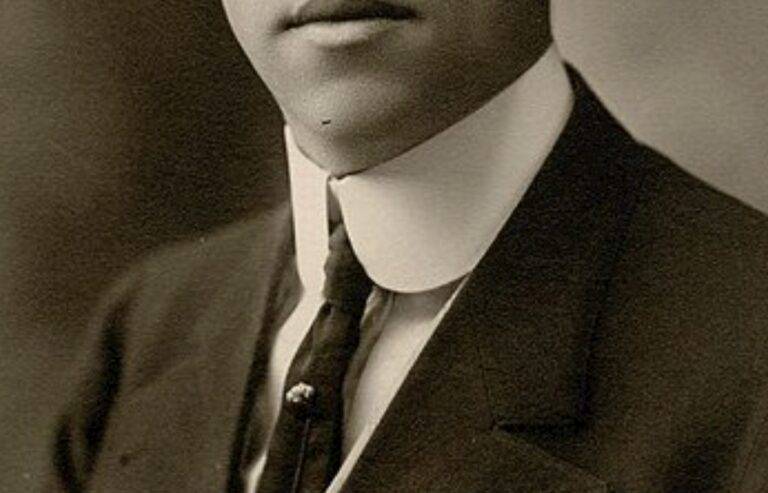
Before Arrow became a name in American menswear, shirts already existed—but their most visually and socially charged element was the white collar.
In the early nineteenth century, men’s shirts were typically made with attached collars. However, these collars posed a practical problem: they were the part of the garment most easily soiled and the most labor-intensive to maintain. To meet social expectations of cleanliness and respectability, collars had to be washed frequently, heavily starched, and pressed to an extreme stiffness. It was this burden of laundering and starching—not an abstract preference for detachable design—that led to the development of the detachable collar. In 1827, in Troy, New York, Hannah Montague devised a practical solution by separating the collar from the shirt body. By removing only the collar for washing and re-starching, the rest of the shirt could be laundered less frequently, reducing both labor and wear. This innovation was soon recognized and commercialized with the involvement of Reverend Ebenezer Brown, and Troy rapidly developed into the primary center of detachable-collar manufacturing.
As production expanded through the nineteenth century, the detachable collar evolved beyond a mere labor-saving device. Because it could be processed independently, the collar became increasingly rigid—sometimes finished to a stiffness likened to cardboard. For a brief period, this logic was extended further: shirt fronts and cuffs were also made detachable and similarly starched. Yet as ideas of comfort and practicality gained importance toward the end of the century, these extreme constructions gradually declined. In everyday dress, the collar alone remained as the principal survivor of this highly structured aesthetic.
By the twentieth century, the detachable collar’s role had narrowed considerably. It persisted in limited and highly codified contexts: as the wing collar in formal eveningwear, as the clerical or Roman collar worn by the clergy, and as part of court dress for barristers in the United Kingdom, Ireland, and Canada. Outside of these settings, rigid detachable collars largely disappeared from daily wear.
Arrow would later emerge against this historical backdrop. What had begun as a practical solution to laundering had, over time, endowed the collar with powerful symbolic meaning—signifying discipline, cleanliness, and social credibility. Drawing on this long-established cultural weight of the collar, Arrow extended that significance to the shirt as a whole, transforming it from a functional undergarment into a garment with broader social and cultural presence.
Cluett, Peabody & Company was one of America’s leading manufacturers of shirts and shirt collars. The company was originally based in Troy, New York. Beginning in the mid-nineteenth century with the production of detachable collars, it played a central role in the growth of Troy into what became known as “Collar City.”
Adopting its current name in 1899, the company initially focused on men’s detachable collars. In the early twentieth century, however, it expanded under the Arrow brand. Launched in 1905, the iconic Arrow Collar Man advertising campaign transformed shirts and collars from simple necessities into potent symbols of idealized masculinity, firmly establishing the brand’s national recognition.
During the 1920s, attached soft-collar shirts became the norm, and the market for detachable collars rapidly declined. Cluett, Peabody & Company responded to this shift by repositioning Arrow as a full-fledged shirt brand rather than a collar specialist.
This transition was supported on the technical side by Sanford L. Cluett, who joined the company in 1919. His development of the Sanforized pre-shrinking process dramatically reduced fabric shrinkage after washing, greatly improving the quality and reliability of collar-attached shirts. Through this innovation, the company completed its transformation from a “collar company” into a true “shirt company.”
By the Second World War, Cluett, Peabody & Company had grown into one of the largest shirt manufacturers in the world. In the decades that followed, industry consolidation reshaped the business, and from the 1980s onward the company itself changed form. Today, the Arrow name continues to thrive as a licensed brand, its legacy firmly embedded in the history of men’s shirts.
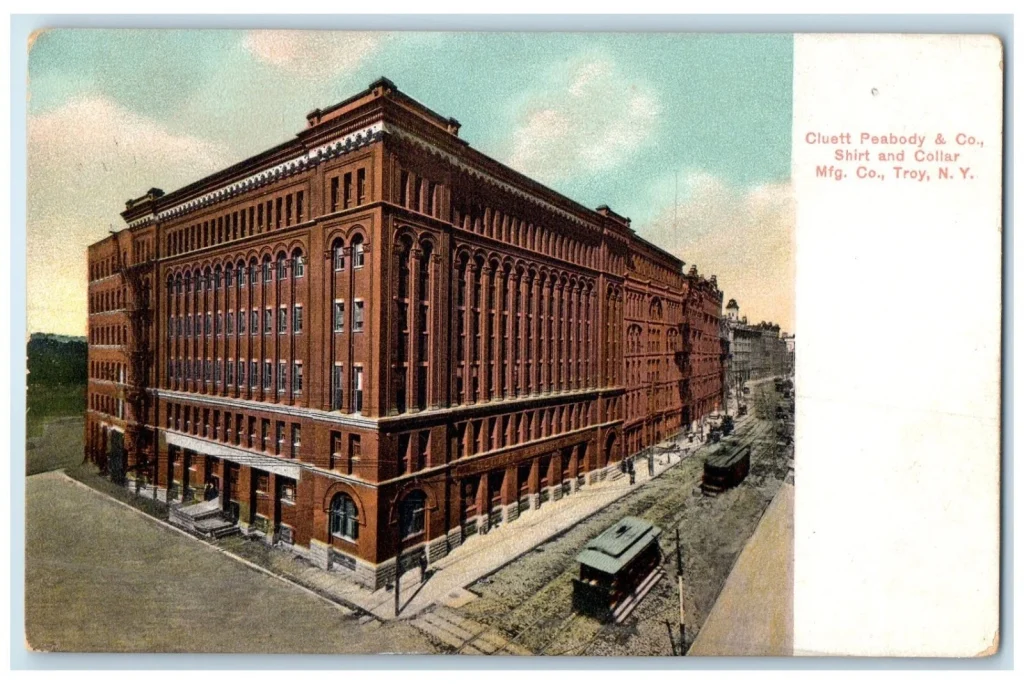
1851 – Maullin & Blanchard founded in Troy, New York as a collar manufacturer.
1856 – Company renamed Maullin & Bigelow.
1861 – Reorganized as Maullin, Bigelow & Co.
1862 – Became Maullin & Cluett.
1863 – Renamed Geo. B. Cluett, Bros. & Co.
1891 – Merged with Coon & Co. to form Cluett, Coon & Co.
1899 – Company renamed Cluett, Peabody & Co.
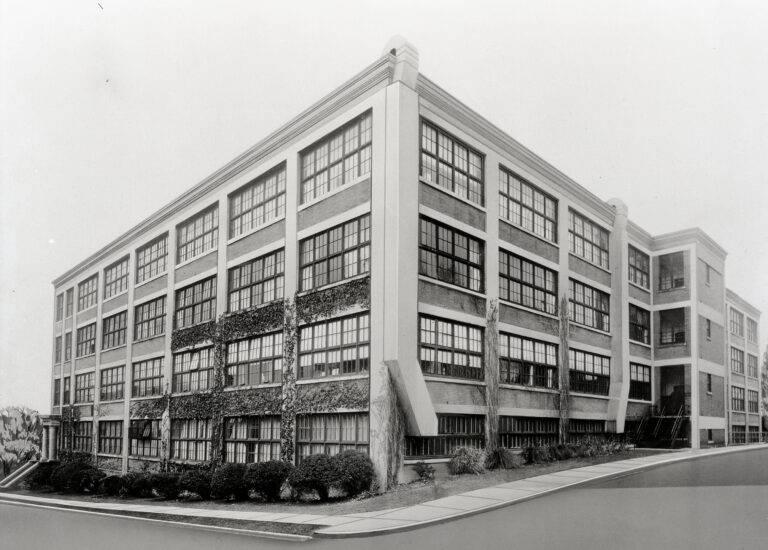
1902 – Factory building constructed at 123 First Street, Leominster, Massachusetts.
1905 – Launch of the “Arrow Collar Man” advertising campaign.
1919 – Sanford L. Cluett joined the company; later developed the Sanforization process.
1920s – Demand shifts from detachable collars to collar-attached shirts.
1929 – National menswear business launched under the Arrow brand.
1935 – Company operated 11 manufacturing plants in the United States.
1945 – Company sales reached $31.3 million.
1955 – Sales increased to $87.4 million.
Mid-1970s – Overseas shirt production began in Korea.
1985 – Cluett, Peabody & Co. acquired by WestPoint Pepperell, Inc.
1989 – Leominster factory building listed on the National Register of Historic Places.
1990 – Company purchased by Bidermann Industries.
1998 – Acquired by Cluett American Group (Vestar Capital Partners).
2004 – Arrow brand and licensing business acquired by Phillips-Van Heusen Corporation for approximately $70 million.
2021 – Arrow brand sold to Authentic Brands Group; United Legwear & Apparel Co. named licensee.
MORE STORY OF TROY CITY
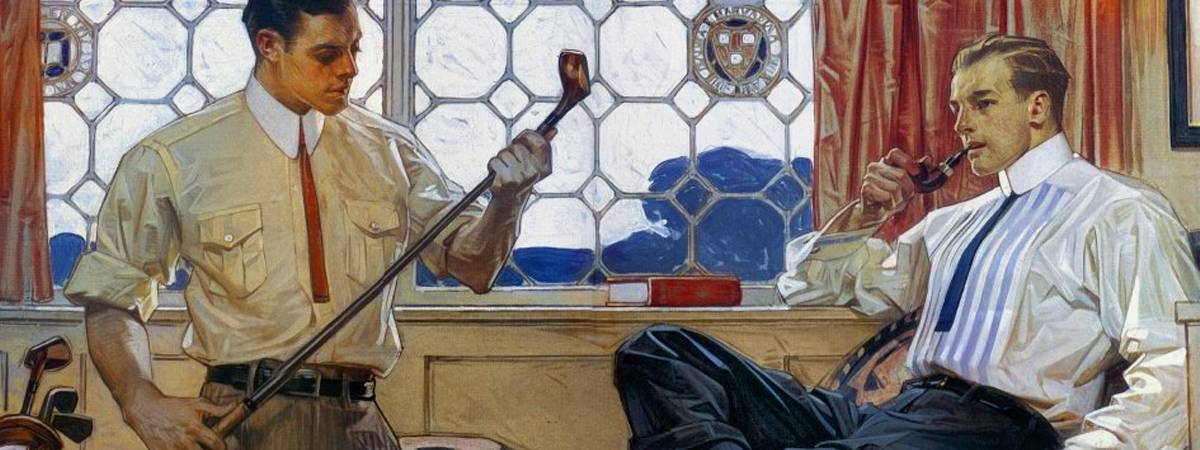
Troy : The Collar City
In the late 19th century, Troy, New York, became known as “Collar City,” a title earned from its status as a hub for the manufacturing of detachable collars. At that time, clean clothing symbolized social status, and detachable collars offered a practical, hygienic solution. Troy met this new demand, supplying products nationwide, significantly impacting its economy and employing thousands. This study explores how Troy achieved its fame through detachable collar manufacturing and its broader impact.
Arrow was never merely a brand of shirts. From its earliest days, it functioned as a cultural device—one that translated industrial progress, modern masculinity, and social aspiration into a single garment. To understand Arrow is to understand how the American dress shirt came to represent far more than clothing.
The roots of Arrow lie in Troy, New York, a city whose identity was inseparable from the manufacture of detachable collars and cuffs. Beginning in 1827, the concept of the detachable shirt collar—traditionally attributed to Hannah Montague and later commercialized by Reverend Ebenezer Brown—transformed both domestic labor and menswear. What began as a practical solution to laundering soon became a powerful visual marker of cleanliness, respectability, and discipline.
By the late nineteenth century, Troy’s textile manufacturers accounted for more than 90 percent of all collars and cuffs produced in the United States, earning the city its enduring nickname: “Collar City.” Concentrated along River Street, north of the commercial center and adjacent to the Hudson River, dozens of brick textile mills formed one of the most specialized industrial corridors in American manufacturing history.
It was within this environment that Cluett, Peabody & Company emerged as the dominant force. Originating from earlier firms dating back to 1851, Cluett, Peabody consolidated generations of collar-making expertise and industrial capacity. The company adopted its definitive name in 1899, but its true transformation began in the early twentieth century with the creation of the Arrow brand.
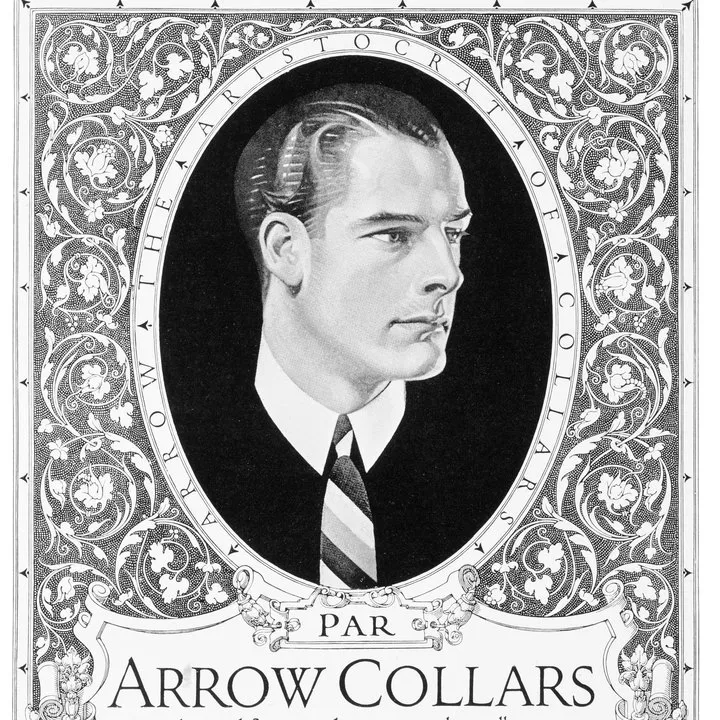
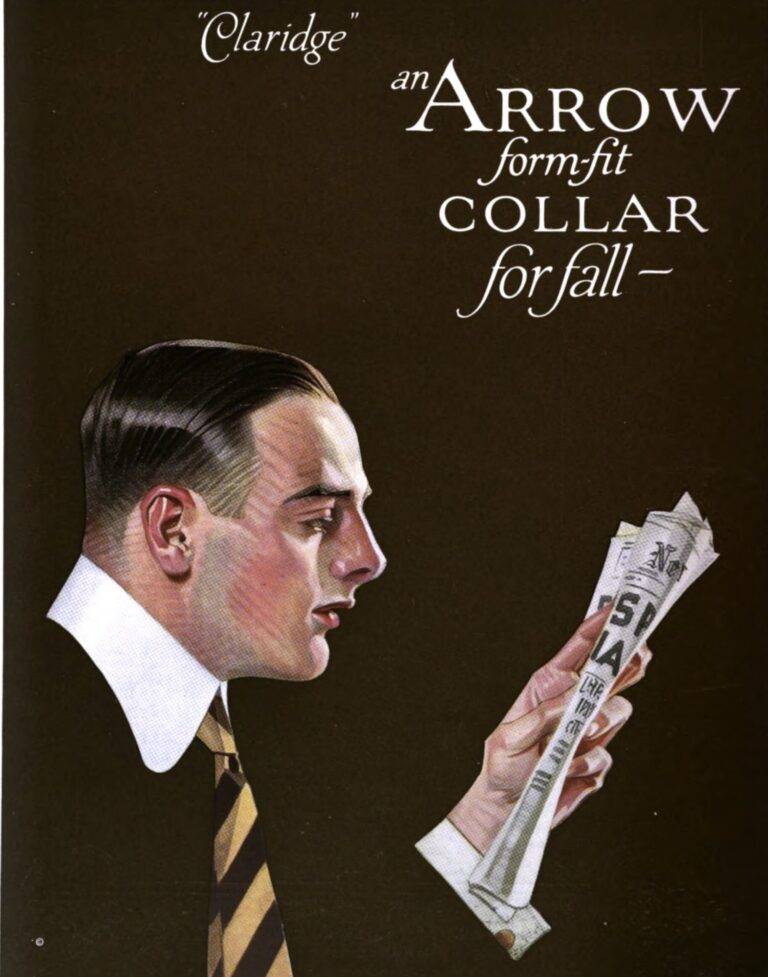
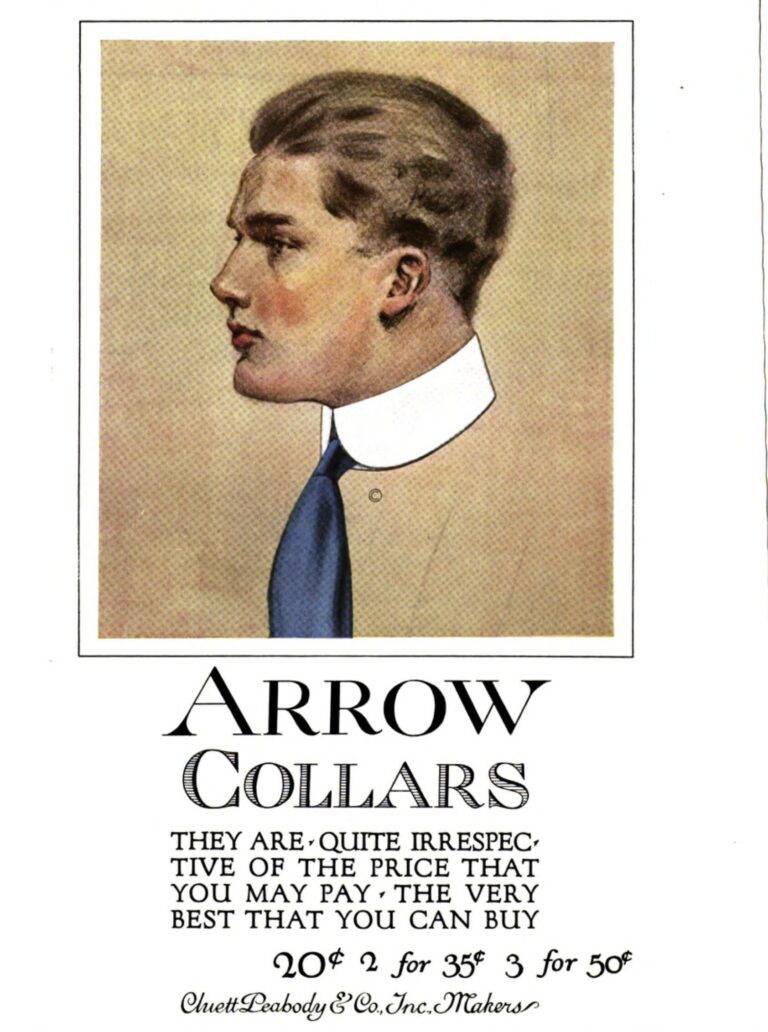
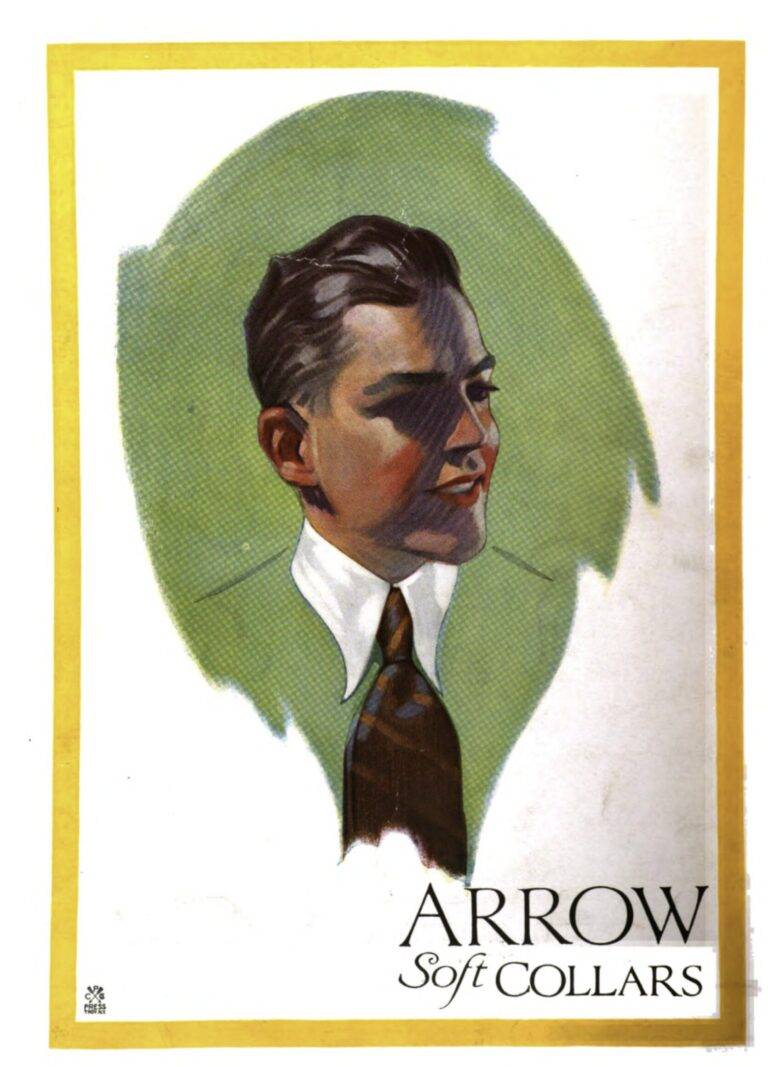
Launched in 1905, Arrow did something unprecedented: it shifted attention away from the detachable collar itself and toward the man who wore it. The Arrow Collar Man, illustrated by J. C. Leyendecker and developed in collaboration with the advertising agency Calkins & Holden, was not a product demonstration but an ideal. Confident yet restrained, modern yet disciplined, he embodied an aspirational masculinity that resonated deeply with American consumers. Shirts and collars were no longer utilitarian necessities—they became symbols of identity.
This symbolic leap proved critical as fashion and society changed. Following the First World War, men increasingly rejected rigid detachable collars in favor of comfort and mobility. By the 1920s, soft, collar-attached shirts had become the norm, and the collar industry that built Troy began to decline. Arrow survived because it adapted—not by abandoning its heritage, but by expanding it.
The technical foundation for this transition was provided by Sanford L. Cluett, who joined the company in 1919. His development of the Sanforized pre-shrinking process dramatically reduced fabric shrinkage after washing, solving one of the greatest shortcomings of early collar-attached shirts. This innovation allowed Arrow to maintain precision, reliability, and consistency at industrial scale, completing its evolution from a collar specialist into a full-fledged shirt manufacturer.
At its height, Cluett, Peabody operated more than a dozen factories across the United States, with Troy remaining its symbolic and industrial heart well into the twentieth century. The company’s River Street facilities—many of which have since been listed on the National Register of Historic Places—stand as physical evidence of Arrow’s central role in American industrial history. These fireproof brick mills, built in Romanesque Revival styles and engineered for mass production, once employed thousands, particularly women, whose labor sustained Troy’s economy for generations.
By the Second World War, Arrow had become the most recognized shirt brand in America, exporting its products worldwide and defining the visual language of modern menswear. In 1955, company sales reached $87.4 million, a staggering figure for the era. Arrow was not simply following American life—it was helping to shape how American men saw themselves.
In the decades that followed, industry consolidation and globalization transformed apparel manufacturing. Production moved beyond Troy, first within the United States and later overseas. Corporate ownership changed hands, and by the early twenty-first century Arrow existed primarily as a licensed brand. Yet unlike many names that faded with the factories that created them, Arrow endured.
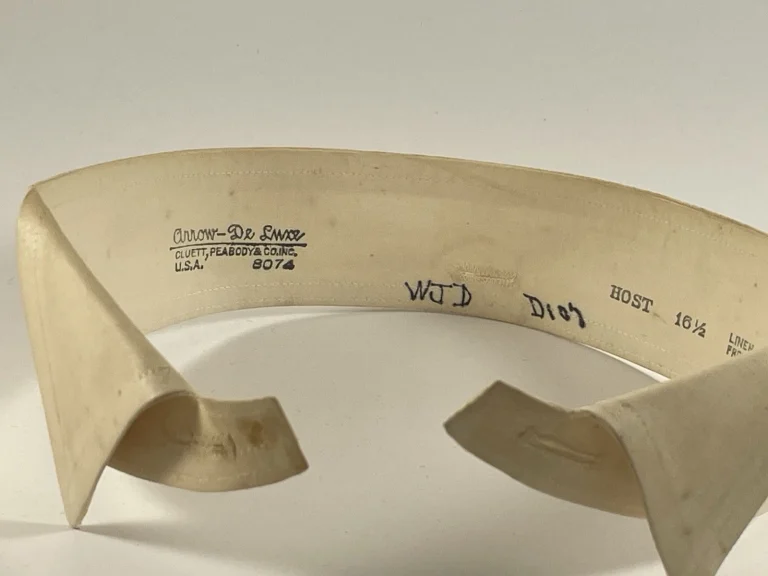
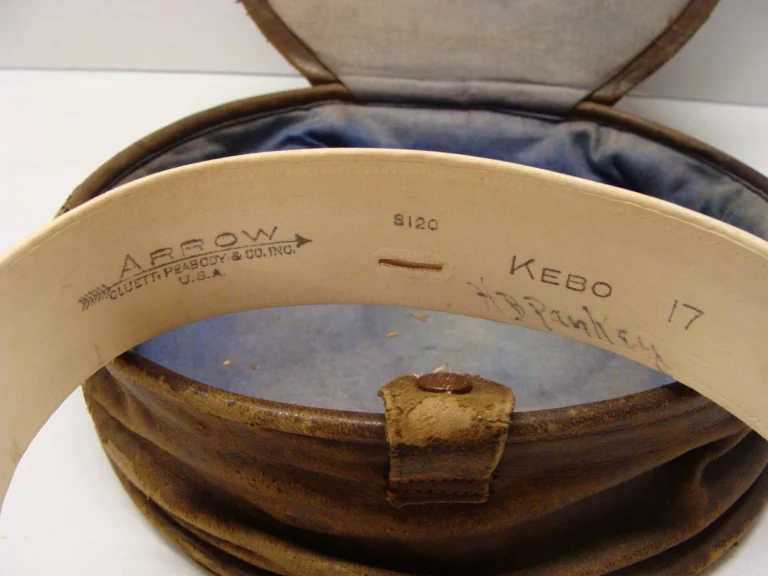
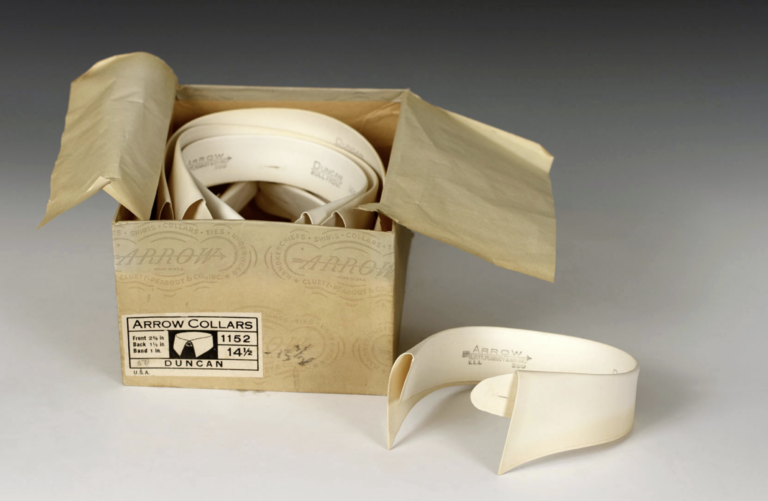
Box of Arrow Shirt Collars, “Duncan” Style
Peabody, Cluett & Co., Inc., Troy, New York | 1921
As your train approaches ION Queen Station in Kitchener, Ontario, it may not be immediately apparent that the surrounding Benton Street area was once the heart of the city’s garment industry. From the late nineteenth century through the mid-twentieth century, clothing manufacturing played a central role in Kitchener’s industrial economy. Shirts, shoes, buttons, and other garments were produced locally at a scale that supported thousands of workers—until global competition after the Second World War fundamentally reshaped the industry.
Benton Street holds particular historical significance as the site of the Arrow Shirt factory. The factory building, constructed in 1913, was the result of the expansion of Williams, Greene and Rome Company, which chose the intersection of Benton Street and St. George Street for a new, modern industrial facility in what was then known as Berlin, Ontario.
The company’s original factory, founded in 1886 by Samuel James Williams, had been located on Queen Street South at the corner of Courtland Avenue. That earlier site—now occupied by the Bread and Roses Housing Co-operative—had previously housed the Vogelsang Button factory, underscoring the area’s long association with garment-related manufacturing.
The Benton Street facility was designed according to contemporary industrial ideals, featuring high ceilings, a poured-concrete structure, and large windows that maximized natural light. In 1919, the company was acquired by Cluett, Peabody & Company, the American firm behind the renowned Arrow shirt line, just one year before Samuel Williams retired. Under Cluett, Peabody’s ownership, the factory became internationally known for producing men’s dress shirts with permanently attached collars—a defining innovation of modern menswear.
The factory was expanded in 1954 and again in 1961, reflecting the continued importance of shirt manufacturing in the region. Production ultimately came to an end on March 30, 2001, following the sale of the Arrow brand to the John Forsyth Shirt Company of Cambridge. With that transaction, the sewing machines fell silent, marking the close of a significant chapter in Kitchener’s industrial and garment-making history.
The Arrow Collar Man
1900s
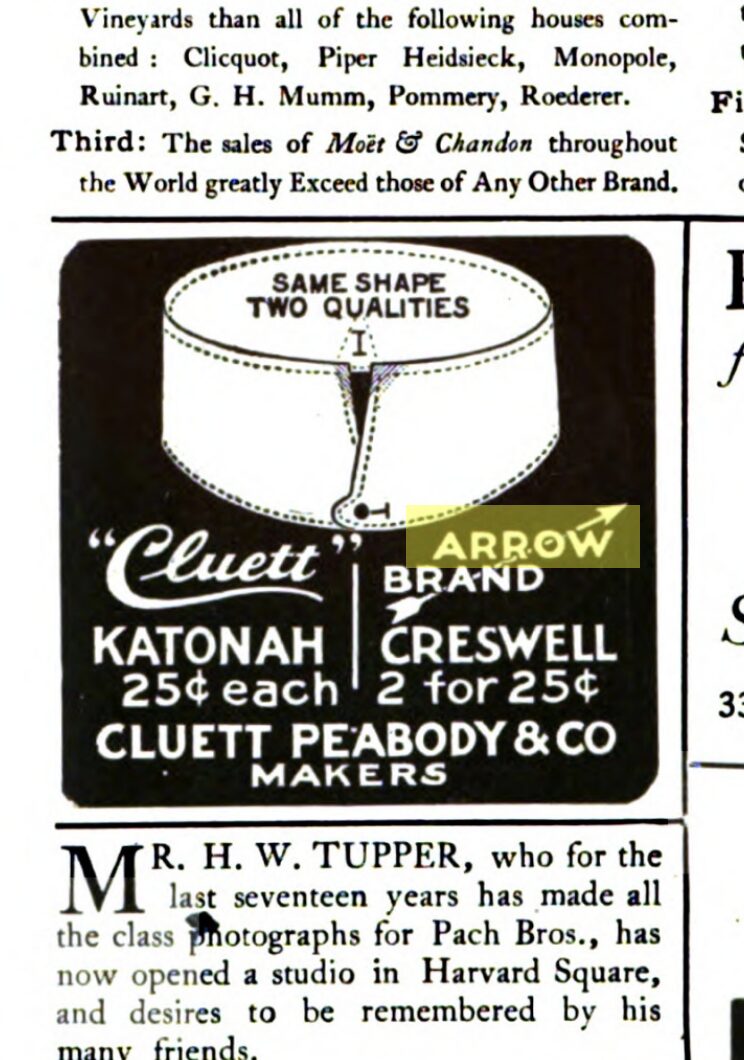
1900 The Harvard lampoon v. 40-41 (Oct. 1900- June 1901)
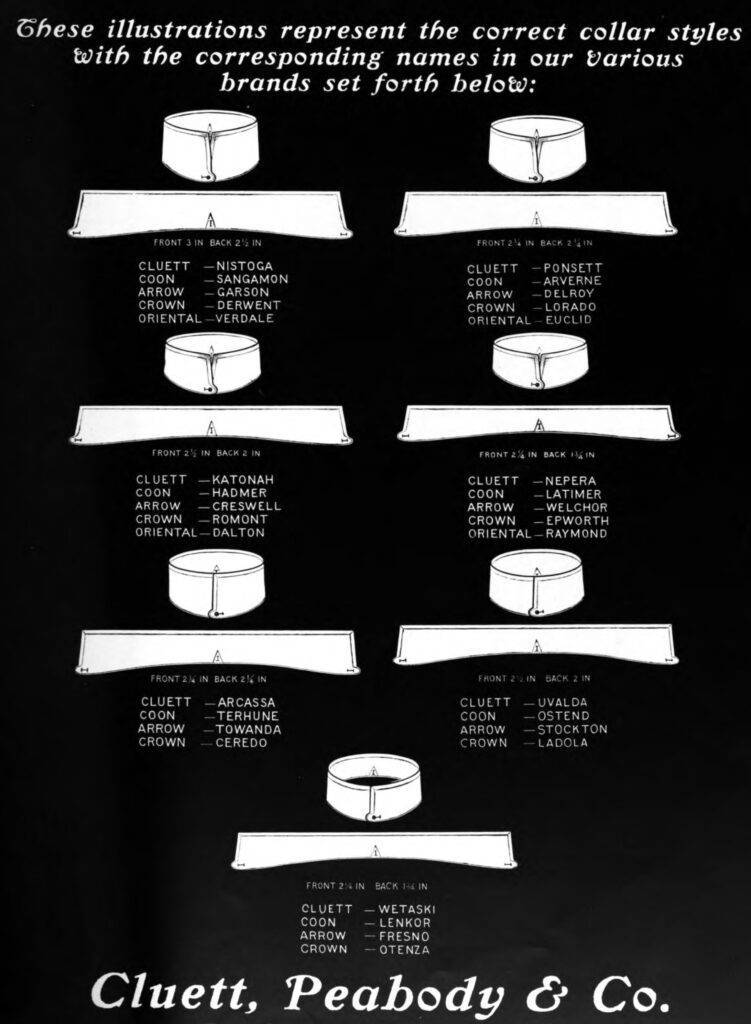
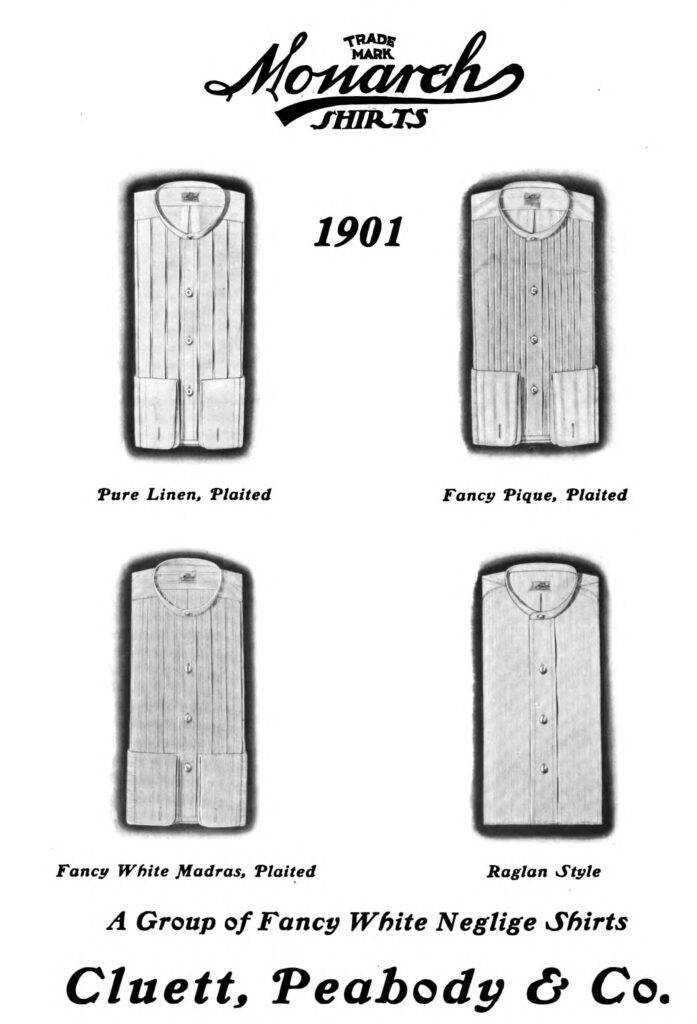
1901 The Clothier and furnisher v. 58 (Feb.-July 1901)

1905 The Clothier and furnisher v. 67 (Aug. 1905-Jan. 1906)
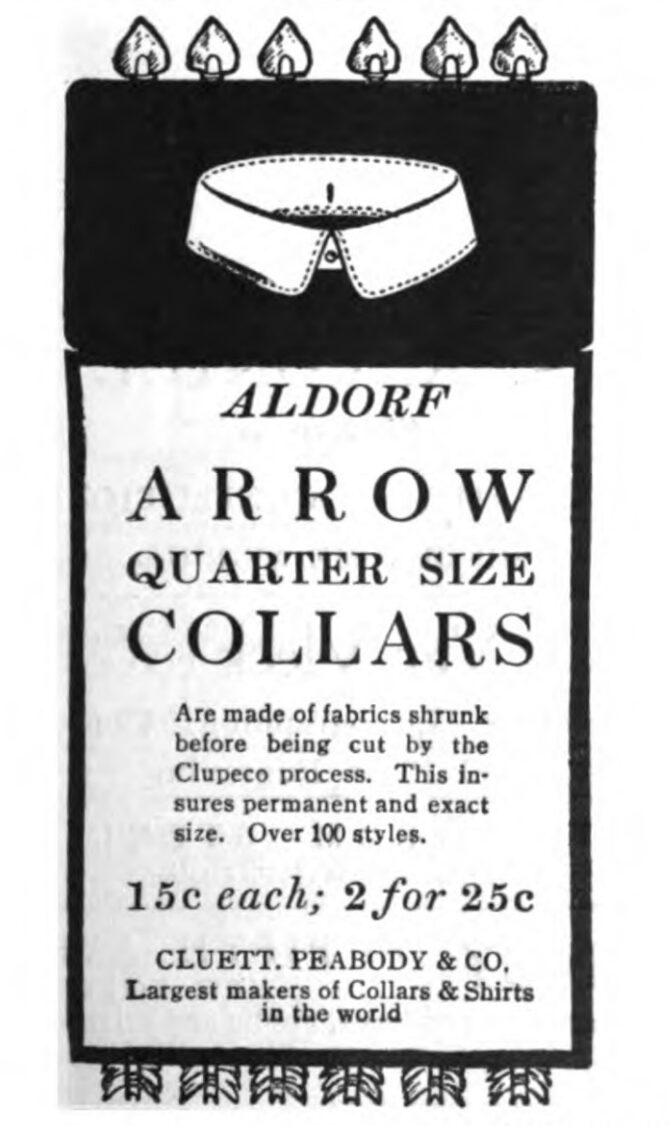
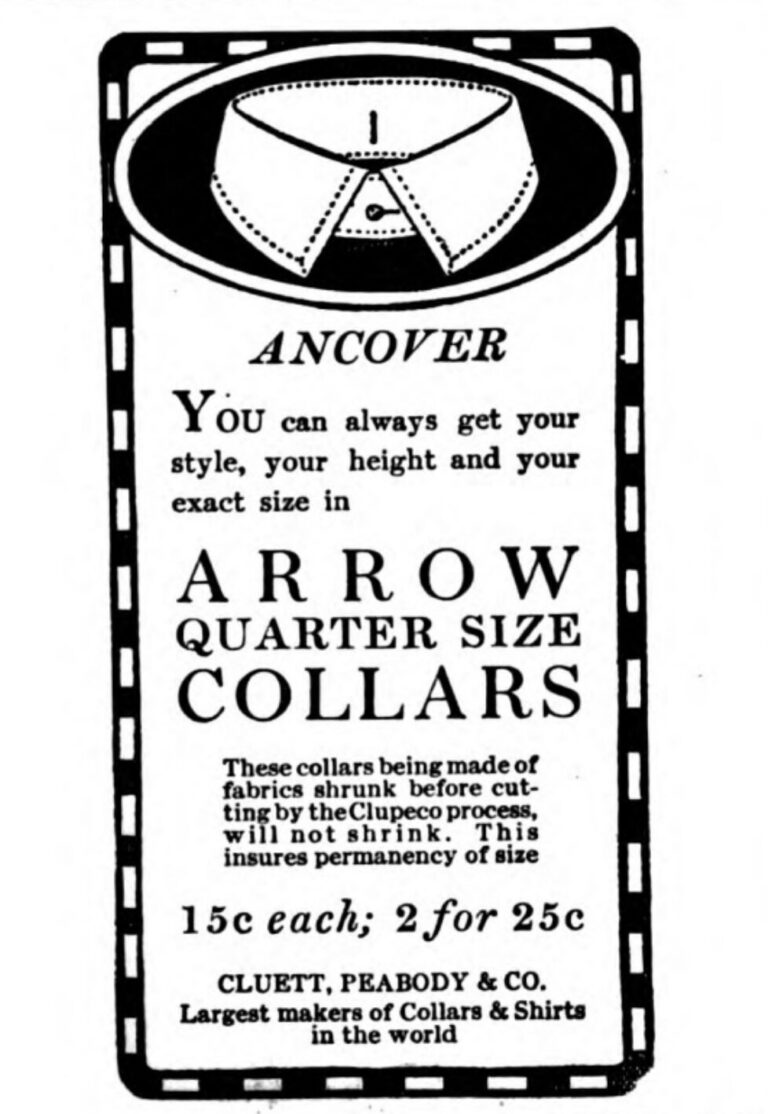
1905 The Triangle / New York University v. 12 (1905-06)
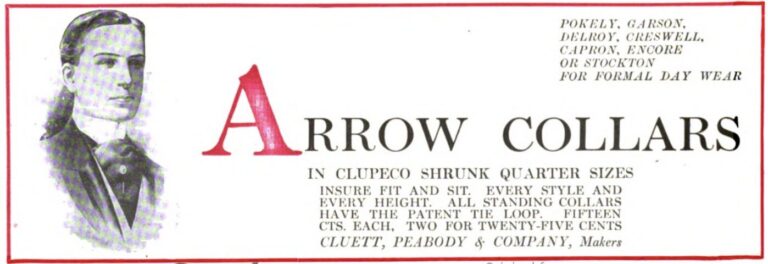
1905 The Harvard lampoon ser.2:v.50-51 (1905-1906)
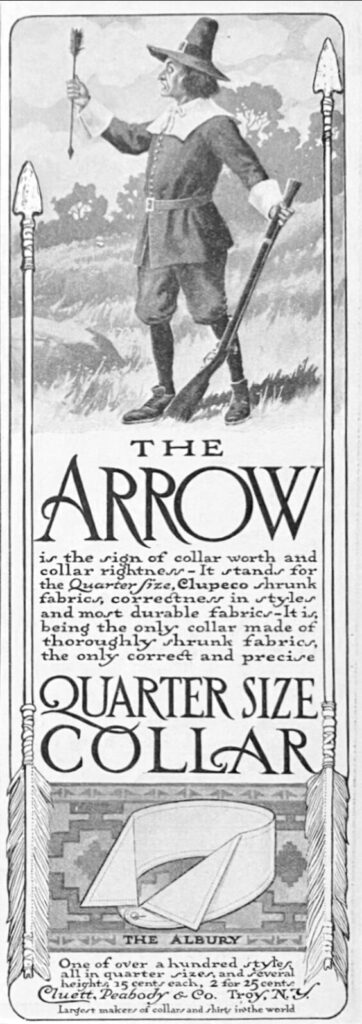
1905 The ARROW Quarter Size Collar “THE ALBURY” Cluett, Peabody & Co. – Troy, N.Y.

1907 The Daily Californian 1907-08-22 Thu Aug. 22, 1907

1908 Cluett Peabody Arrow Men’s Collar Shirt Handsome Man
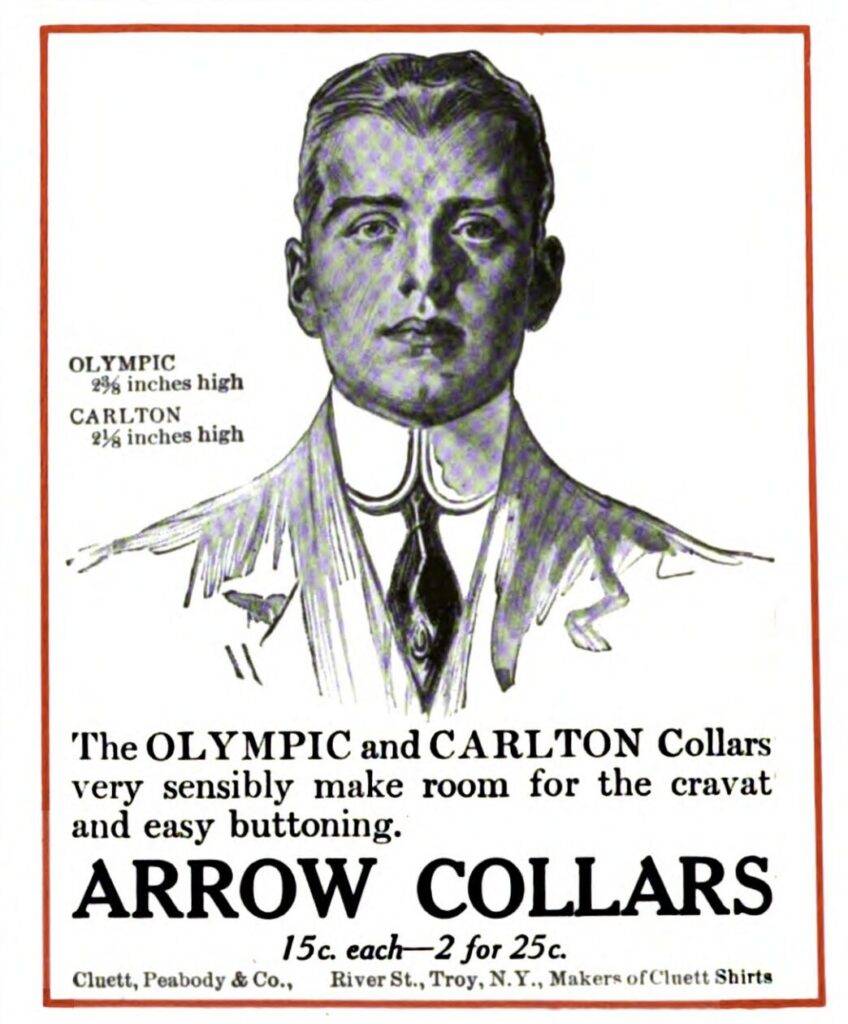
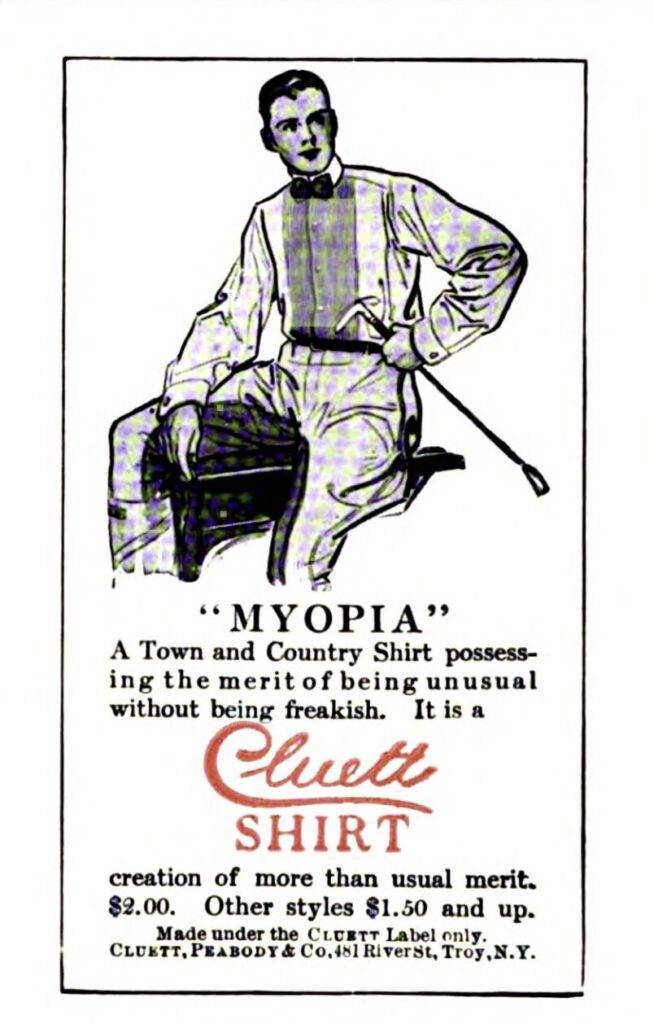
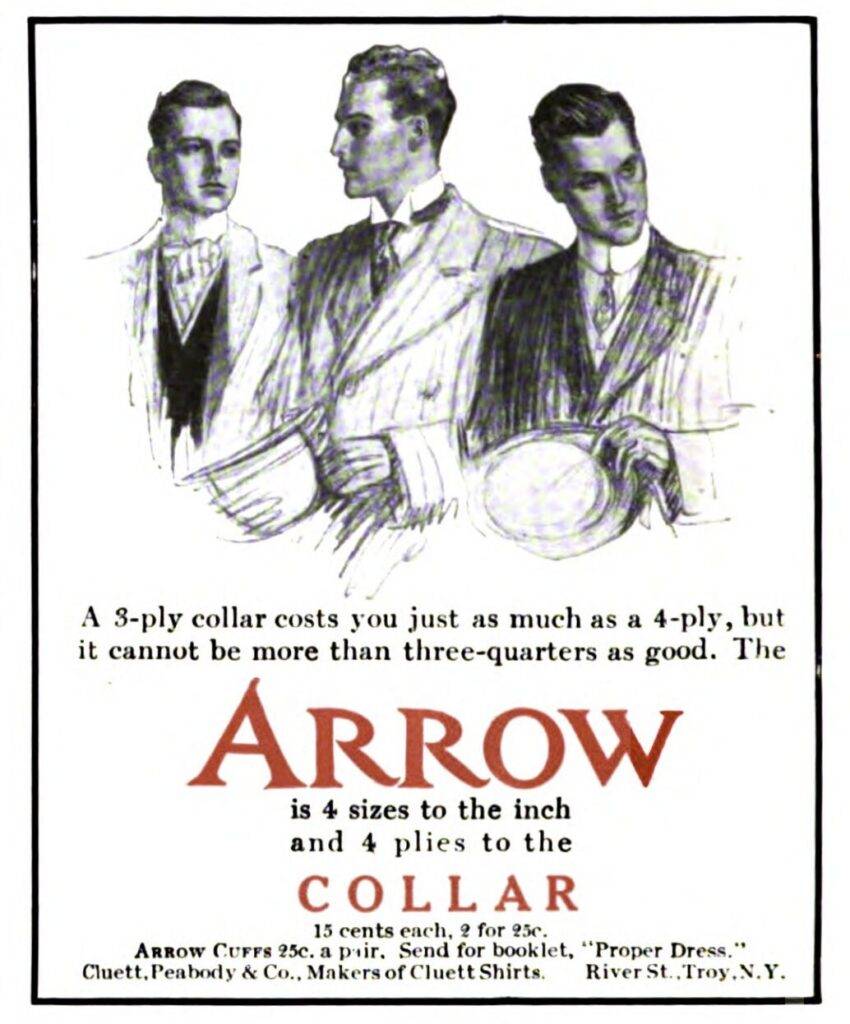
1908 The Harvard lampoon ser.2:v.56-57 (1908-1909)
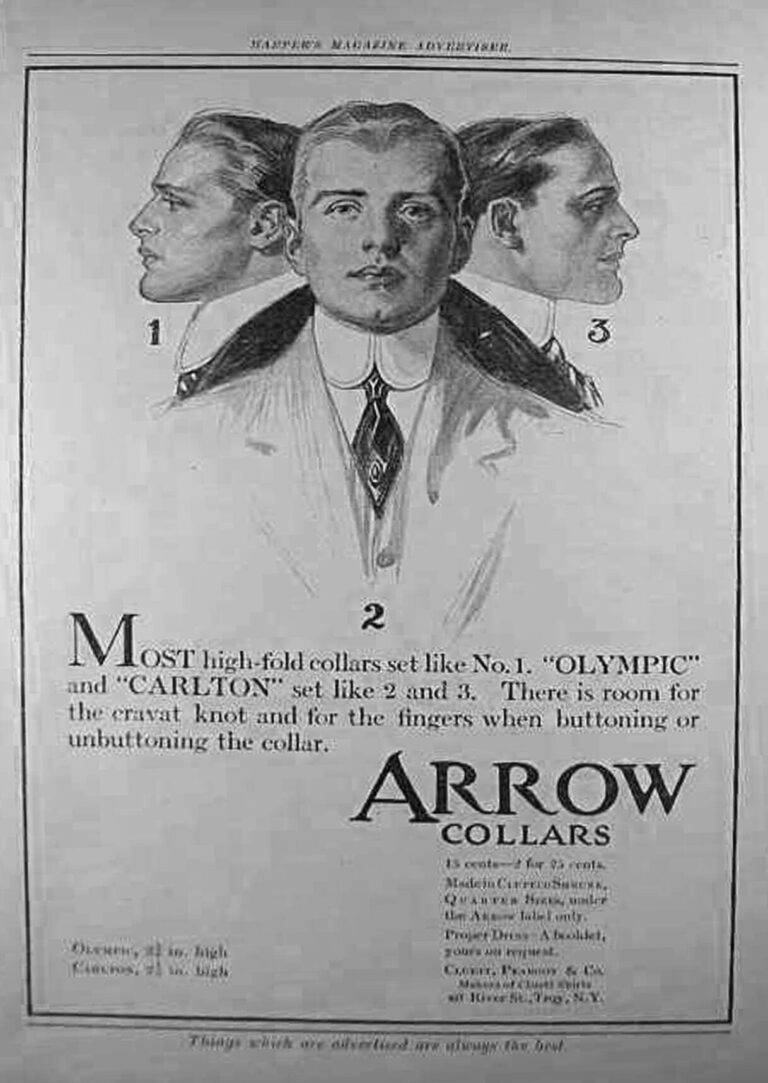
1908 Arrow Collars Ad
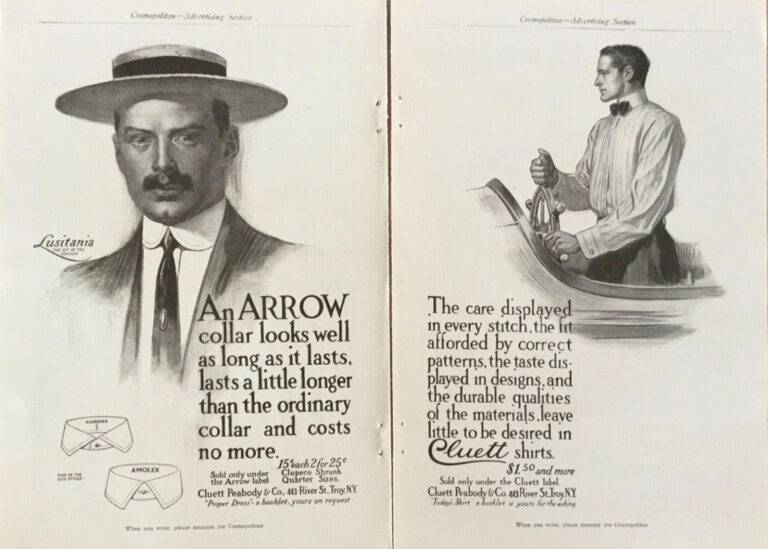
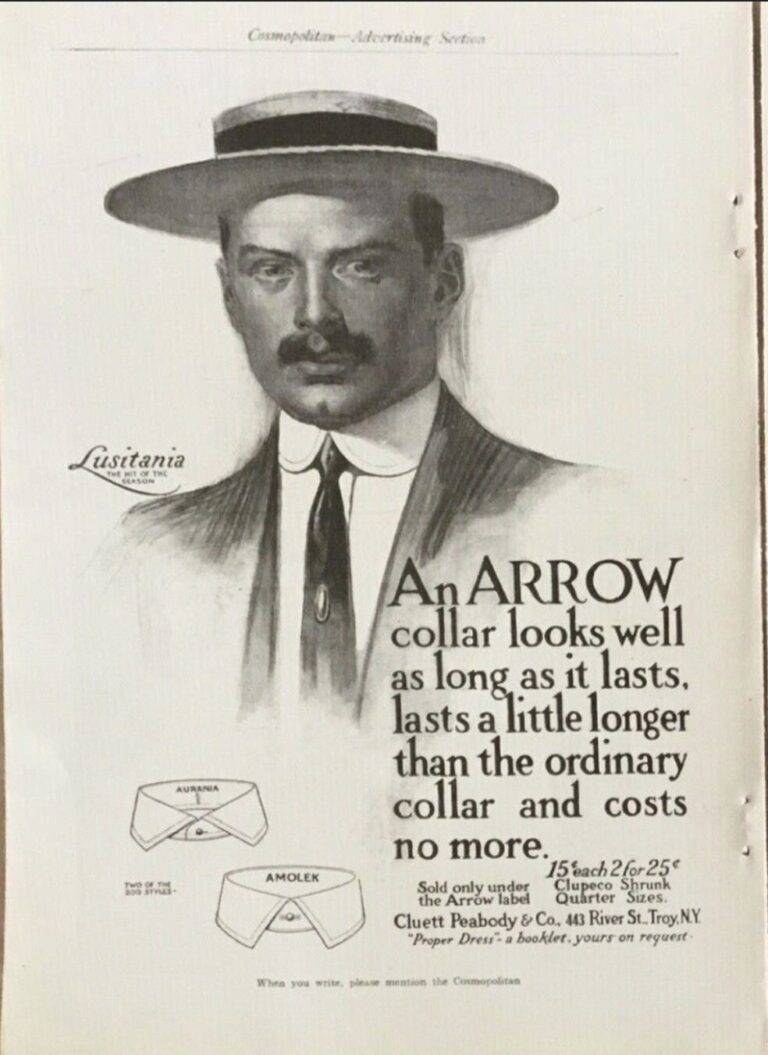
1908 Arrow Collars Ad
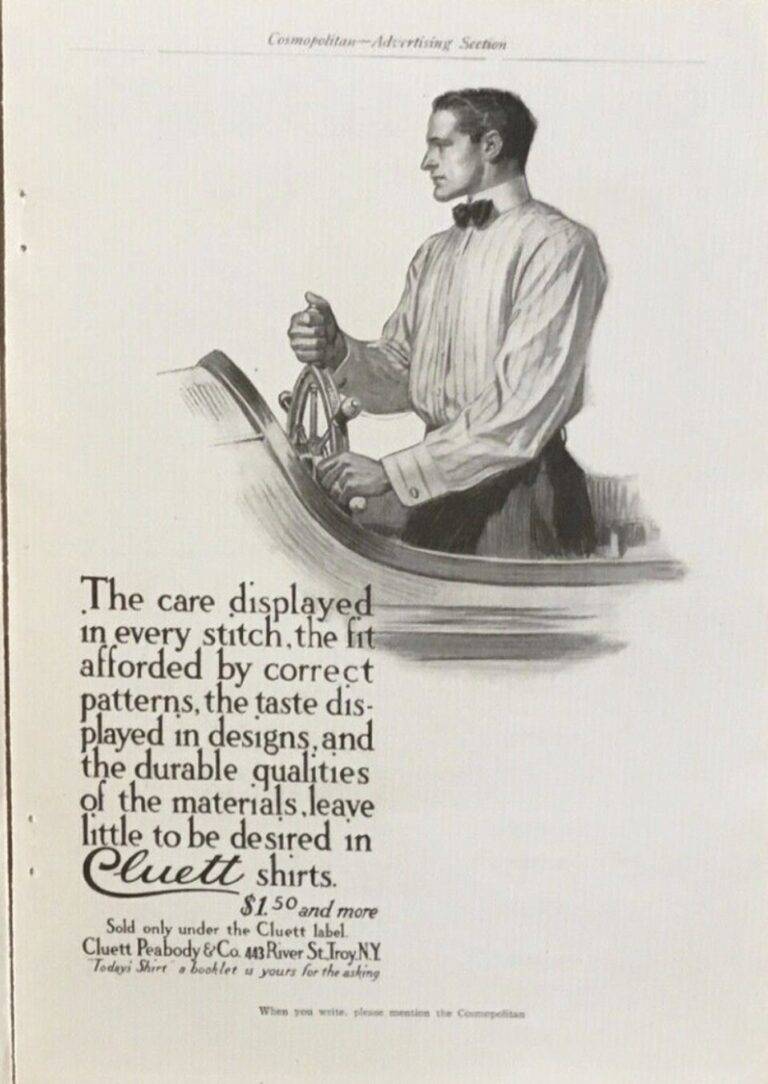
1908 Arrow Collars Ad
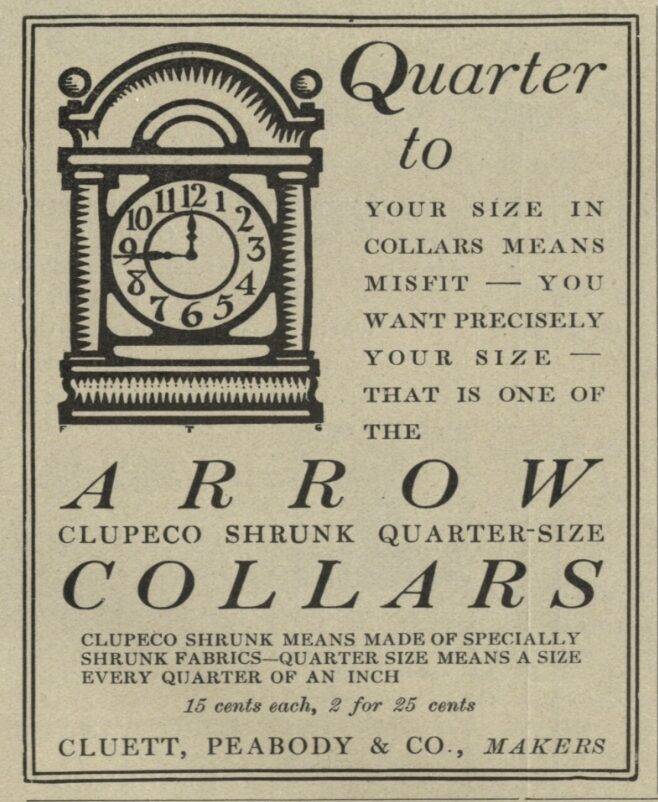
1908 The Yale record v. 35, no. 6,
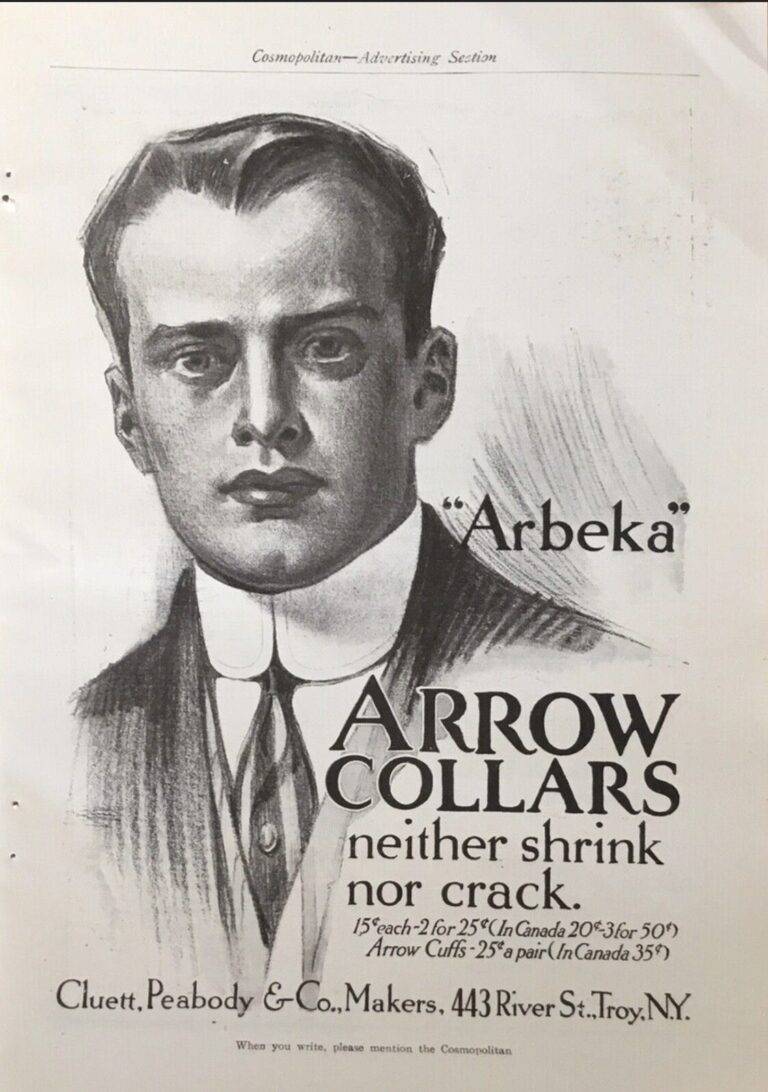
Arrow shirt collars print ad 1909
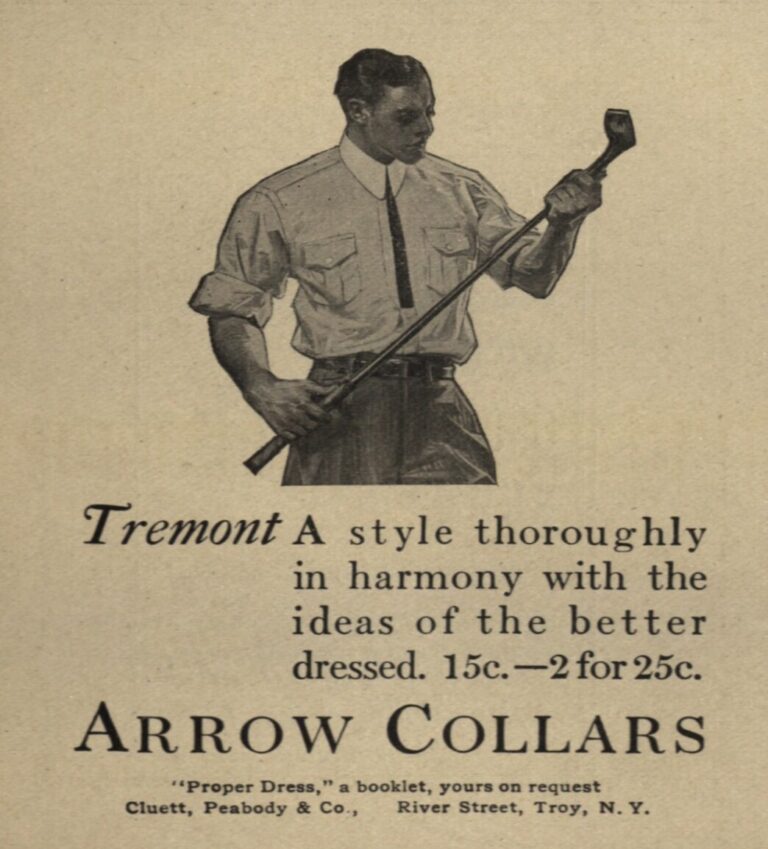
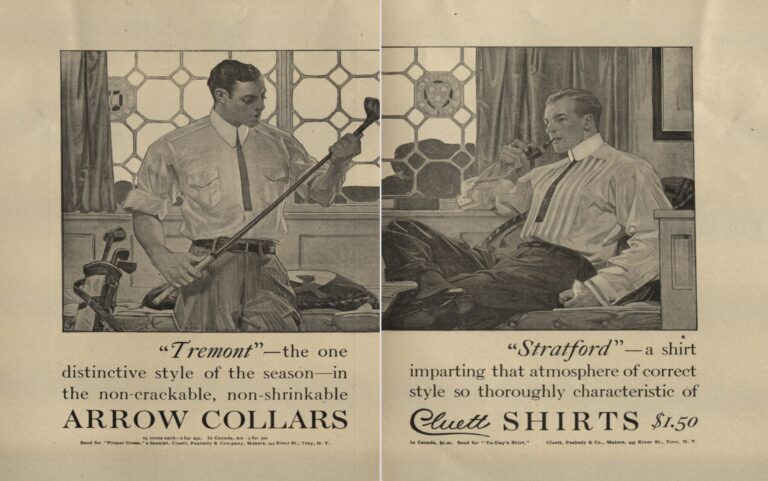
1909 The Yale record v. 37, no. 12, 5/8/1909
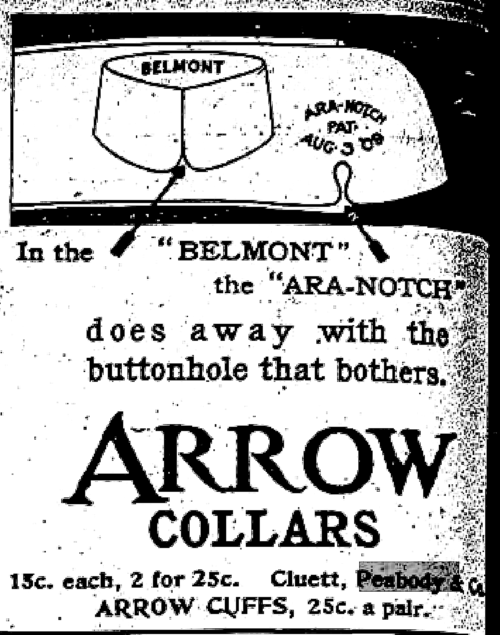
New York NY Tribune 1909 Sep Grayscale
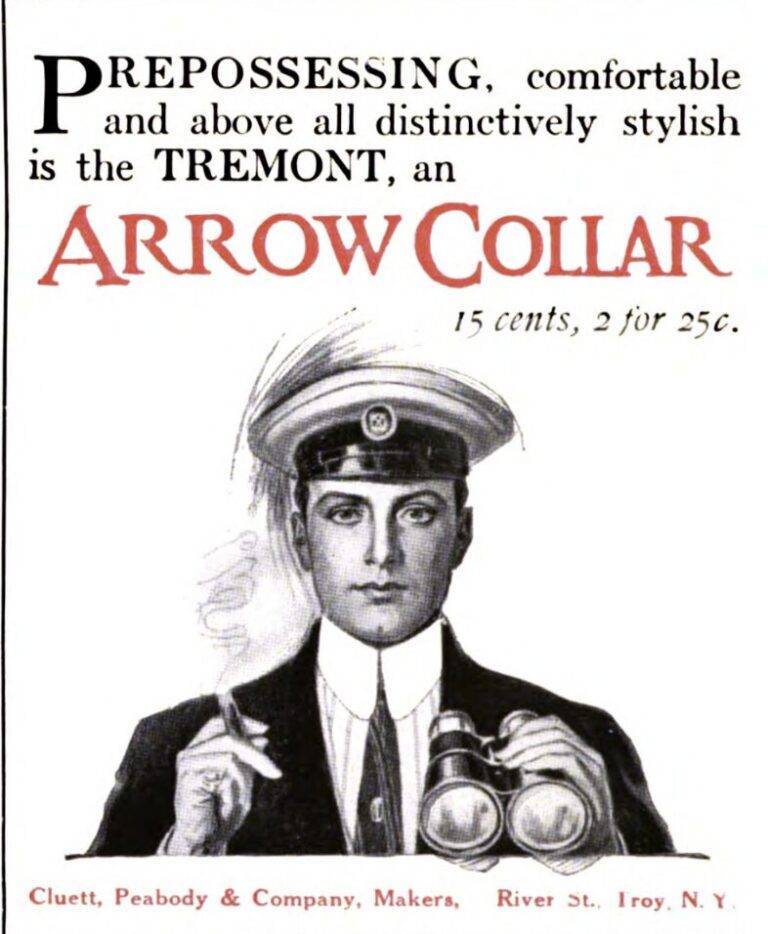
The Harvard lampoon ser.2:v.58-59 (1909-1910)
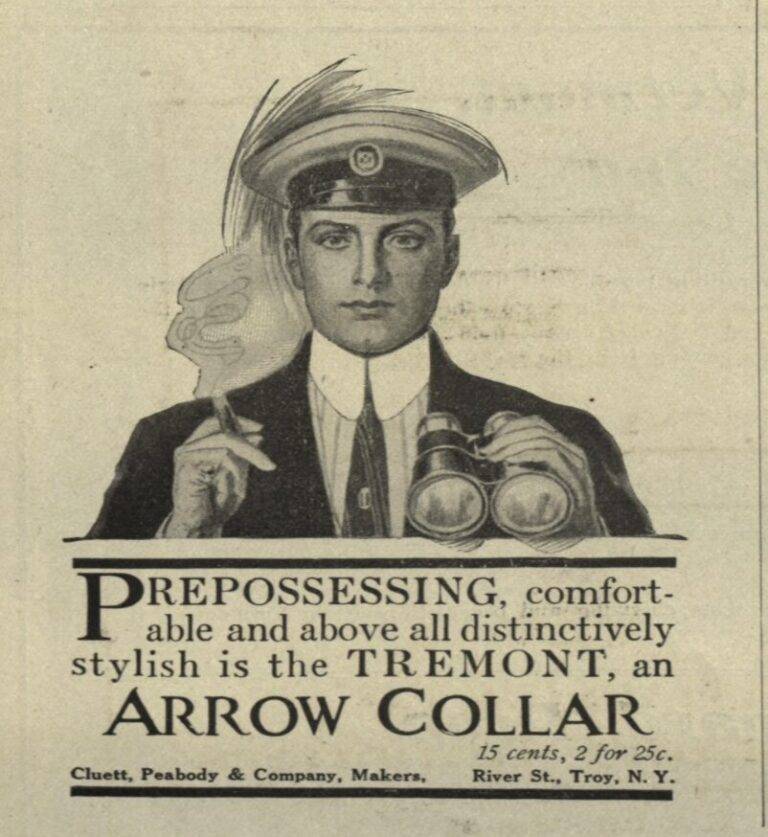
1909 The Yale record v. 37, no. 16, 6/28/1909
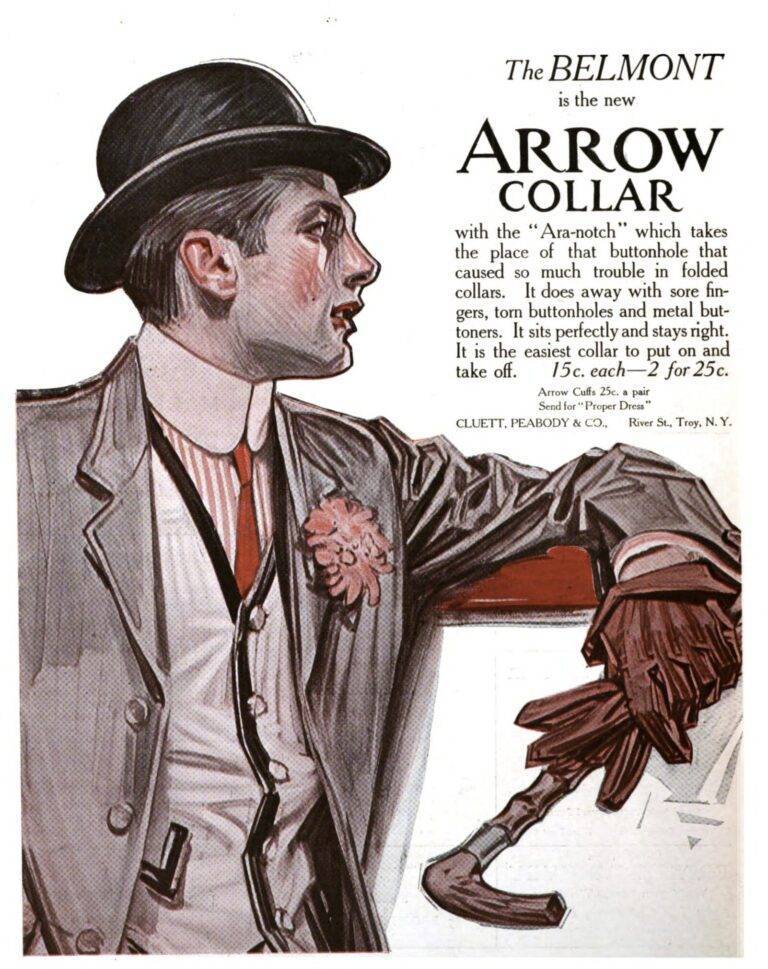
The Harvard lampoon ser.2:v.58-59 (1909-1910)
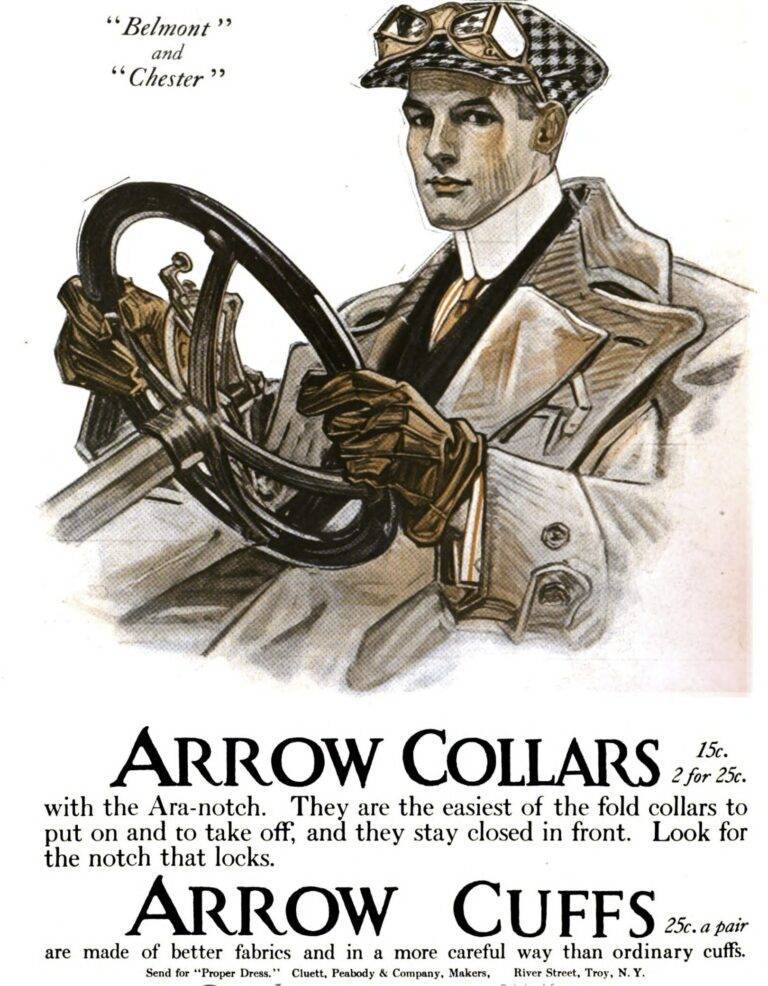
The Harvard lampoon ser.2:v.58-59 (1909-1910)

1910 The Clothier and furnisher v. 75 (Aug. 1909-Jan. 1910)
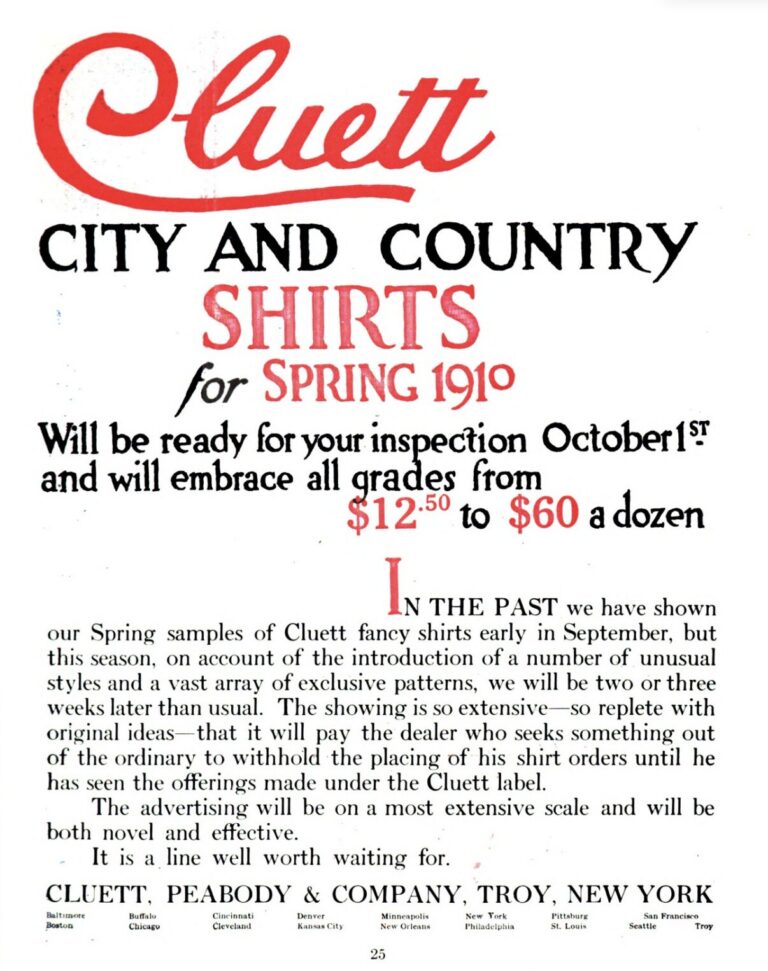

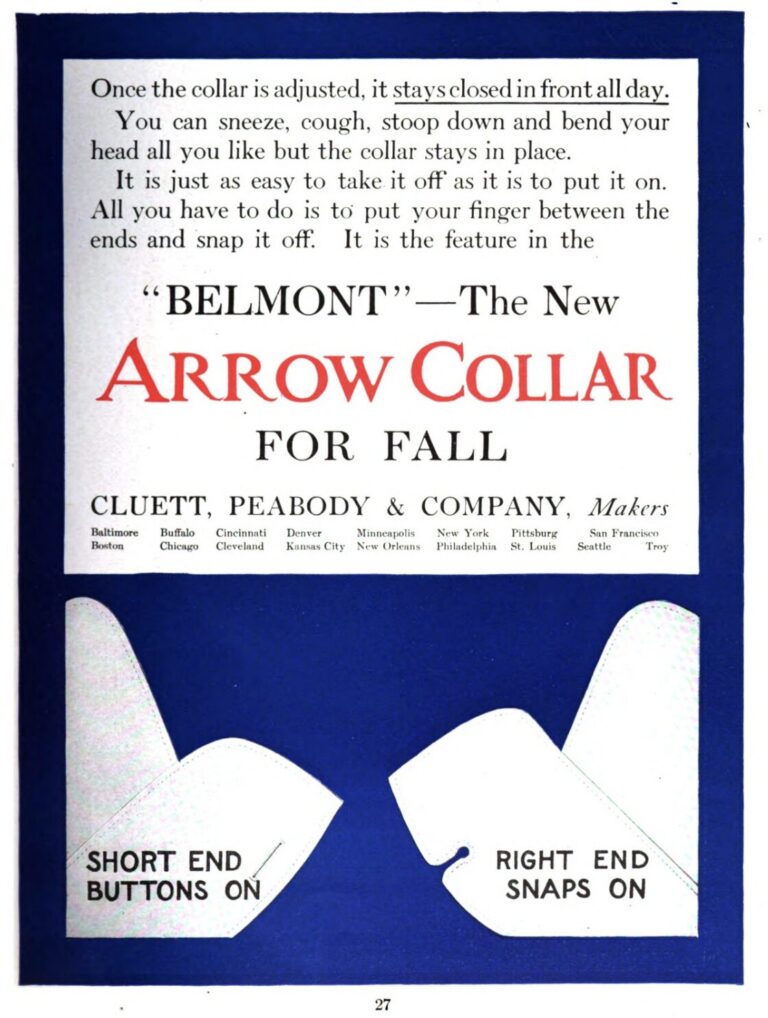
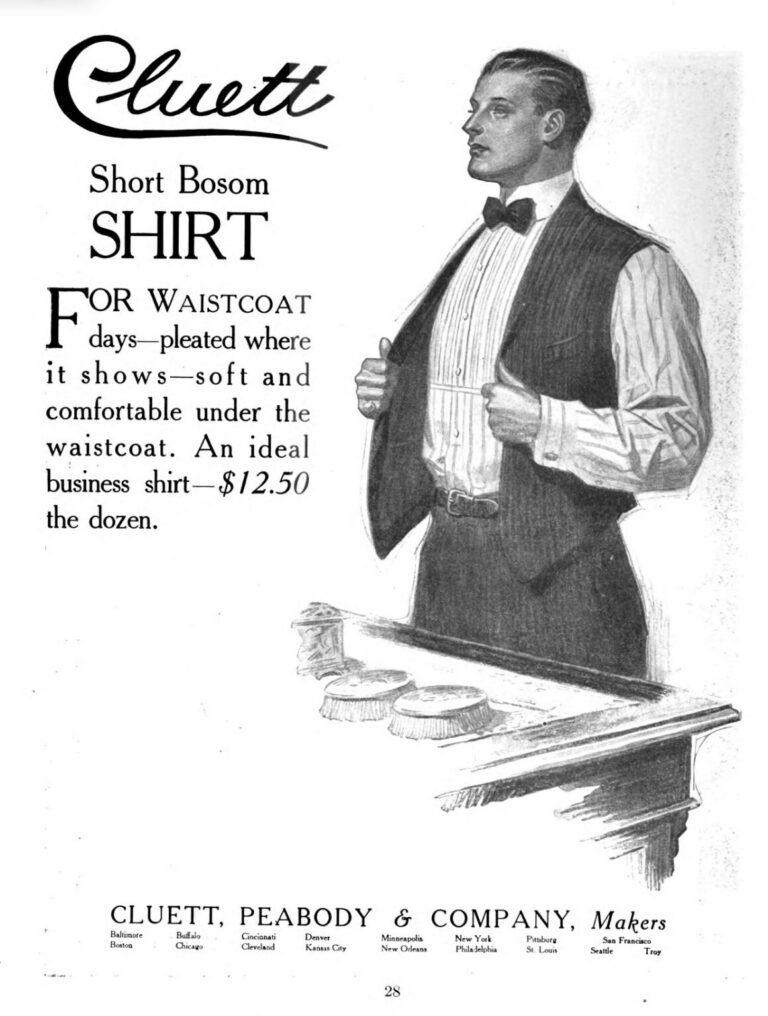
1910 The Clothier and furnisher v. 75 (Aug. 1909-Jan. 1910)
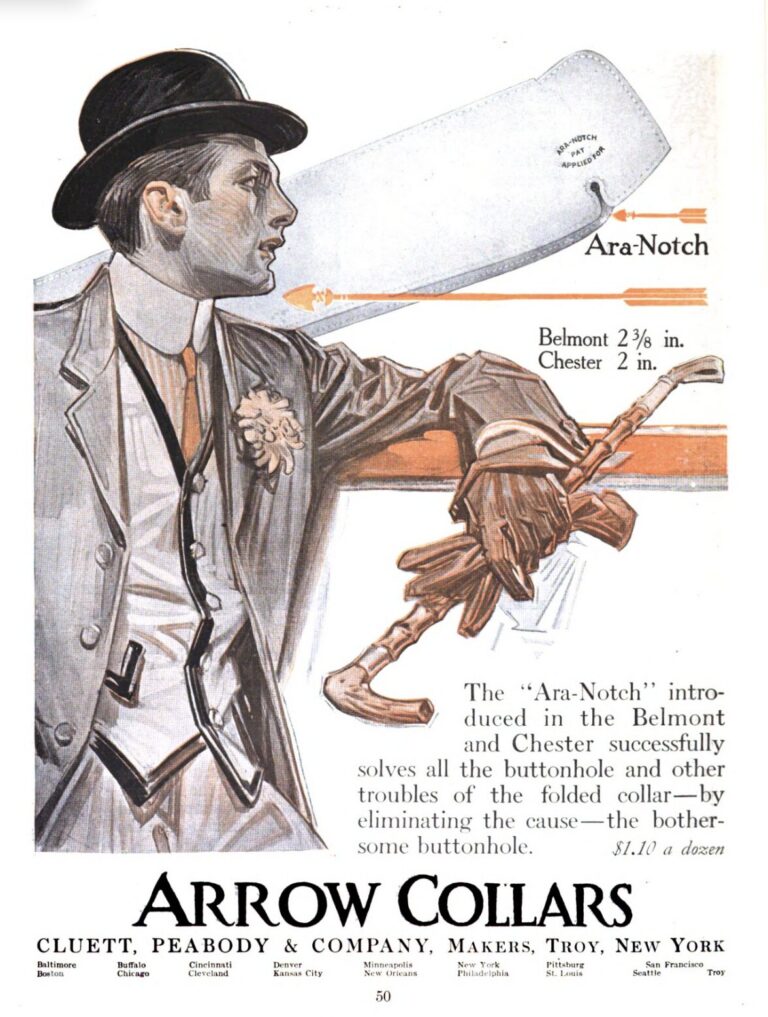
1910 The Clothier and furnisher v. 75 (Aug. 1909-Jan. 1910)

1910 The Clothier and furnisher v. 75 (Aug. 1909-Jan. 1910)
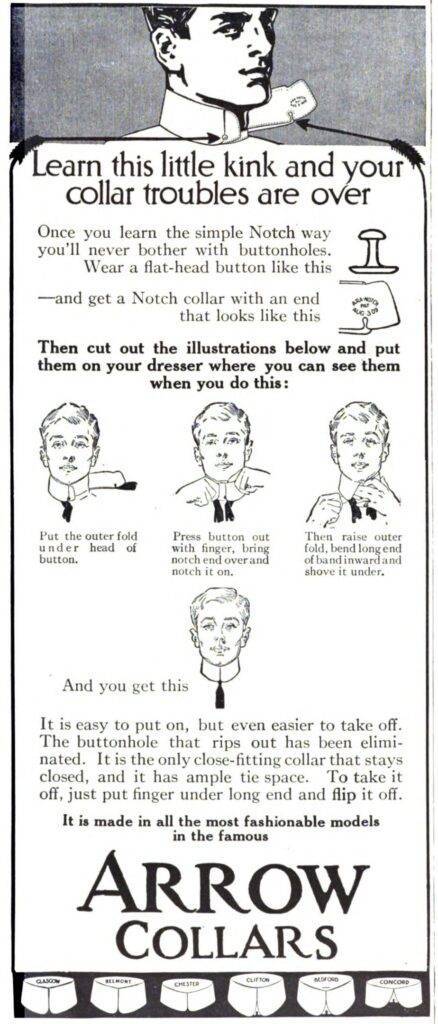
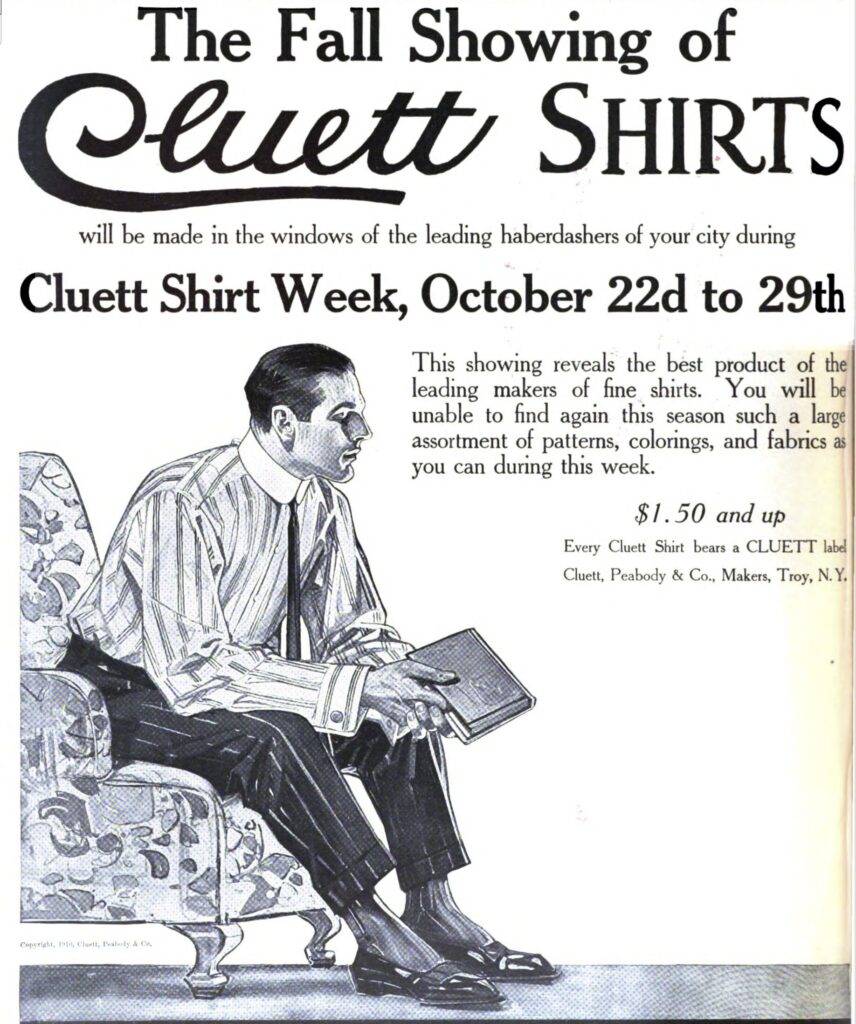
1910 Life v.56 pt.2 1910
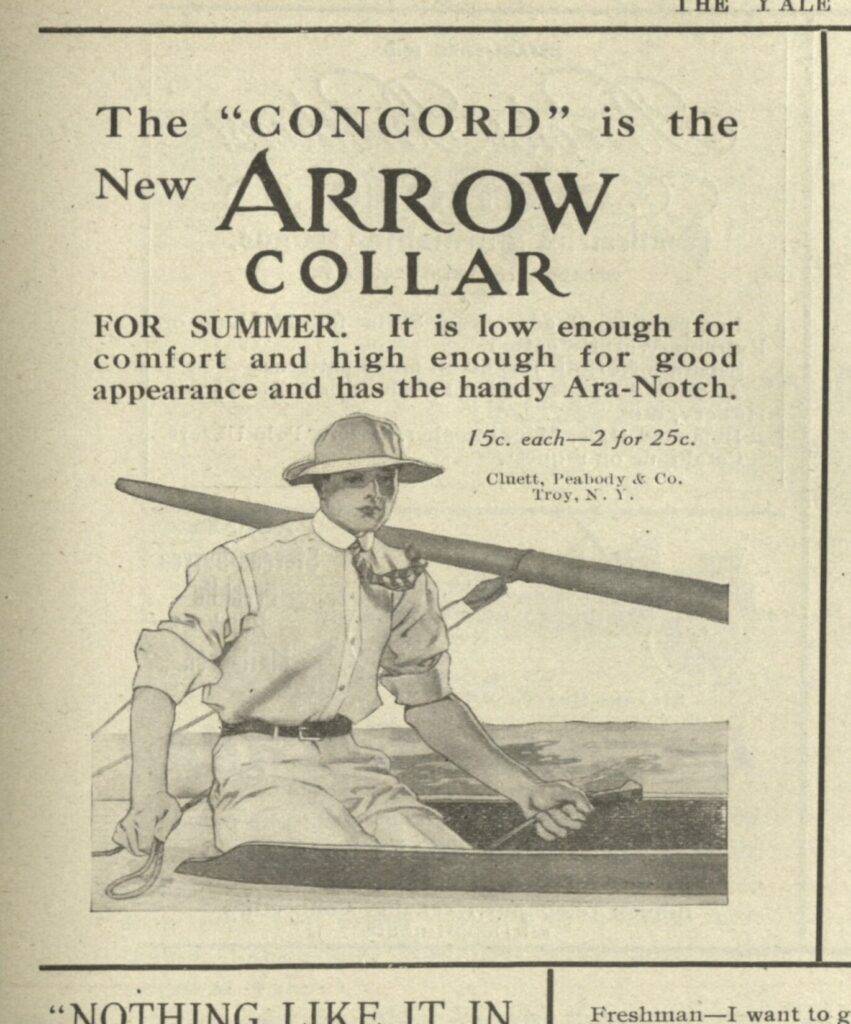
1910 The Yale record v. 38, no. 14, 1910
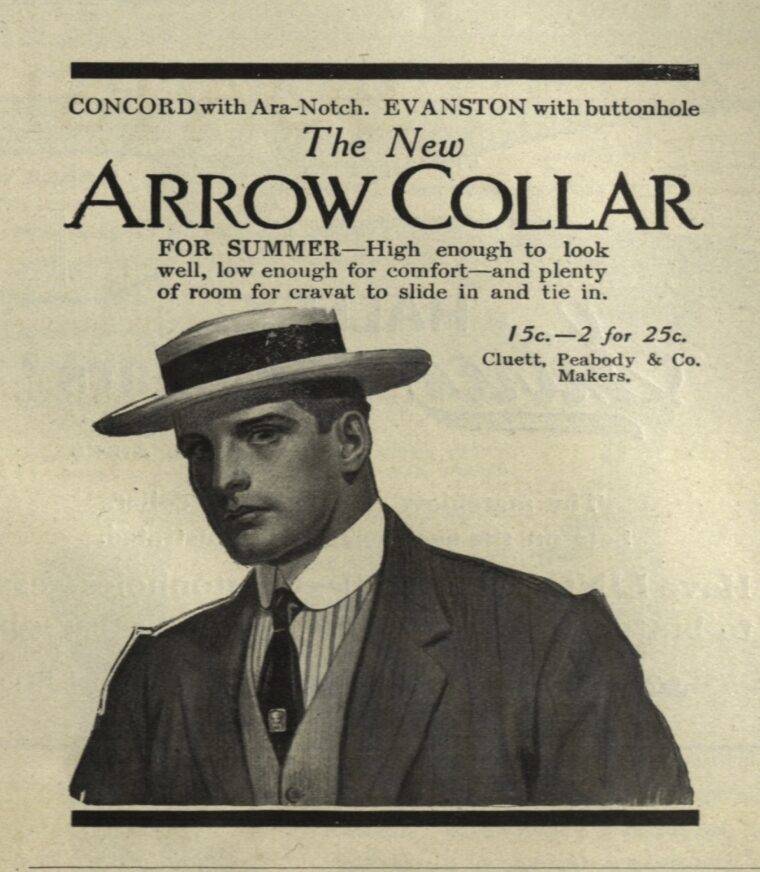
1910 The Yale record v. 38, no. 11, 1910
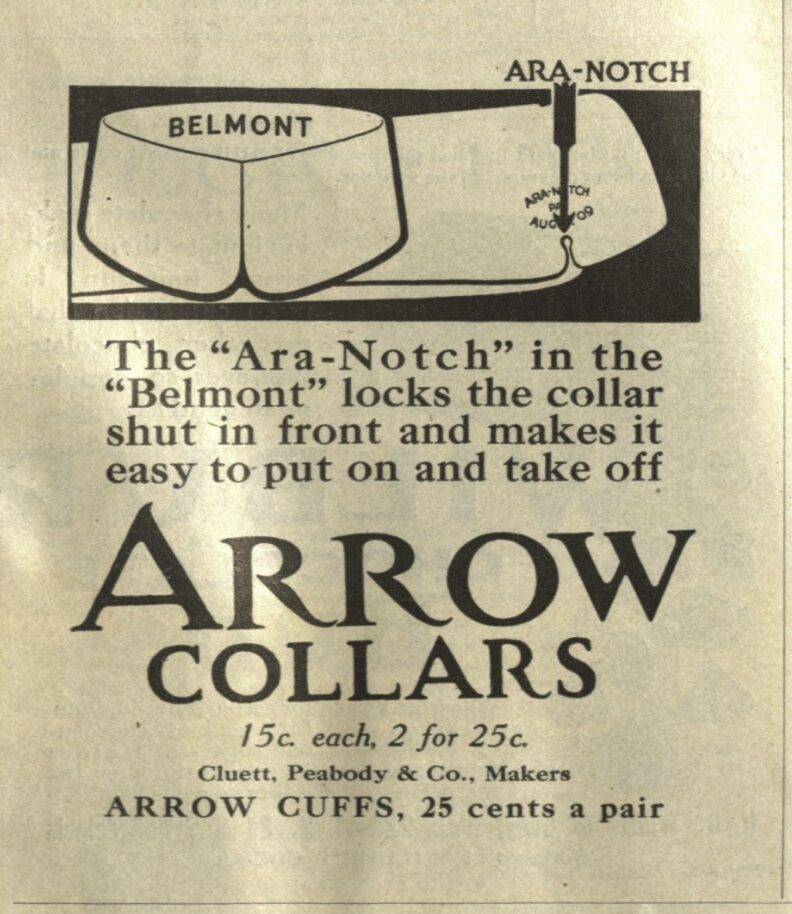
1910 The Yale record v. 38, no. 6, 1910
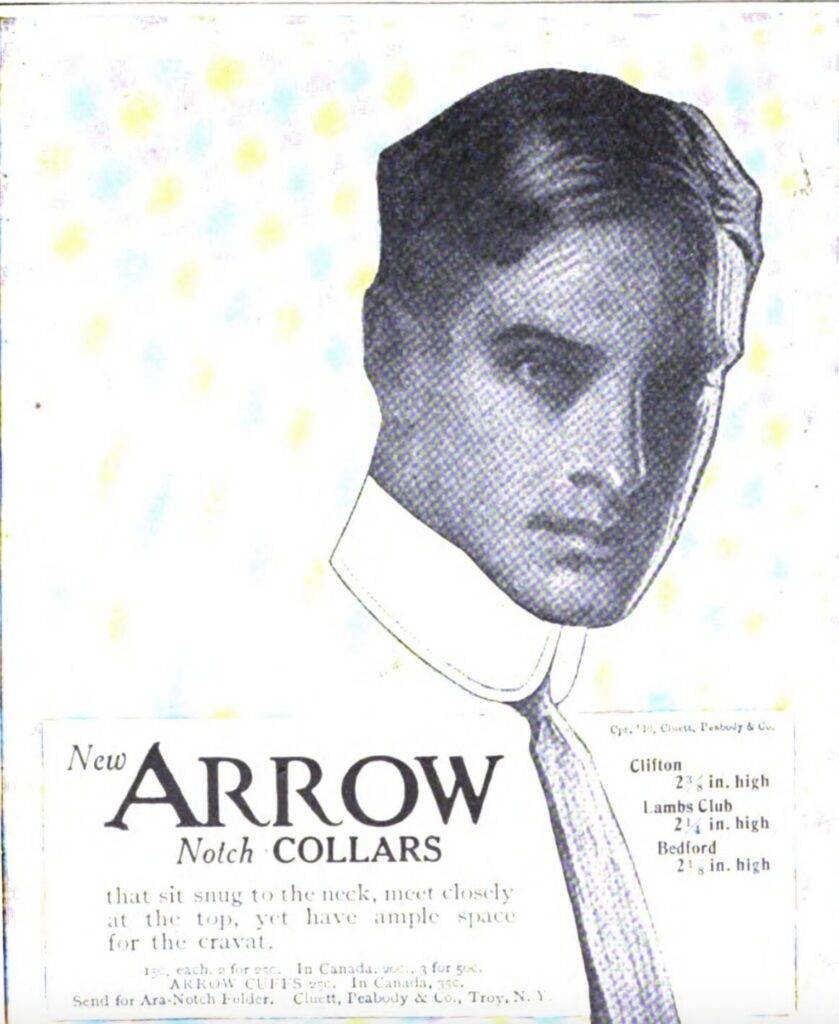
1910 Life v.56 pt.2 1910

Arrow shirt collars print ad about 1900-10s
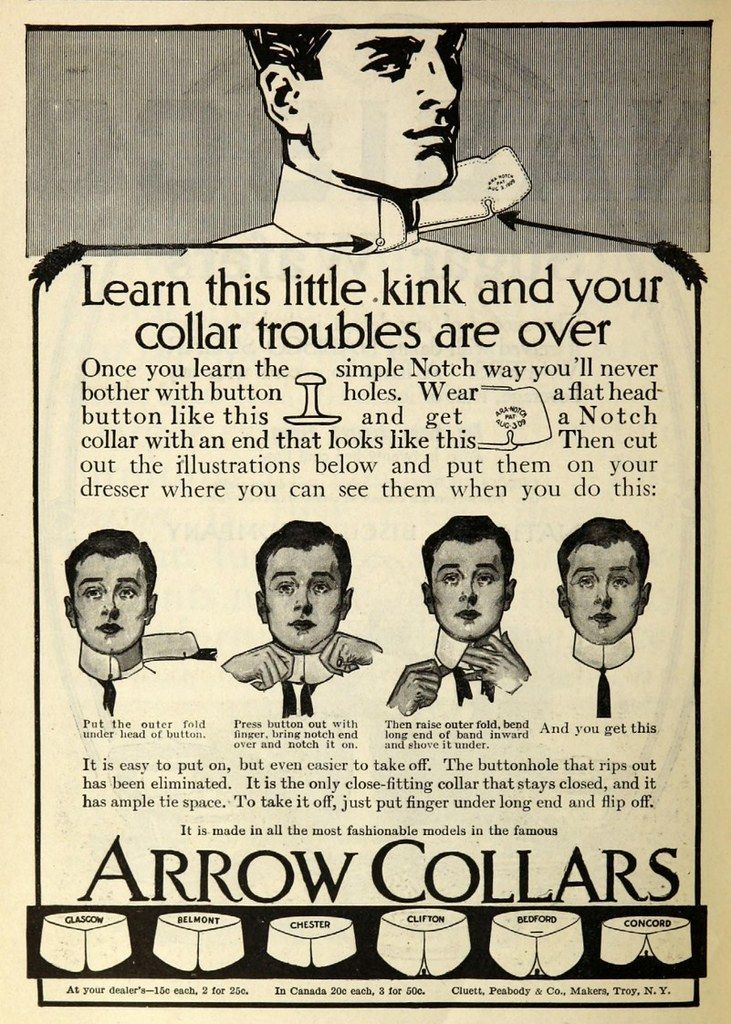
Arrow Collars – 1910 McClure’s Magazine, October 1910
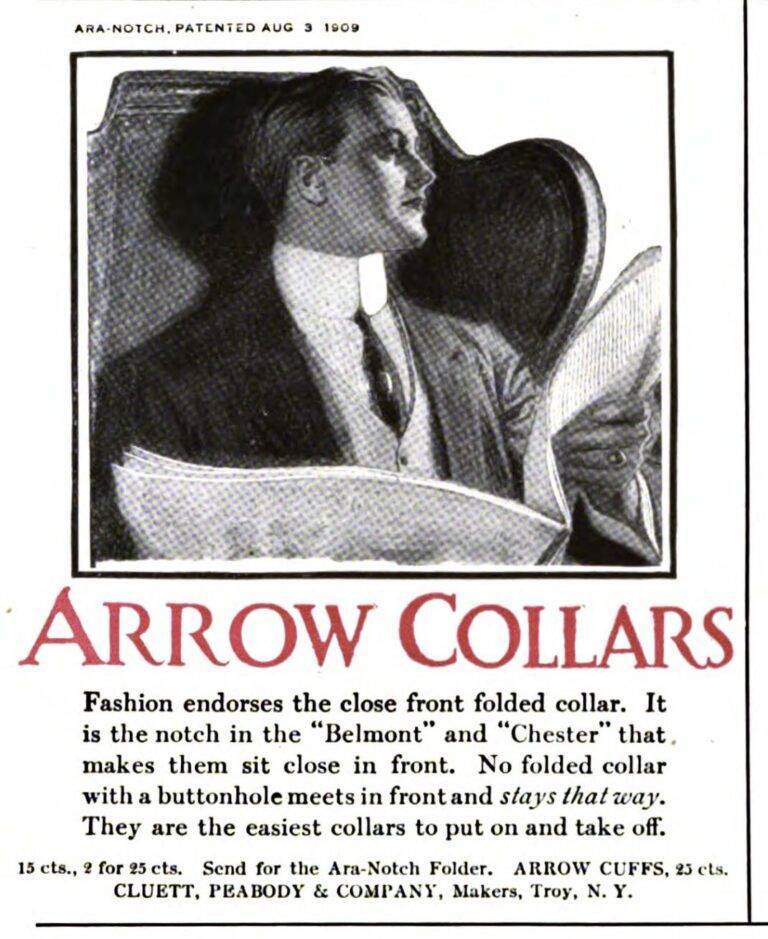
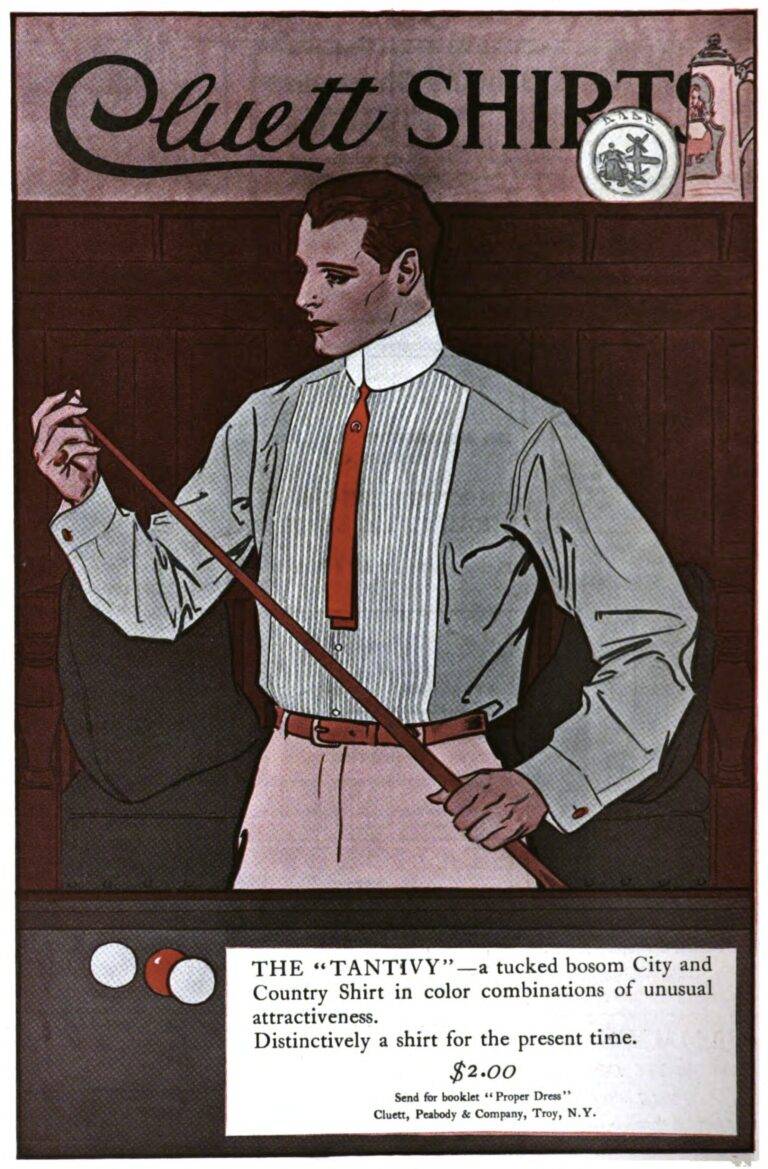
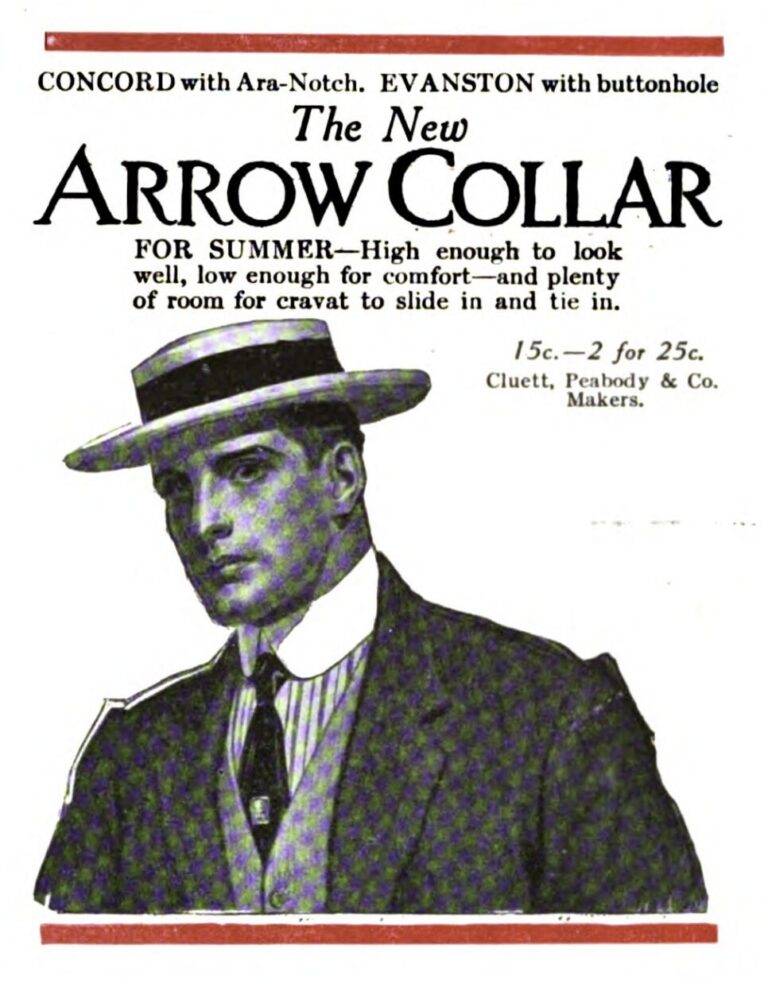
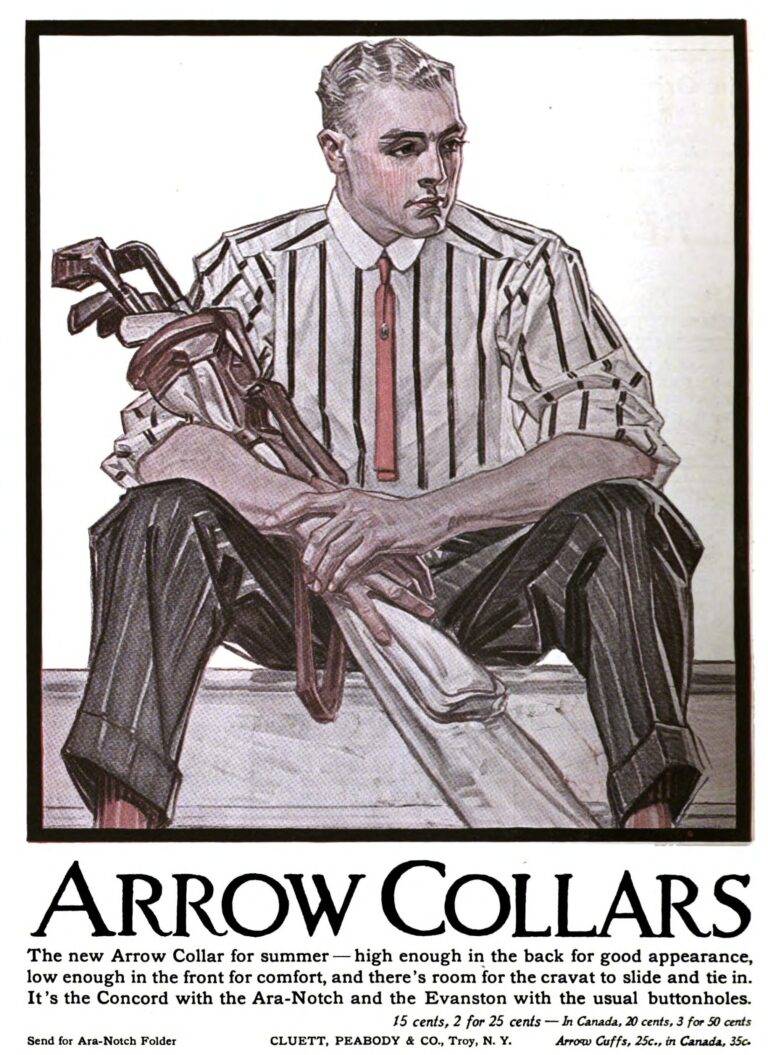
1910 The Harvard lampoon ser.2:v.58-59 (1909-1910)

1911 The Clothier and furnisher v. 79 (Aug. 1911-Jan. 1912)
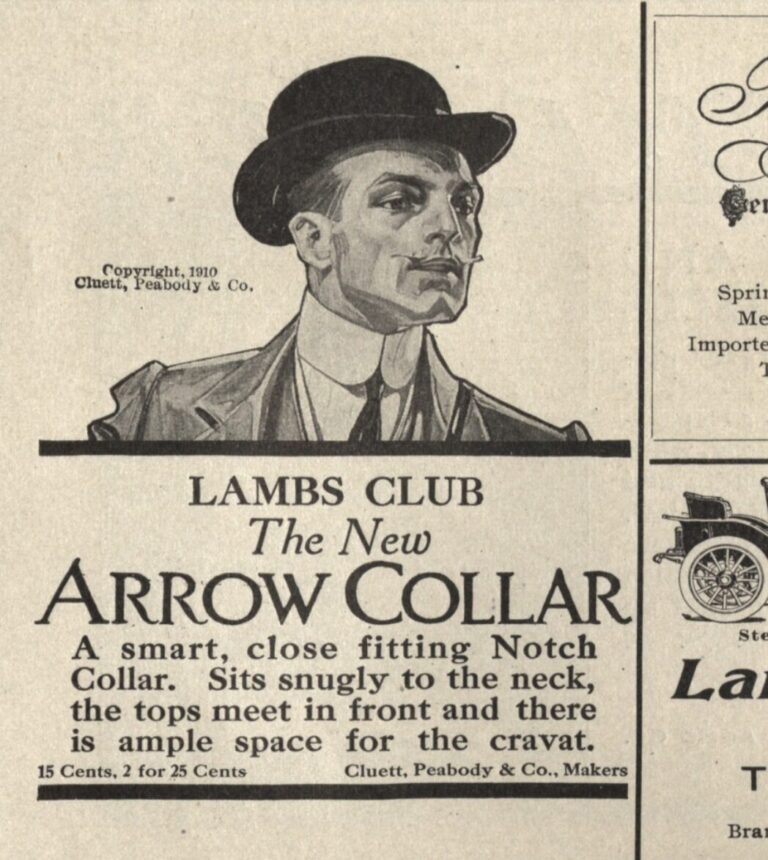
1911 The Yale record v. 39, no. 11, 4/1/1911
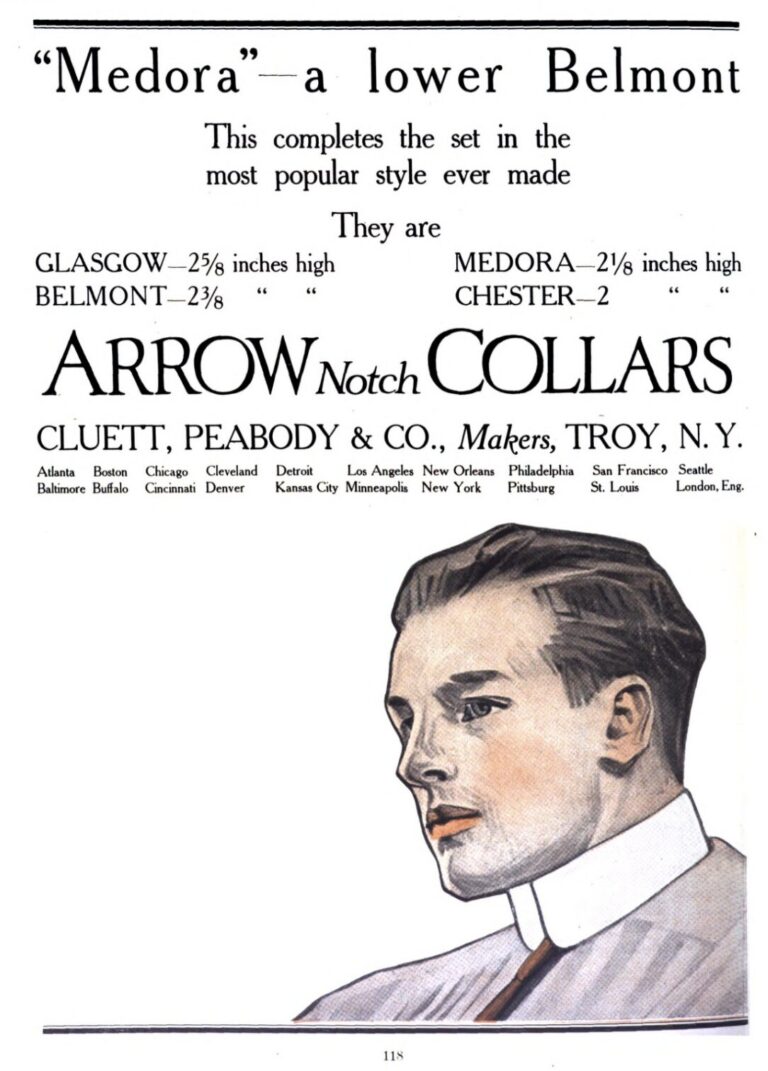
1912 The Clothier and furnisher v. 80 (1912)

1912 The Clothier and furnisher v. 80 (1912)
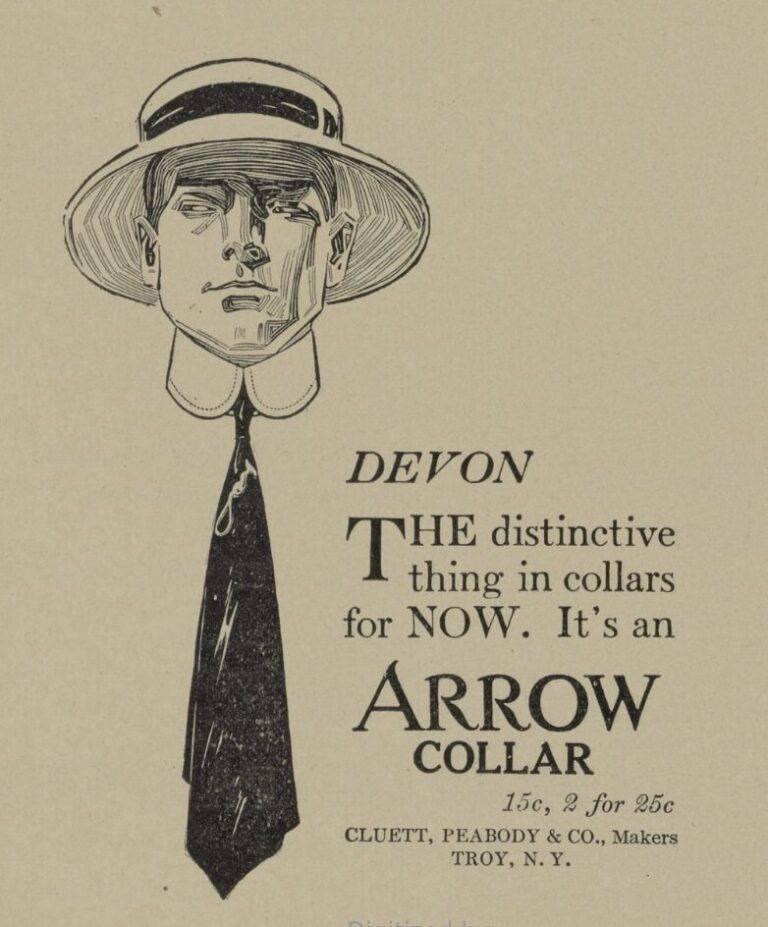
1912 The Yale record v. 40, no. 14, 5/18/1912
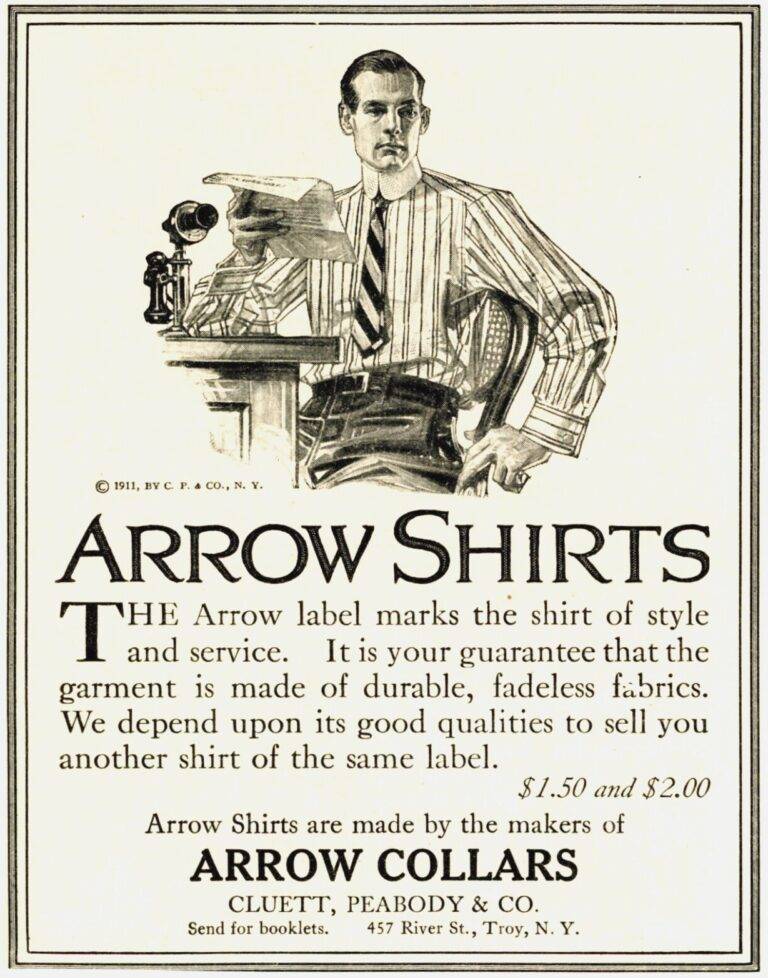
1912 Original Arrow Shirts
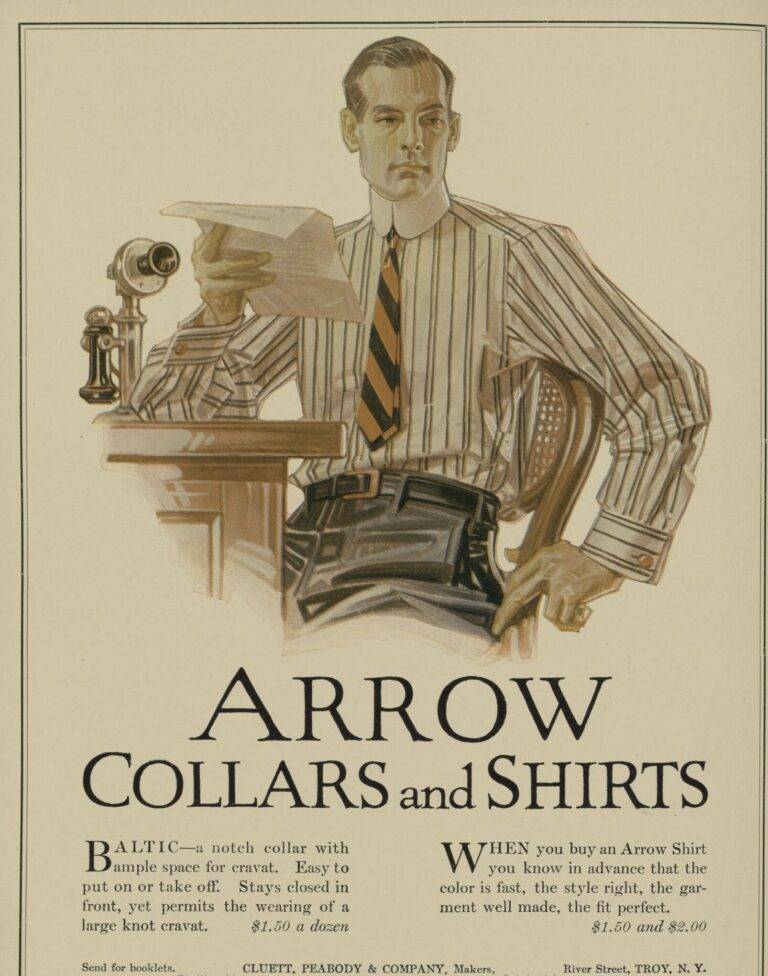
1912 The Yale record v. 40, no. 12, 4/20/1912
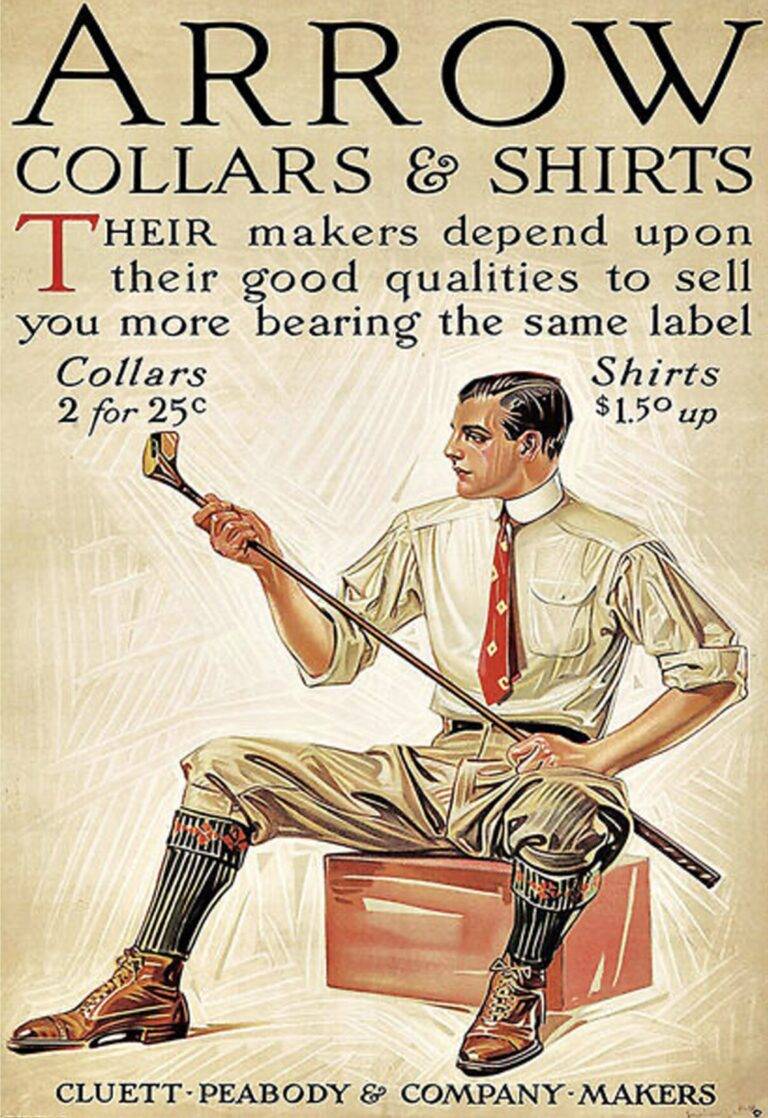
Arrow Collars and Shirts 1912
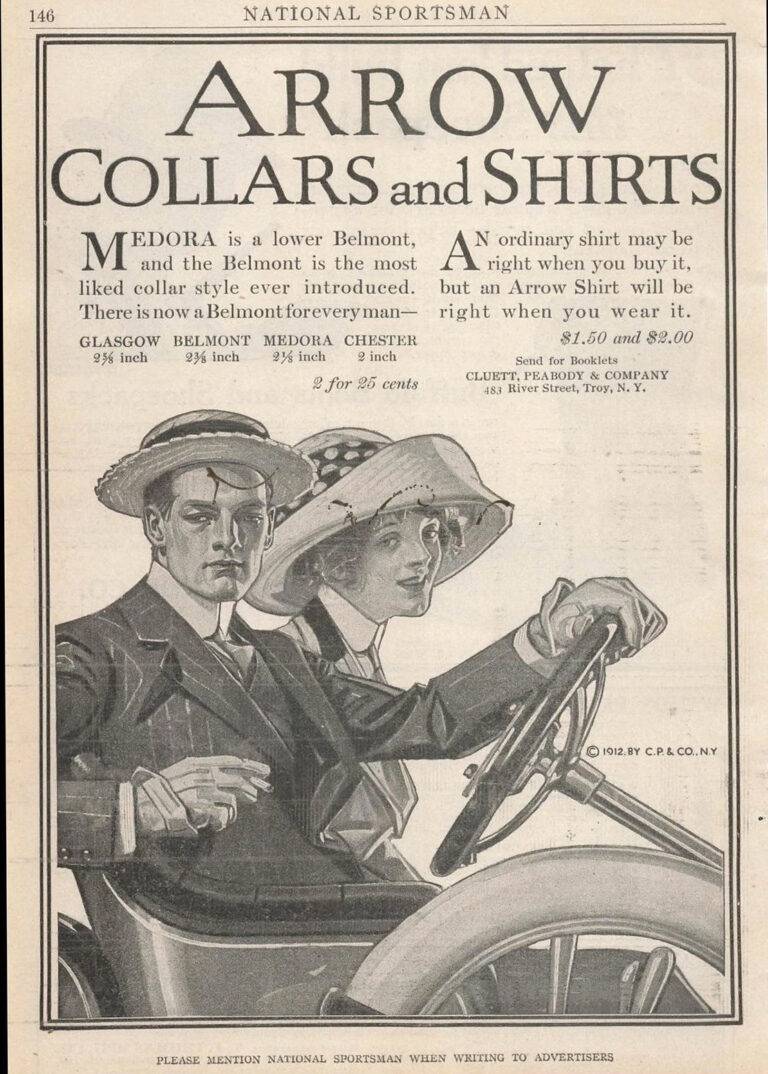
1912 J C Leyendecker Automobile Art Arrow Shirt
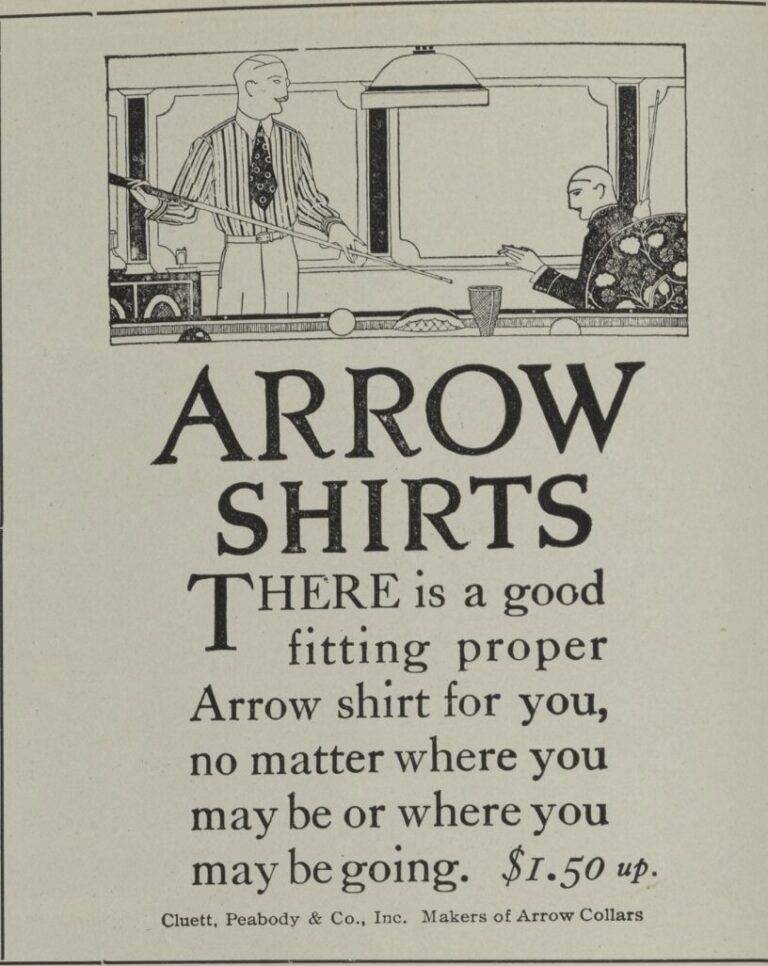
1913 The Yale record v. 42, no. 2, 10/24/1913
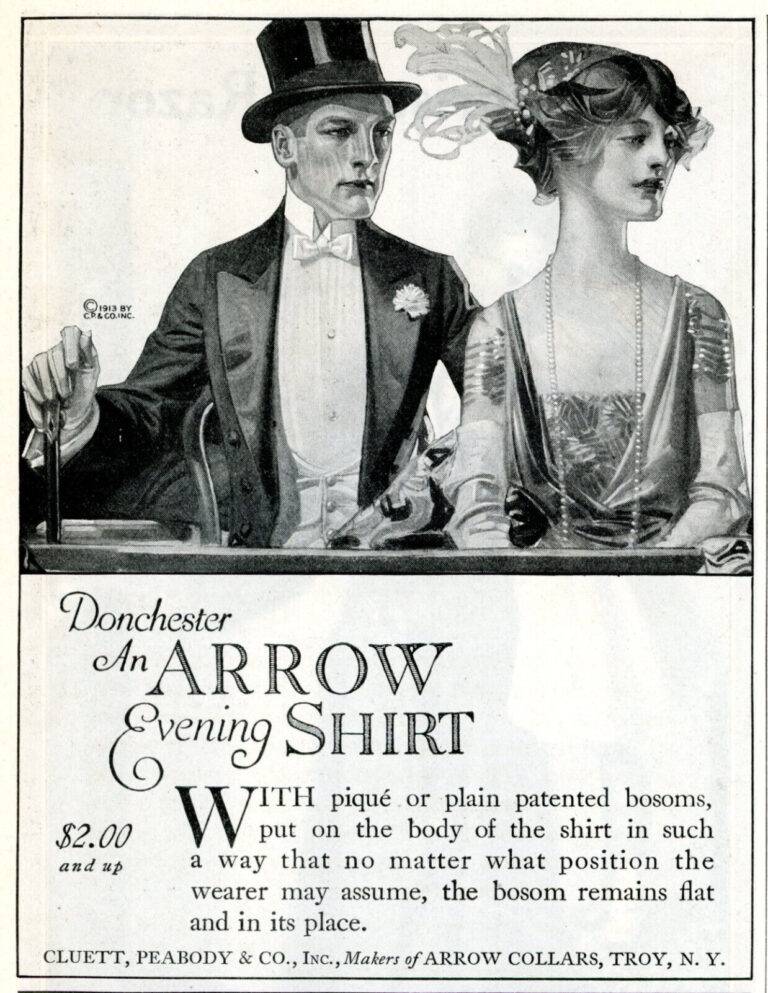
1913 Original Arrow Evening Shirts Ad
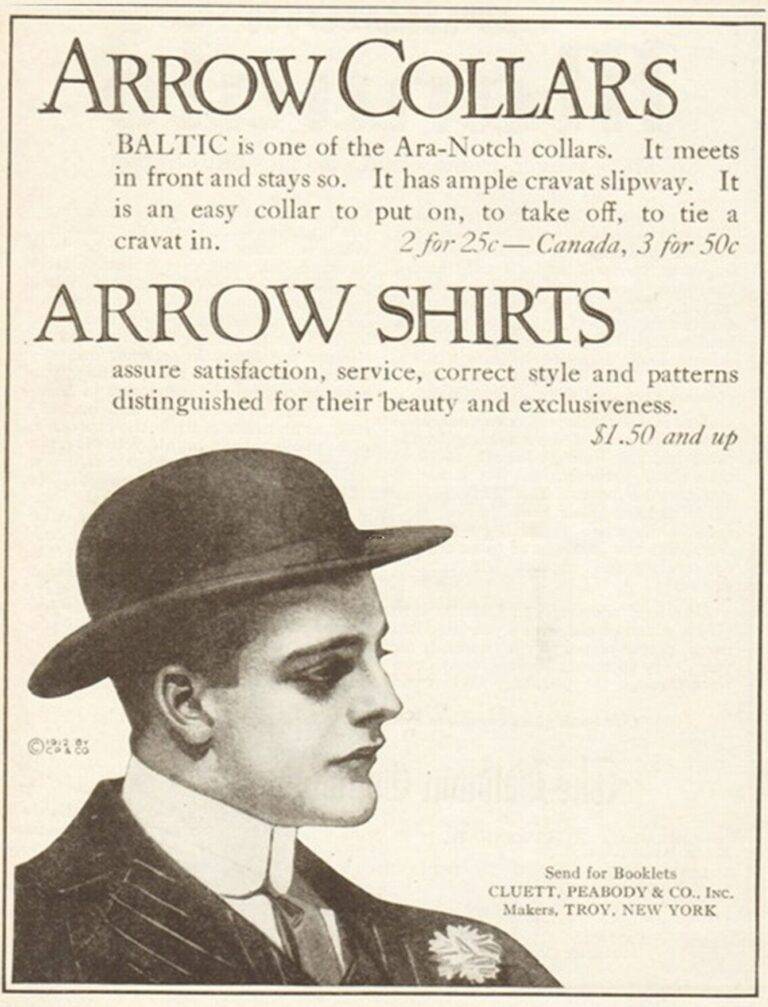
1913 Arrow Collars and Shirts Cluett & Peabody Antique Original Print
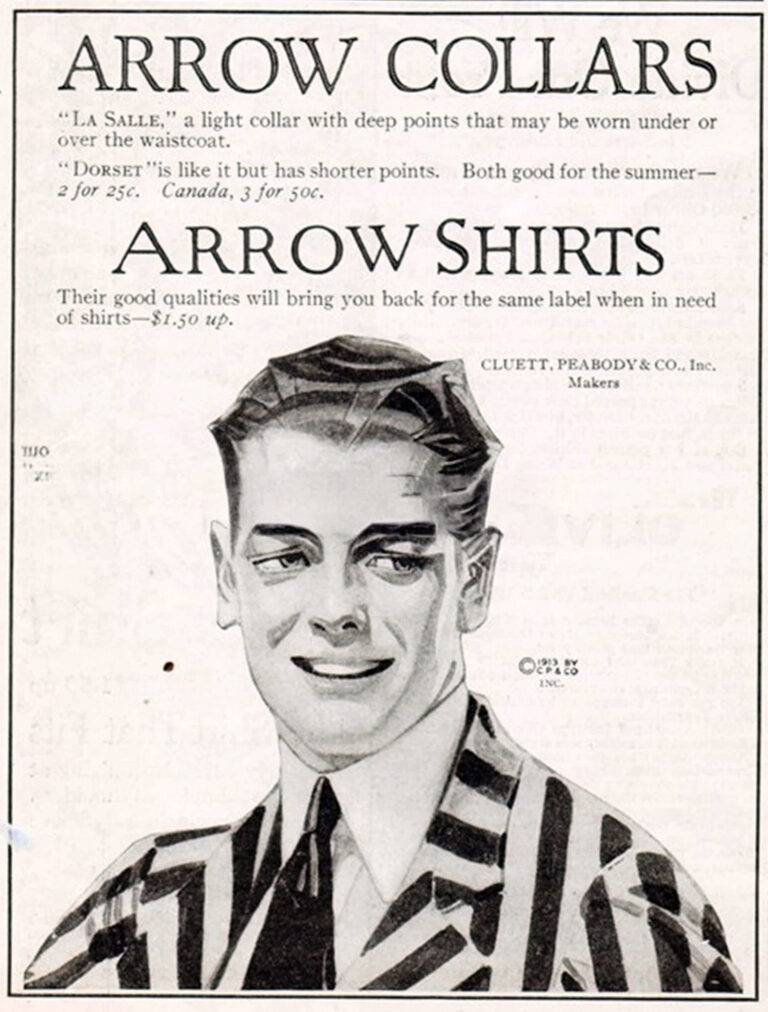
1913 JC Leyendecker Arrow Shirt

1913 JC Leyendecker Arrow Shirt

1913 Arrow Collar Magazine Ad in “The Saturday Evening Post” (June 7, 1913).
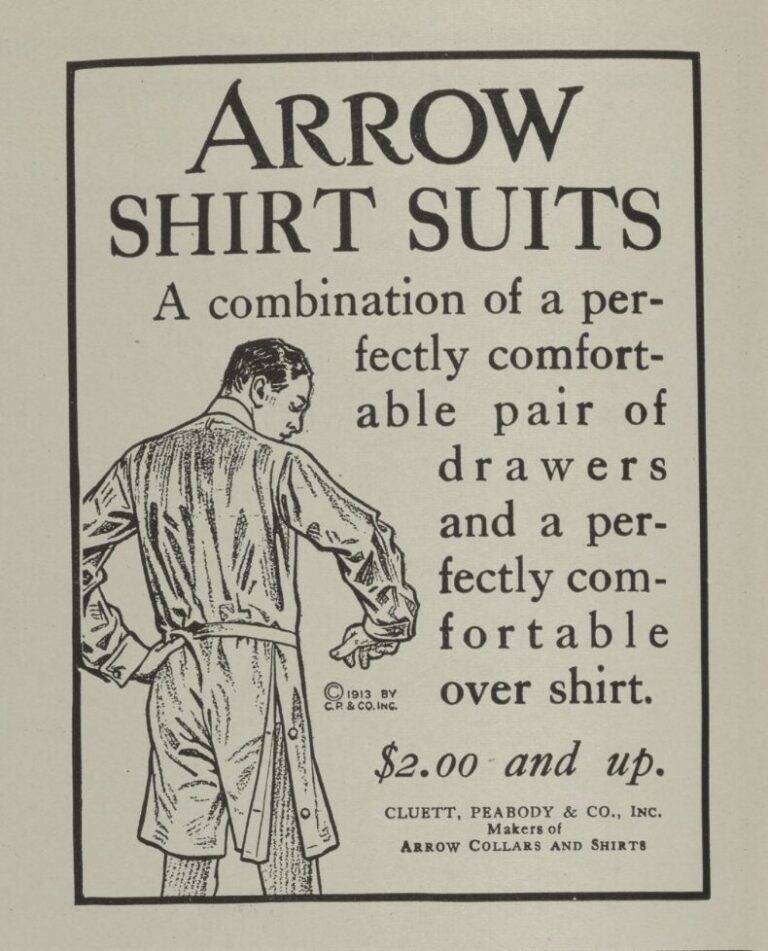
1913 The Yale record v. 42, no. 12, 1913-1914?
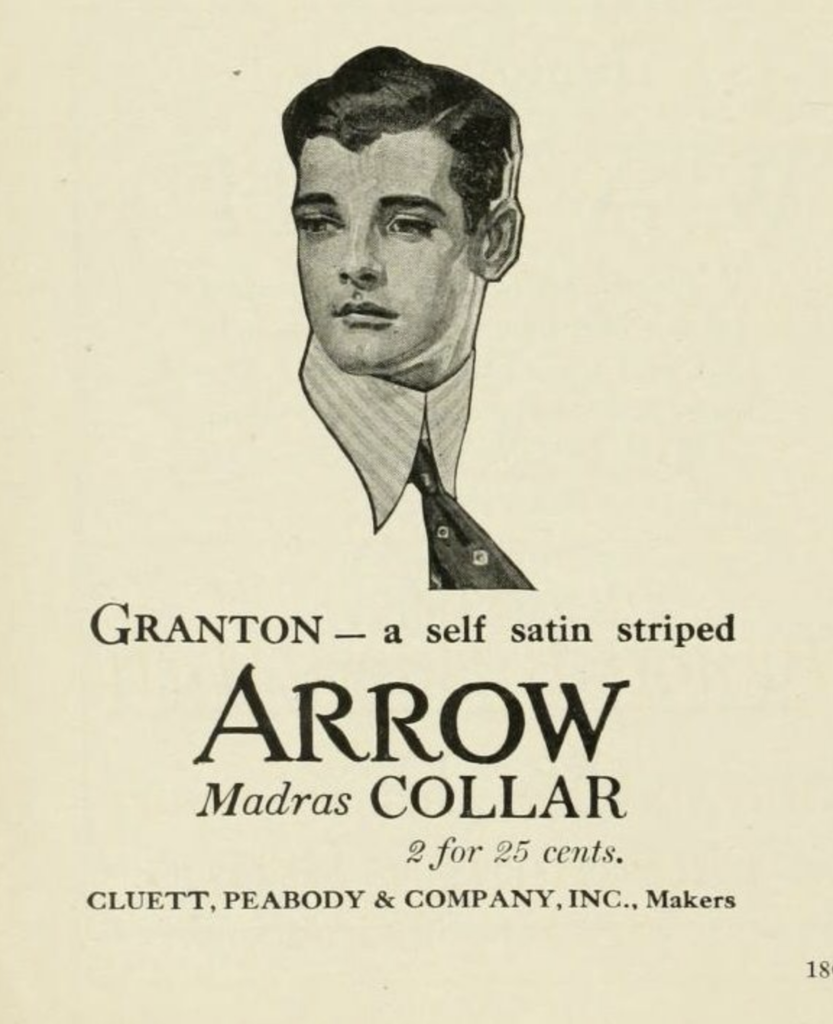
Cluett, Peabody & Co., “Granton” Collar. The Siren, September 1913.
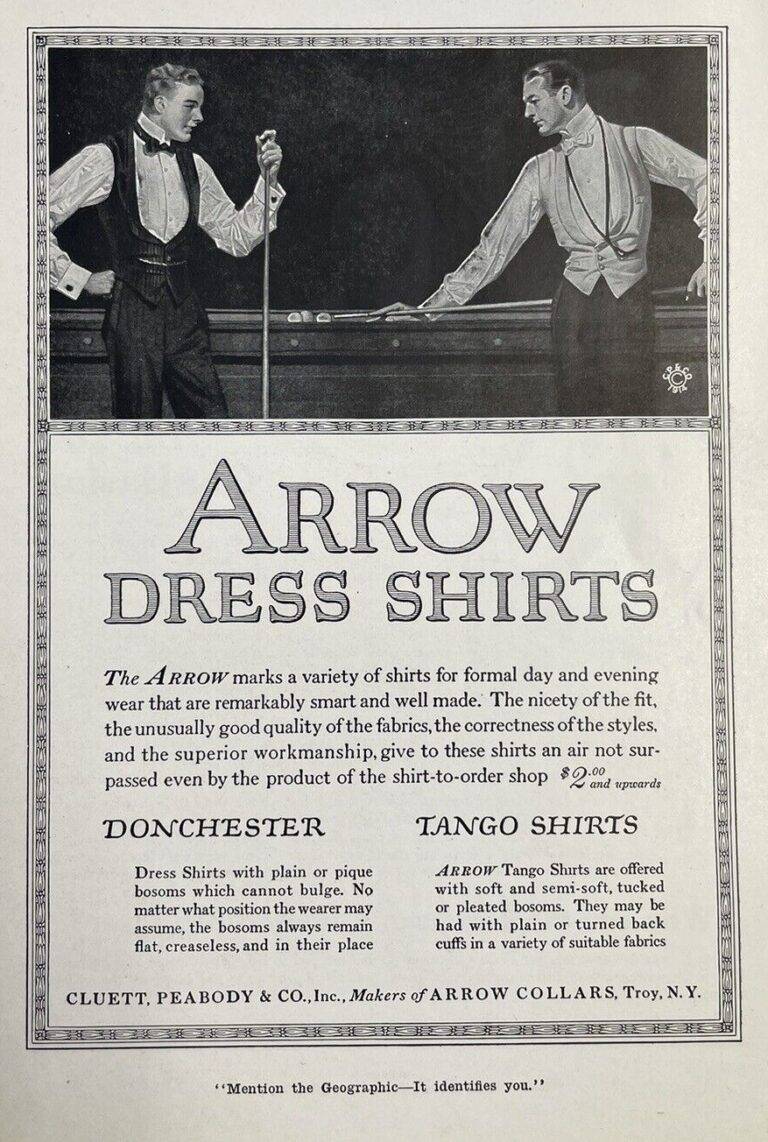
1914 Arrow Dress Shirts
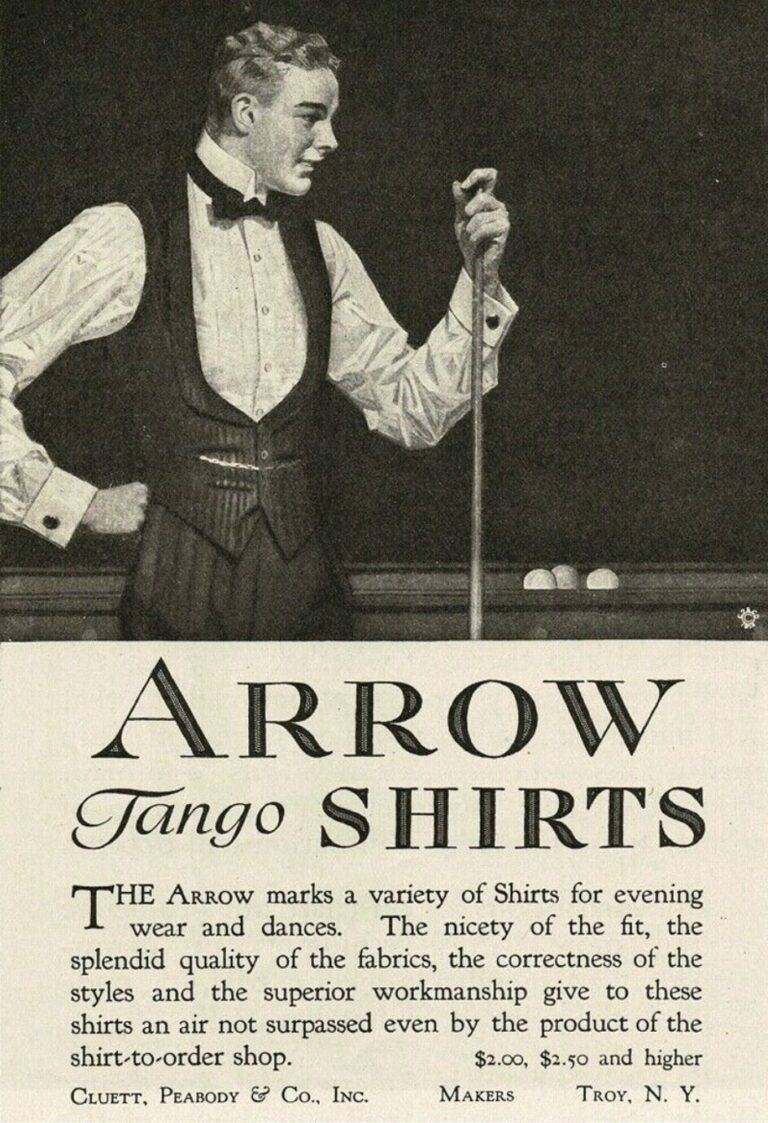
1914 ARROW Tango Shirts
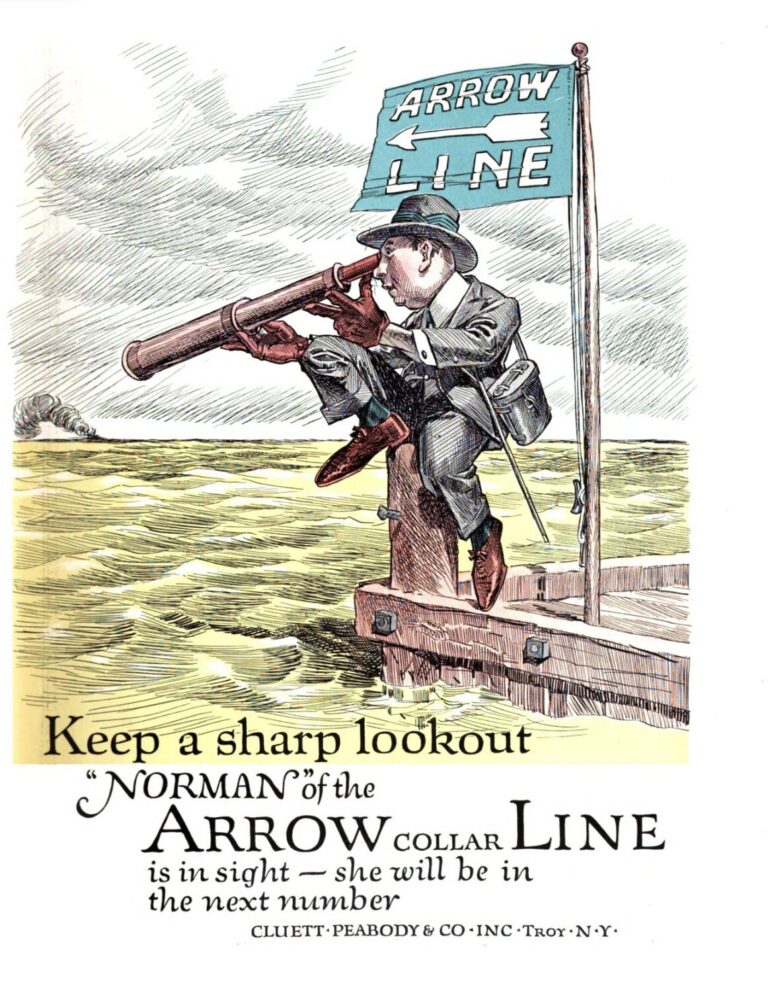
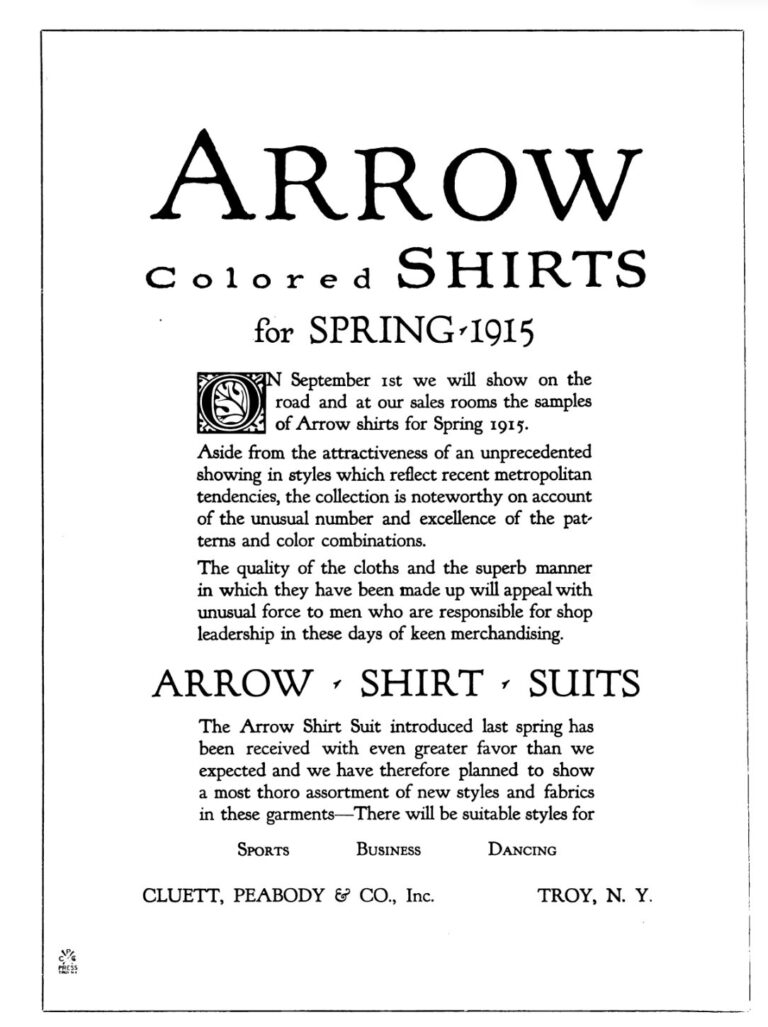
1914 The Clothier and furnisher v. 85
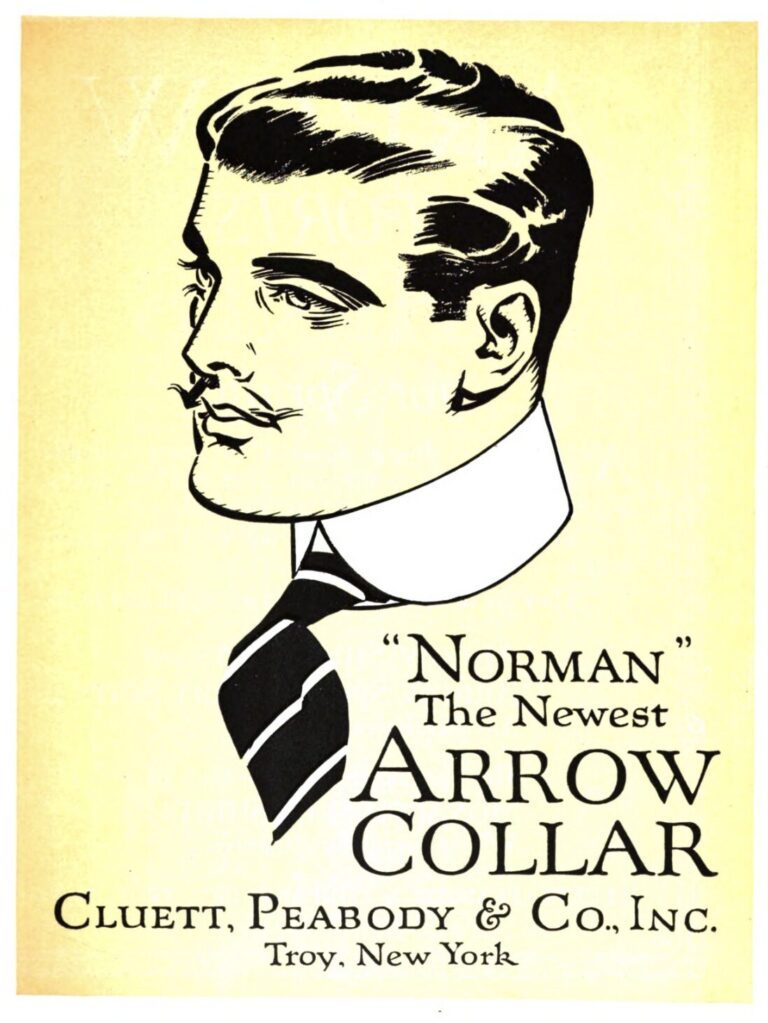
1914 The Clothier and furnisher v. 85
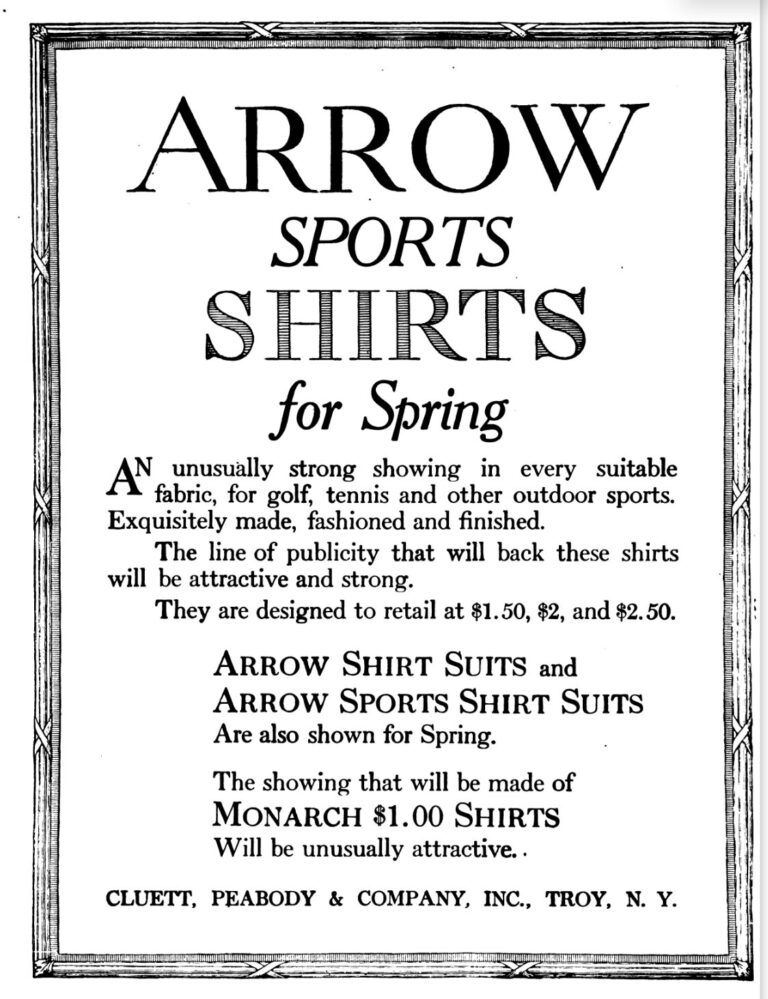
1914 The Clothier and furnisher v. 85
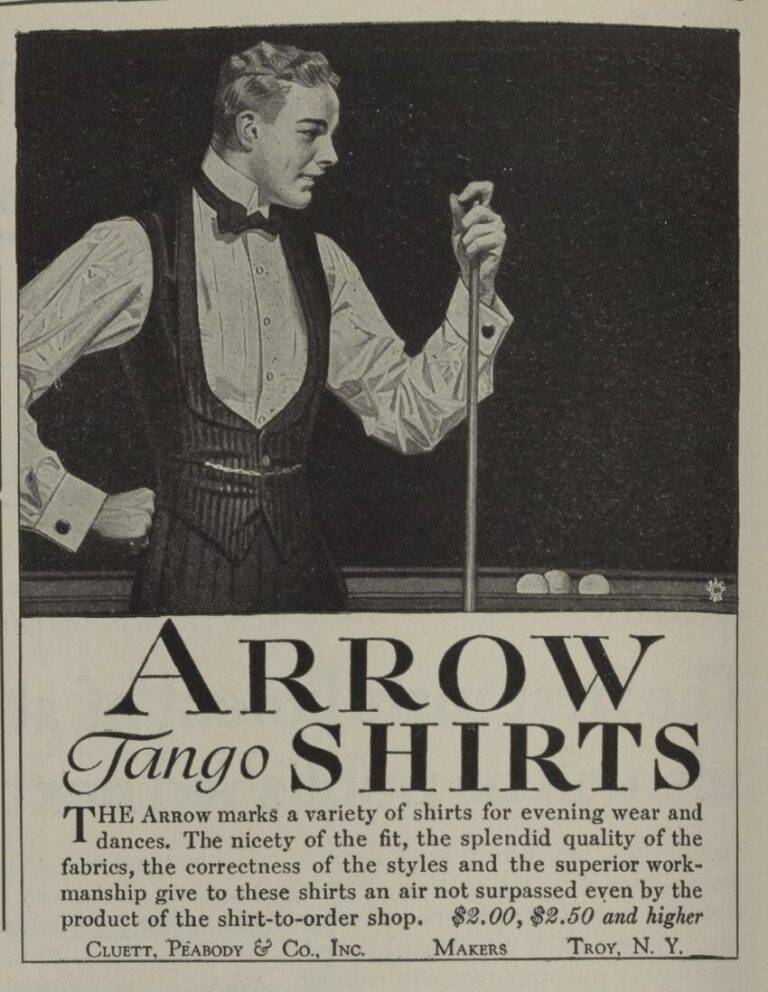
1914 The Yale record v. 43, no. 4, 1914-1915?
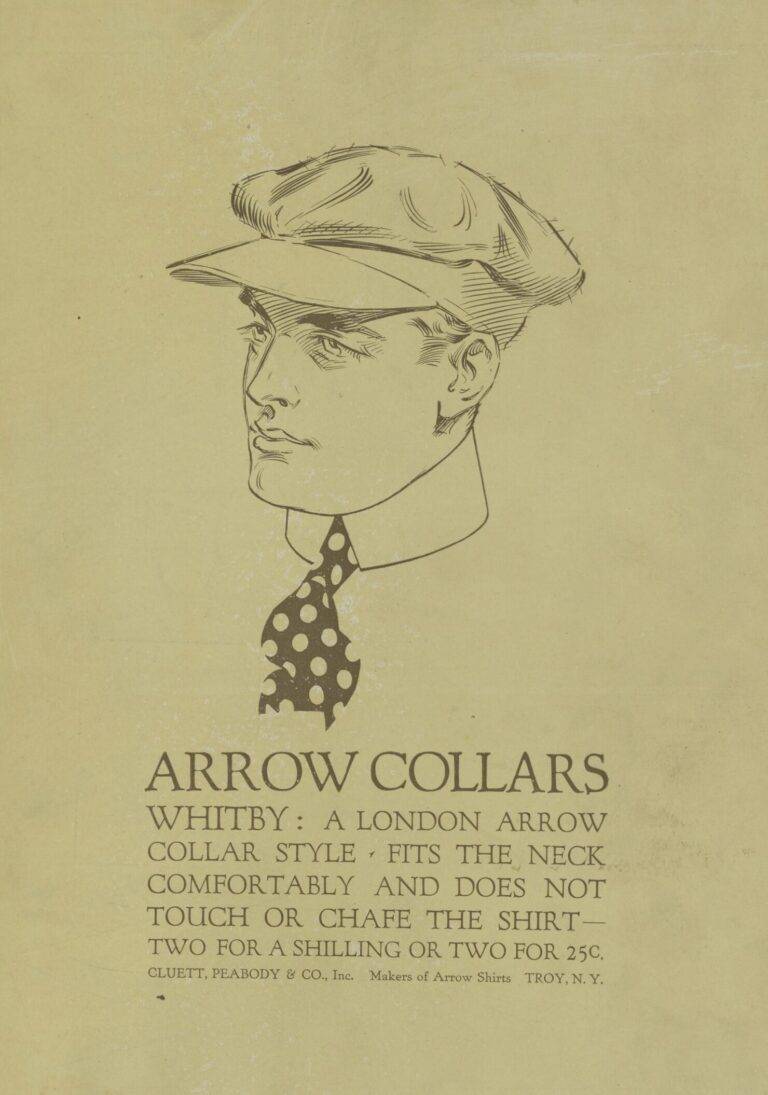
1914 The Yale record v. 42, no. 16, 6/13/1914
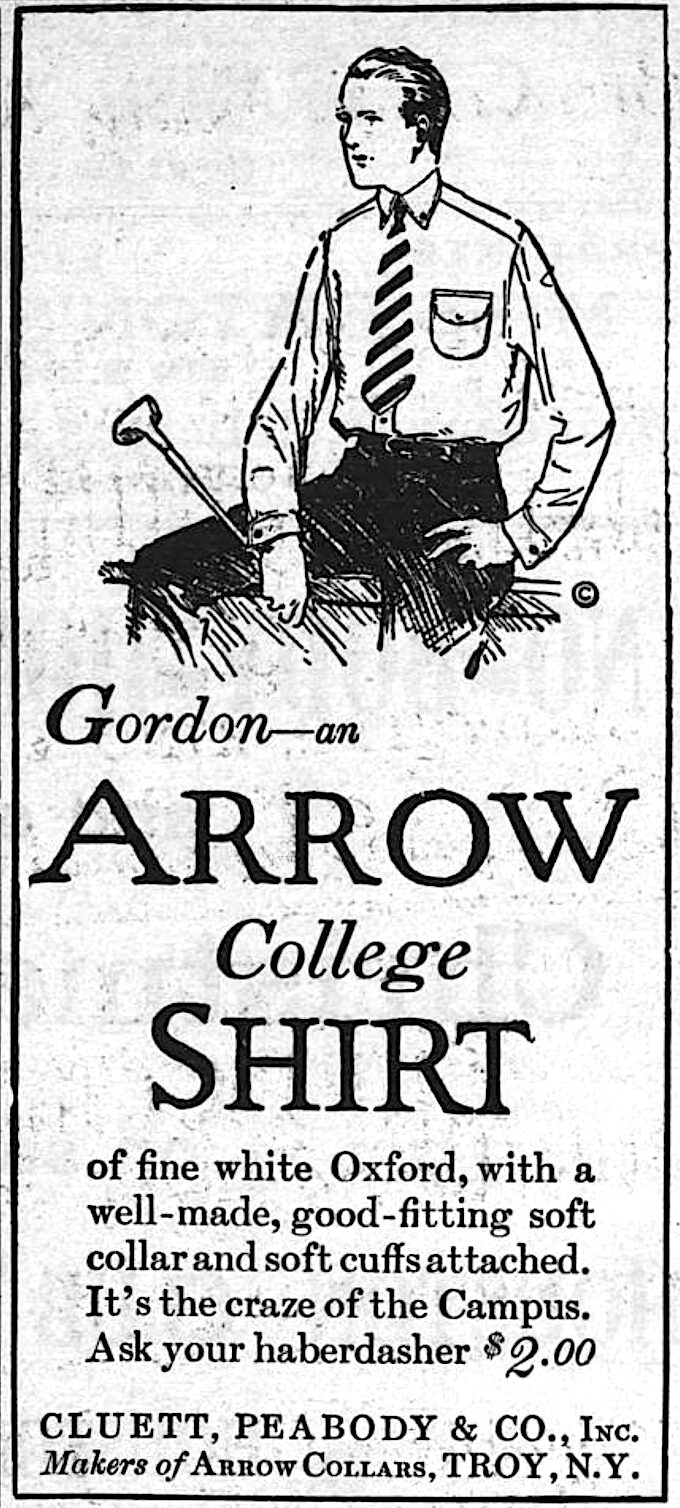
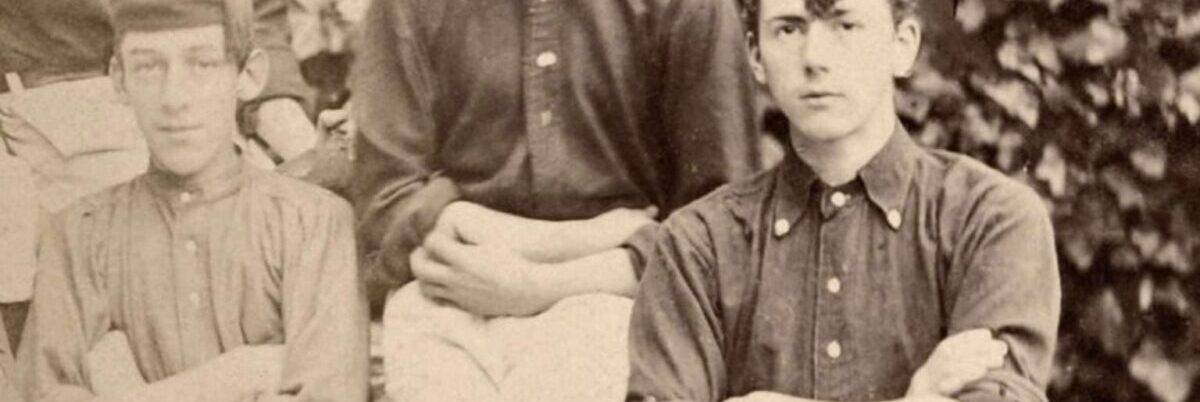
The advertisement published in The Daily Pennsylvanian on December 19, 1914, by ARROW (Cluett, Peabody & Co.) demonstrates that shirts featuring a soft (unstarched) collar sewn to the shirt body and secured with buttons at the collar points already existed at that time as ready-made garments for college students.The advertisement text explicitly states “soft collar … attached,” while the accompanying illustration clearly depicts a structure in which the collar points are fastened with buttons. This constitutes primary evidence that what would later be termed the button-down collar had already been put into practical use by 1914.
The acceptance of this specification within the college market can be attributed to student demand for washable, attached soft collars as an alternative to detachable collar systems. This shift was first systematized by Brooks Brothers, where the button-down collar initially became established as a sports shirt for upper-class consumers. ARROW, in turn, presented this construction as a ready-made shirt for college students and promoted it within the explicit framework of the “College Shirt,” contributing to its wider adoption among the student population.
This illustration makes it definitive that the flap pocket associated with J.Press was not an original invention of the brand.

about 1910s? ARROW
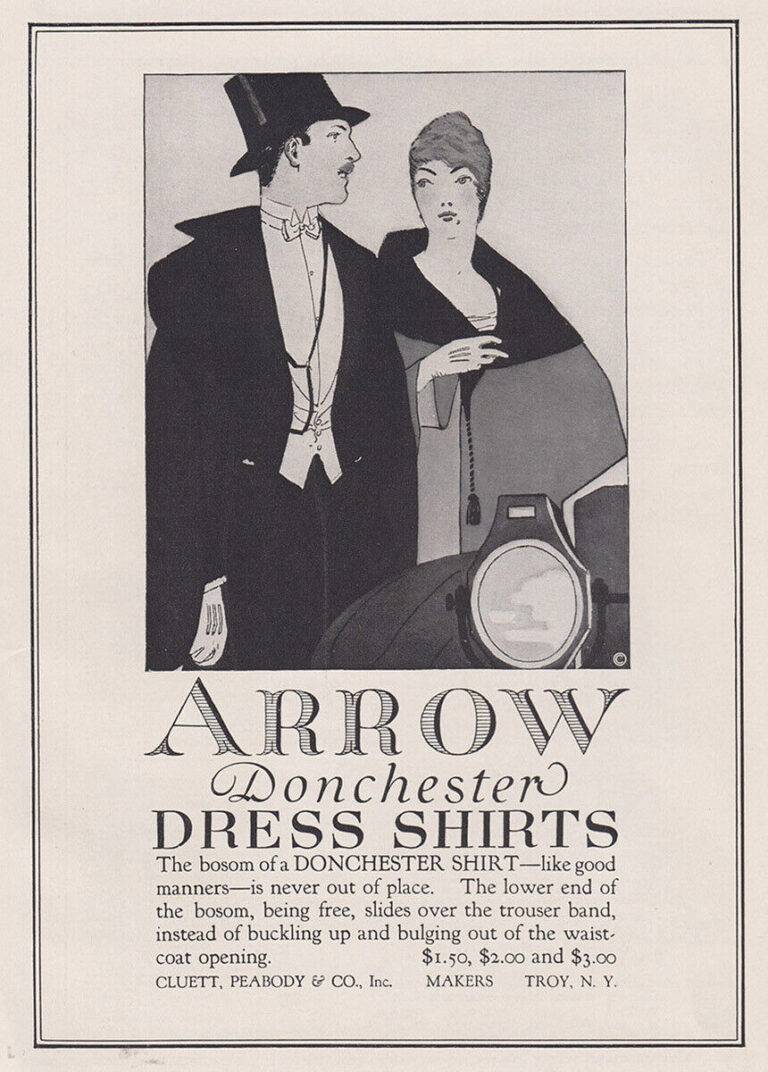
1915 Arrow: Donchester Dress Shirts
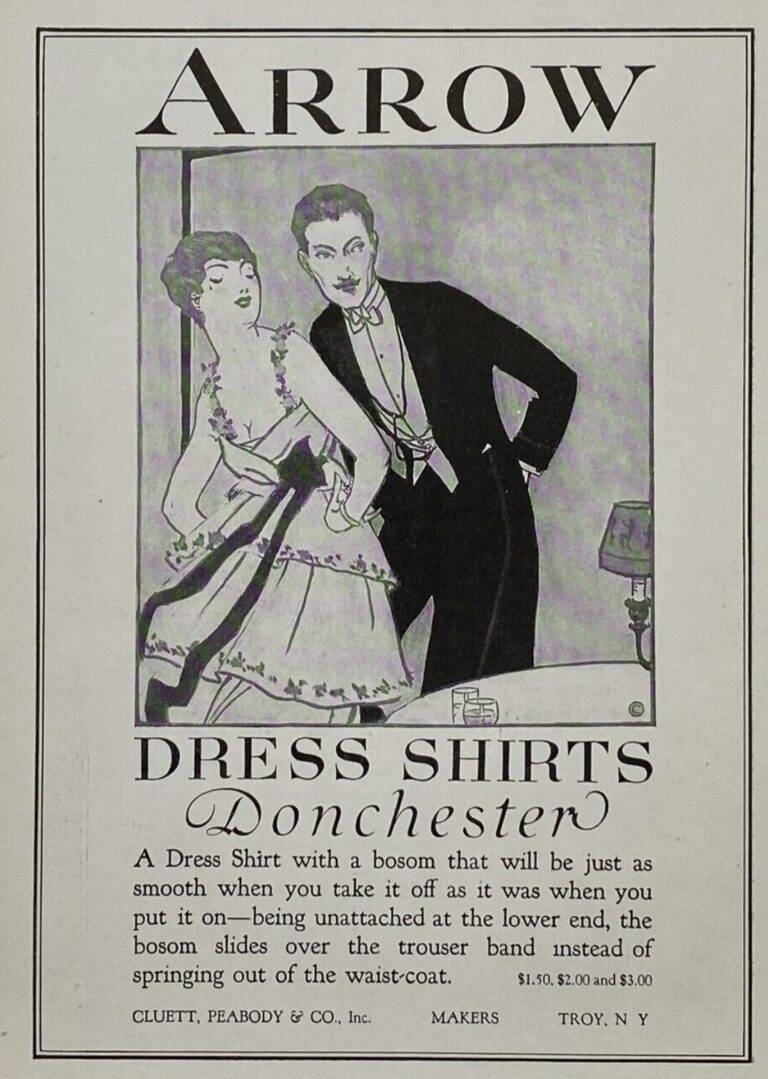
1915 Arrow Donchester Dress Shirts
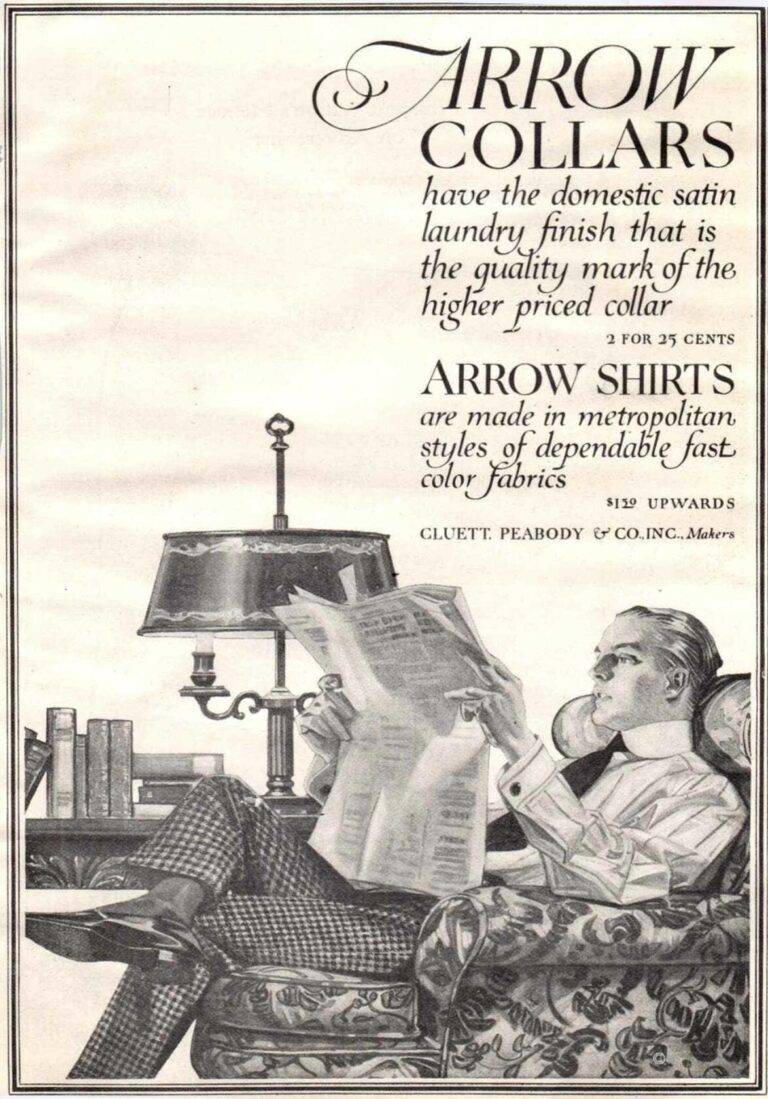
1915 Arrow Shirt Collars
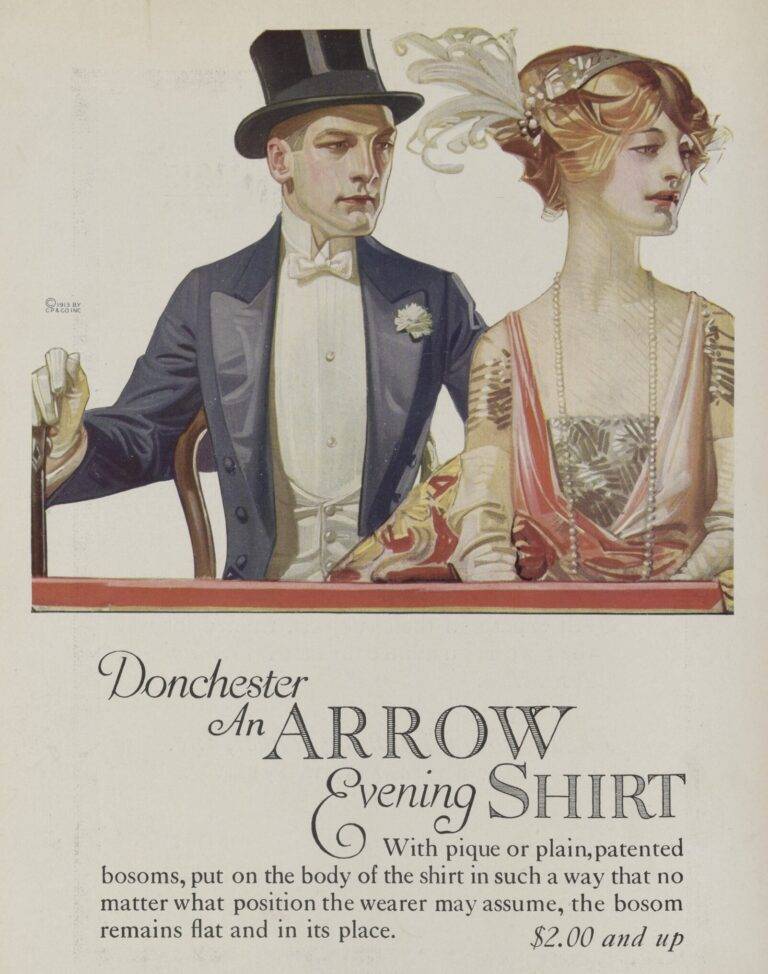
1915 The Yale record v. 43, no. 7, 2/5/1915

1915 The Clothier and furnisher v. 85 (1914-1915)
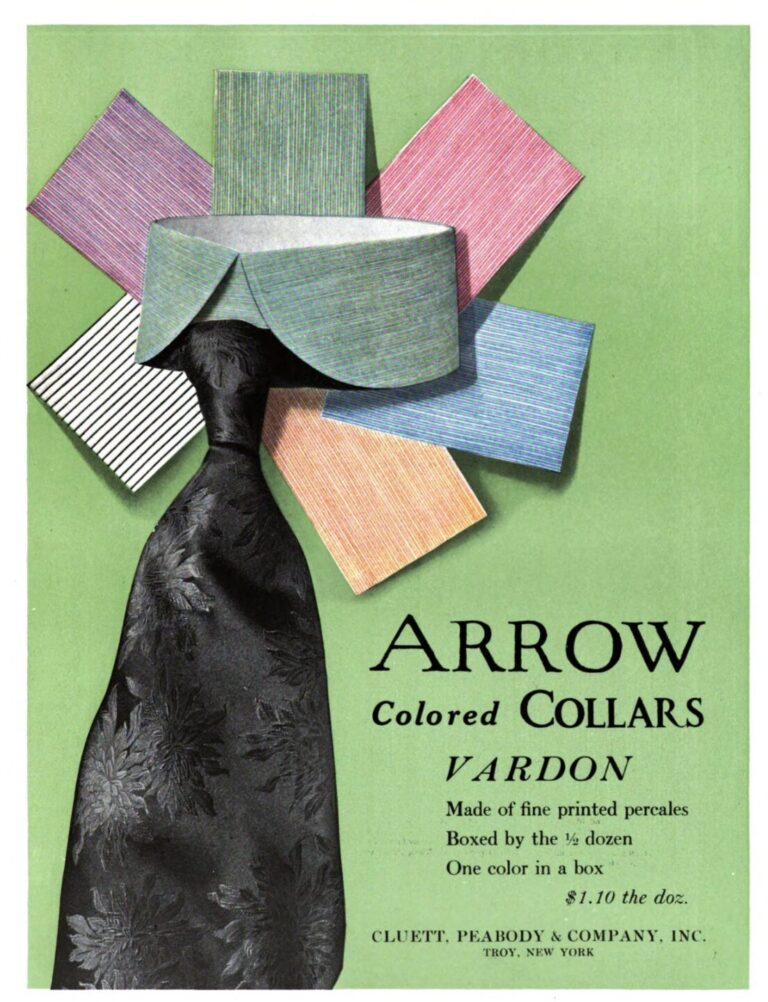

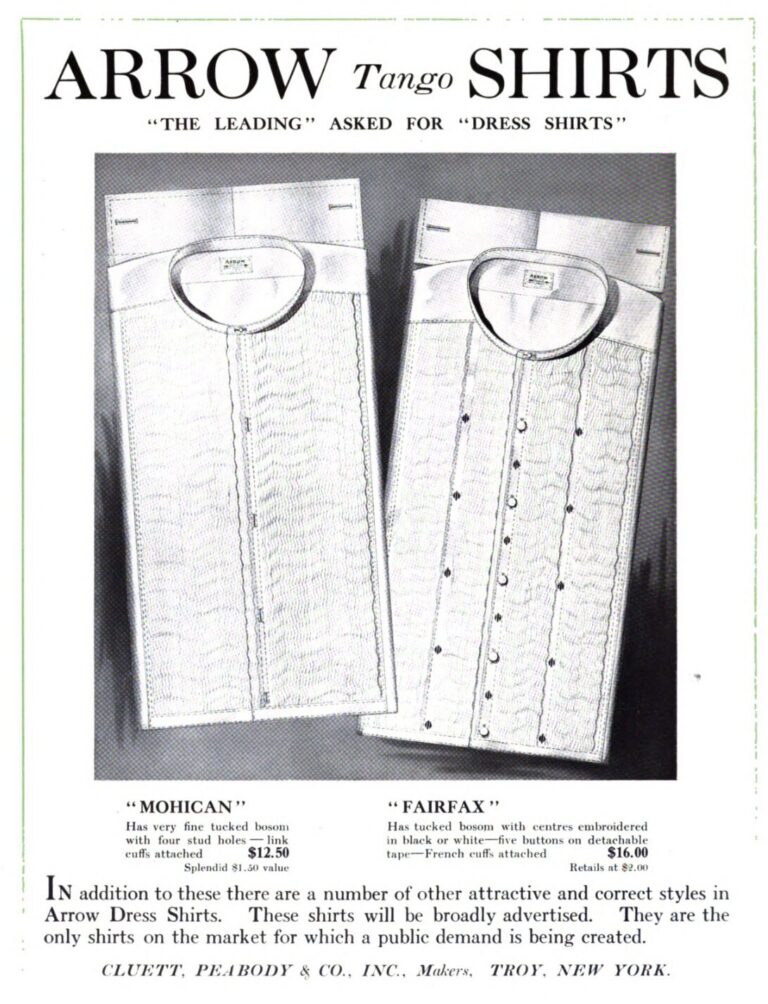
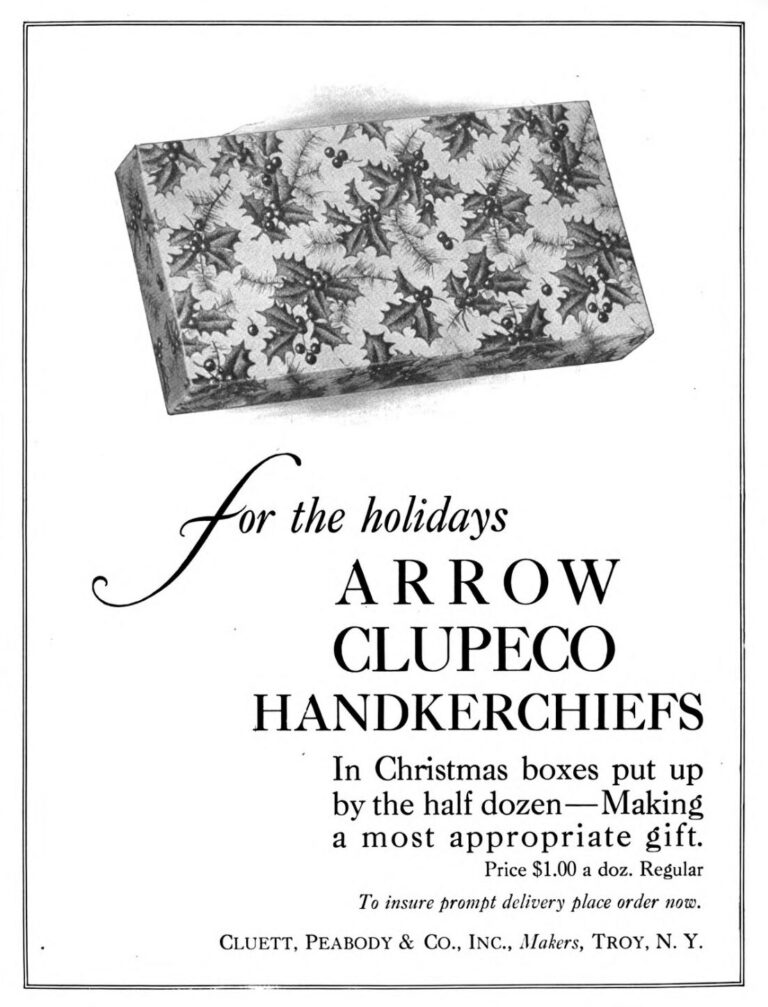
1915 The Clothier and furnisher v. 85 (1914-1915)
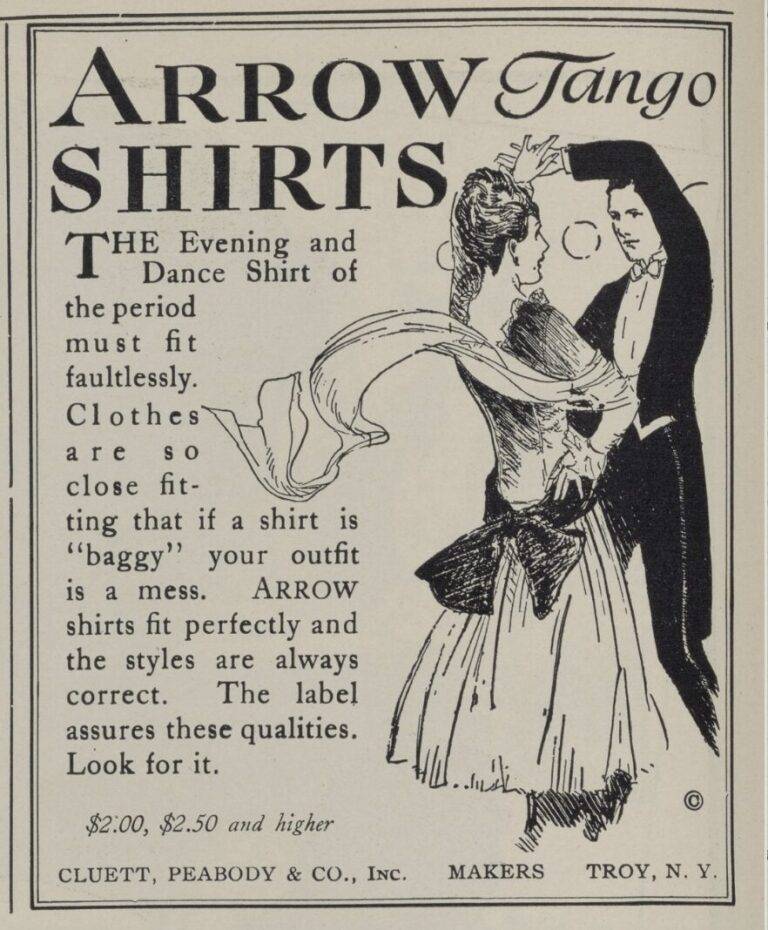
1915 The Yale record v. 43, no. 10, 3/19/1915
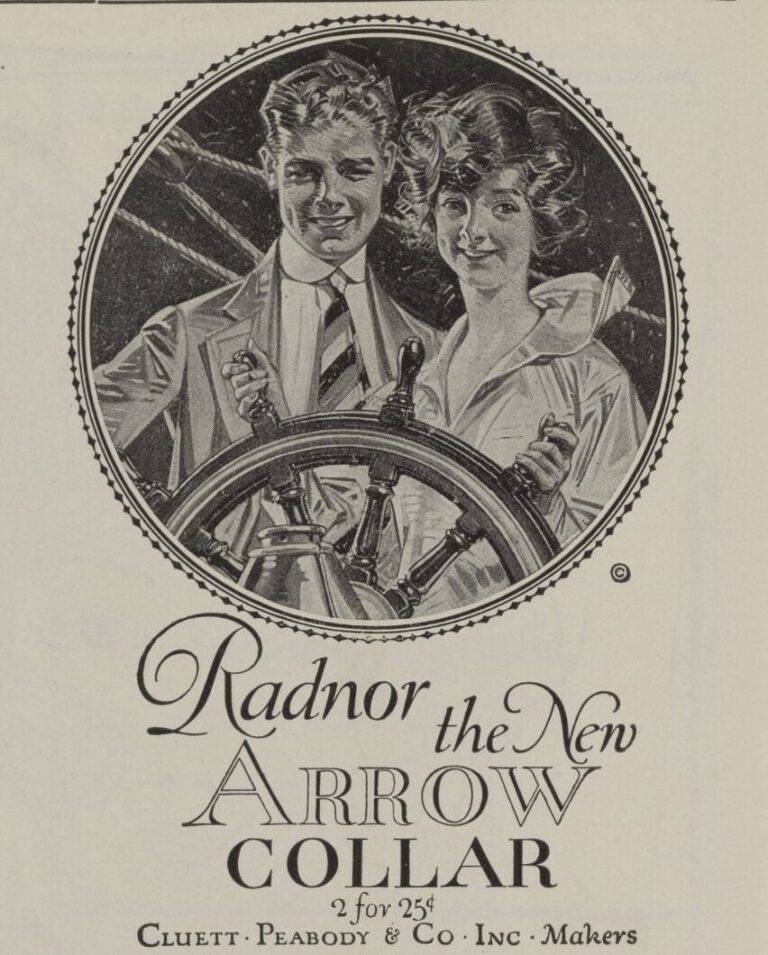
1915 The Yale record v. 43, no. 16, 6/11/1915
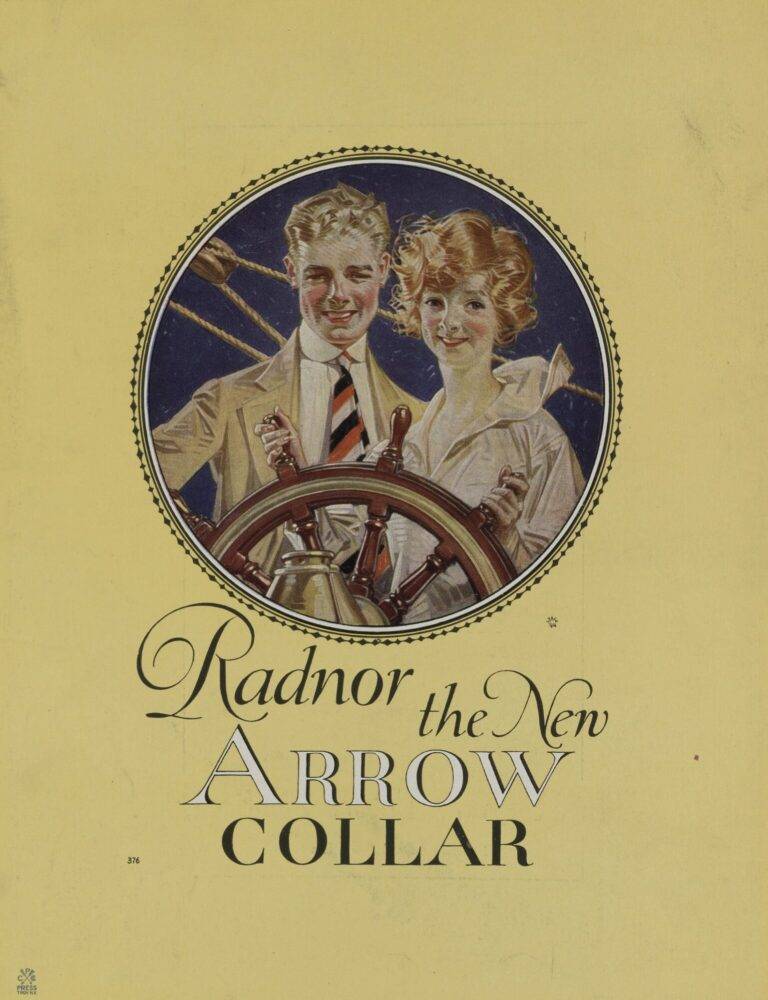
1915 The Yale record v. 43, no. 12, 4/23/1915
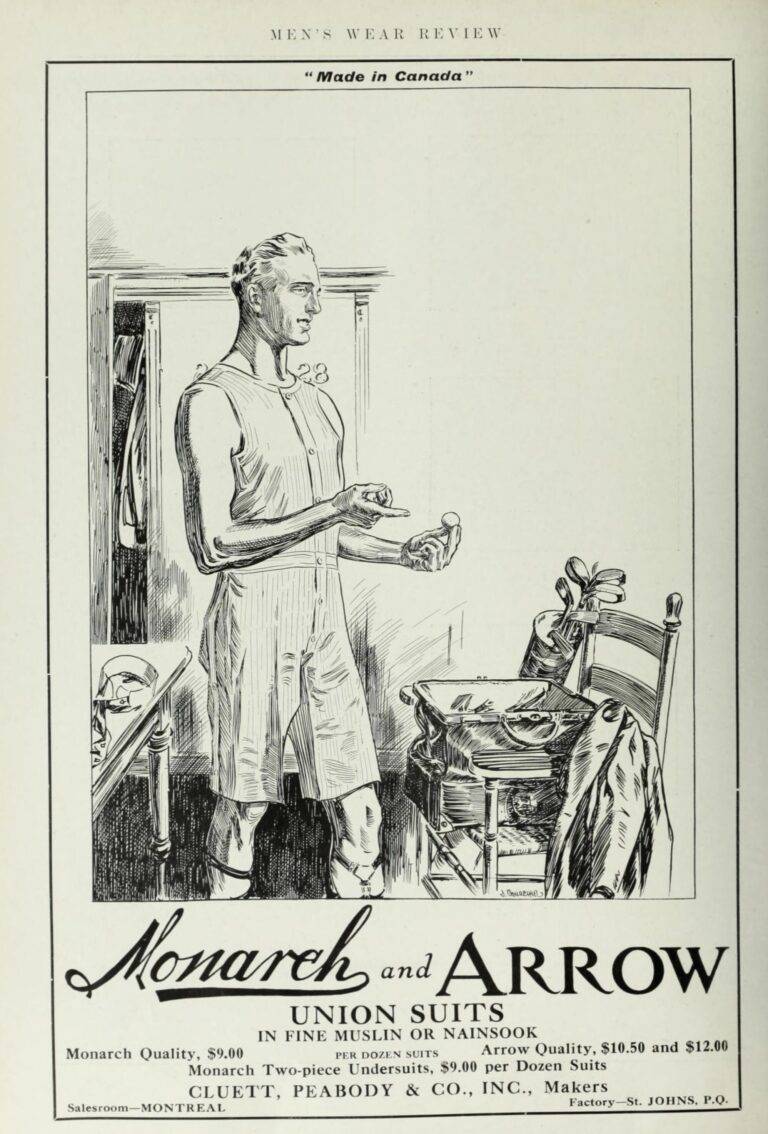
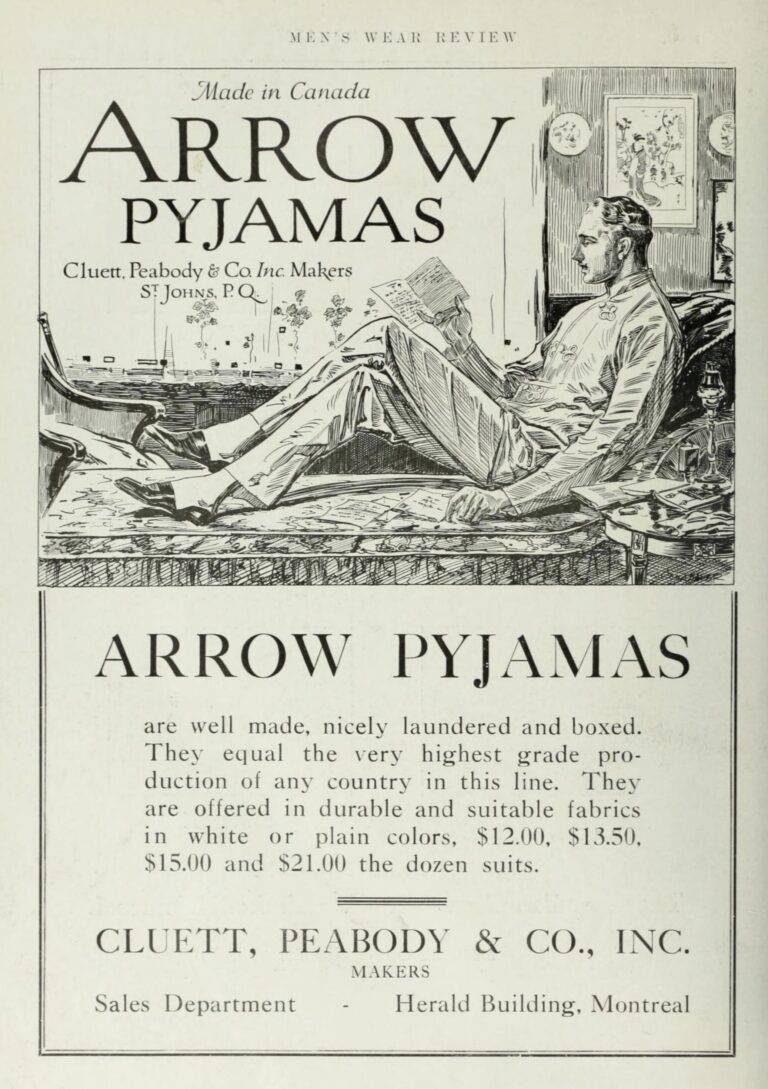
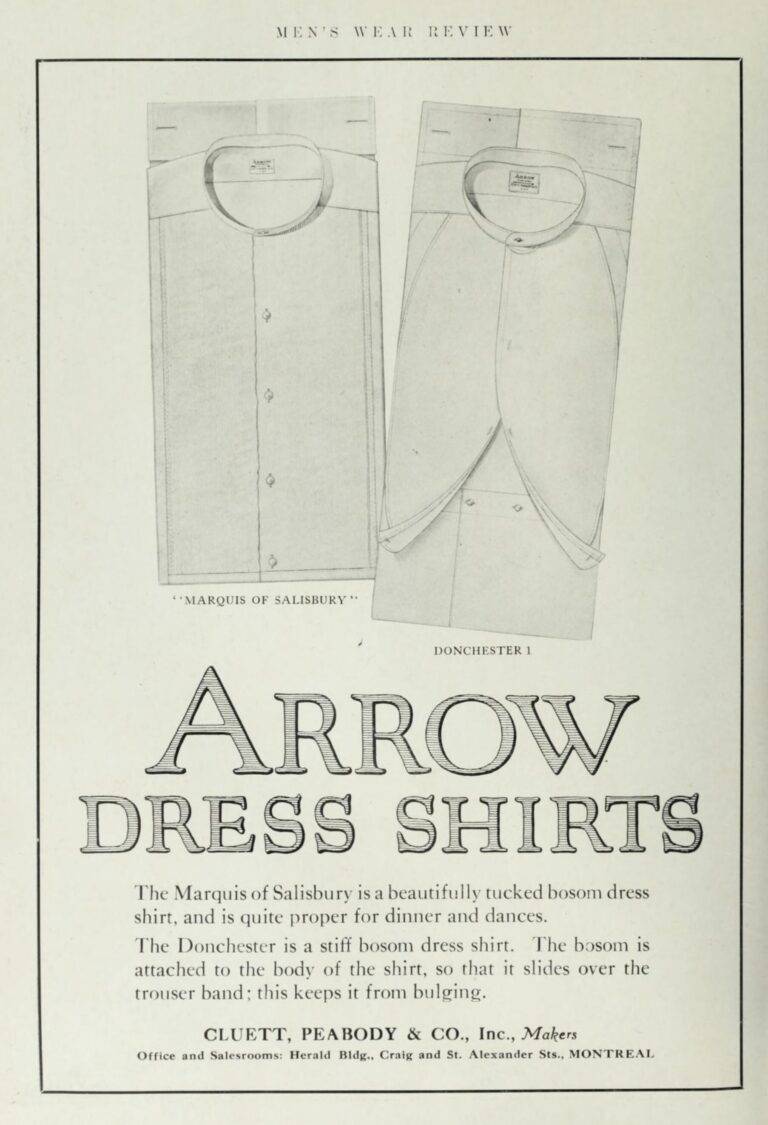
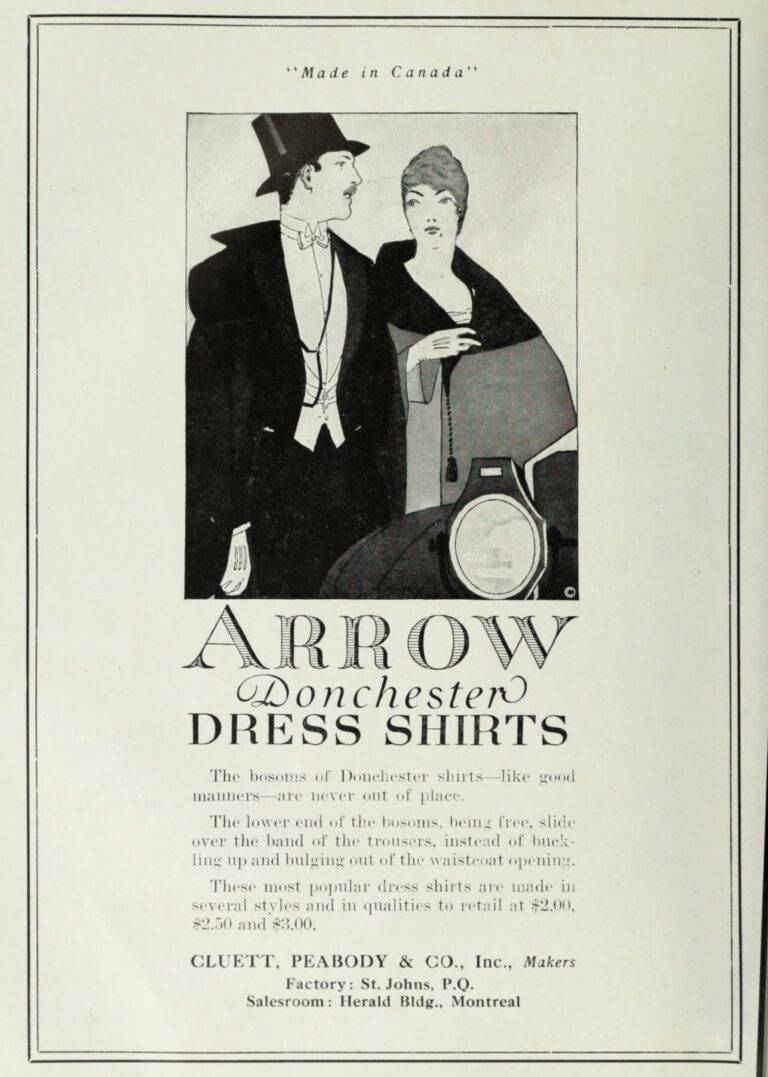
1915 Men’s wear of Canada (January-December 1915)
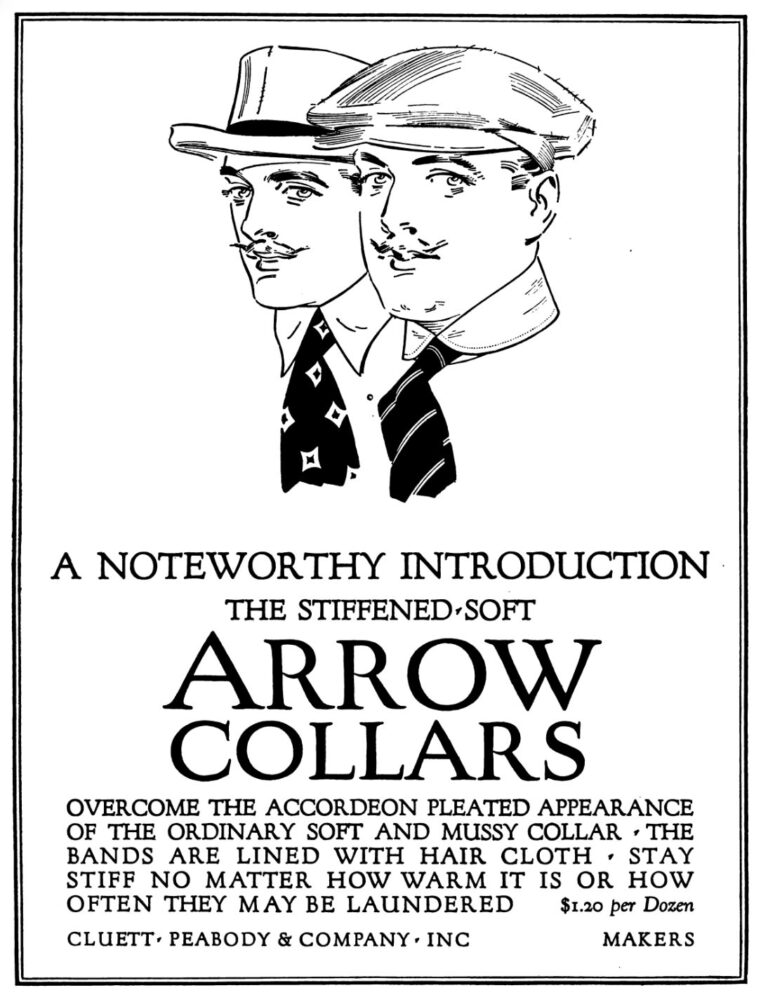
1916 The Clothier and furnisher v. 89 (1916-1917)
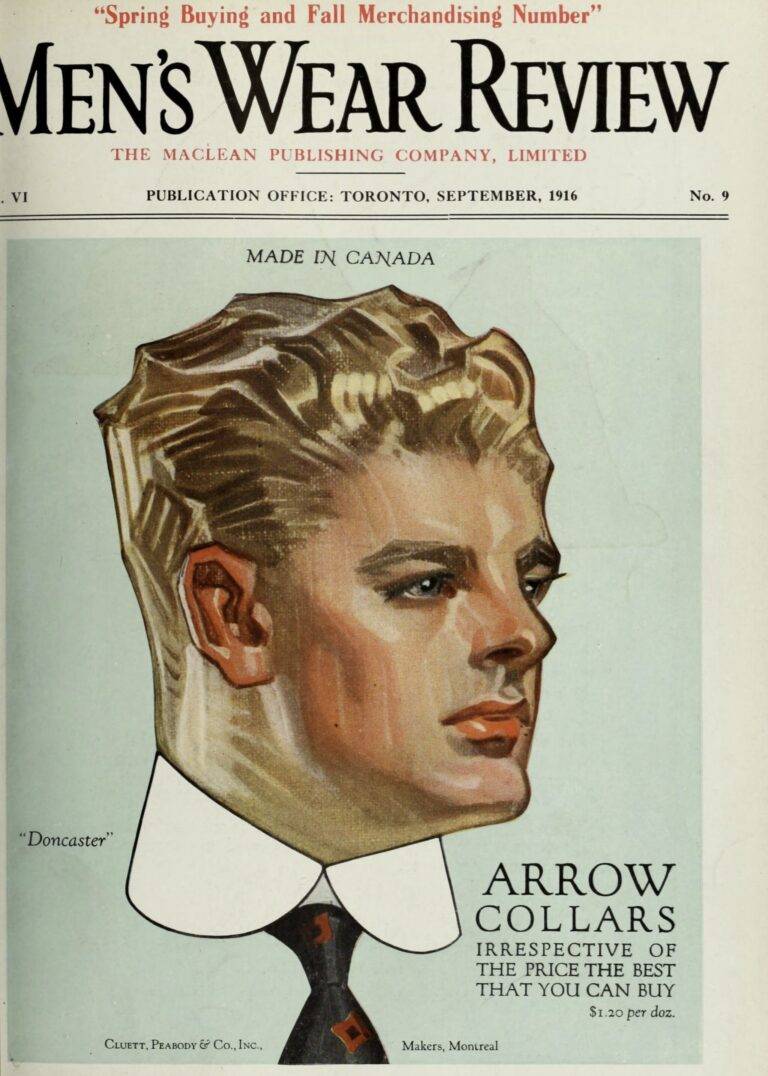
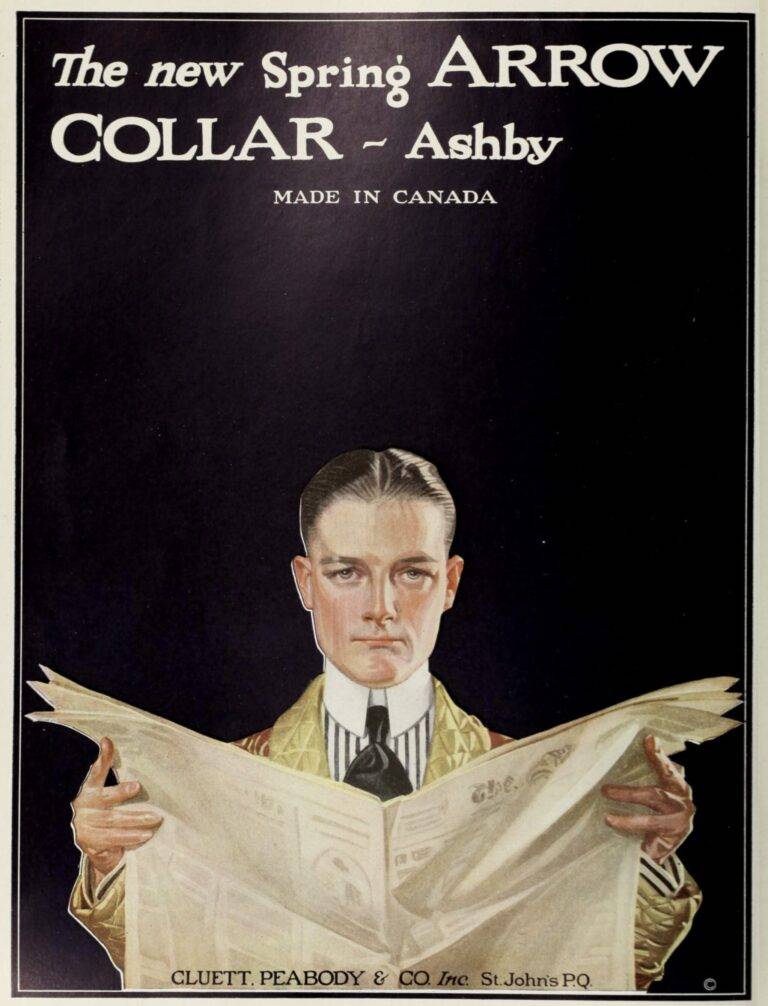
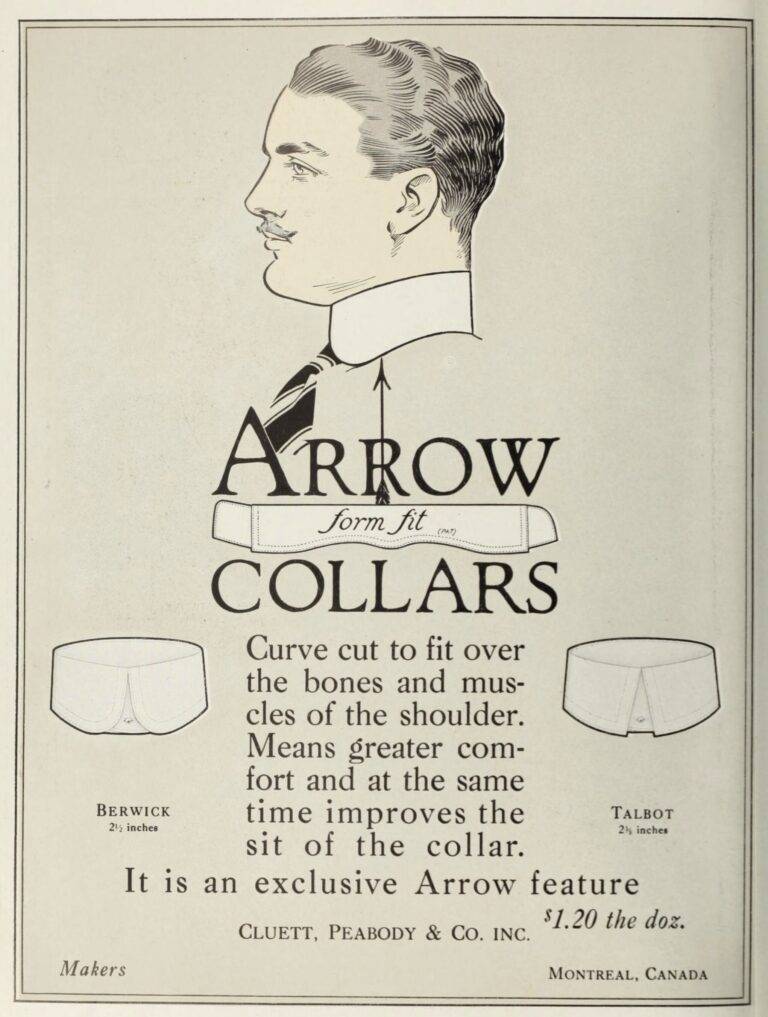
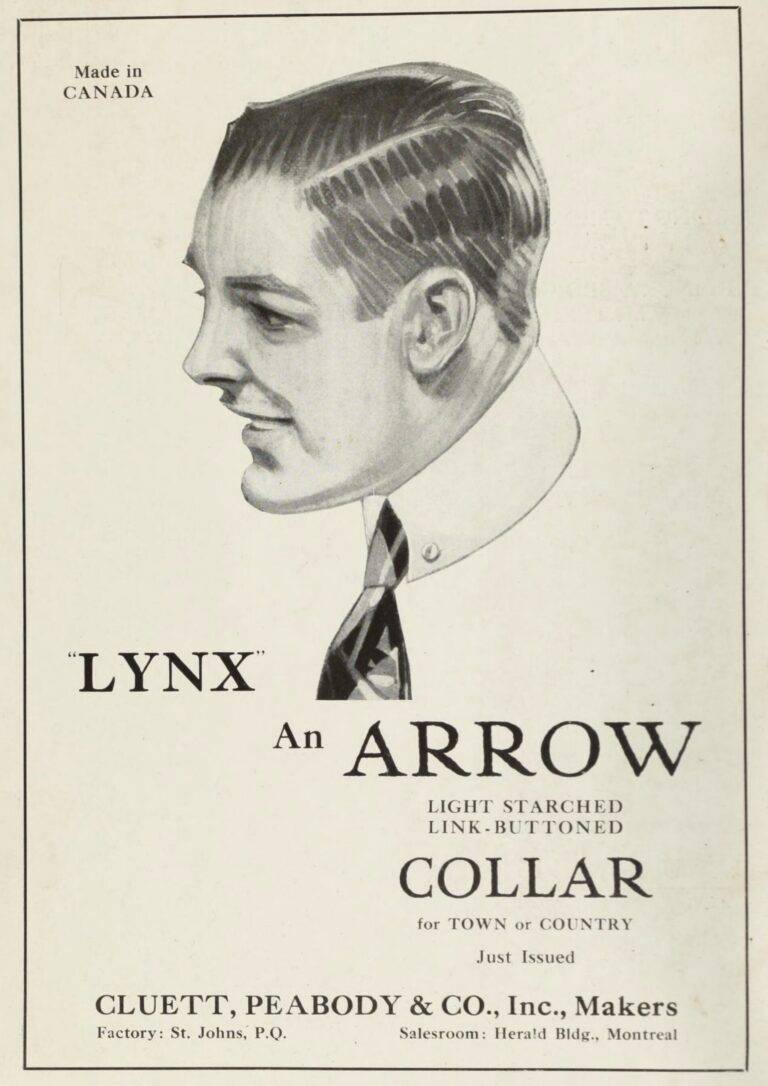
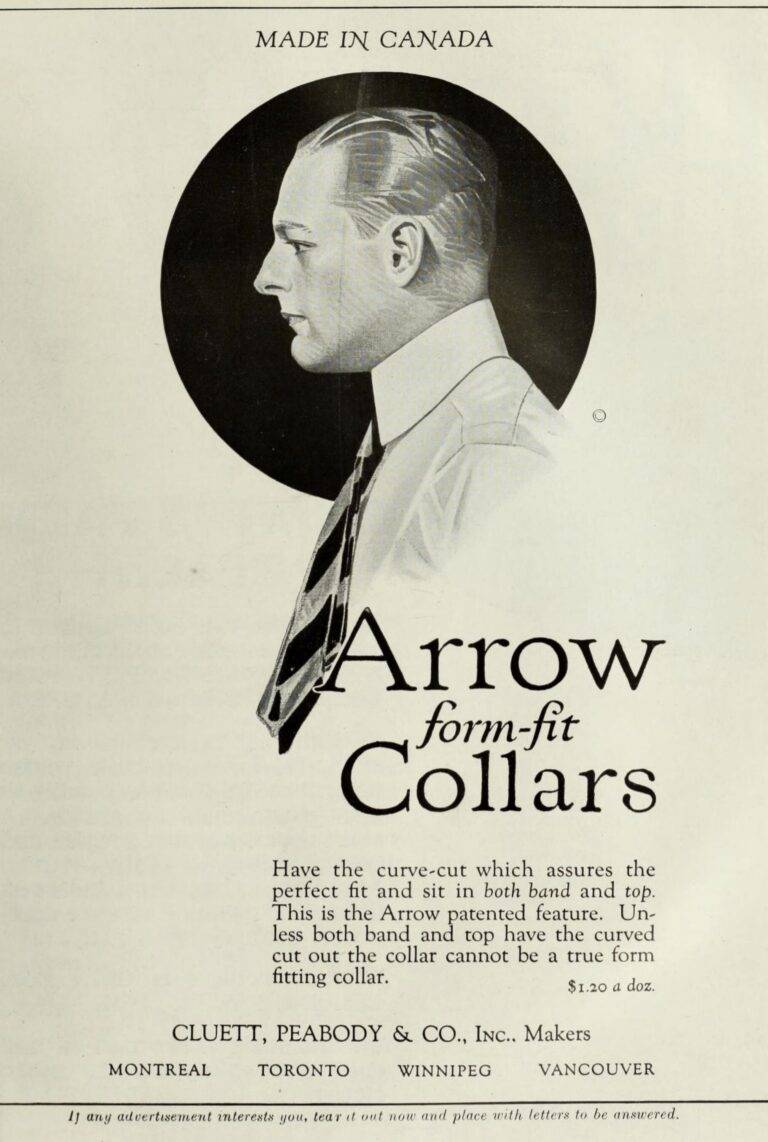
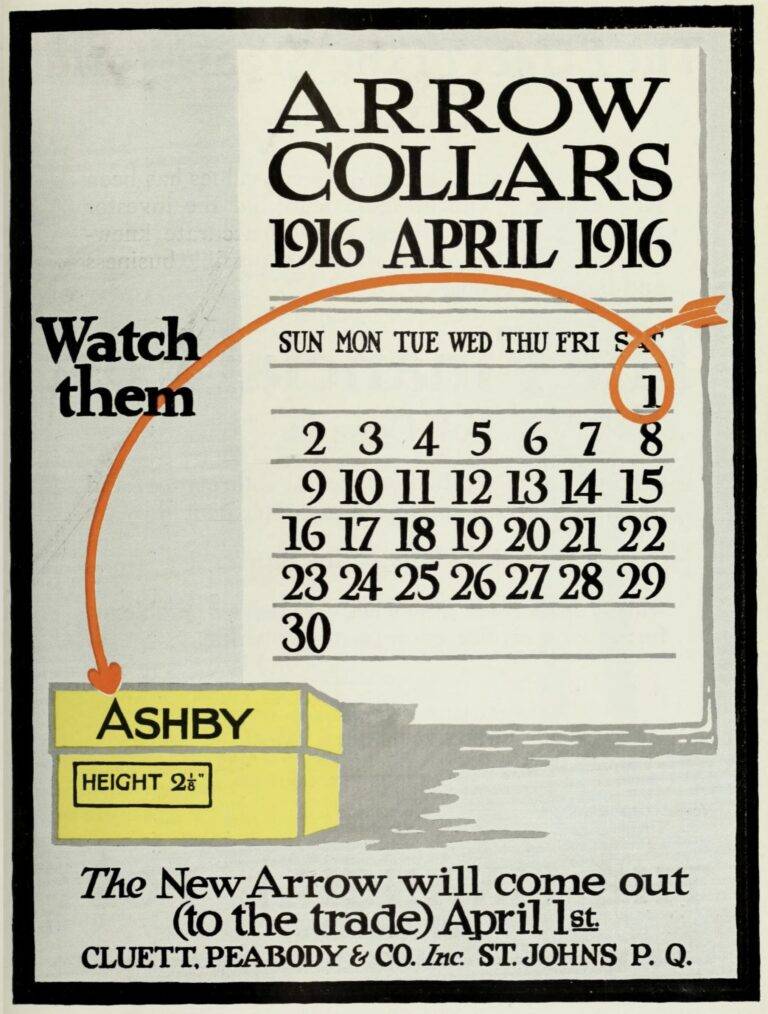
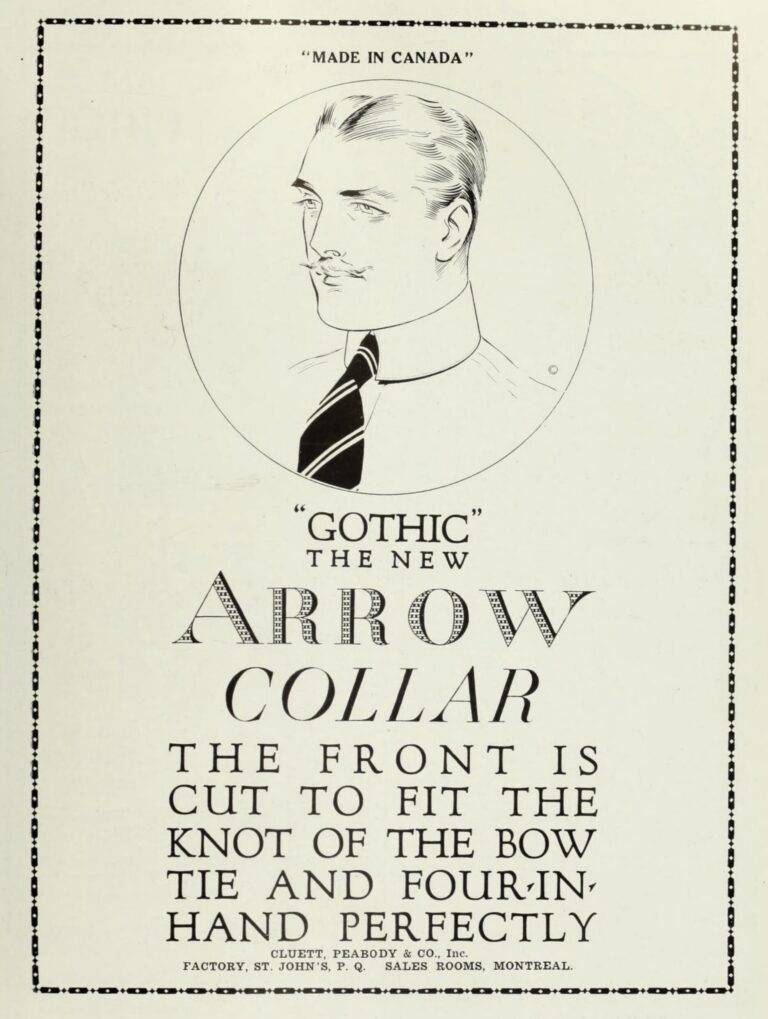
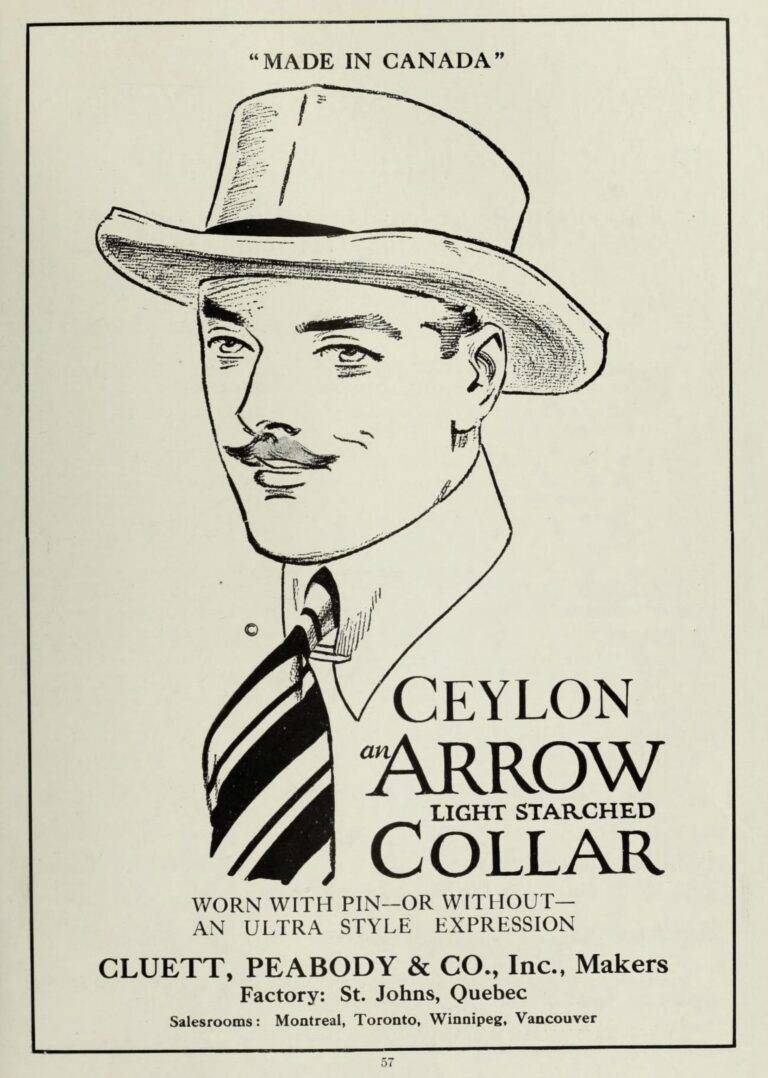
1916 Men’s wear of Canada (January-December 1916)
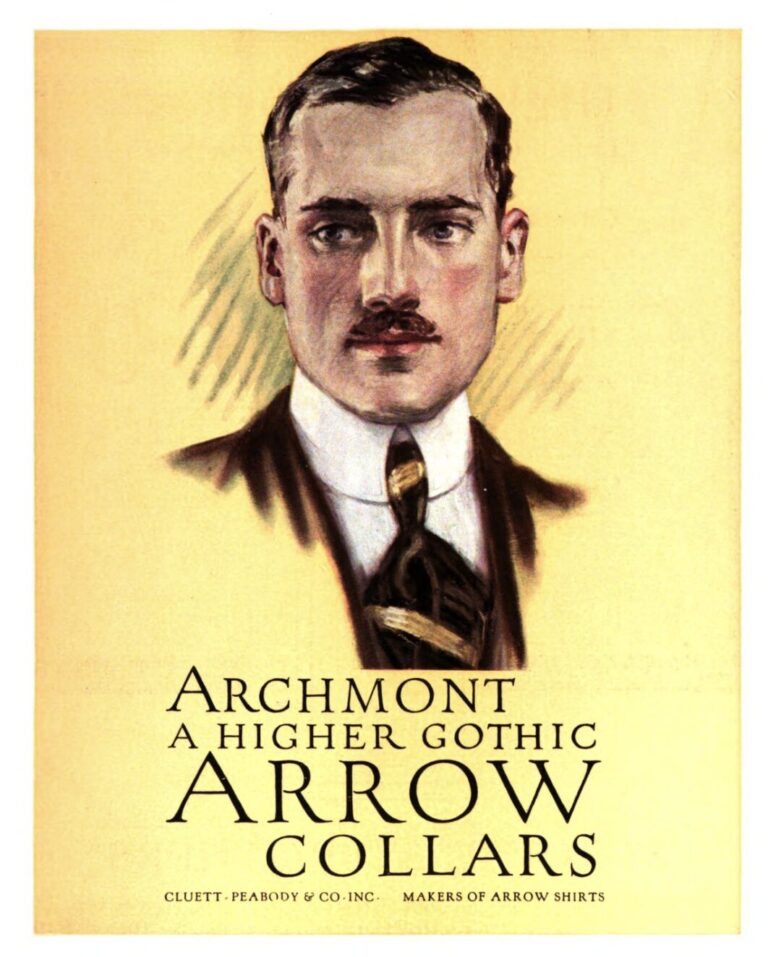

1916 The Clothier and furnisher v. 88 (1916)
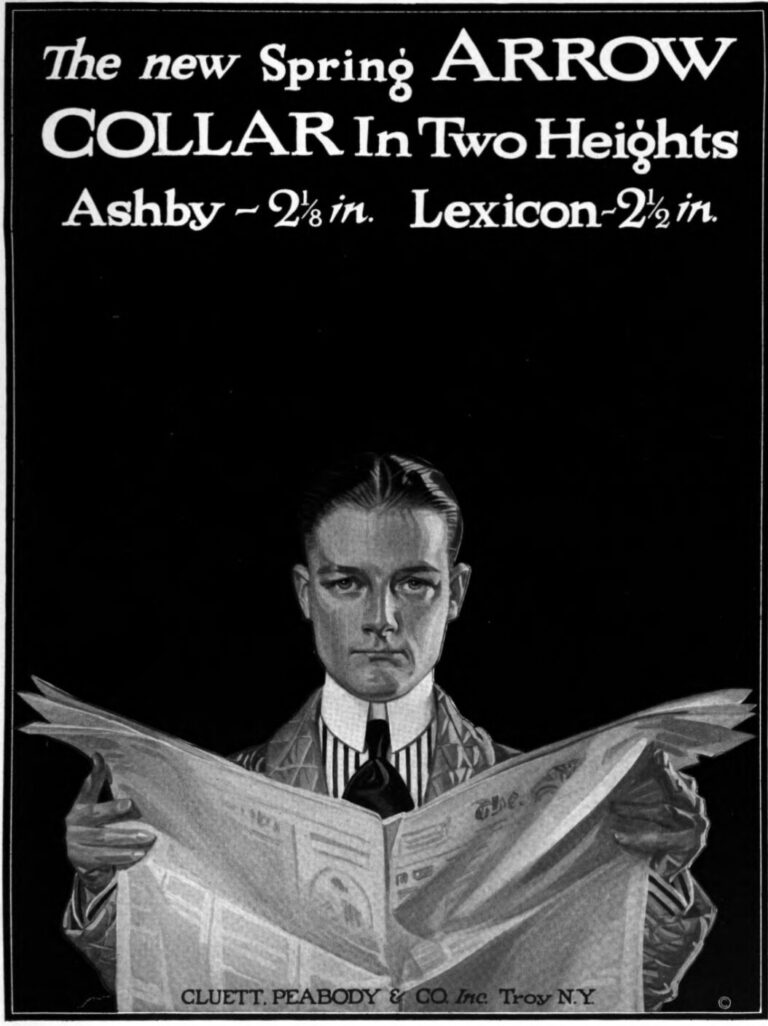
1916 The Clothier and furnisher v. 88 (1916)
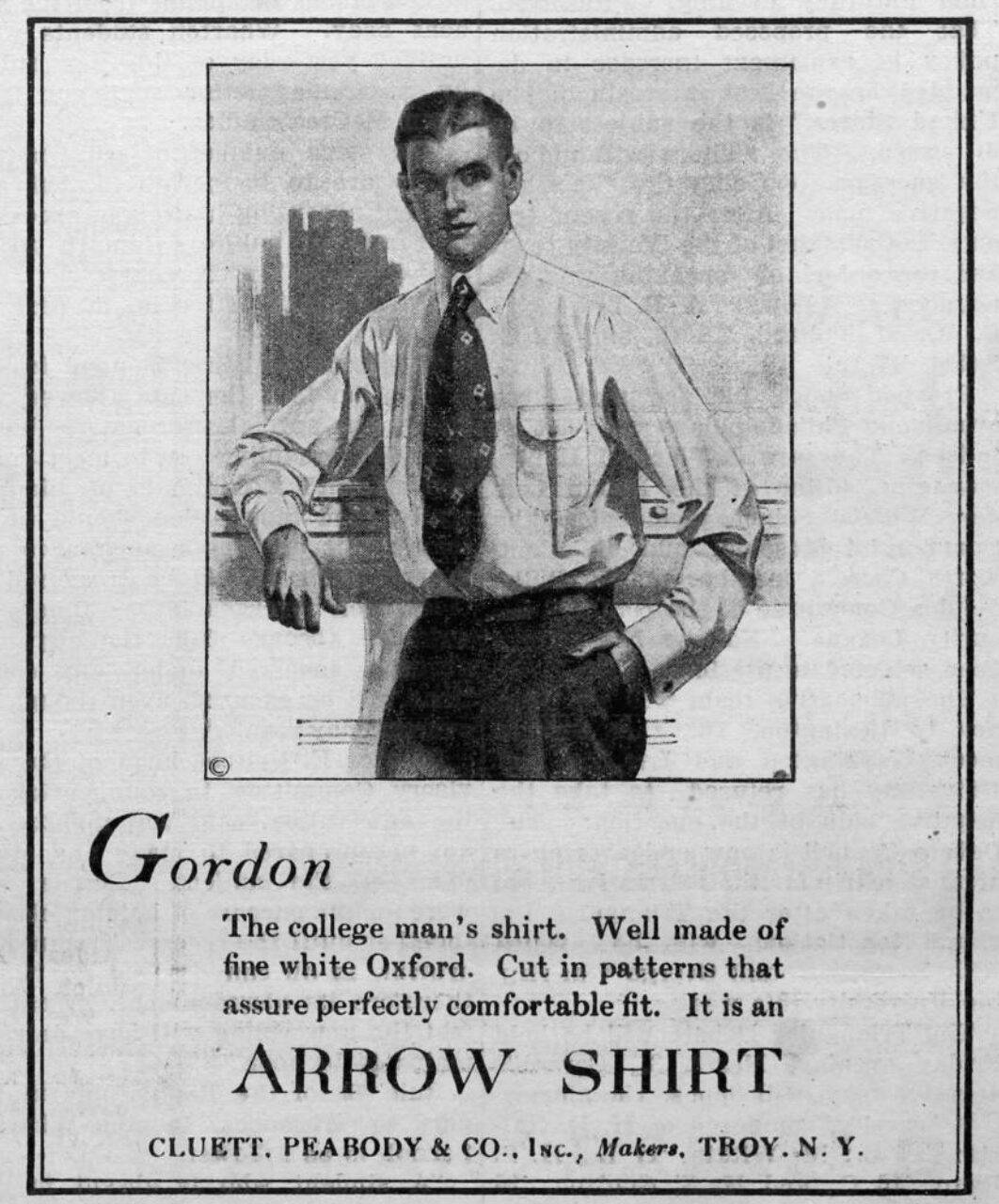
1916 The Daily Pennsylvanian, Volume XXXI, Number 107, 22 February 1916
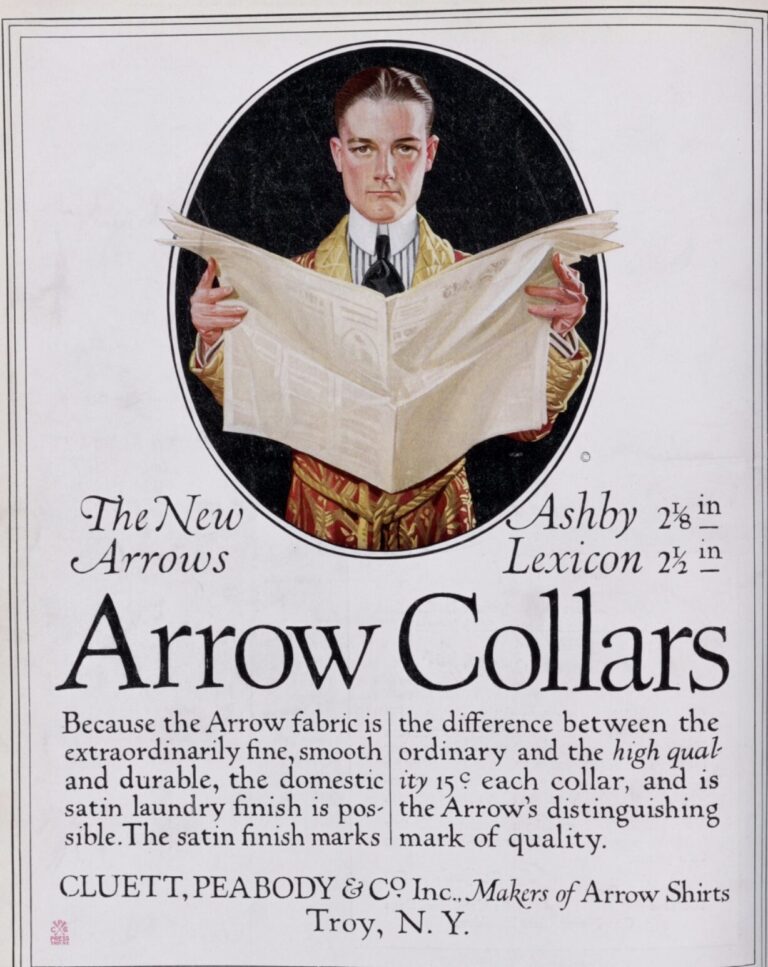
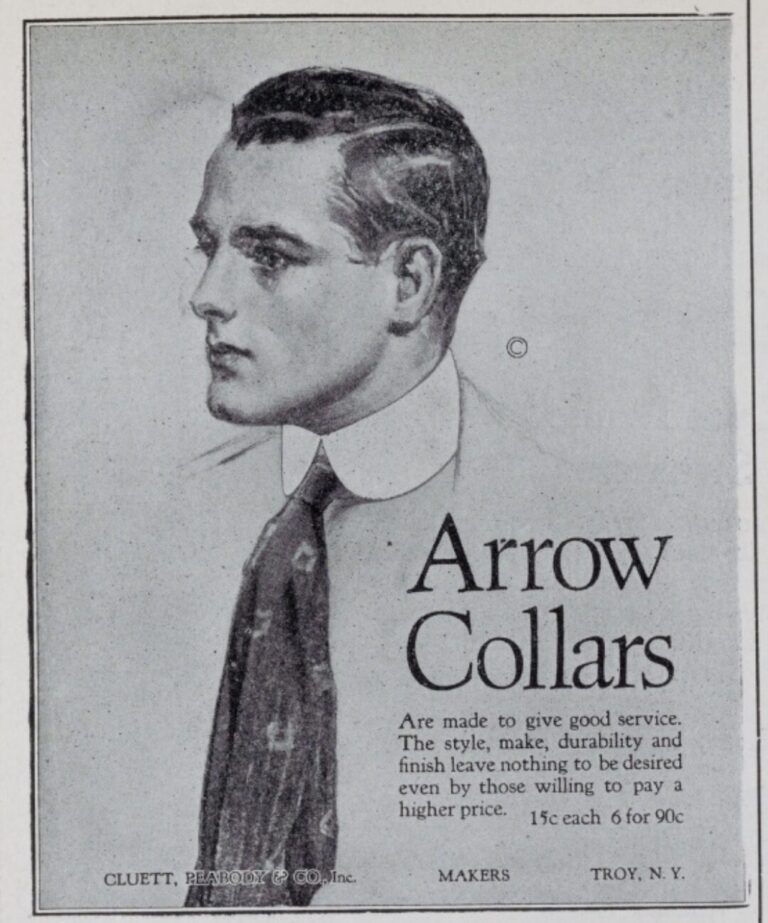
1916 The Yale record v. 45, no. 2, 10/26/1916
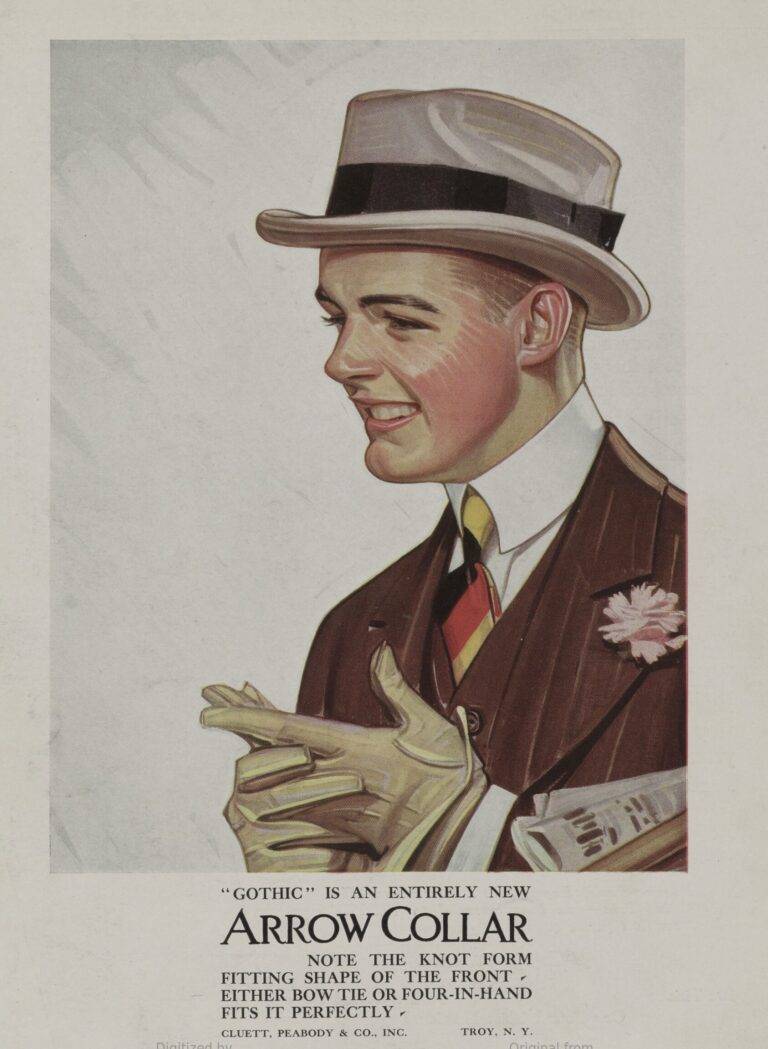
1916 The Yale record v. 44, no. 1, 1915-1916?
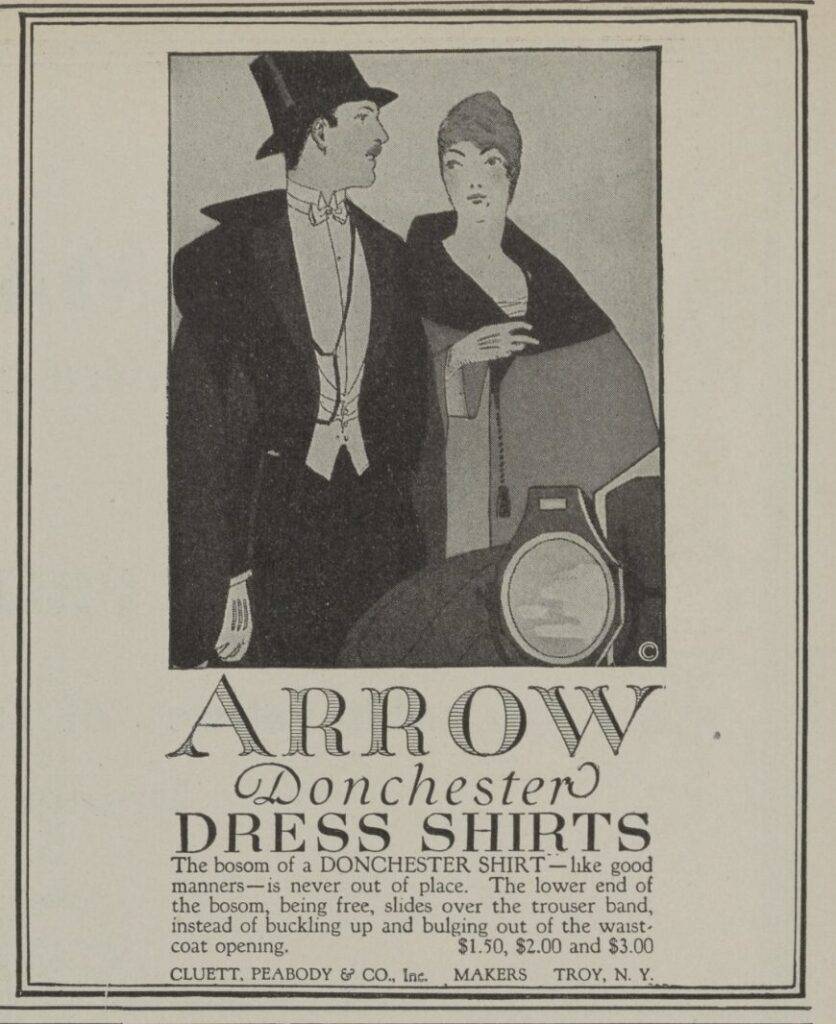
1916 The Yale record v. 44, no. 6, 1/14/1916
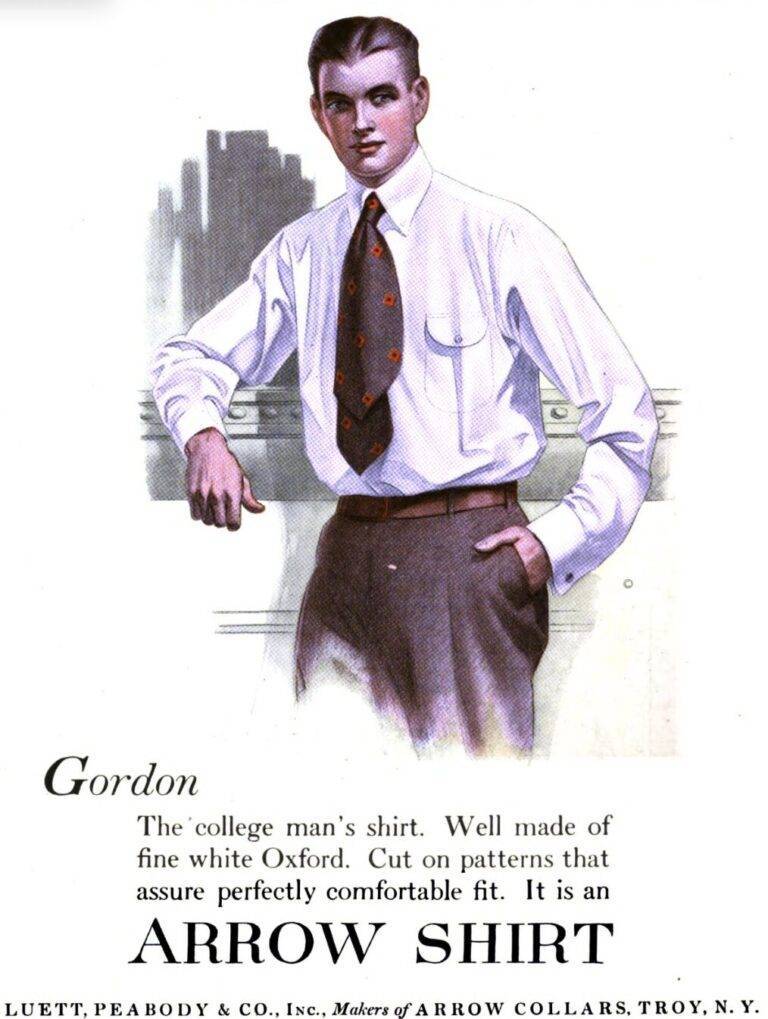
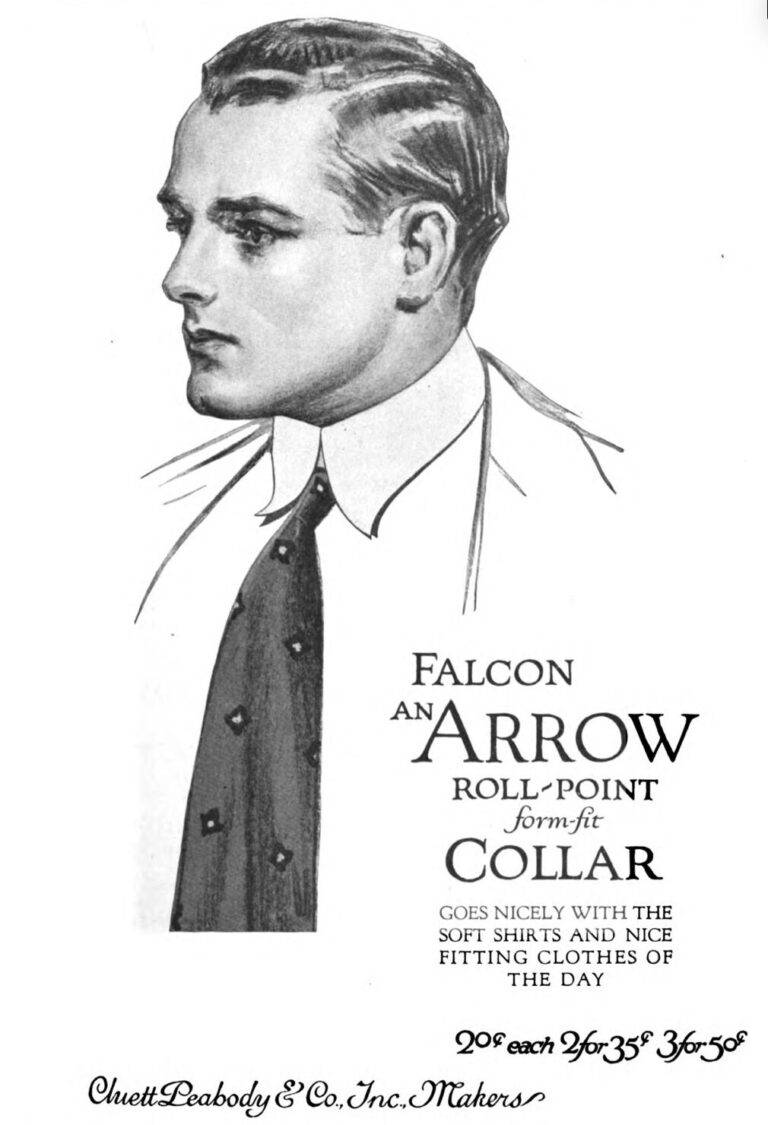
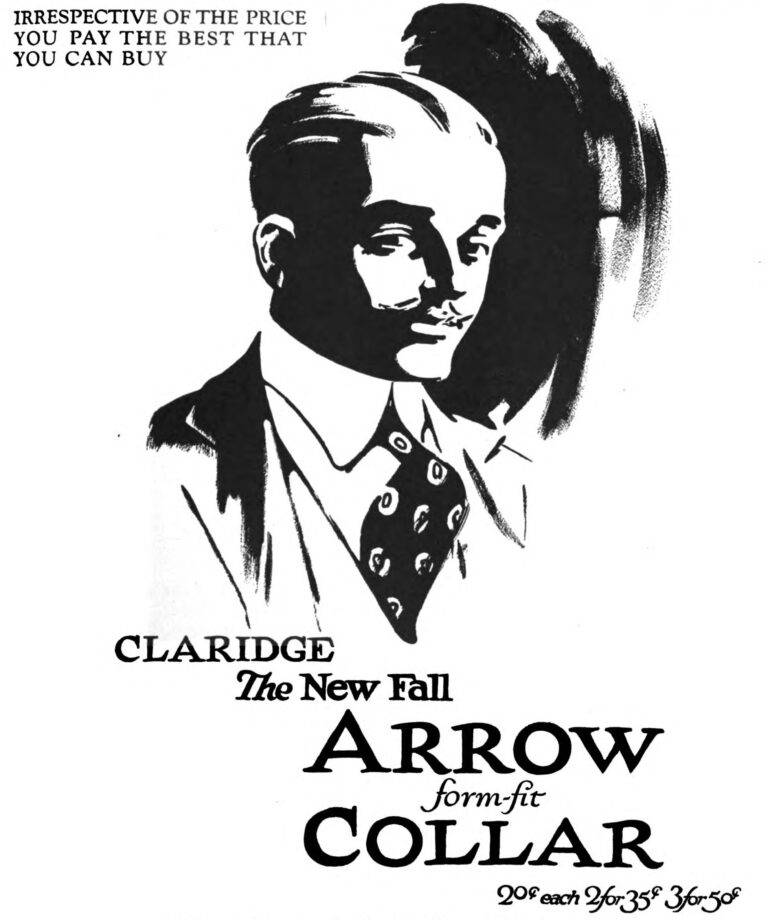
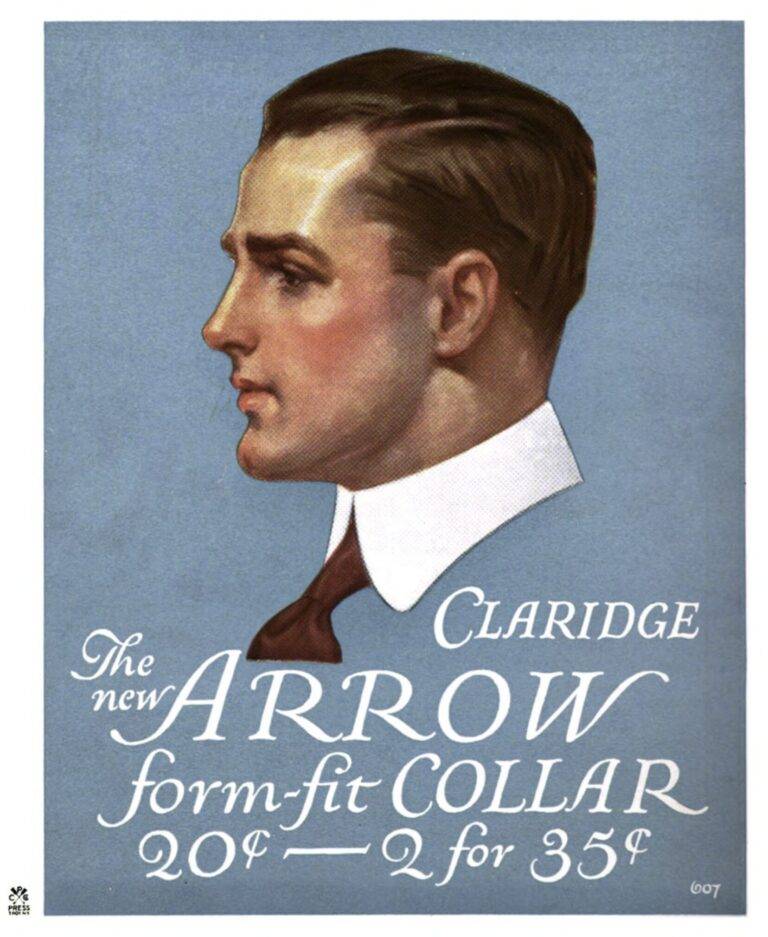
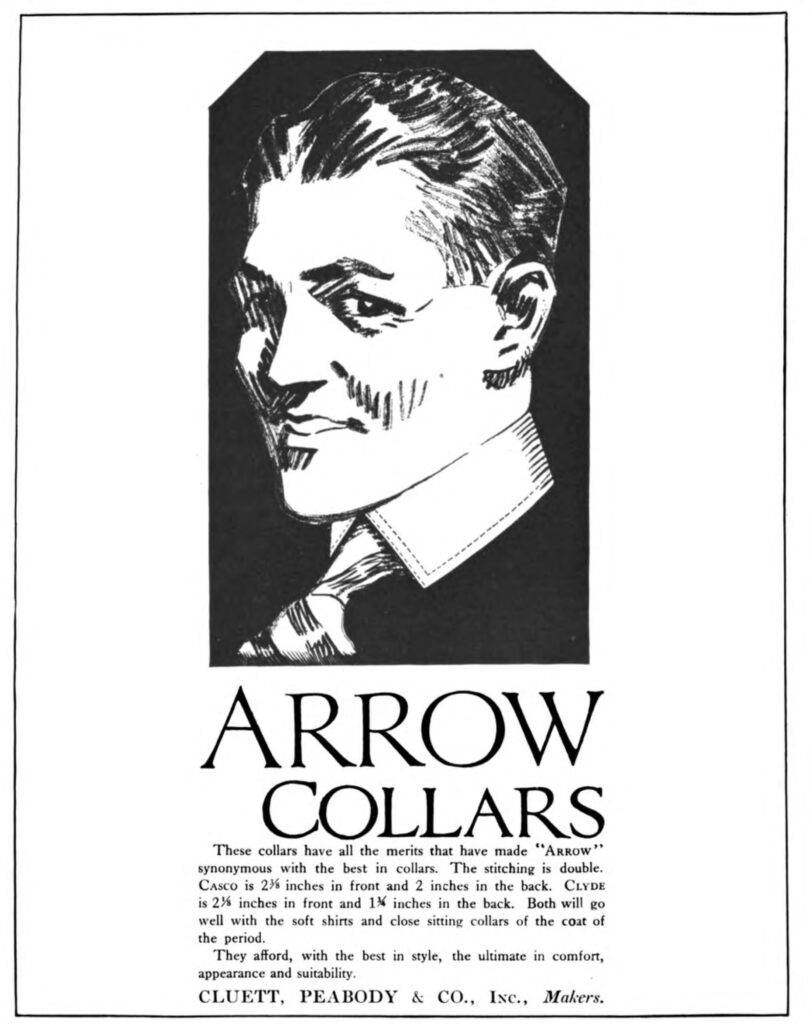
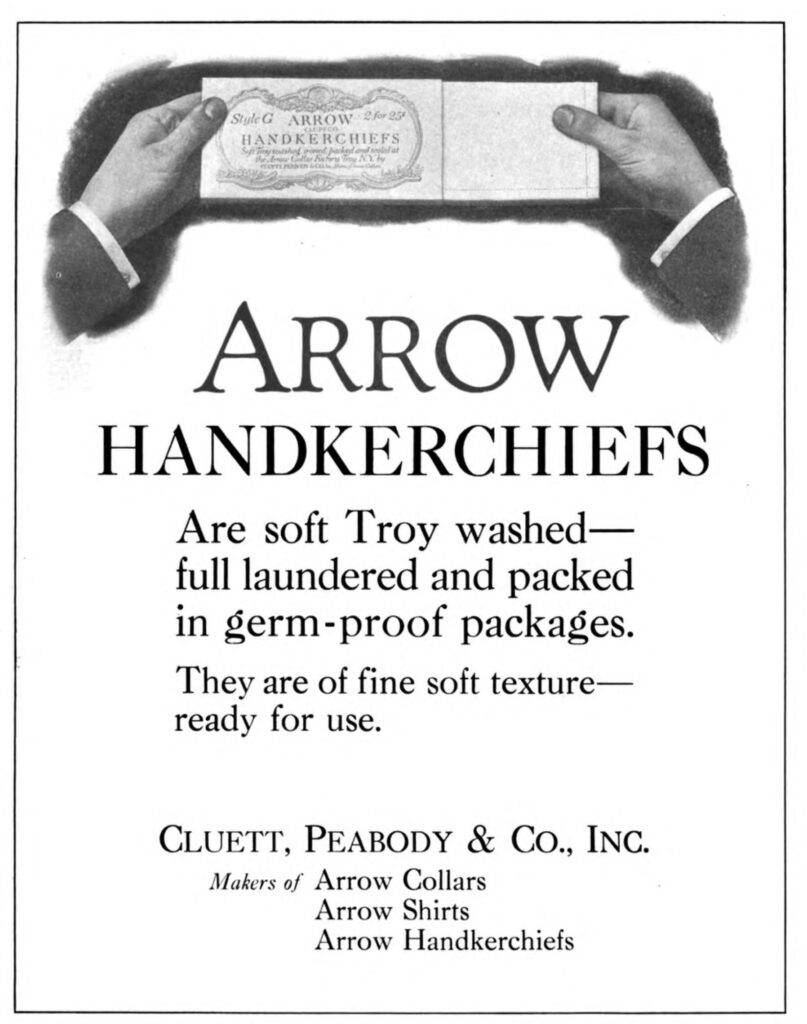
1917 The Harvard lampoon ser.2:v.74-75 (1917-1918)
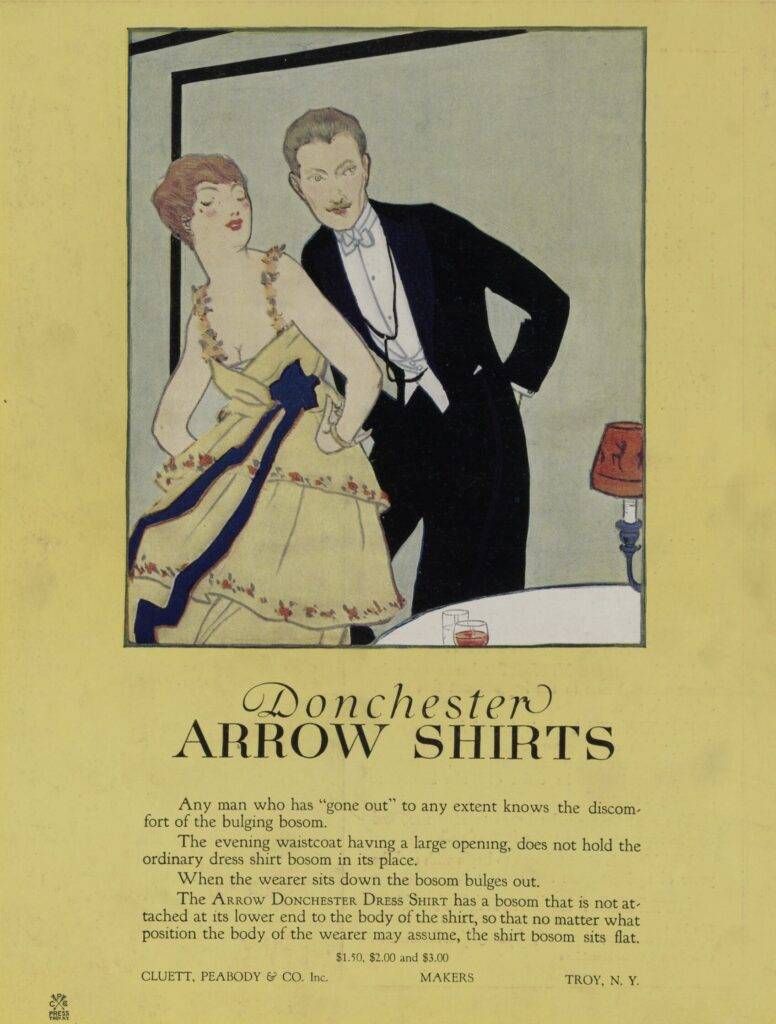
1917 The Yale record v. 44, no. 4, 1915-1916?
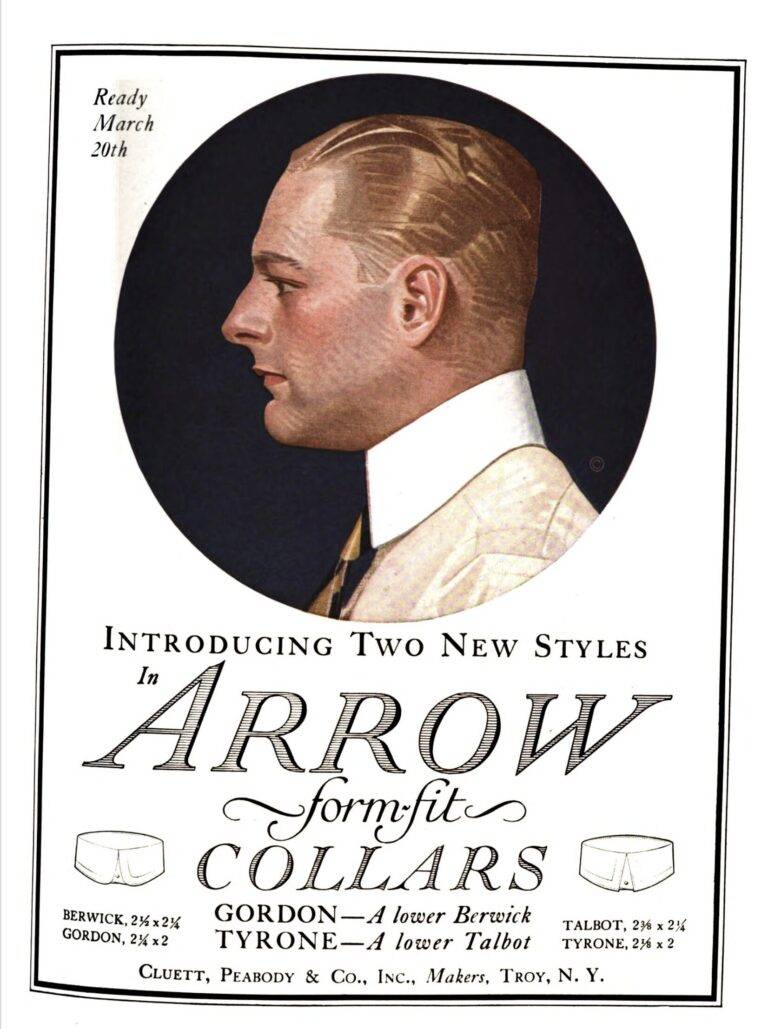
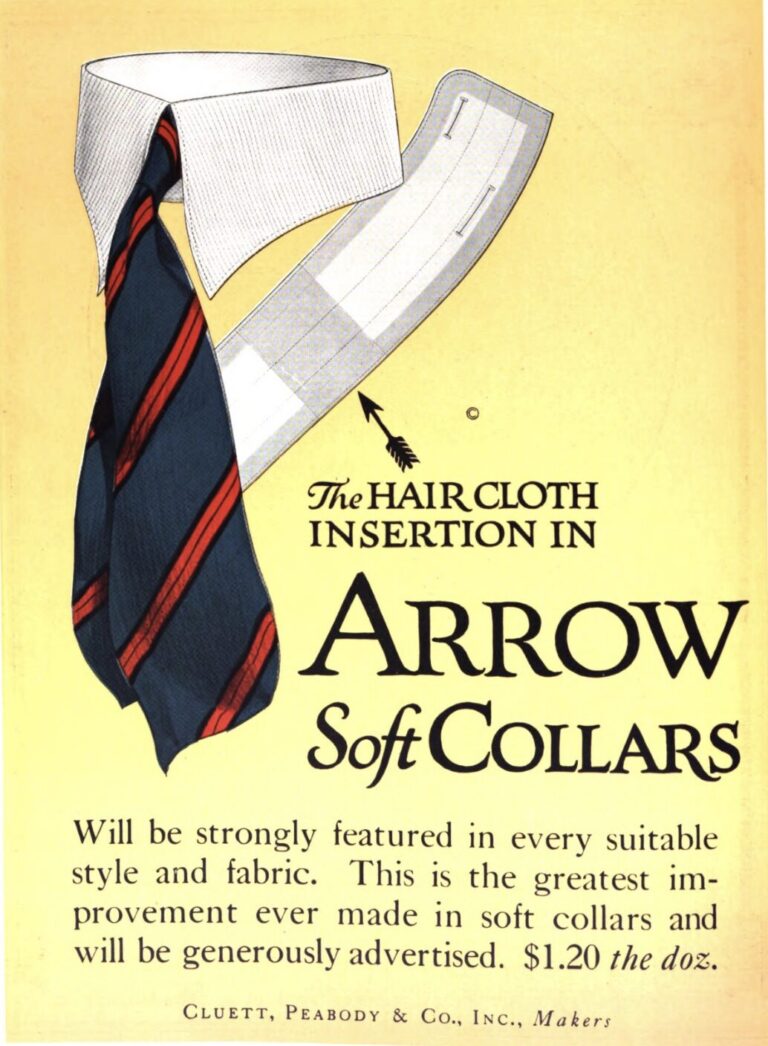
1917 The Clothier and furnisher v. 90
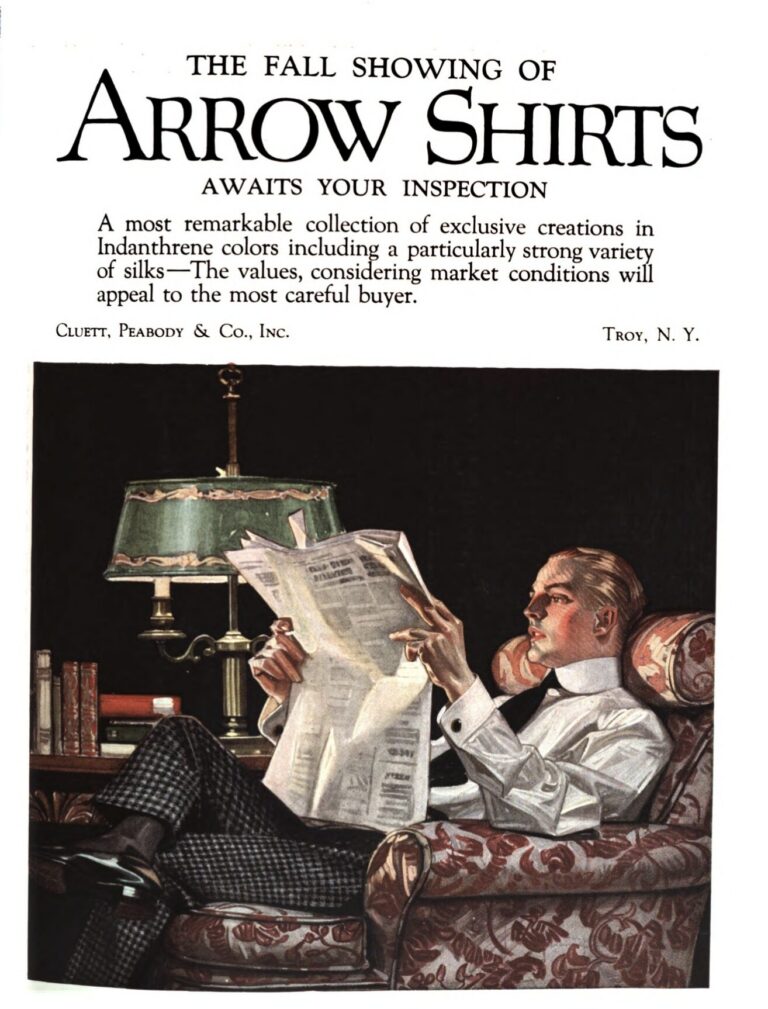
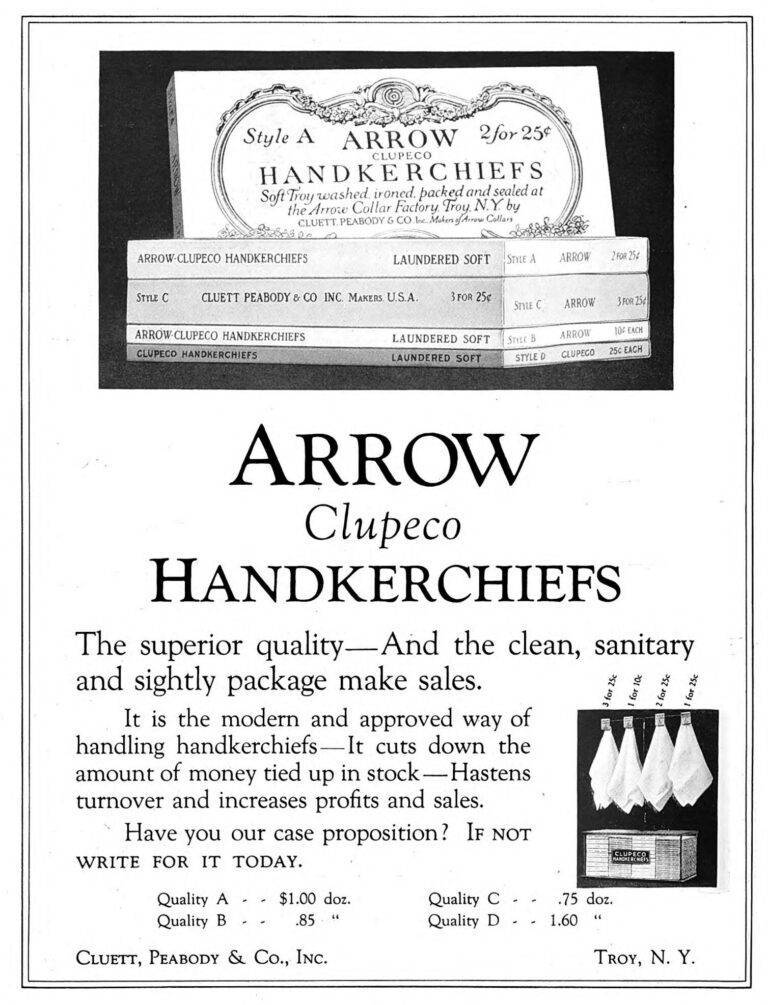
1917 The Clothier and furnisher v. 90
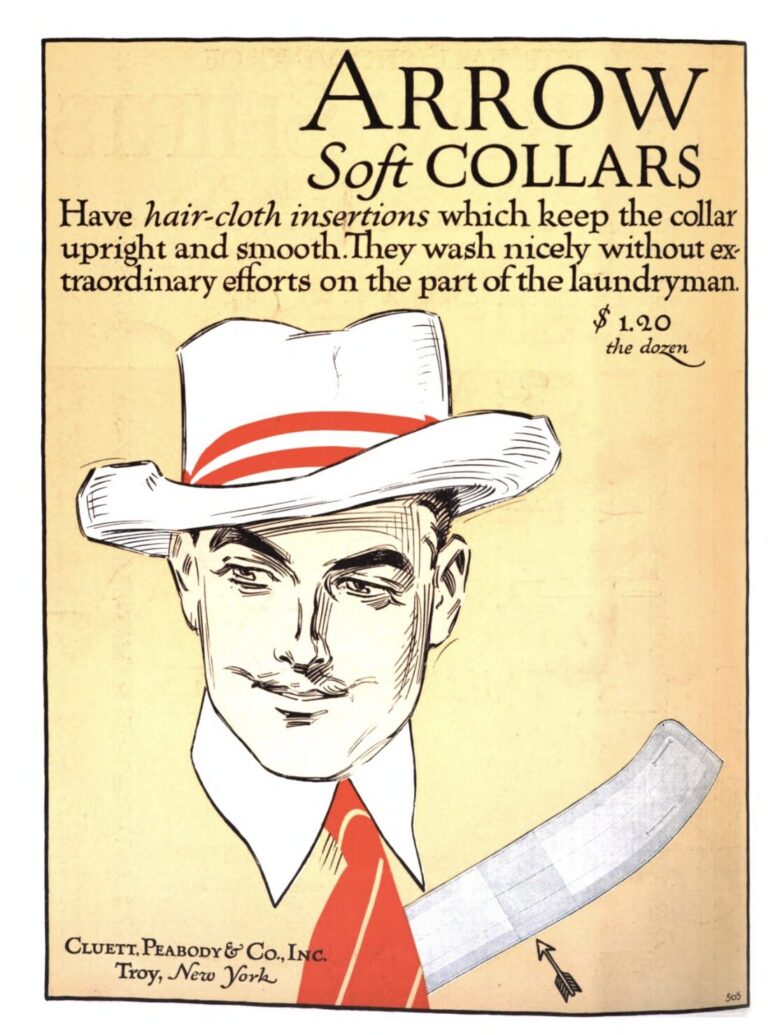
1917 The Clothier and furnisher v. 90
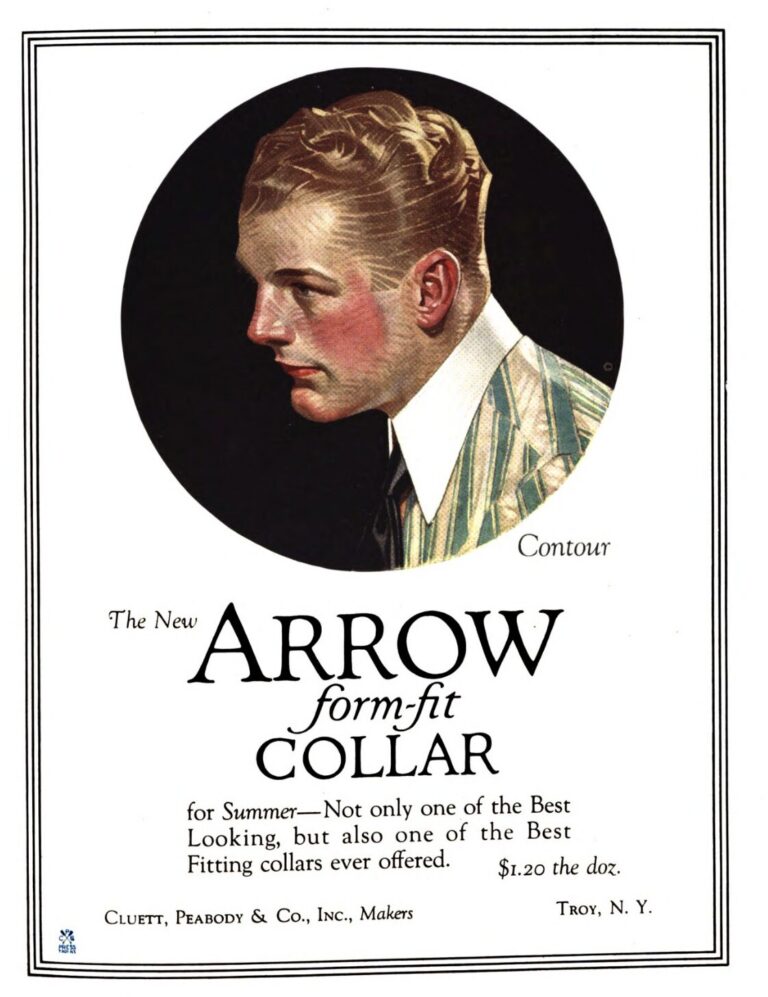
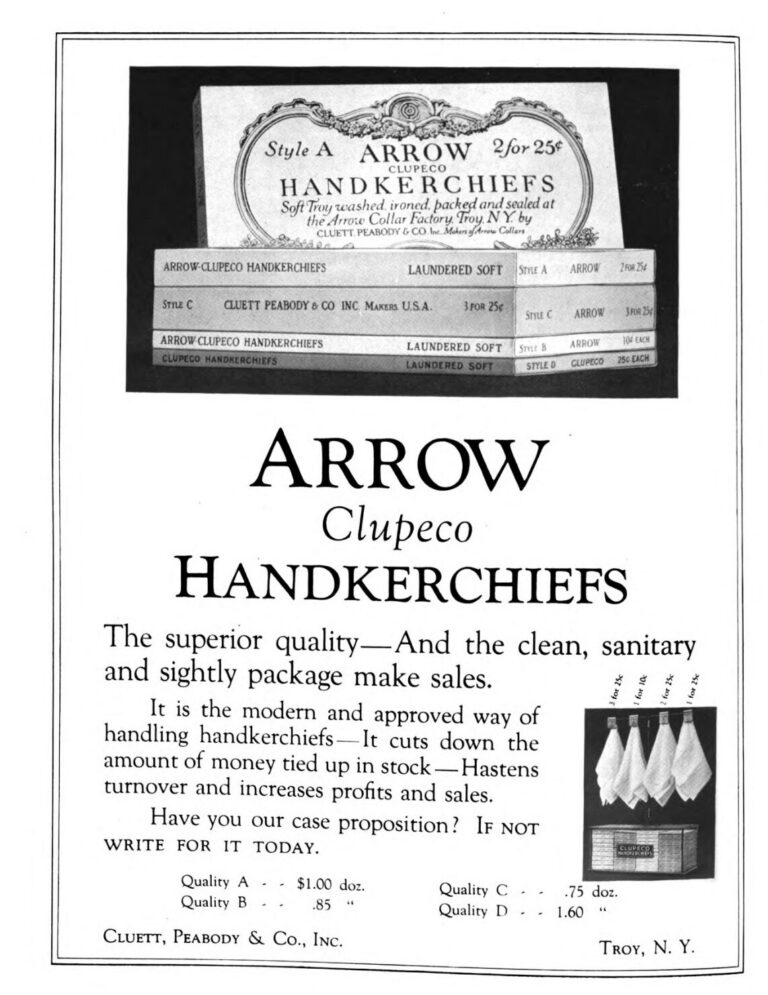
1917 The Clothier and furnisher v. 90
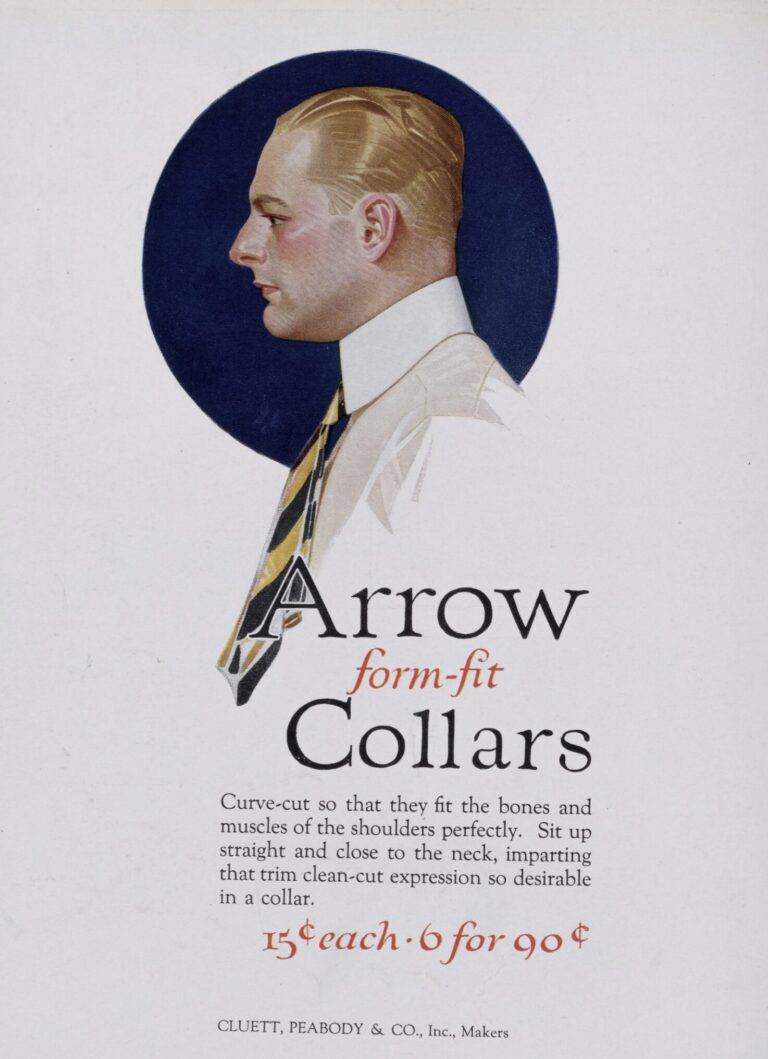
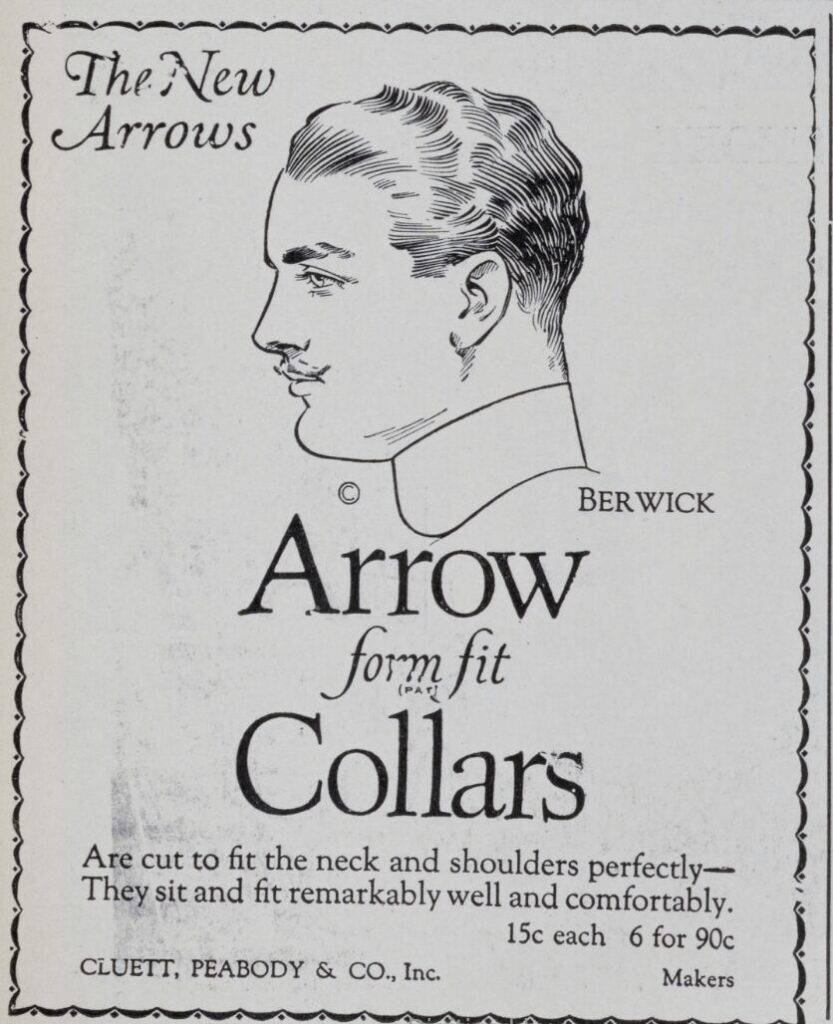
1917 The Yale record v. 45, no. 7, 2/1/1917
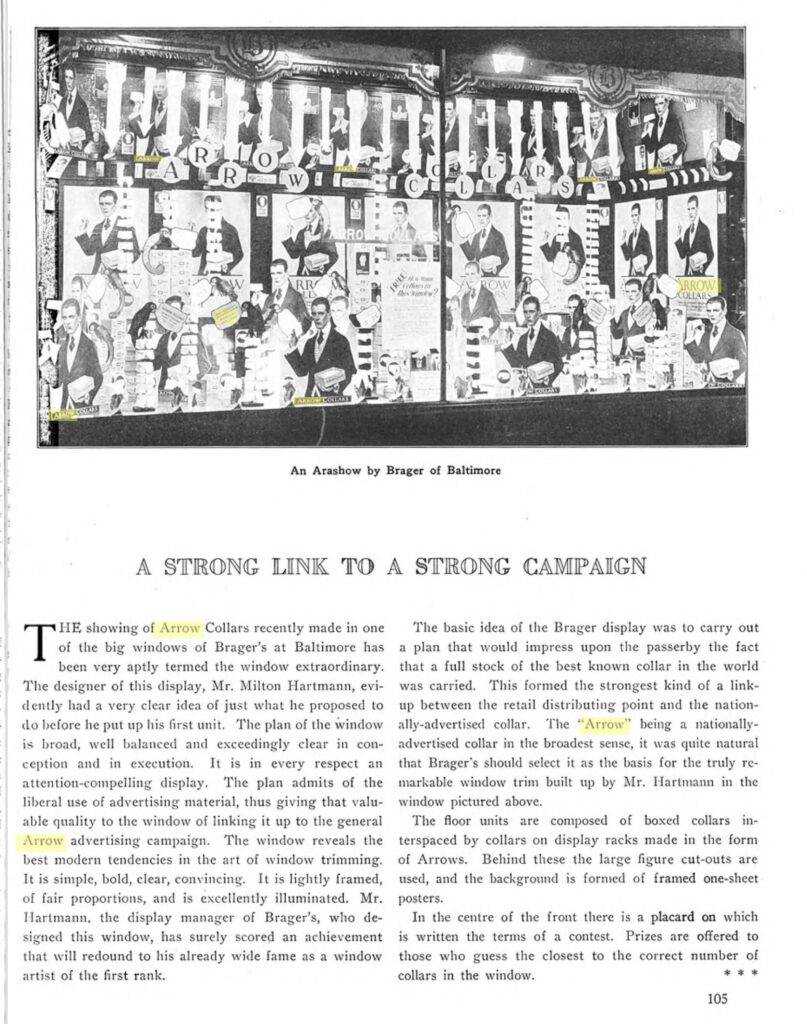
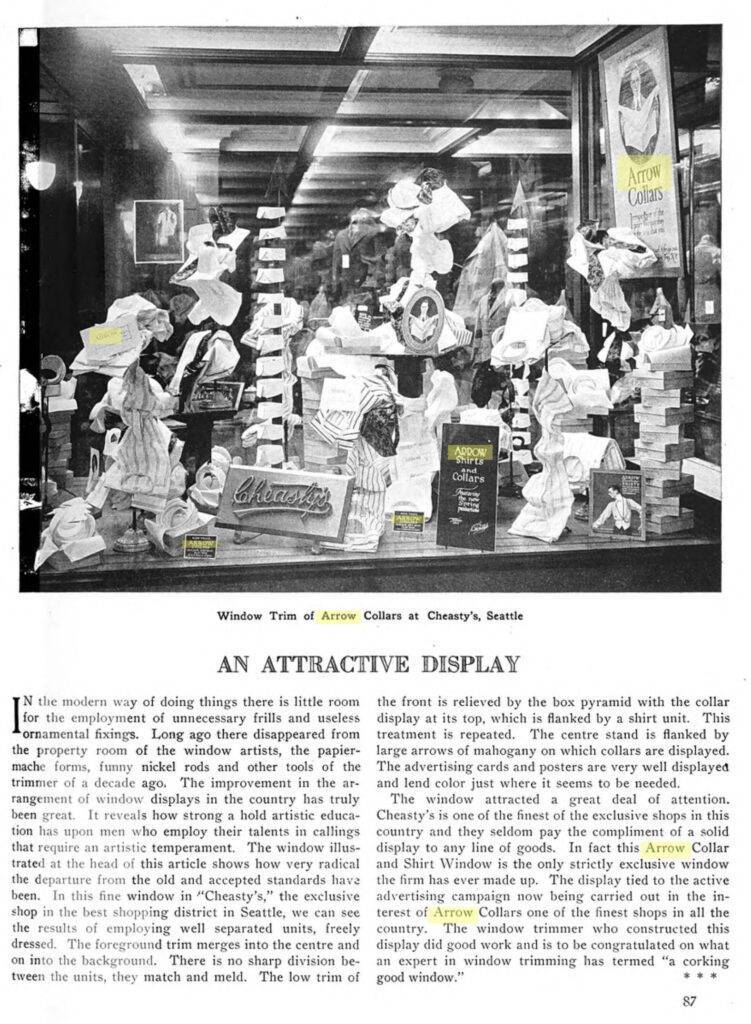
1917 The Haberdasher v.65:4-6(1917:Apr.June)
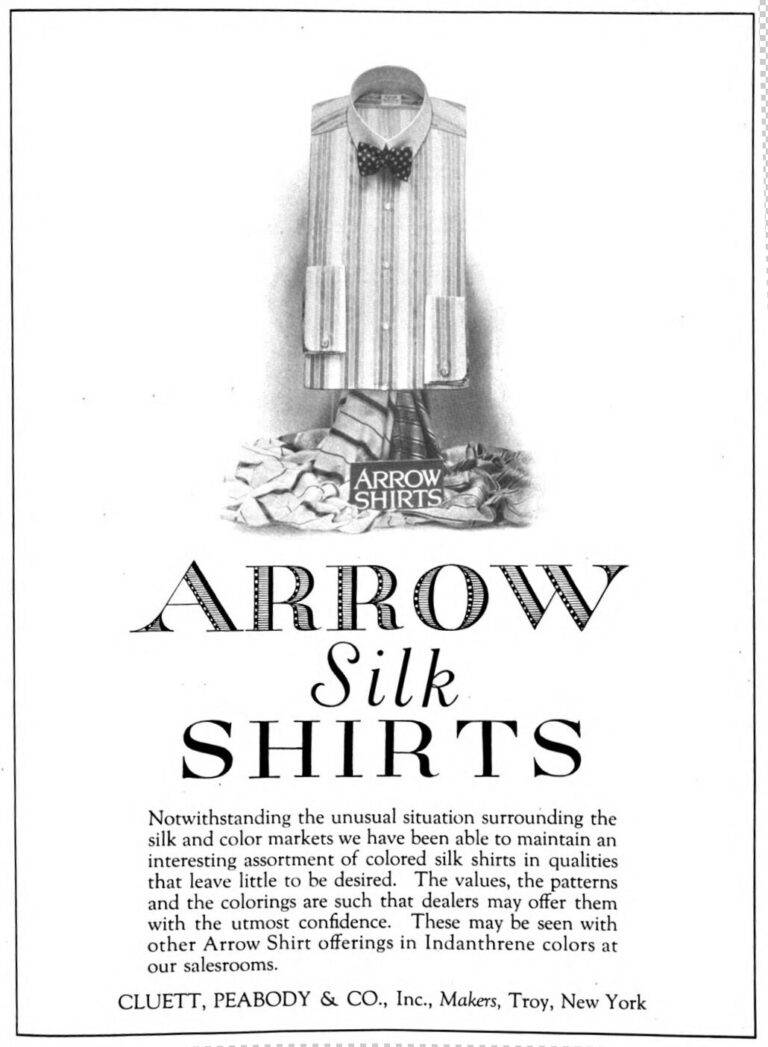
1918 The Haberdasher v.67(1918:Jan.-June)
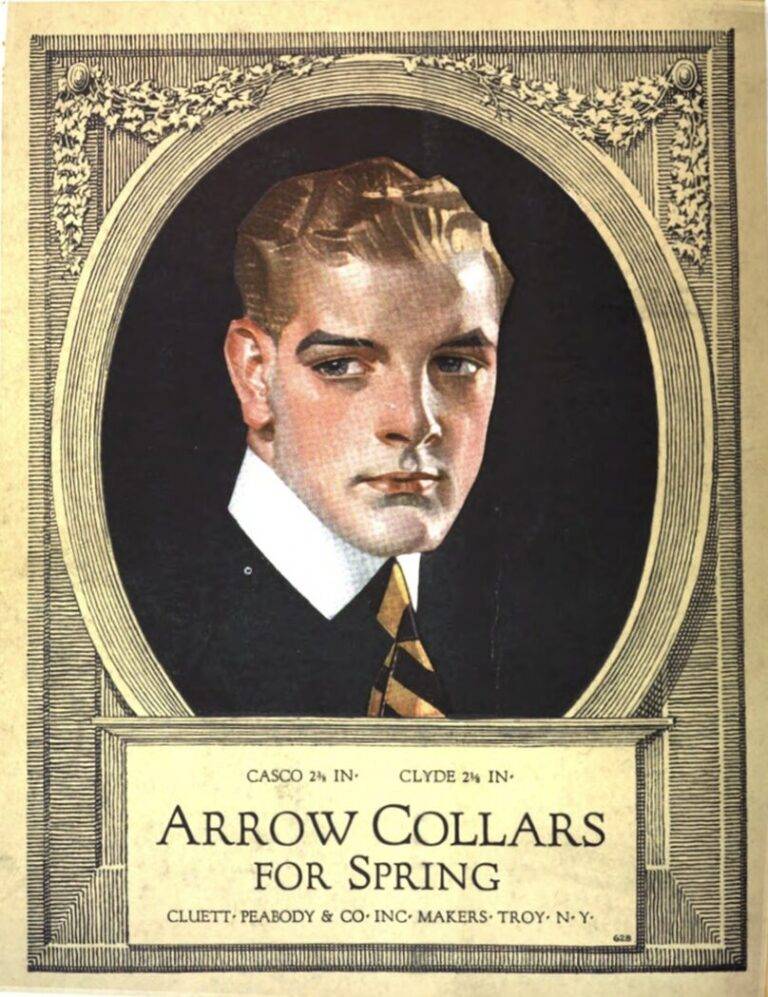
1918 The Haberdasher v.67(1918:Jan.-June)
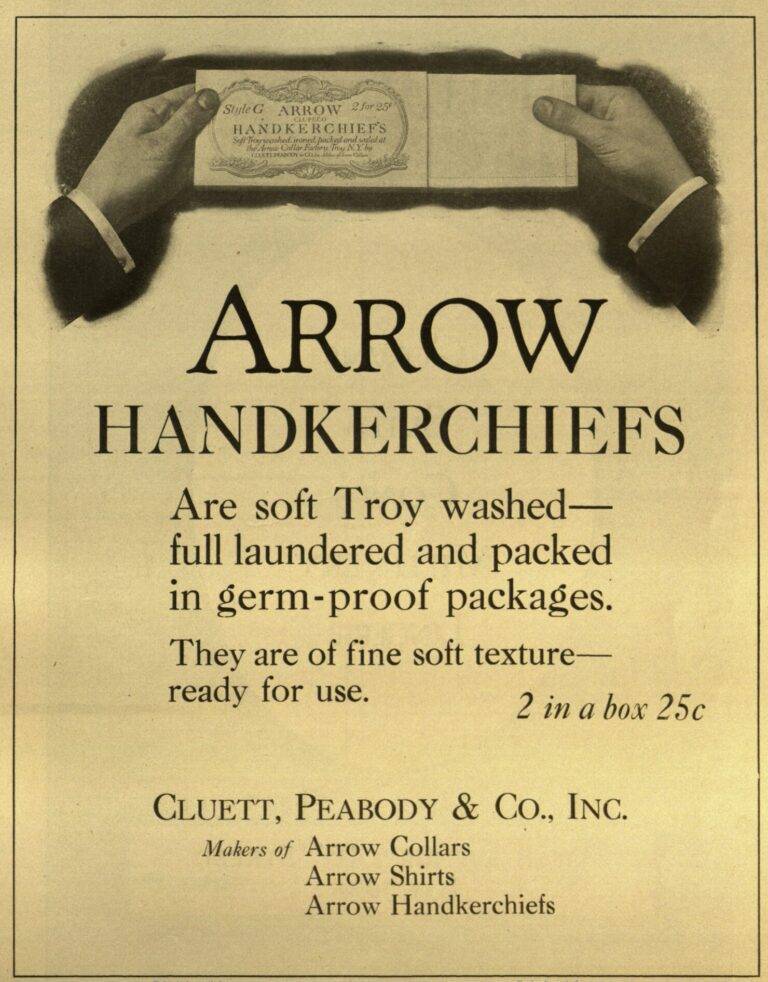
1918 The Yale record v. 46, no. 3, 1/9/1918
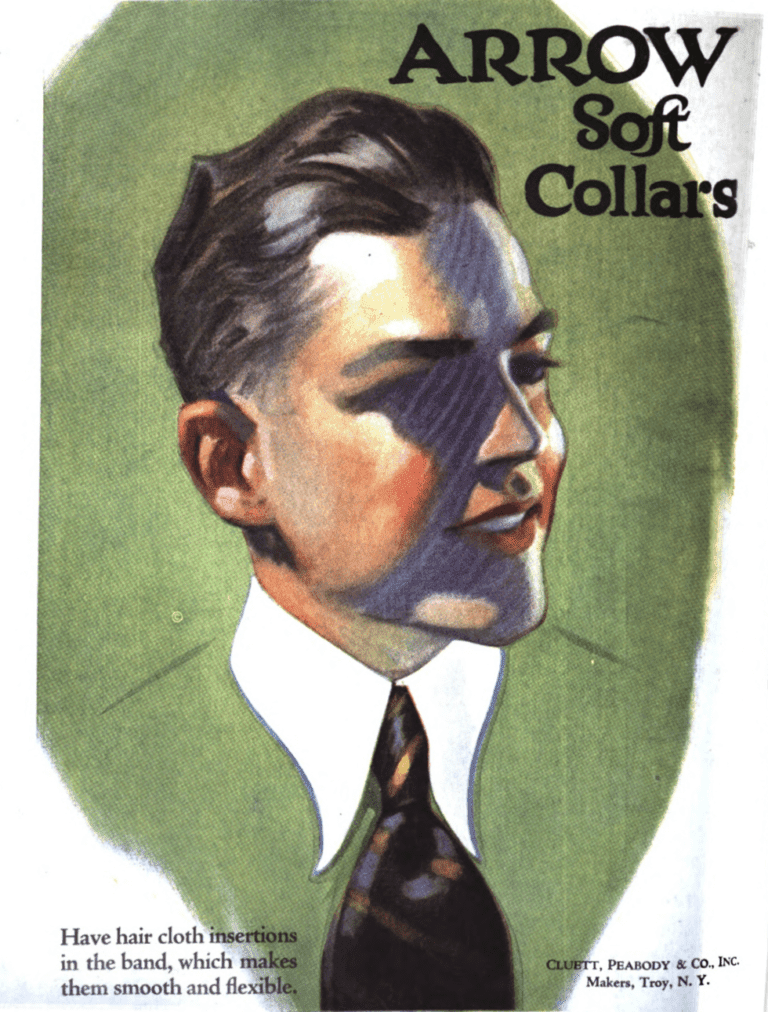
1918 The Haberdasher v.67(1918:Jan.-June)
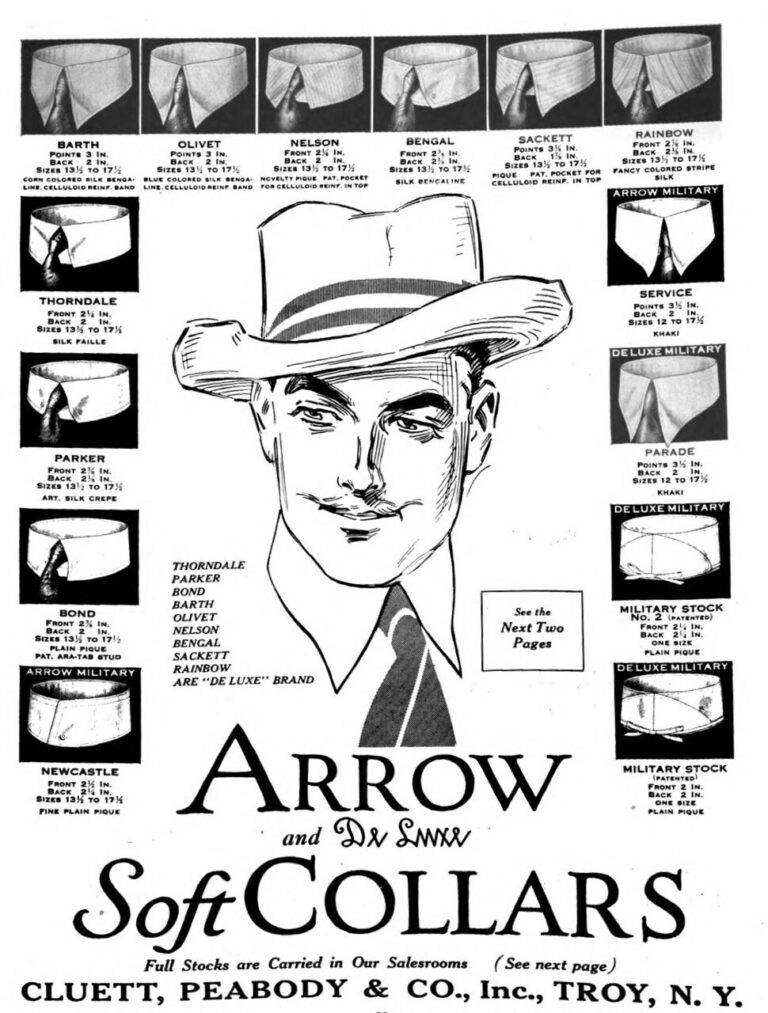
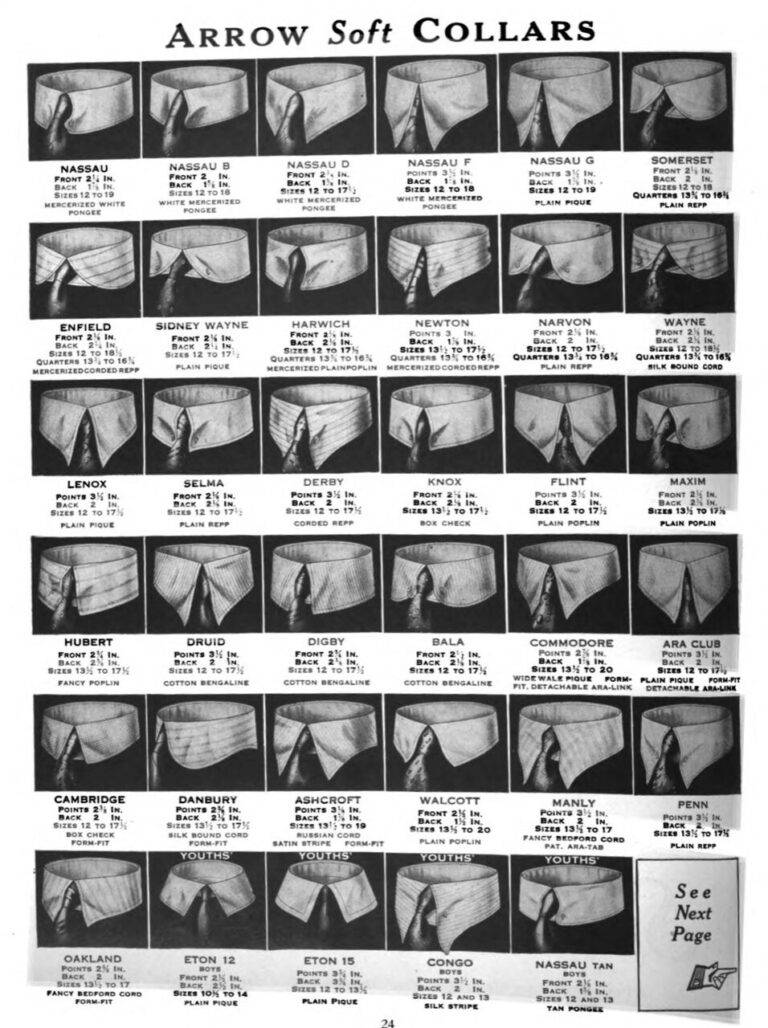
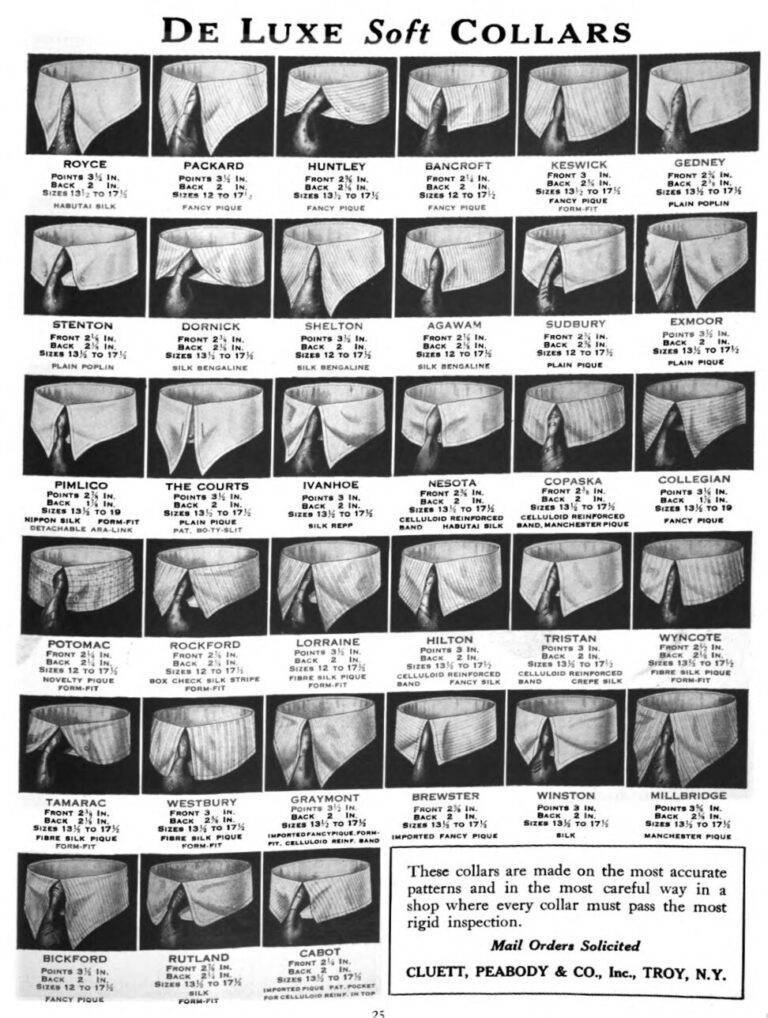
1918 The Haberdasher v.67(1918:Jan.-June)
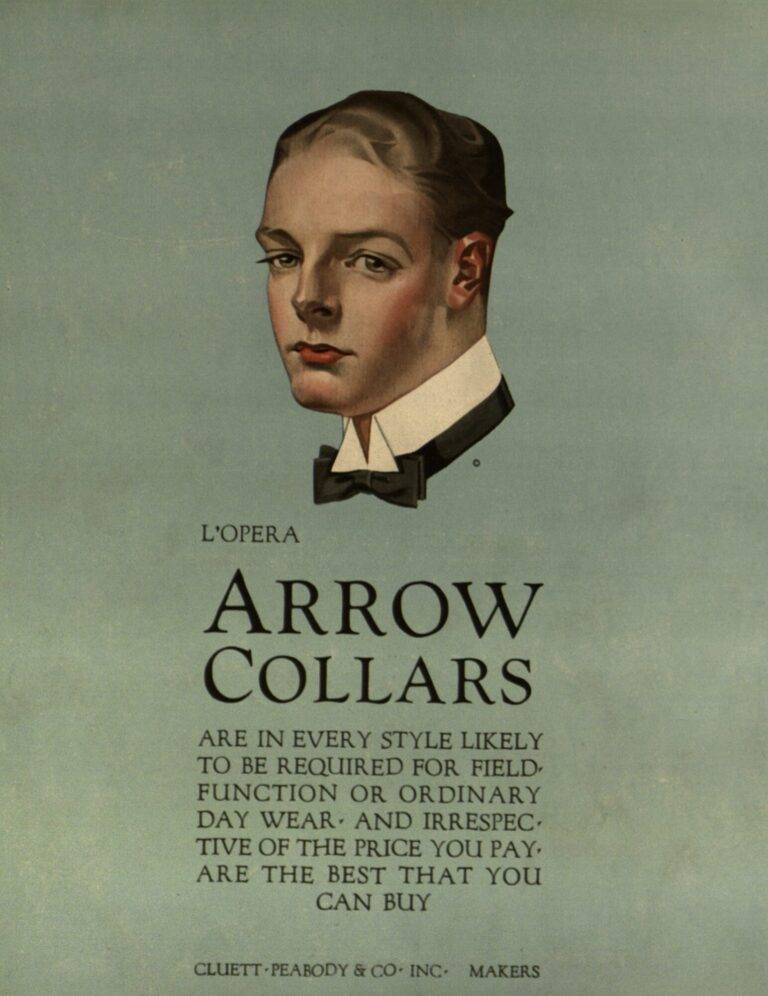
1918 The Yale record v. 46, no. 4, 2/9/1918
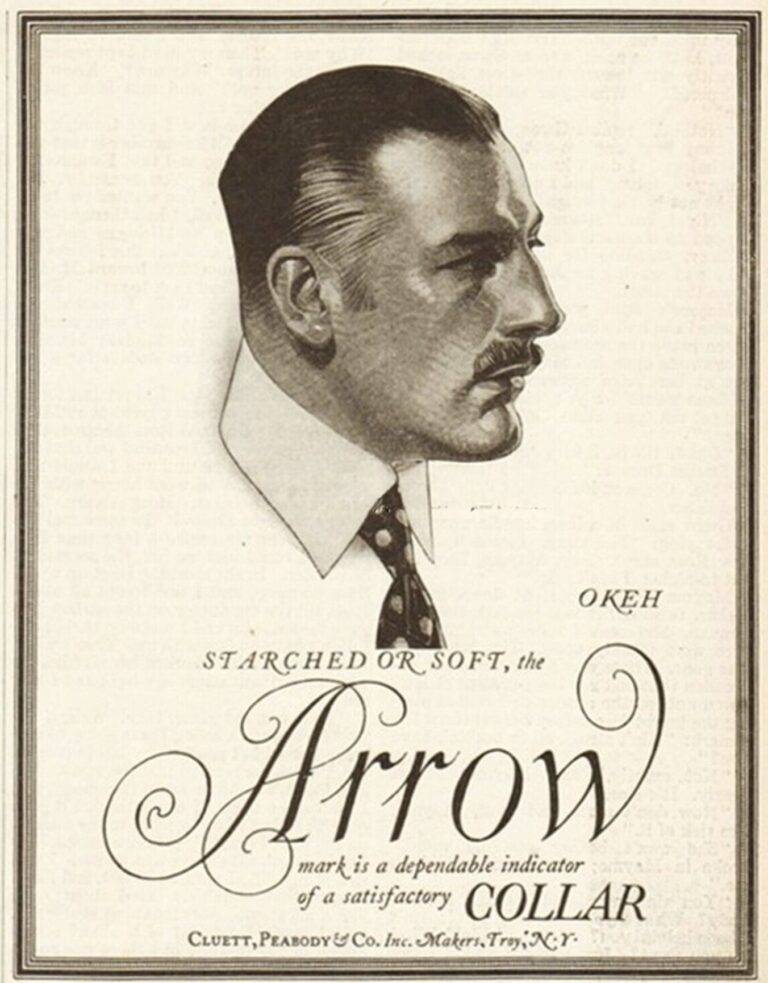
1919 JC Leyendecker Cluett Peabody Troy NY Arrow Moustache
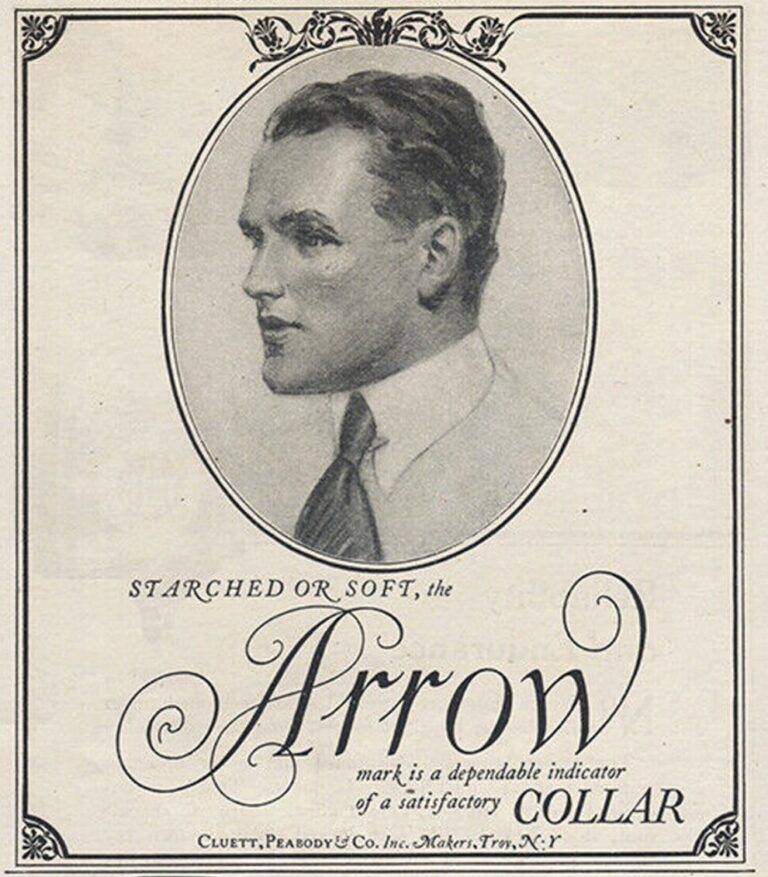
1919 Arrow Shirt Collar
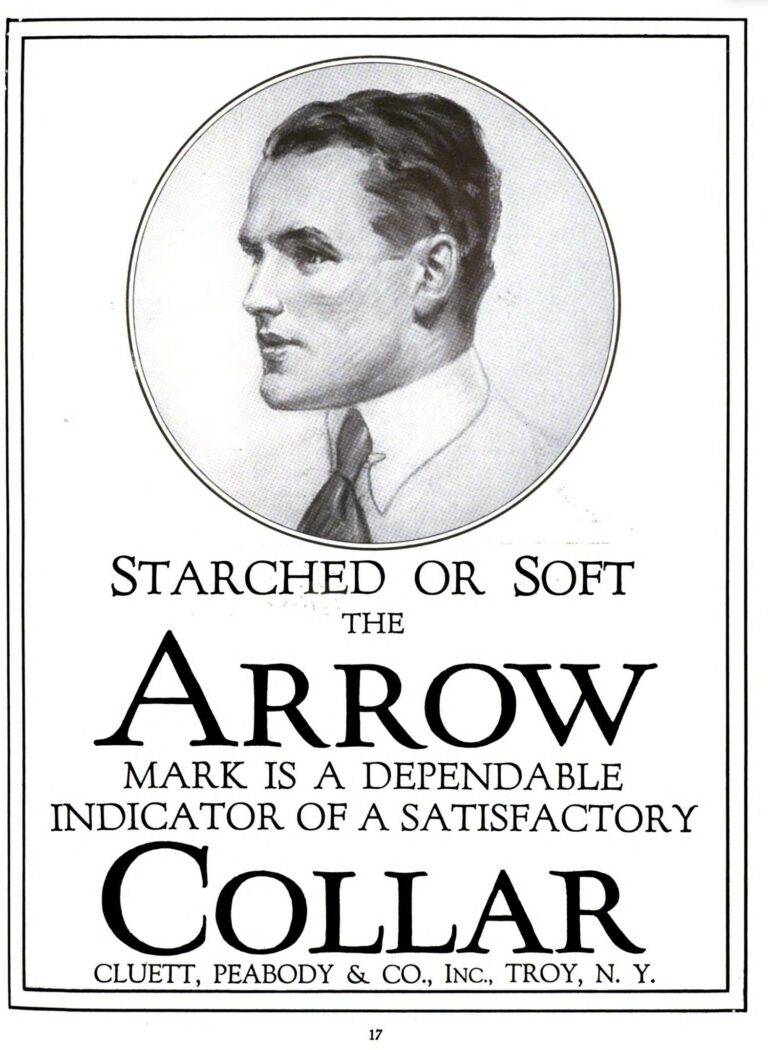
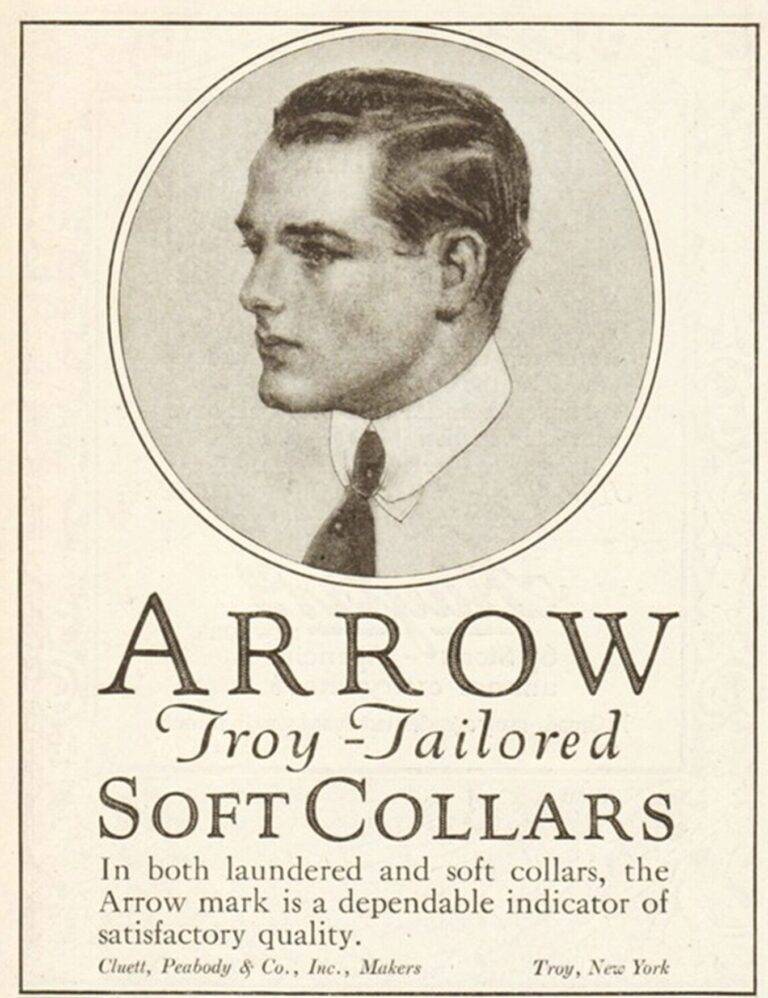
1919 Cluett Peabody Co Troy NY Arrow Soft Collar Men’s Fashion Style
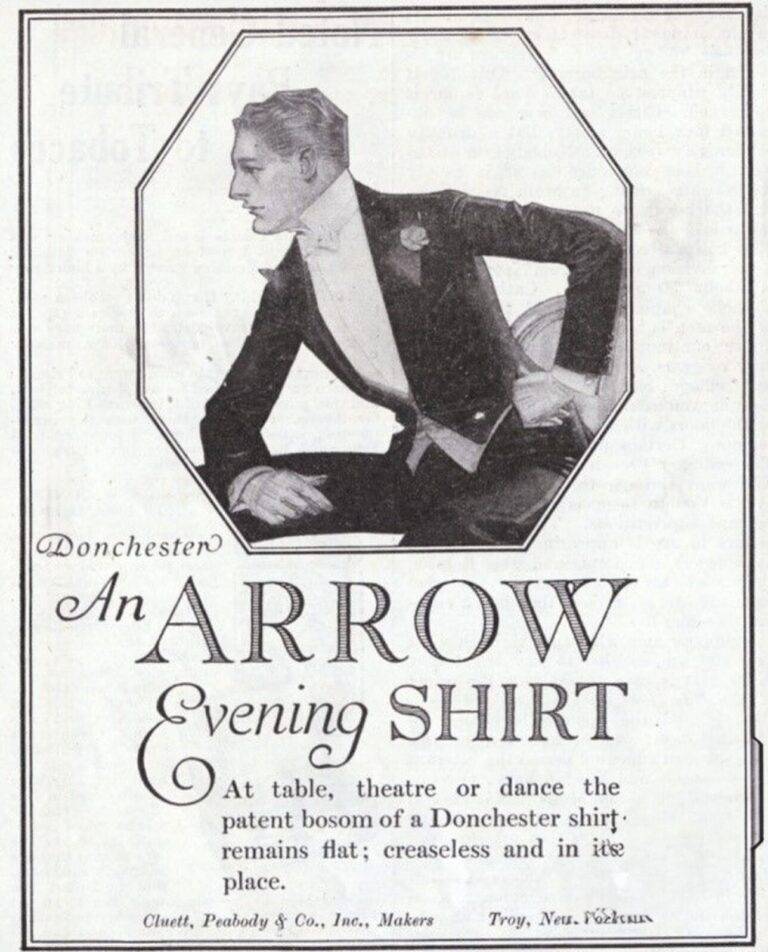
1919 J.C. Leyendecker man art Arrow Donchester evening shirt
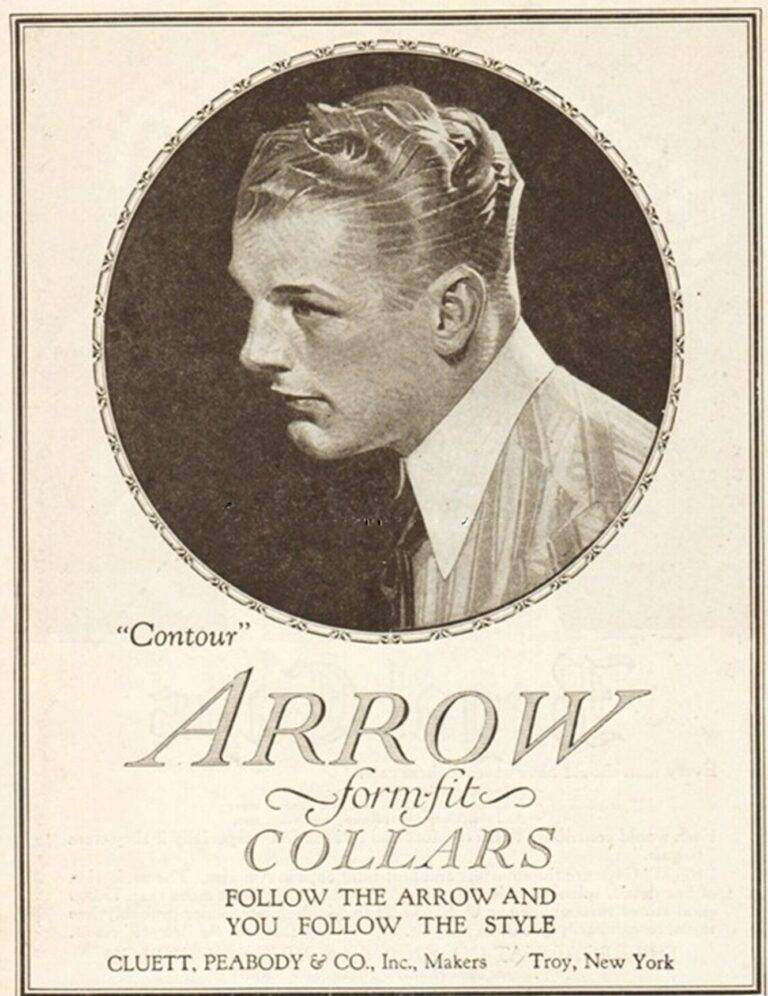
1919 Arrow Shirt Collar


1919 The Clothier and furnisher v.94 F-JY(1919)
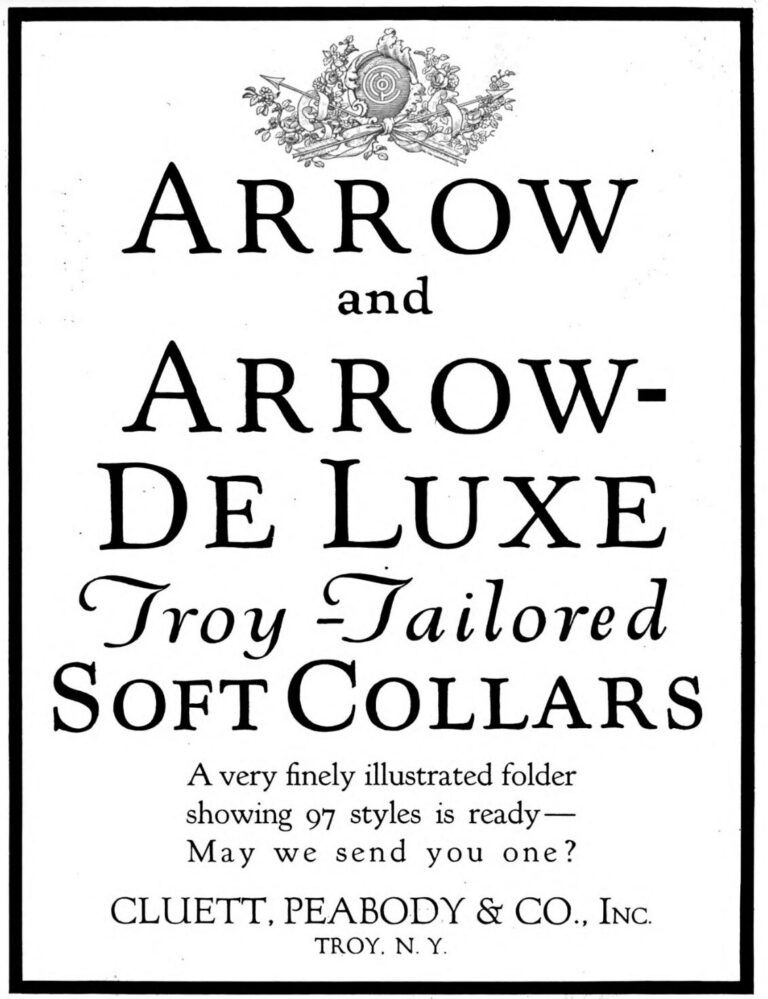
1919 The Clothier and furnisher v. 94 (Feb.-July 1919)
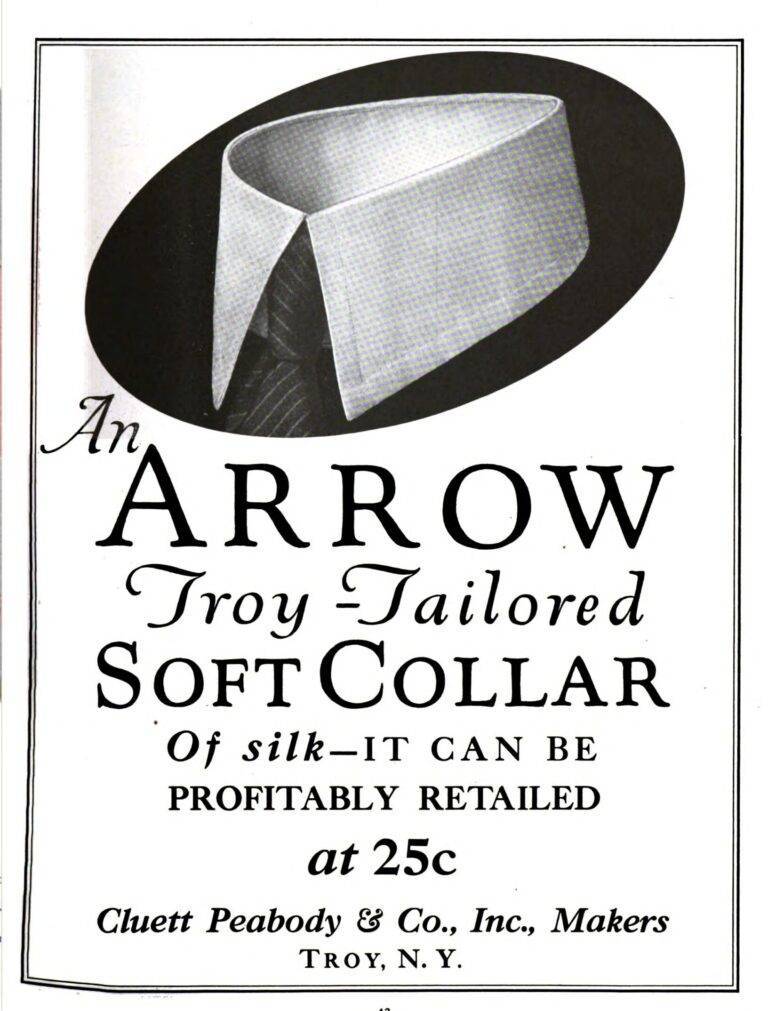
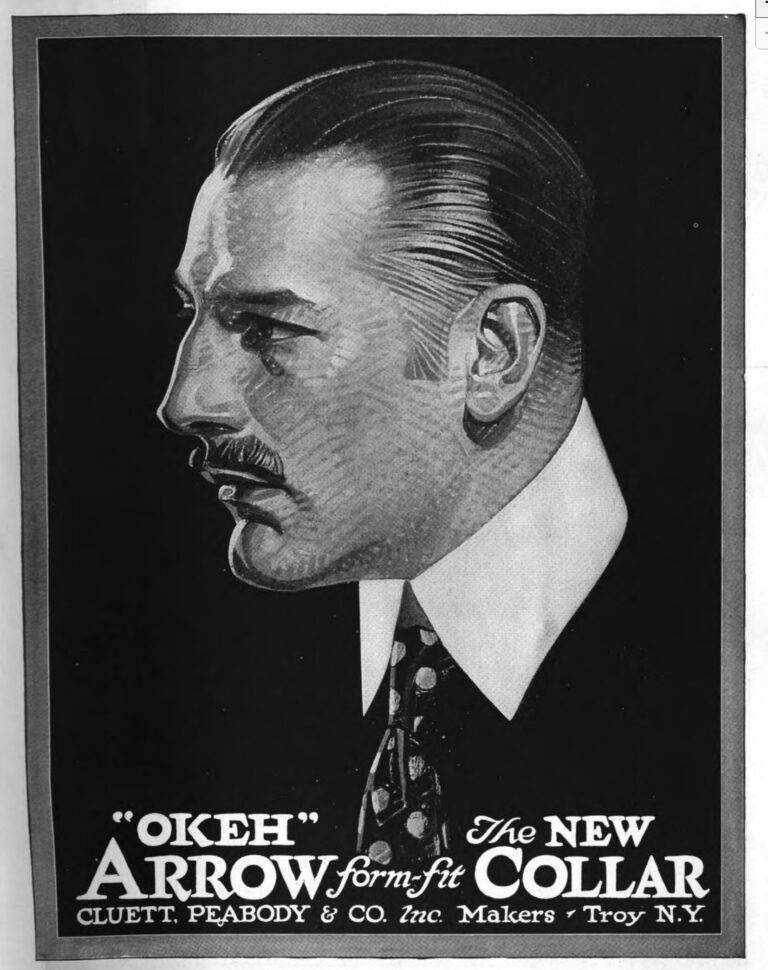
1919 The Haberdasher v.69(1919:Jan.-June)
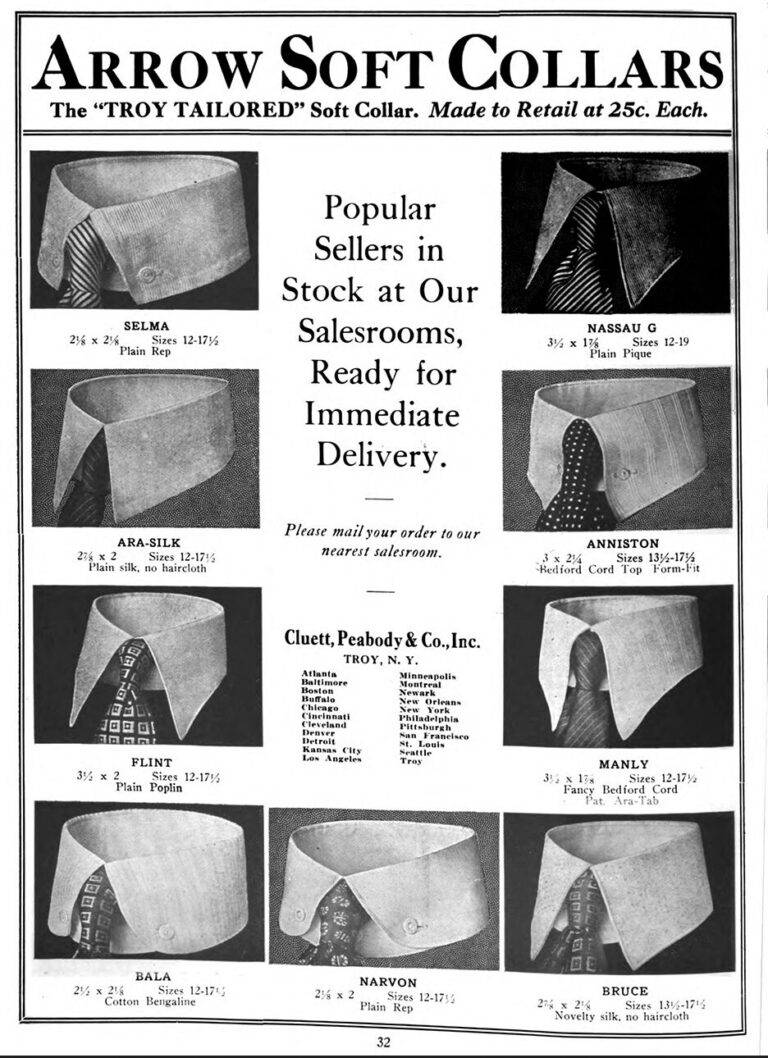
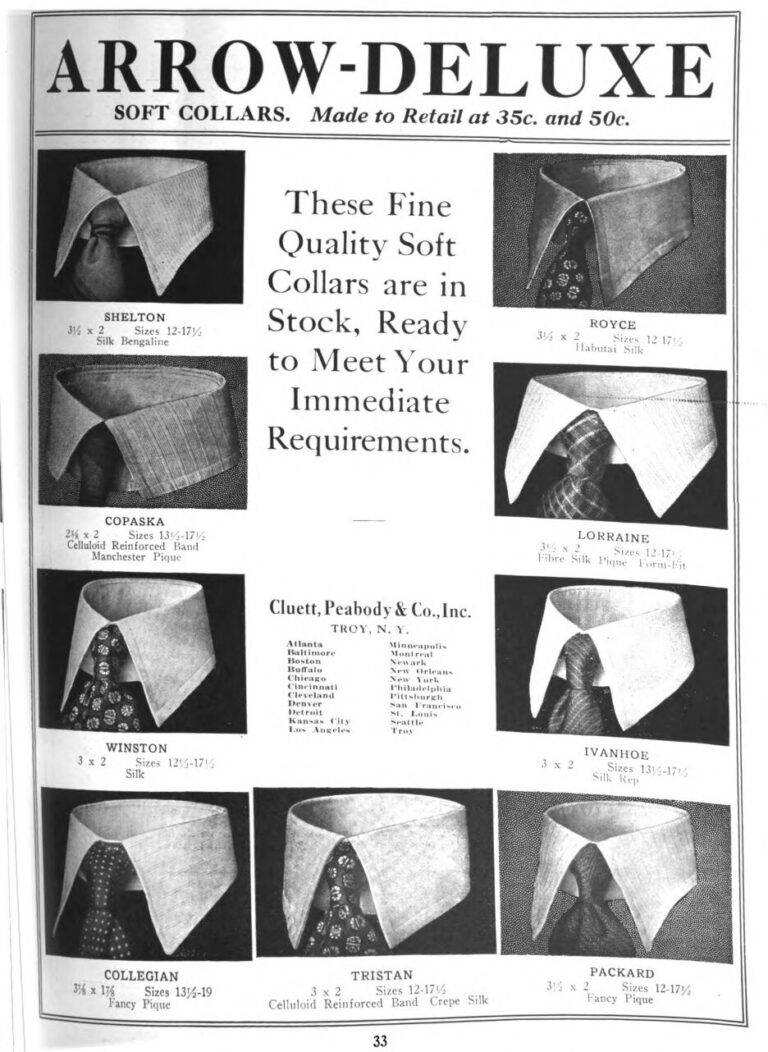
1919 The Haberdasher v.70(1919:July-Dec.)
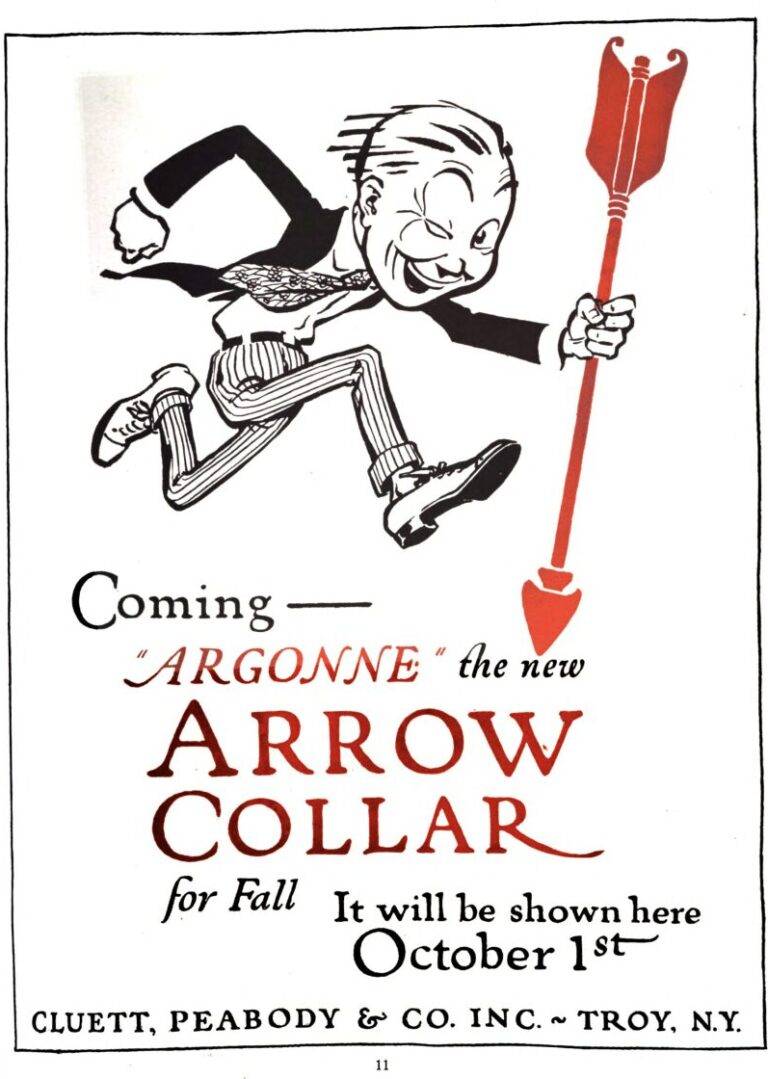
1919 The Haberdasher v.70(1919:July-Dec.)
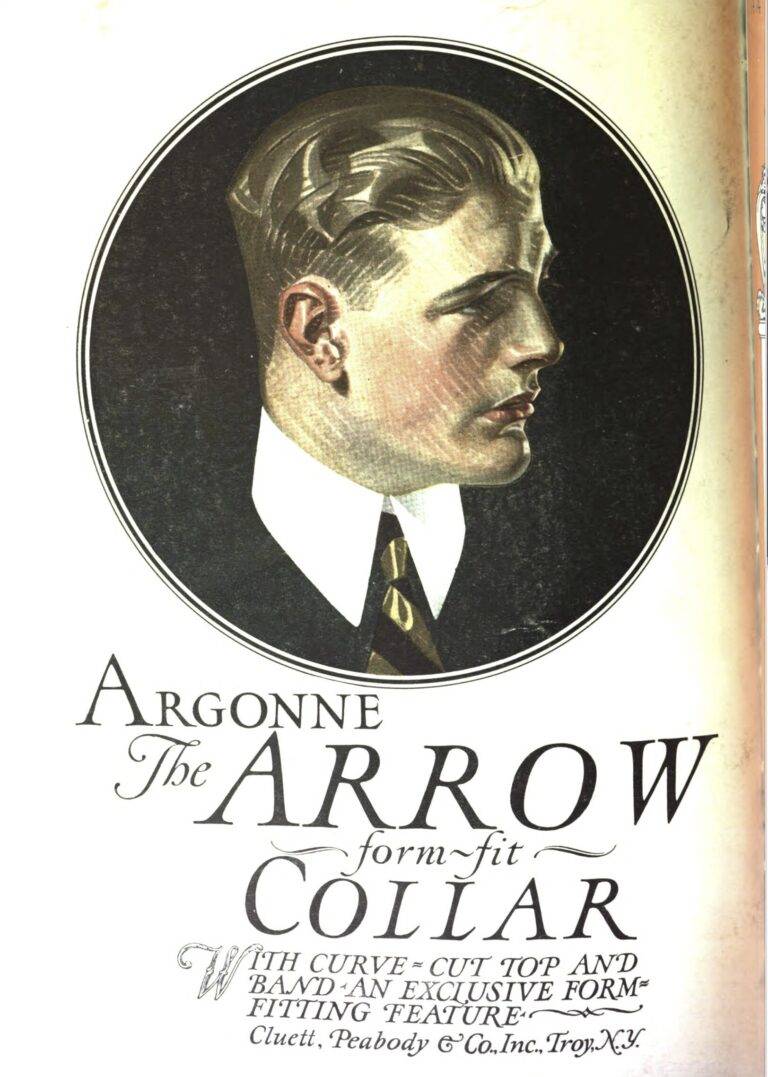
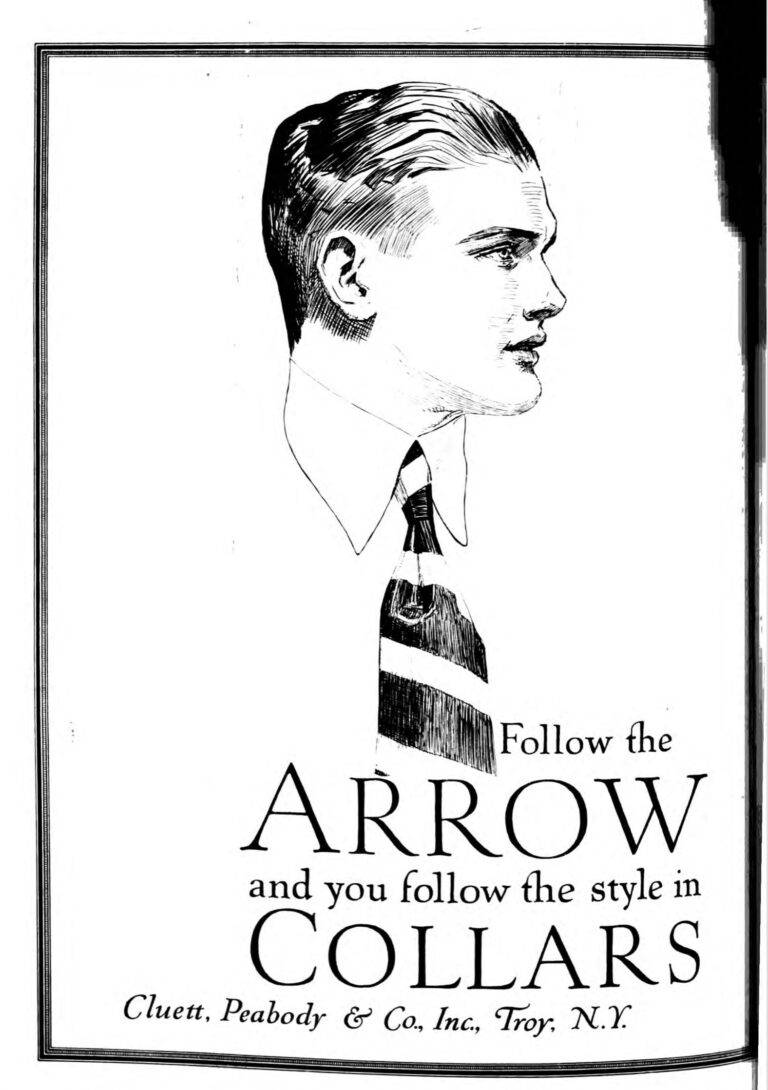
1919 The Haberdasher v.70(1919:July-Dec.)
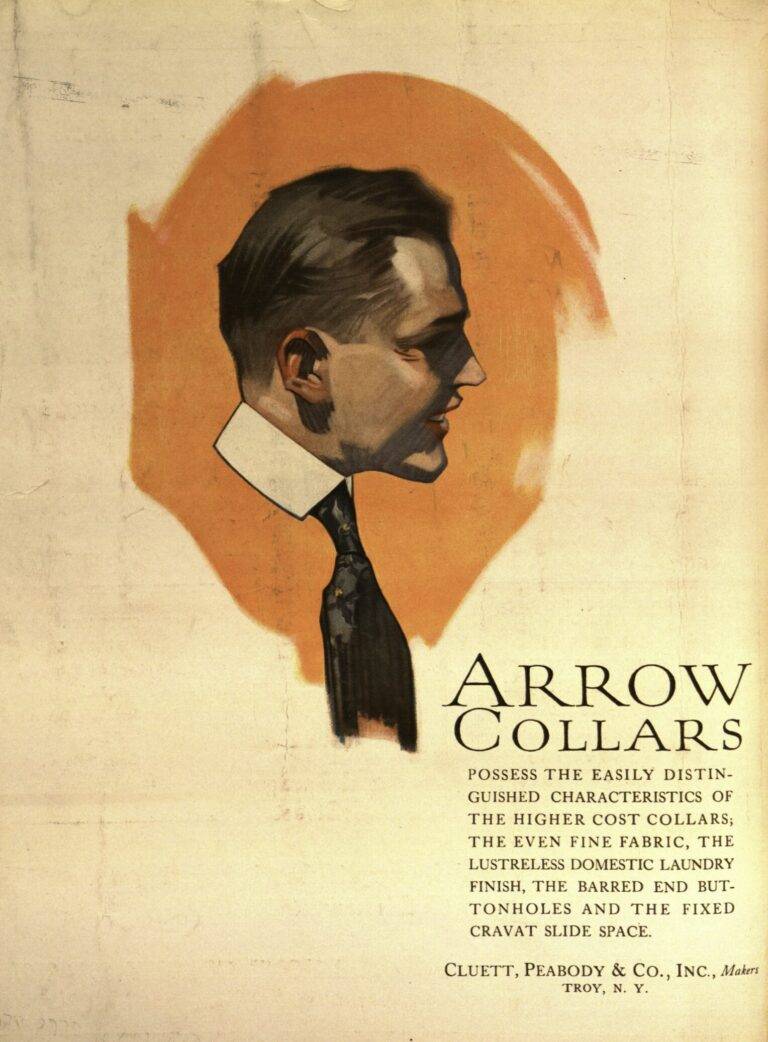
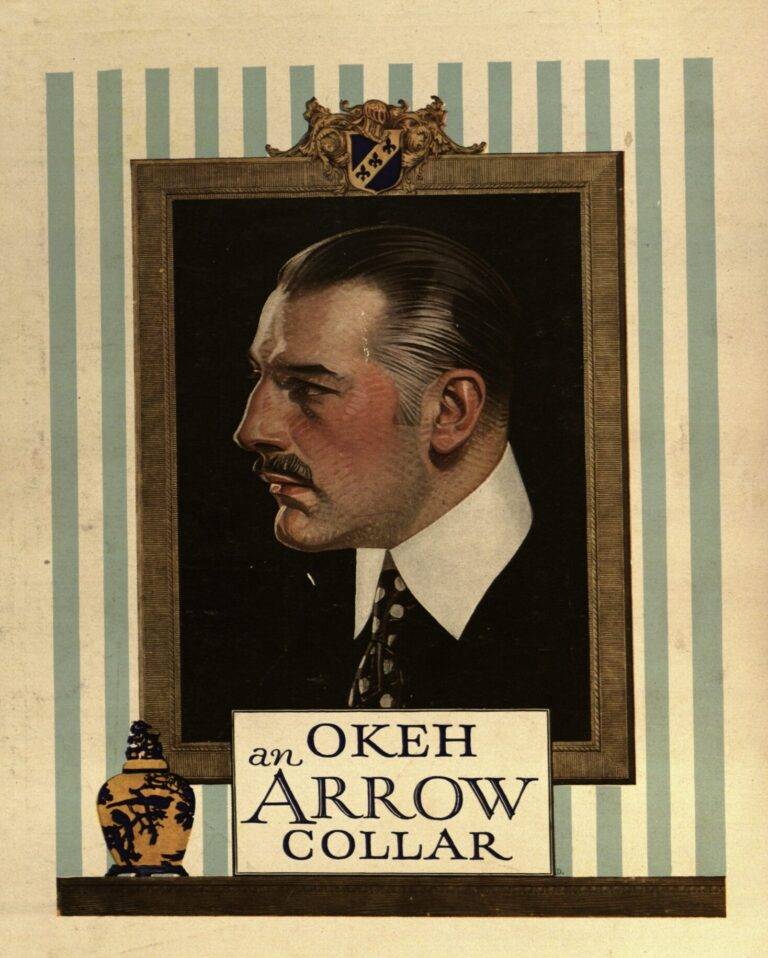
1919 The Yale record v. 47, no. 1, 1919
1920s
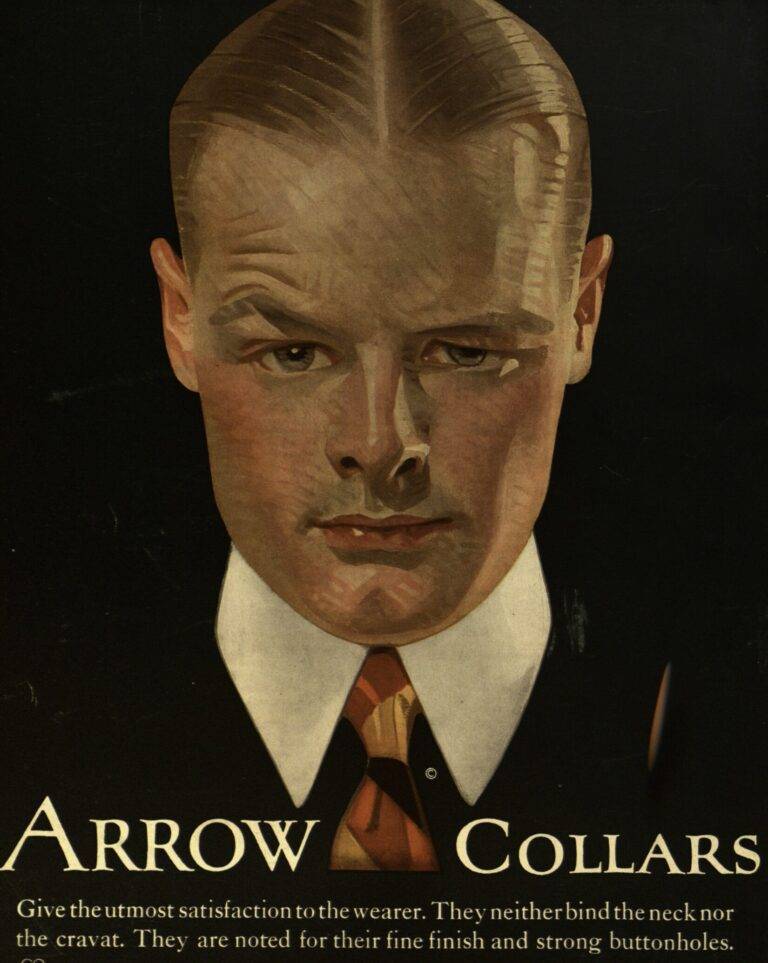
1920 The Yale record v. 48, no. 9, 1920
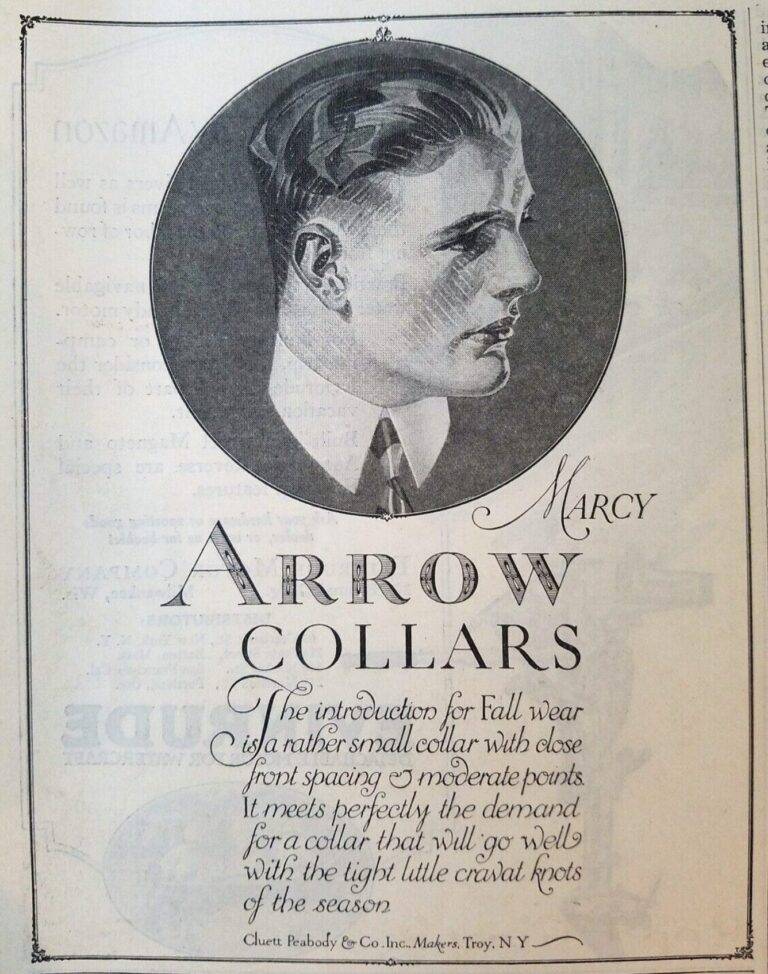
1920 Arrow mens shirt collars Marcy style
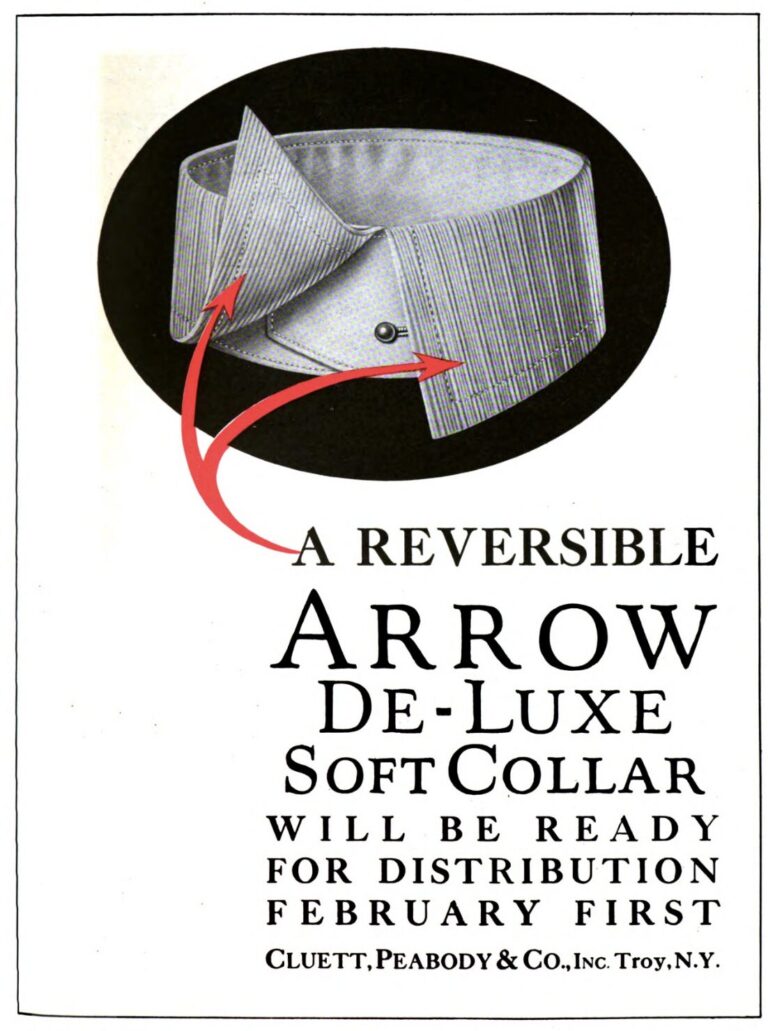
1920 The Clothier and furnisher v.97
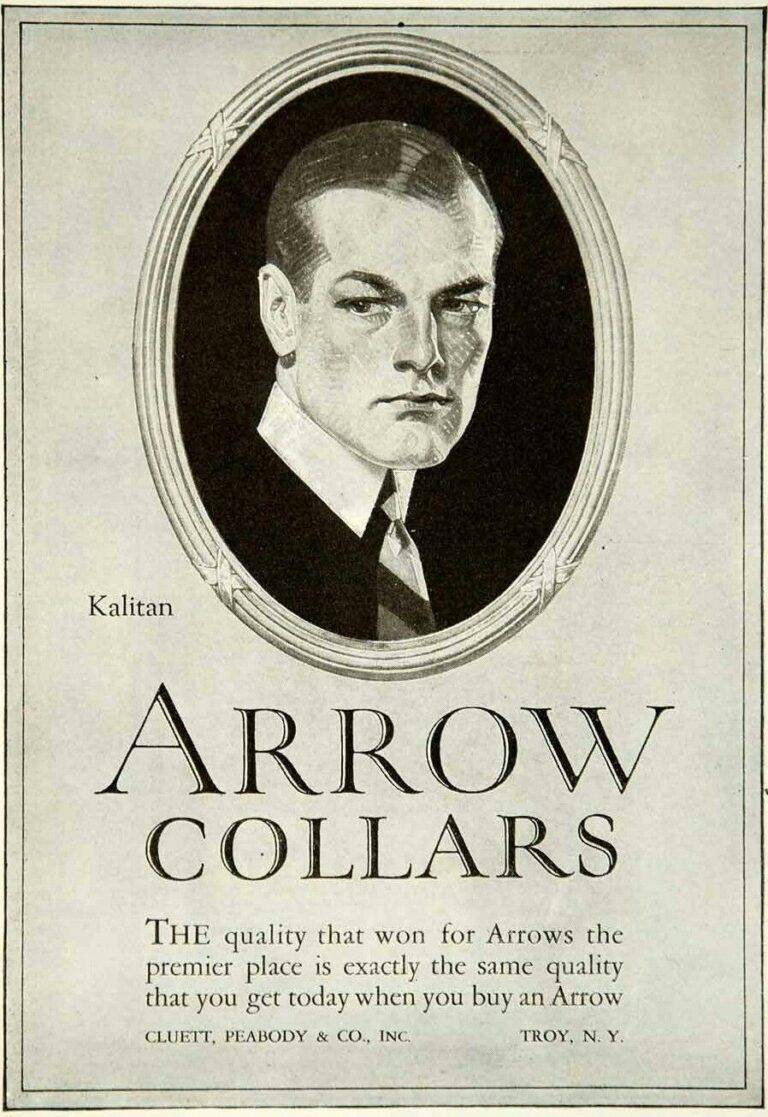
Arrow 1920
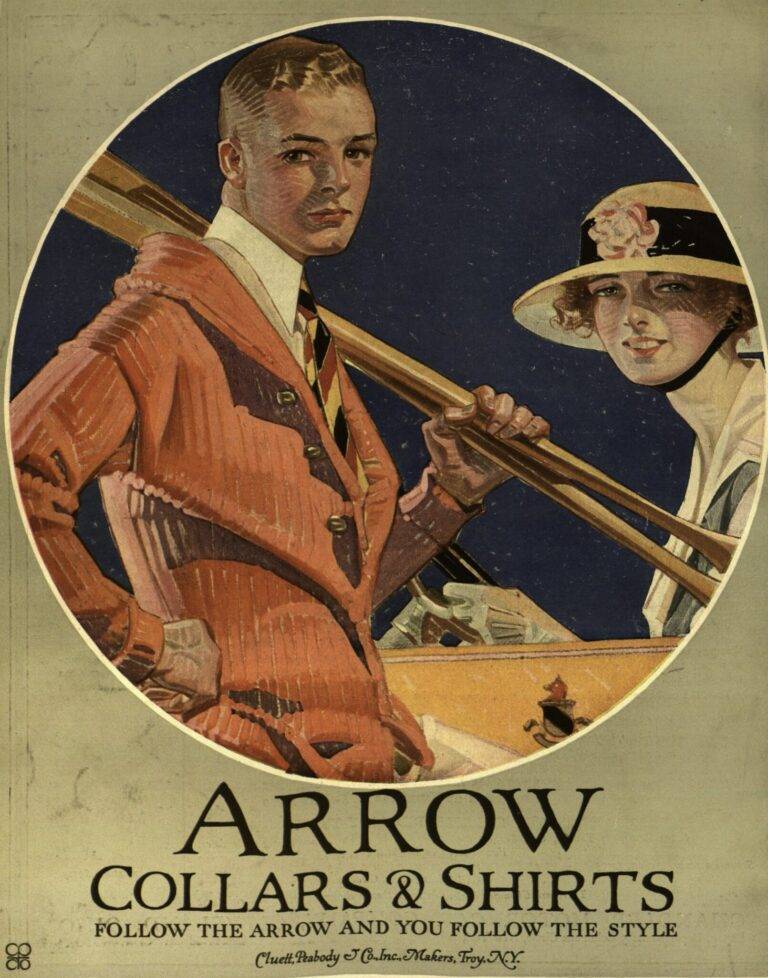
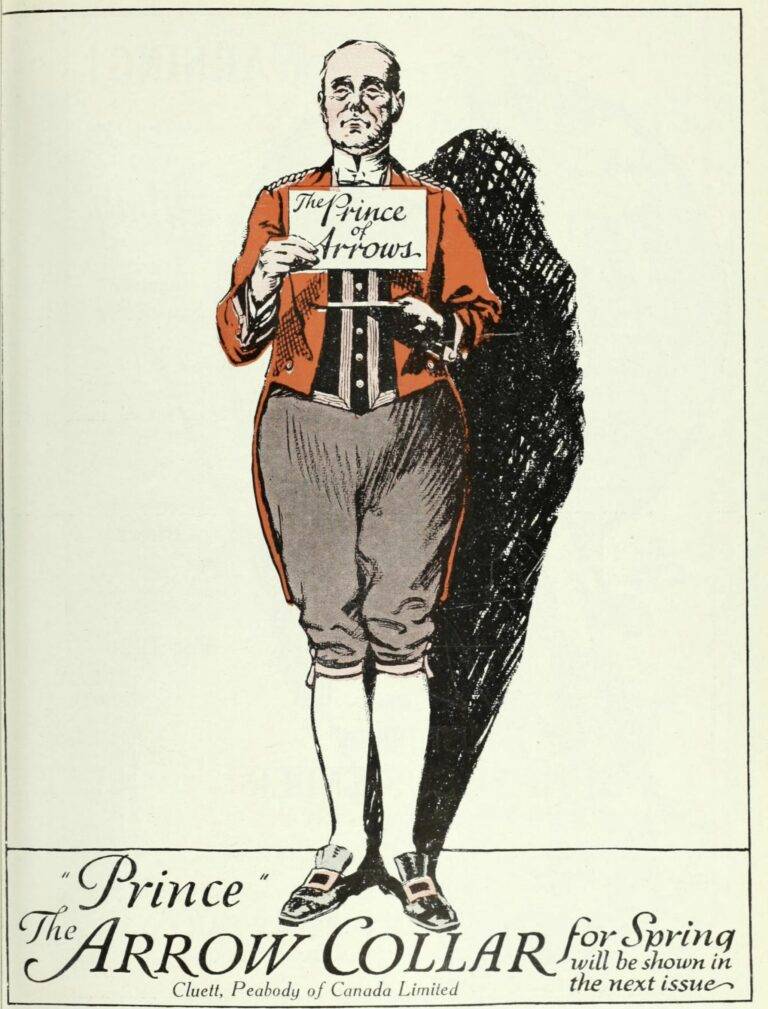
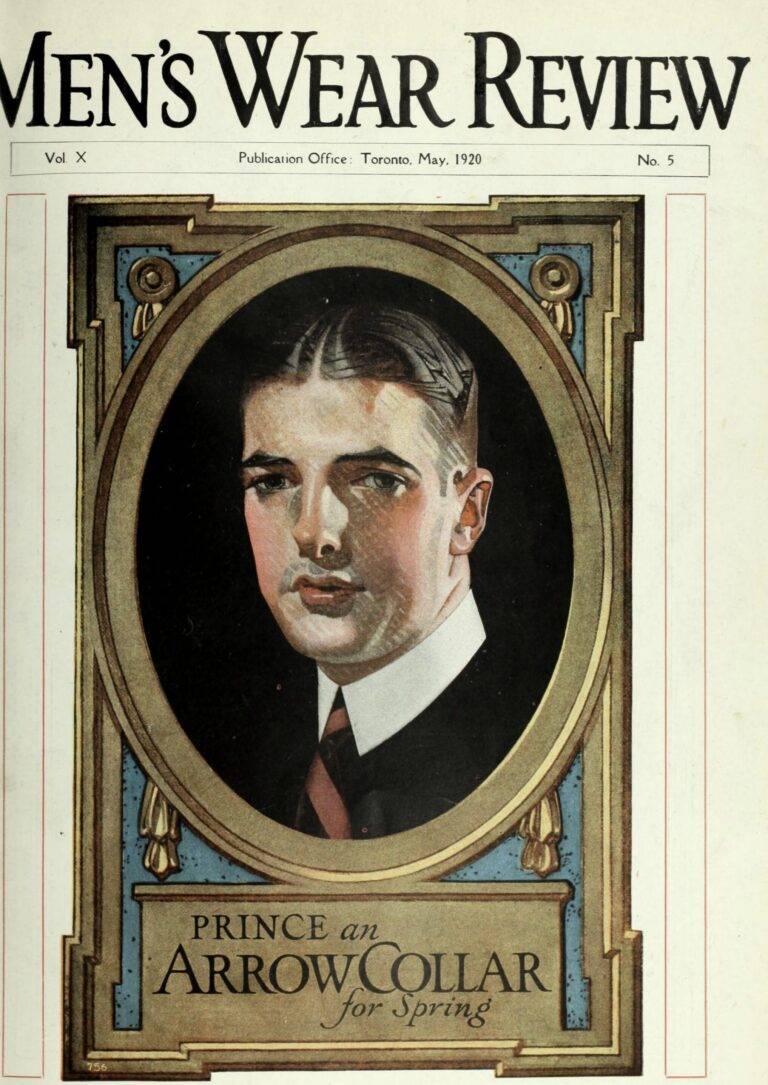
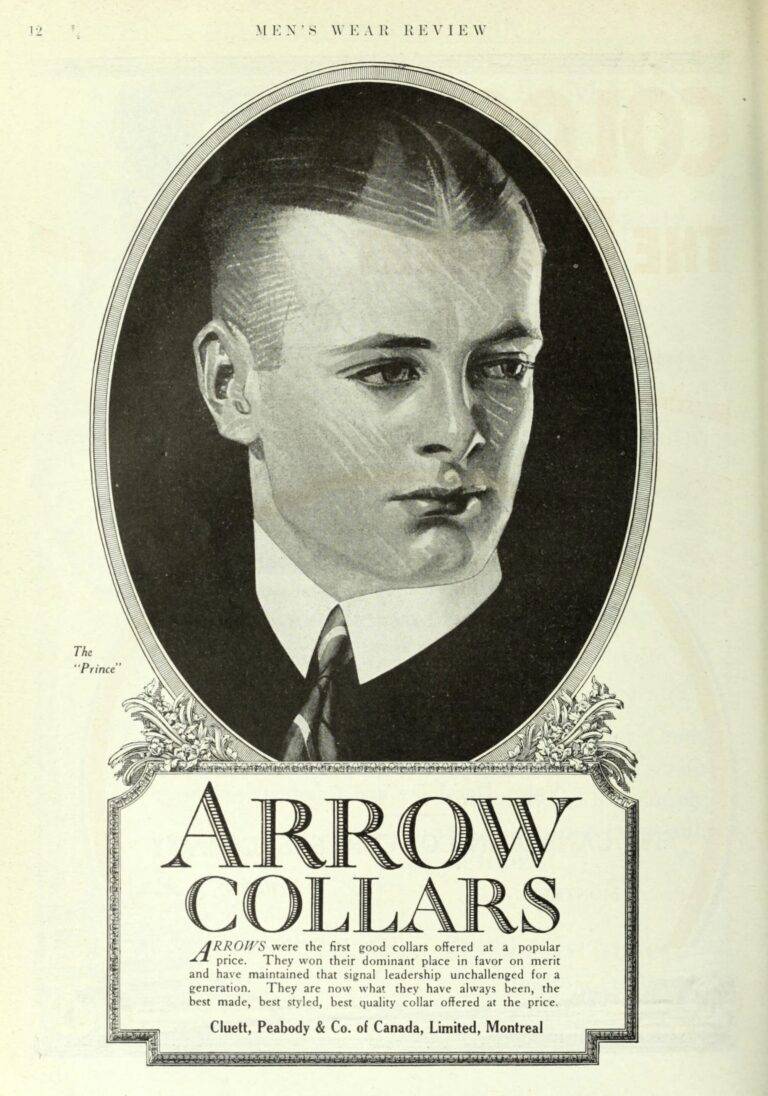
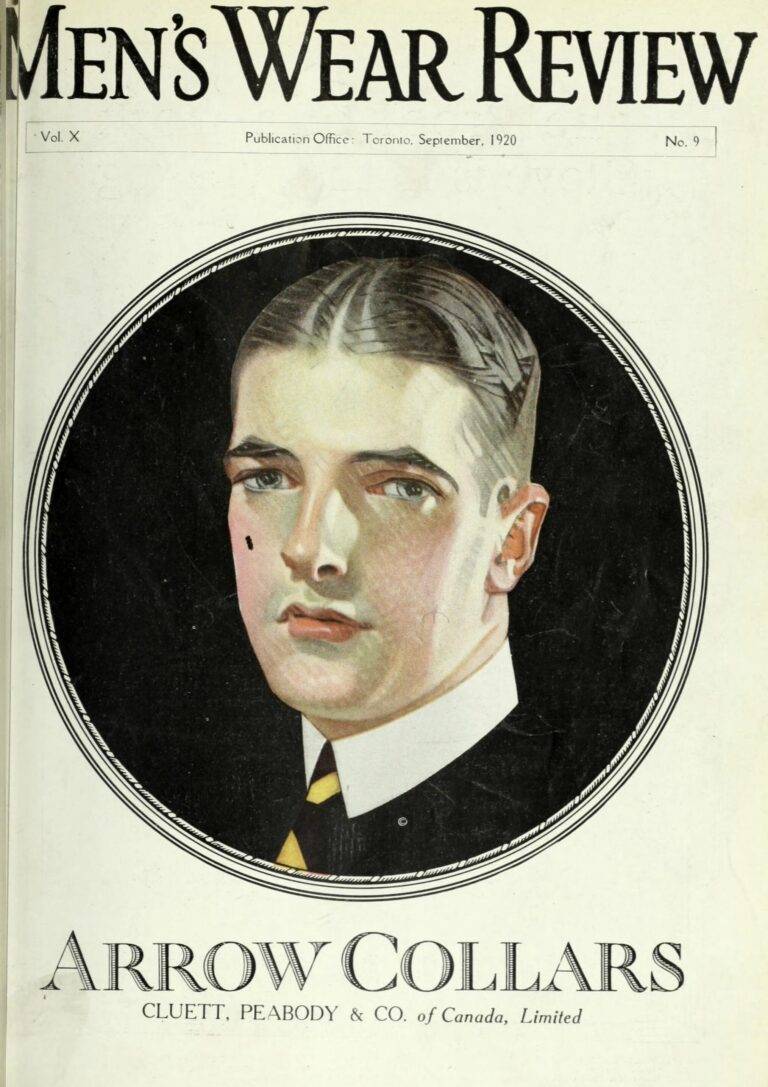
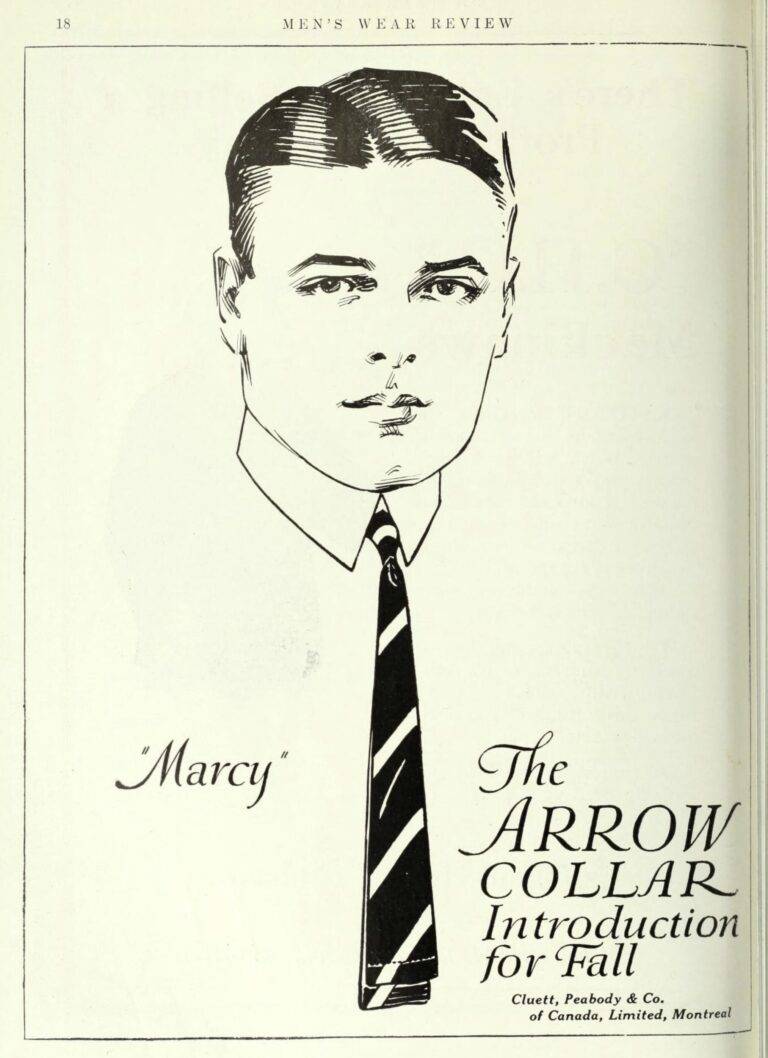
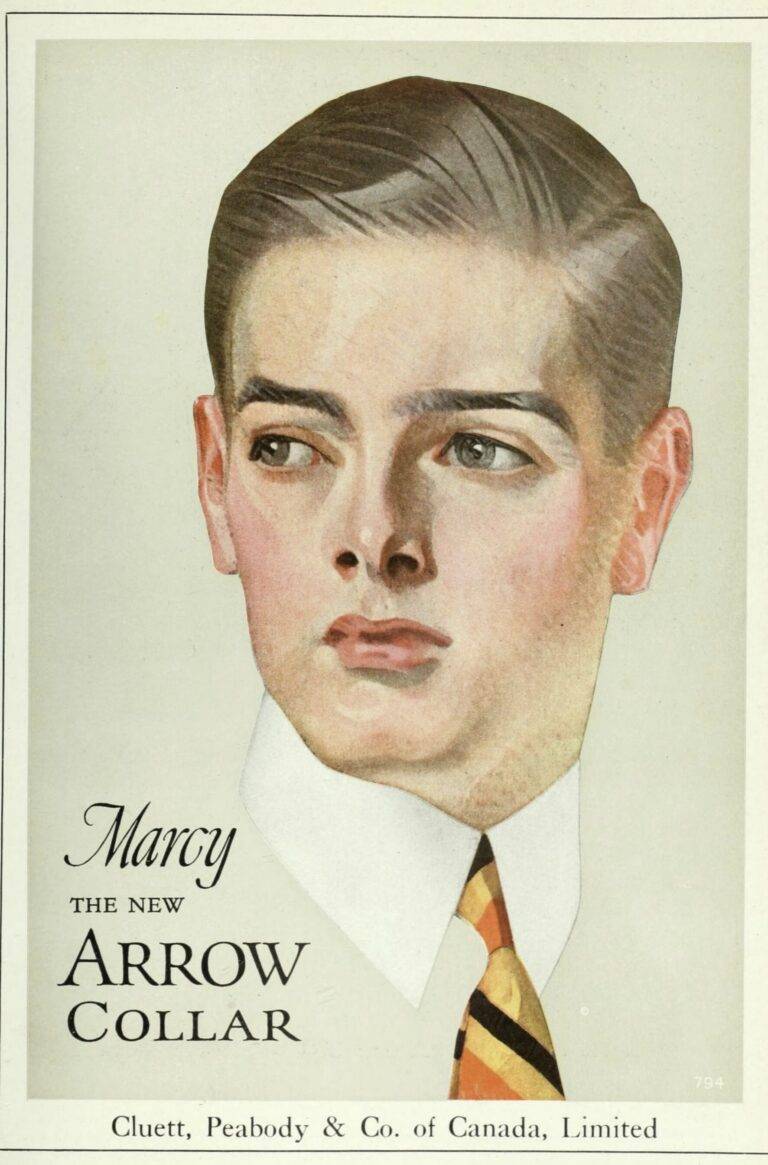
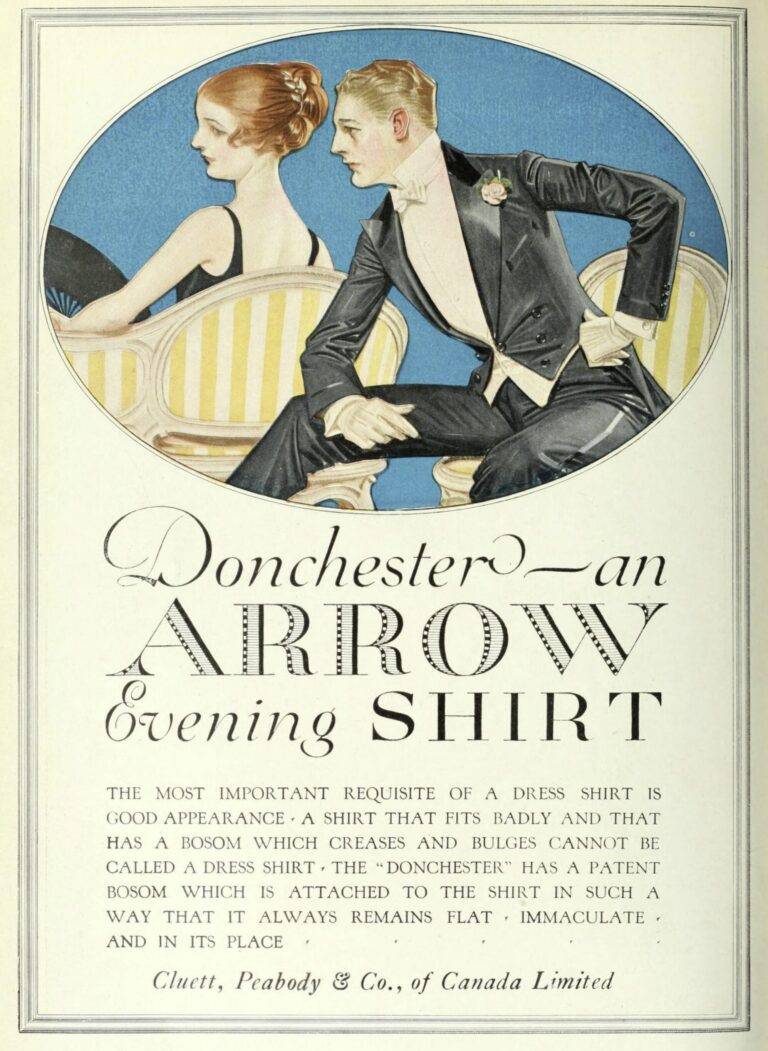
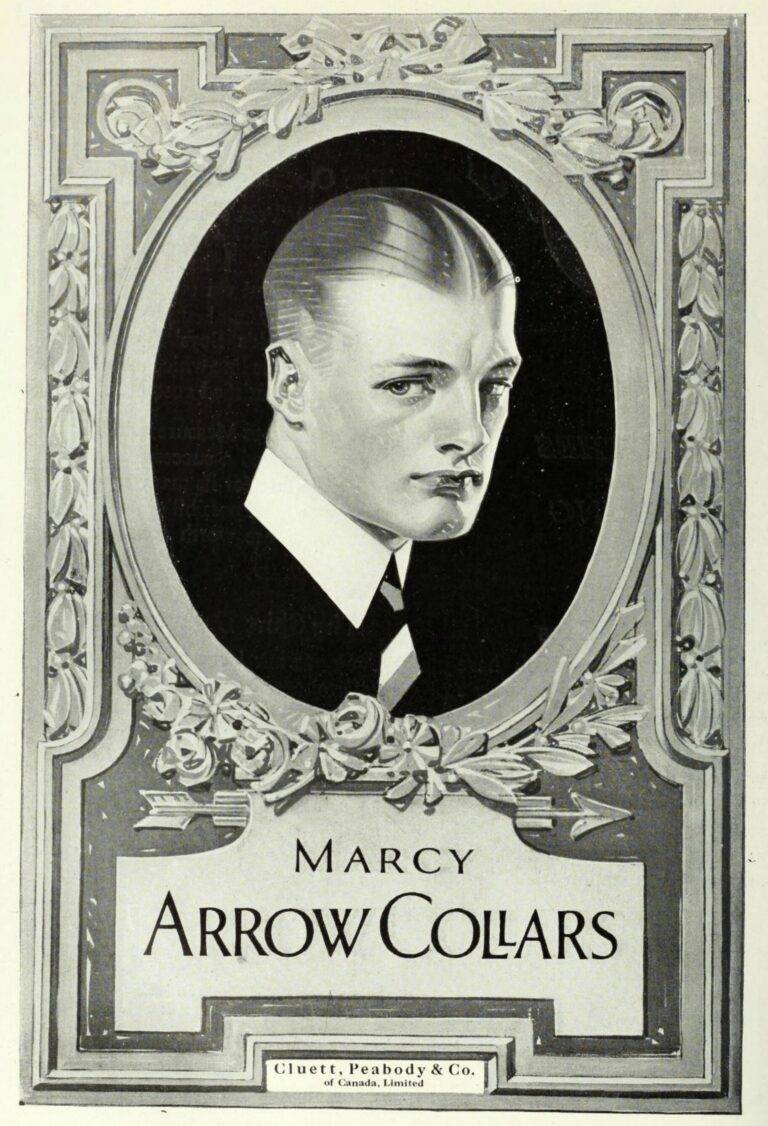
1920 Men’s wear of Canada (January-December 1920)
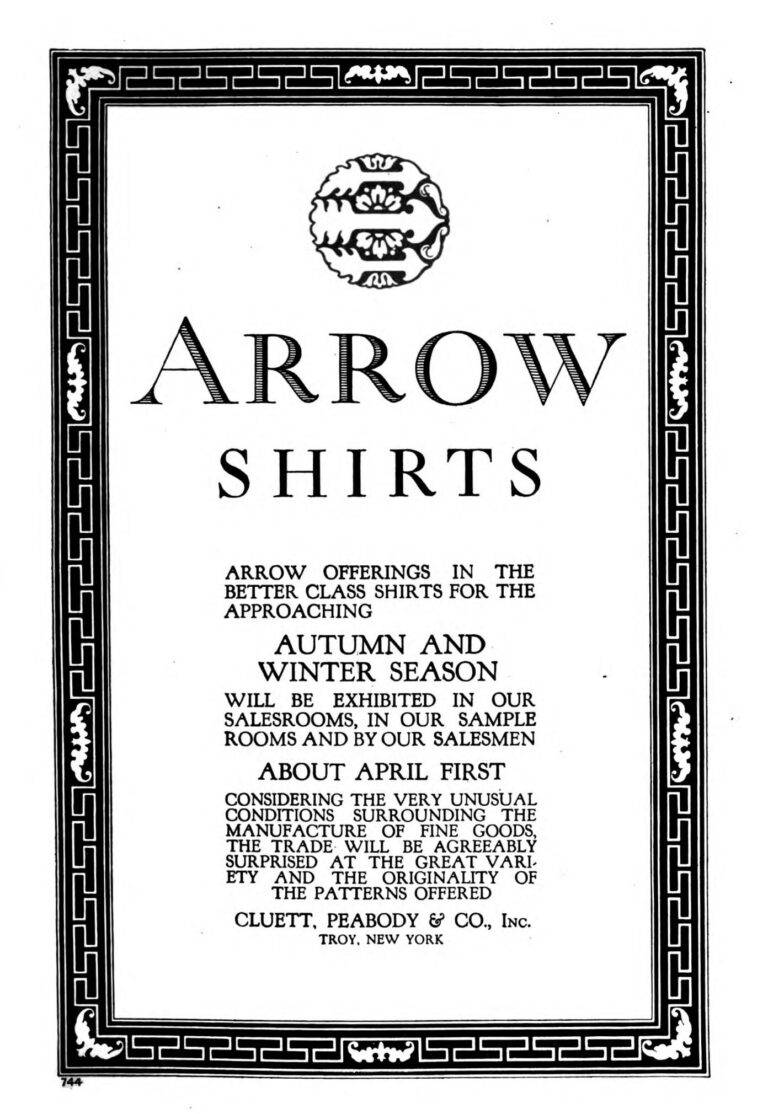
1920 The Clothier and furnisher v.96 F-JY(1920)
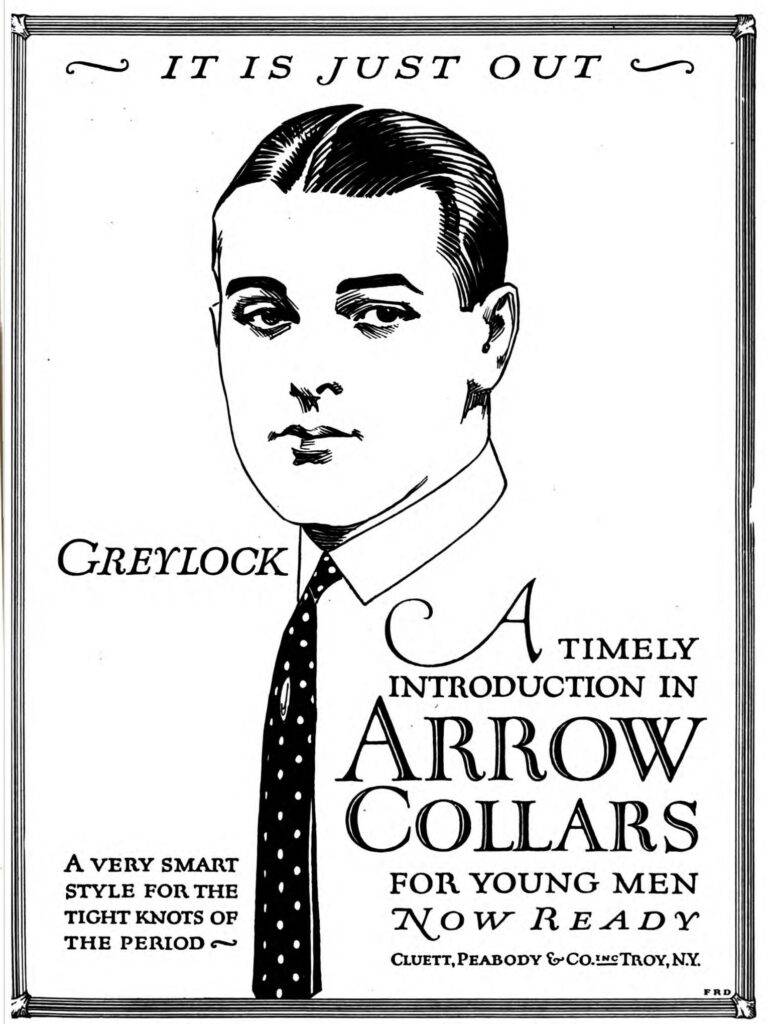
1921 The Clothier and furnisher v.98 (Bd. w/o Mr, Ap) (1921:F-Jy)
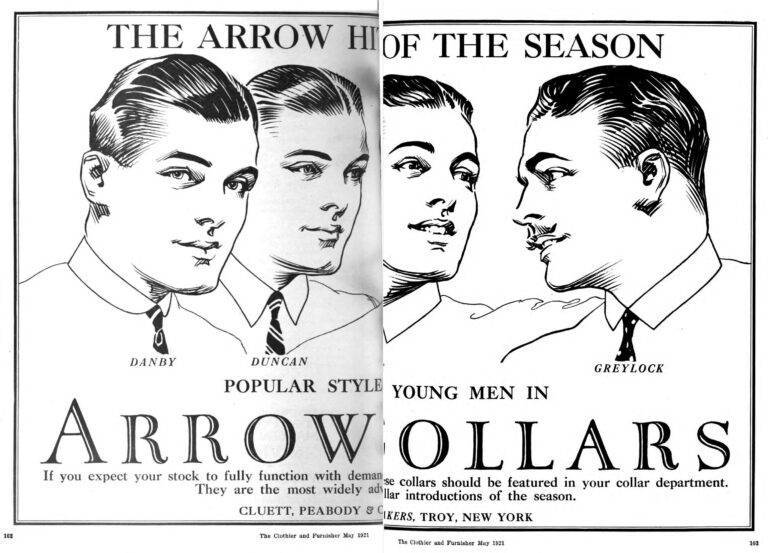
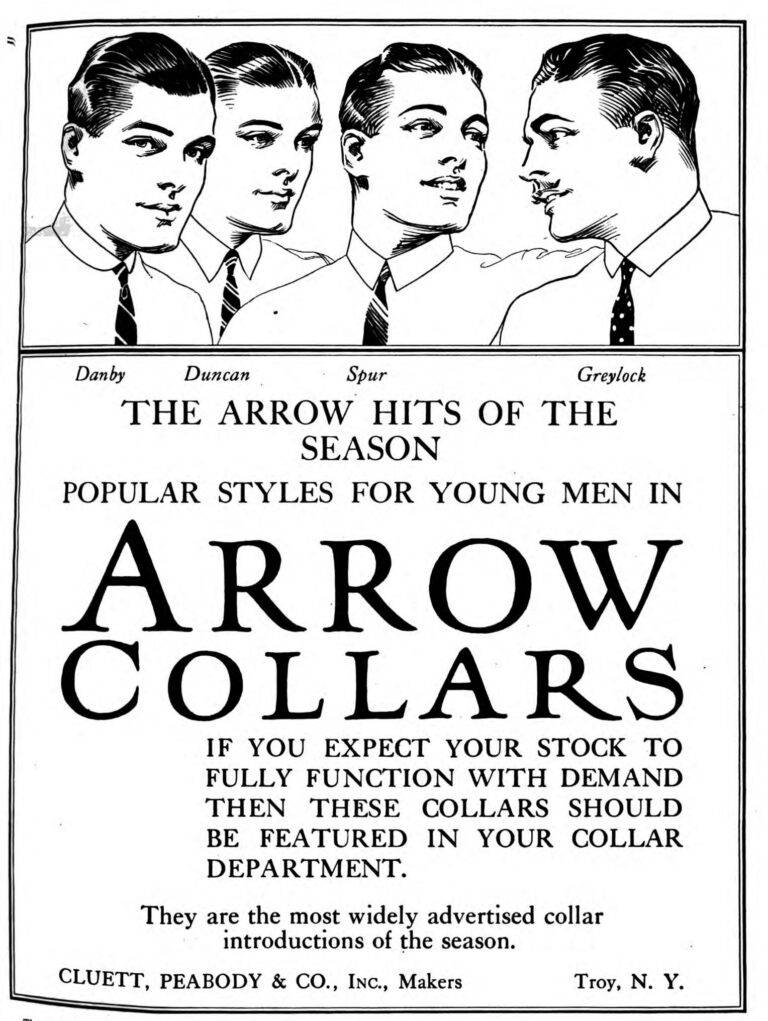
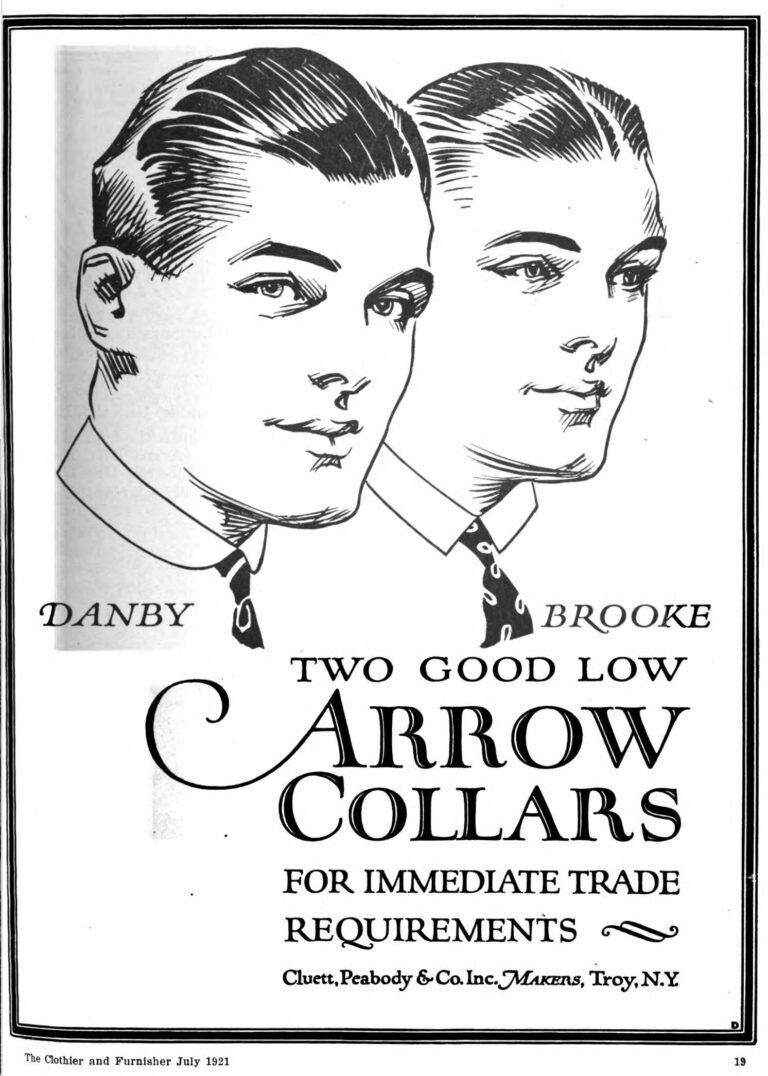
1921 The Clothier and furnisher v.98 (Bd. w/o Mr, Ap) (1921:F-Jy)
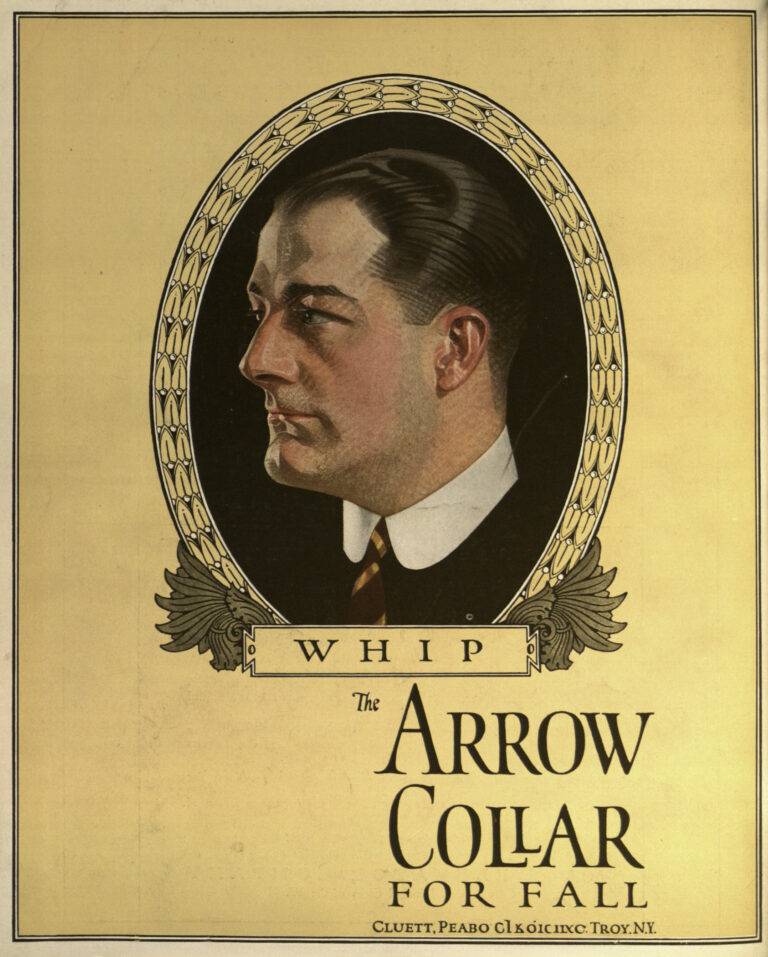
1921 The Yale record v. 50, no. 1, 10/12/1921
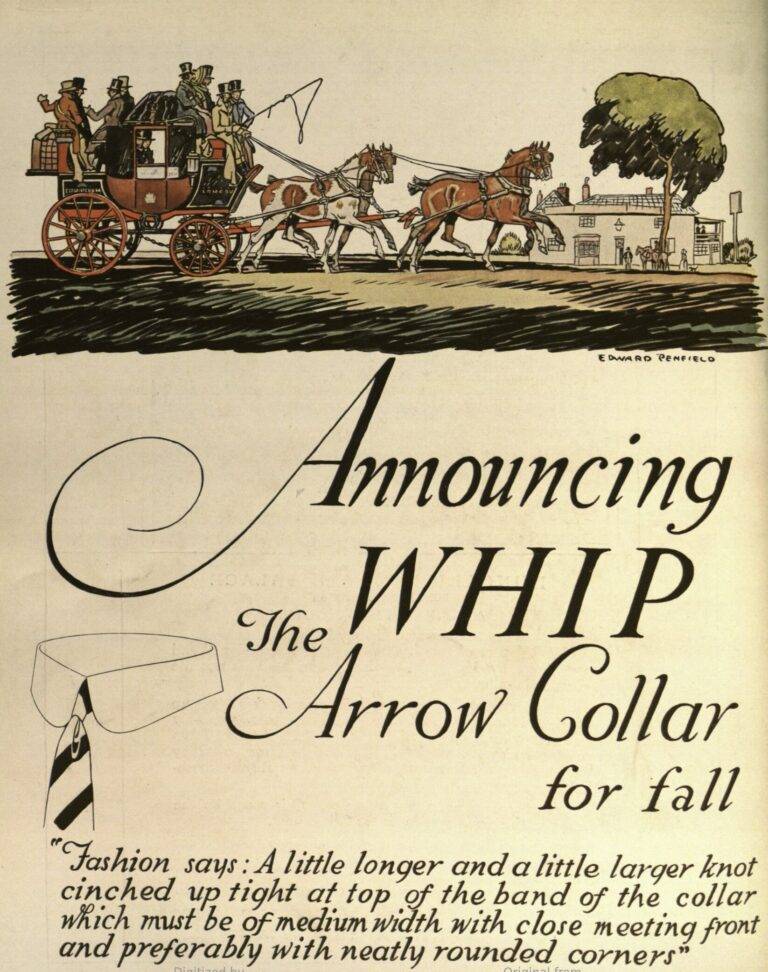
1921 The Yale record v. 50, no. 3, 11/9/1921
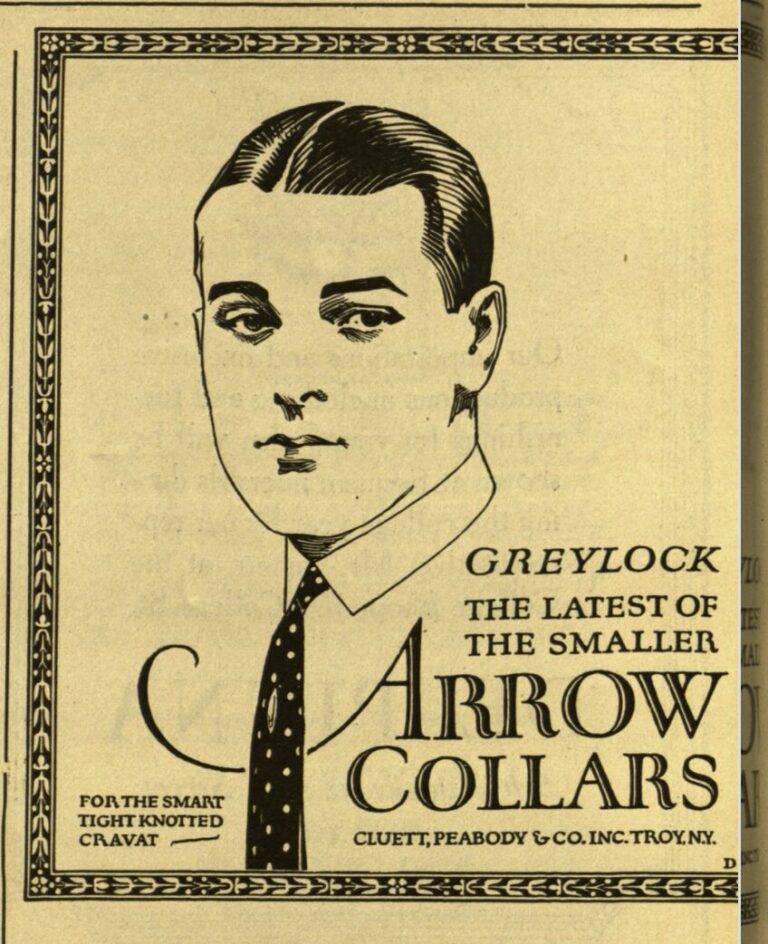
1921 The Yale record v. 49, no. 10, 3/2/1921
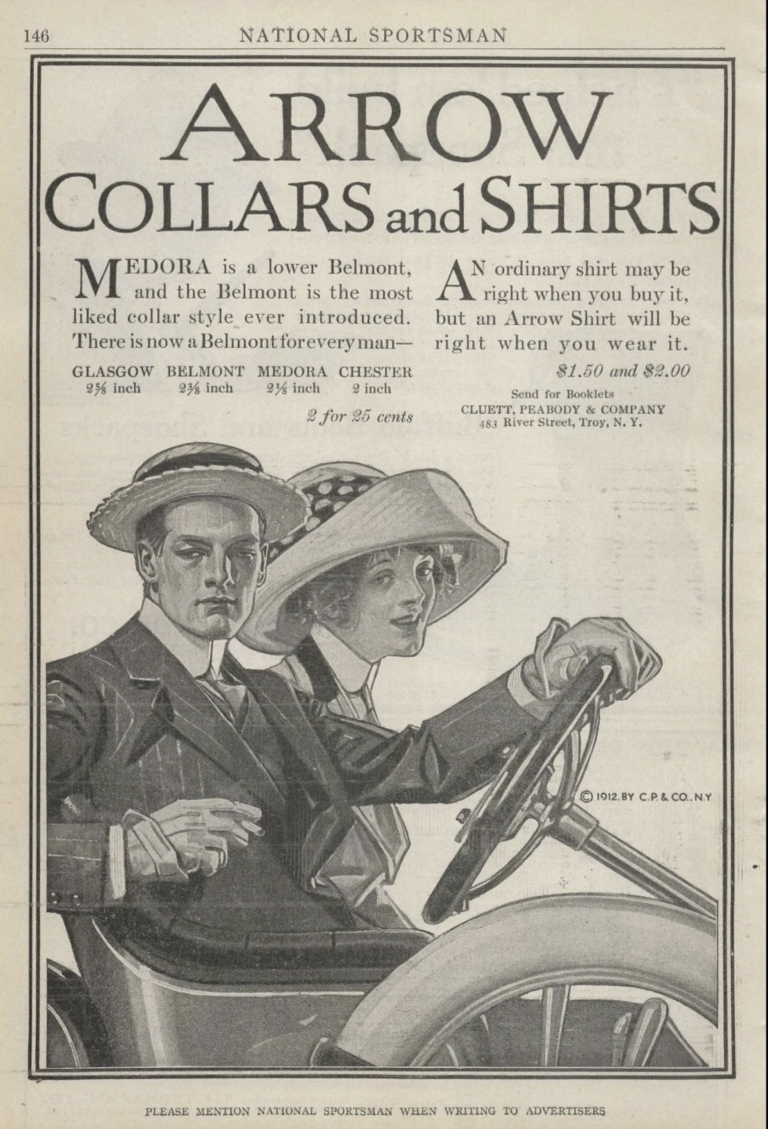
1922 J C Leyendecker Automobile Art Arrow
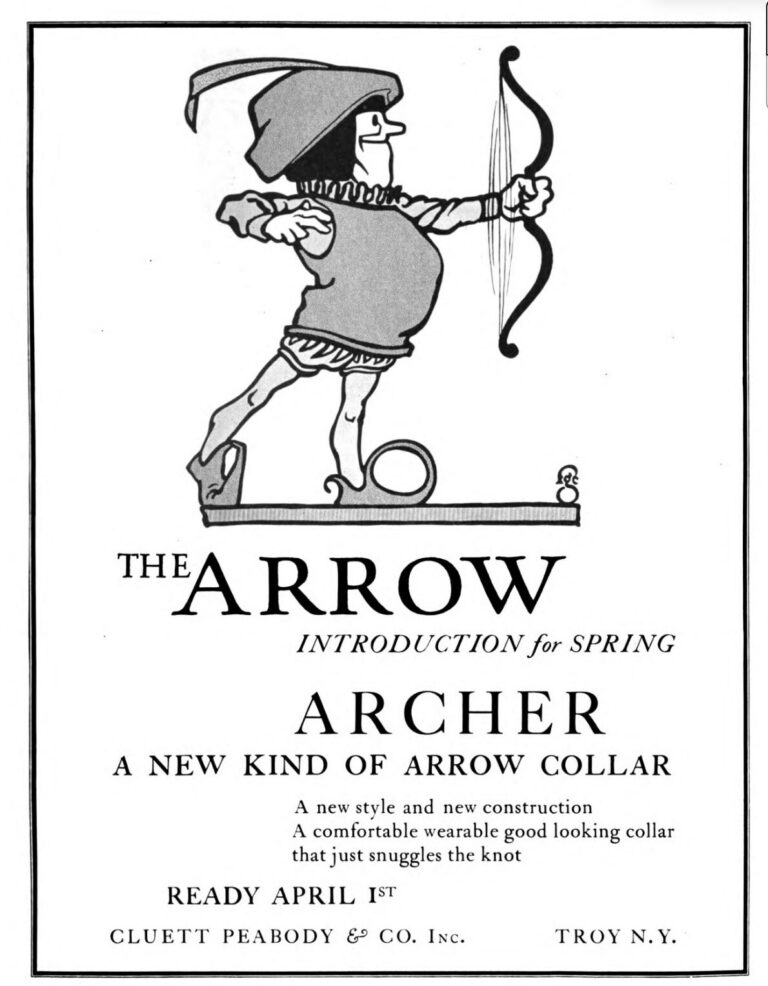
1922 The Clothier and furnisher v.100 F-JY(1922)
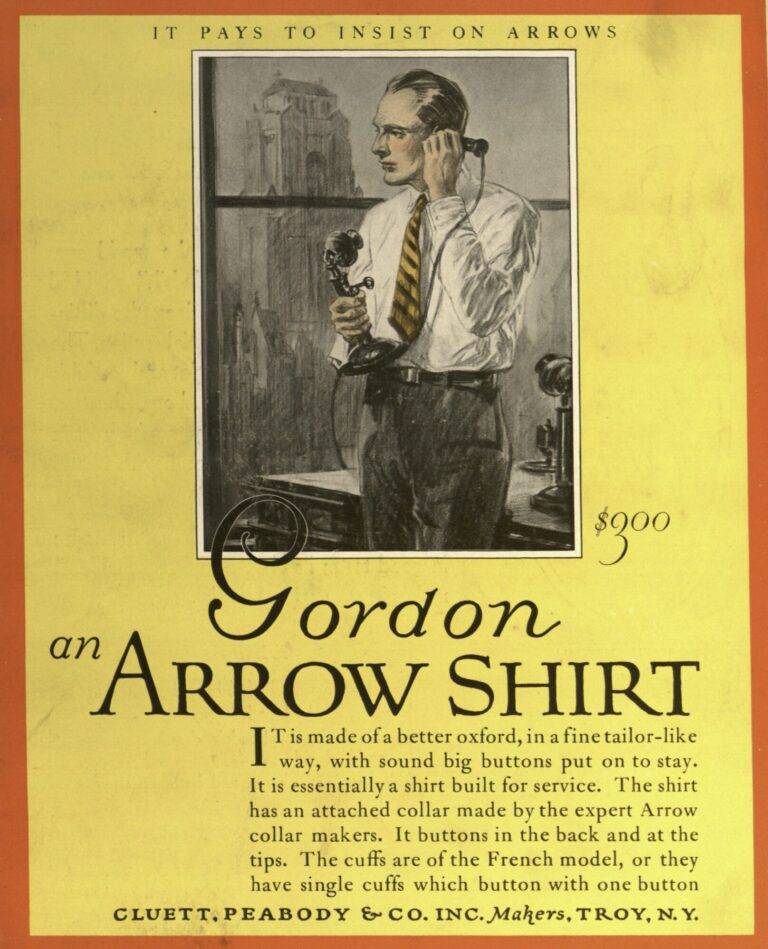
1922 The Yale record v. 51, no. 4, 11/25/1922
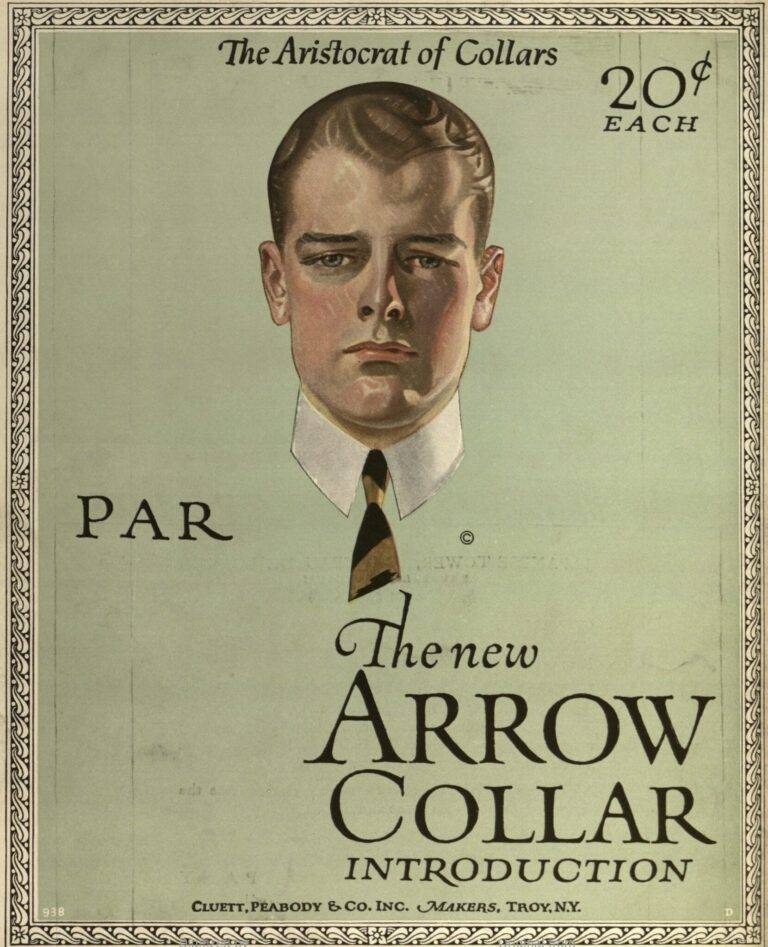
1922 The Yale record v. 51, no. 2, 10/25/1922
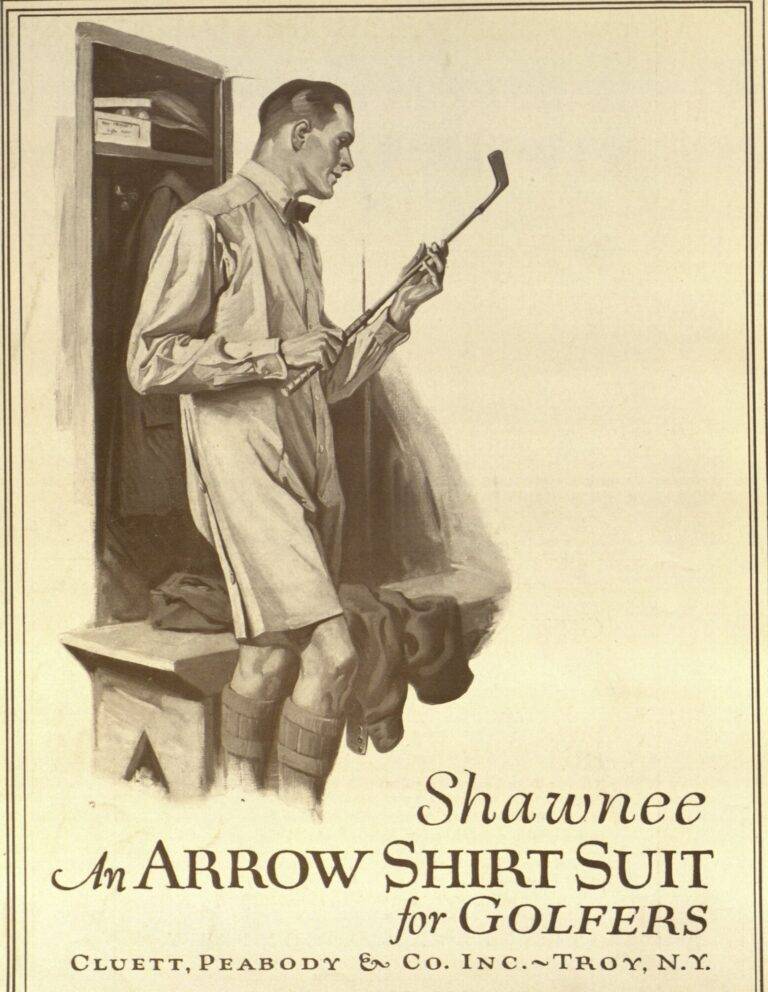
1922 The Yale record v. 50, no. 9, 3/8/1922

1922 The Clothier and furnisher v.100 F-JY(1922)
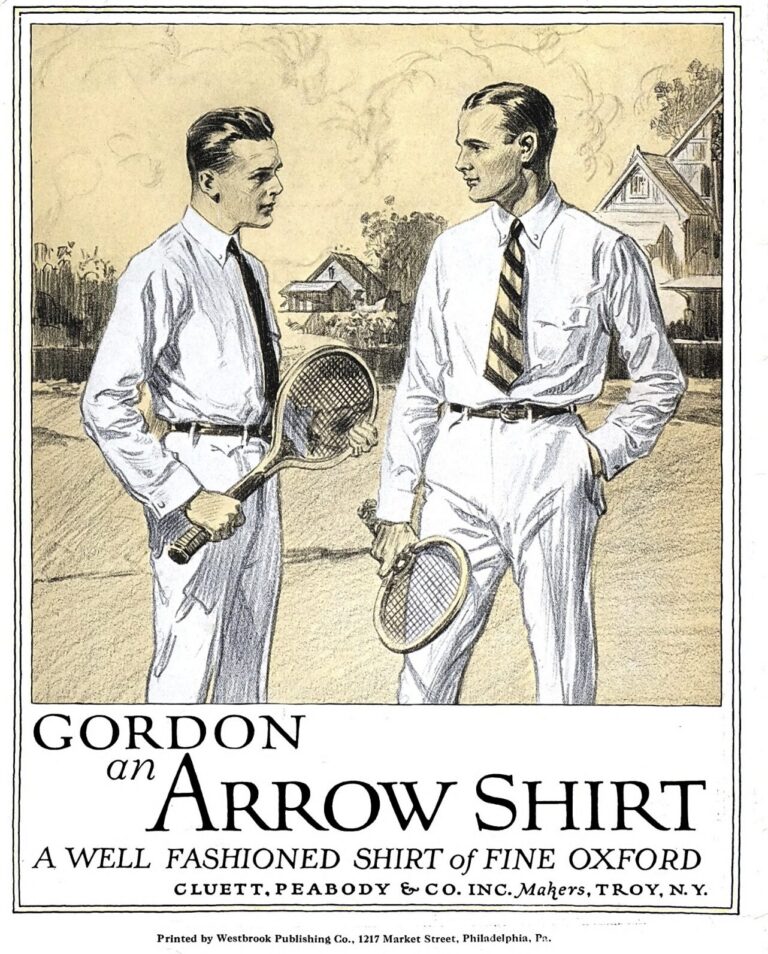
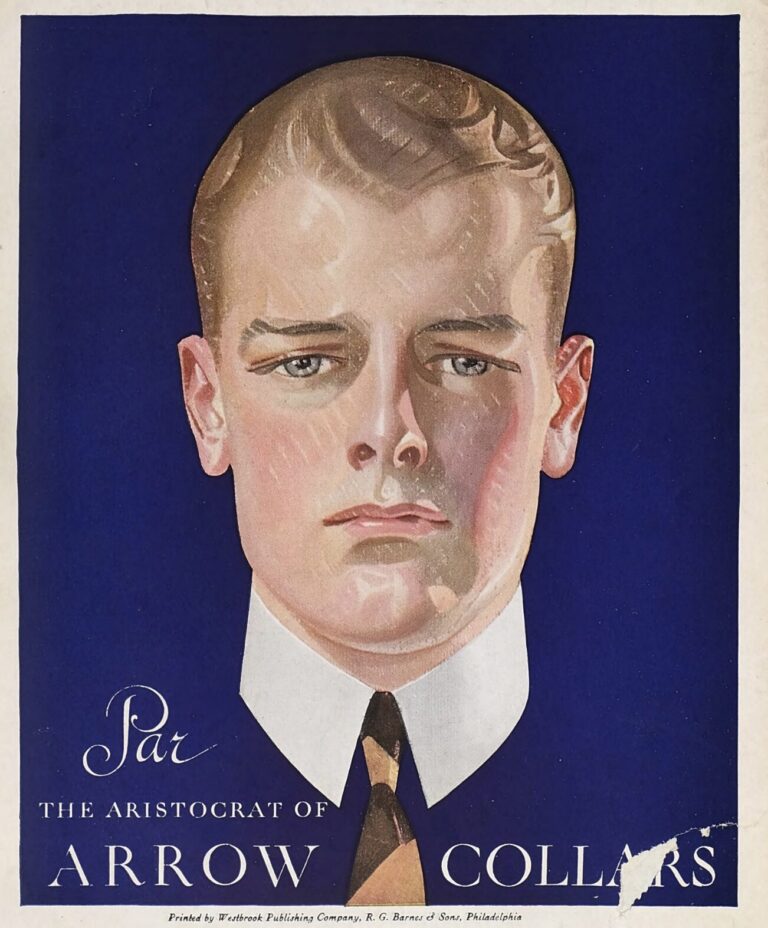
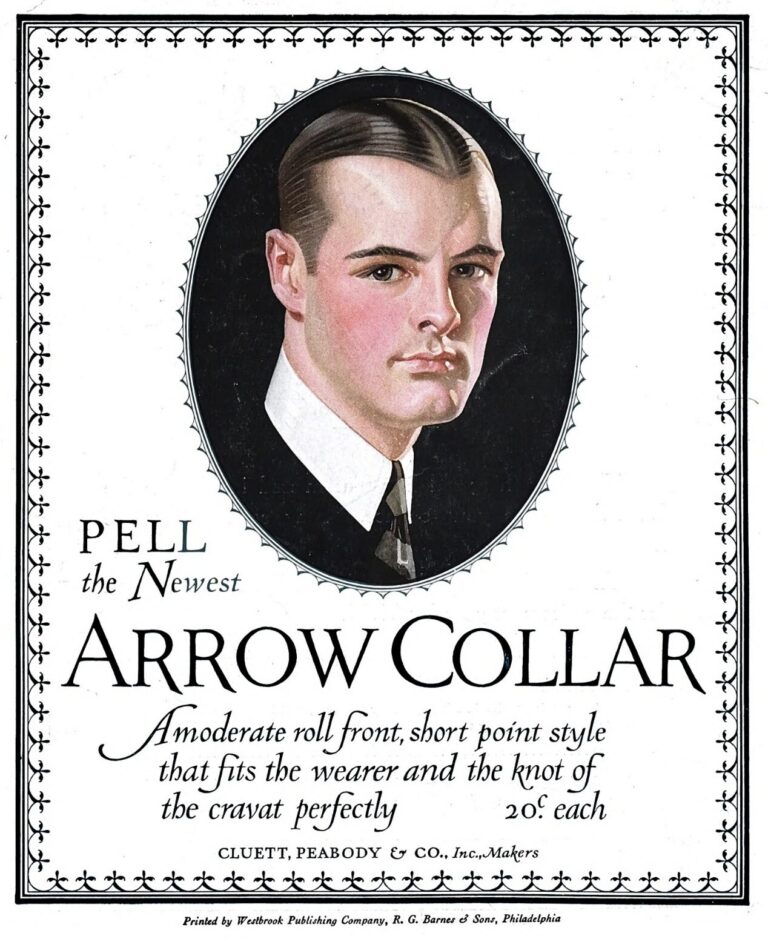
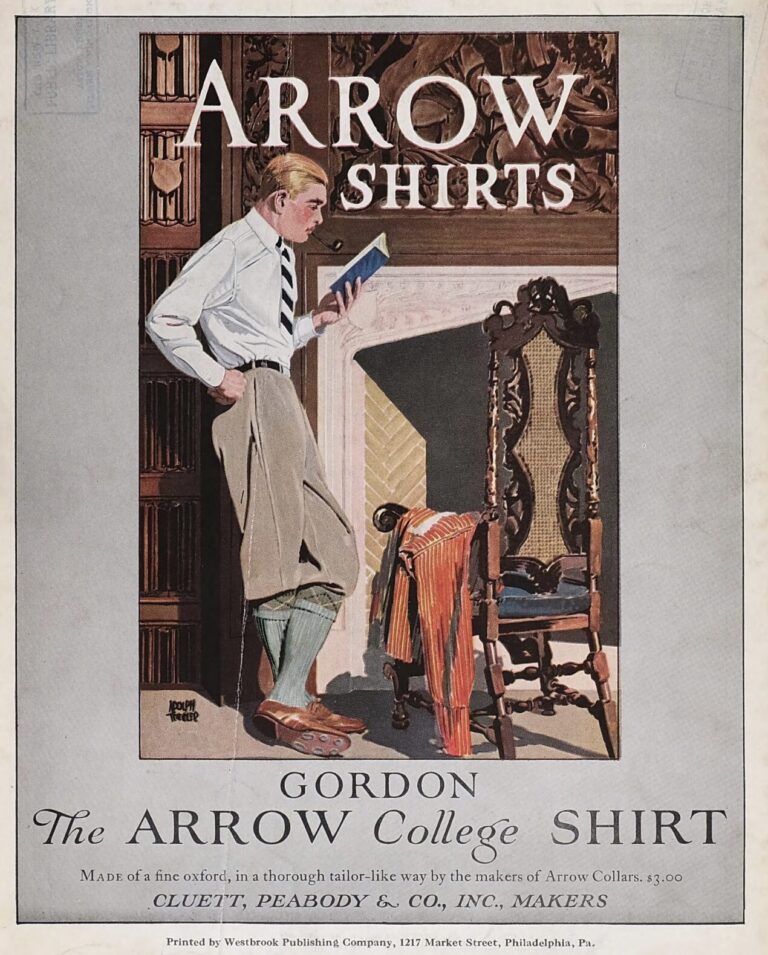
1922 The Lyre v. 4, no. 1-6 (1922/23)
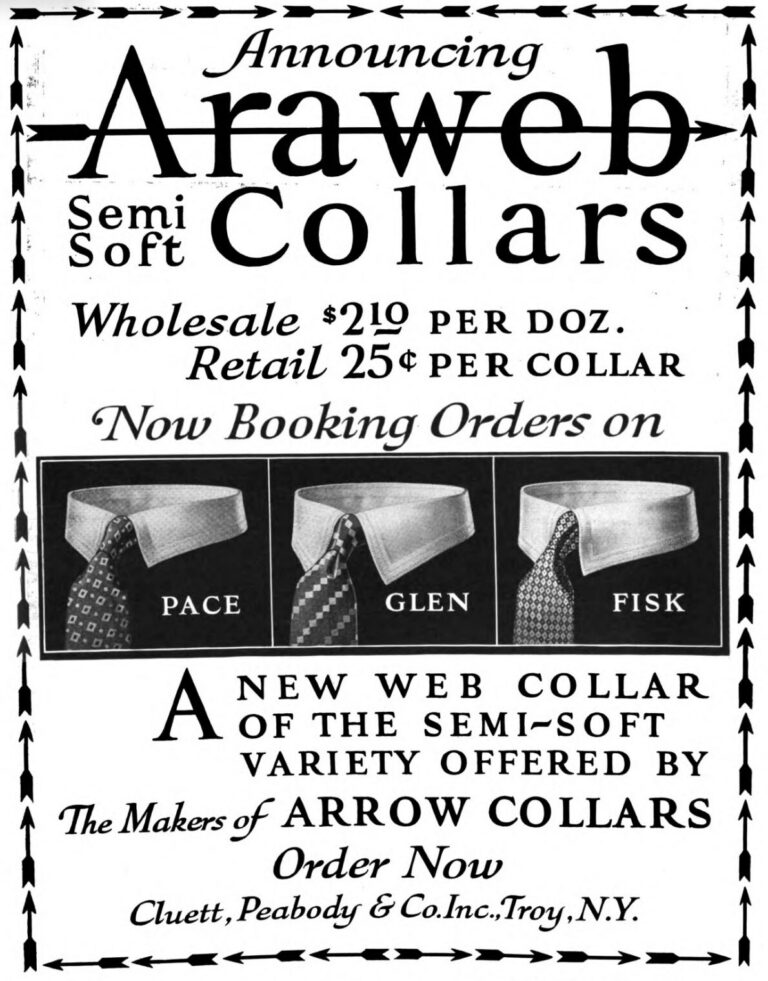
1923 The Clothier and furnisher v.102 F-JY(1923)
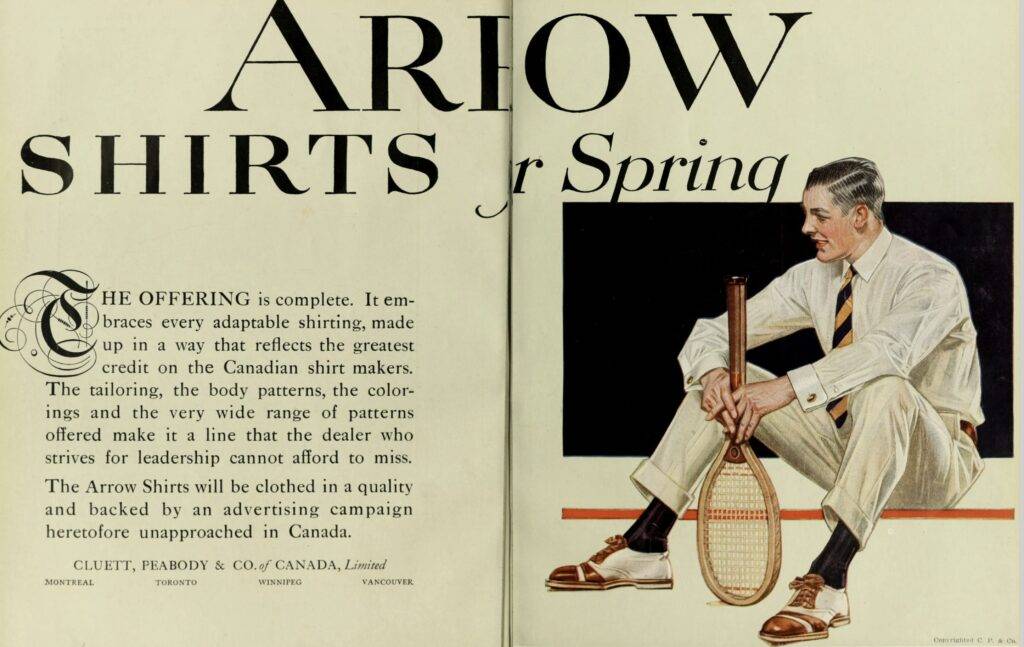
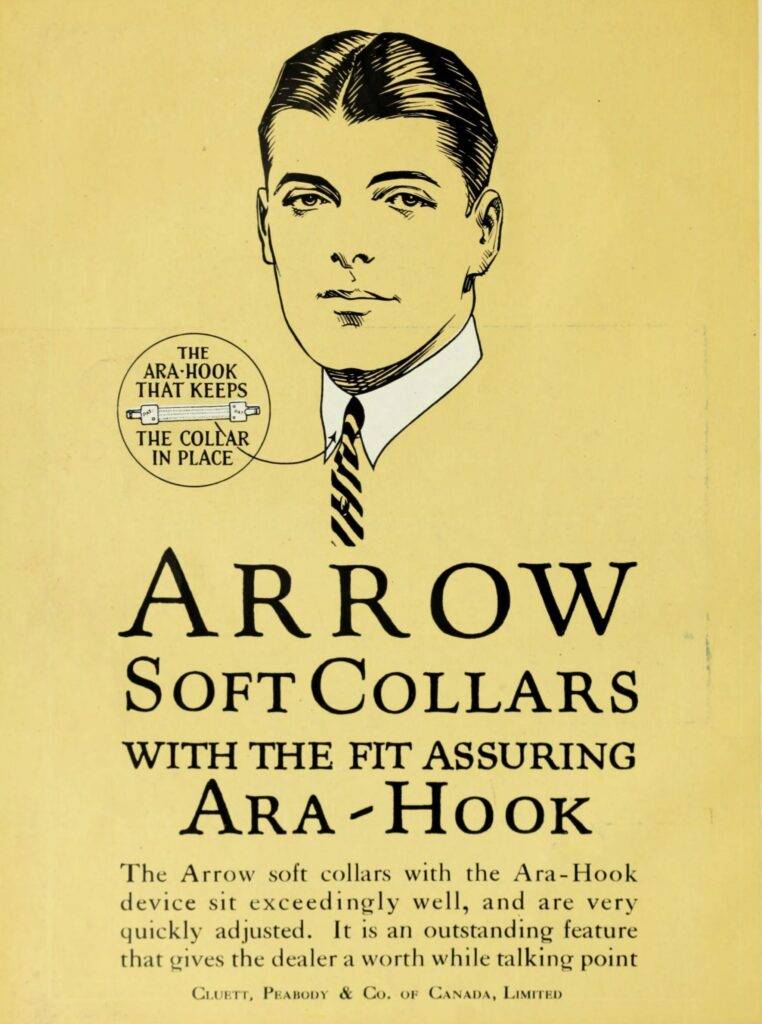
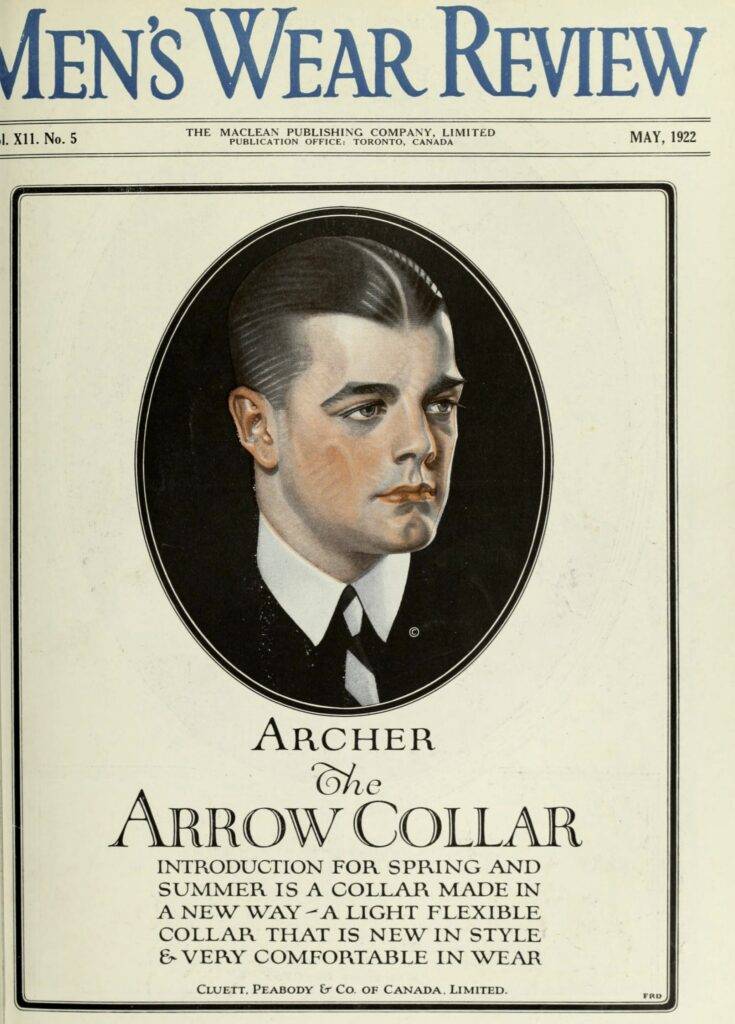
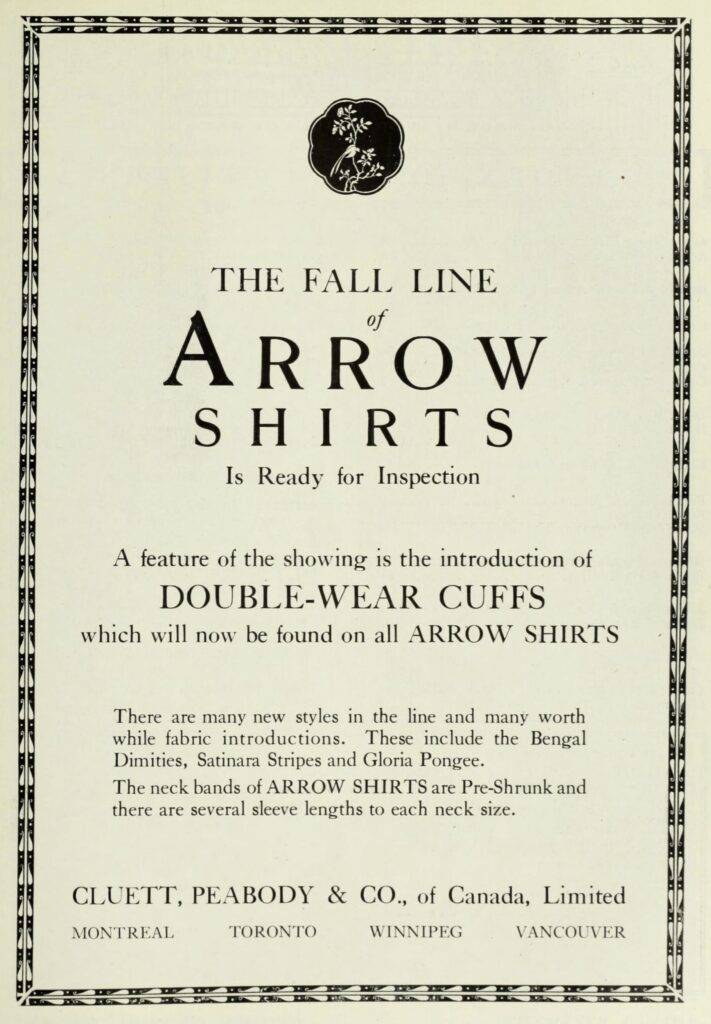
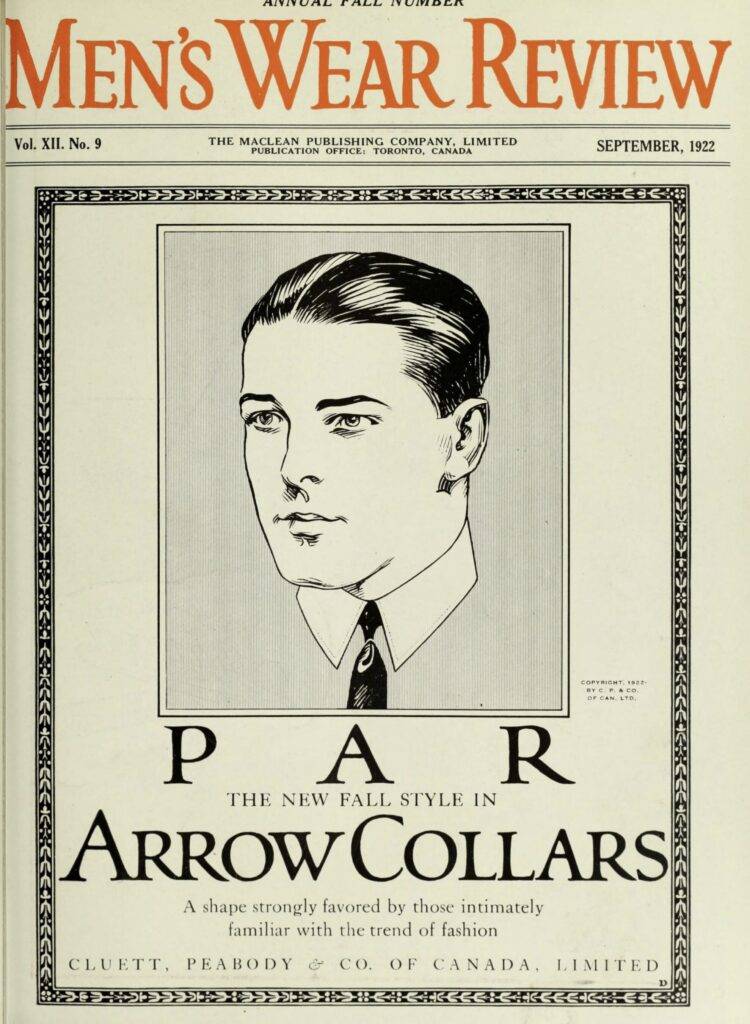
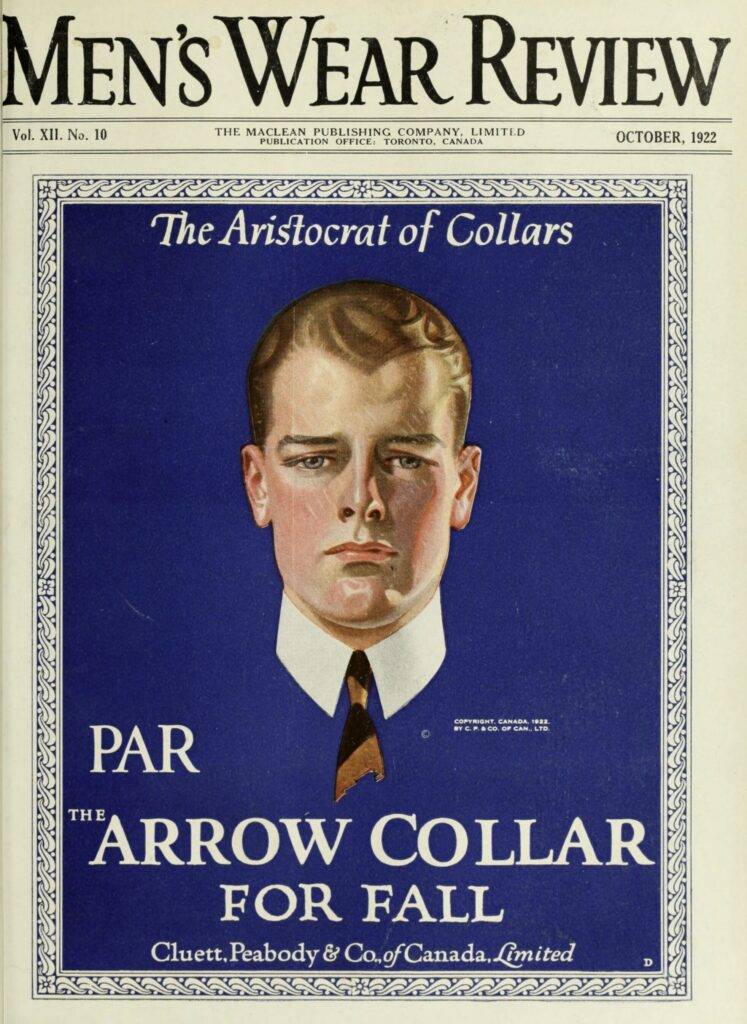
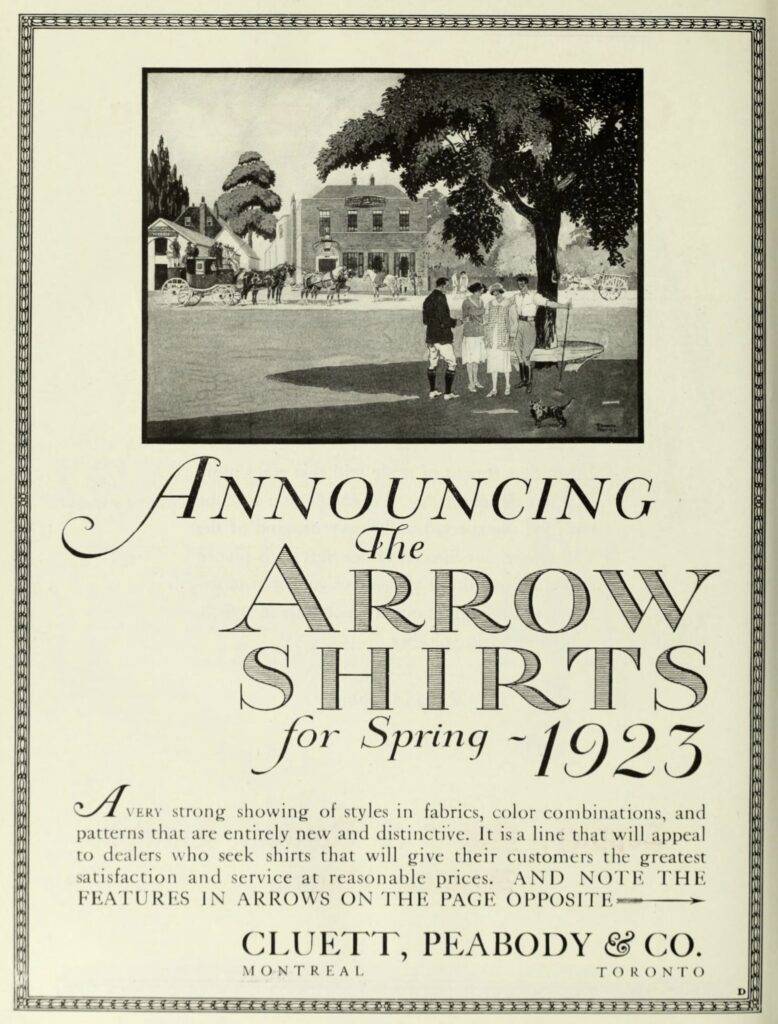
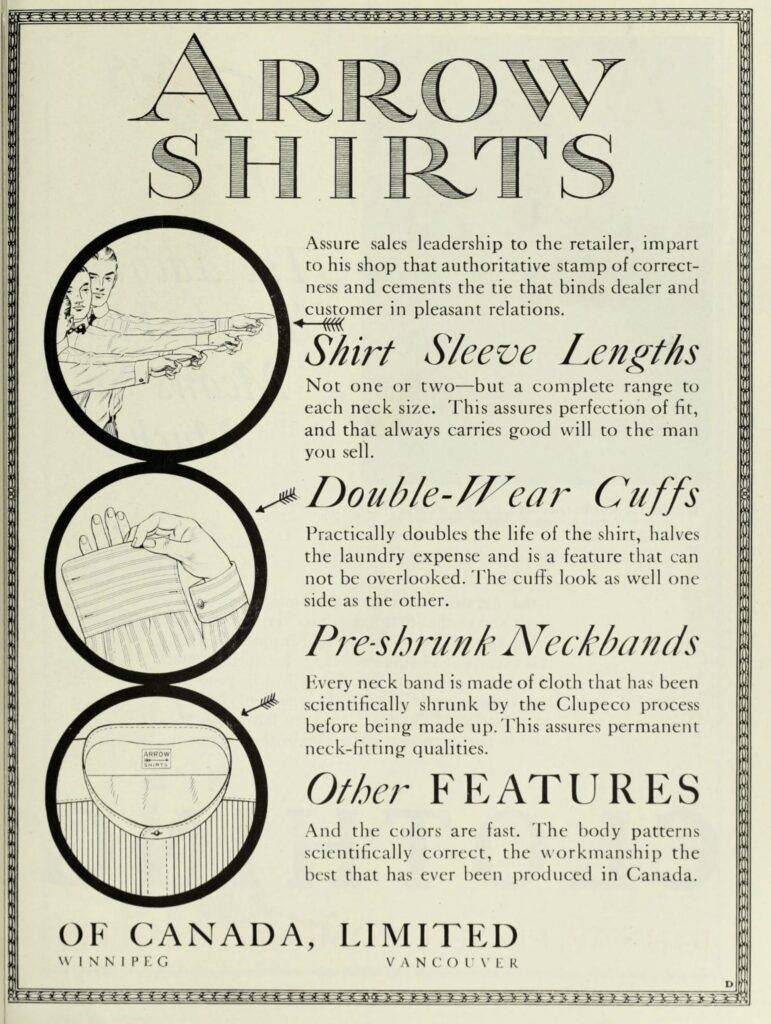
1923 Men’s wear of Canada (January-December 1922)
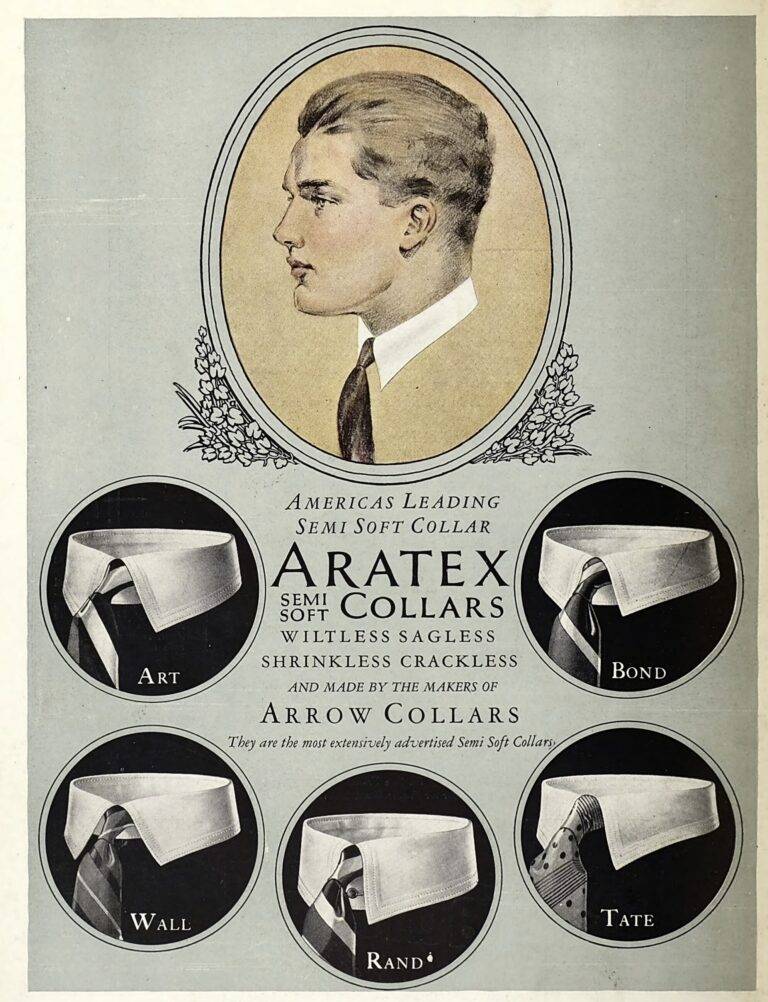
1923
The Haberdasher v.77(1923:Jan.-June)
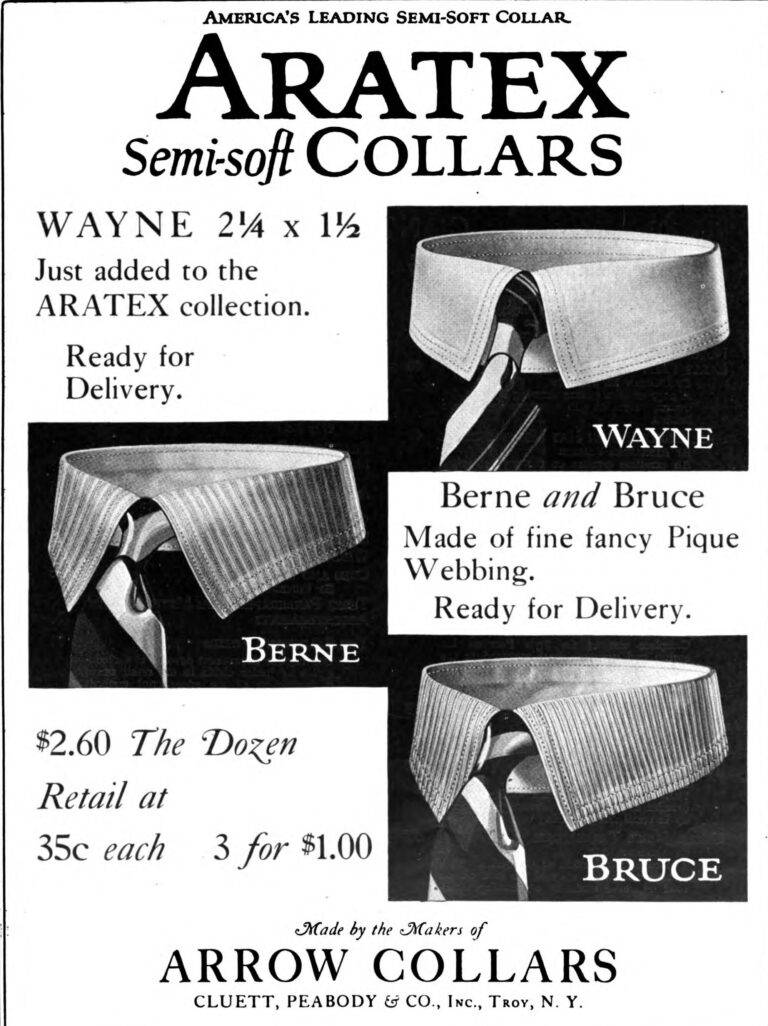
1923 The Clothier and furnisher v.103 AG-JA(1923-1924)
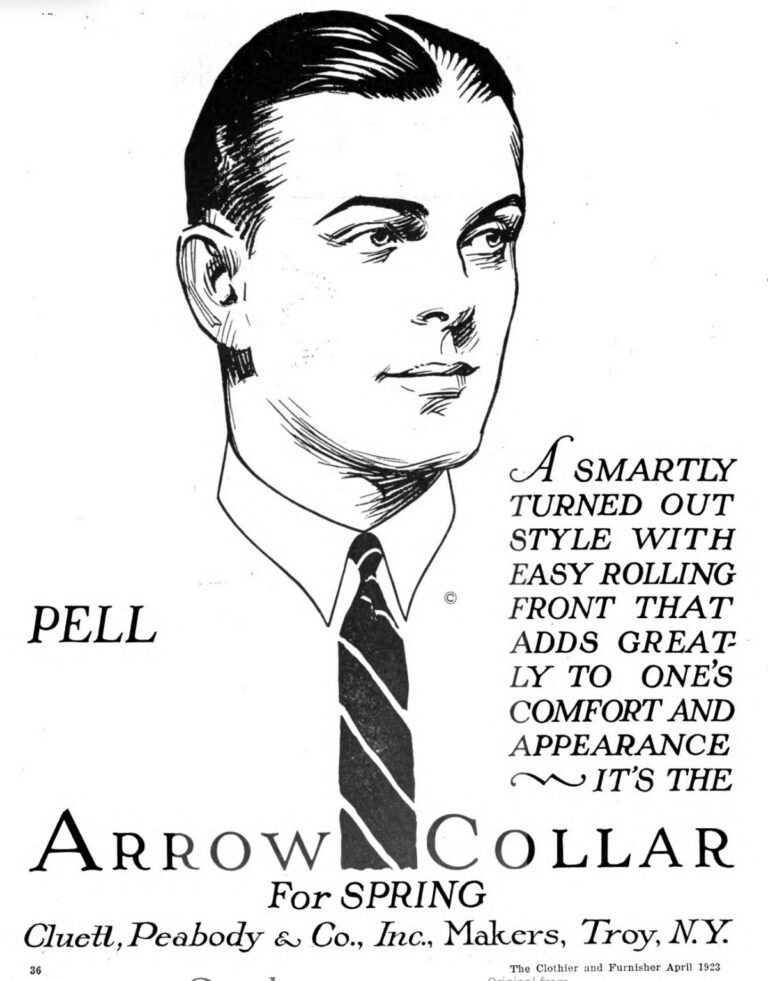
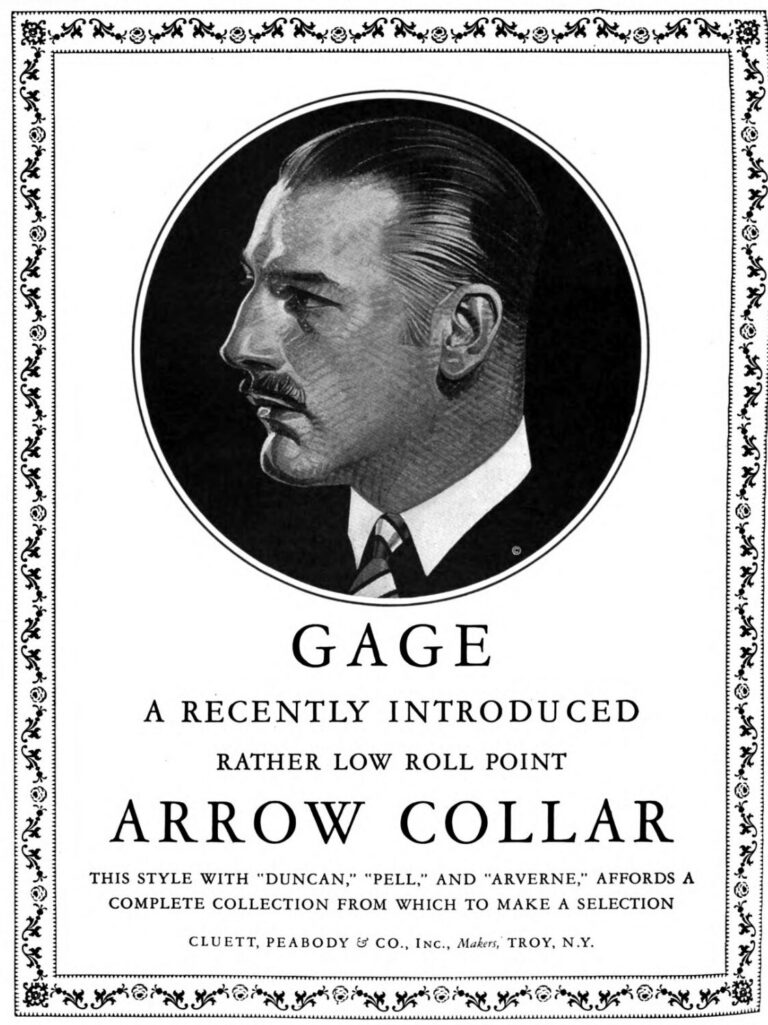
1923 The Clothier and furnisher v.102 F-JY(1923)
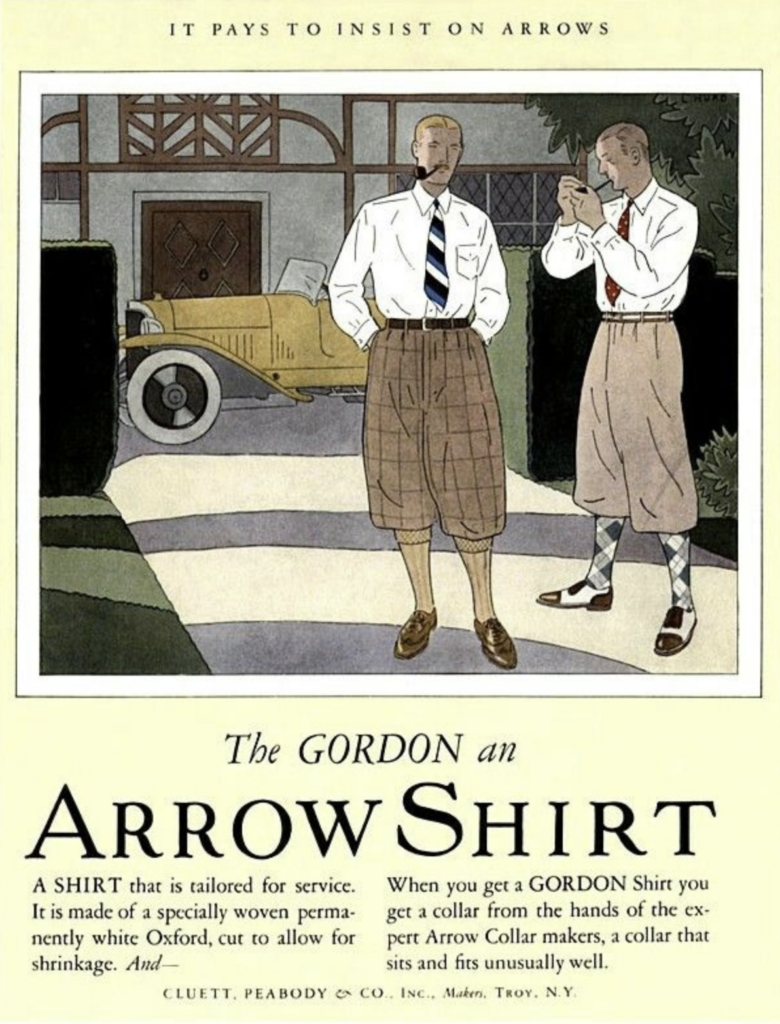
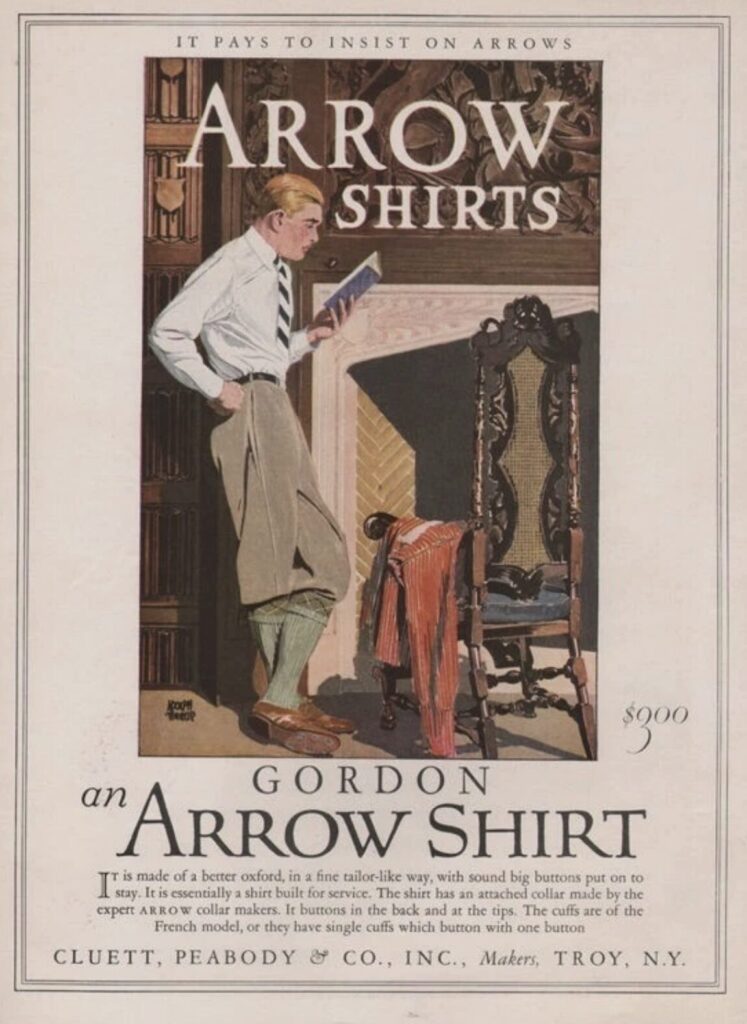
Arrow 1923
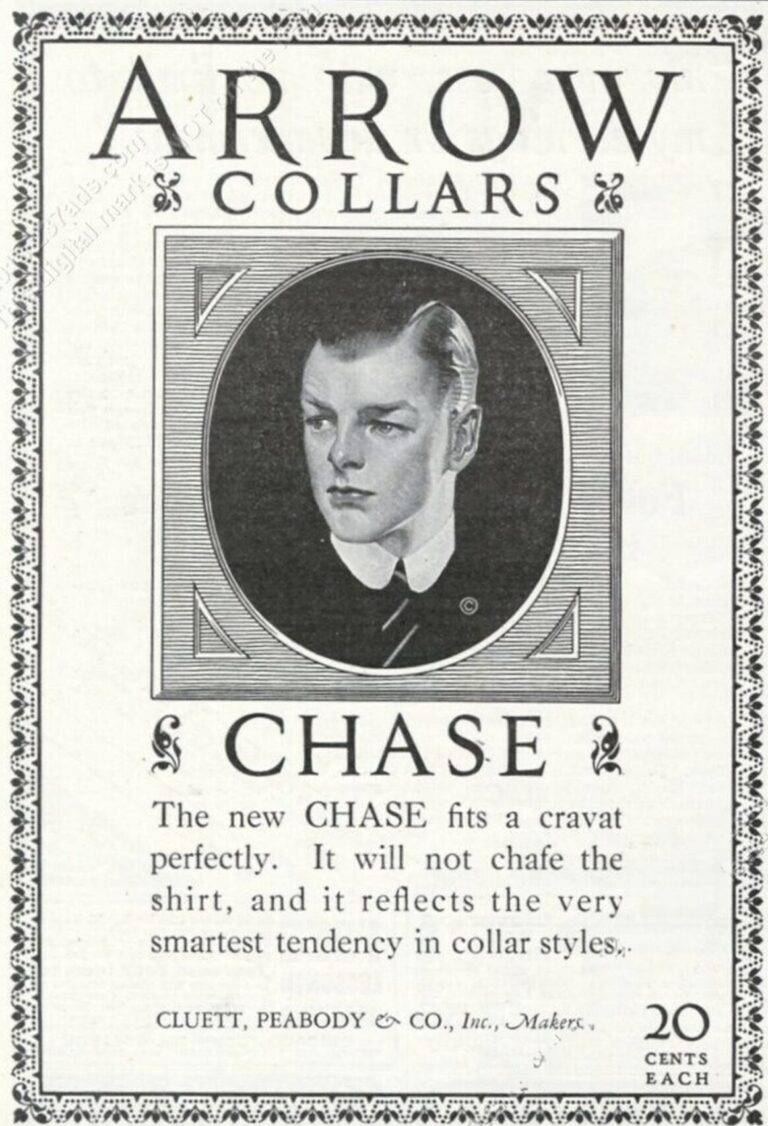
1923 Arrow shirt collar J.C. Leyendecker young man
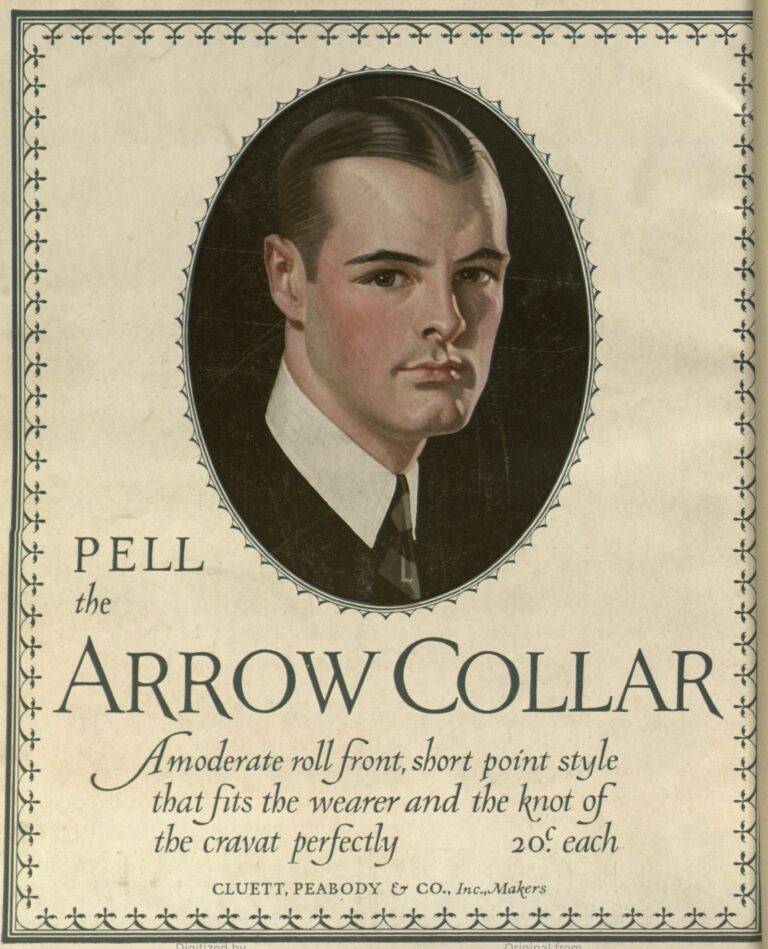
1923 The Yale record v. 51, no. 16, 6/6/1923
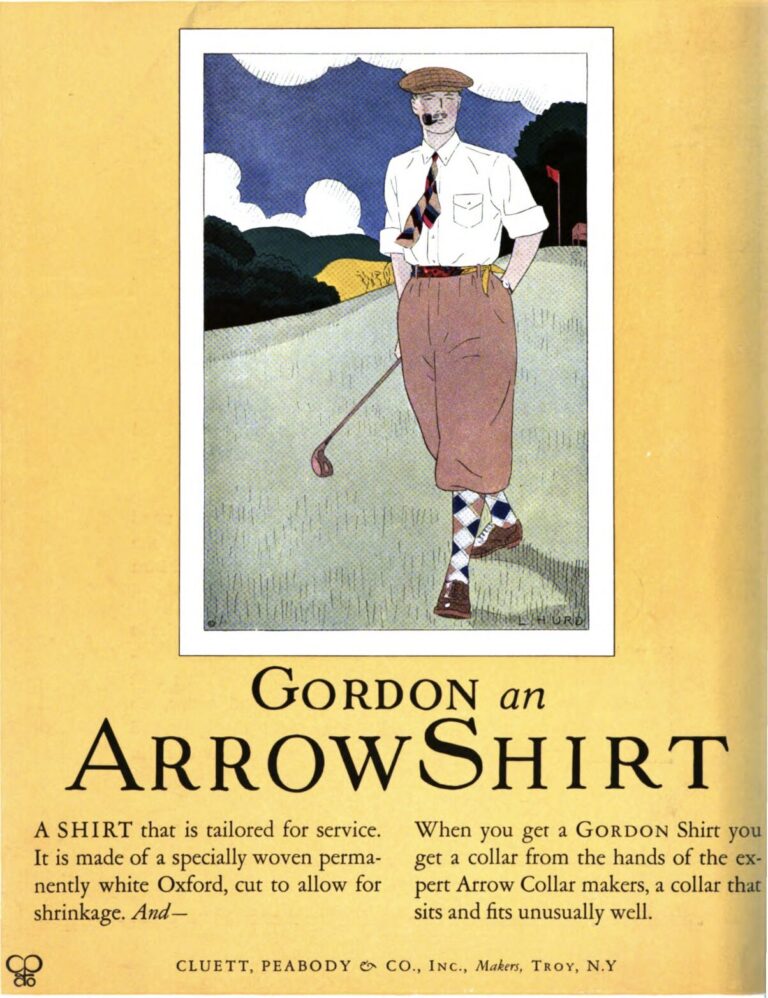
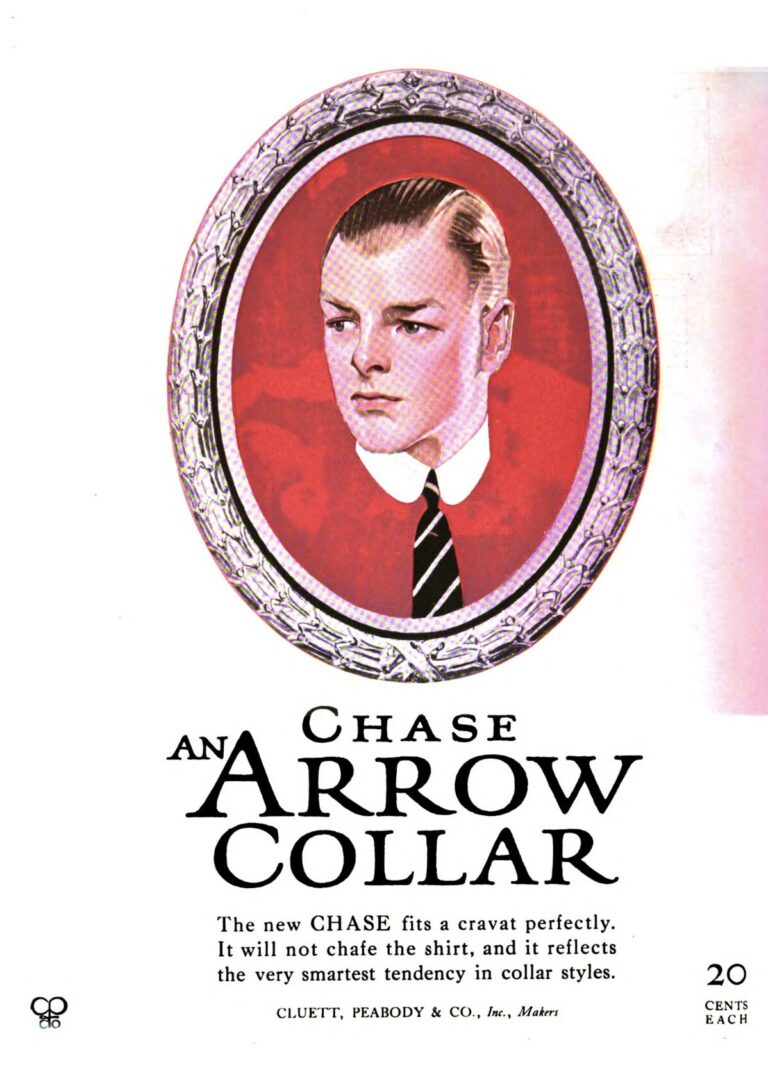
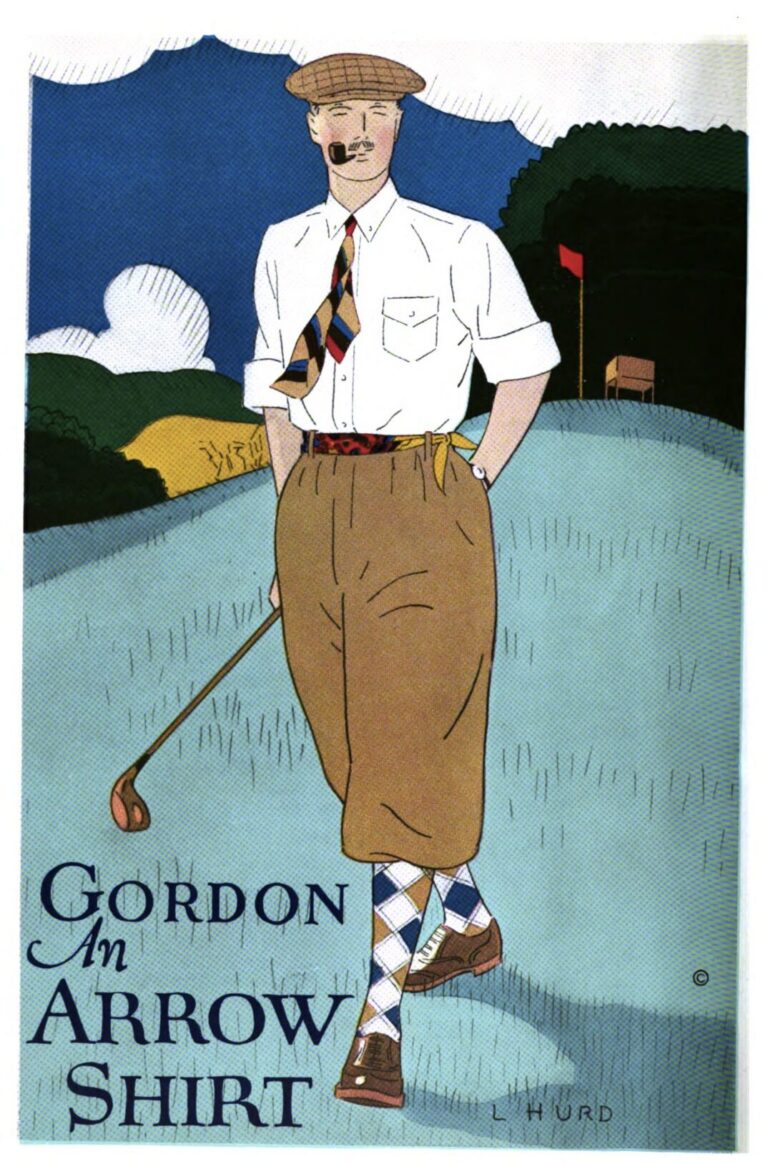
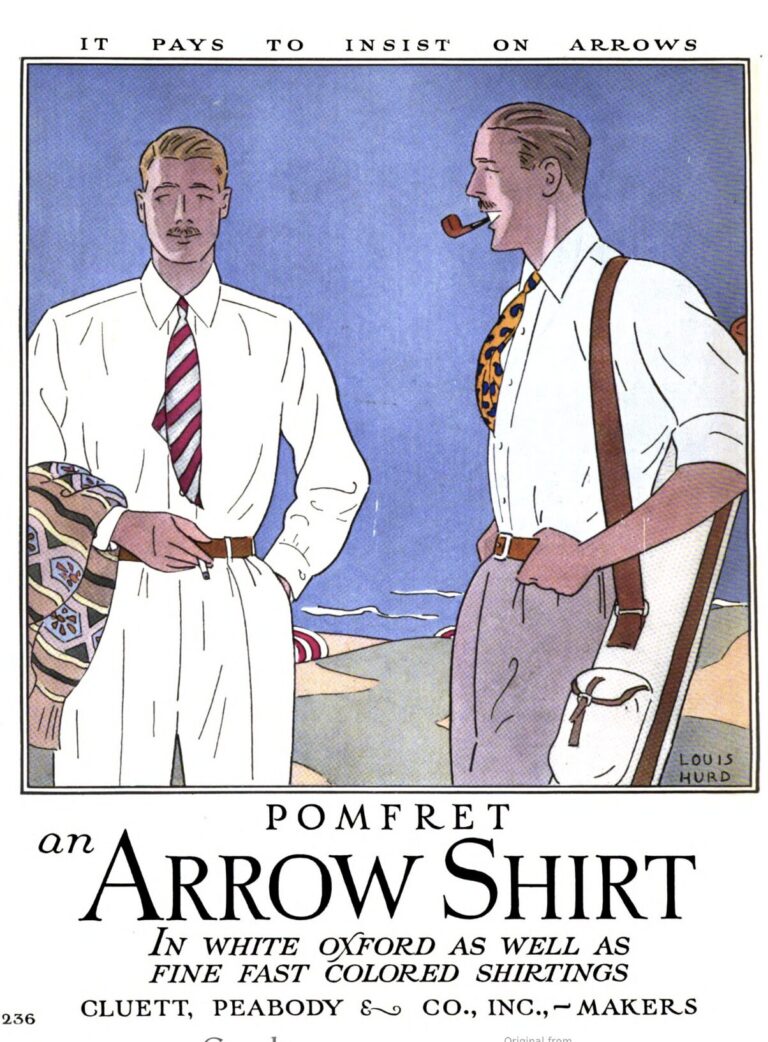
1923 The Gargoyle v.17 1923-1924
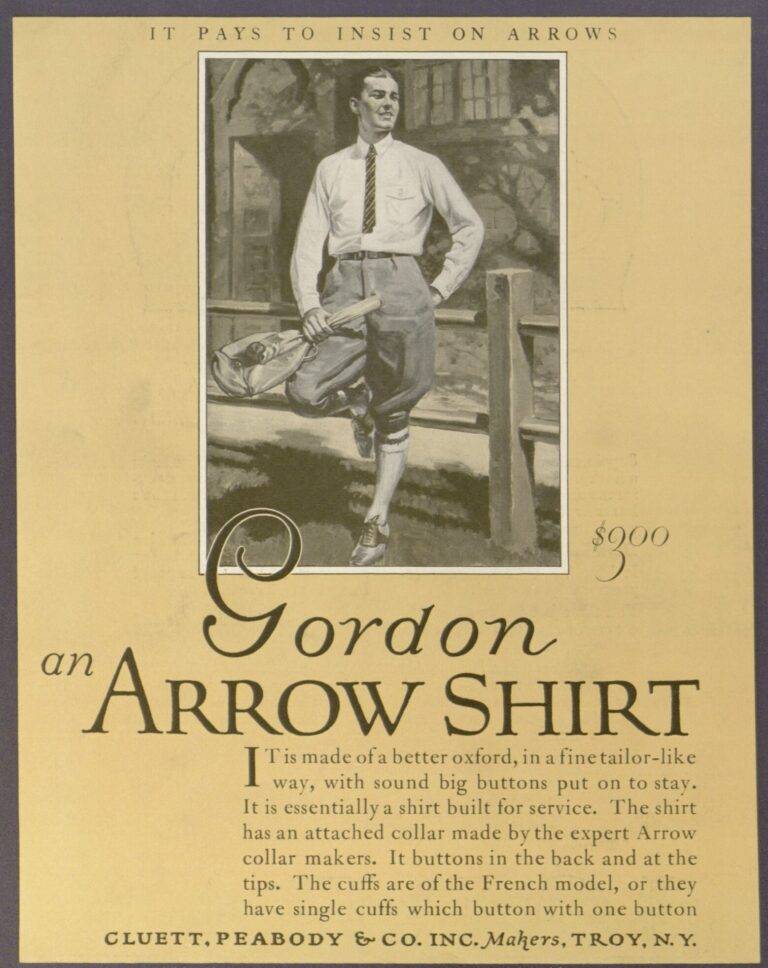
1923 The Yale record v. 51, no. 10, 3/14/1923
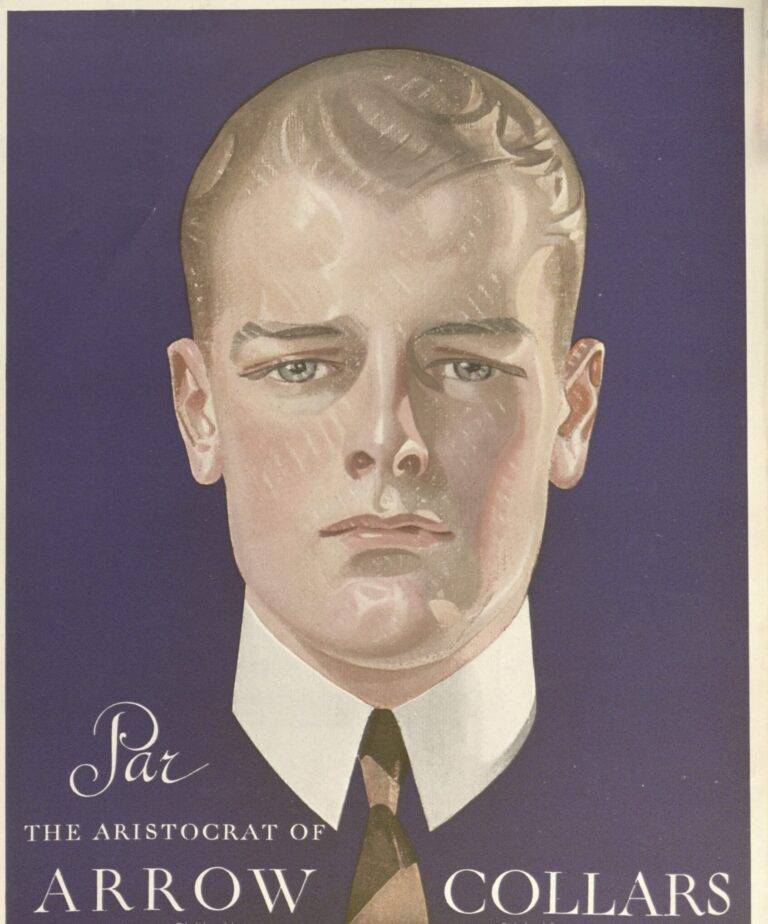
1923 The Yale record v. 51, no. 6, 1/17/1923
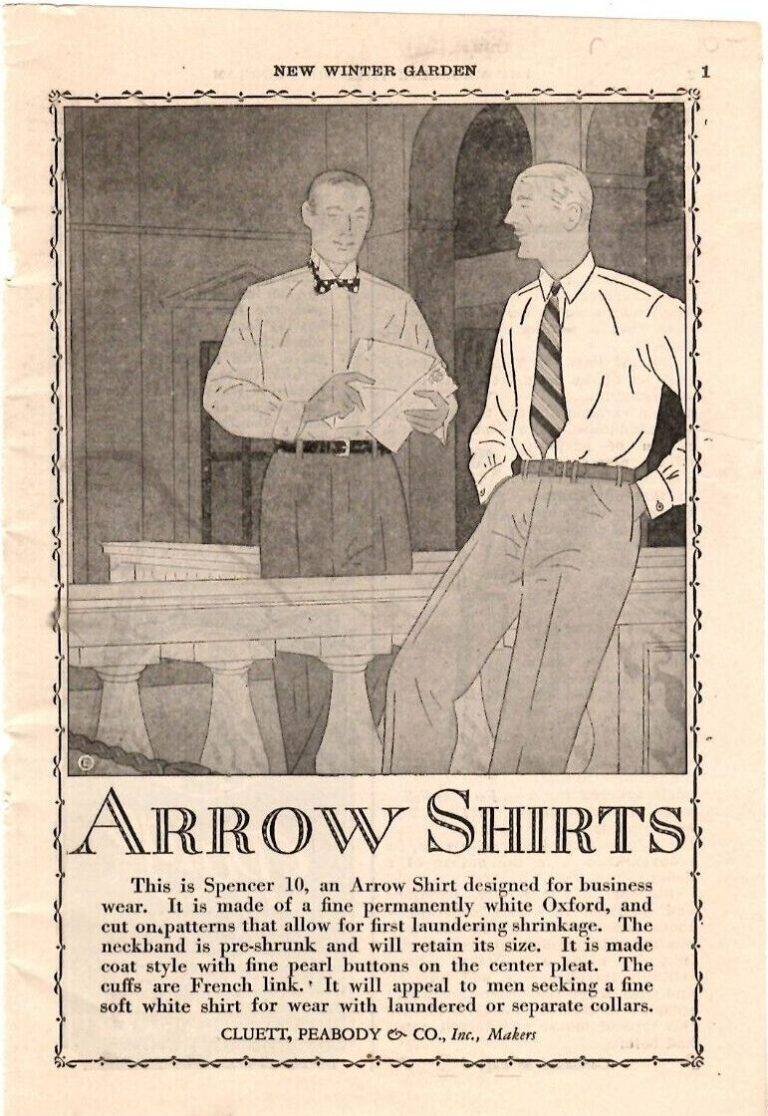
1924 Print Ad Arrow Shirts
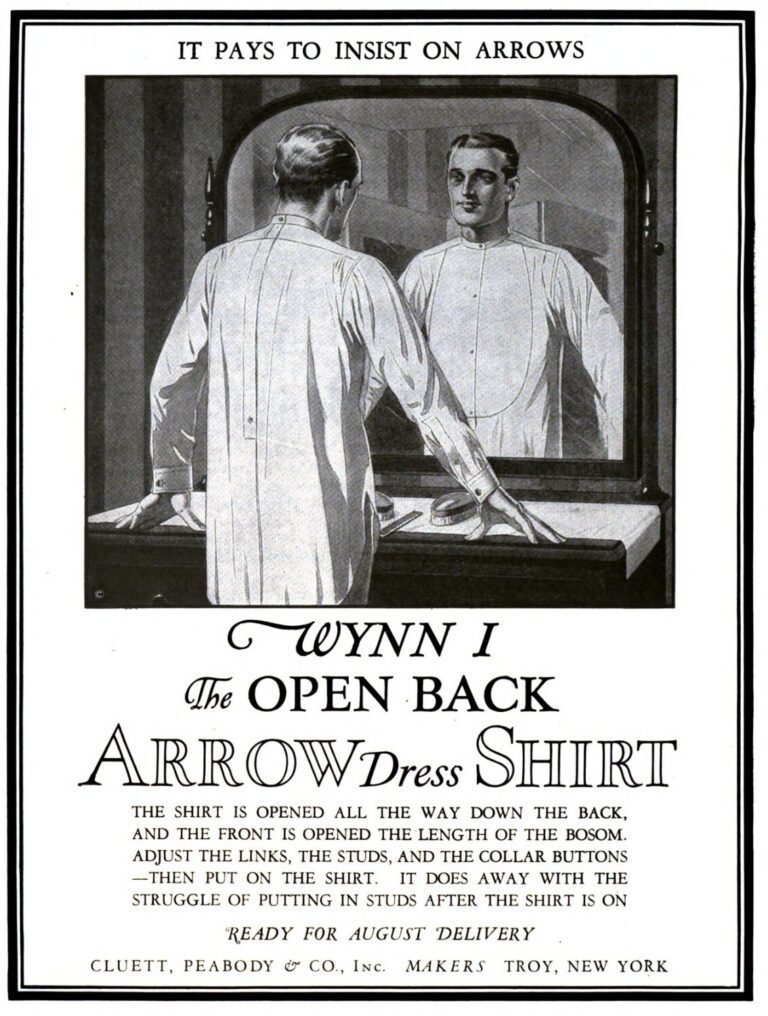
1924 The Clothier and furnisher v.104 F-JY(1924)
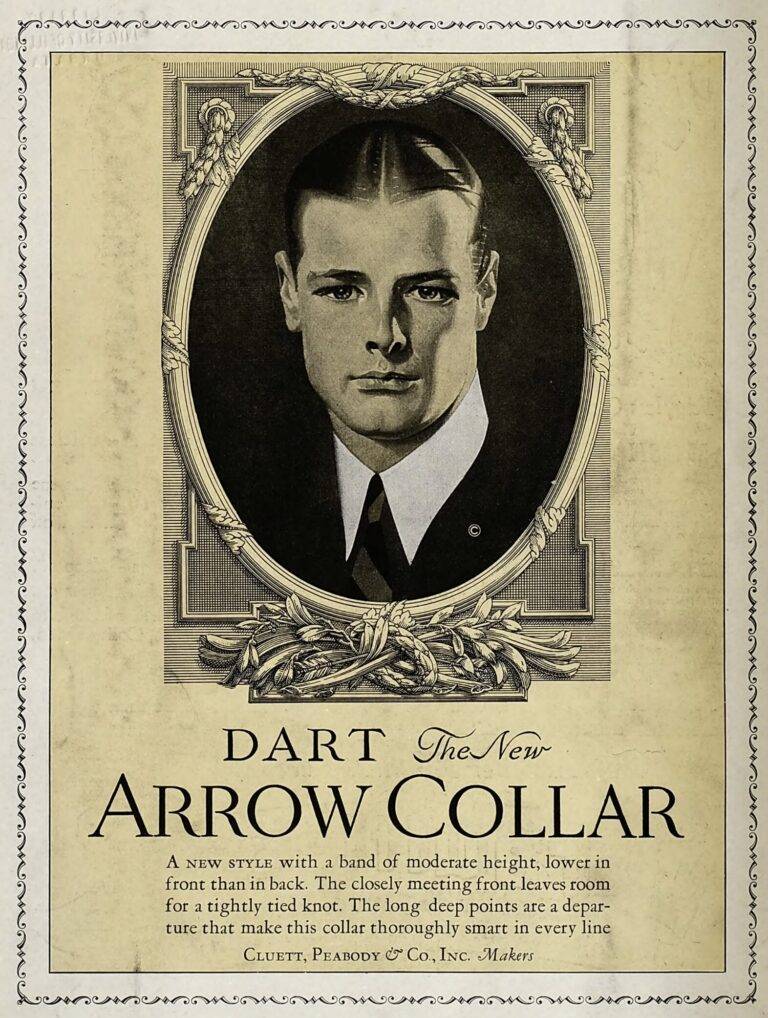
1924 The Haberdasher v.80 (1924:July-Dec.)
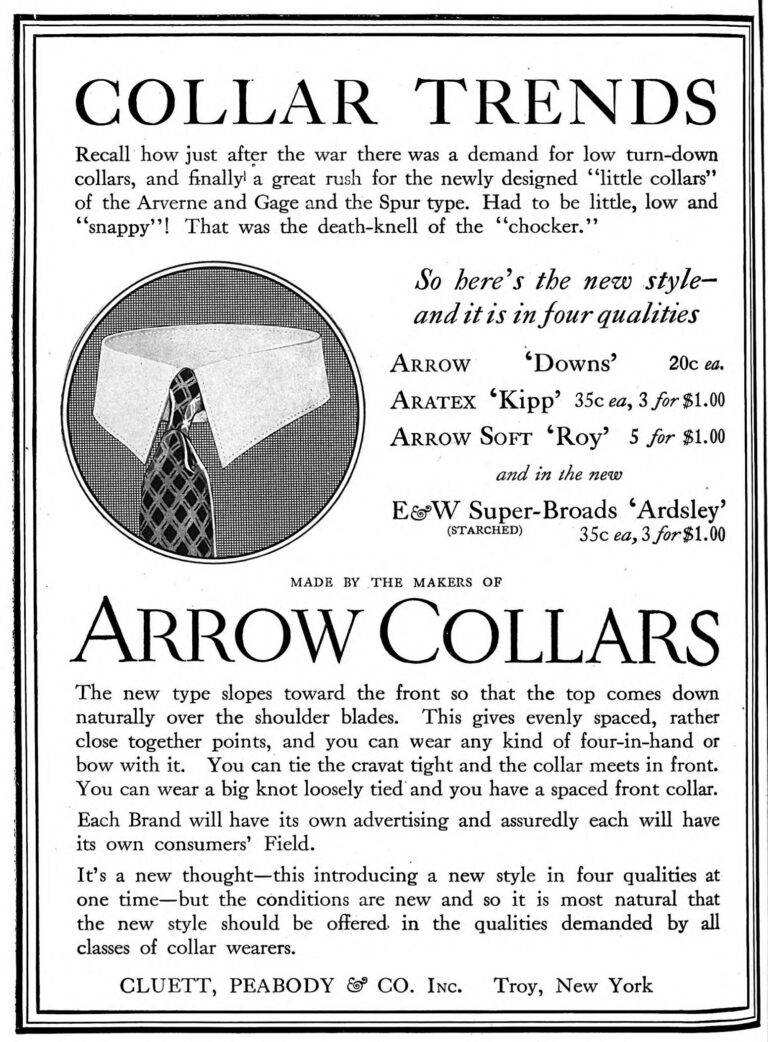
1925 The Haberdasher v.82 (1925:July-Dec.)
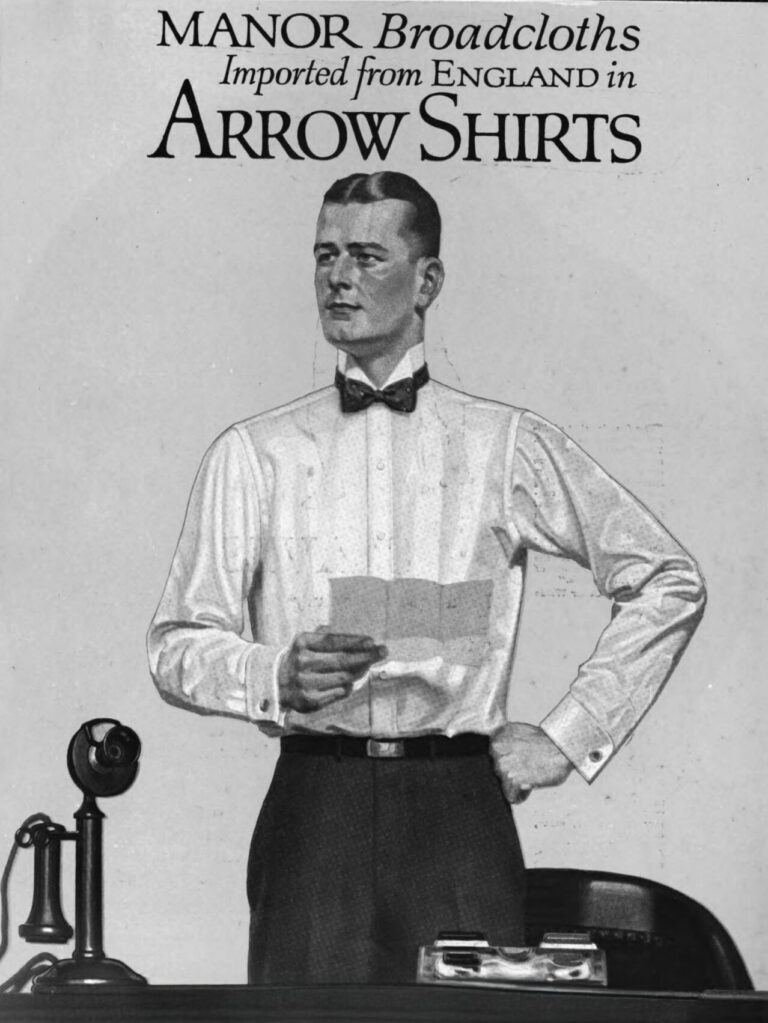
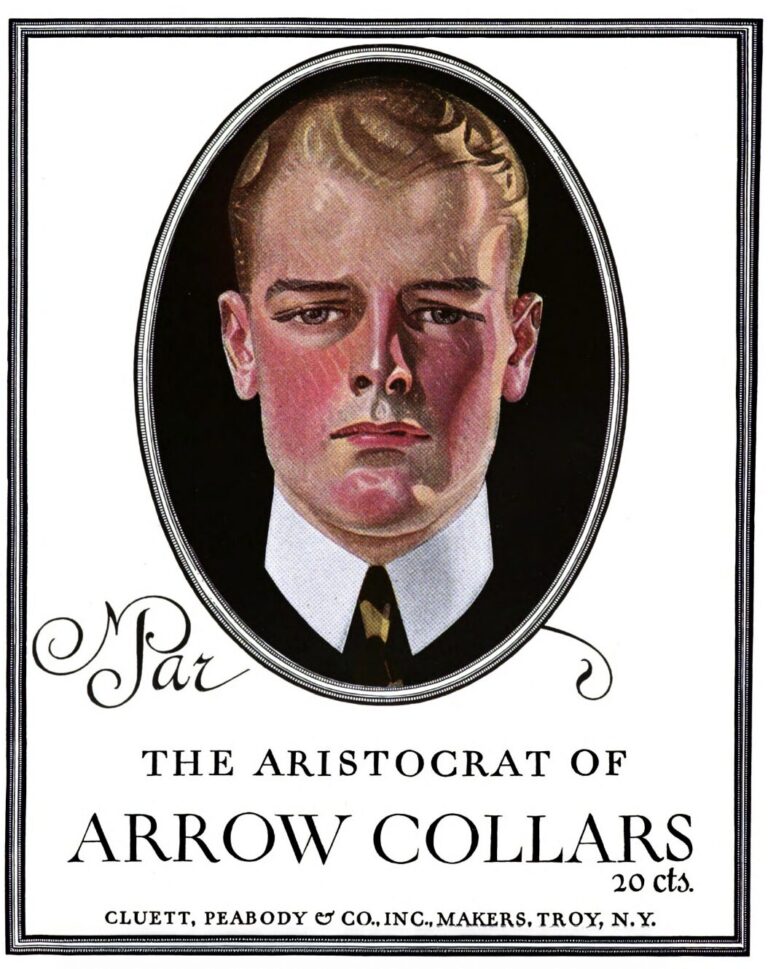
1927 The Virginia reel v.7 1926-27
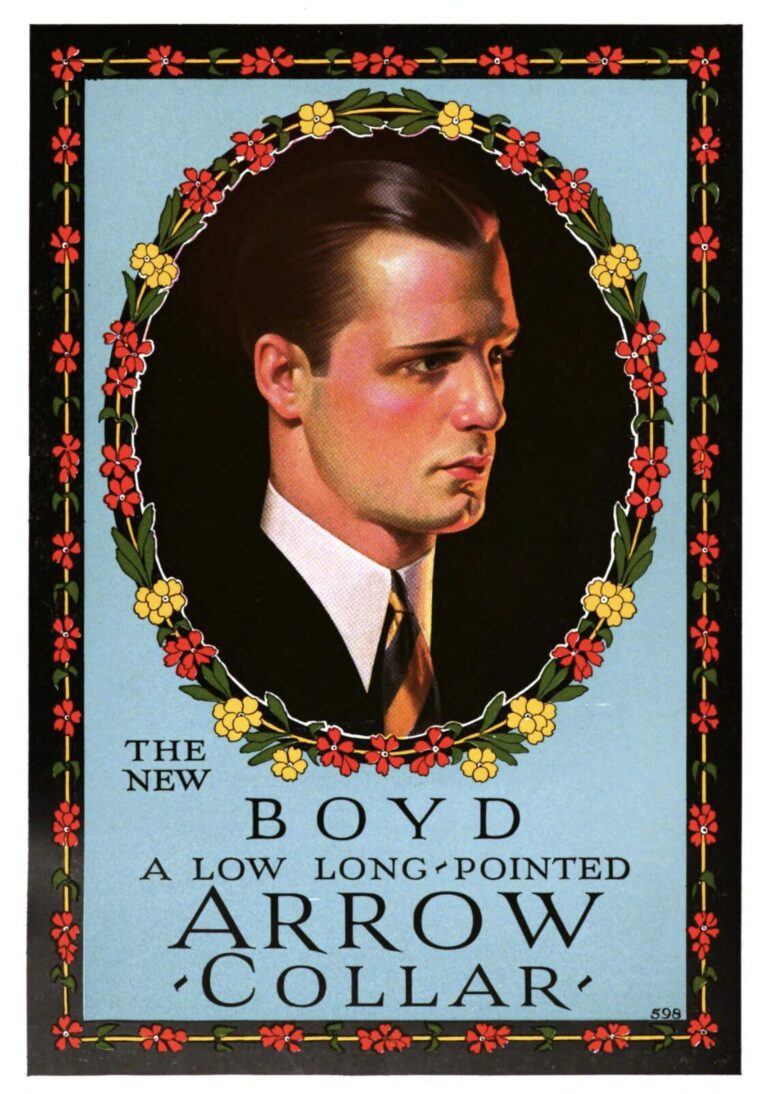
1927 The Virginia reel v.7 1926-27
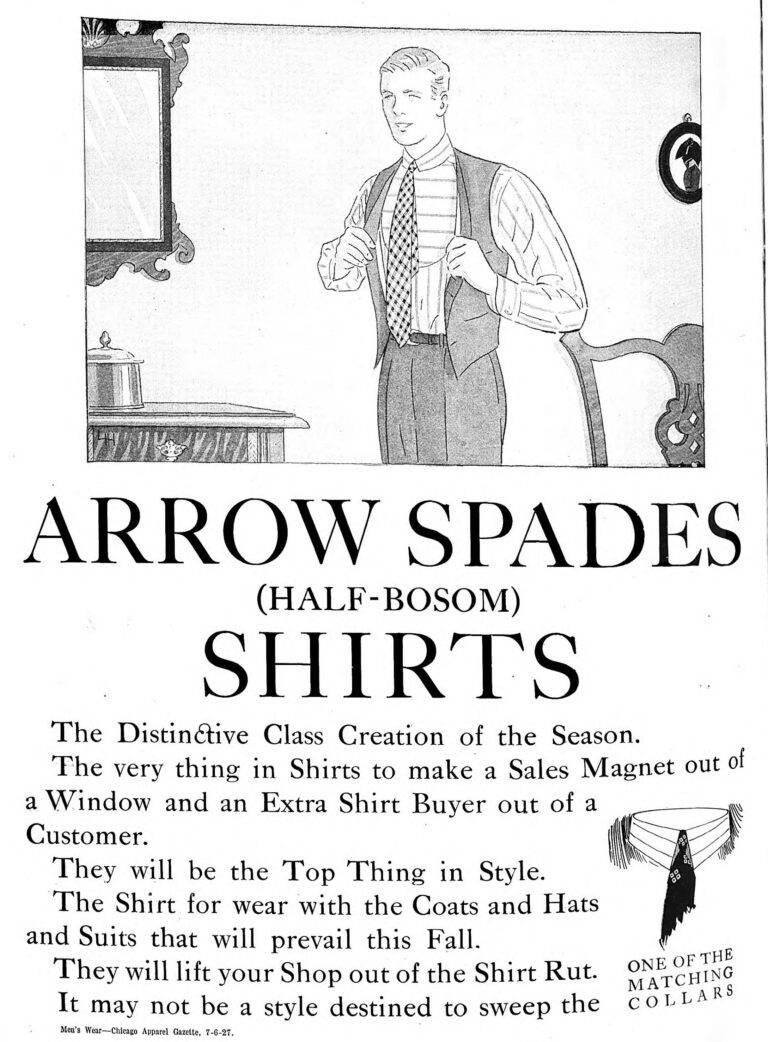
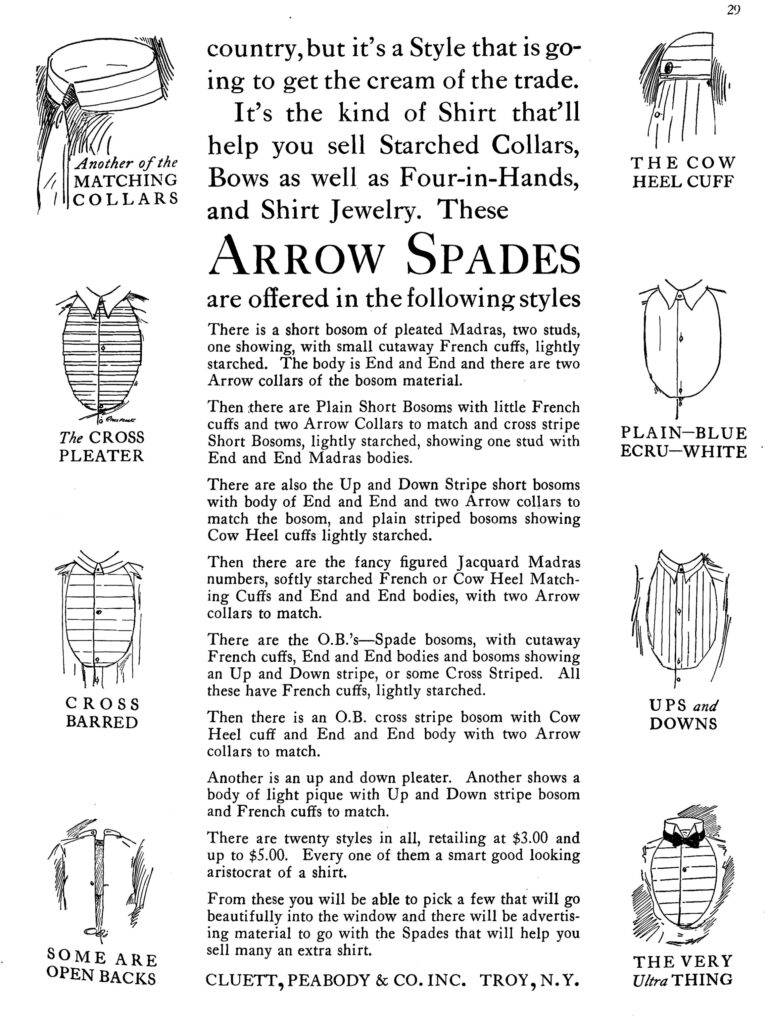
1927 Men’s wear-Chicago apparel gazette edition v. 74 (May 11-July 20, 1927)
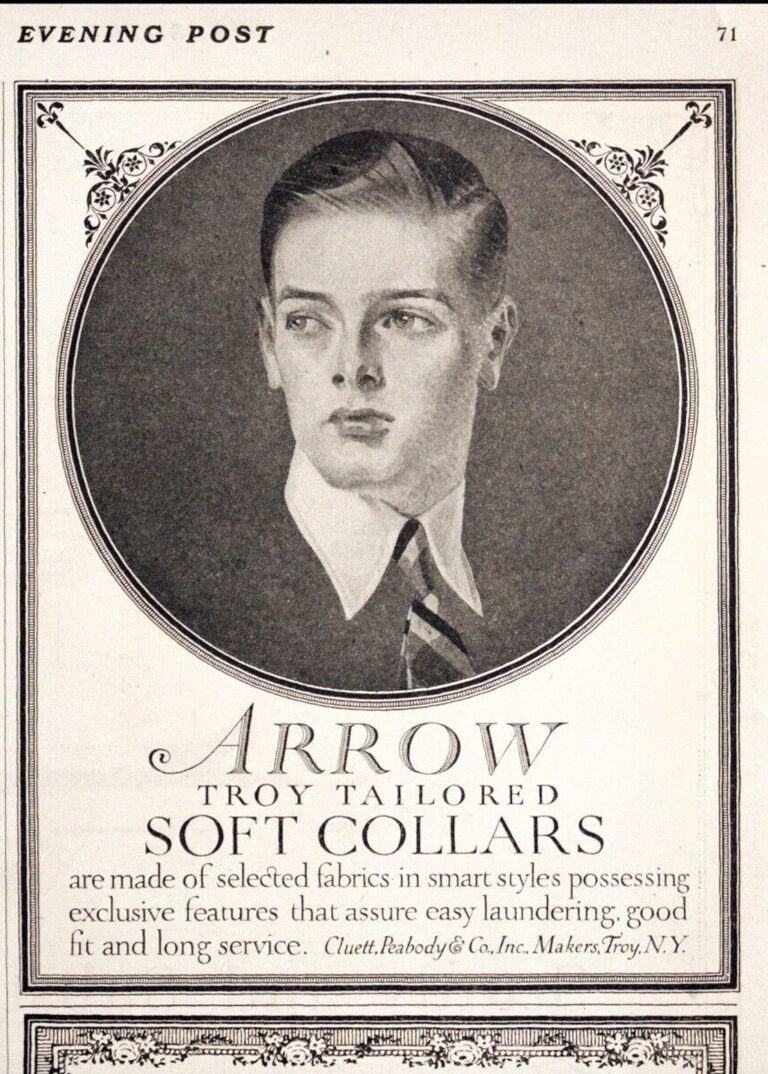
1927 Men’s ARROW Collars Clothing J.C. LEYENDECKER
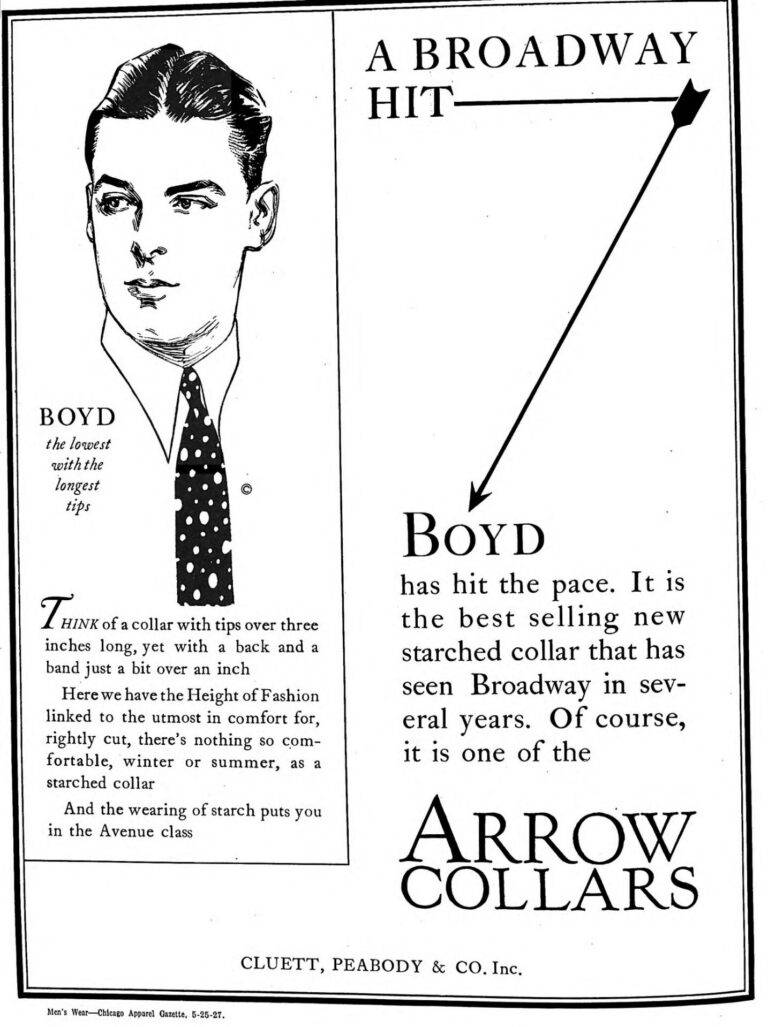
1927 Men’s wear-Chicago apparel gazette edition v. 74 (May 11-July 20, 1927)
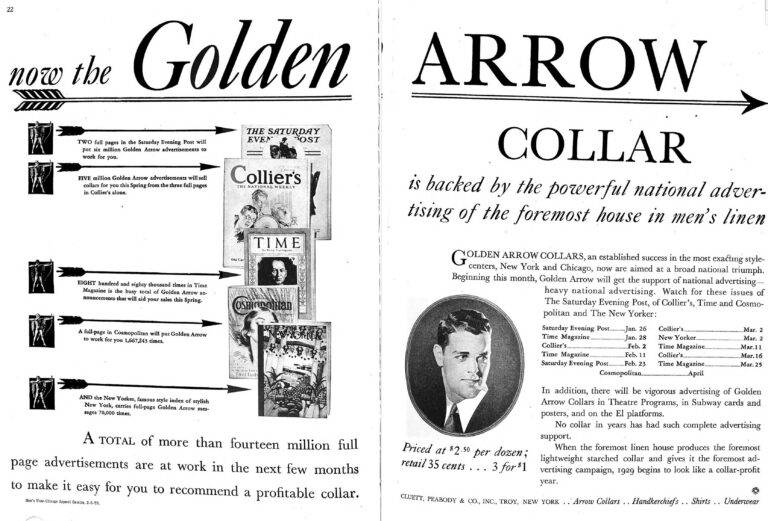
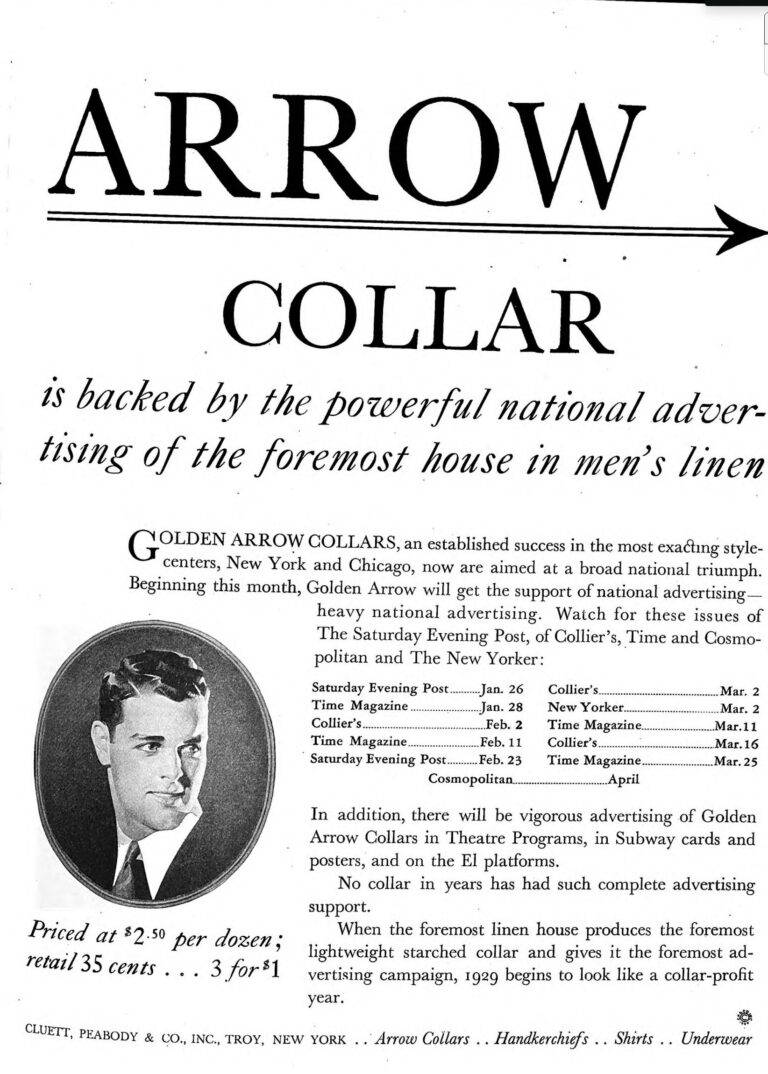
1929 Men’s Wear—Chicago Apparel Gazette, 2-6-29.
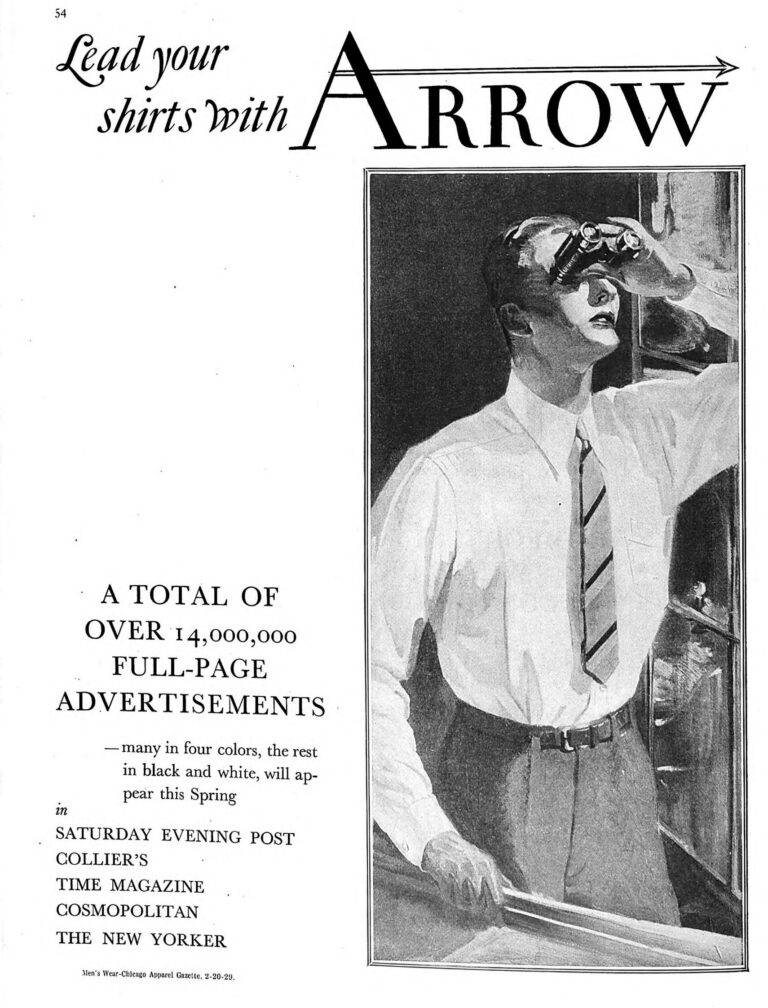
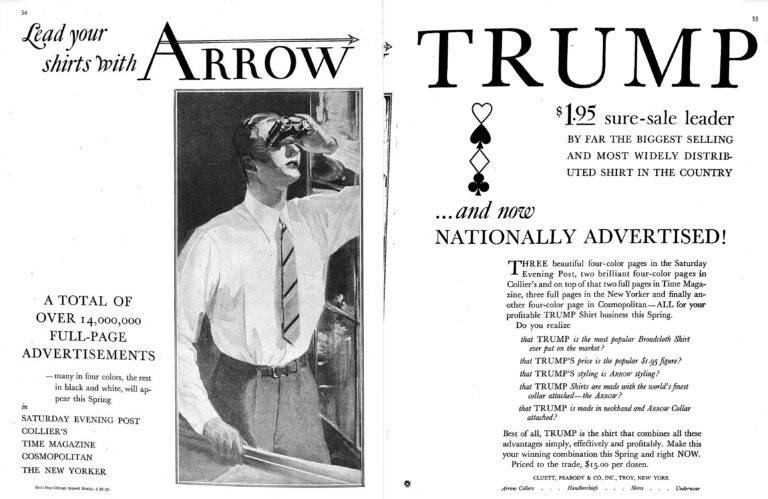
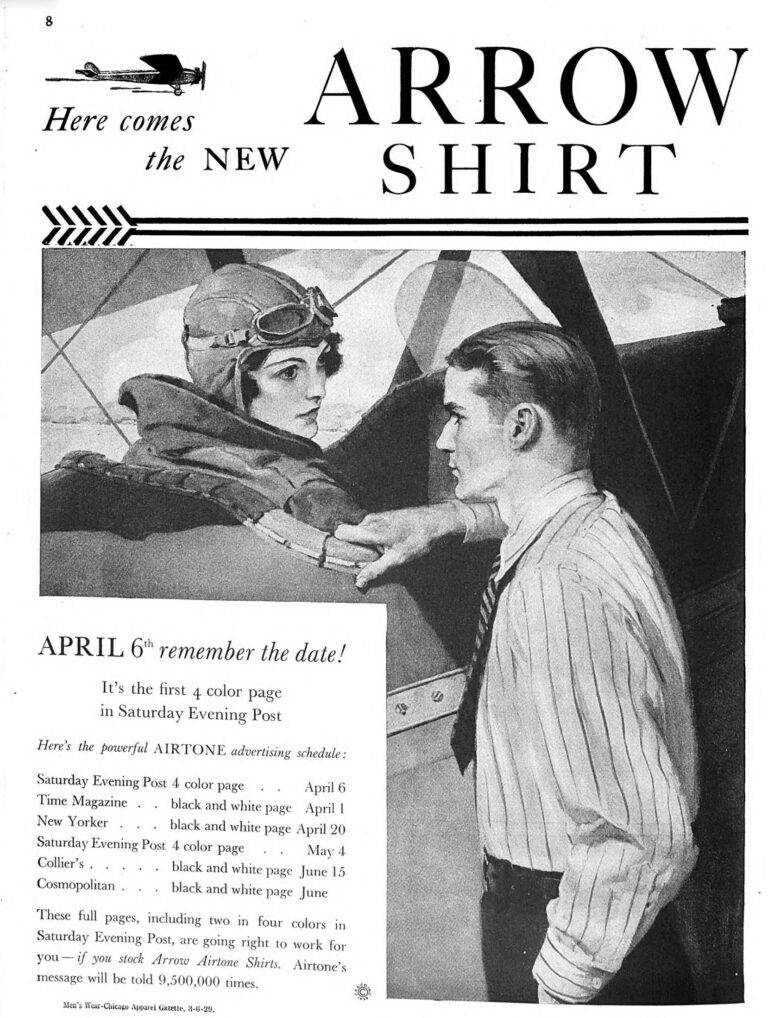
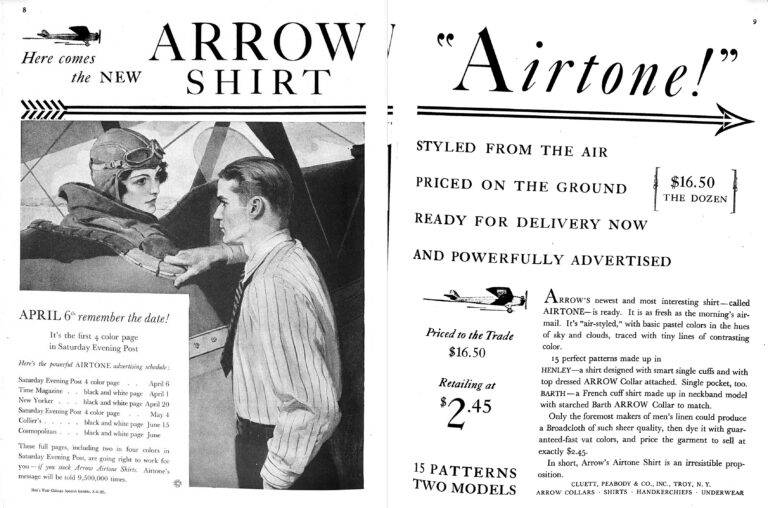
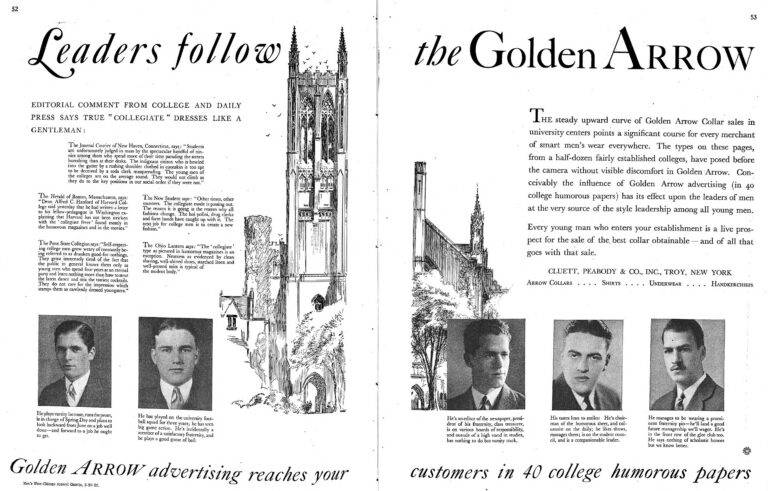
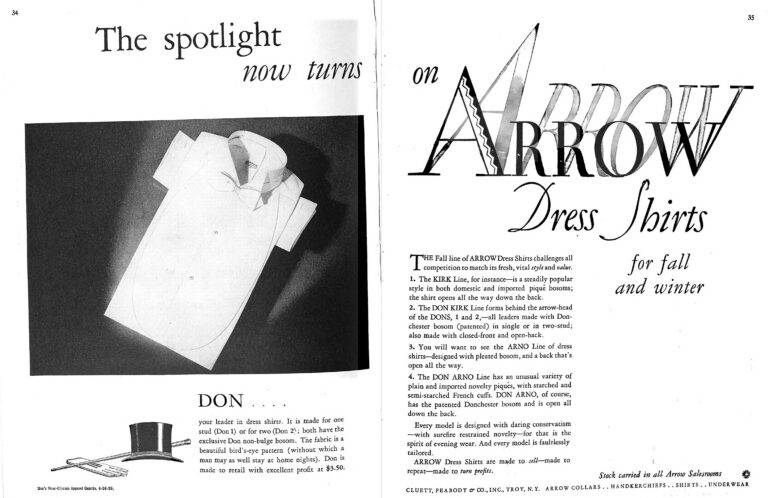
1929 Men’s wear-Chicago apparel gazette edition v. 78, no. 1-6 (Feb. 6-Apr. 24, 1929)
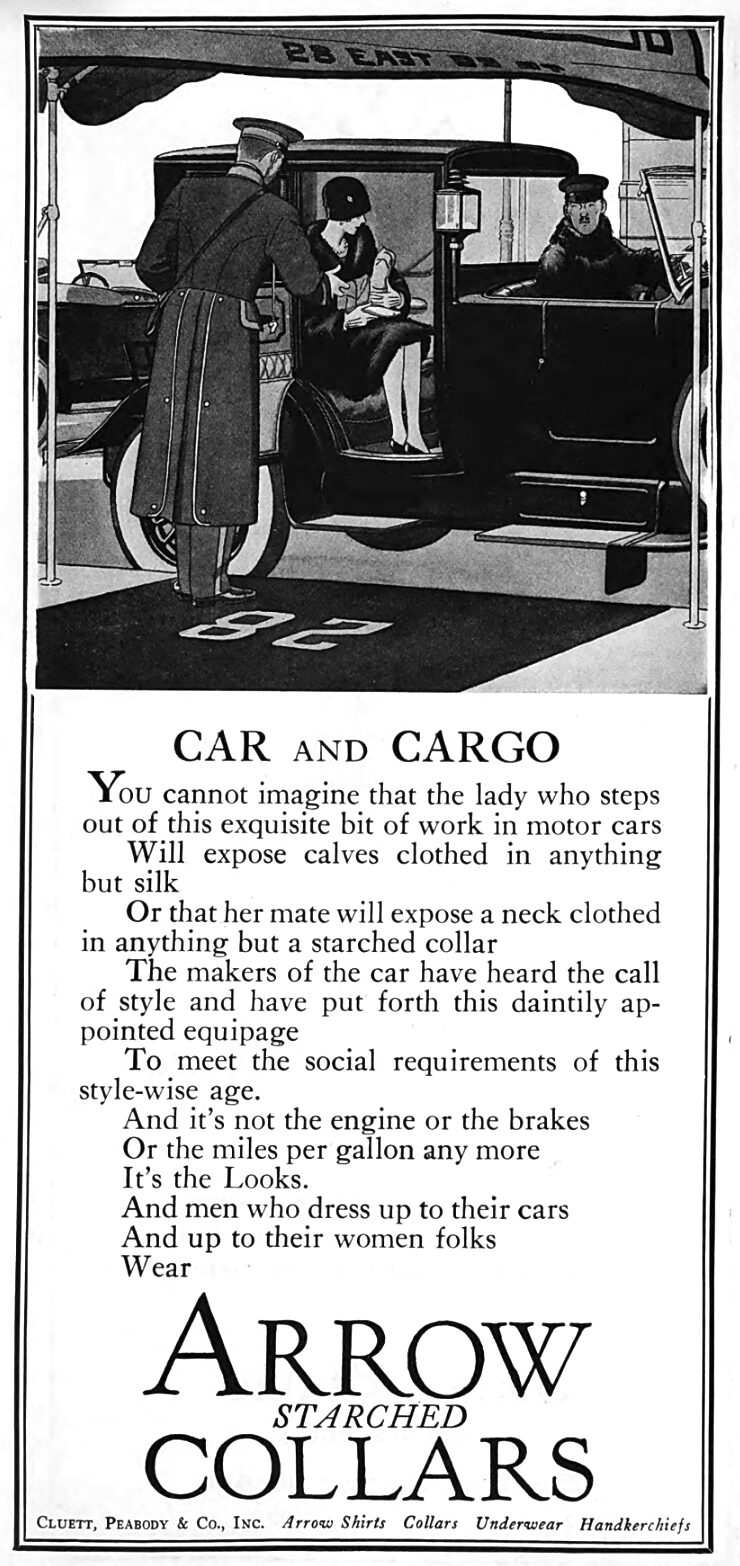
1928 The New Yorker v.3 ja.-f. 1928
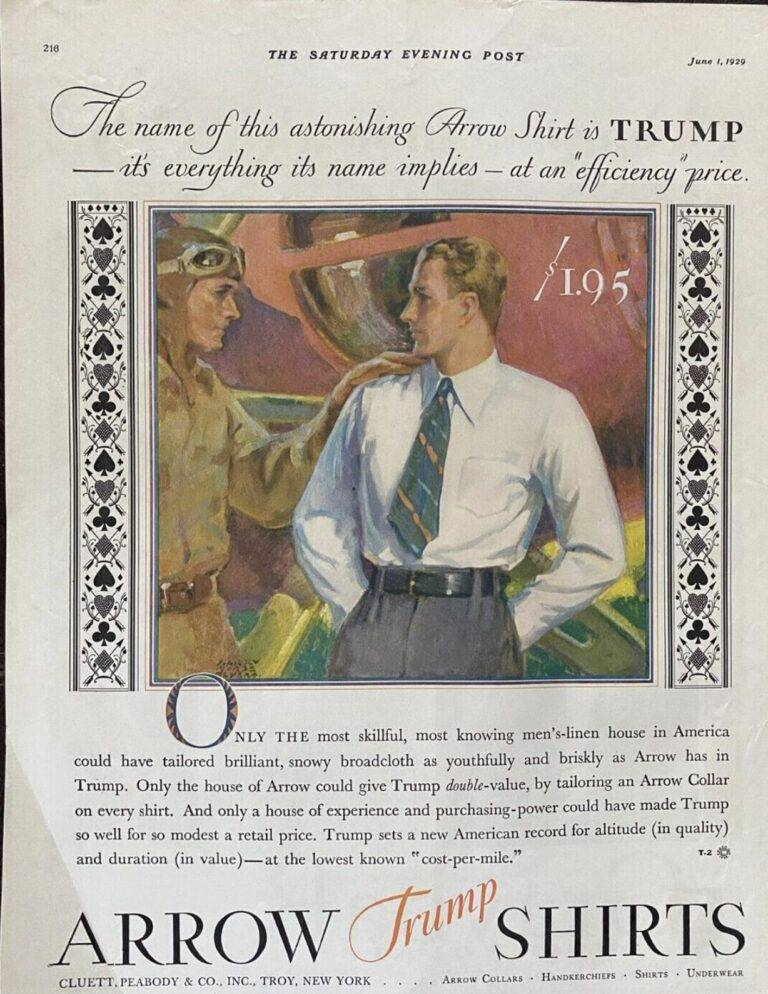
1929 Print Ad Arrow Shirts
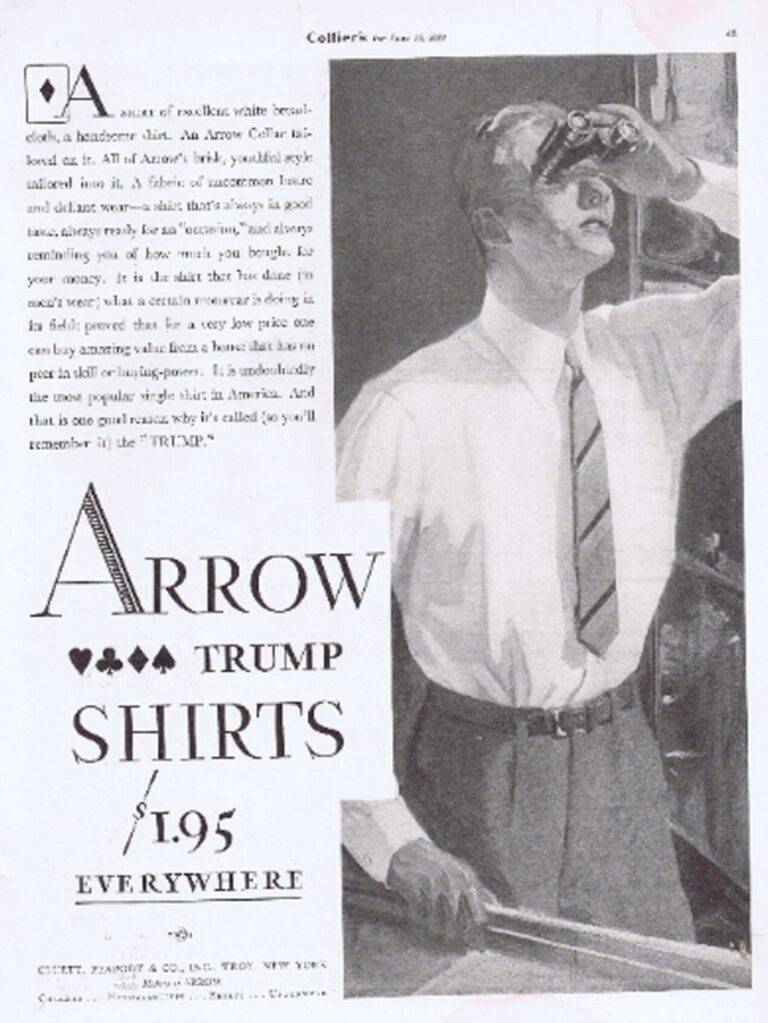

1929 Print Ad Arrow Shirts
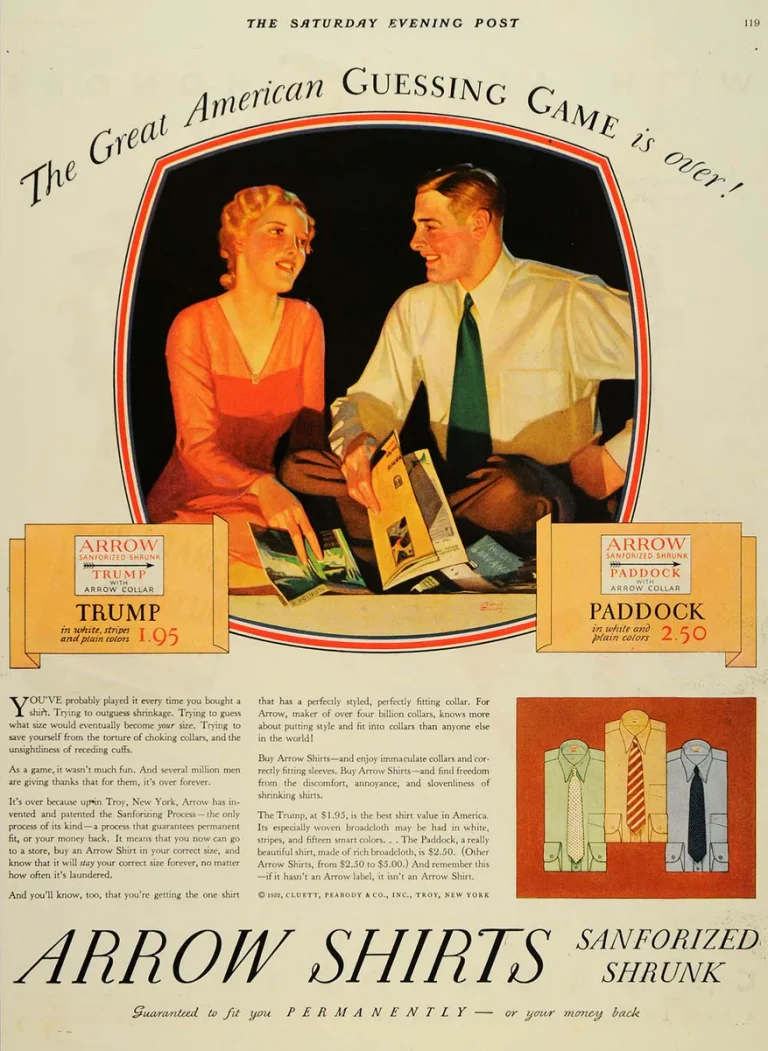
1929 Print Ad Arrow Shirts
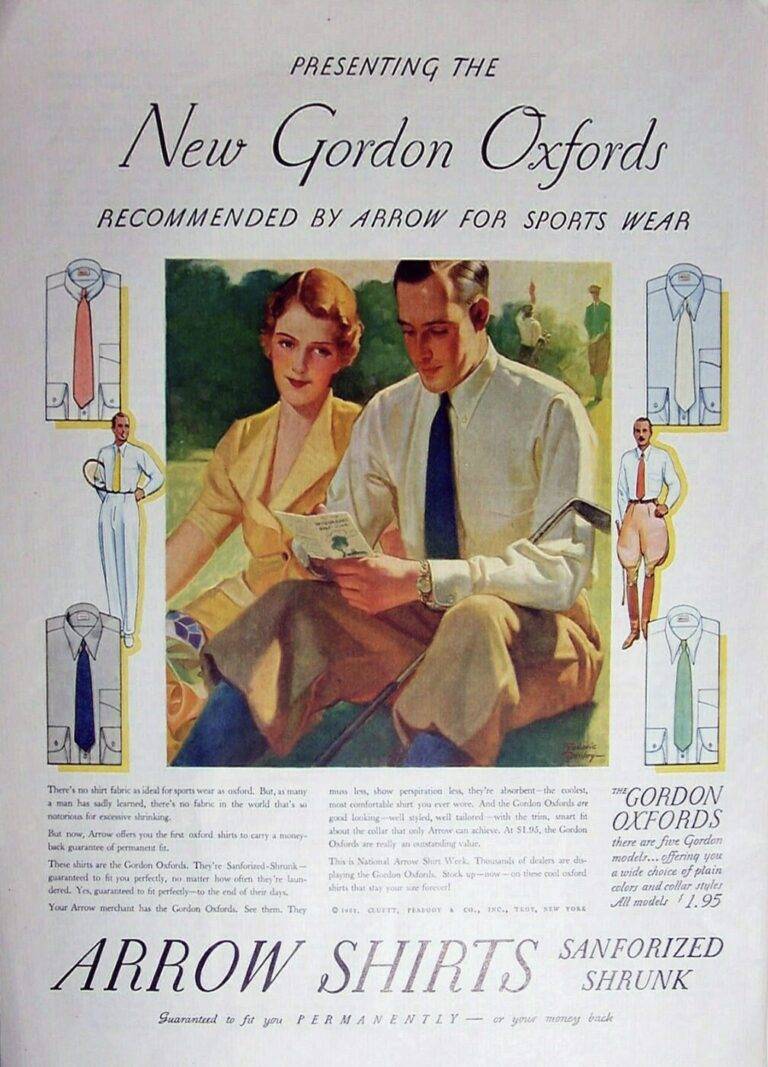
1929 Print Ad Arrow Shirts?
1930s
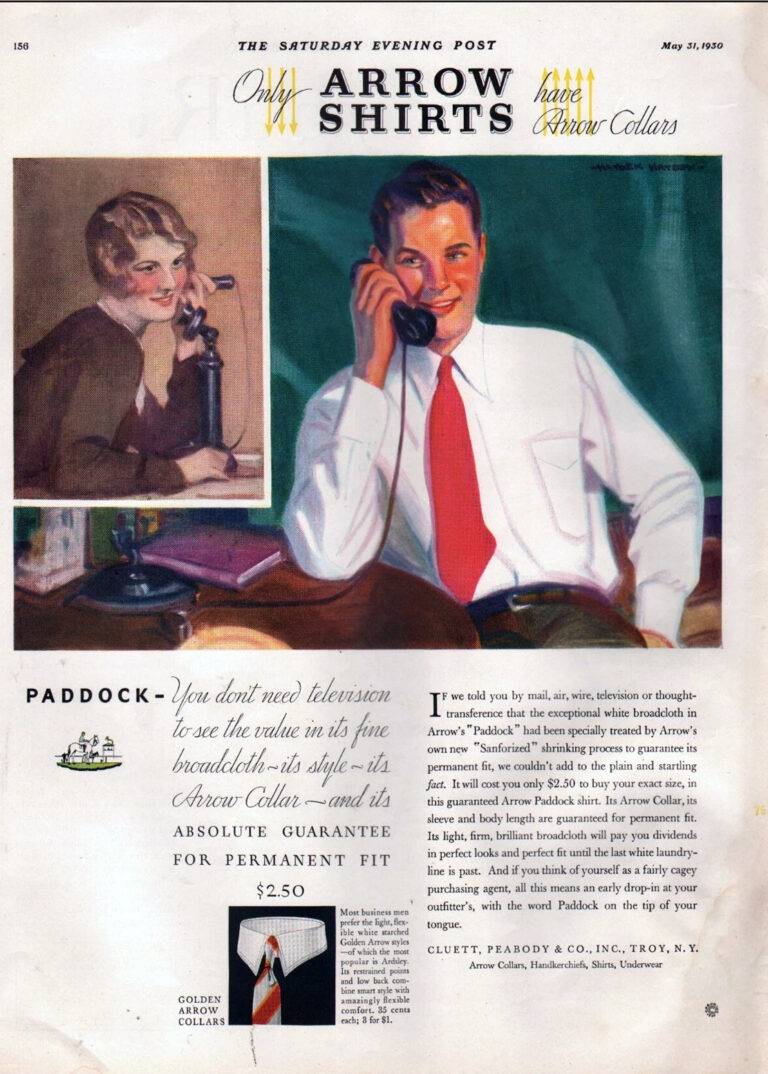
1930 Vintage ad Arrow Shirts GOLDEN

1930 Arrow Shirts Ad – art by Hayden Hayden
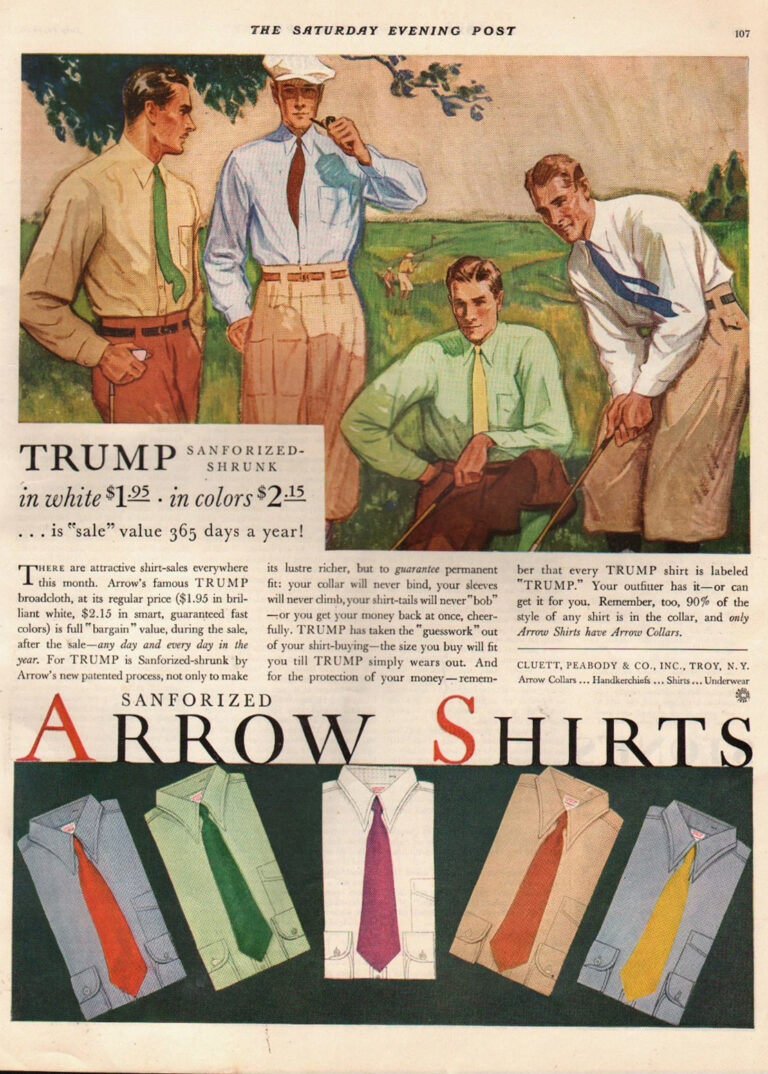

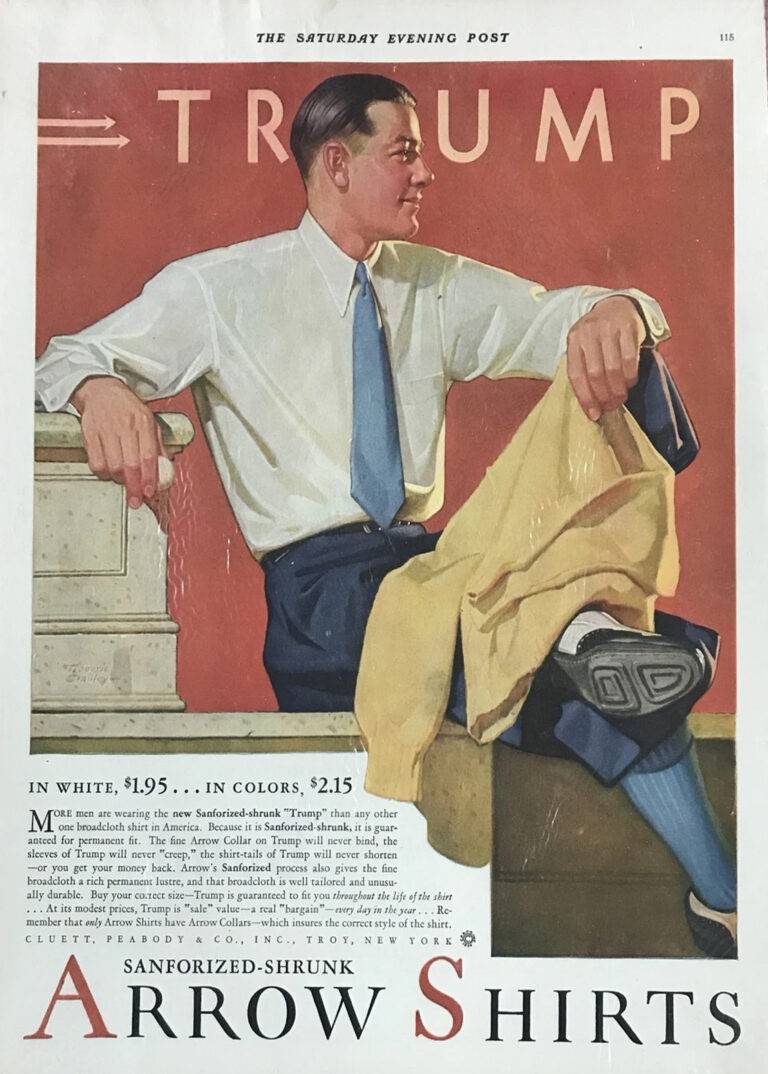
1930s? Arrow Shirt’s
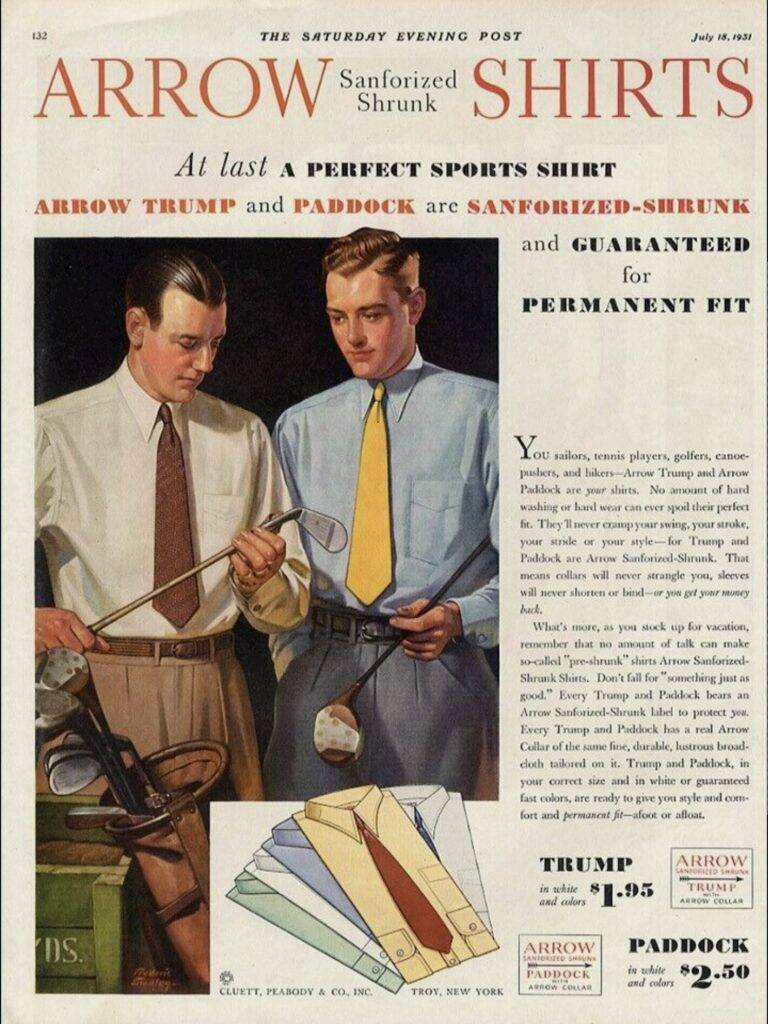
ARROW SHIRTS Fashion Ad 1931

1931 Arrow Men’s Shirts
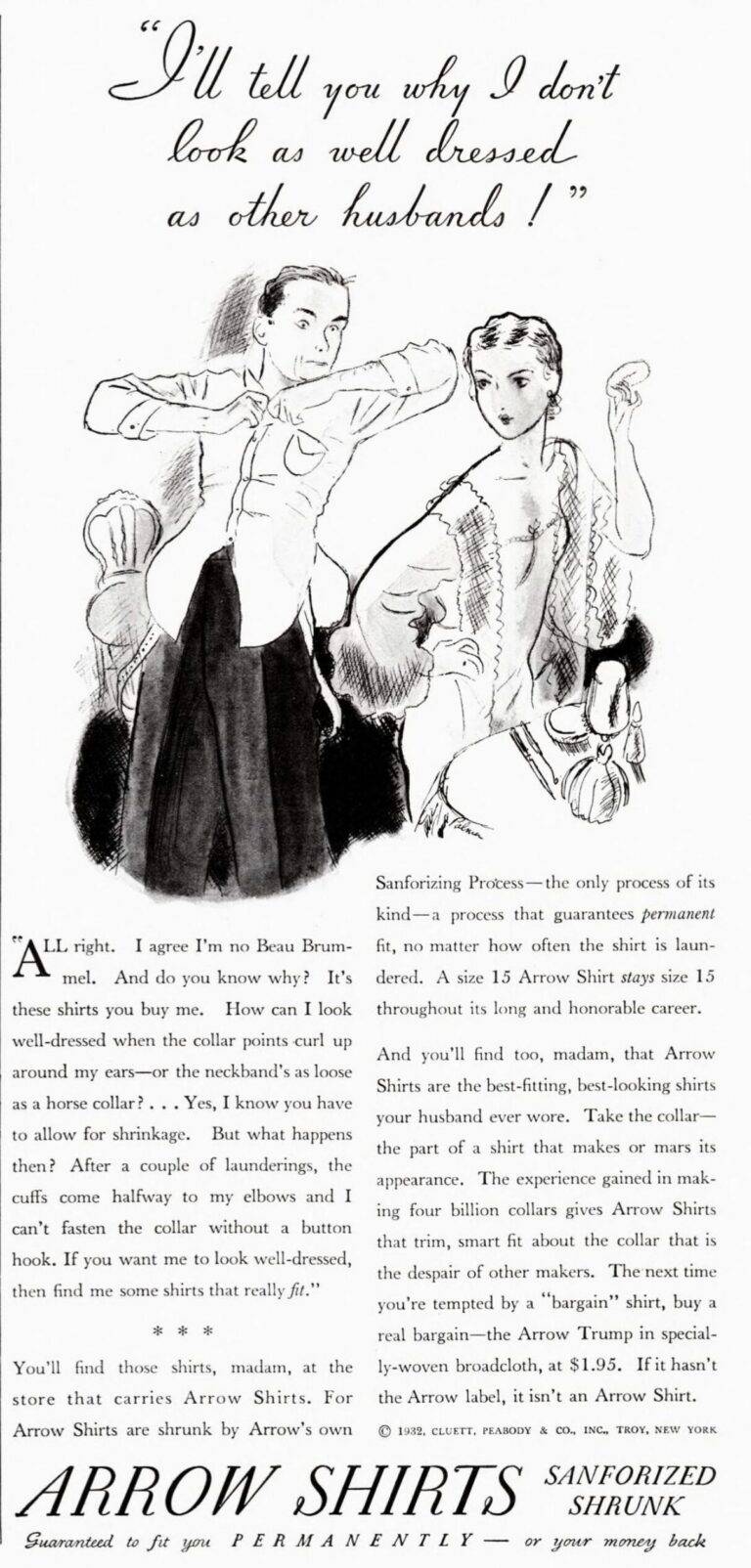
1932 The American Magazine v114n01 1932-07.Crowell (Darwination-IA)
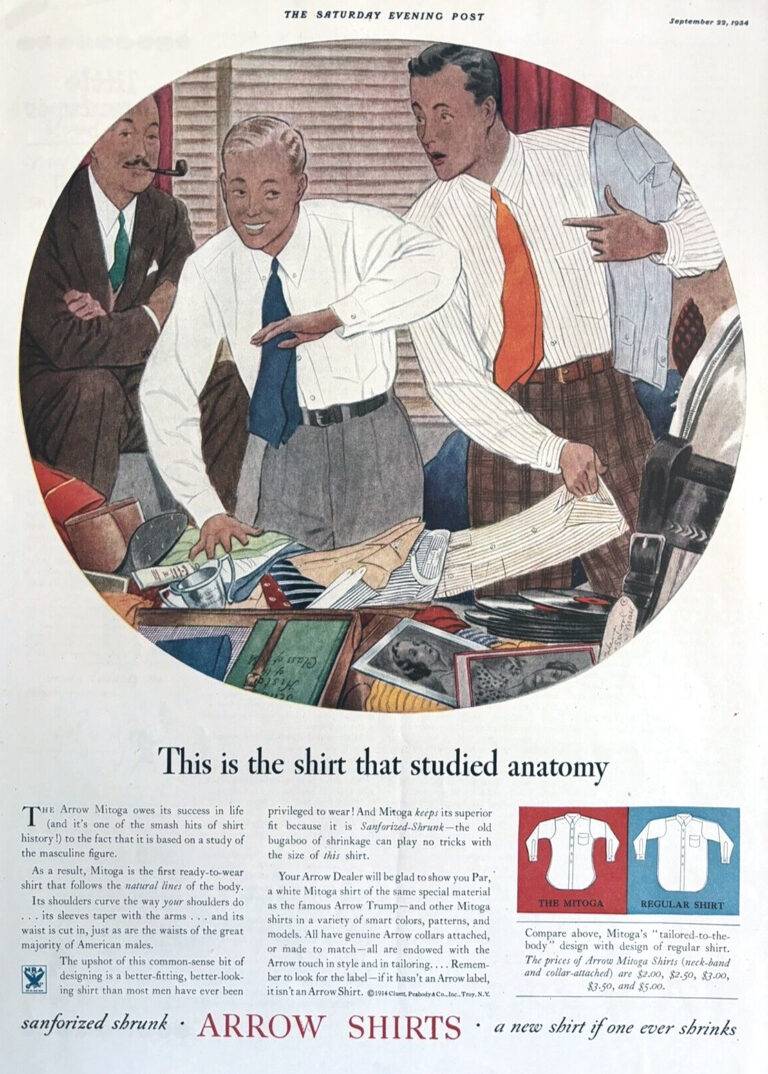
1934 Arrow Shirts Sanforized Shrunk Anatomy Troy NY
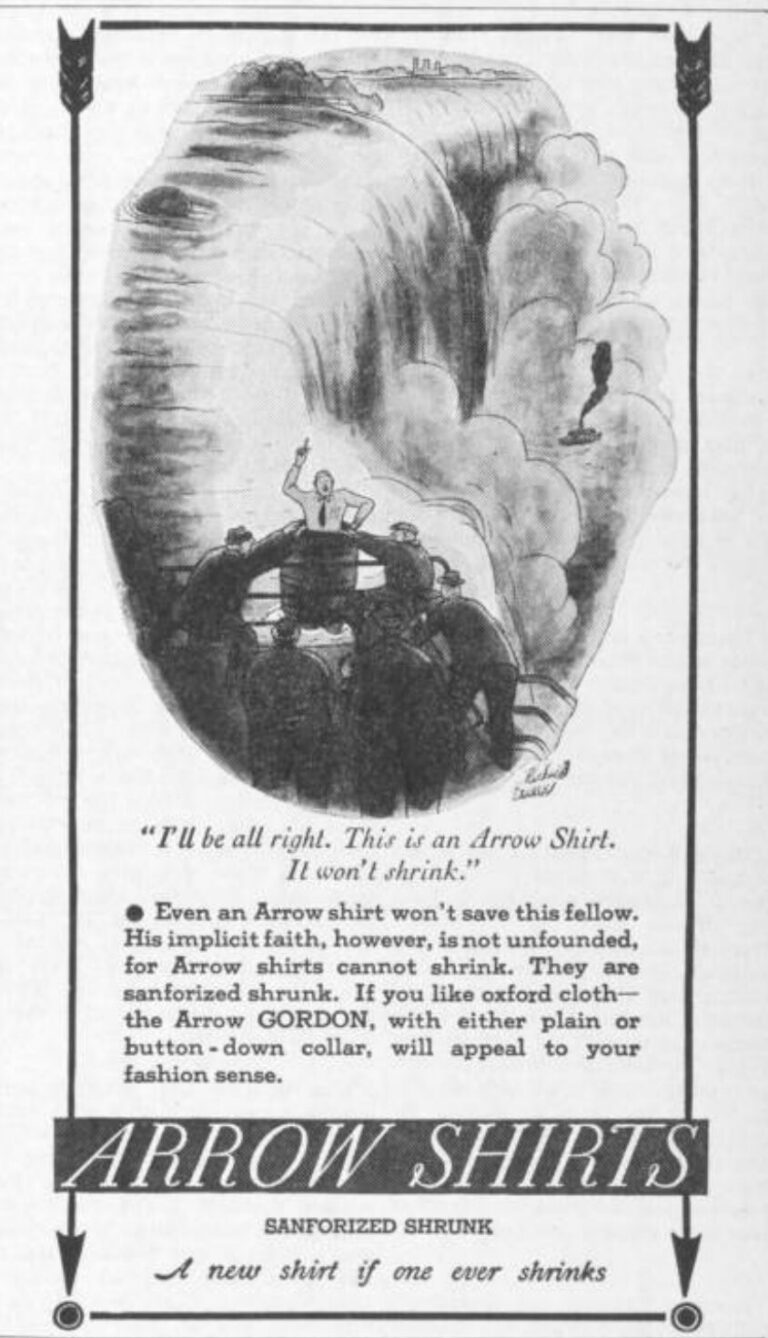
1934 The Daily Pennsylvanian, Volume L, Number 88, 2 March 1934
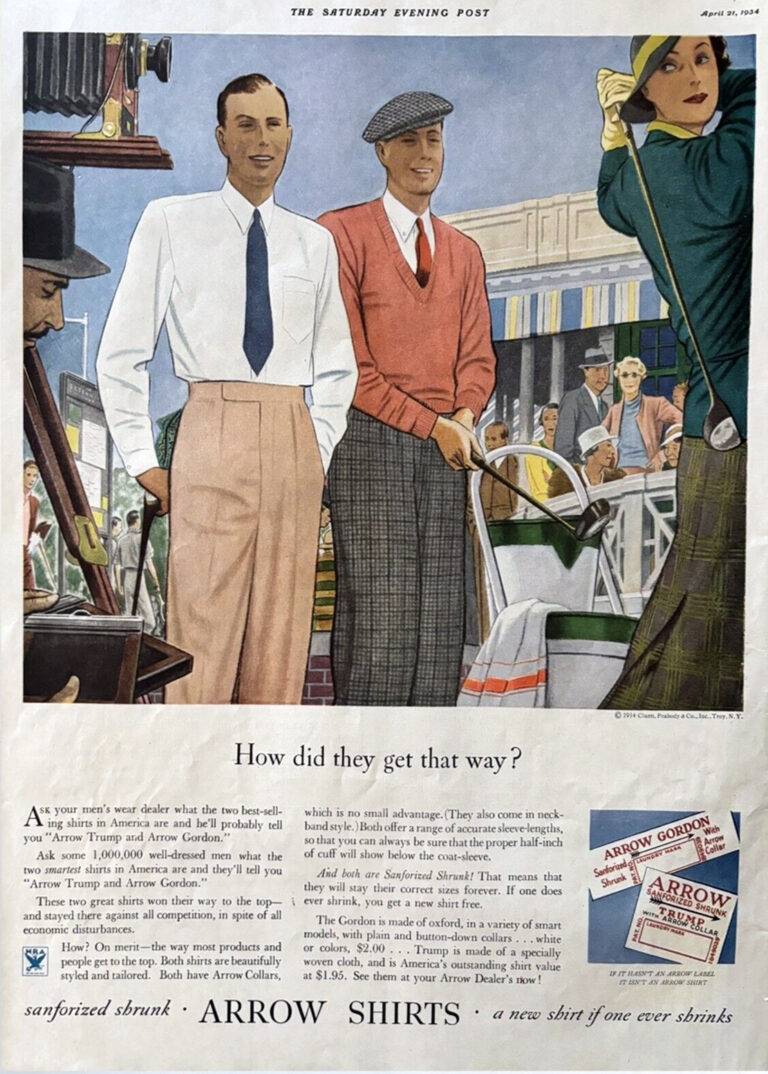
1934 Arrow GOLF Shirts Sanforized Shrunk Anatomy Troy NY
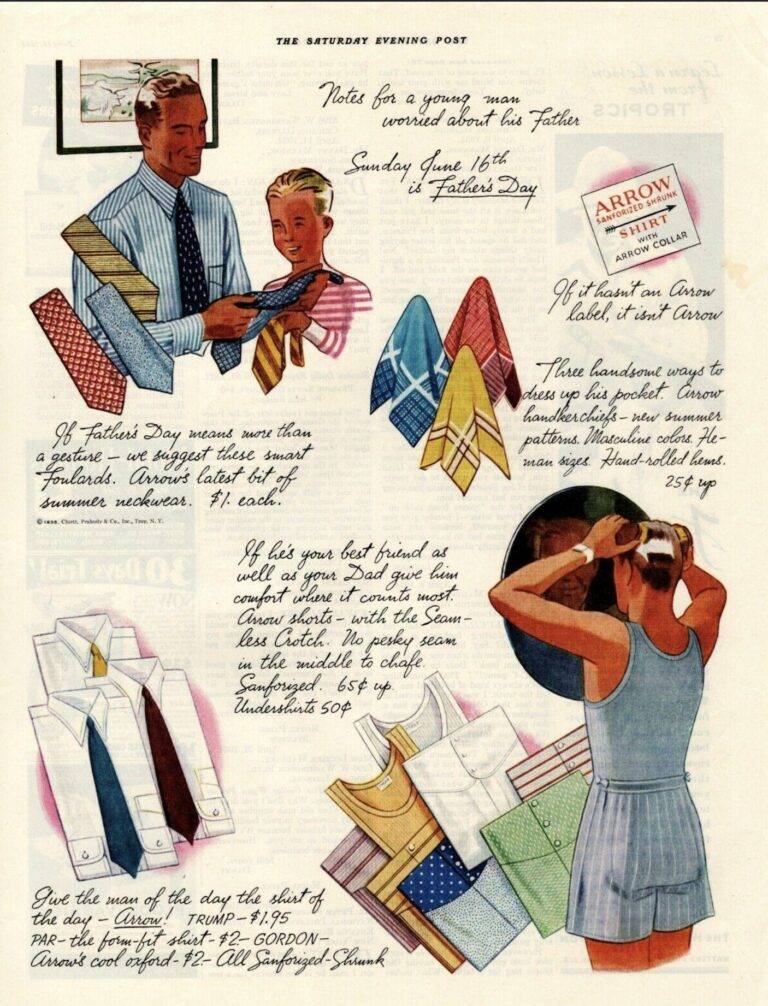
1935 ORIGINAL VINTAGE ARROW SHIRT CLOTHING MAGAZINE AD
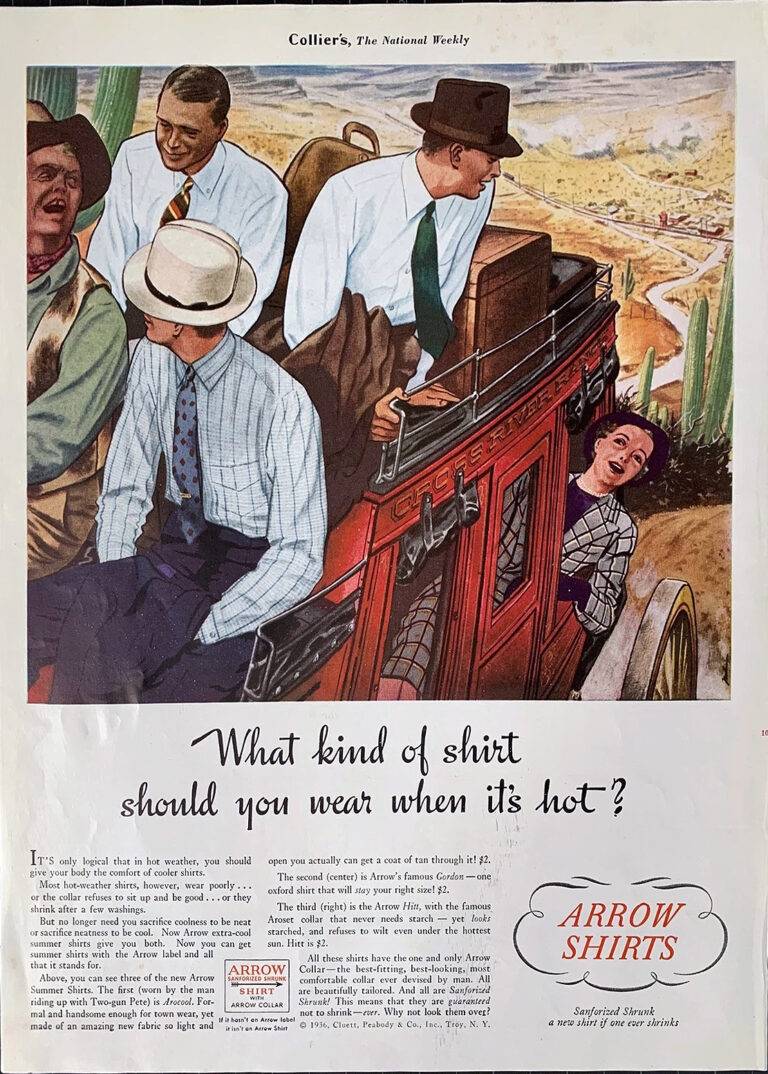
1936 Arrow Shirts

1936 Arrow Shirts Placid Stripes Gun Club Check

1937 Print Ad Arrow Men’s Shirts & Ties for Dad & Father’s Day & Children

1937 Arrow Shirts

1937 Print Ad Arrow
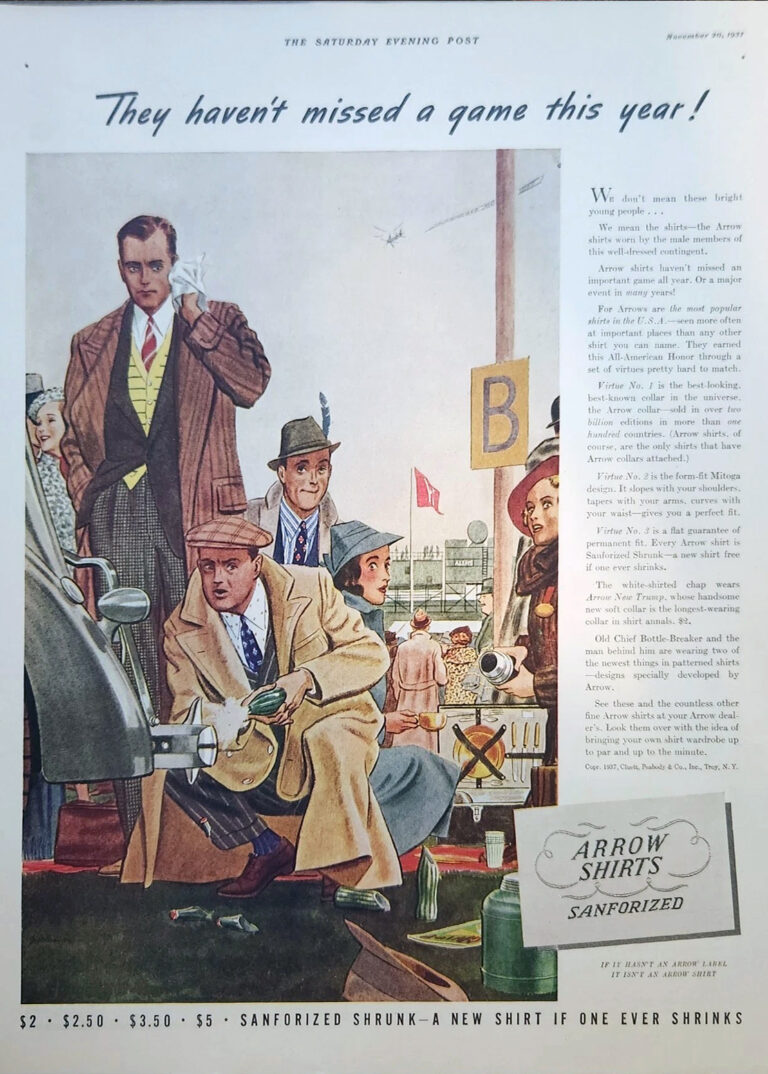
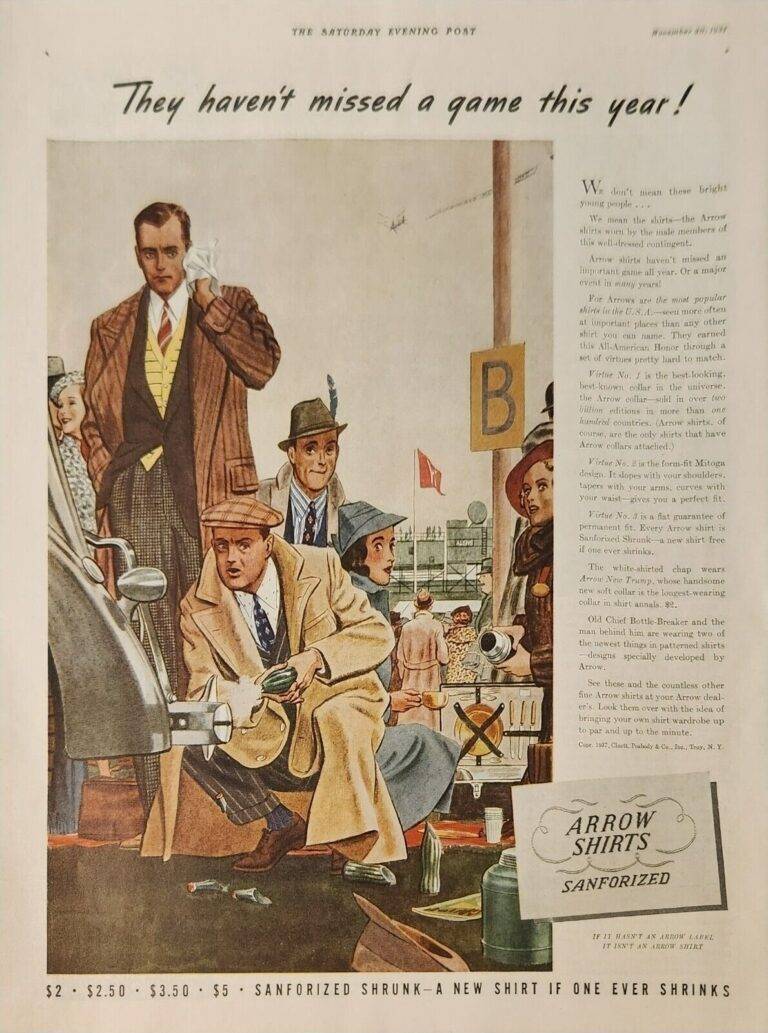
1937 Arrow Shirt for Men Vintage Ad They Havent Missed a Game
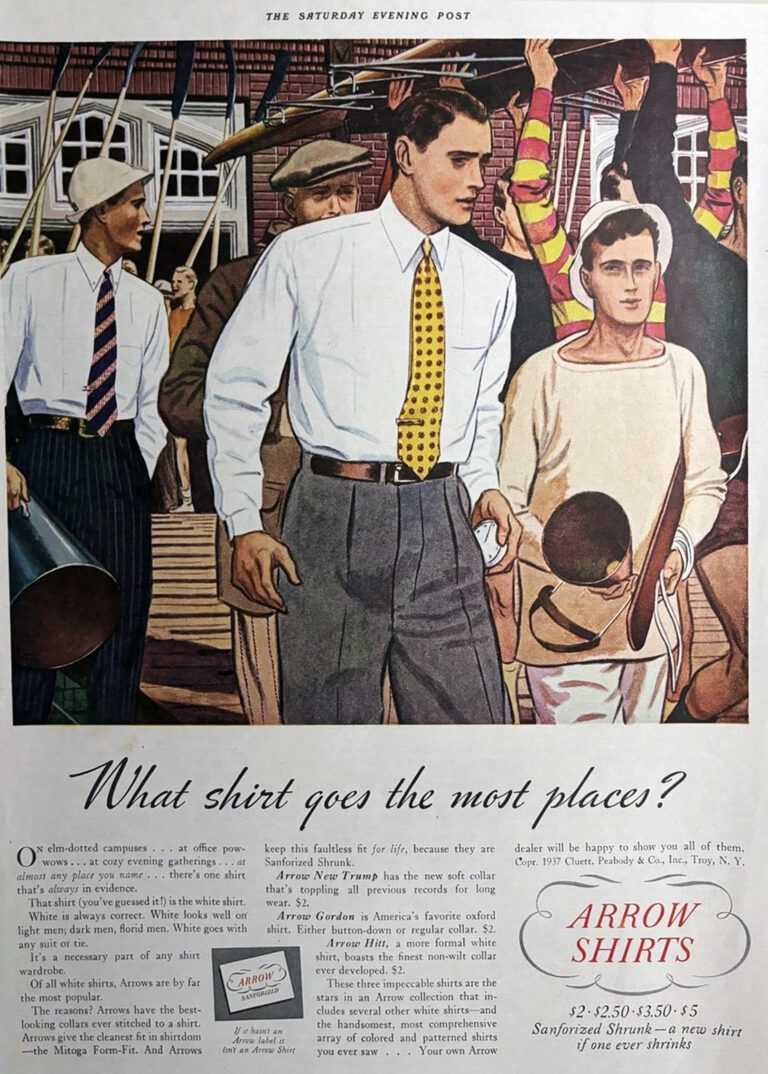
1937 Arrow Shirts Shrunk Sanforized Cluett Peabody Co Troy NY

1937 Arrow Shirts Man Striped Pajamas Black Porter
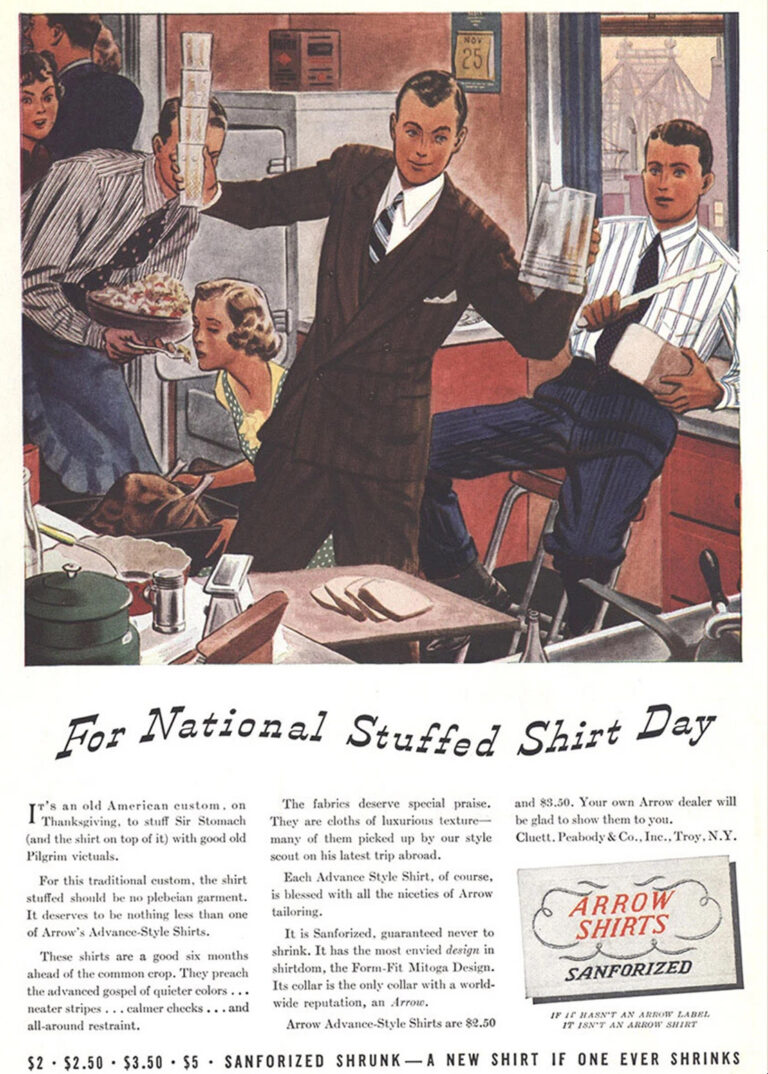
1937 Arrow Shirts: National Stuffed Shirt Day
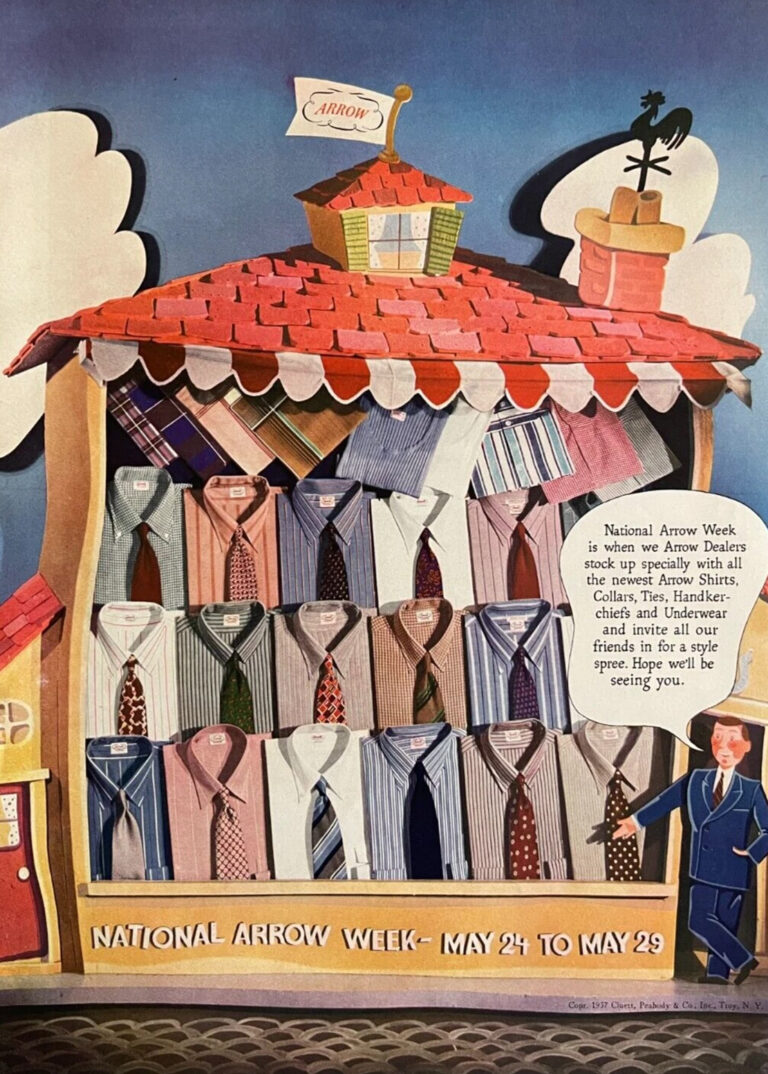
1937 Arrow Print Ad
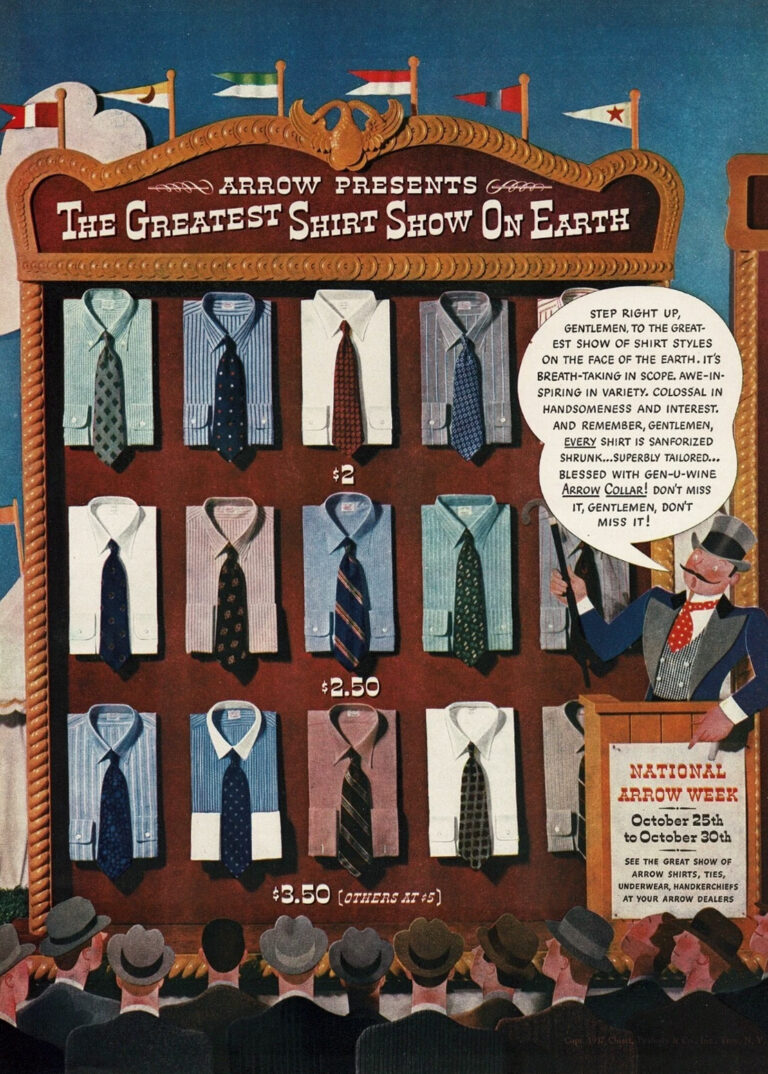
1937 Arrow Shirts and Ties
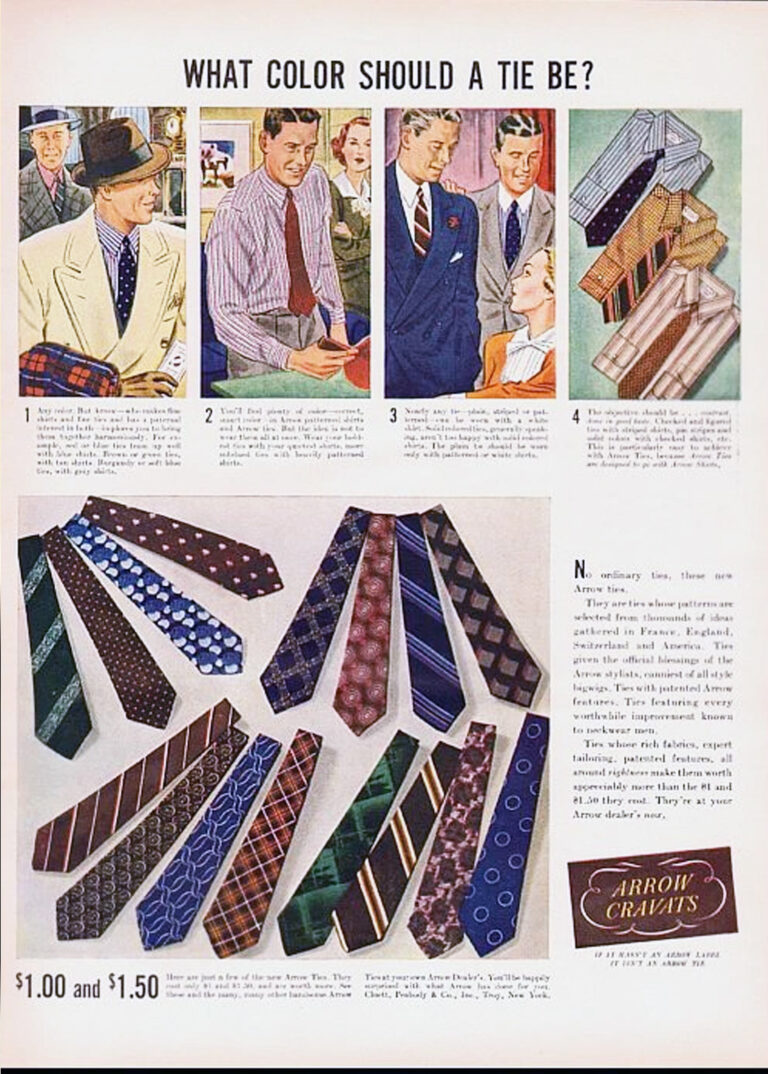
ARROW CRAVATS-ARROW
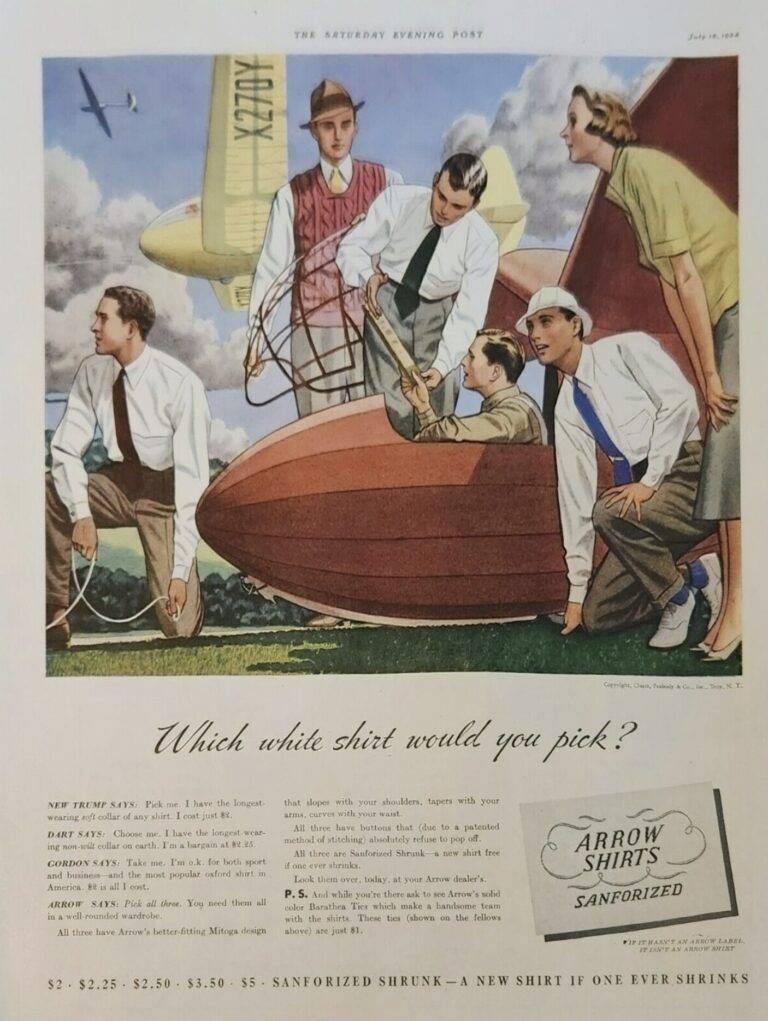
1938 Arrow shirts Sanforized

1938 Arrow Shirts: Shirt Doodler
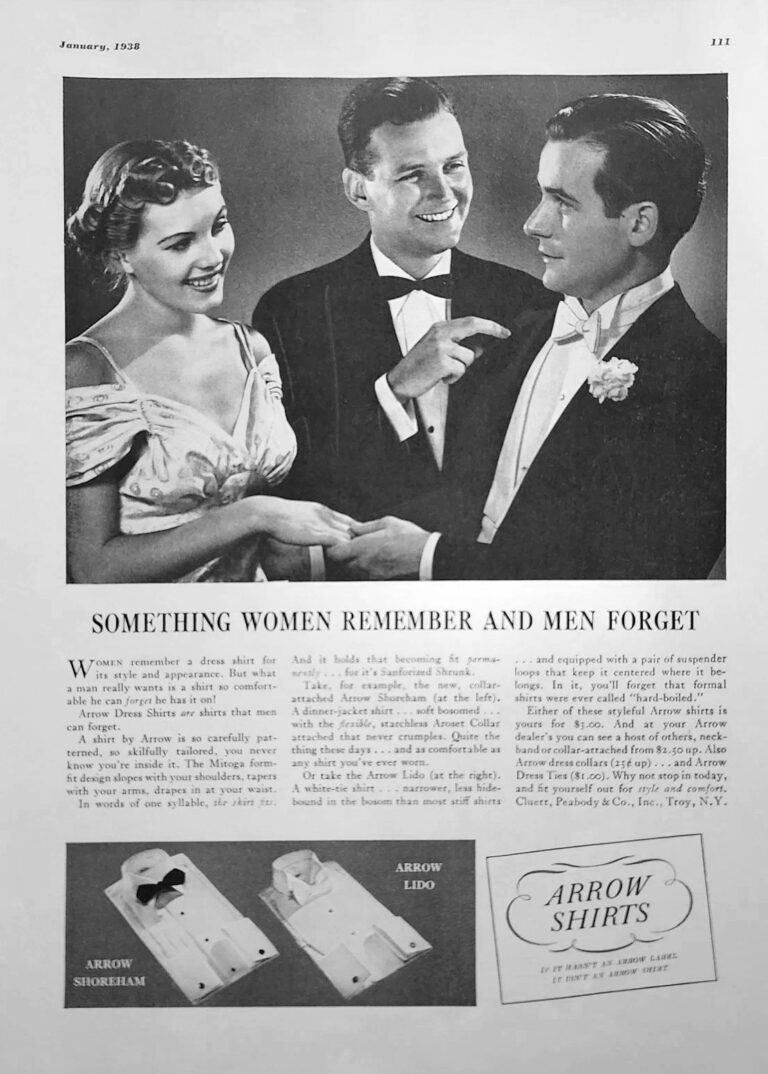
1938 Arrow Shirt for Men
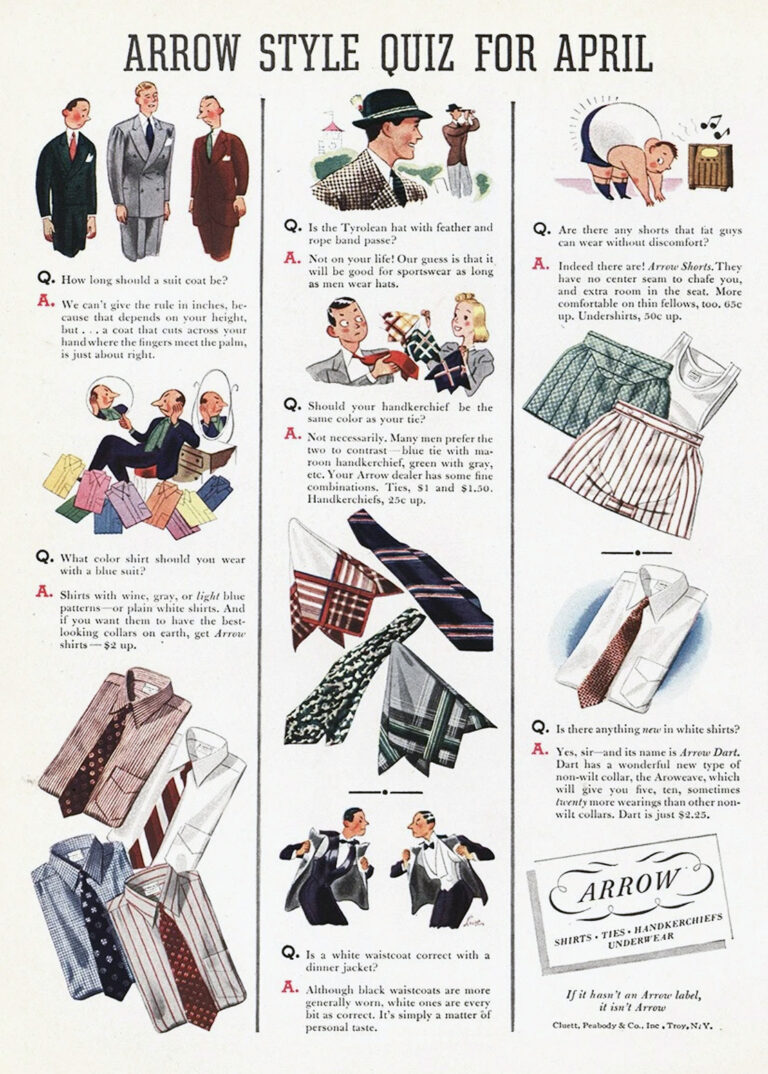
1938 Arrow shirts Sanforized
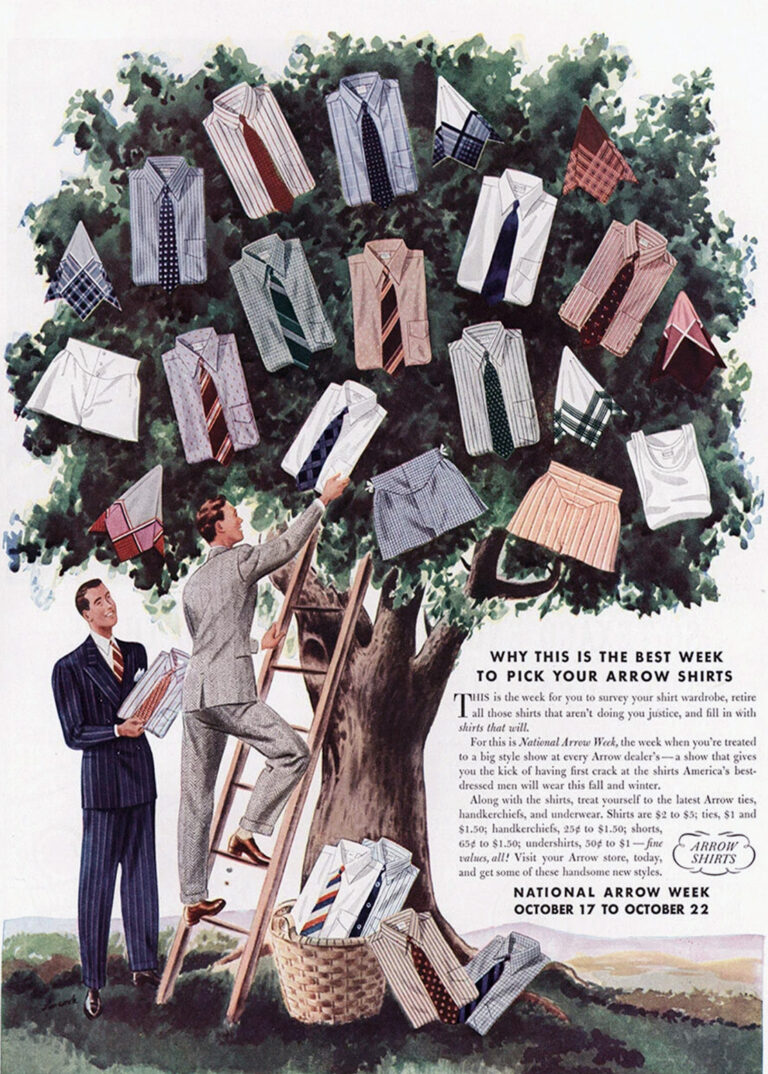
1938 Arrow shirts Sanforized
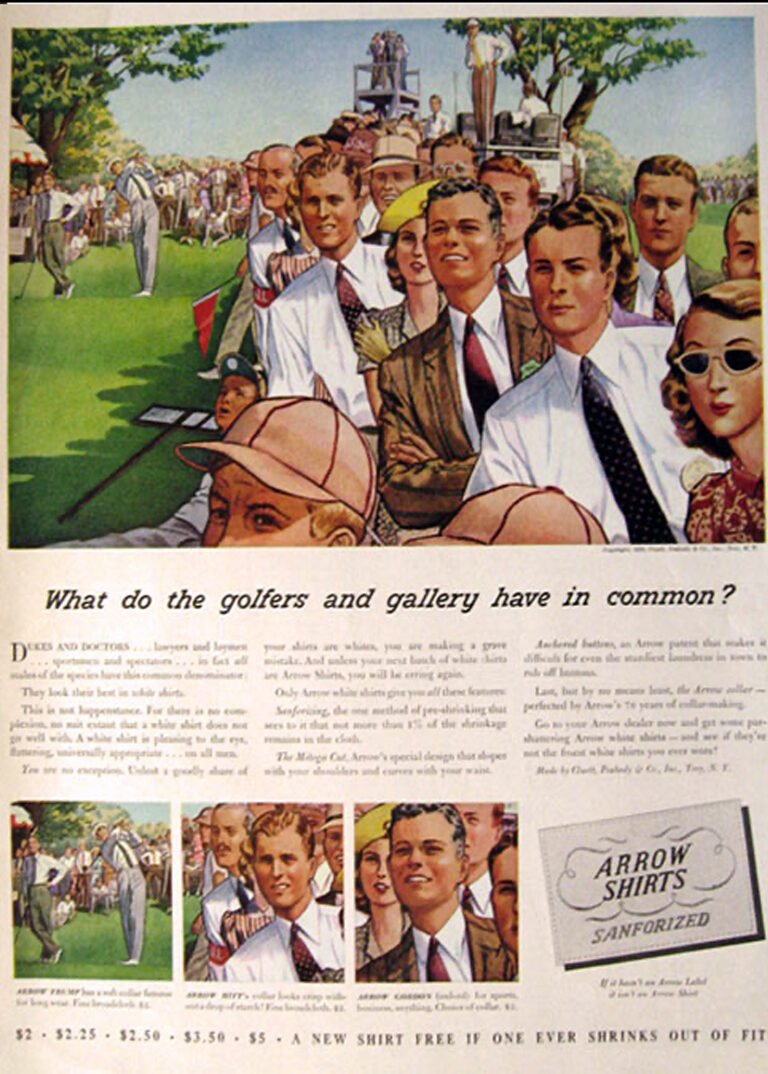
1939 Arrow Shirts

1939 Arrow Mens Shirt National Week

1939 Arrow
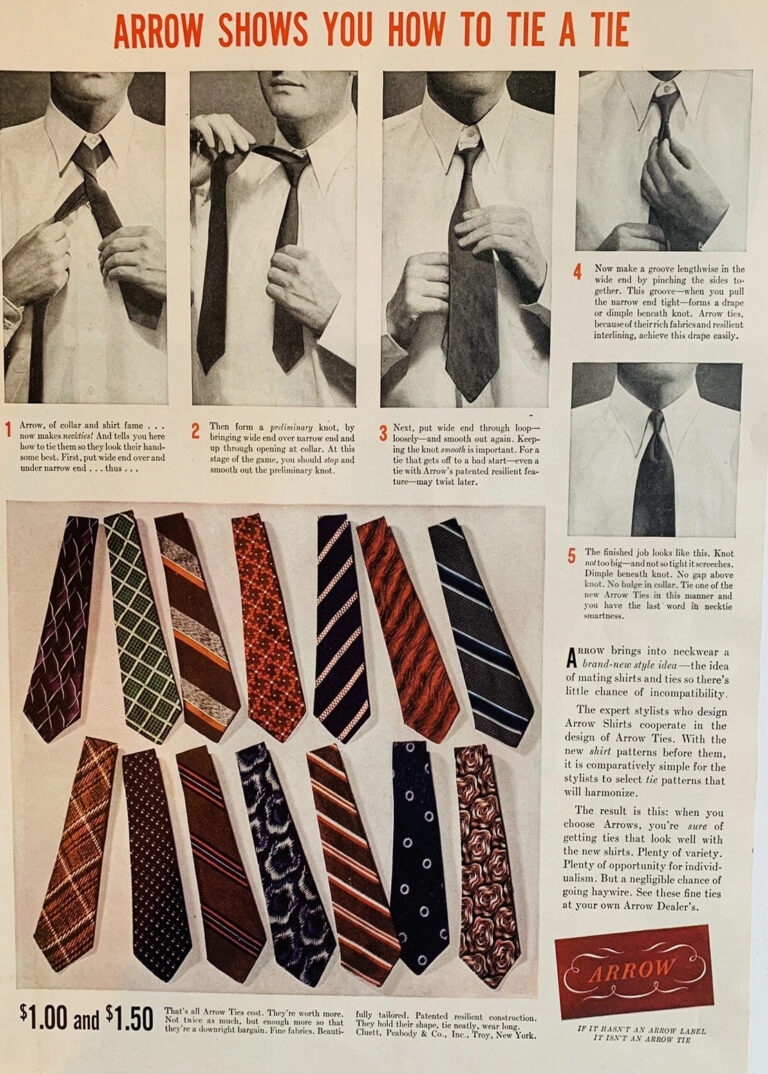
1939 Arrow Ties
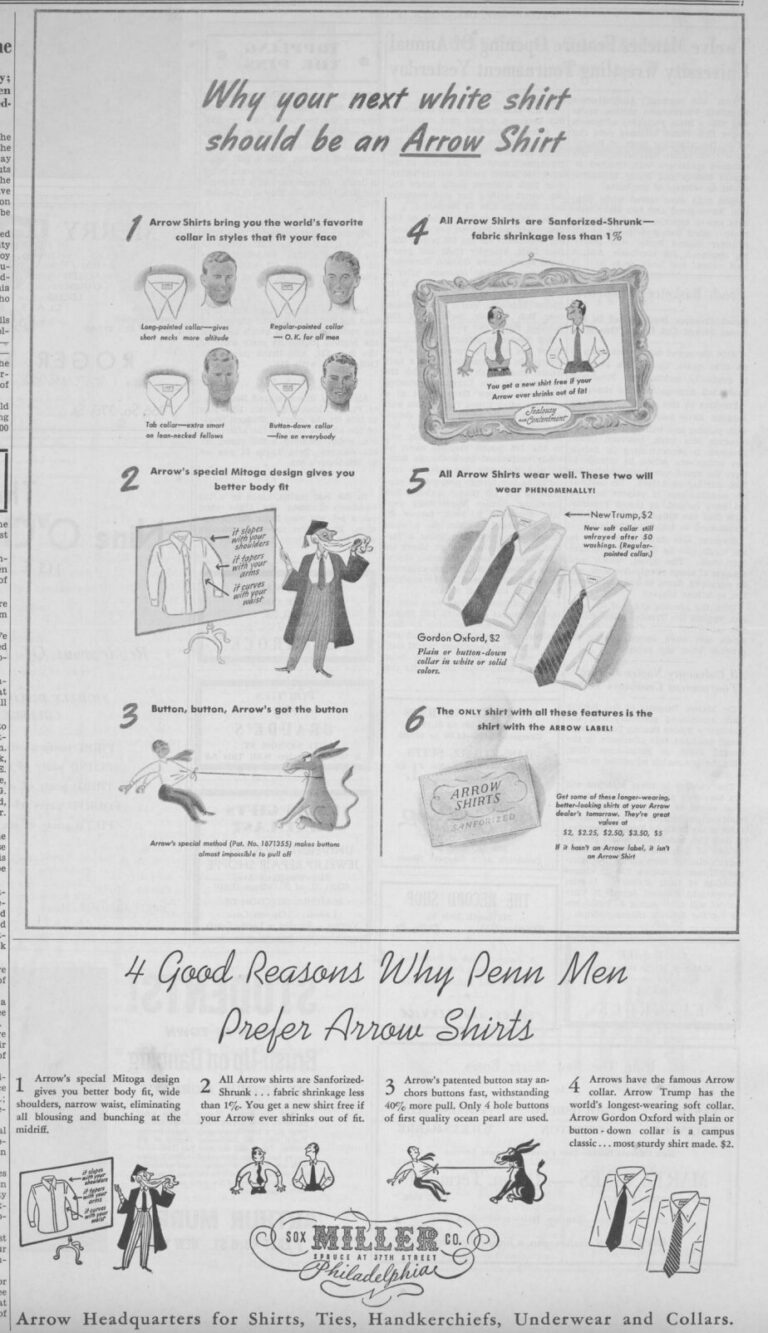
1939 The Daily Pennsylvanian, Volume LVI, Number 56, 13 December 1939
1940s
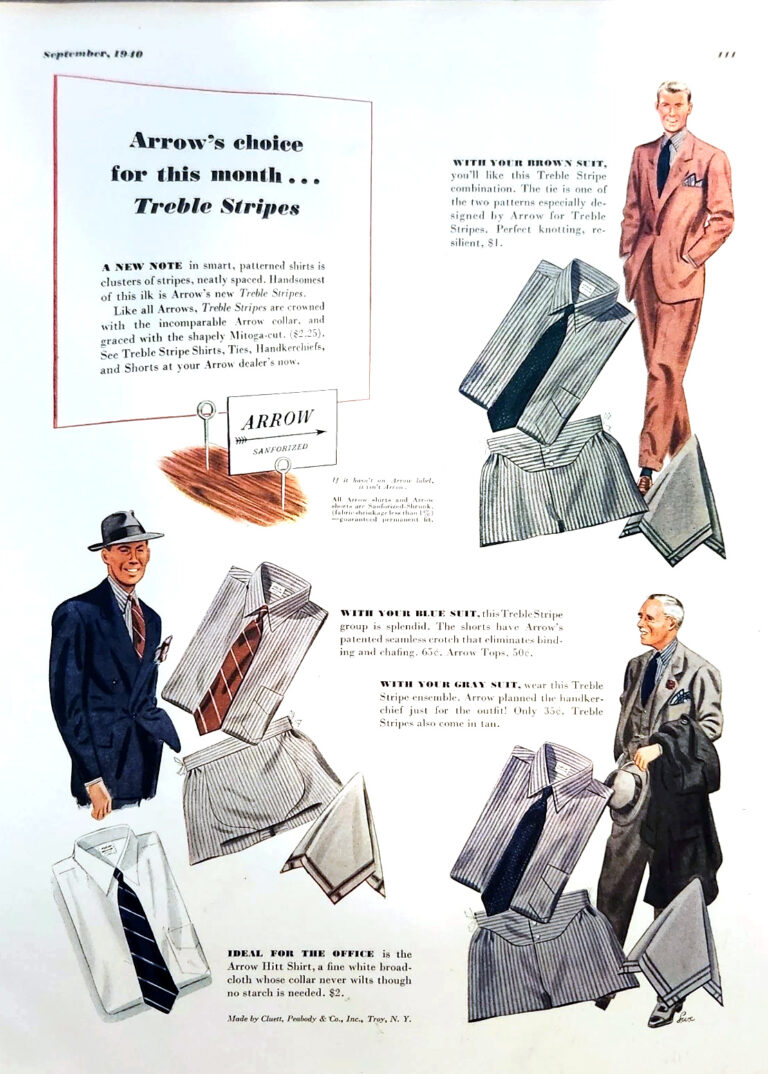
1940 Arrow Shirts Mens Treble Stripes

1940s Arrow Aronet

1941 Arrow shirts Sanforized Shrunk

1941 ARROW AD
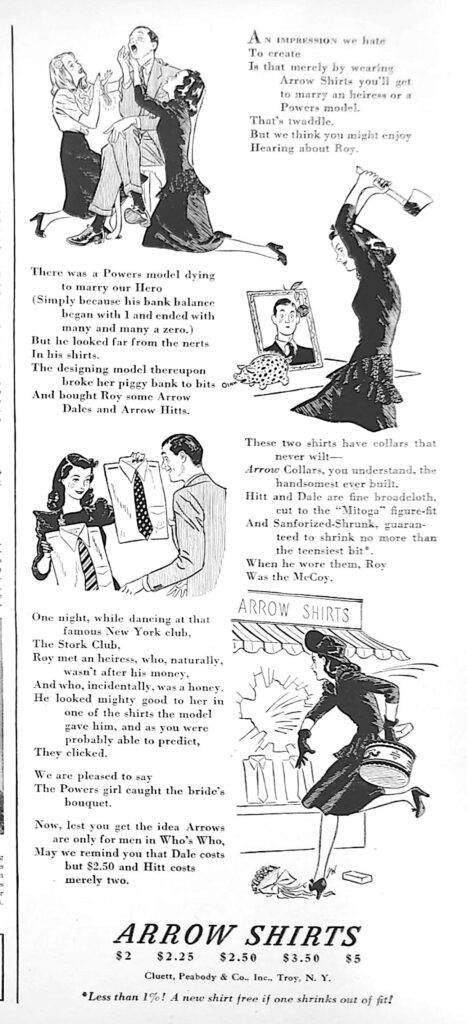
1941 ARROW AD
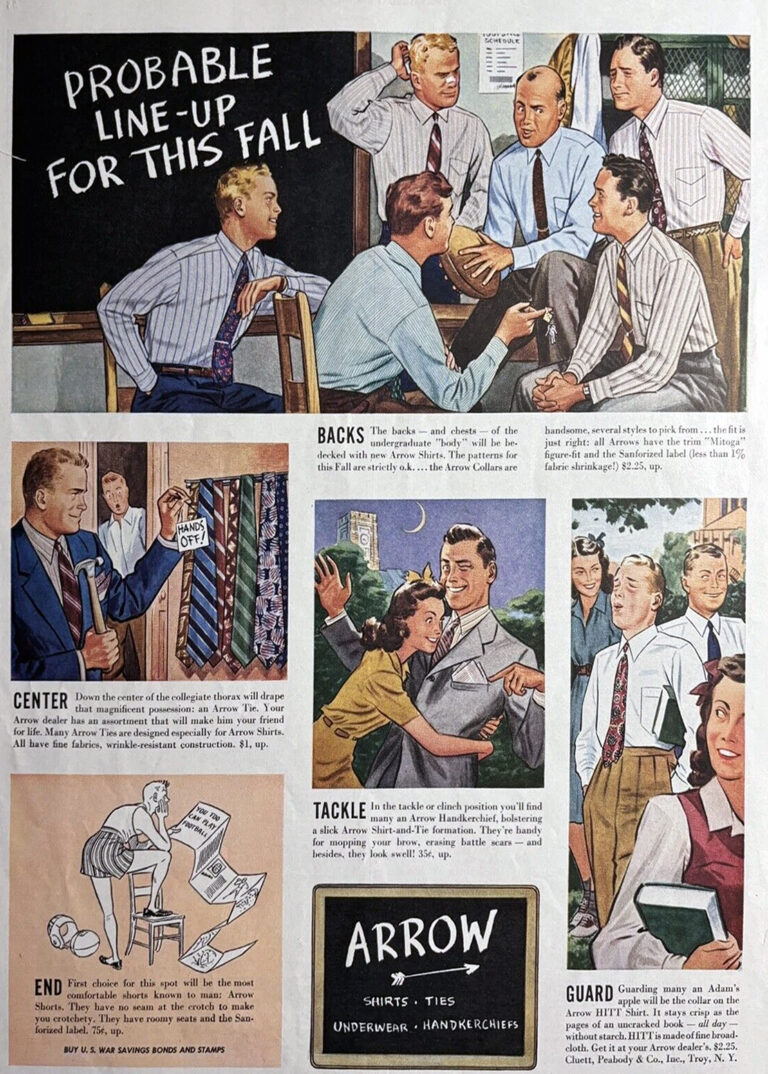
1942 Arrow Shirts Ties Underwear Clothing Probable Line Up
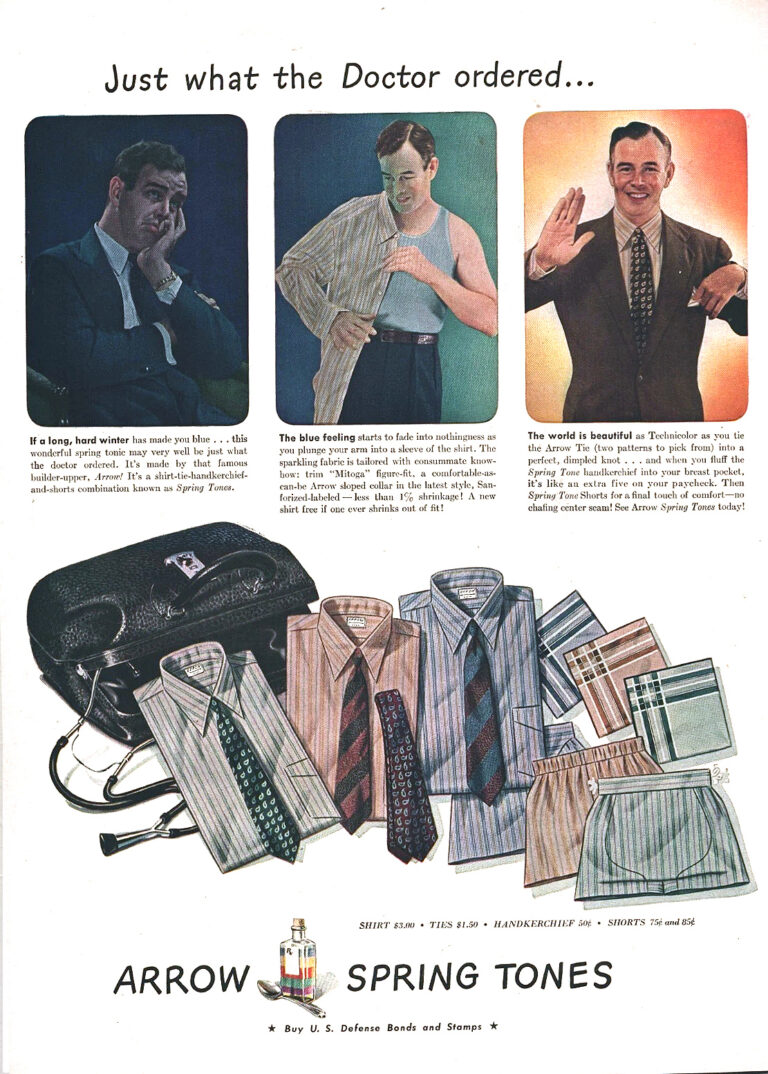
1942 Arrow Men’s Shirts

1942 Arrow Shirts Print Ad Vintage Clothing Advertising Mens Fashion WWII Era

1943 Arrow Colby Stripes for July Shirts
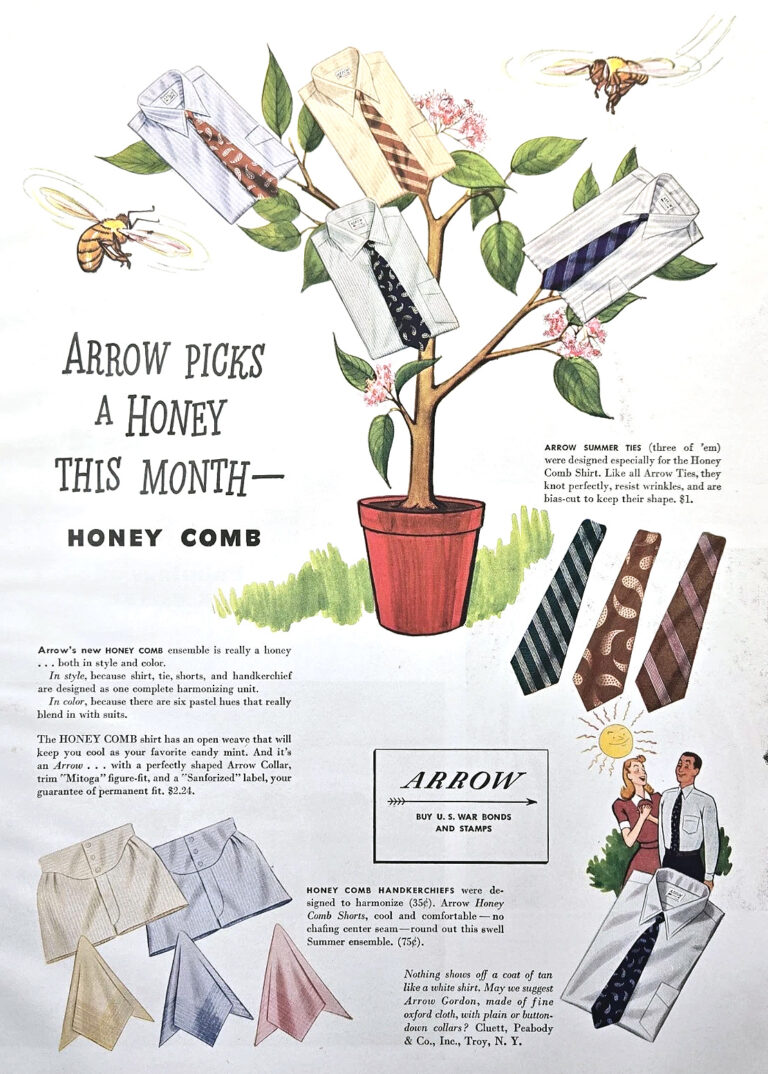
1943 Arrow Honey Comb Fabric Shirts

1943 Vintage ad Arrow Shirts`art cartoon
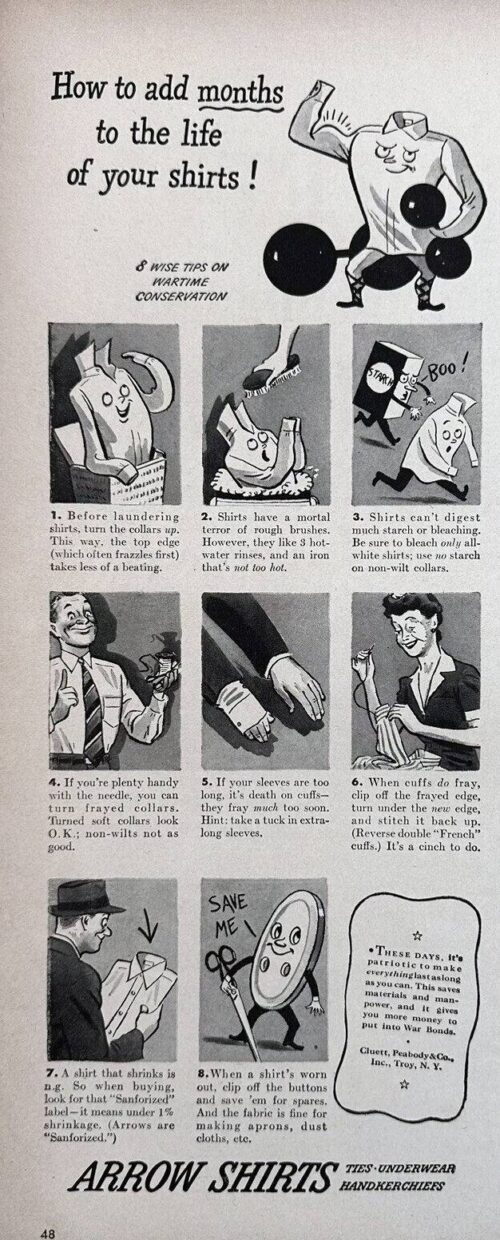
1943 Arrow Shirts Ties Underwear & Handkerchiefs Vintage Clothing Print Ad

1943 Arrow Men’s Shirts WWII Era

1944 Arrow huntsman Ensemble

1944 Arrow
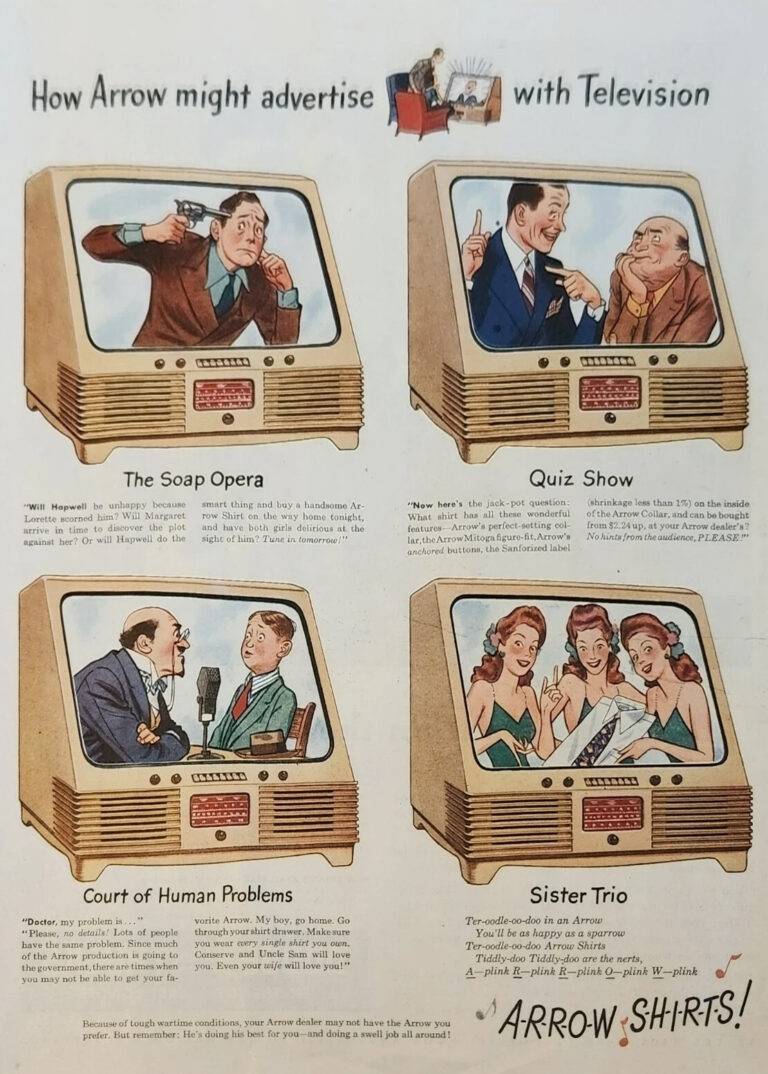
1945 Arrow shirts ?

1945 Arrow shirts

ARROW SHIRTS cartoon comic

1946 ARROW Shirts

1946 ARROW Shirts

1946 Arrow Shirts And Ties For Men
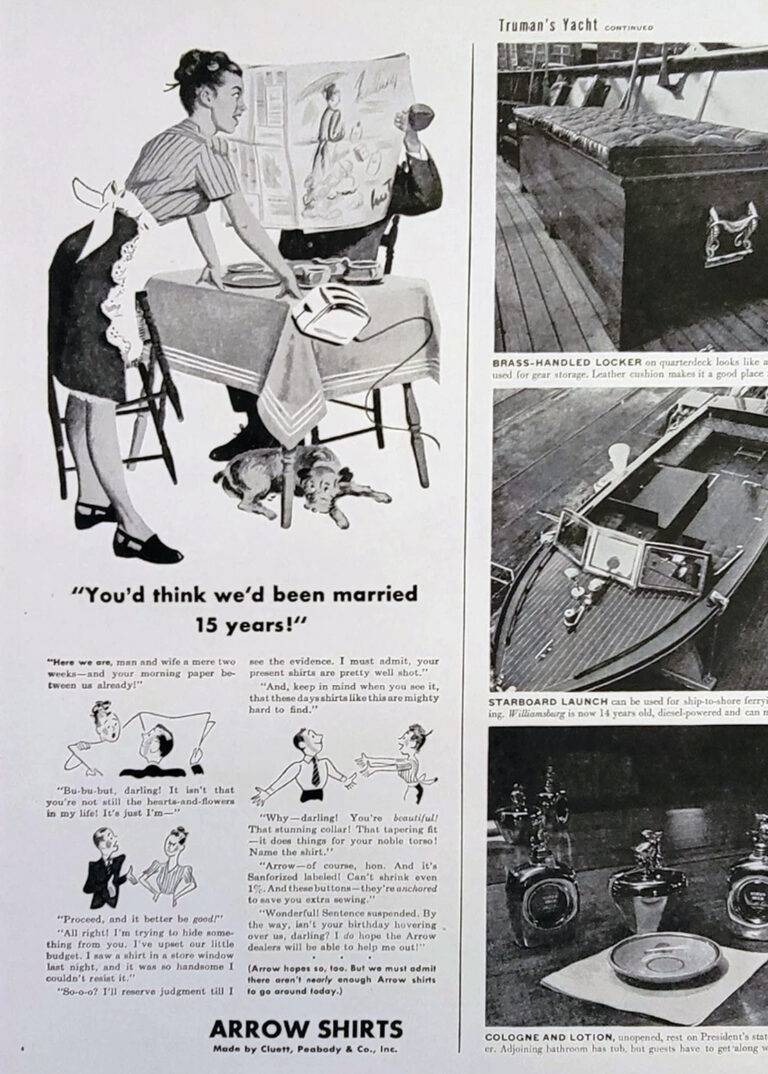
1946 Arrow Shirts You’d Think We’d Been Married

1947 vintage original
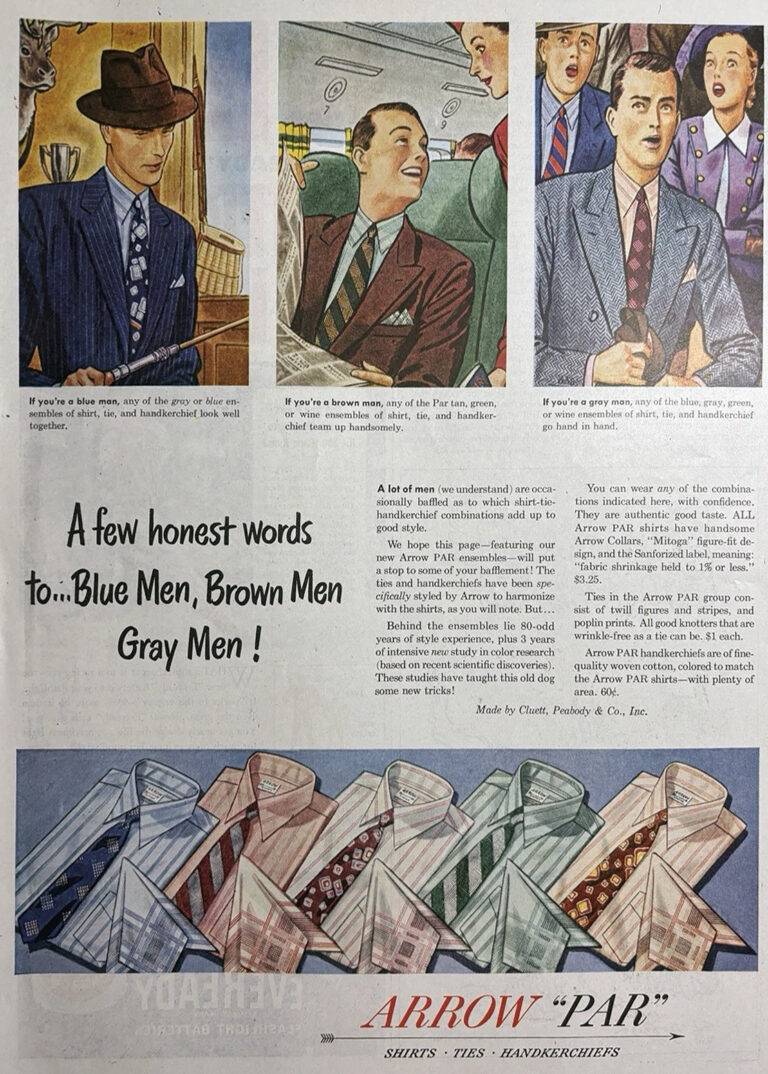
1947 Cluett Peabody Co Inc Arrow Shirts
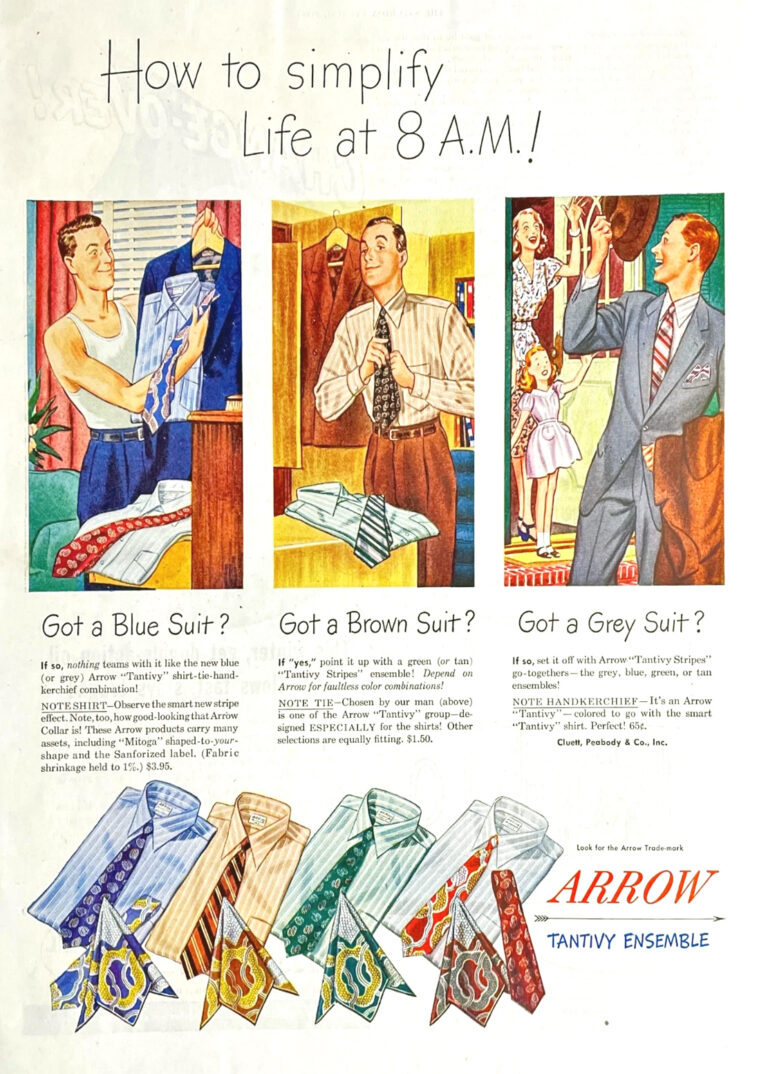
Arrow Shirts, 1947
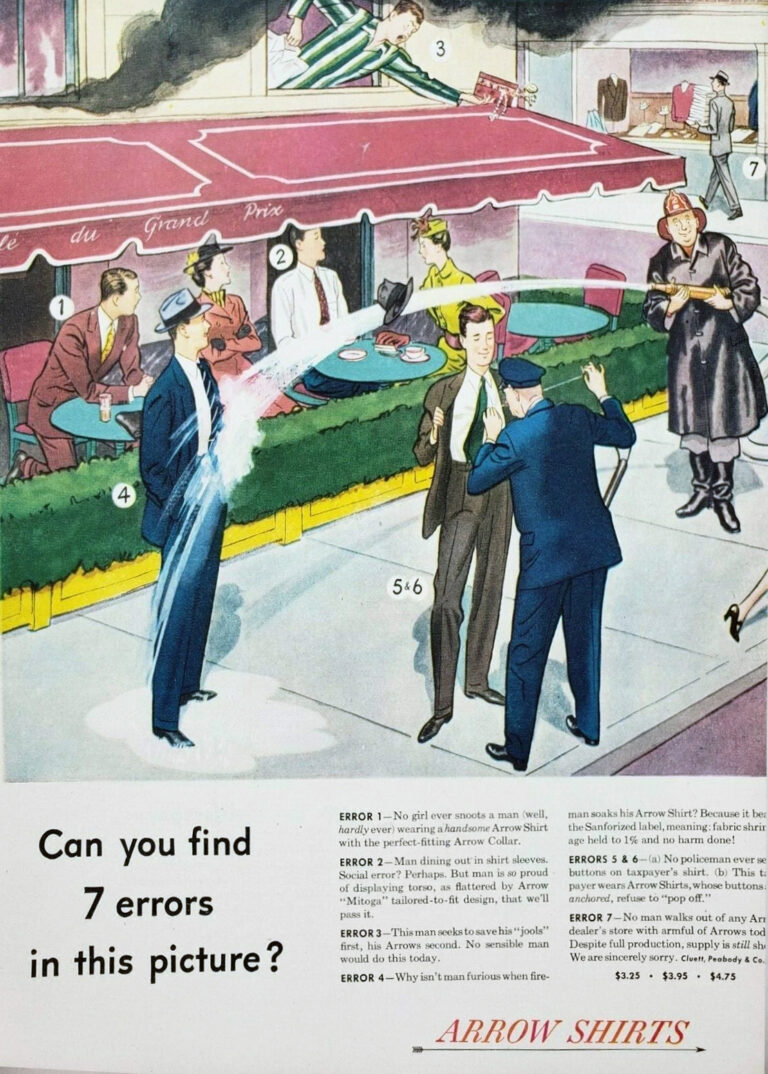
Arrow Shirts, 1947
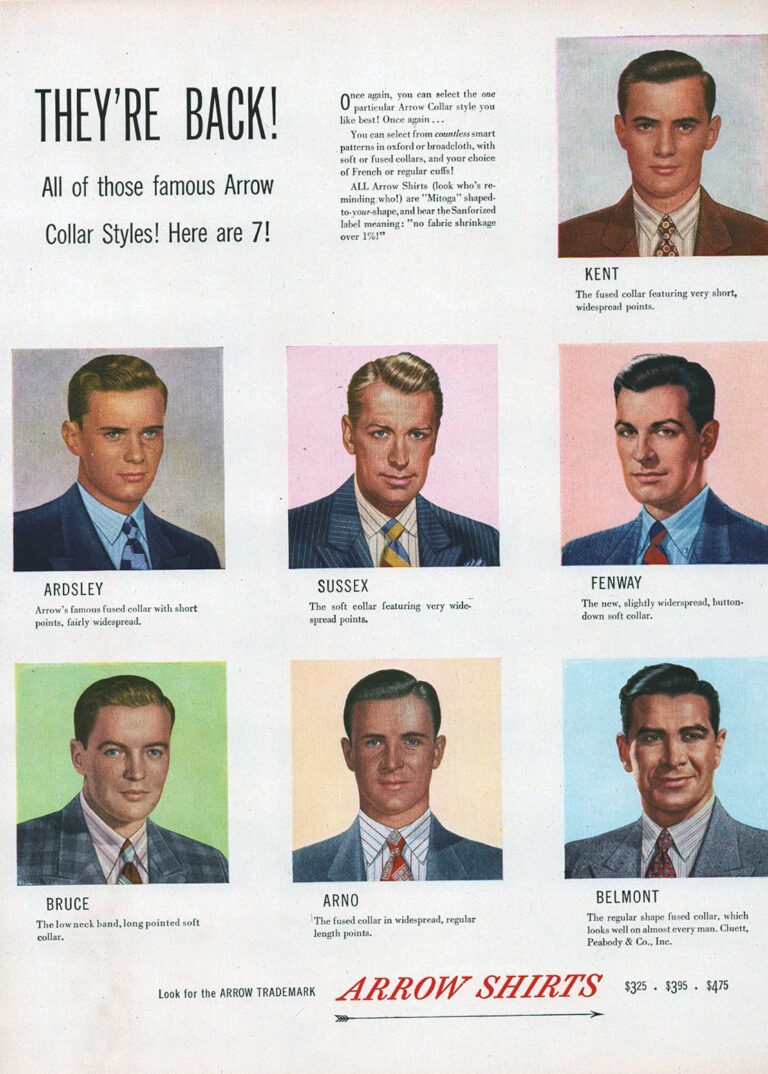
1947 ARROW Shirts Print Ad “They’re Back! 7 Collar Styles”
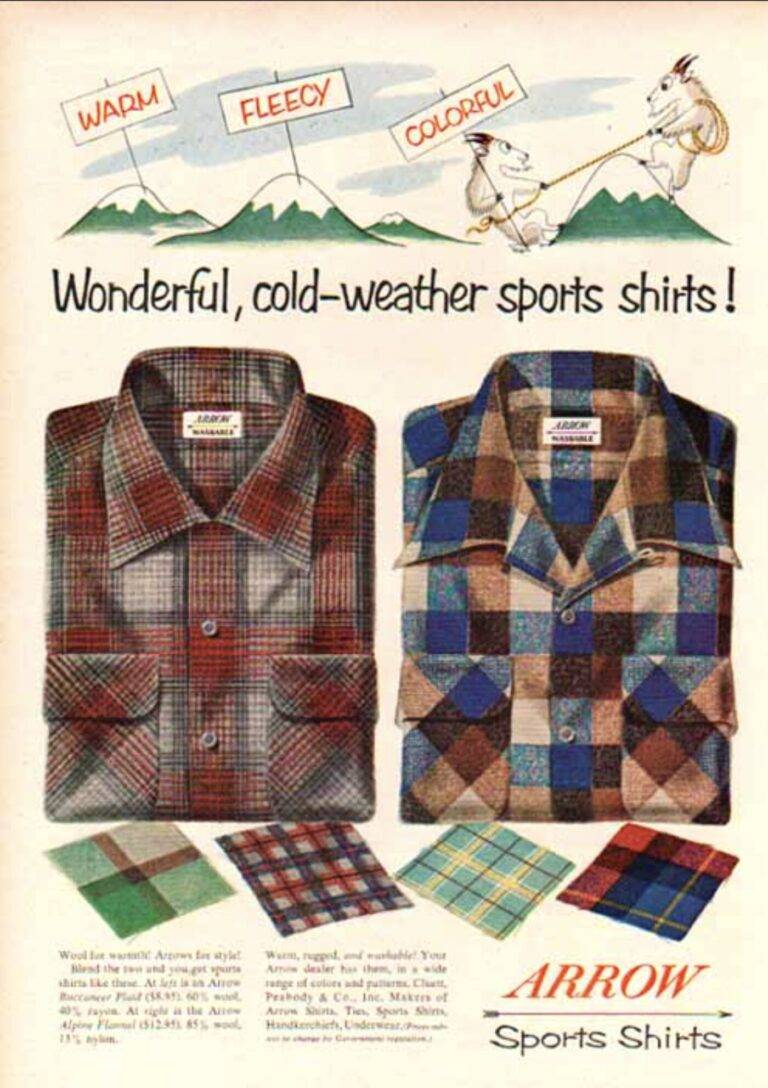
Arrow Shirts, 1947
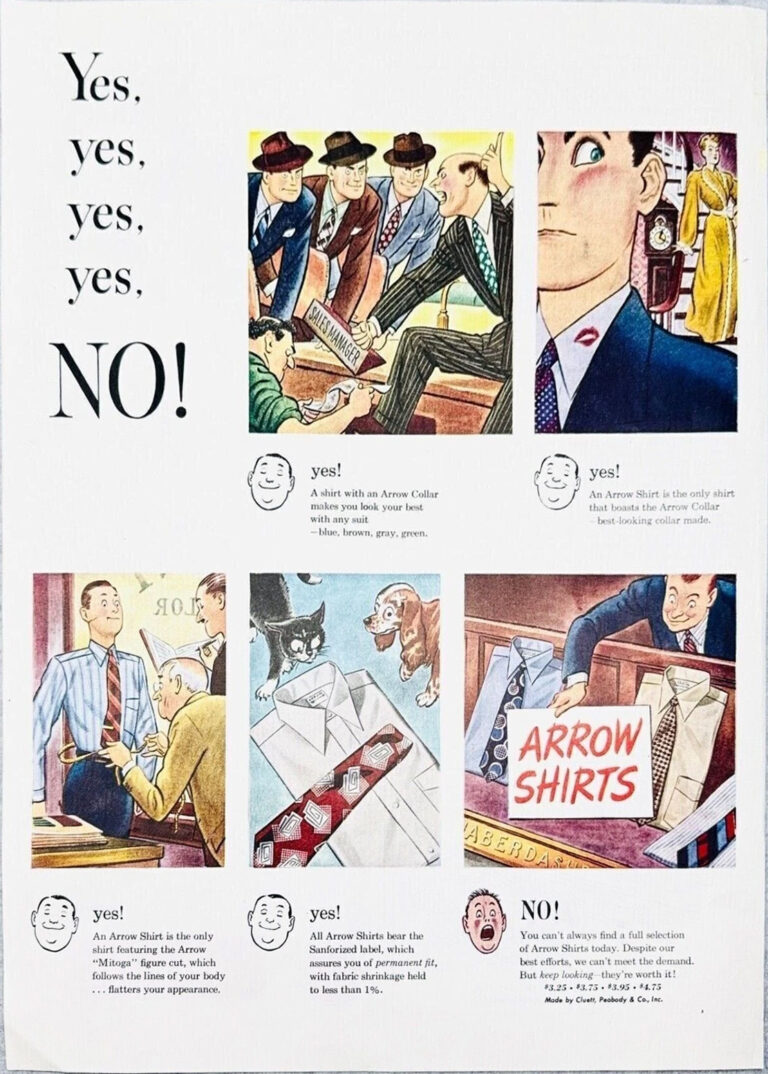
1947 Arrow Button Up Shirts Mens w Collar Cluett Peabody and Co Vintage Print Ad
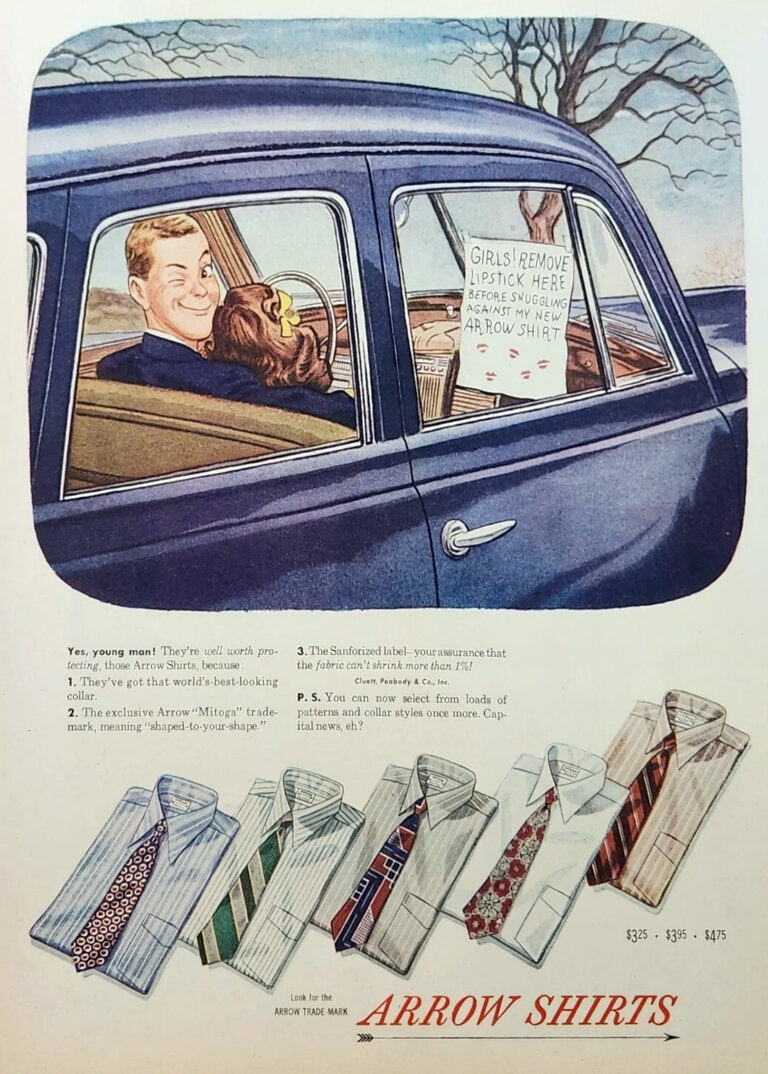
1947 Arrow shirts for men
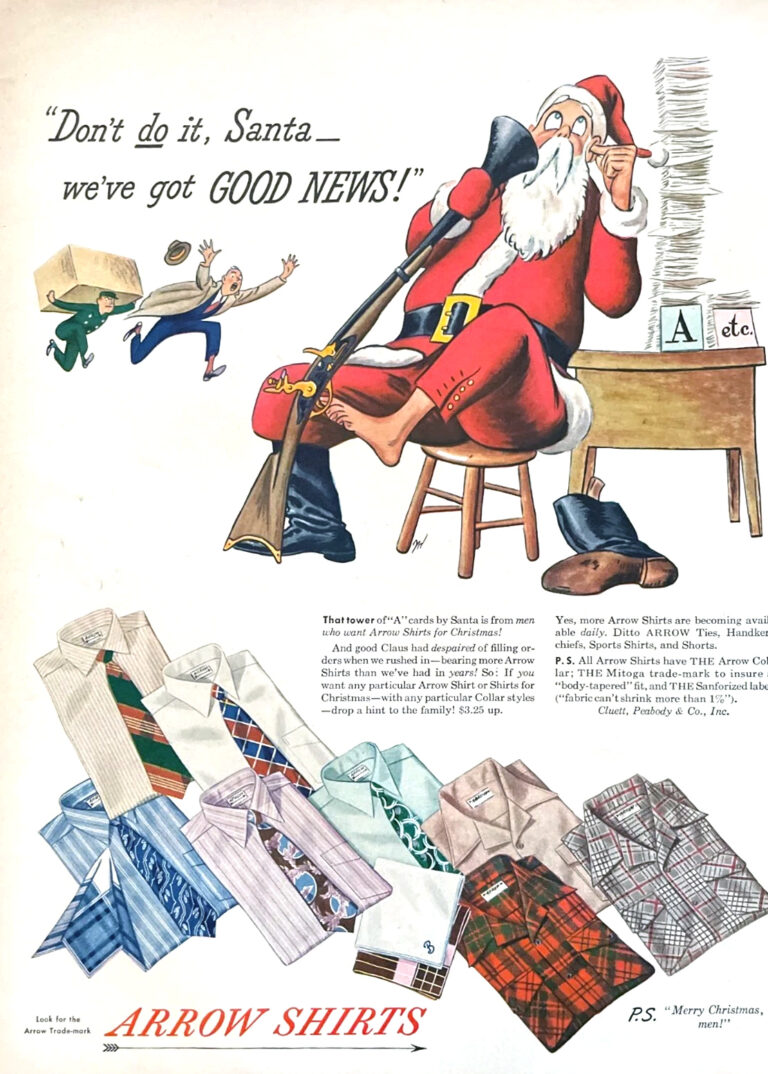
1947 Arrow Shirts Christmas Santa with Gun
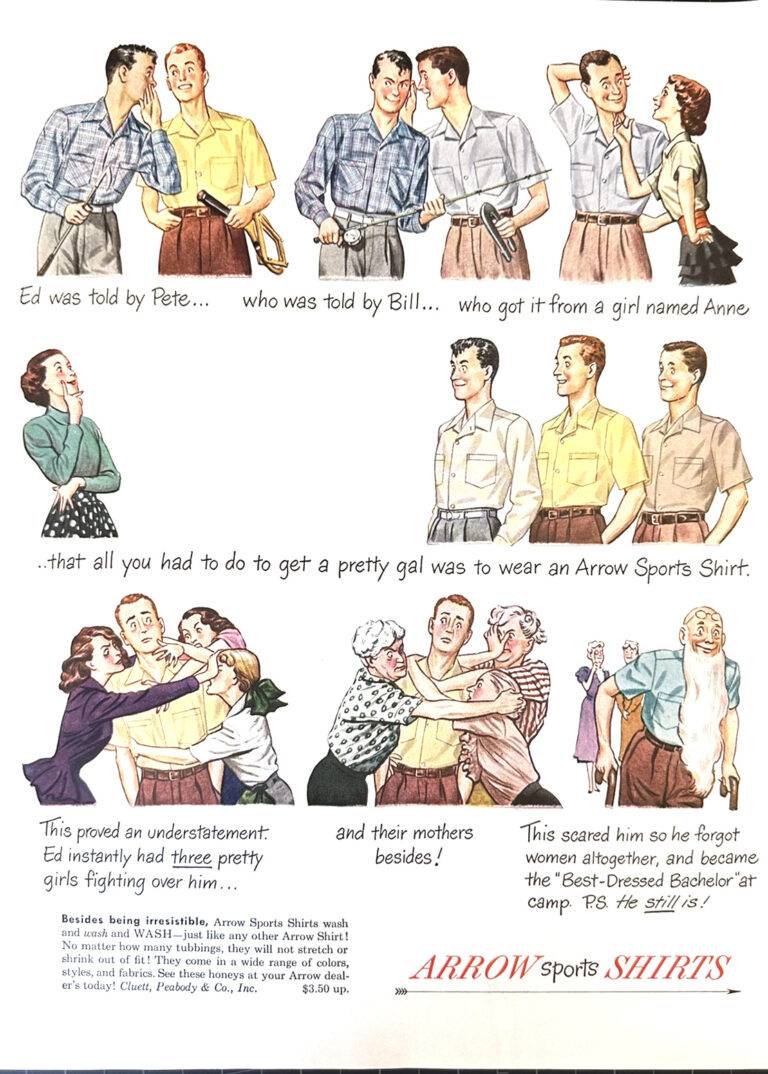
1948 Arrow Shirts
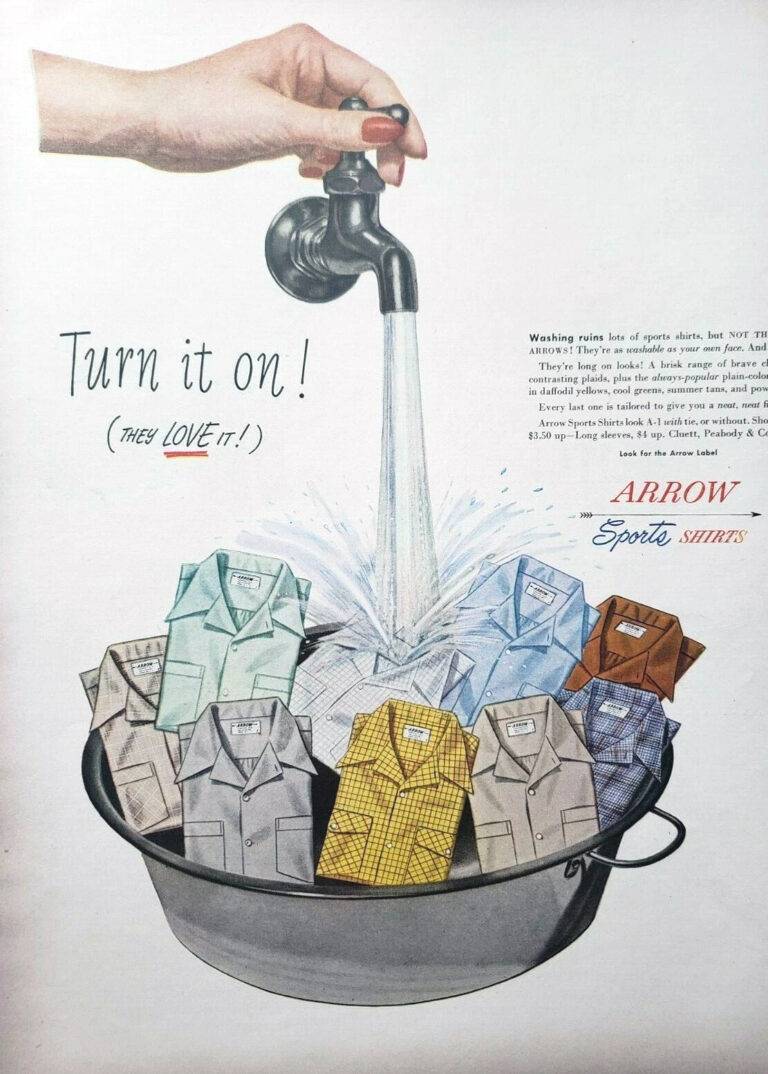
1948 Arrow Sports Shirts
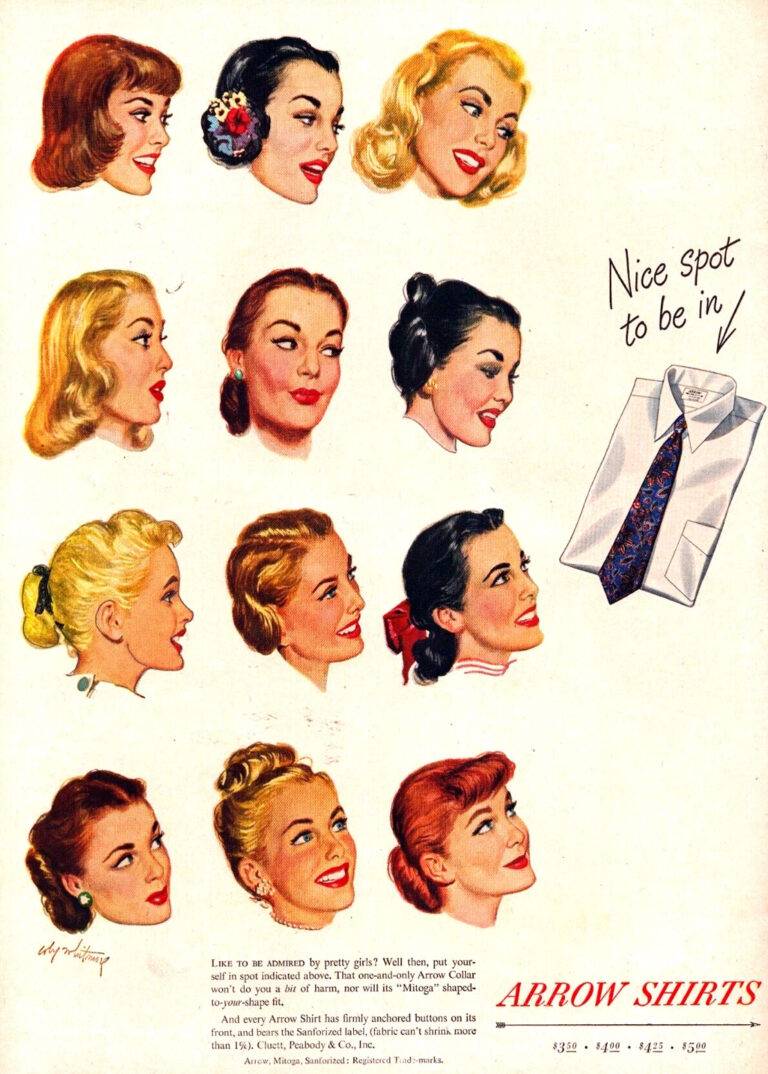
1948 Arrow Shirts Original Life Magazine Vintage Coby Whitmore
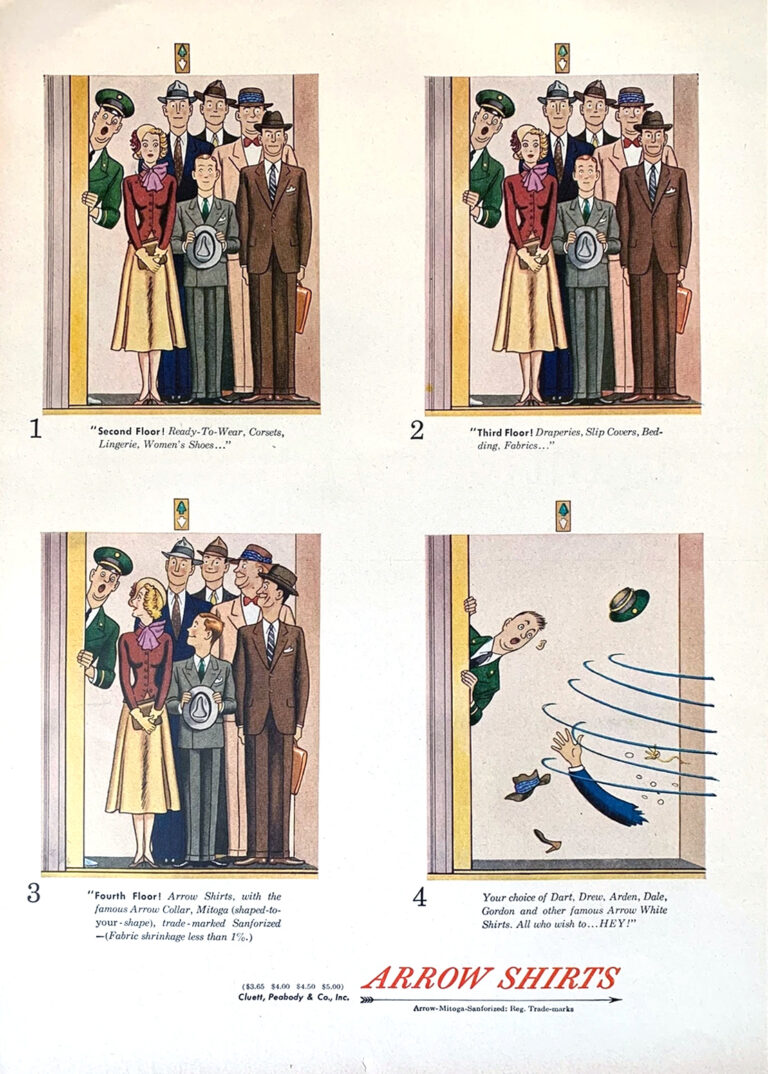
1948 Arrow Shirts
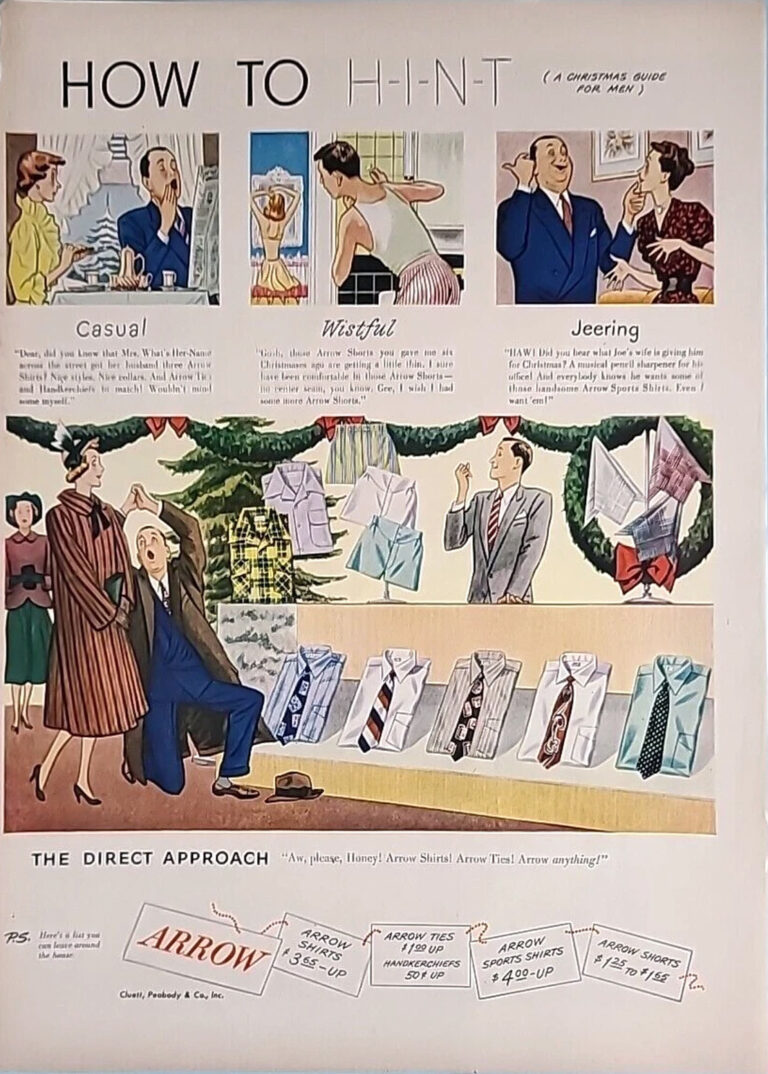
1948 Arrow Shirts
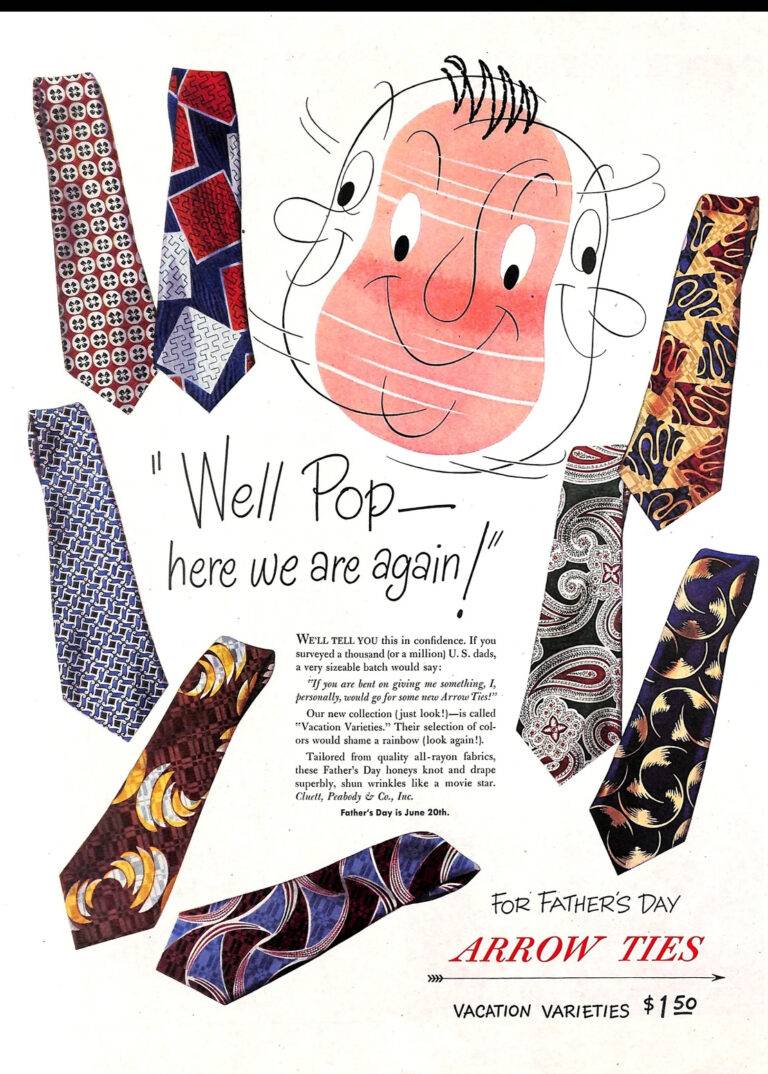
1948 Arrow Ties
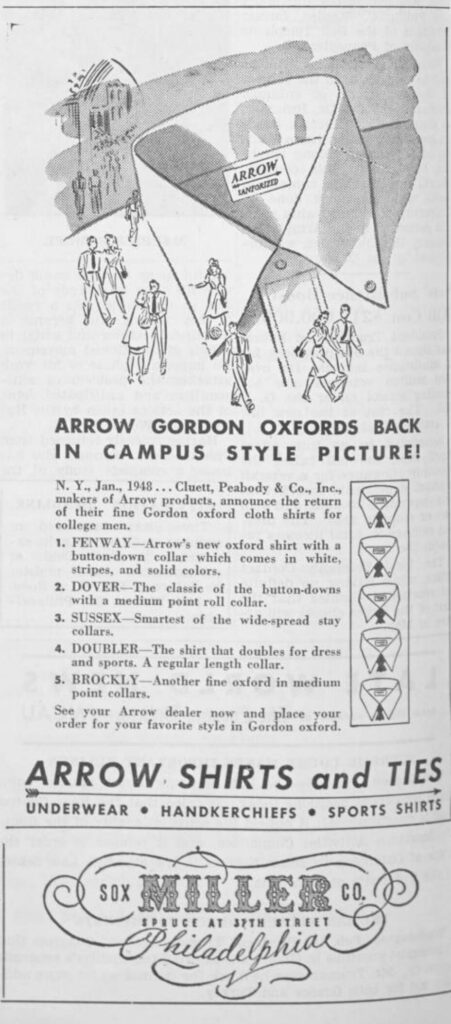
1948 The Daily Pennsylvanian, Volume LXI, Number 82, 17 February 1948
Film sponsored by the Troy, New York–based manufacturer of Arrow shirts to explain its reasons for moving its business down south. Enterprise tells the true story of how two World War II veterans invited the company to occupy an industrial plant that they had built in the hope of revitalizing Buchanan, Georgia. Five hundred residents signed a pledge stating that they were willing to work in the new factory. Cluett, Peabody & Co. eventually employed one-third of the townspeople.
ニューヨーク州トロイを拠点とするアロー・シャツ・メーカーが、南部に事業を移転した理由を説明するためにスポンサーとなった映画。第二次世界大戦の退役軍人2人が、ジョージア州ブキャナンの活性化を願って建設した工業工場に同社を誘致した実話を描いている。500人の住民が、新しい工場で働く意思があることを表明する誓約書に署名した。クルーエット・ピーボディ社は、最終的に町民の3分の1を雇用した。
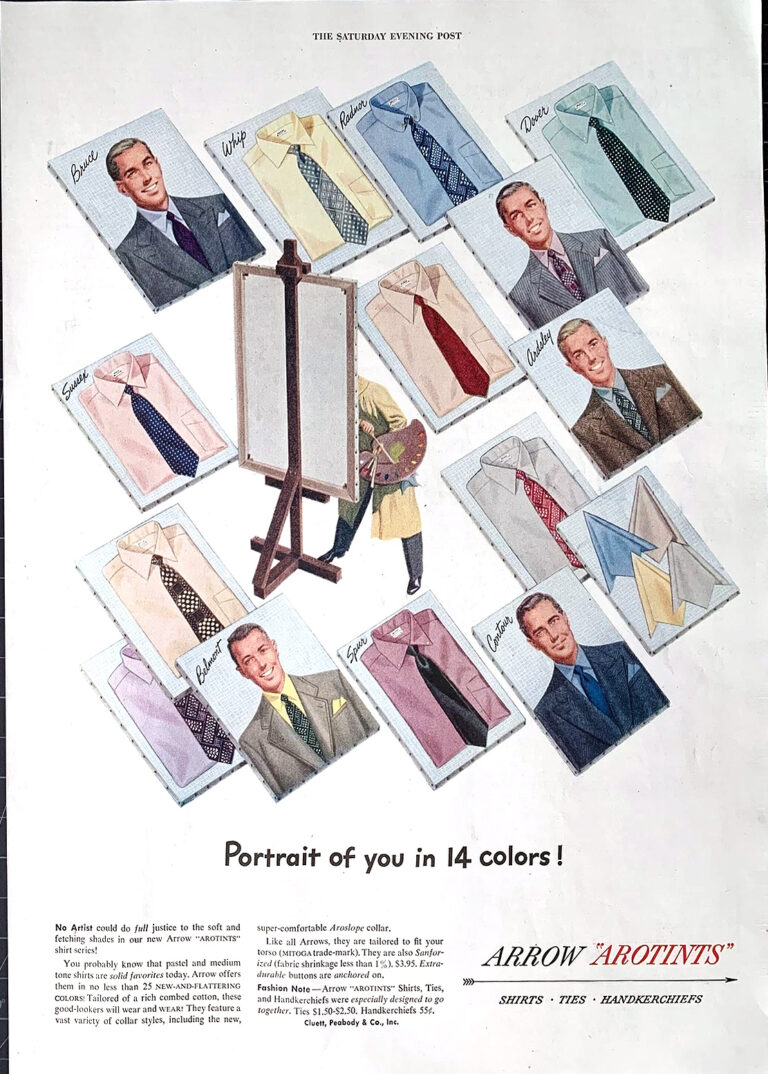
1949 Arrow Shirts
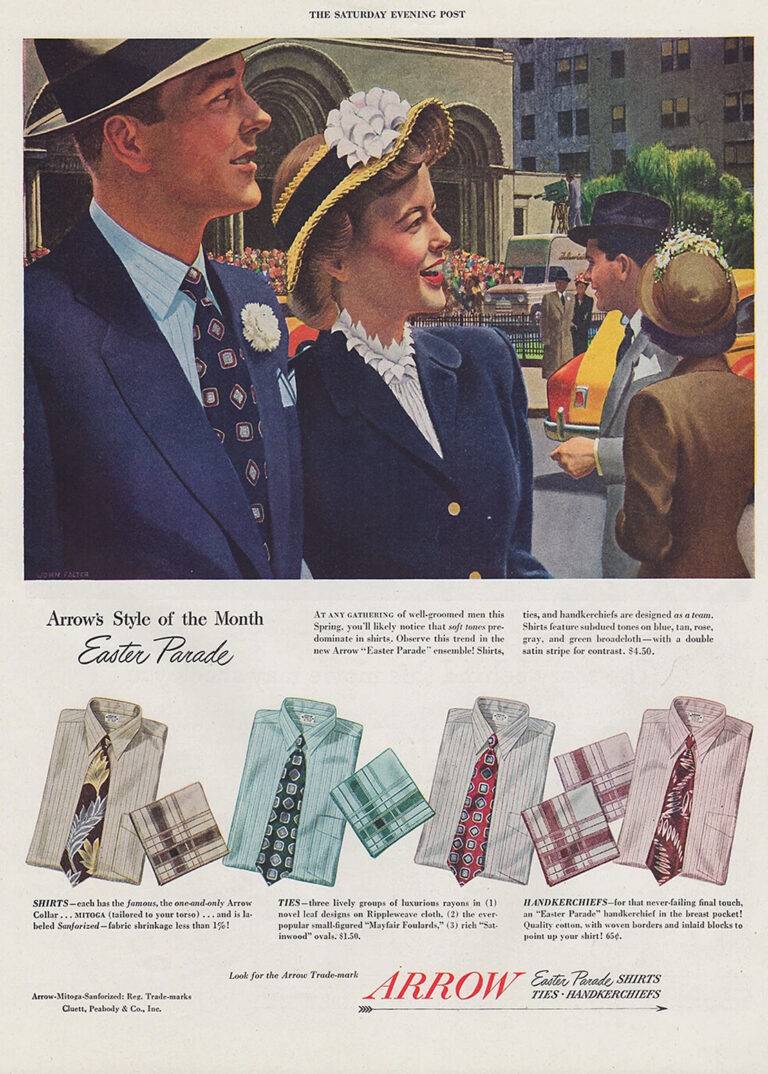
1949 ARROW Shirts Men’s Fashion Easter Parade Ephemera
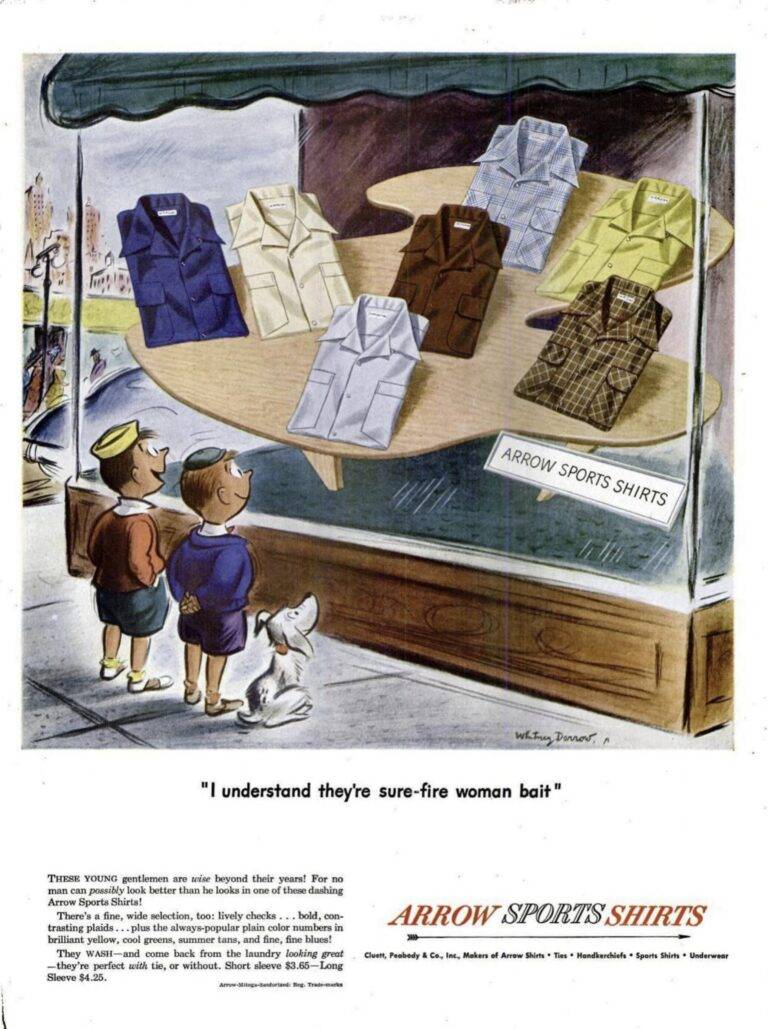
1949 Life 1949-05-02 Vol. 26, No. 18
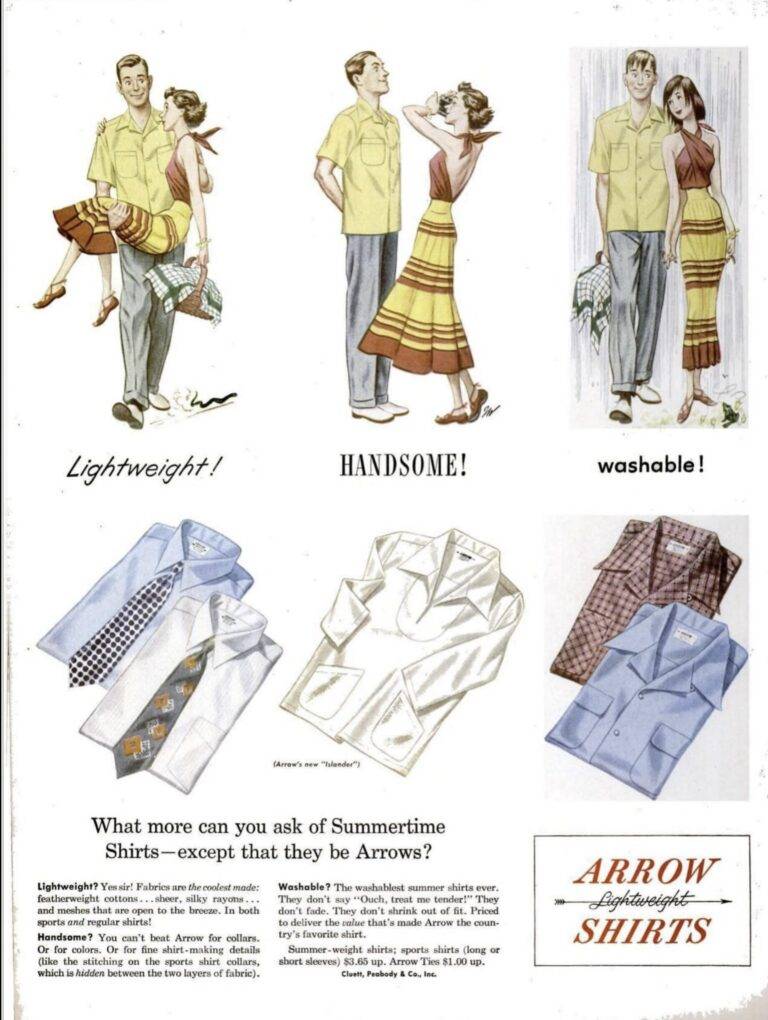
1949 Life 1949-07-04
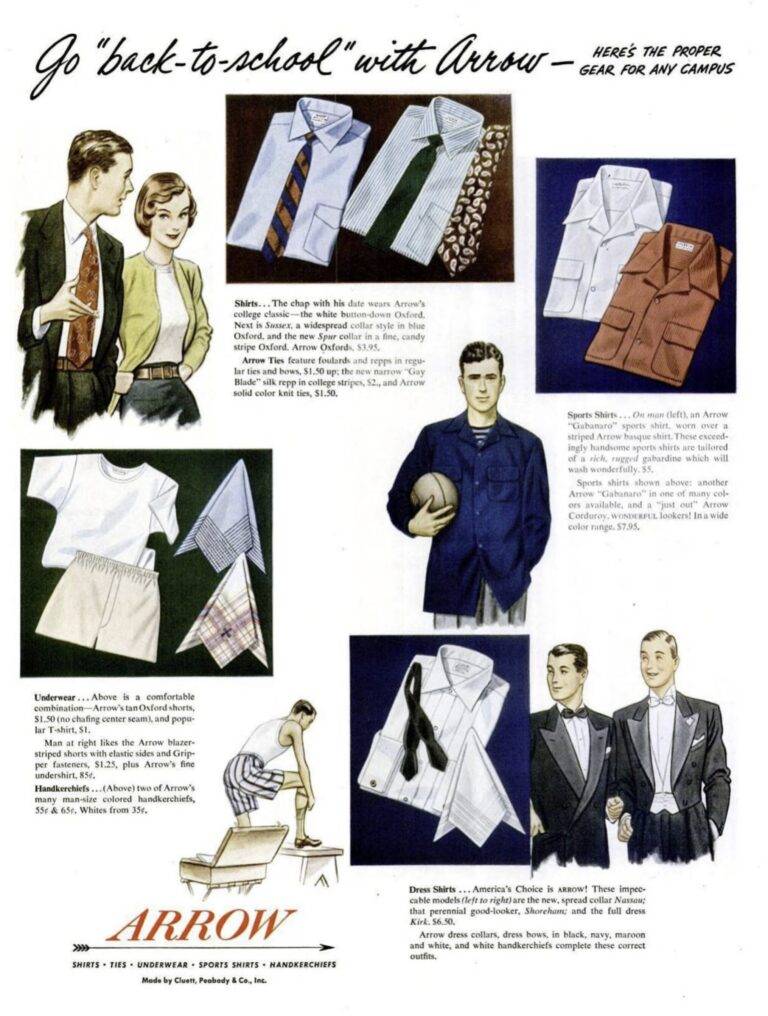
1949 Life 1949-08-29 Vol. 27, No. 9
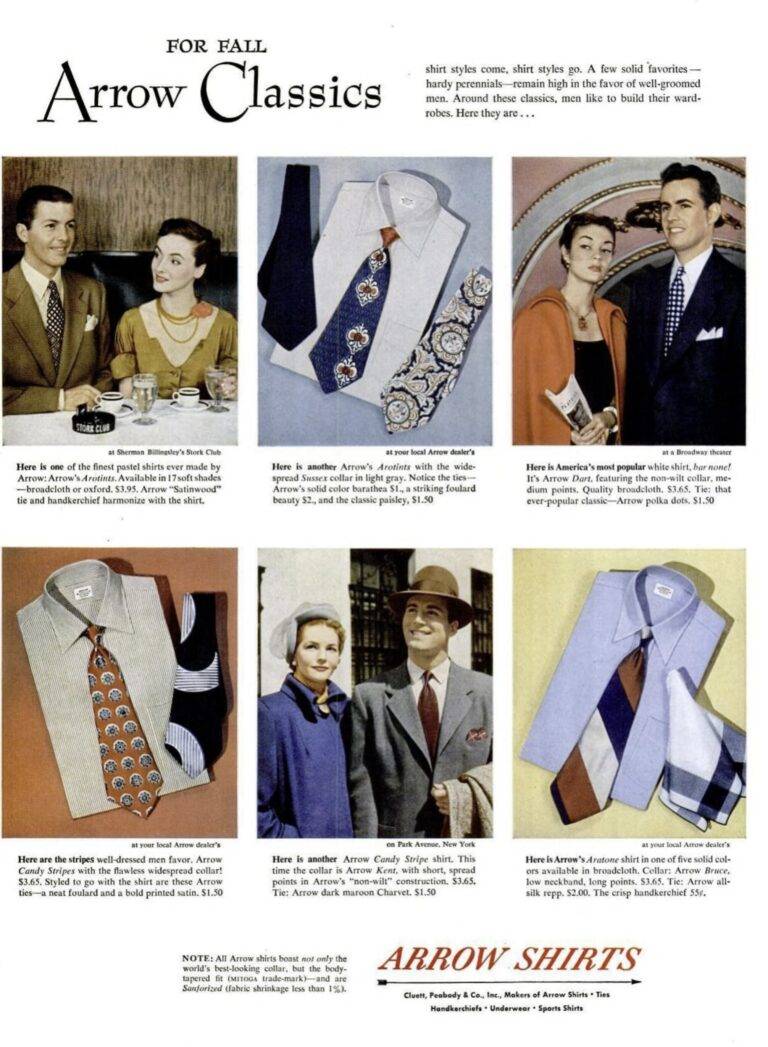
Life 1949-09-19
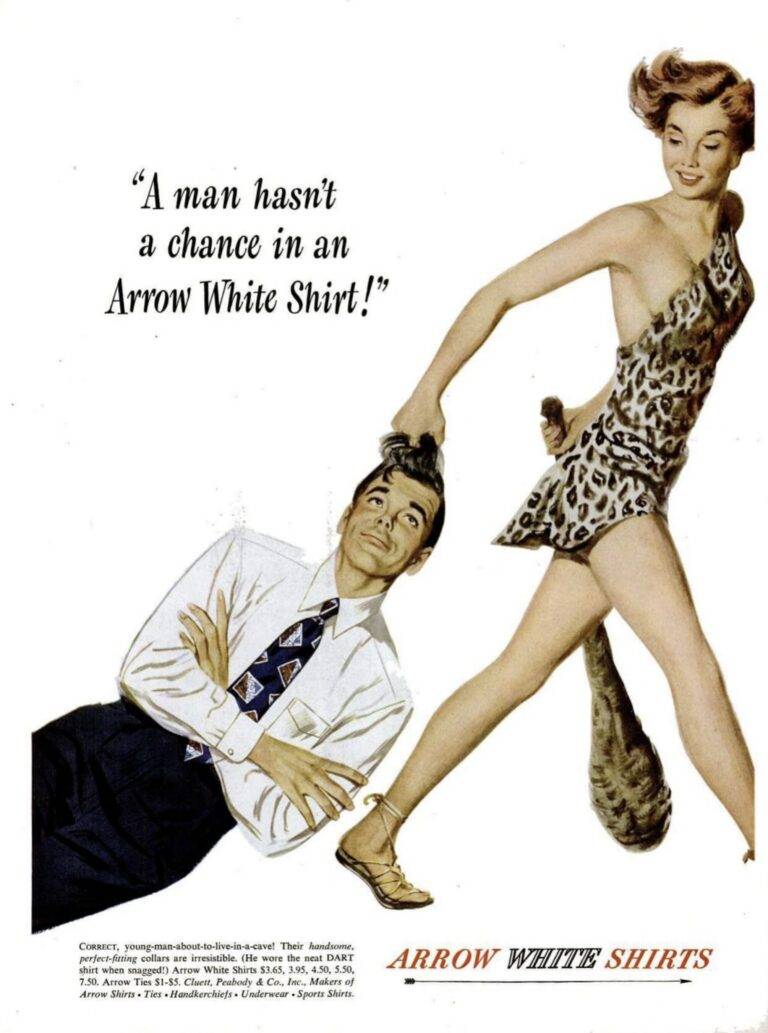
1949 Life 1949-11-14
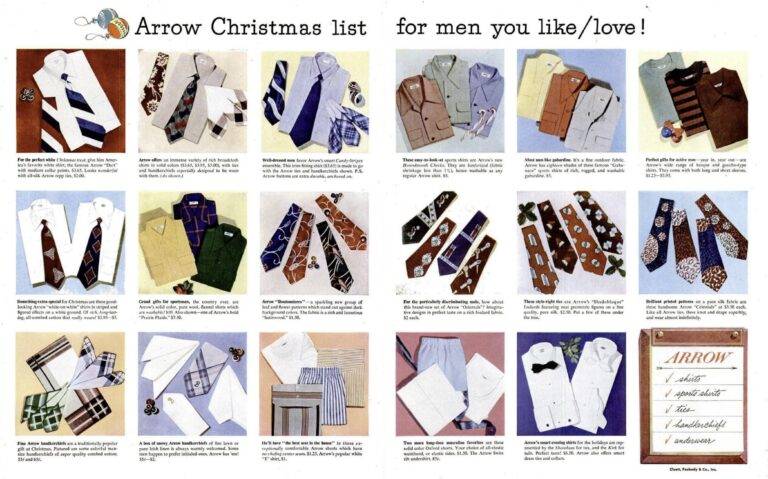
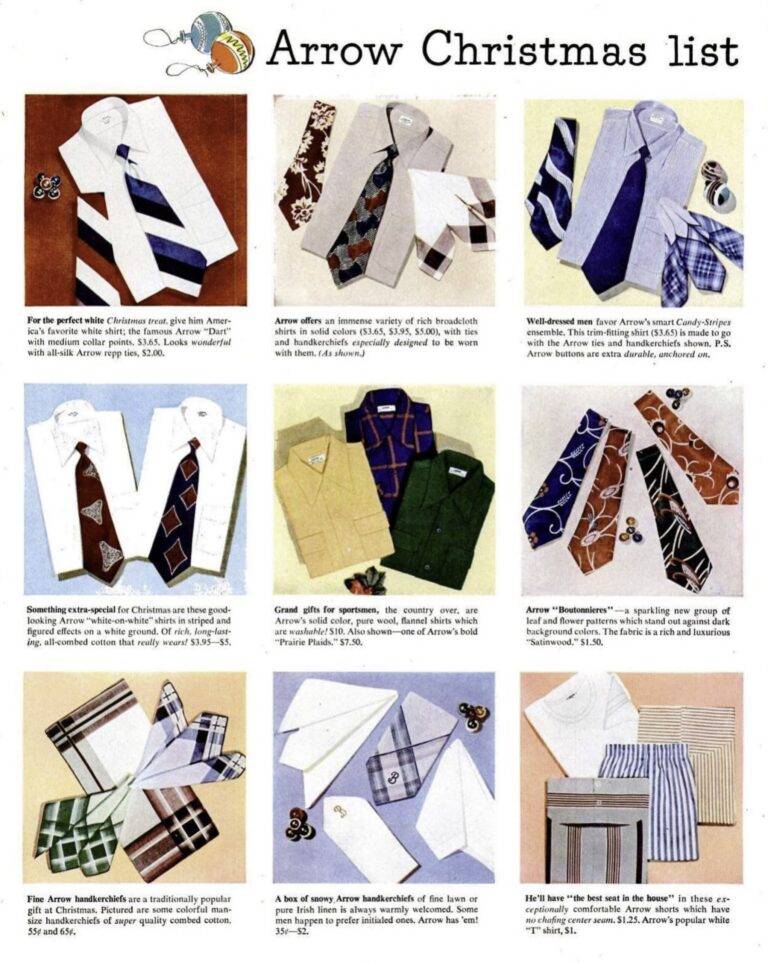
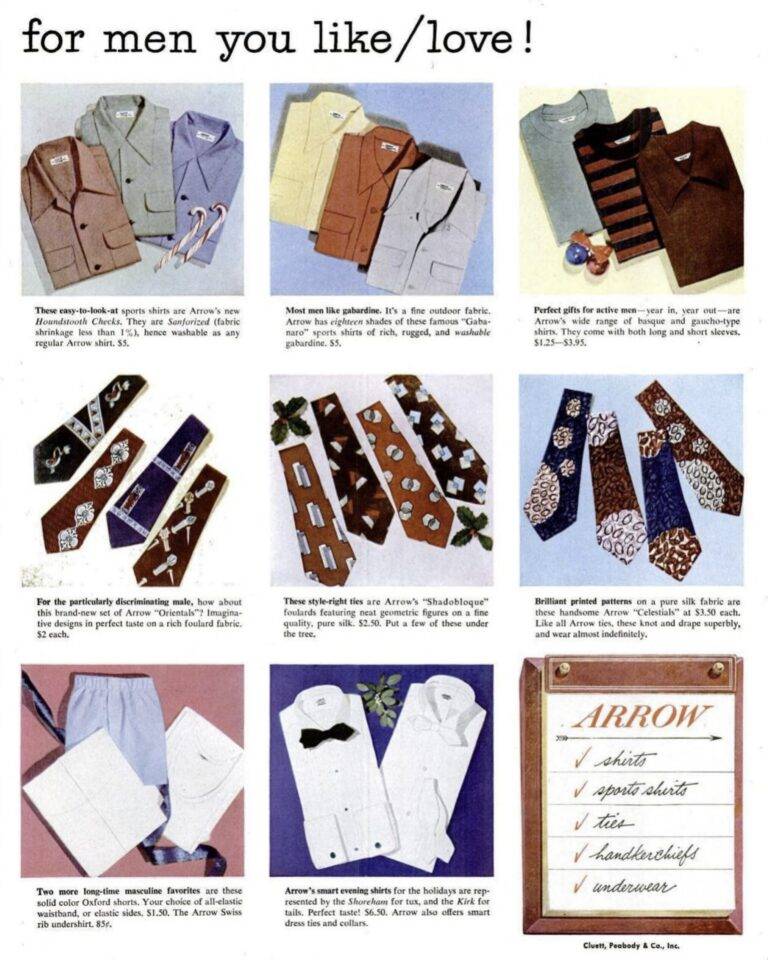
Life 1949-12-05
1950s
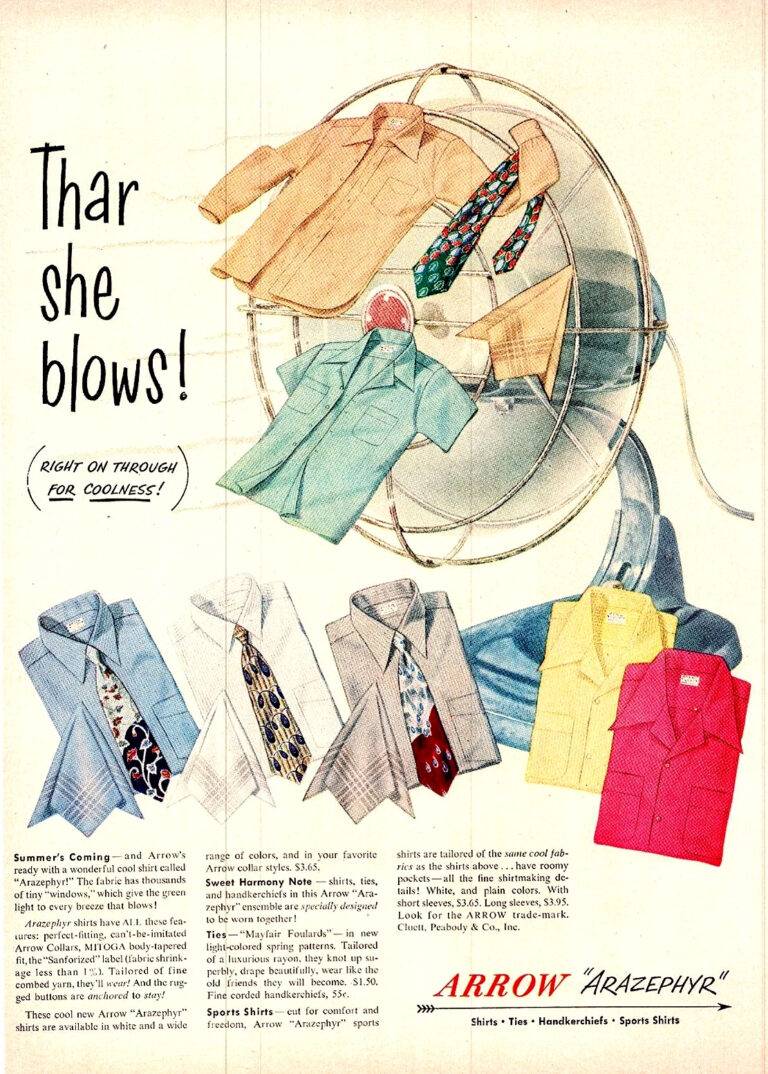
1950 Arrow Shirtmakers Arazephyr
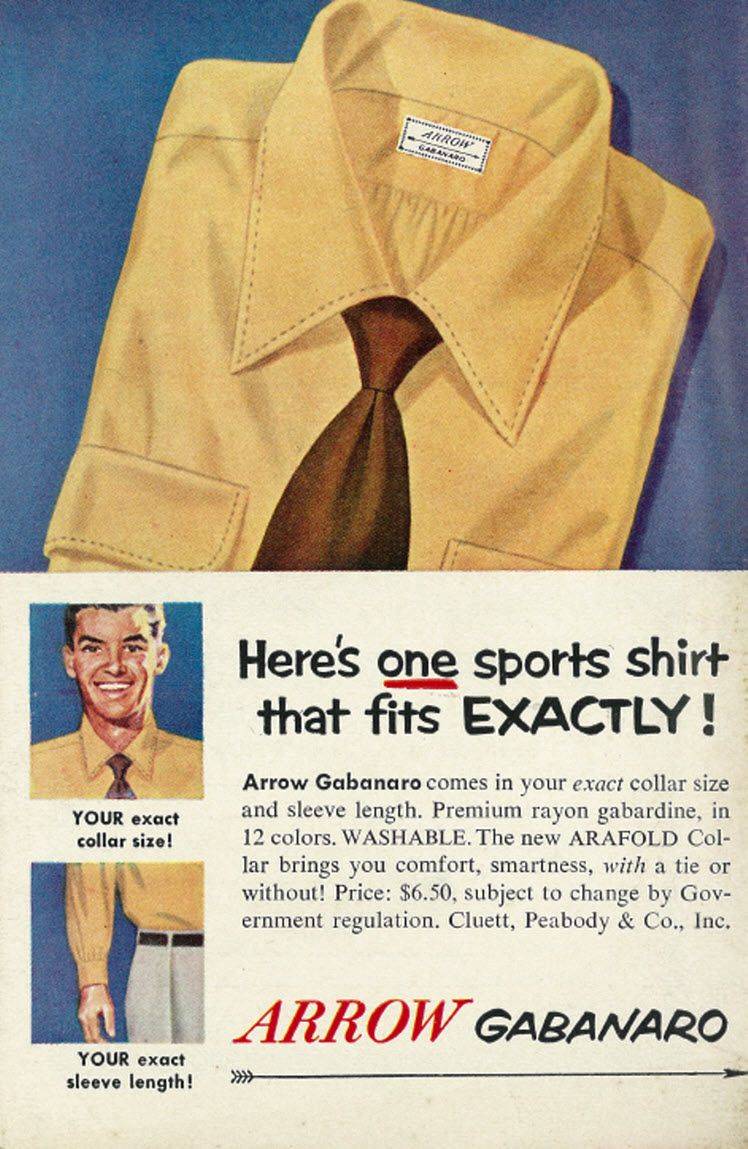
1950s Arrow GABANARO
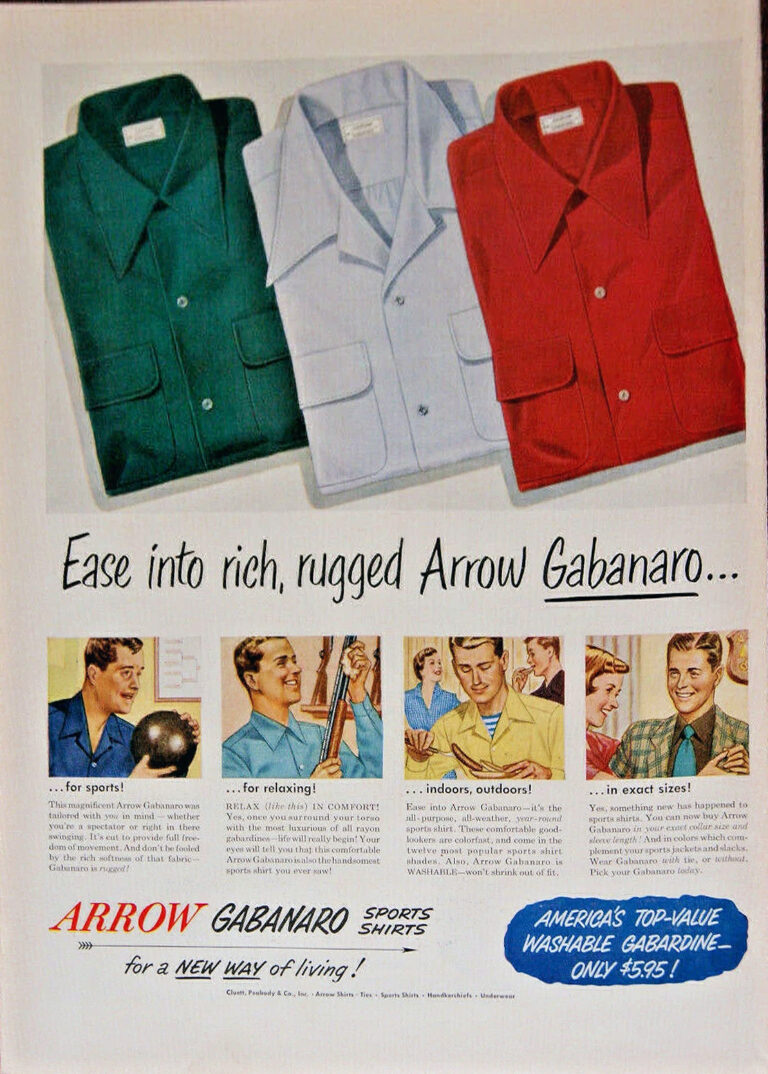
1950 Arrow Gabanaro
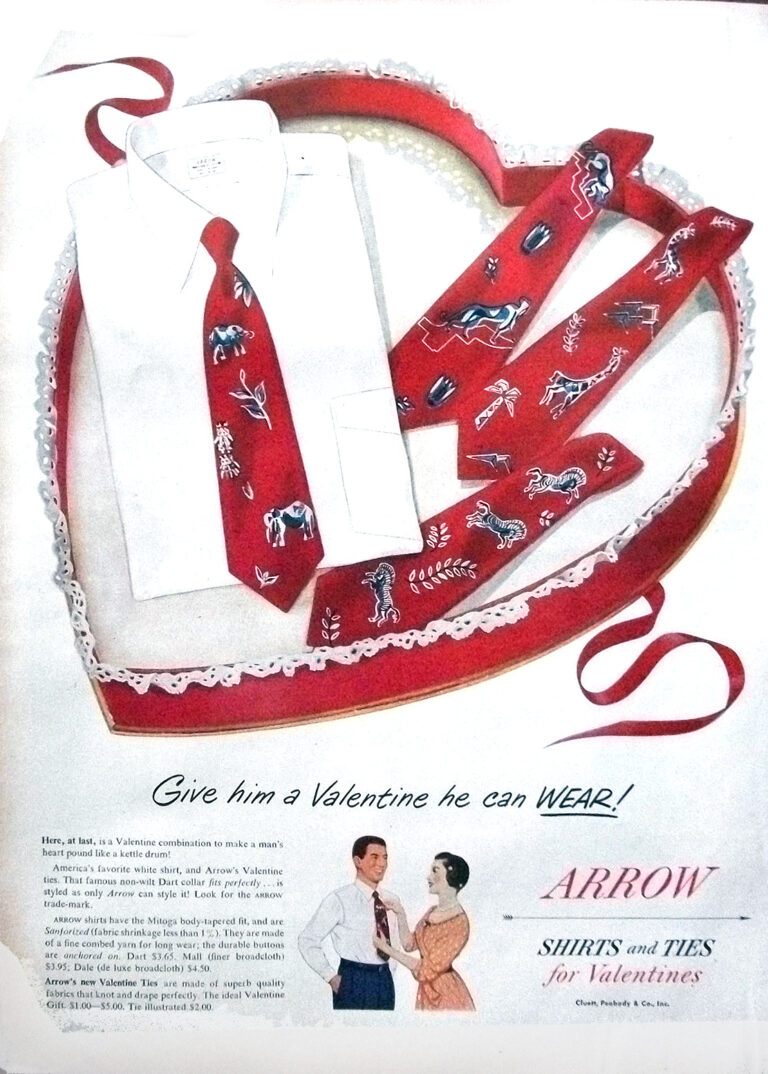
1950 Arrow Shirtmakers Arazephyr

1950 Arrow Pin Tab Radnor E Tabber Styles Soft Tones Shirts
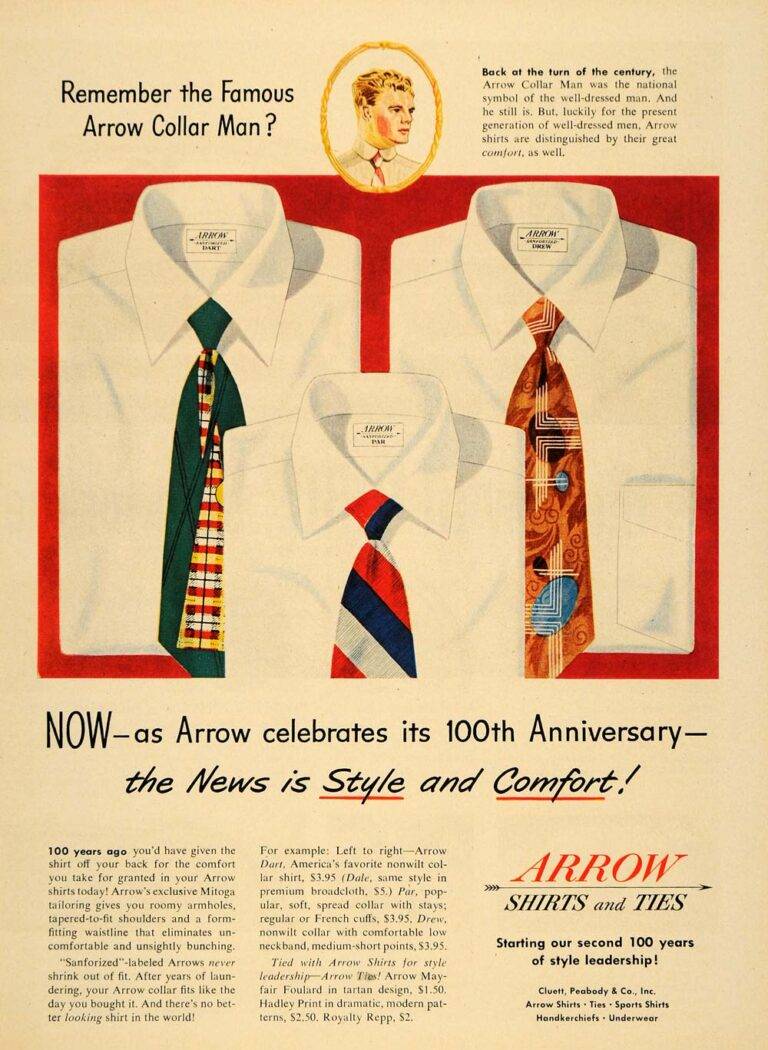
1951 Ad Arrow Shirts Ties Collar Men Clothing

1950s ARROW SHIRTS
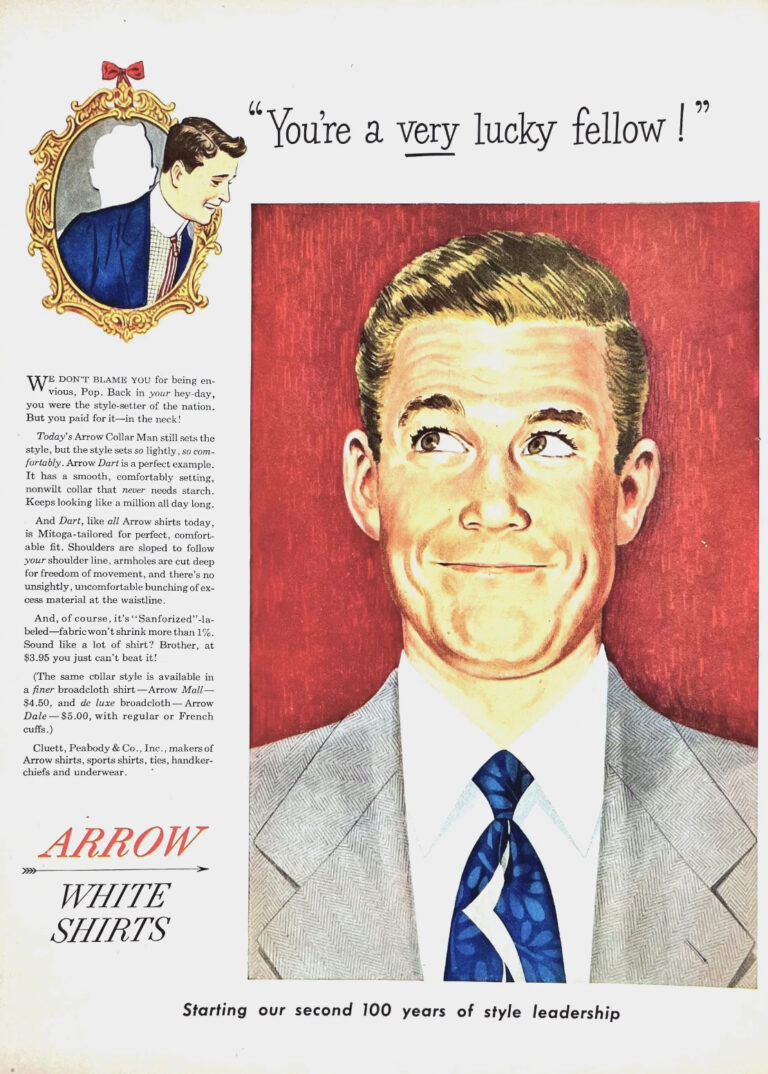
1951 Arrow Shirts
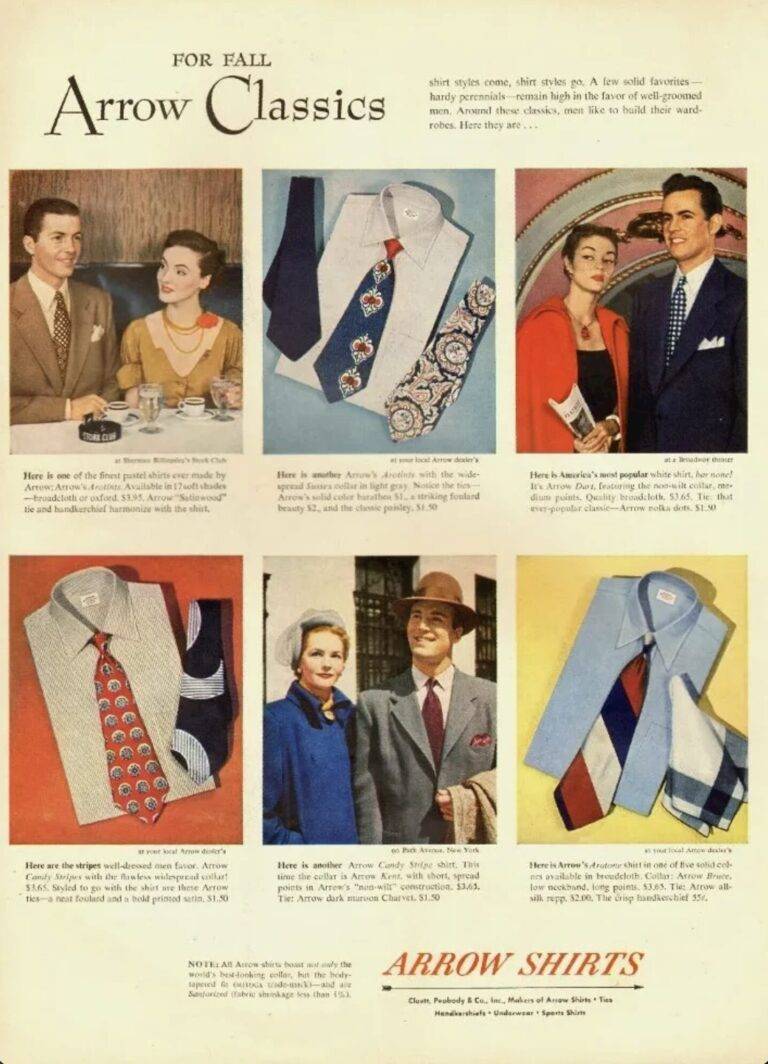
1951 Ad Arrow Shirts Ties Collar Men Clothing

1951 Arrow shirts Clothing Fall Festival 12 Colors Cluett Peabody

1951 Arrow Gabanaro

1951 Arrow Shirts Arafold Collar Gabanaro Sports Shirts

1951 Vintage Magazine Arafold Collar Arrow’s Bi-Way Shirt
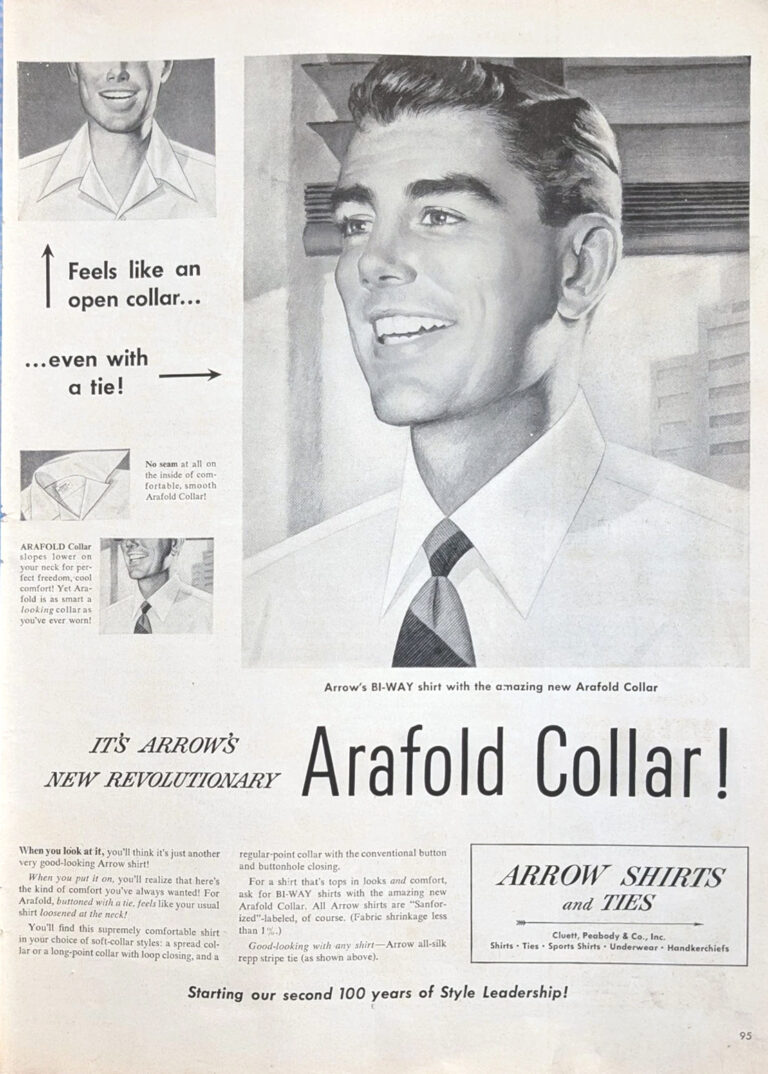
1951 – “new revolutionary Arafold Collar”
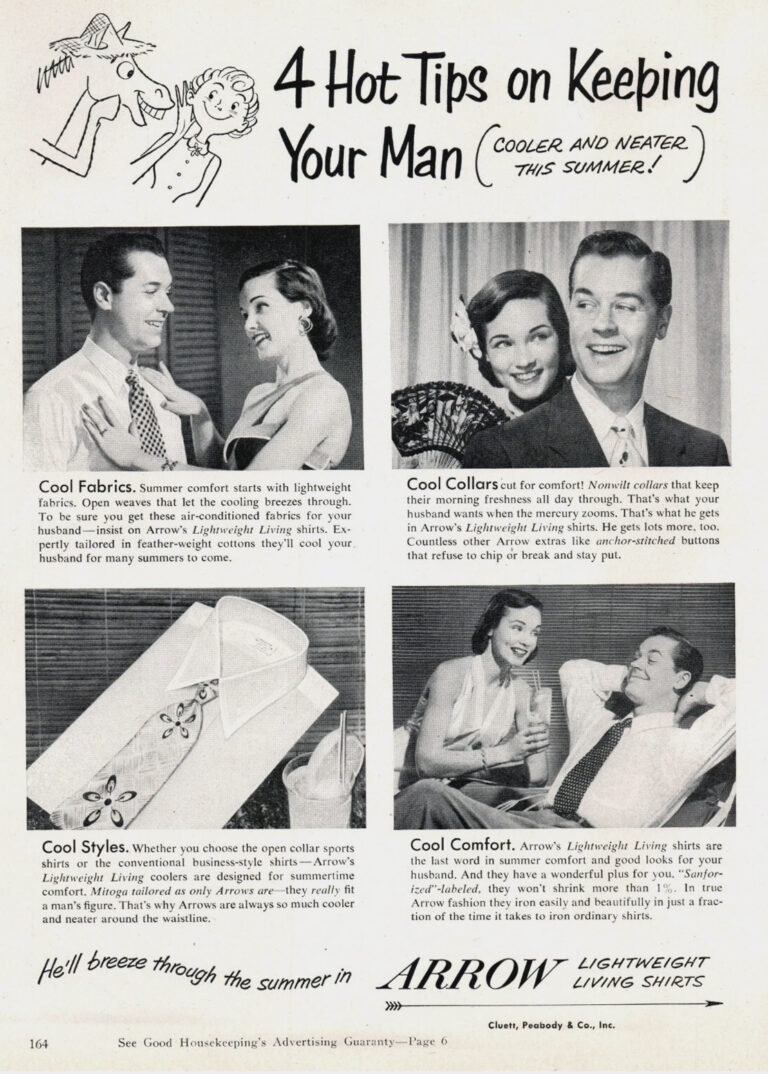
1951 Arrow Cooler Neater
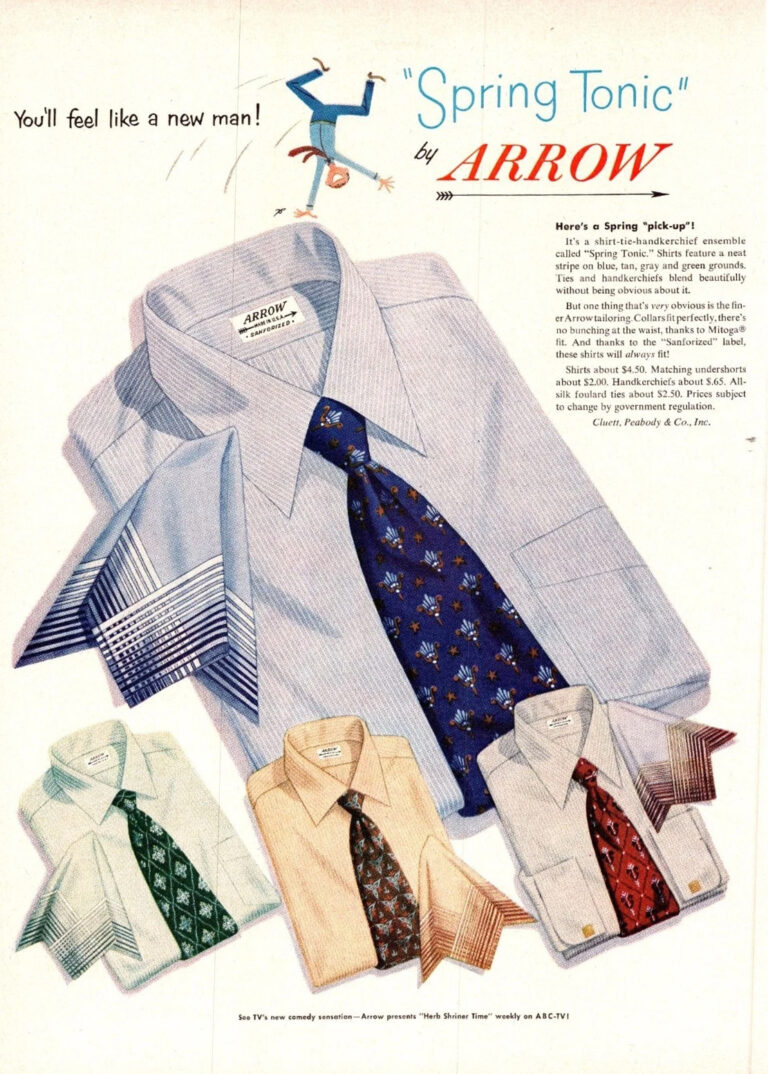
1952 Arrow Sprint Tonic Dress Shirts Vintage Print Ad Mens 50s Fashion Wall Art

1952 Arrow Shirts Bi Way Cluett Peabody Co Business Collars Sport

1952 LIFE Ad Advertisement ARROW Gabanaro SHIRTS 12 Colors! Arafold Collar!

1952 ARROW White Shirts Men’s Fashion Ephemera
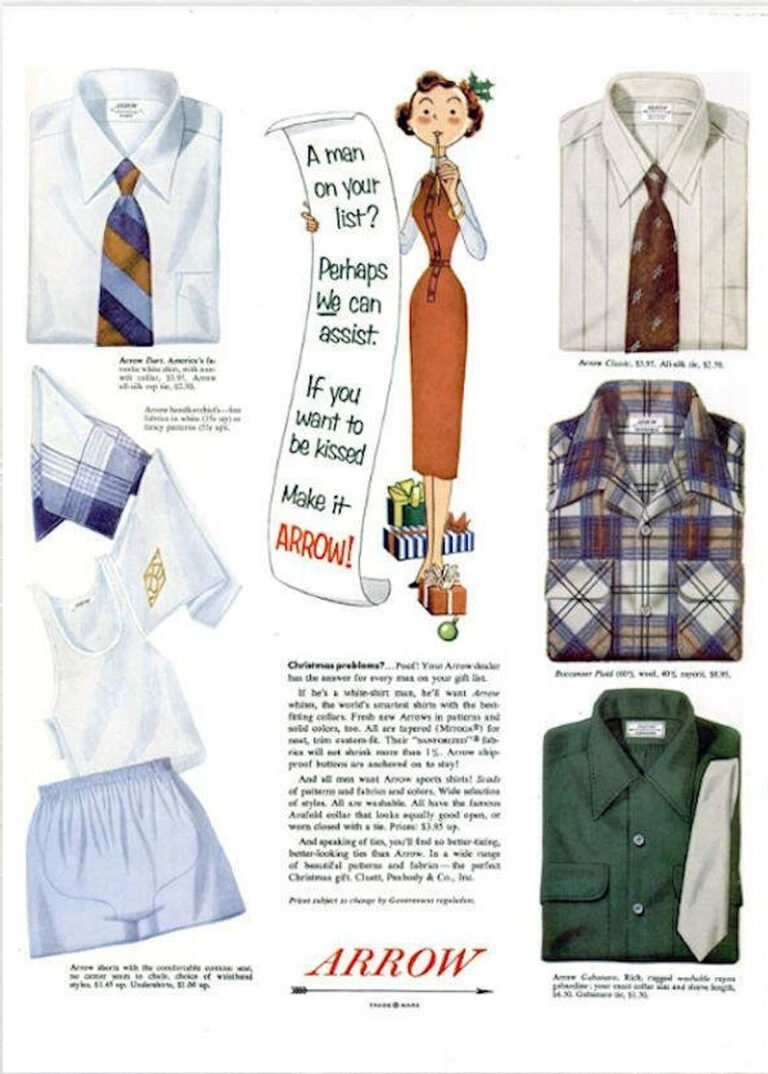
1952 Arrow
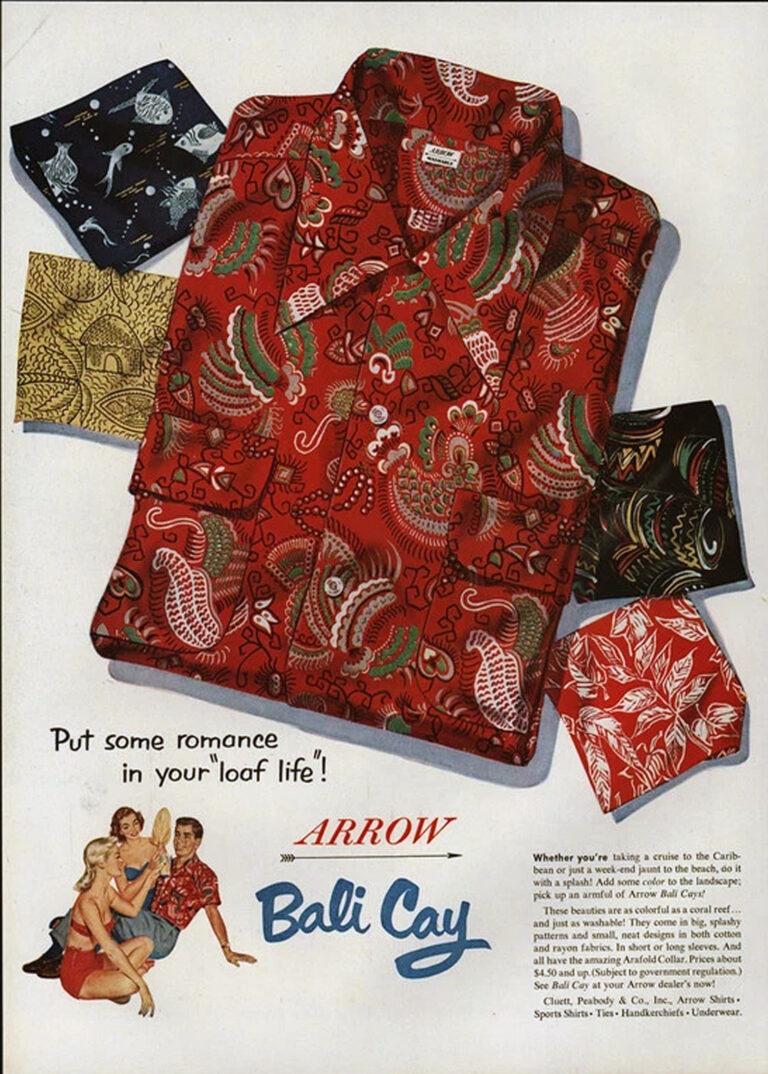
1952 ARROW BALI CAY Tropical Hawaiian Print
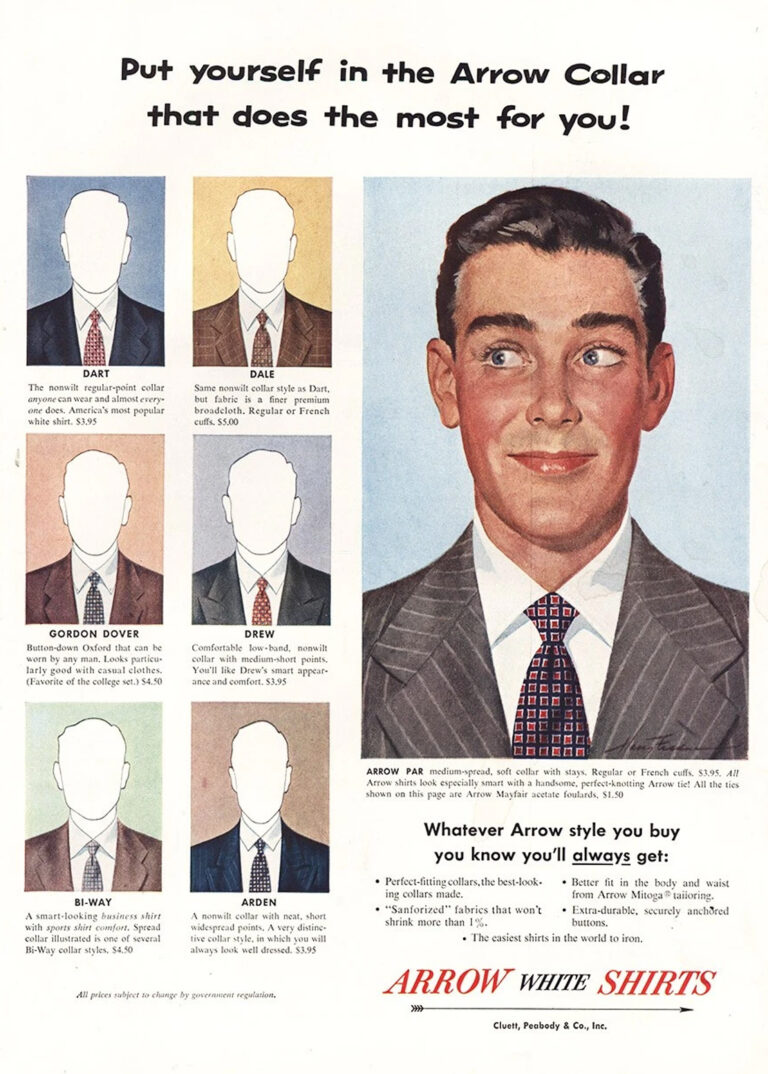
1952 Arrow Shirts: Put Yourself In the Arrow Collar

1952 Arrow Shirts: Santa
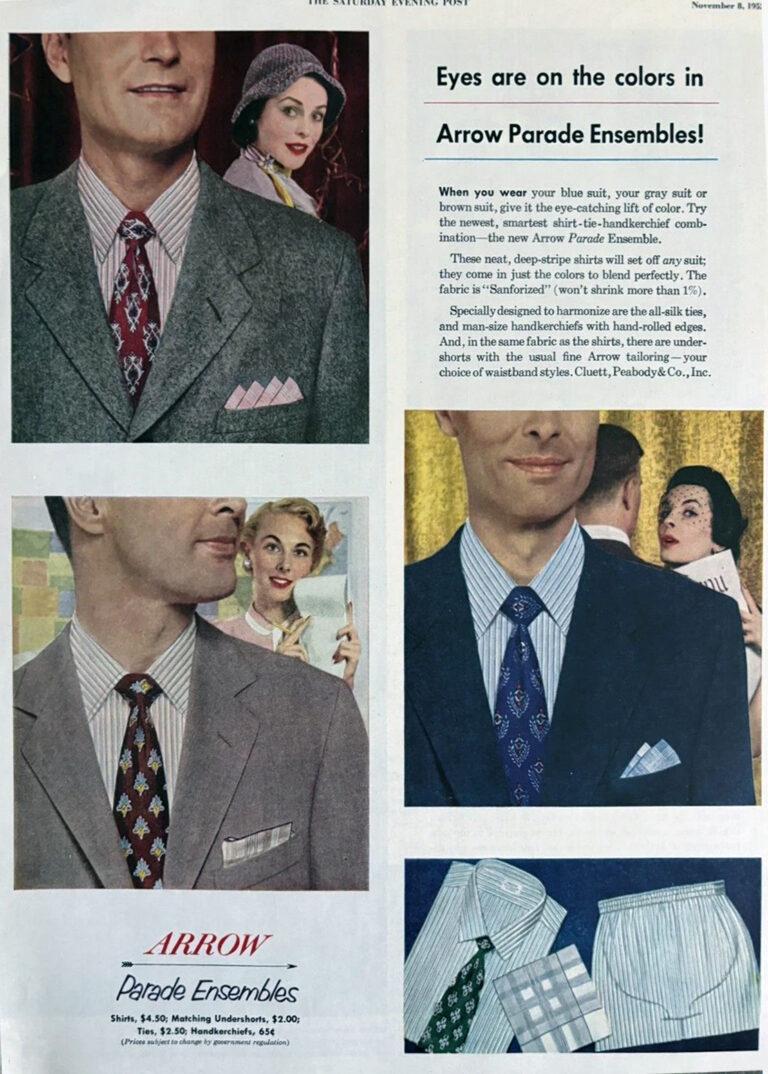
1952 Arrow Parade Ensembles Colors Blue Suit Cluett Peabody Co
1952 Arrow

1953 Arrow Lightweight Living Shirts
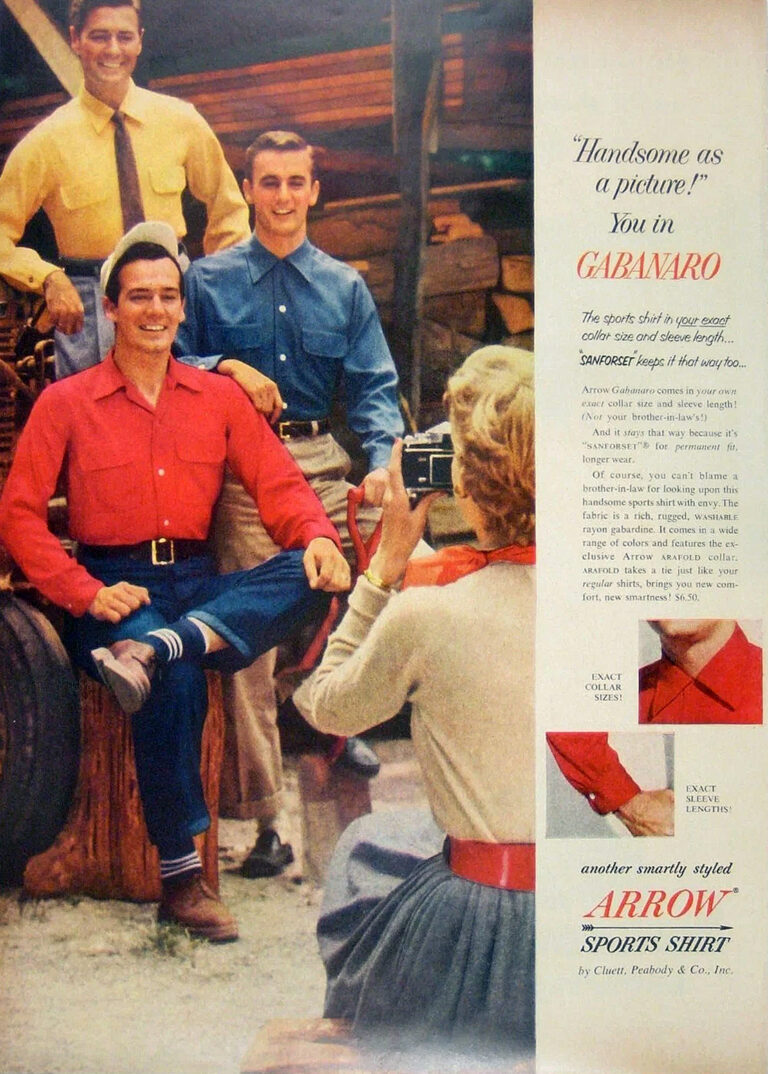
1953 Arrow Shirt Gabanaro Sports Shirt Men in Photograph

1954 Arrow Shirts Softone Men Ensembles

1954 Arrow Shirts Softone Men Ensembles
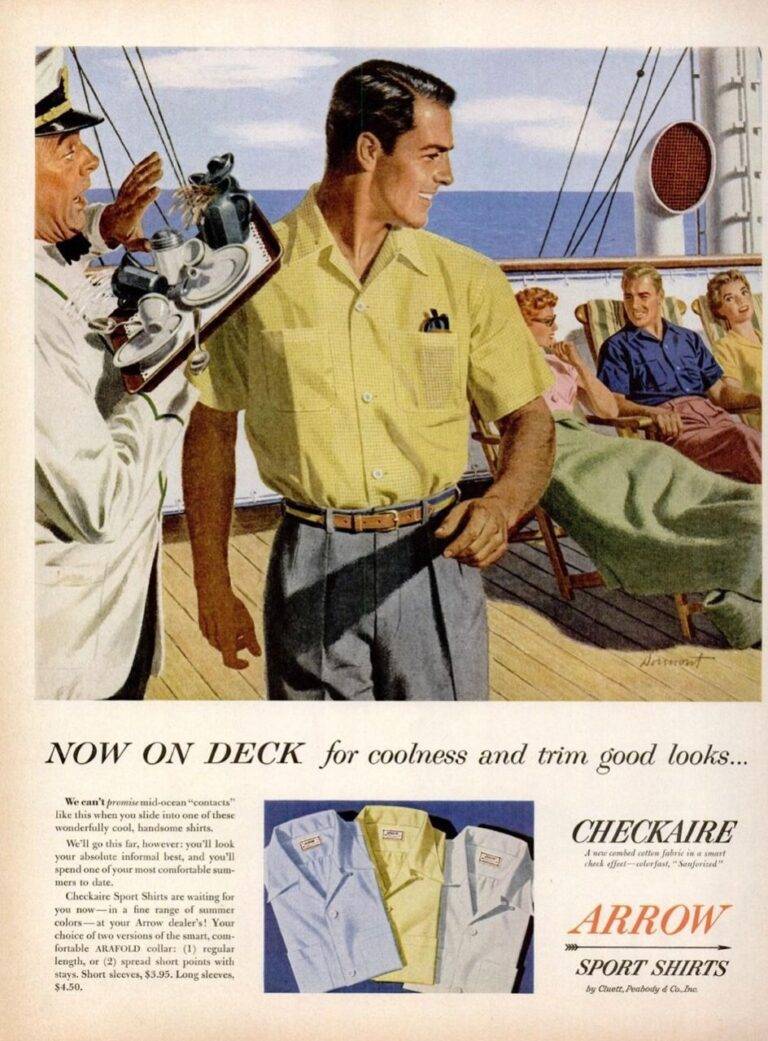
1954 Arrow DECK CHECKAIRE ad

1954 Arrow Sport Shirts Cluett Peabody Dude Ranch Range

1954 Arrow
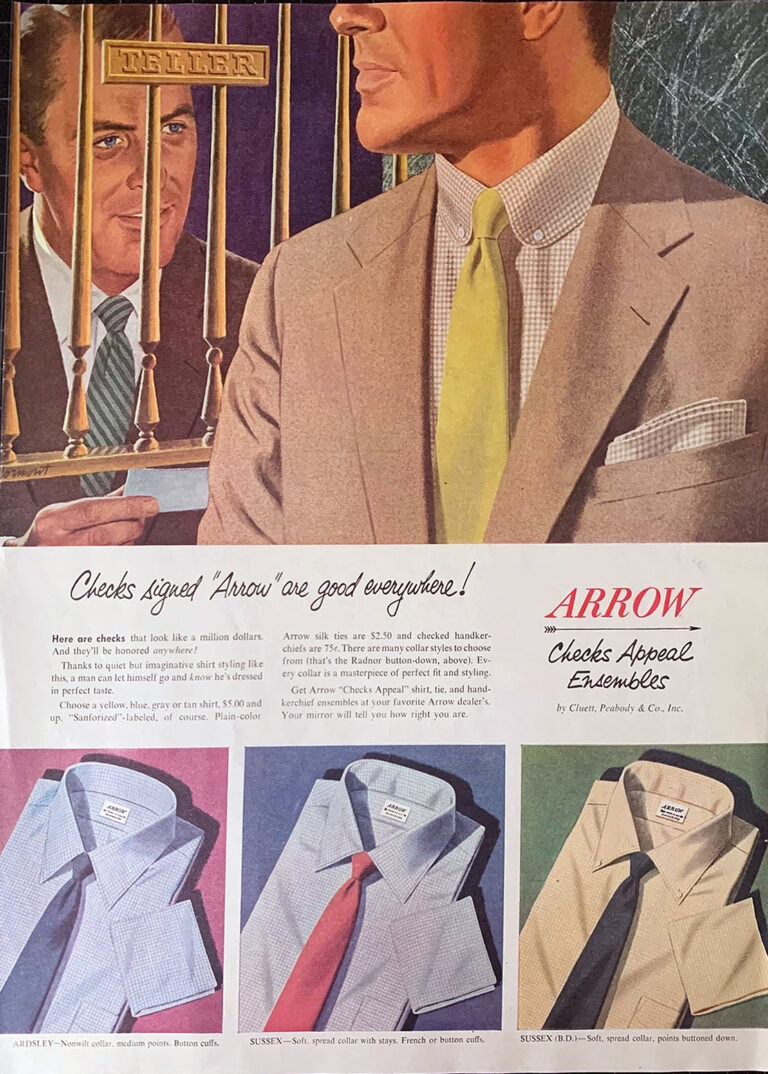
1954 Arrow Clothing
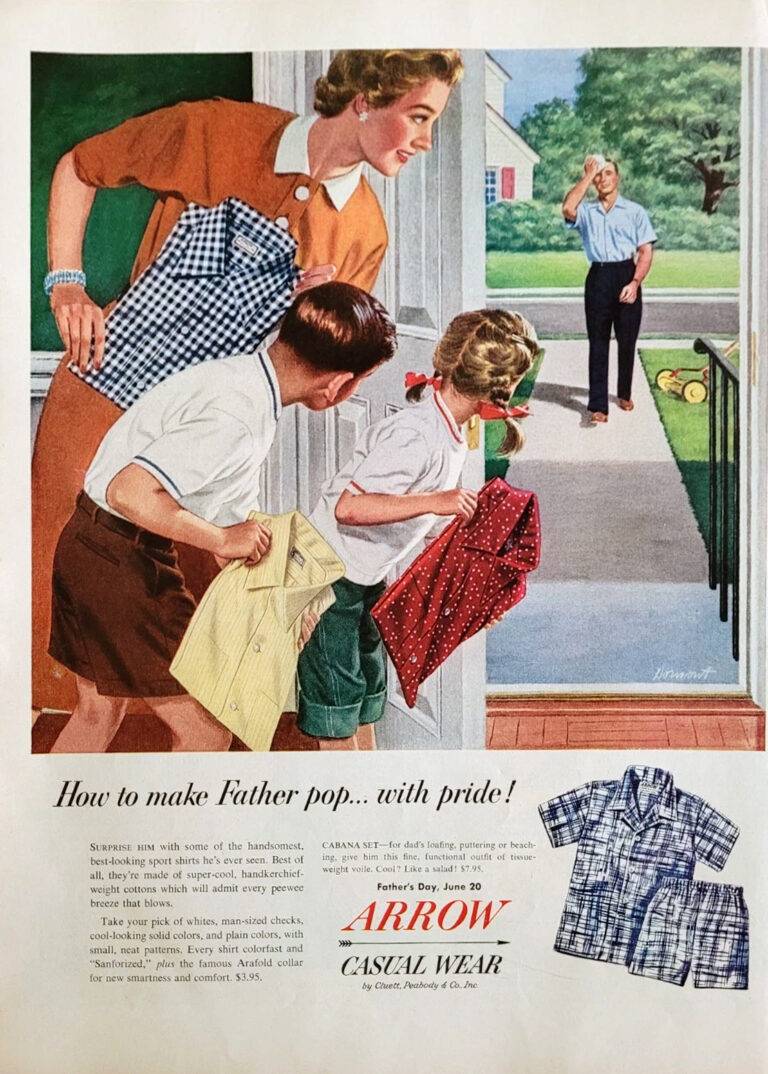
1954 VTG Original Magazine Ad ARROW Shirts How To Make Father Pop With Pride

1955 Arrow Shirts Casual Wear
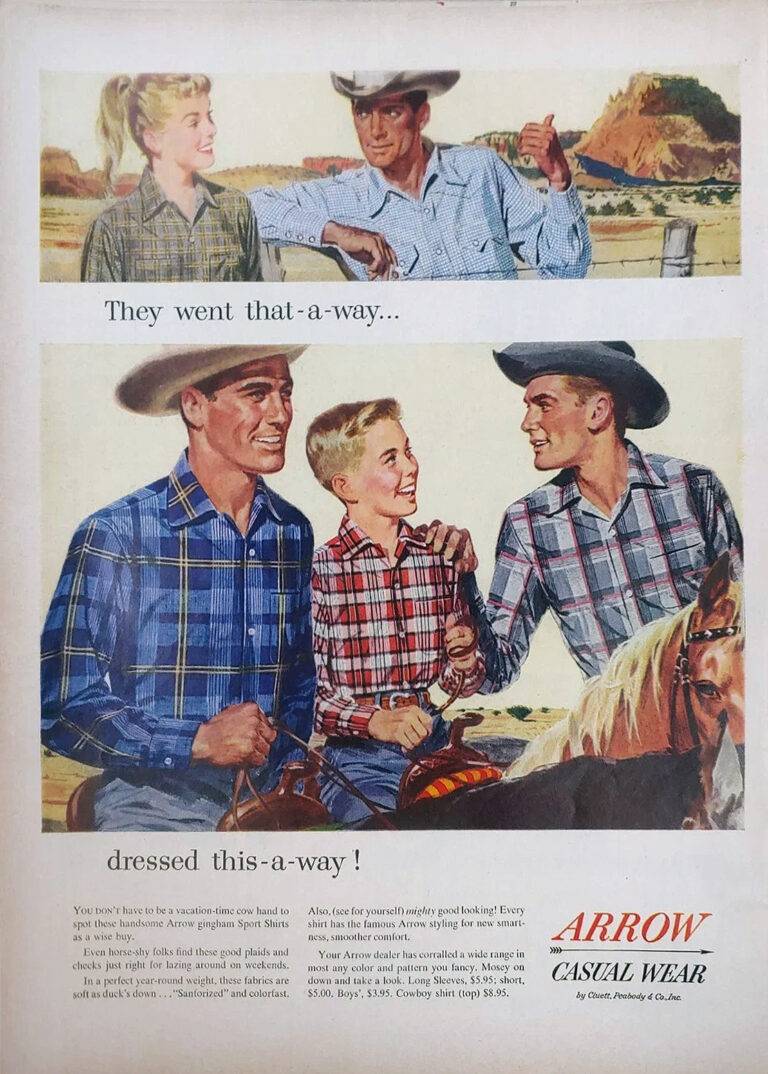
1954 ARROW Shirts They Went That-A-Way
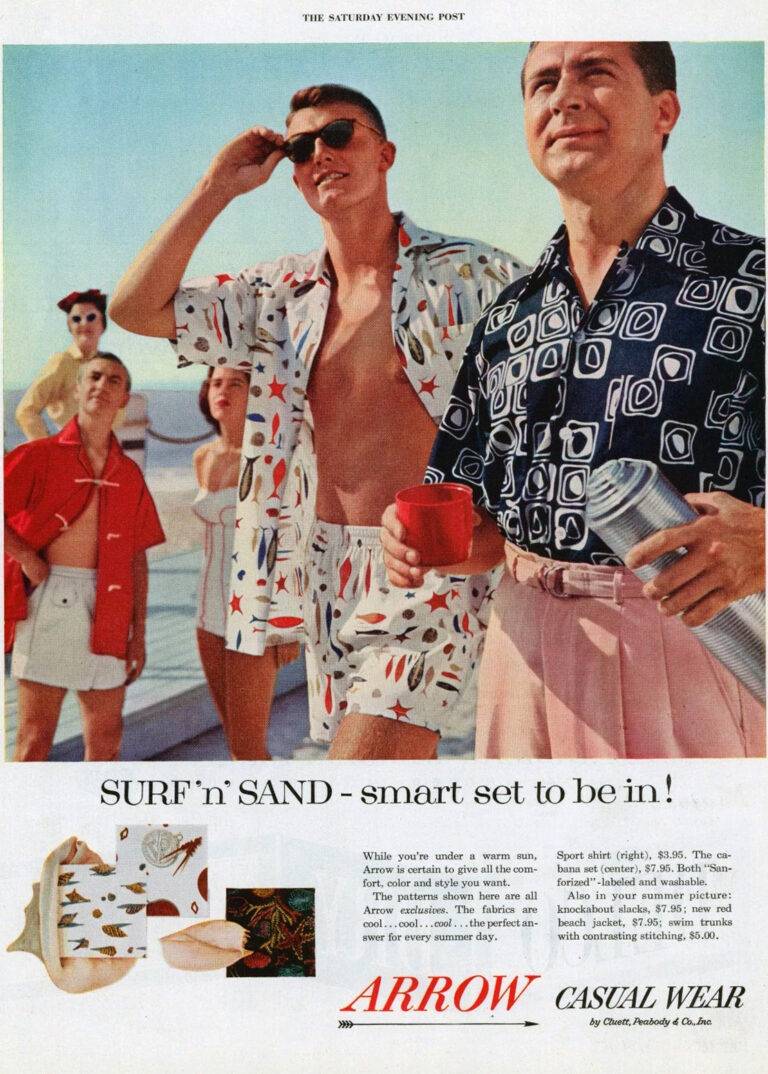
1955 Arrow Casual Wear
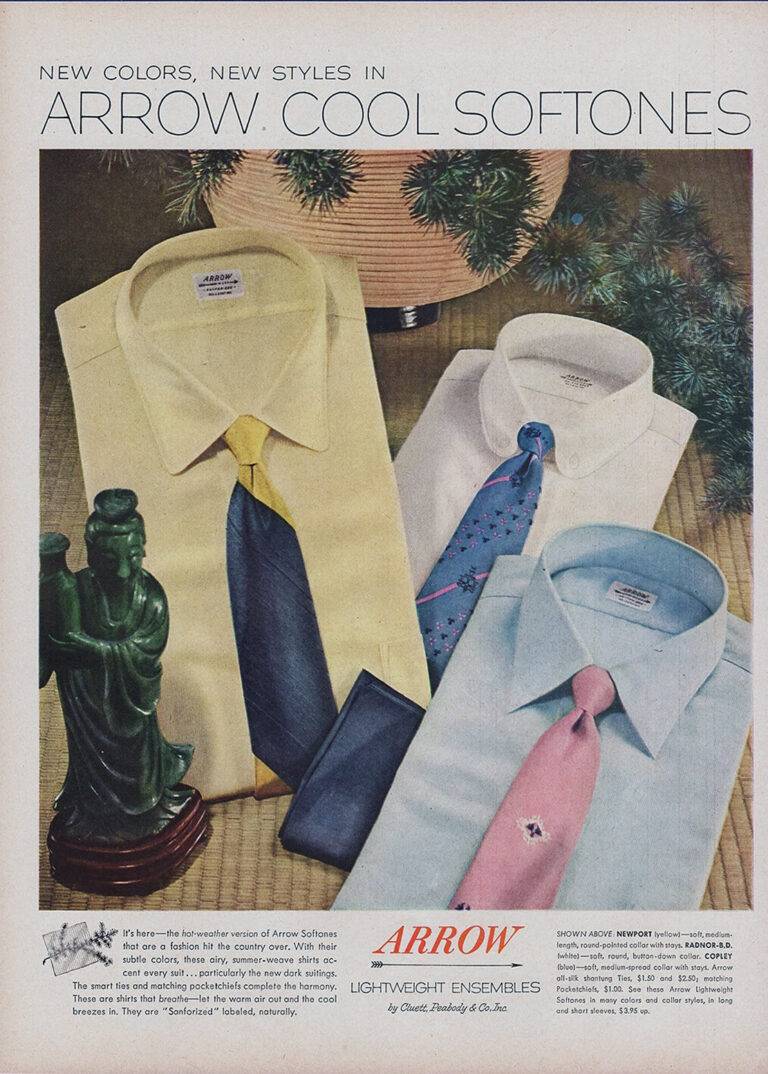
1955 ARROW Cool Softones
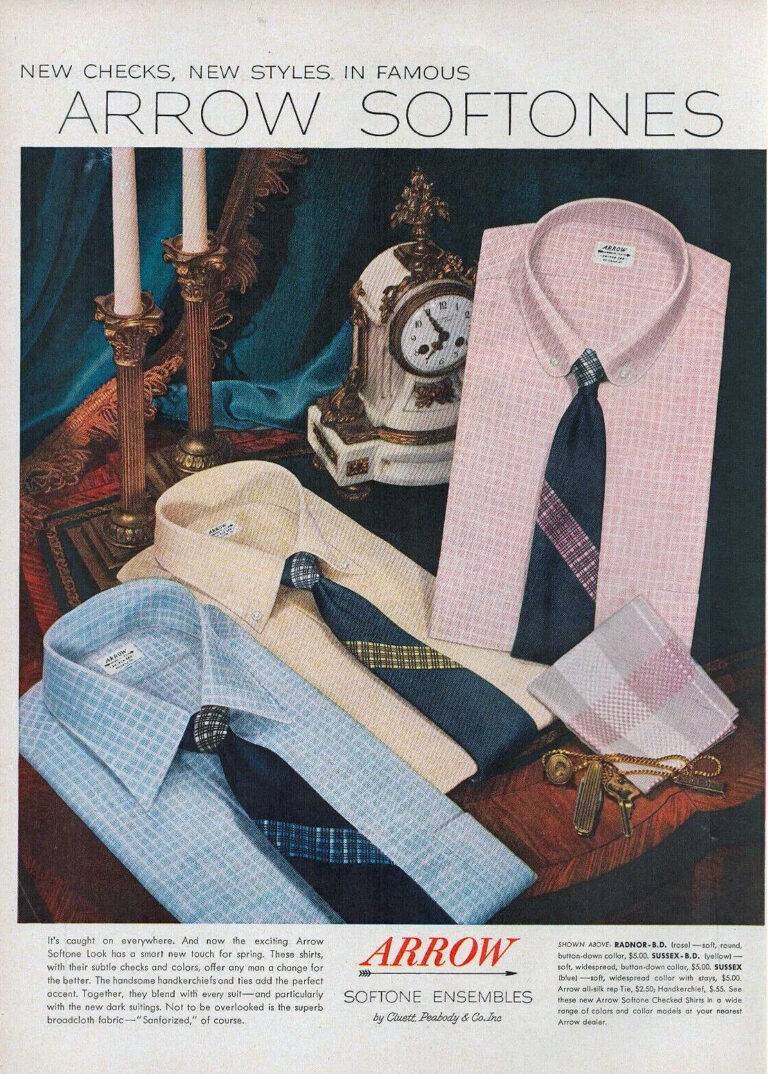
1955 Arrow Shirts Softones Ensembles New Checks Styles In Famous
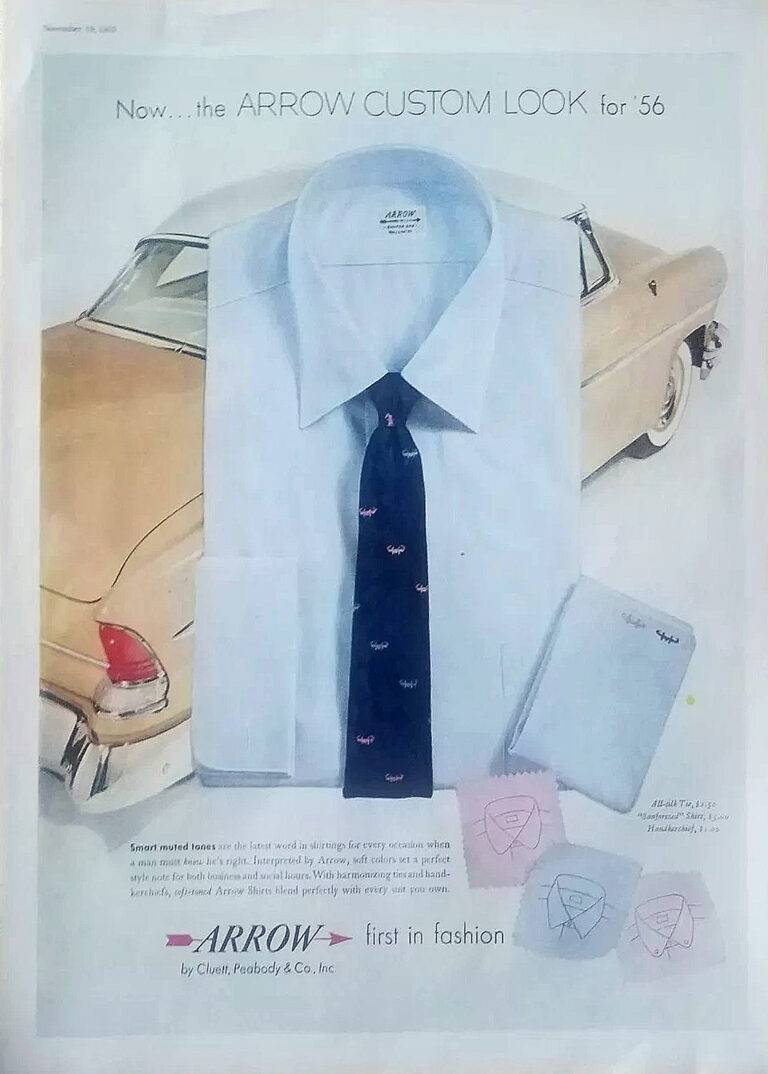
1955 Arrow Shirts Vintage Magazine Ad “Arrow custom look
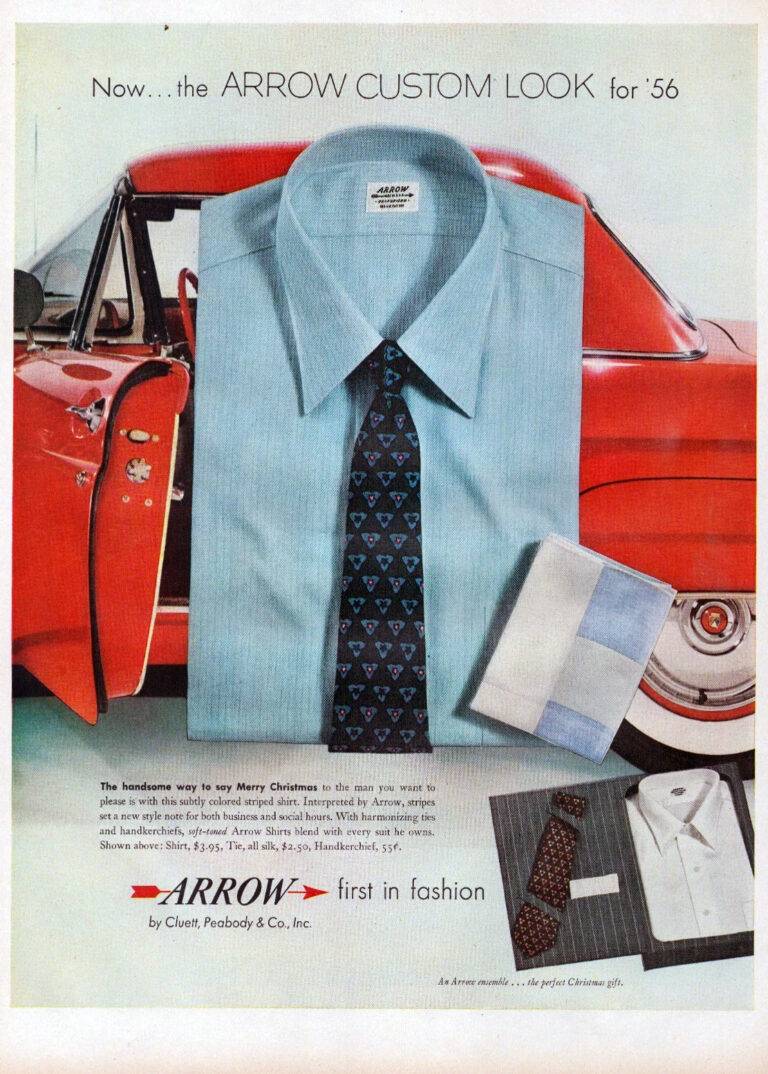
1955 Arrow Shirt Merry Christmas Custom Look For 56 Ford T-Bird

1956 Arrow Casual Wear Men’s Clothing Golf

1956 Arrow Shirts Gabanaro
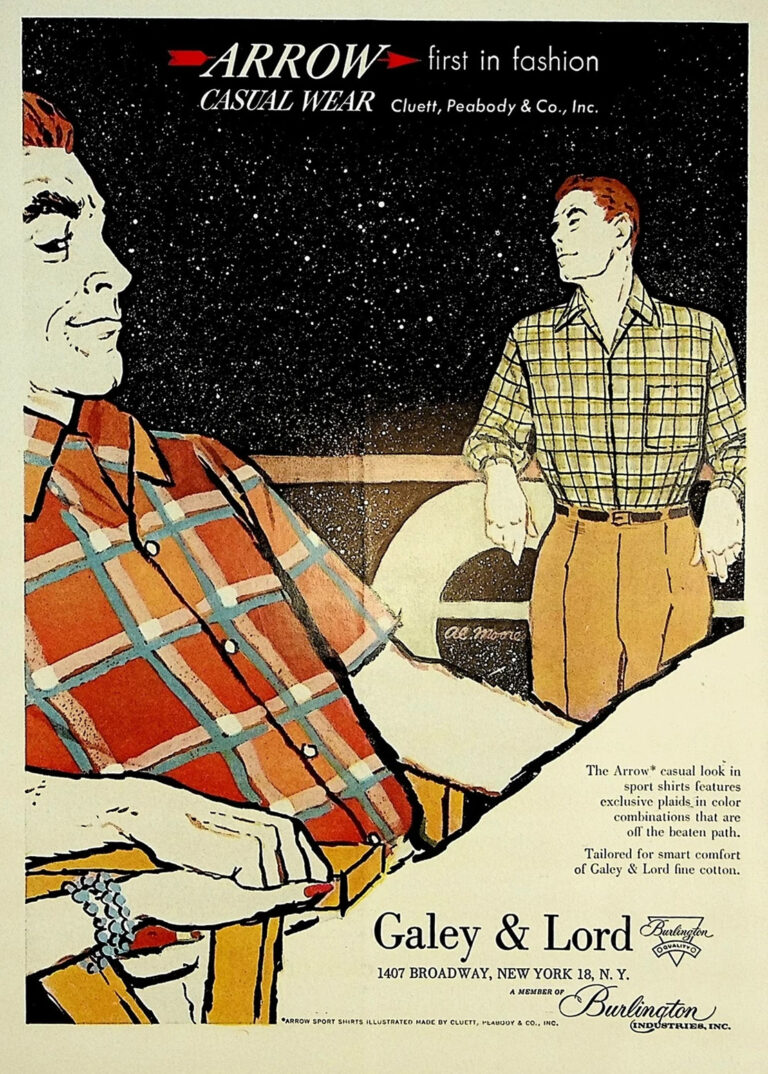
1956 Galey & Lord Arrow Casual Wear


1956 Arrow Men’s Shirts
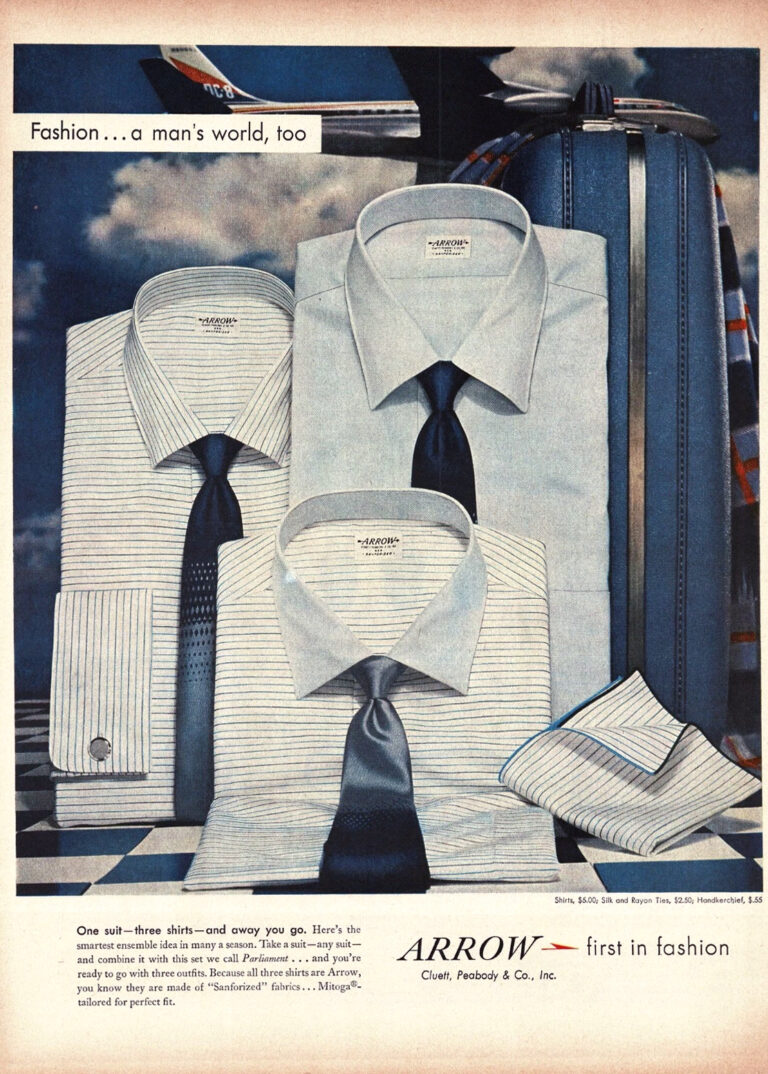
1956 Arrow Men’s Shirts Clothes blue pin stripe

1956 Arrow Men’s Shirts Clothes blue plaid

1950s Arrow Crosswind

1957 Arrow Chromspun Acetate and Cotton Shirts by Riegel

1957 Arrow Casual Wear Flannel Shirt
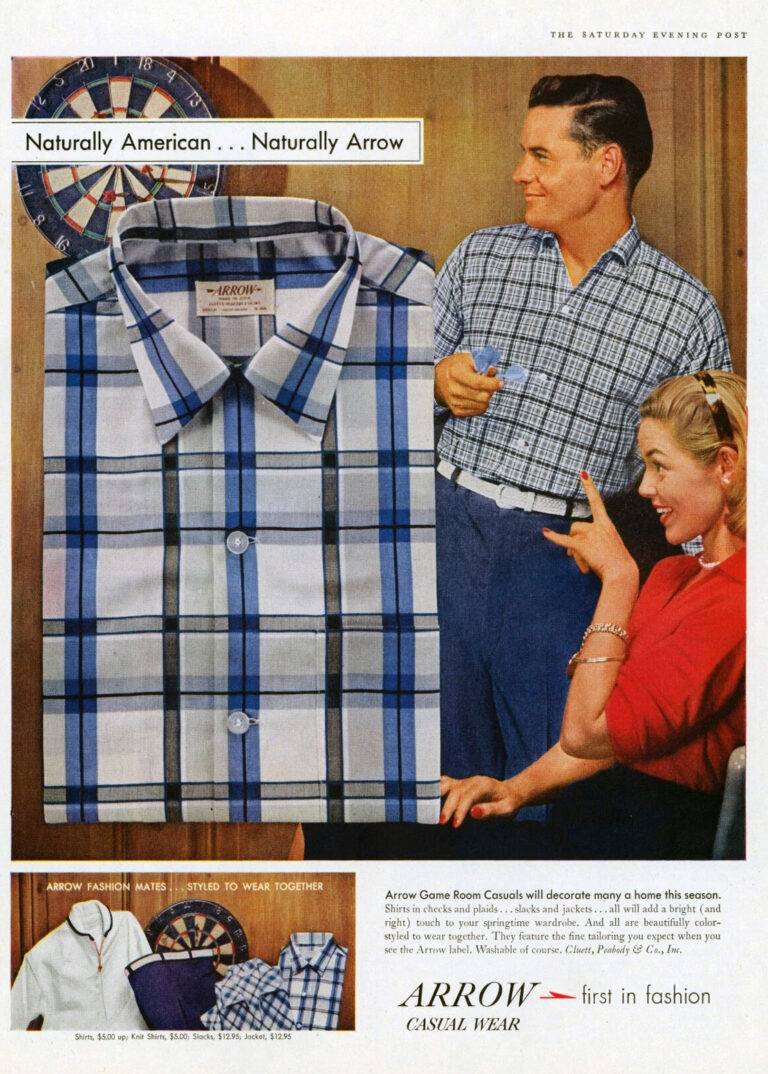
1957 Arrow Casual Wear Flannel Shirt
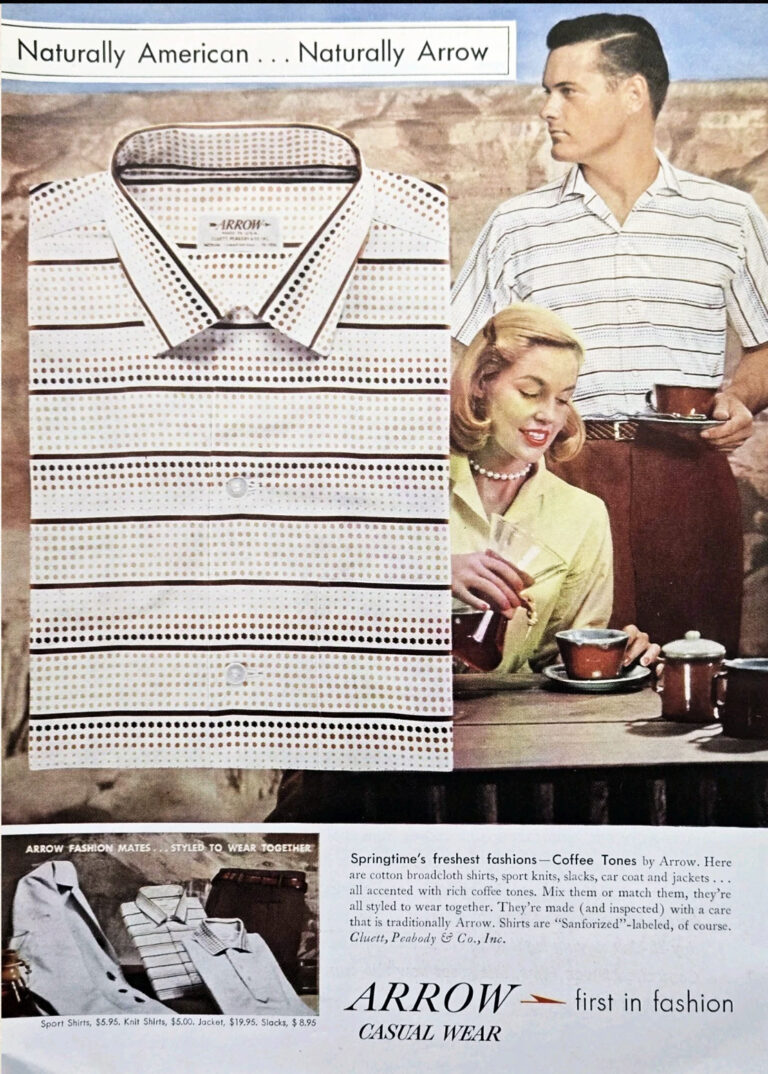
1957 Arrow Casual Wear POLOS
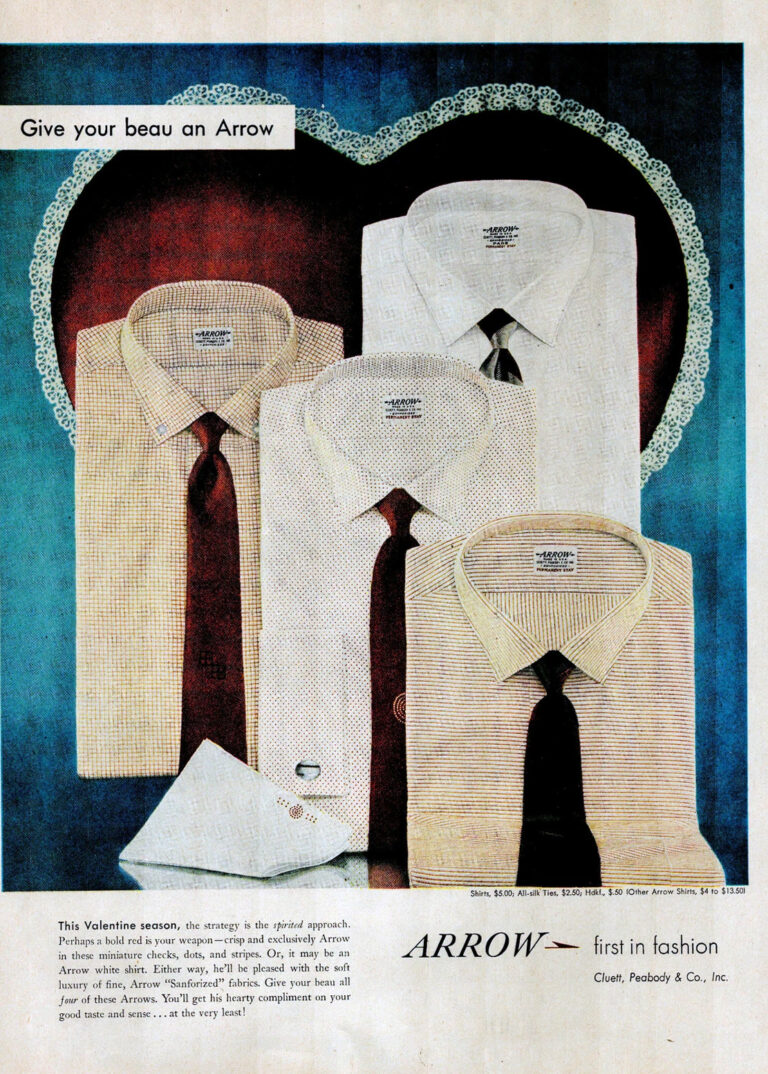
1958 Arrow Men’s Shirts

1958 Arrow Bowling Shirt
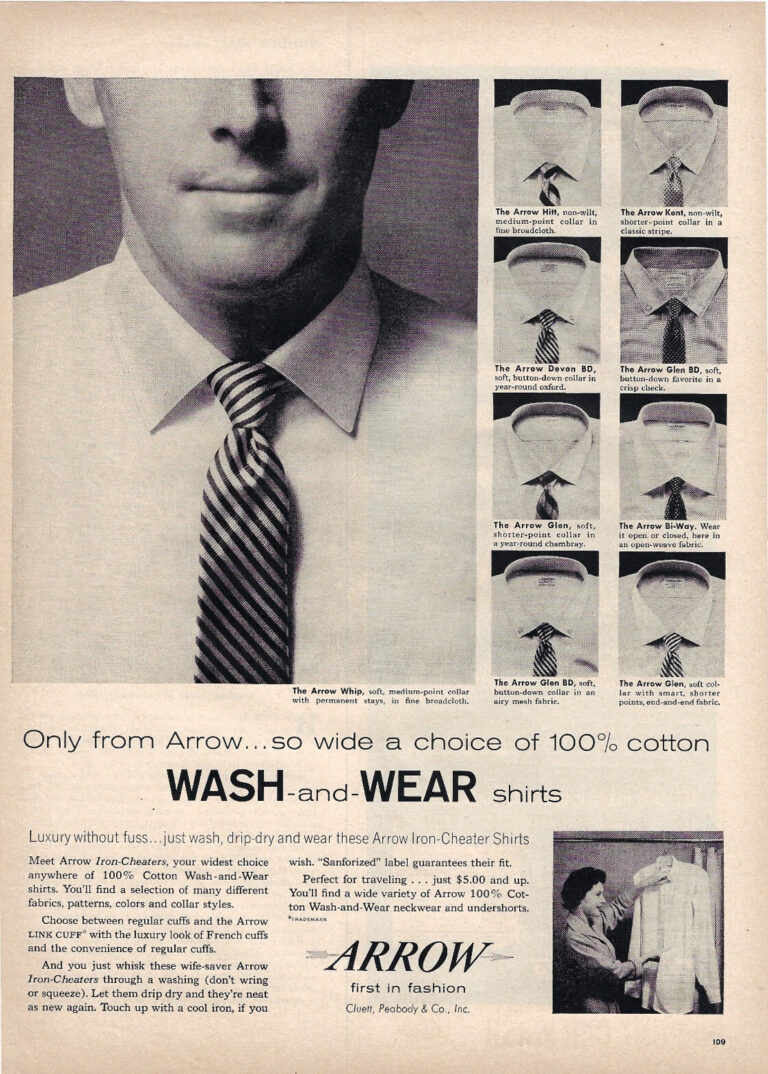
1958 Arrow Wash and Wear Clothing Ad
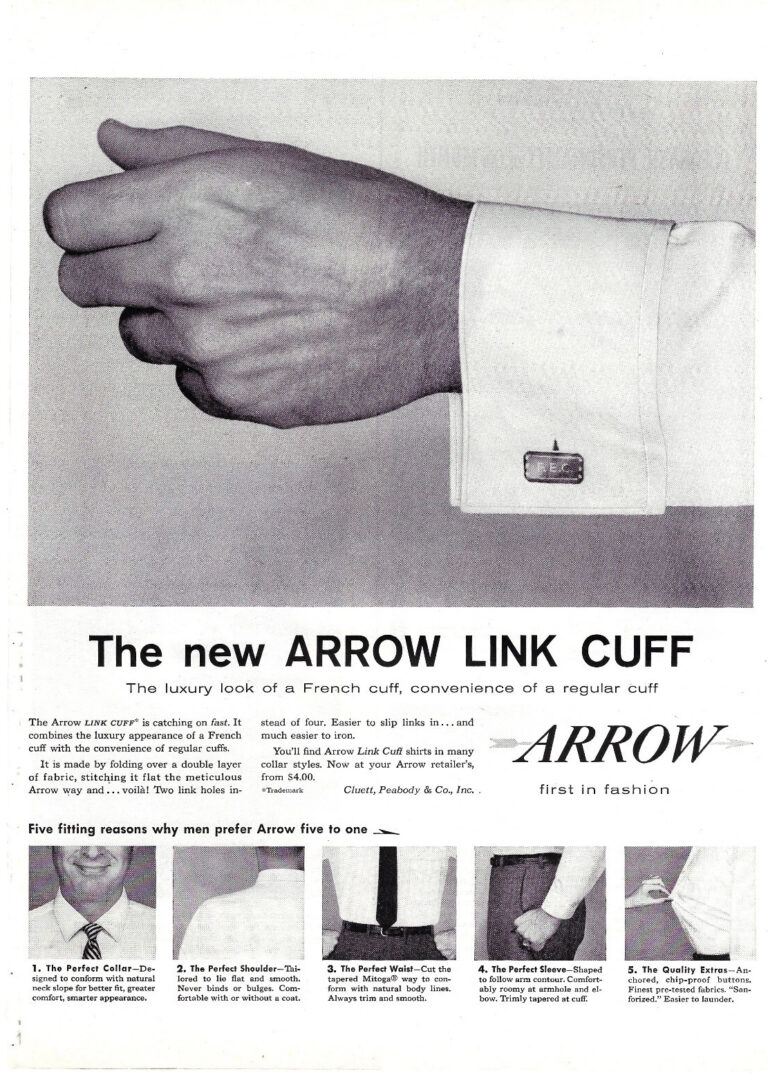
1958 Arrow Shirts Print Ad Vintage Advertisement Link Cuff

1959 Arrow Shirts Dart & Glen
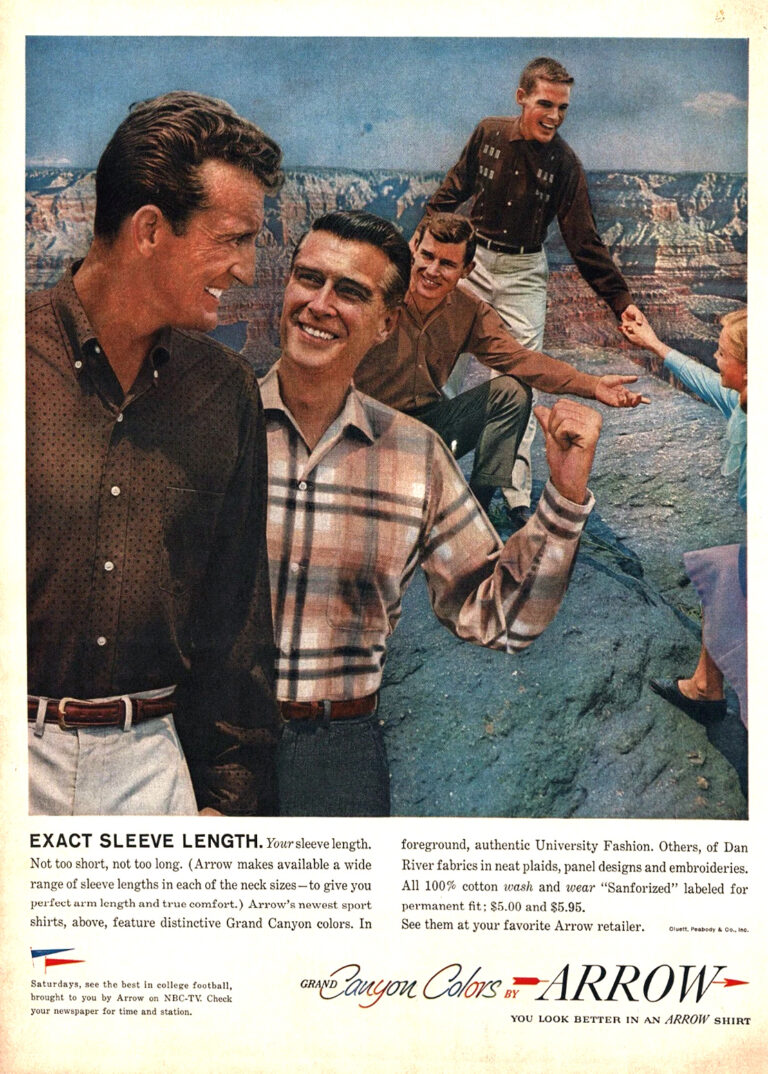
1959 Arrow Long Sleeve Printed Shirts For Men
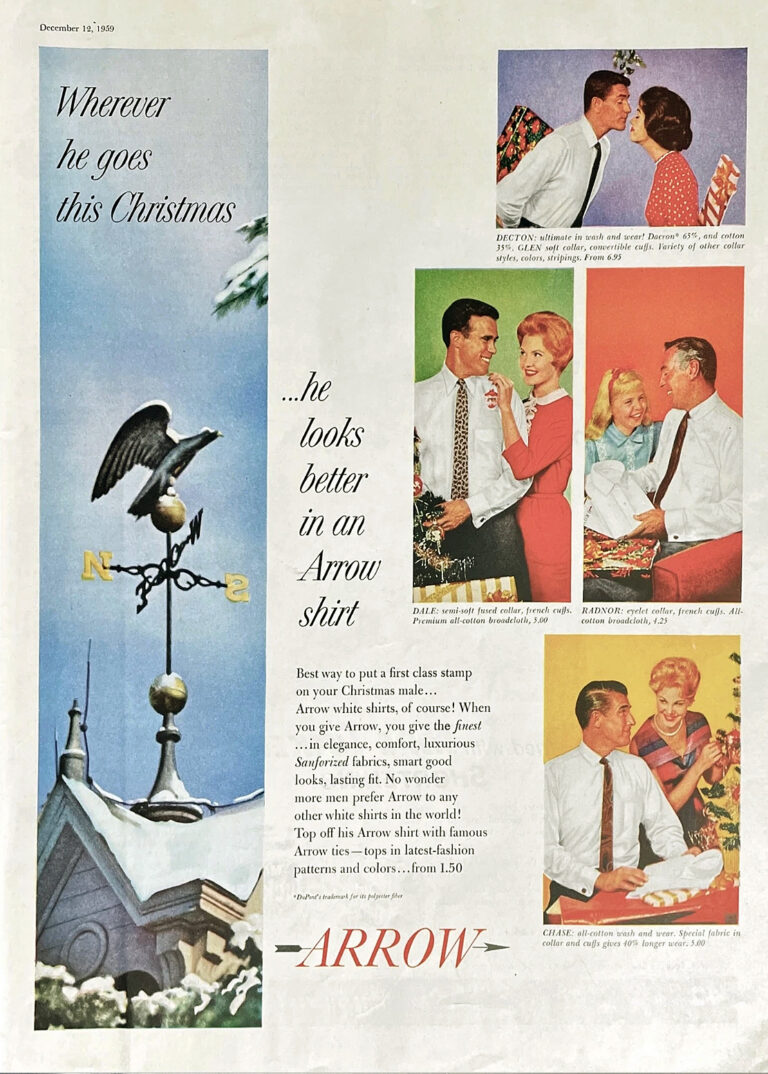
1959 Arrow Men’s Shirts
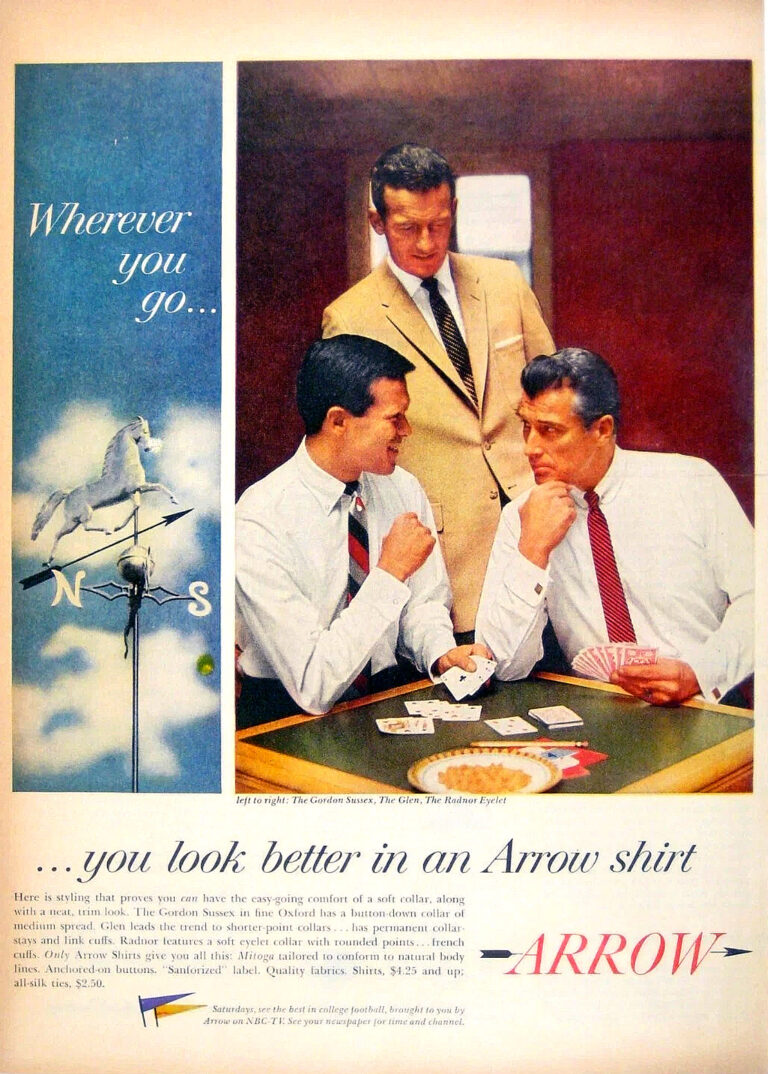
1959 Arrow Men’s Shirts
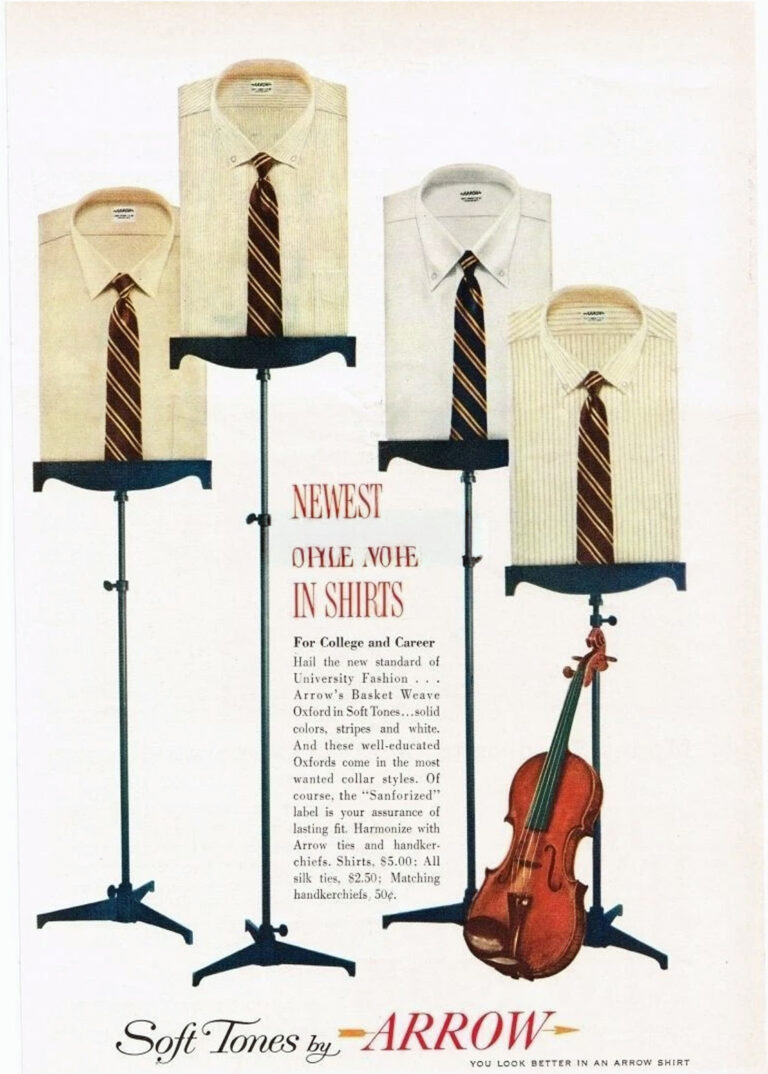
1959 Arrow Men’s Shirts NEWEST STYLE NOTE IN SHIRTS

1950s Arrow Canyon Colors
1960s

1960 Arrow Shirt Martinique photo mens clothing

1960 Arrow Shirt ITALIAN LIDO BEACH

1960 Arrow Clothier Relaxed and Informal
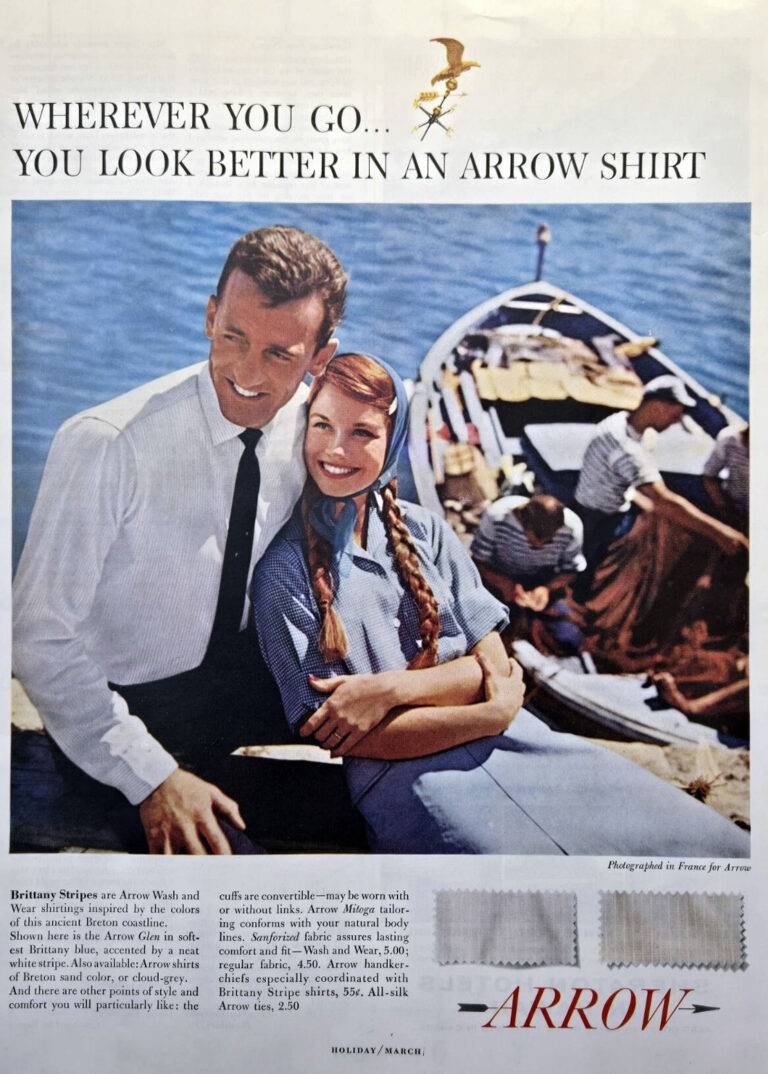
Arrow Shirts Brittany Stripes Couple French Pier Boat Vintage

1960 Arrow Nu Cords Shirts At Nikko Shrine Honshu Tochigi Japan

1960 Vintage ad for Arrow Shirts Decton
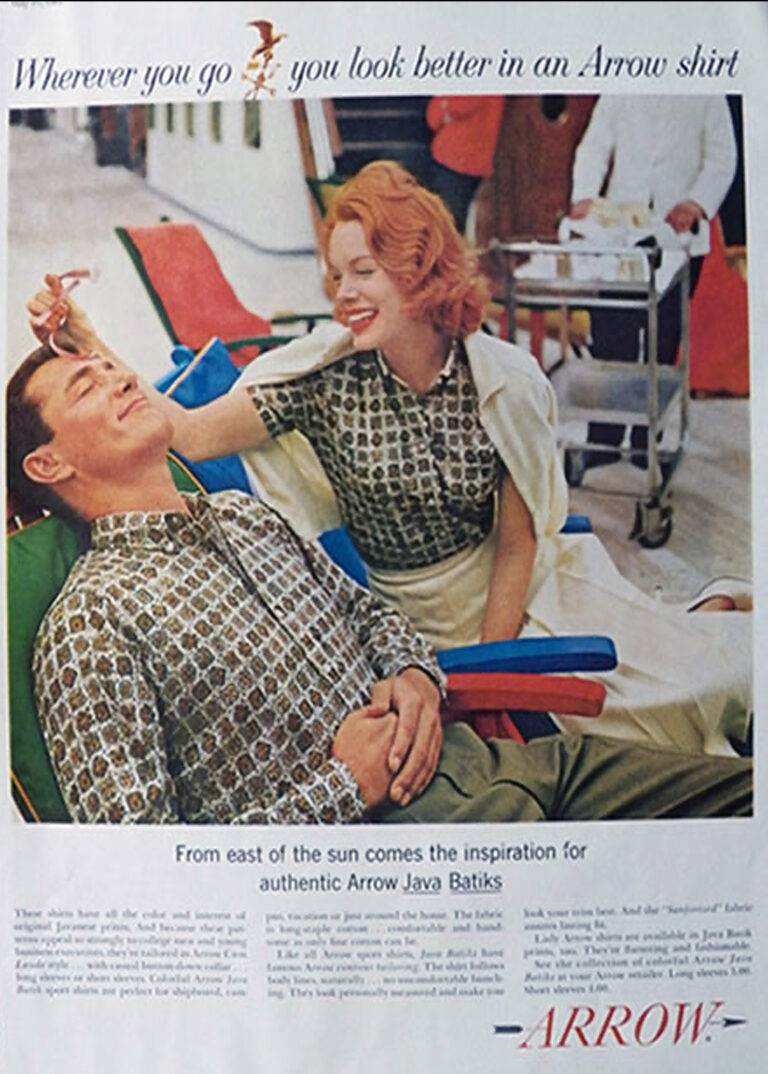
1961 Vintage Arrow Shirt Ad ~ Java Batiks

1961 Arrow Shirt
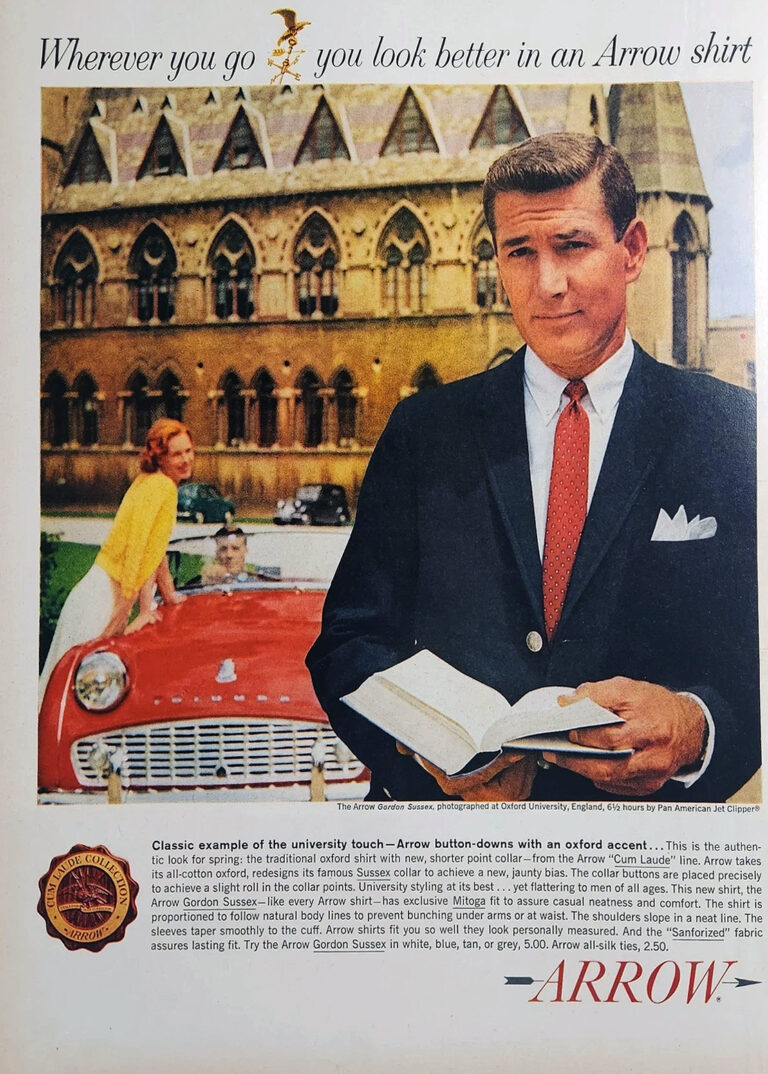
1961 Print Ad Arrow Gordon Sussex
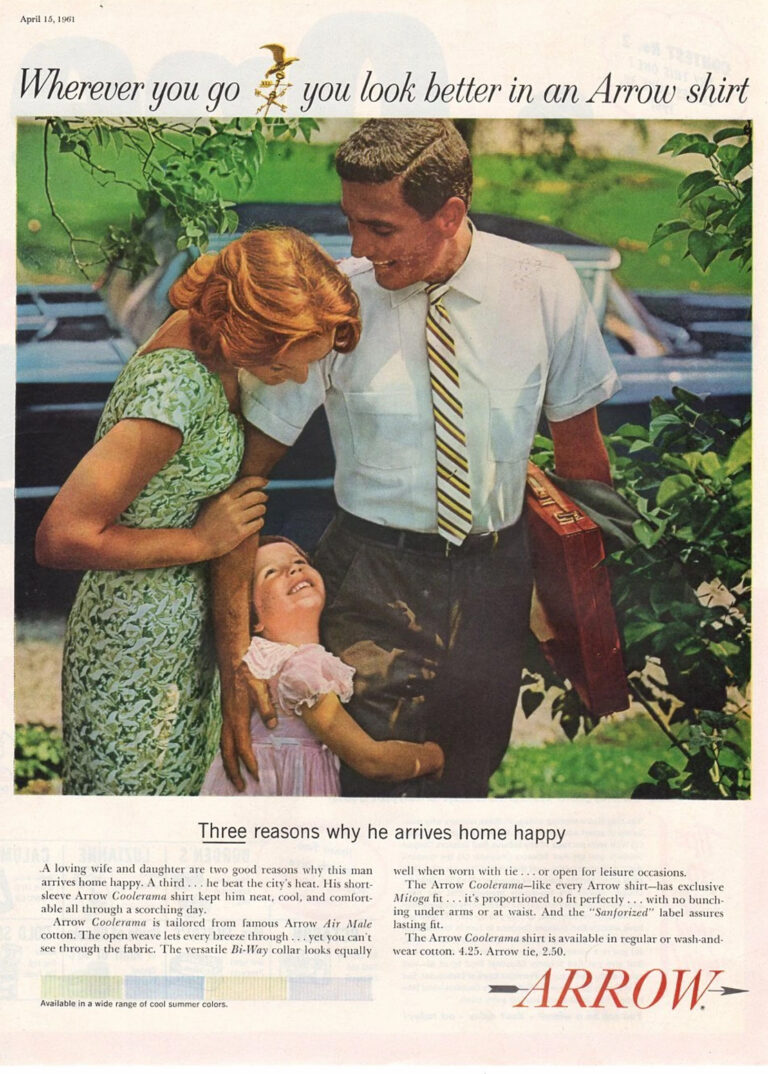
1961 Vintage Print Ad Cool Summer Shirt Fashion Family

1961 Arrow Shirt Ad “Wherever you go”
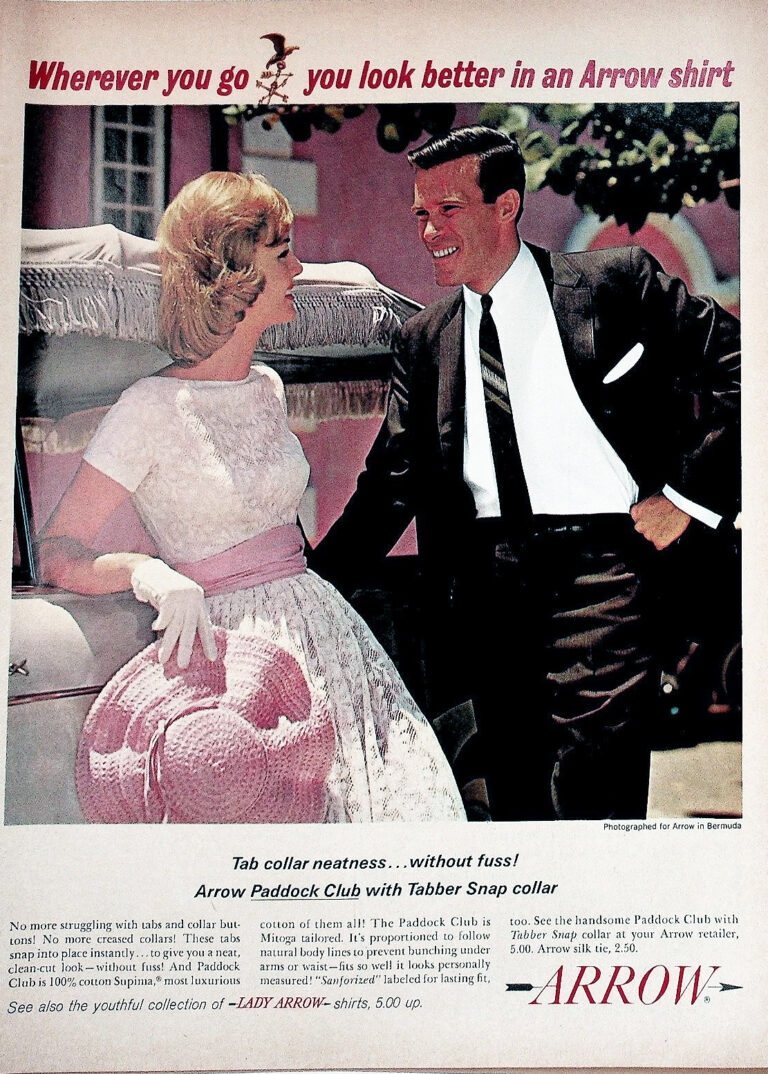
1960s Paddock Club Shirt Tab Snap Collar Fashion

1963 Arrow World Traveler Orlon Shirt Ping Pong Table Tennis
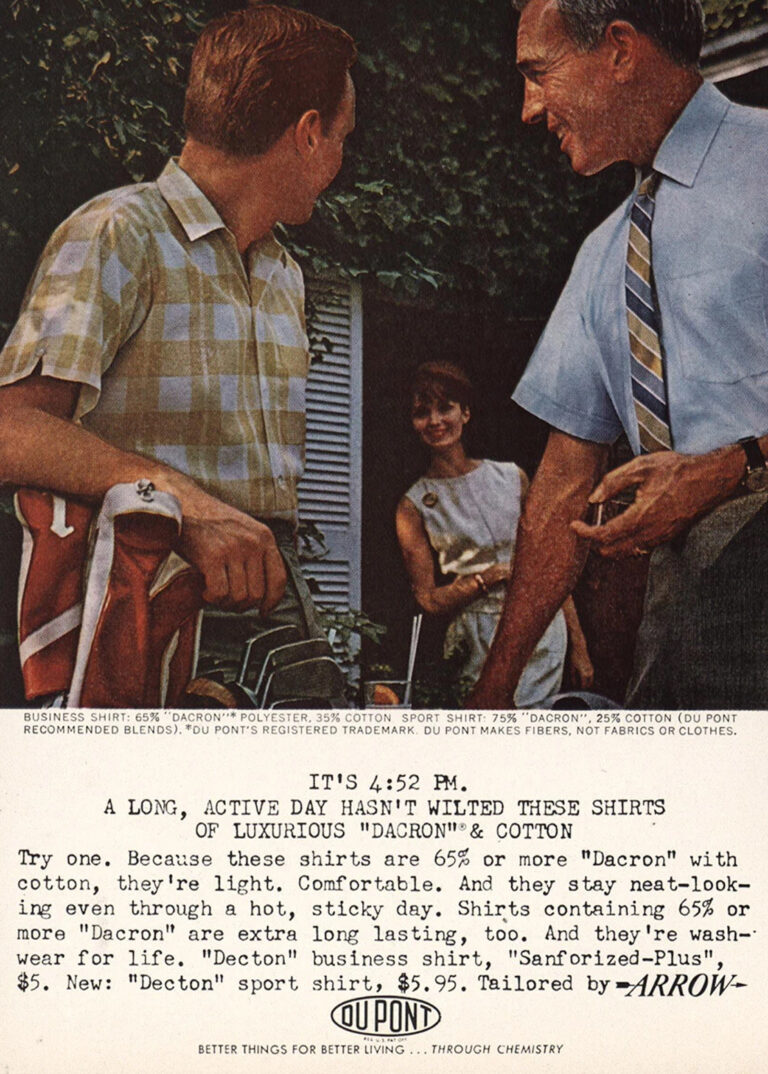
1963 1963 Arrow Shirts Dupont DACRON
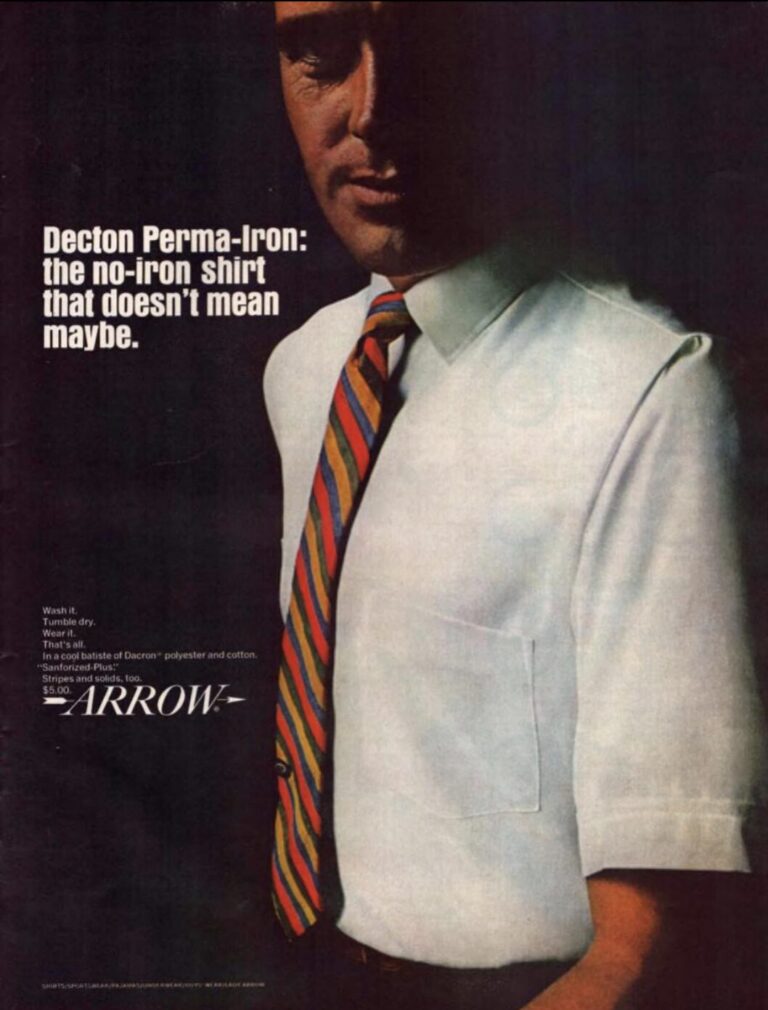
1967 Life magazine 1967_05MAY_12 May 12th 1967

1968 Arrow Mens Dress Shirts Clothing Fashion Tie Vintage Magazine Print Ad


1969 Arrow the white shirt company
1970s

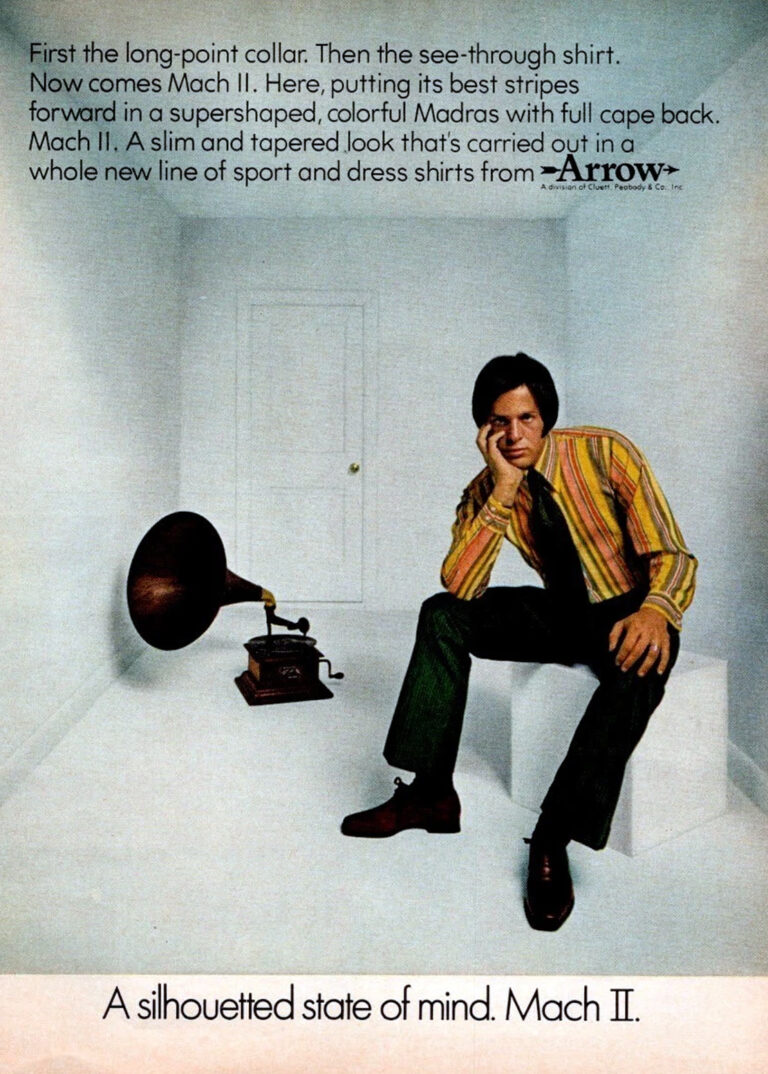
1970 Arrow Mach II Two Flap Pocket Shir
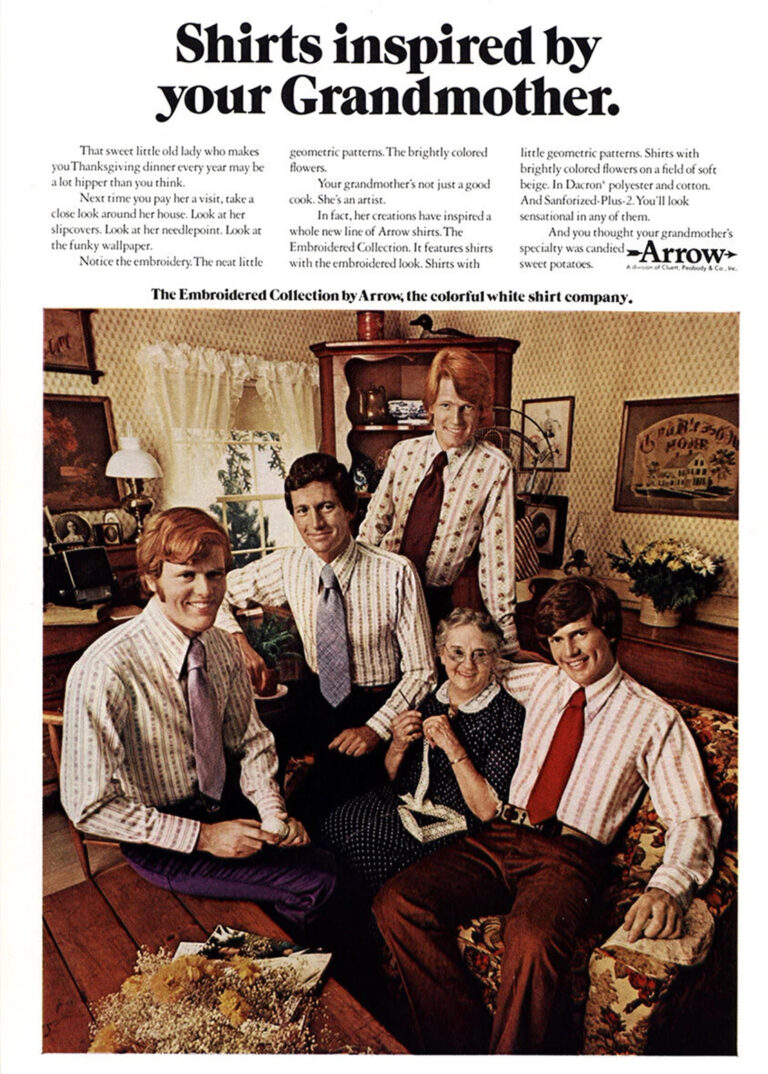
1971 Arrow: Shirts Inspired By Your Grandmother Vintage Print Ad
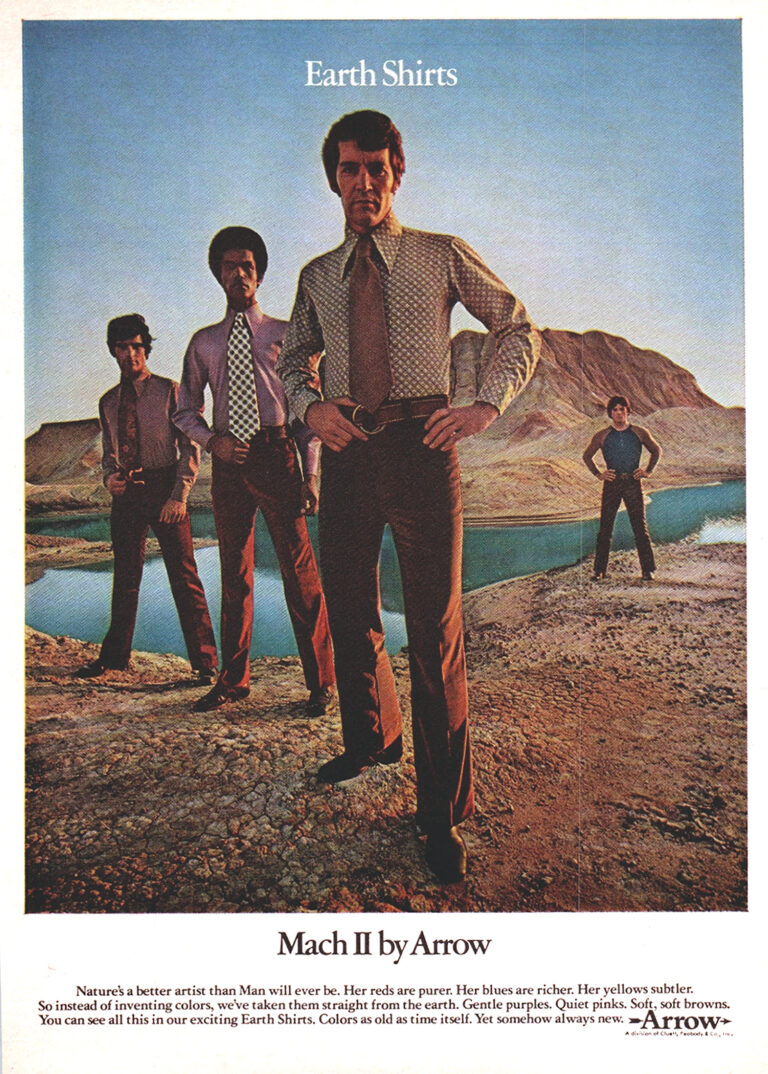
1971 Arrow Mach II Dress Shirt

1971 Mach II Arrow Shirts Age of Aquarius Hippie Style
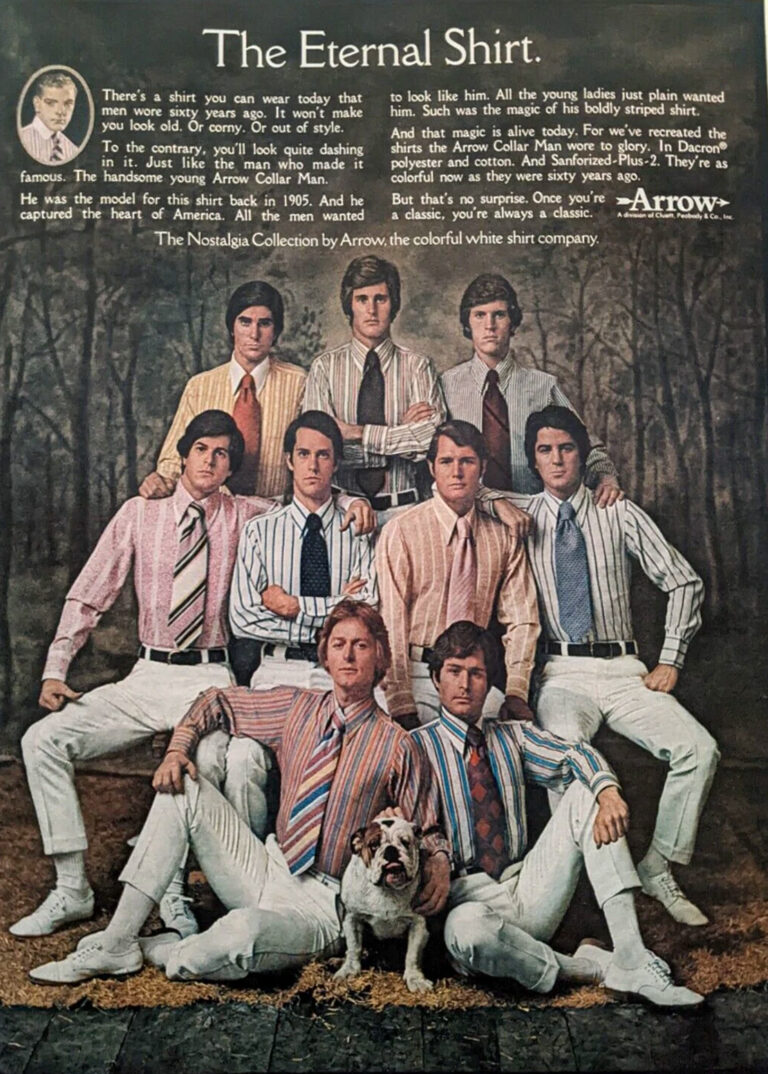
1971 Arrow Shirts The Eternal Shirt Life Magazine
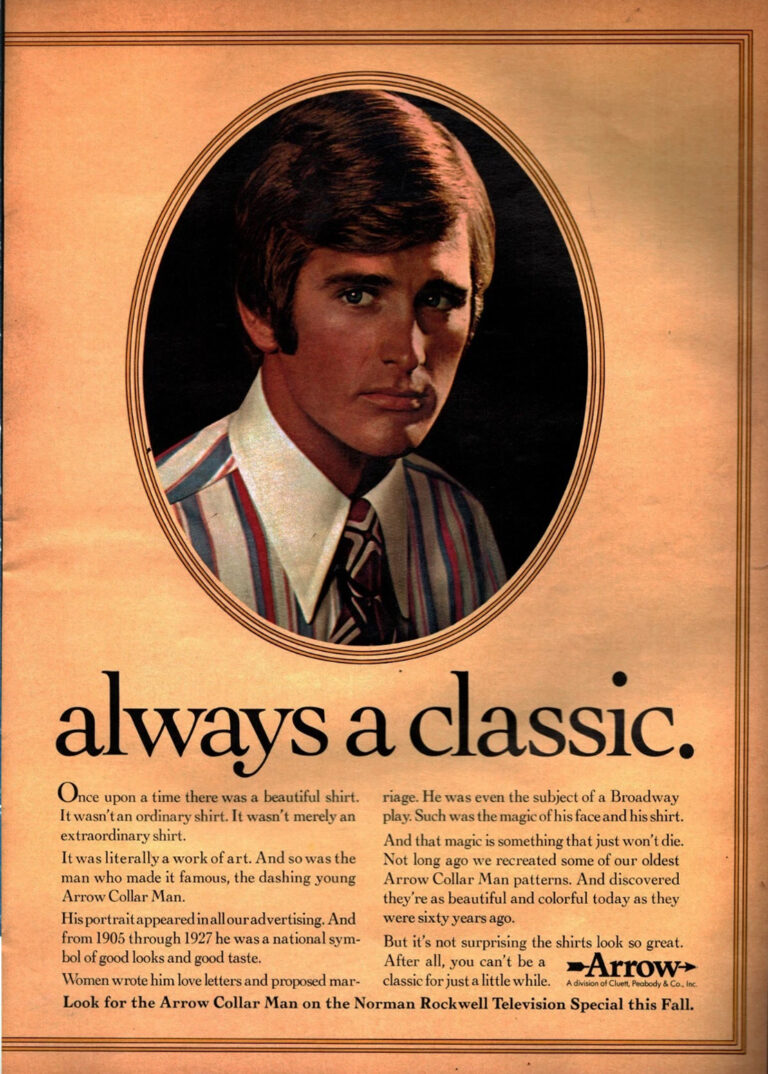
1972 vintage original print ad Arrow Classic Shirt Company always a classic
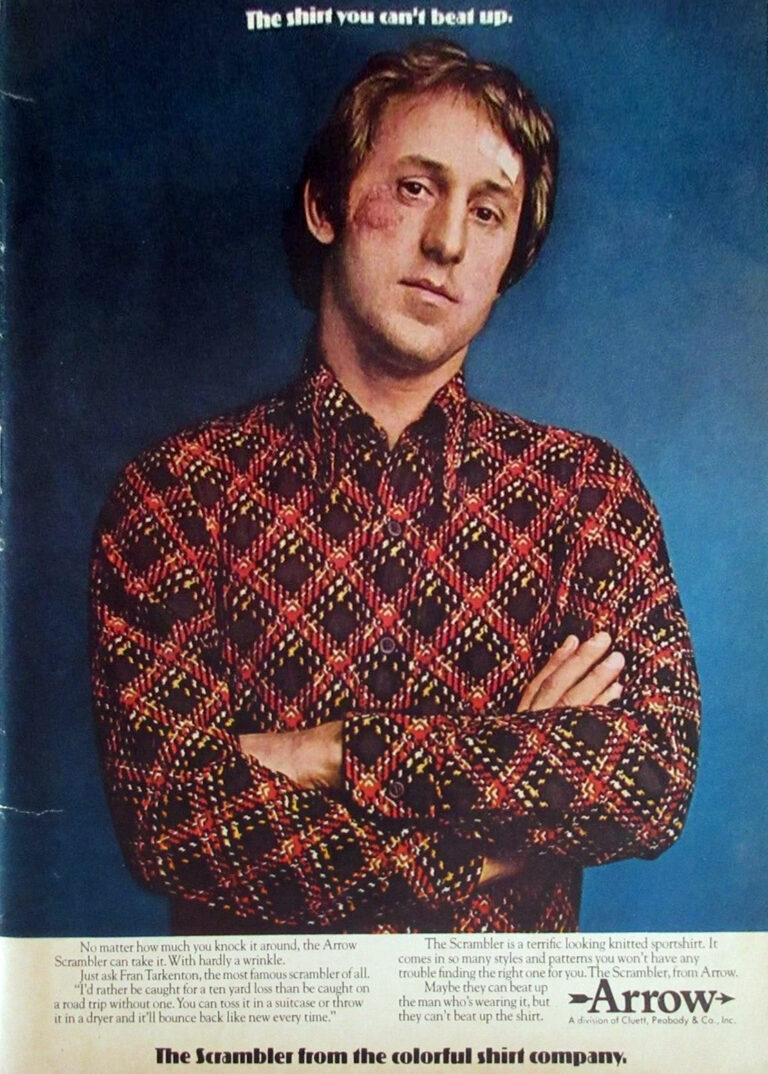
1973 Arrow Shirts: The Shirt You Can’t Beat Up,
Arrow Casual Wear Commercial (1973)
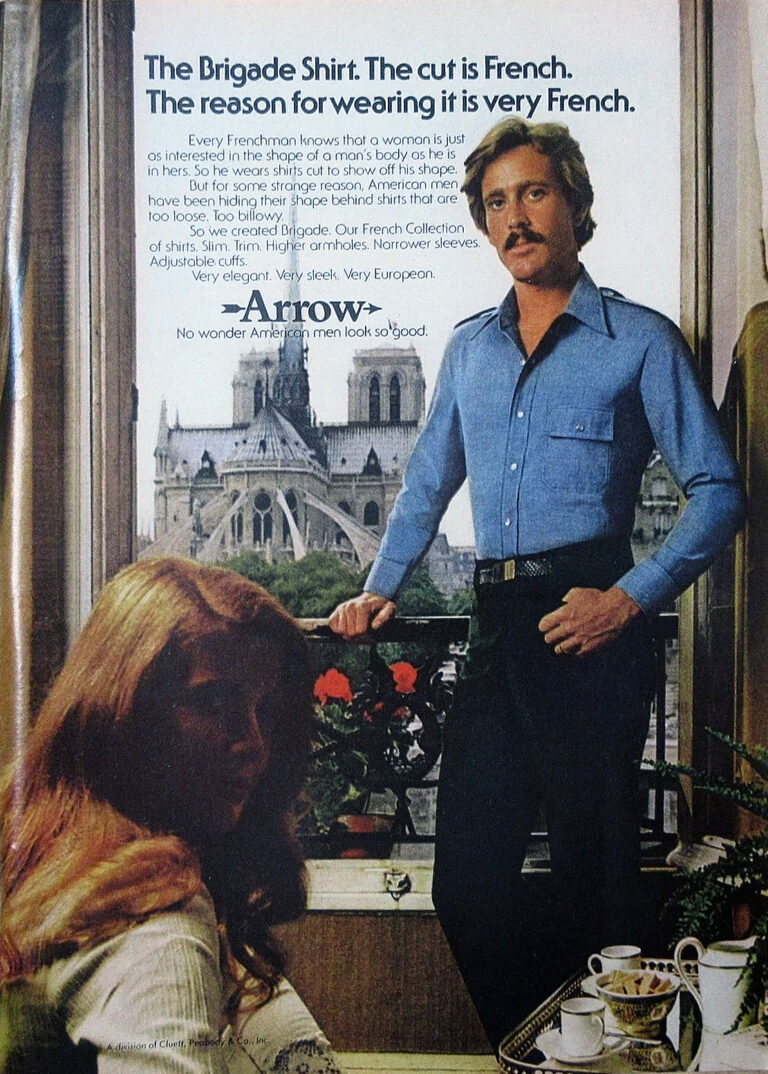
1974 Arrow Men’s Shirts
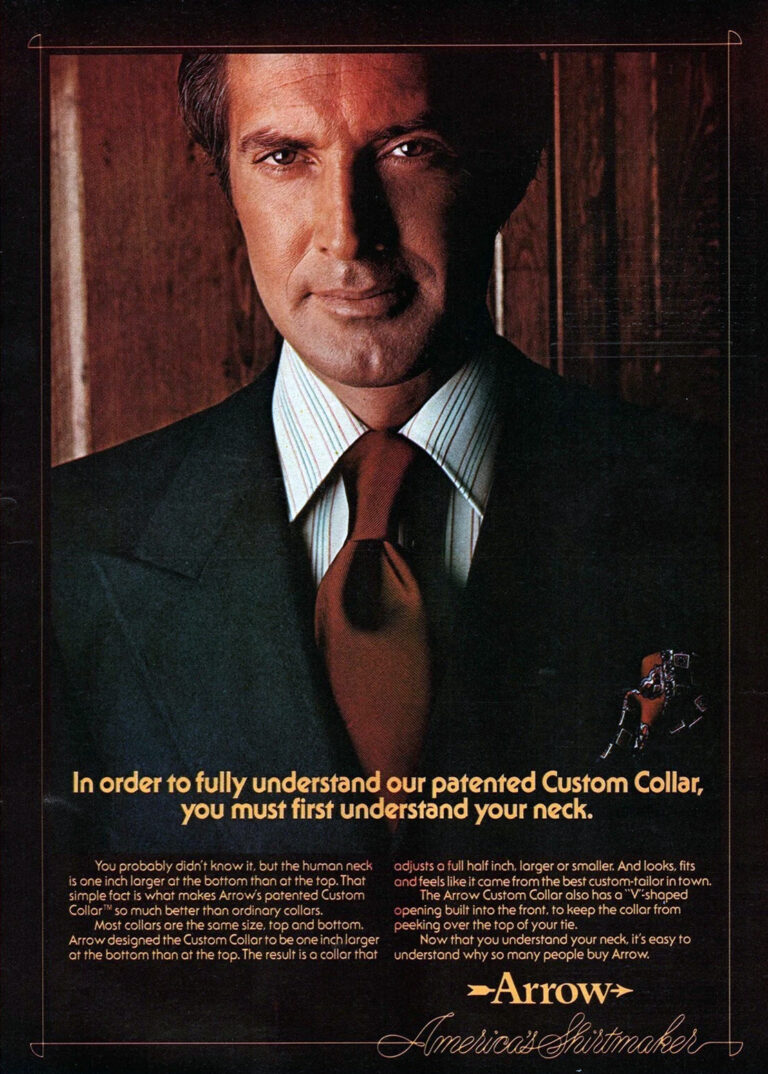
1977 Arrow
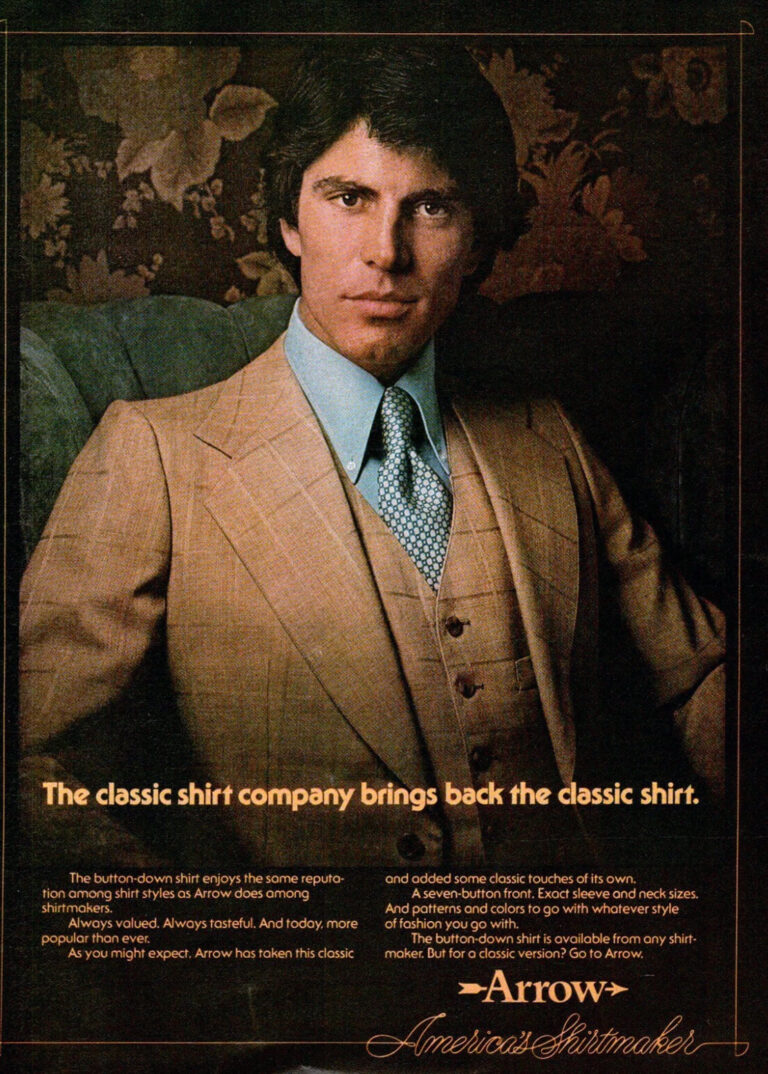
1977 Arrow Classic Shirt
1979 TVCM Arrow Cotton ease
1980 TVCM Arrow Casual
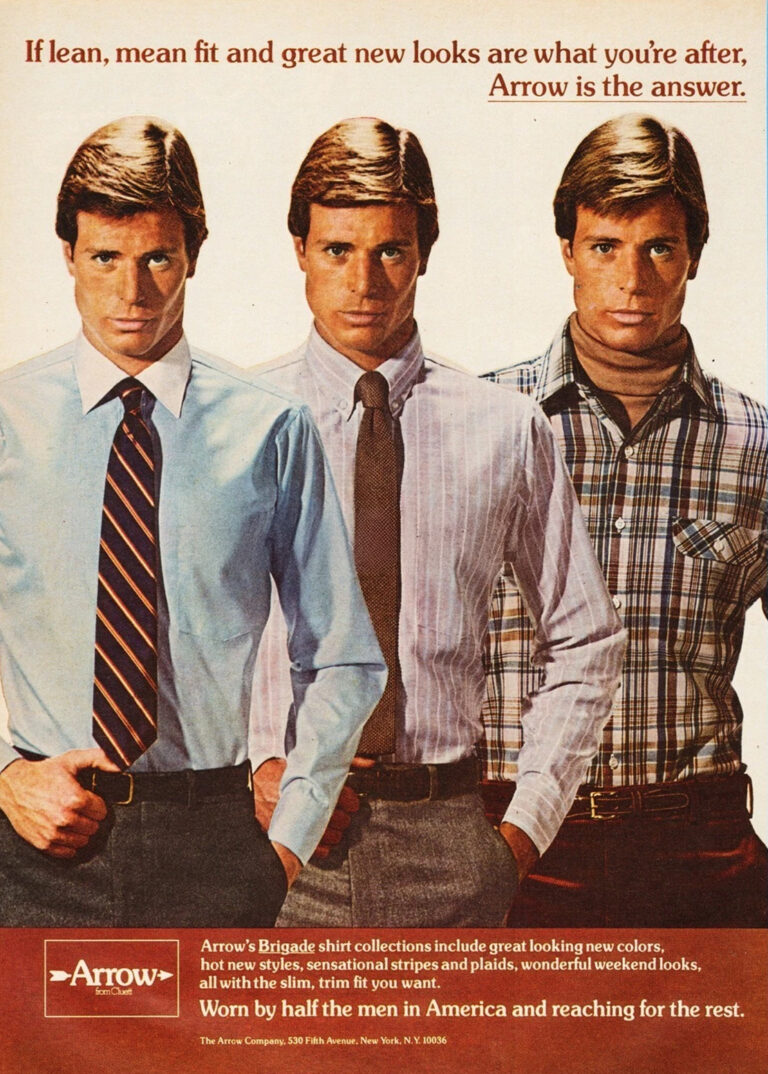
1982 Arrow Brigade Men’s Shirt Lean Mean Fit
Who invented the button-down ?