GANT
IVY’s Standard Shirt Maker
Dec – 2025 30 MINS READ
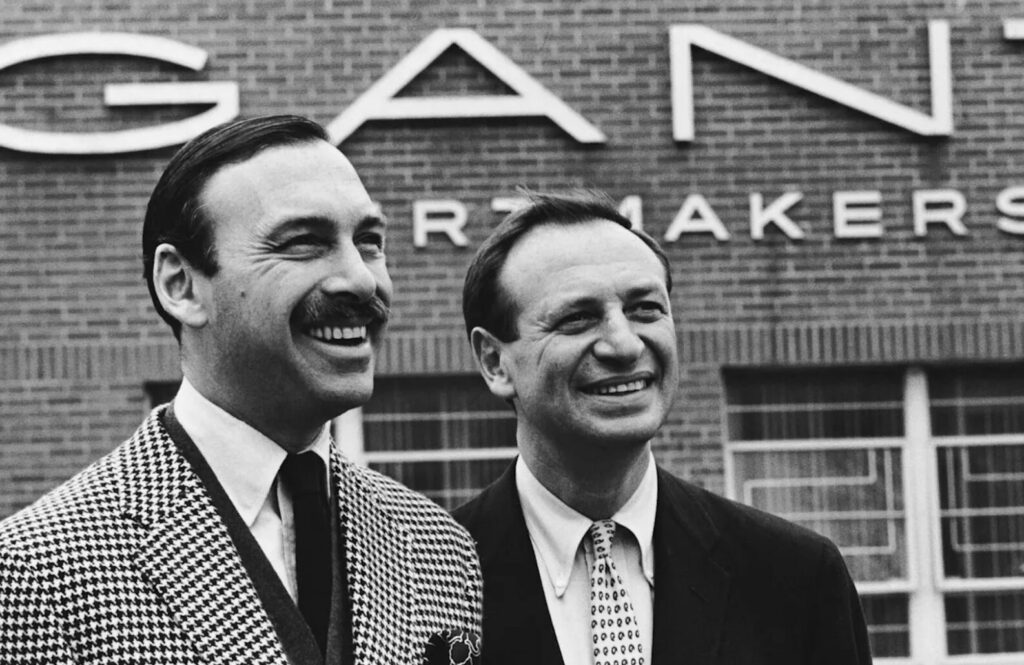
Elliot Gant was born Elliot Bernard Gantmacher in Brooklyn in 1926. He grew up in a family immersed in the garment trade. His father, Bernard Gantmacher, specialized in sewing shirt collars; his mother, Rebecca Rose, worked with buttons and buttonholes. Together with a business partner, Morris Shapiro, Bernard founded the Par-Ex Shirt Company, which produced shirts for Brooks Brothers and other retailers. In 1927, the company relocated to New Haven, Connecticut, then a center of American shirt manufacturing.Elliot entered the business gradually, beginning with basic factory work before serving in the U.S. Navy during World War II. After the war, he studied marketing at the University of Connecticut, while his older brother Martin focused on business administration. In 1949, the brothers persuaded their father to begin selling shirts under a new label: GANT.
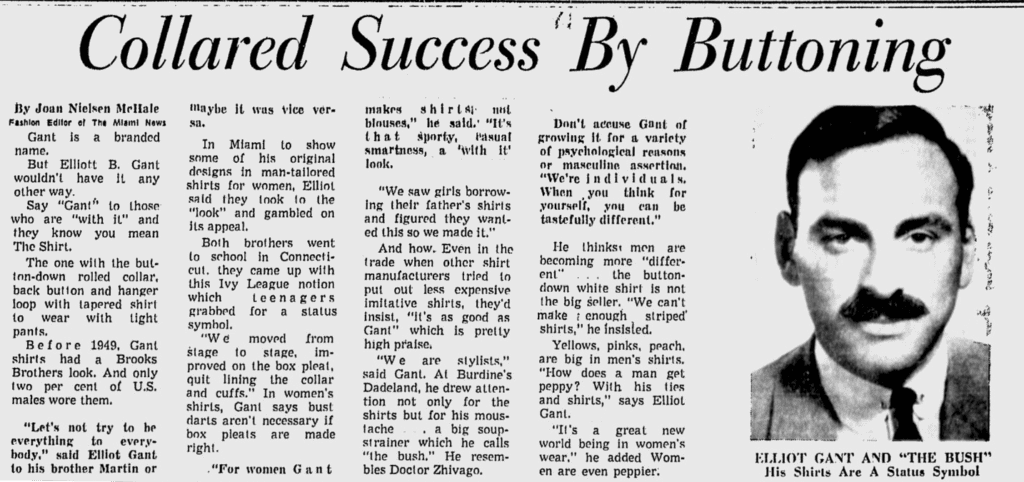
From New Haven—within reach of Ivy League campuses, particularly Yale—the company began to build its identity. Advertising first appeared in publications such as The New Yorker, and GANT positioned itself as a shirtmaker associated with collegiate life. The button-down shirt, while not invented by the company, became closely identified with it as distribution expanded from campus stores to Madison Avenue and beyond. Under the direction of Elliot and Martin Gant, a number of practical refinements were introduced. Collar construction was adjusted to produce a distinctive roll. A box pleat was added to the back for ease of movement. An extra button was placed behind the collar to help keep the tie in position, along with a patented button tab designed to lift the knot. A hanger loop was added so the shirt could be hung without wrinkling. None of these details were radical in isolation, but together they defined the shirts most customers came to recognize as “GANT.”
エリオット・ガントは、2016年3月12日、ボストンで亡くなった。89歳だった。
彼の死は、GANT創業者の最後の一人が表舞台から去ったことを意味し、工場の外にまで影響力を及ぼしたアメリカの一シャツメーカーの歴史に、一つの区切りをもたらした。ガントの訃報は、「ボタンダウンシャツを普及させた人物の死」として報じられた。その表現は控えめではあるが、的確でもある。ボタンダウンシャツ自体は、GANTがブランドとして登場する以前から存在していたが、アメリカの服装文化におけるその位置づけは、決して固定されたものでも、普遍的なものでもなかった。20世紀半ばに変化したのは、シャツの基本的な形ではなく、それが日常生活の中でどのように存在するか、という点だった。
エリオット・ガントは1926年、ブルックリンでエリオット・バーナード・ガントマッハーとして生まれた。彼は衣料産業に深く関わる家庭で育った。父バーナード・ガントマッハーはシャツの襟縫製を専門とし、母レベッカ・ローズはボタンやボタンホールの仕事に携わっていた。バーナードは、ビジネスパートナーのモリス・シャピロとともにパーエックス・シャツ社を設立し、ブルックス・ブラザーズをはじめとする小売業者向けにシャツを製造していた。1927年、同社は当時アメリカの主要なシャツ生産地であったコネチカット州ニューヘイブンへと移転した。エリオットは、工場での初歩的な作業から徐々に家業に関わり始め、その後、第二次世界大戦中にはアメリカ海軍に従軍した。戦後はコネチカット大学でマーケティングを学び、兄のマーティンは経営学を専攻した。1949年、兄弟は父を説得し、新たなラベル「GANT」のもとでシャツの販売を開始する。
ニューヘイブンを拠点とし、特にイェール大学をはじめとするアイビーリーグのキャンパスに近い立地を背景に、GANTは自らのアイデンティティを築いていく。広告はまず『ニューヨーカー』誌などに掲載され、GANTは大学文化と結びついたシャツメーカーとして位置づけられた。ボタンダウンシャツは、GANTが発明したものではなかったが、流通がキャンパス内の店舗からマディソン・アベニュー、さらにはその先へと広がるにつれ、同社の名と強く結びつくようになっていった。エリオットとマーティン・ガントの指揮のもと、シャツにはいくつかの実用的な改良が加えられた。襟の構造は特徴的なロールを生むよう調整され、動きやすさのために背中にはボックスプリーツが加えられた。ネクタイを安定させるため、襟の後ろには追加のボタンが設けられ、結び目を持ち上げるための特許取得済みのボタンタブも導入された。さらに、シワを防ぐためのロッカーループも加えられた。これらのディテールはいずれも単体では革新的なものではないが、組み合わさることで、多くの顧客が「GANT」として認識するシャツを形づくっていった。
1907
It was in this garment work environment that he met Rebecca Rose, who was employed in the same workplace sewing buttonholes and attaching buttons. Multiple sources indicate that they later married. With the outbreak of the First World War, Gantmacher served in the United States Army and was stationed in France. After returning from military service, and following his marriage and completion of his studies, he made the decision to pursue an independent business venture.
In the early 1920s, Gantmacher, together with Morris Shapiro, established the Par-Ex Shirt Company in Brooklyn, New York. Par-Ex was a high-quality shirt manufacturing operation without its own consumer-facing brand and functioned primarily as an OEM producer. As the company expanded its order volume in the latter half of the 1920s, constraints such as rising labor costs and a shortage of skilled sewing workers in Brooklyn became increasingly apparent. As a result, the possibility of relocating to a more suitable production base began to be considered.Around 1927, Par-Ex Shirt Company is understood to have relocated to New Haven, Connecticut. New Haven was known as a center of high-quality shirt manufacturing, supported by a skilled workforce largely composed of Italian immigrants, and offered advantages in terms of quality, cost structure, and logistics. At this stage, the “GANT” brand had not yet been established, and Par-Ex continued to operate solely as a well-regarded shirt manufacturing factory.
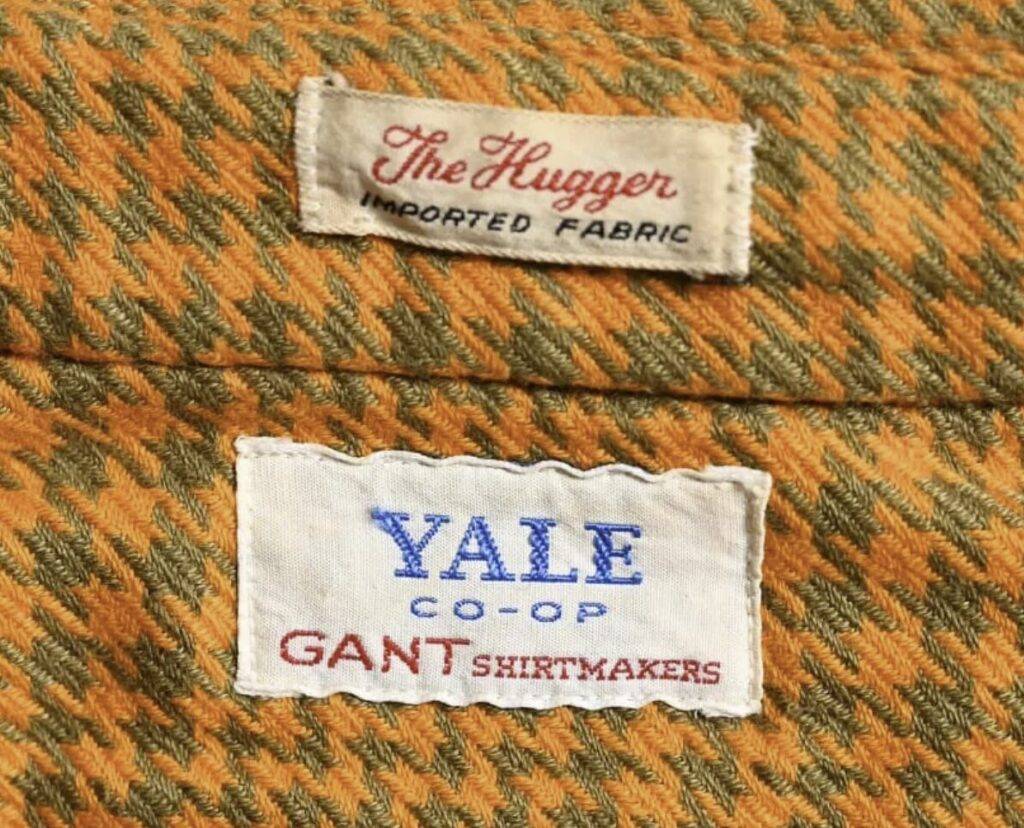
Regarding the period following the move to New Haven, memoirs and testimony from individuals within the apparel industry suggest that Par-Ex supplied shirts to retailers such as Brooks Brothers, J. Press, and the Yale Co-op, producing garments that would later be regarded as foundational to what is now known as Ivy League style.
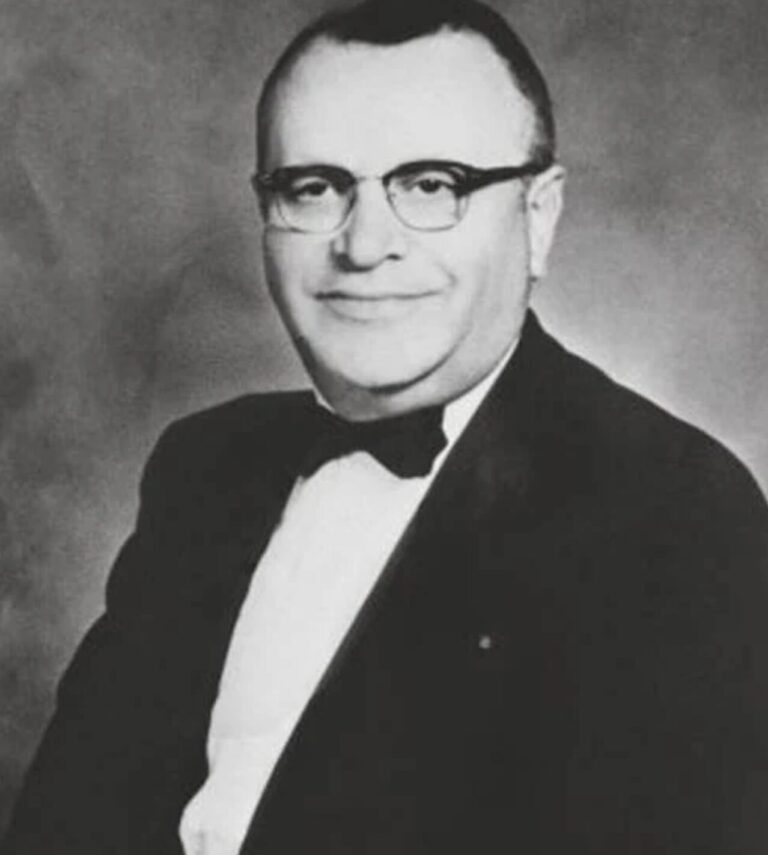
Bernard Gantmacher
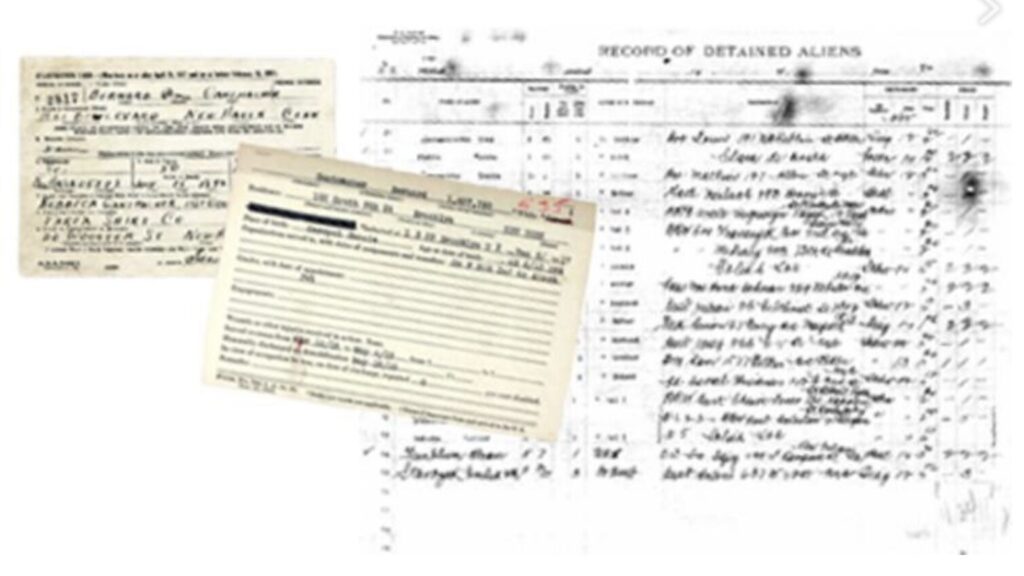
後に GANT を創業する Bernard Gantmacher は、現在のウクライナに位置するミロポリ(当時はロシア帝国領)出身のユダヤ系移民でした。エリス島の入国記録によれば、1907年11月12日、17歳でニューヨークに到着したことが確認できます。渡米後、彼は名を Berl から Bernard に改めました。 渡米後の Bernard Gantmacher は昼間はニューヨーク・ロウアーイーストサイドの縫製工場で働き、夜間は Columbia University の College of Pharmacy に通学しました。縫製工場では、主に「クローザー」と呼ばれる工程=裁断された部品を組み立てて衣服を完成させる工程に従事しそれを通じてシャツ製造に関する技能と工程理解を深めていきました。
この縫製現場において、ボタンホール縫製やボタン付けを担当していた Rebecca Rose と出会い、その後結婚したと複数の資料で言及されています。第一次世界大戦の勃発により、Gantmacher は米軍に所属し、フランスに従軍したとされています。戦後に帰還したのち、結婚および学業の修了を経て、独立して事業を行う決断をしました。
1920年代前半、Gantmacher は Morris Shapiro とともに、ニューヨーク・ブルックリンに Par-Ex Shirt Company を設立したとされています。Par-Ex は自社ブランドを持たない高品質シャツの専業製造工場=OEM生産をメインにしていました。1920年代後半に入ると、Par-Ex は受注を拡大した一方で、ブルックリンでは工賃の上昇や熟練縫製労働力の不足といった制約が顕在化し、より適した生産拠点への移転が検討されるようになったと考えられます。1927年頃、Par-Ex Shirt Company はコネチカット州 New Haven へ移転したとされています。New Haven は、イタリア系移民を中心とした熟練縫製労働力を有し、高級シャツ産業の集積地として知られていた地域であり、品質、コスト、物流の各面において一定の優位性があったと考えられます。この段階においても、「GANT」というブランドはまだ存在しておらず、Par-Ex は引き続き優良なシャツ製造工場として運営されていました。
この New Haven 移転以降の時期については、回顧録や業界関係者の証言において、Brooks Brothers、J. Press、Yale Co-op などに向けて、いわゆる Ivy League スタイルの基礎となるシャツを供給しました。
Par-Ex Shirt Company was established in the early 1920s in Brooklyn, New York, by Bernard Gantmacher and Morris Shapiro as a shirt manufacturing operation without its own consumer brand. The company specialized exclusively in the production of dress shirts and operated primarily through contract manufacturing for other firms—what would now be described as OEM or white-label production—with a reputation for high-quality workmanship.
Around 1927, Par-Ex Shirt Company relocated its manufacturing operations to New Haven, Connecticut, specifically to Wooster Street. At the time, New Haven was a city in which the shirt industry functioned as one of the core pillars of the local economy. The city had a concentrated workforce of skilled garment laborers, largely composed of Italian immigrants, making it a favorable environment for shirt manufacturing in terms of labor quality, production stability, and scalability. Following the relocation, Par-Ex continued operations as one of the principal shirt factories based in New Haven.
PAR-EX SHIRT FACTORY IN NEWHAVEN
※ Addendum
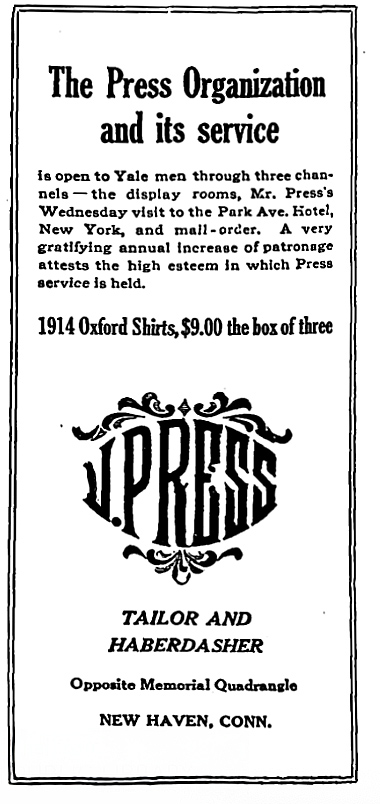
According to the IVY STYLE site, J. Press shirts were produced by different makers depending on the period. From the turn of the 20th century until World War II, most J. Press shirts were made in England using J. Press’s own patterns, under the supervision of the British importer Welch, Margetson & Co.
With the onset of the 1930s, New Haven’s shirt industry was severely affected by the Great Depression. Wages declined, piece-rate compensation systems intensified, and long working hours became commonplace. Contemporary records and oral histories indicate that shirt factories in particular relied heavily on young workers and immigrant women, who were employed at low wages and labored under poor working conditions.
Against this backdrop, labor organization efforts in New Haven accelerated beginning in 1932. The Amalgamated Clothing Workers of America initiated campaigns to unionize garment workers across the city. In 1933, Brewster Shirt Company was among the first to sign a union contract, followed shortly thereafter by D&I Company, Ideal Company, and Par-Ex Shirt Company. The inclusion of Par-Ex among these firms indicates that it was regarded as part of the core group of shirt manufacturers operating within New Haven at the time. Worker testimonies from the period describe conditions within shirt factories—including those at Par-Ex—as lacking adequate heating or cooling, relying on unstable piecework wages, and, in some cases, involving underage labor. The labor movements of the 1930s thus emerged as direct responses to everyday working realities rather than abstract ideological conflicts. Despite operating under significant economic and social strain during the Depression, Par-Ex continued production, positioning it as a factory that sustained operations amid prolonged instability.
During the Second World War, shirt manufacturers faced additional challenges, including material rationing and fluctuations in labor availability. These conditions further complicated efforts to maintain stable production. Nevertheless, multiple accounts suggest that during its New Haven period, Par-Ex supplied shirts to prominent retailers such as Brooks Brothers and J. Press, as well as to leading local merchants and university cooperative stores, including the Yale Co-op. These shirts are often described as forming part of the foundation of what would later be recognized as Ivy League style. Following the end of the war, the United States entered a period of rapid economic growth, accompanied by the expansion of the ready-to-wear clothing market and the accelerating casualization of dress. For Par-Ex, which had accumulated decades of manufacturing experience, this postwar boom represented a moment of structural opportunity. During this period, Bernard Gantmacher’s sons, Marty and Elliot, became increasingly involved in the business. As a result, discussions emerged regarding a shift away from exclusive reliance on contract manufacturing toward the development of products under an independent name.
In 1949, Bernard Gantmacher dissolved his partnership with Morris Shapiro and formally separated from the Par-Ex Shirt Company lineage, launching a new shirt business under the name GANT. The manufacturing expertise and human capital cultivated within Par-Ex thus became reorganized under the GANT name. Following the split, Morris Shapiro went on to establish SERO Shirtmakers.
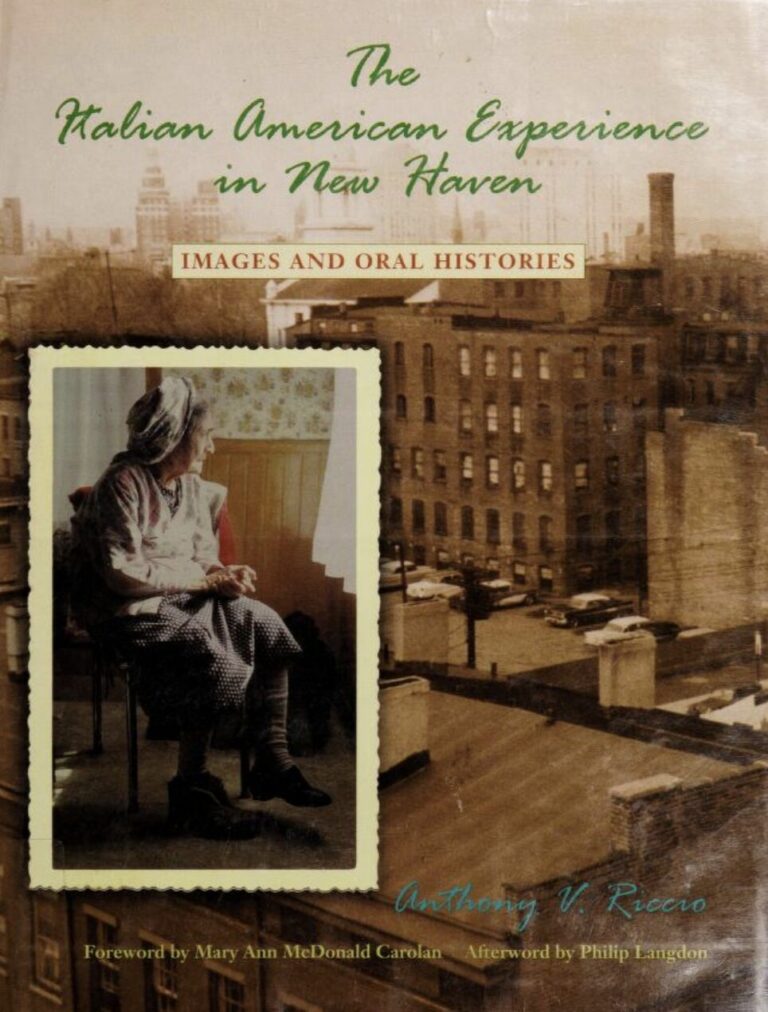
Par-Ex Shirt Company は、1920年代前半に Bernard Gantmacher と Morris Shapiro によって、ニューヨーク・ブルックリンで設立された、自社ブランドを持たないシャツ専業の製造工場であったとされている。事業は主として、他社ブランド向けの受託生産、いわゆる OEMによって構成され、高品質なドレスシャツの縫製を専門としていた。1927年頃、Par-Ex Shirt Company は生産拠点をコネチカット州 New Haven(ウースター通り20番地)へ移転した。New Haven は当時、イタリア系移民を中心とする熟練縫製労働力が集積し、シャツ産業が地域経済を支える主要産業の一つとして機能していた都市であった。このような環境は、品質の安定確保および生産体制の拡充という観点から、シャツ製造業にとって適した条件を備えていたと考えられる。移転後、Par-Ex は New Haven を拠点とする主要なシャツ工場の一つとして操業を続けた。
1930年代に入ると、New Haven のシャツ産業は大恐慌の影響を強く受け、賃金水準の低下、出来高払いの強化、長時間労働といった厳しい労働条件が常態化していった。とりわけシャツ工場では、若年層や移民女性労働者が低賃金で雇用され、劣悪な作業環境のもとで縫製作業に従事していたことが、当時の記録や証言から確認されている。
こうした状況を背景に、1932年以降、New Haven では衣料労働者の組織化が本格化し、全米衣料労働組合(Amalgamated Clothing Workers of America)による労働組合結成運動が展開された。1933年には、Brewster Shirt Company を皮切りに、D&I Company、Ideal Company、そして Par-Ex Shirt Company も、労働組合との団体協約を締結した工場の一つとして記録されている。これは、Par-Ex が当時の New Haven シャツ産業の中核を担う工場群に含まれていたことを示す事実である。当時の証言によれば、Par-Ex を含むシャツ工場では、冷暖房設備の欠如、出来高制による不安定な収入、未成年労働の問題などが存在しており、1930年代の労働運動は、こうした日常的な労働実態への切実な対応として生じたものであった。大恐慌下においても操業を継続していた Par-Ex は、経済的・社会的緊張の中で生産を維持していた工場であったと位置づけることができる。
さらに第二次世界大戦期にかけては、資材統制や労働力の変動なども重なり、シャツメーカーにとって安定した事業継続は容易ではなかったとみられる。この New Haven 時代の Par-Ex については、Brooks Brothers や J. Press をはじめ、New Haven 周辺の有力小売店や大学生協(Yale Co-op を含む)に向けて、いわゆる Ivy League スタイルの基礎となるシャツを供給していたとする証言が複数存在している。第二次世界大戦終結後、アメリカ社会では経済成長とともに既製服市場が拡大し、服装のカジュアル化が急速に進行した。こうした戦後の好景気は、長年シャツ製造に携わってきた Par-Ex にとっても、新たな可能性をもたらす局面であったと考えられる。この時期、Bernard Gantmacher の息子である Marty と Elliot が事業に関与するようになり、従来の受託生産中心の体制から、自社名による製品展開へ移行する構想が検討されるようになった。その結果、1949年、Bernard Gantmacher は Morris Shapiro との共同体制を解消し、Par-Ex Shirt Company の系譜から分岐する形で新たに「GANT」名義によるシャツ事業を開始するに至った。
※なお分岐後に Morris Shapiro が設立するシャツメーカーが SERO Shirtmakers である。
1949~
130 Haven St, New Haven, CT usa gant
At the same time, Par-Ex continued to operate as a shirt factory based in New Haven, supplying shirts to prominent local retailers, including J. Press. However, later recollections suggest that by around 1950, the volume that could be absorbed by individual specialty retailers remained limited. Although Par-Ex also undertook manufacturing work for Paul Stuart and other accounts, these relationships did not provide sufficient scale for sustained expansion.
Richard Press recalls the tension this situation produced, describing a conversation at a party in New Haven:
“I remember going head to head with Elliot and Marty at a party in New Haven. ‘We worked in your stockroom and you only buy a few sport shirts from us,’ they said.”
Against this backdrop, the brothers began to pursue a broader retail base. As recalled by Press, this effort resulted in a large-scale supply agreement with the Hart Schaffner & Marx Retail Group, including Wallach’s, covering more than one hundred stores. This marked a decisive shift away from reliance on a small number of specialty retailers toward national-level distribution.Through these experiences, Marty and Elliot came to recognize the limitations of remaining solely within the contract-manufacturing framework of Par-Ex, while also gaining confidence in the commercial viability of their product beyond individual Ivy League shops.
These developments formed a critical prelude to the decision taken in 1949, when Bernard Gantmacher dissolved his partnership with Morris Shapiro and, branching from the Par-Ex lineage, initiated a new shirt business under the name “GANT.”
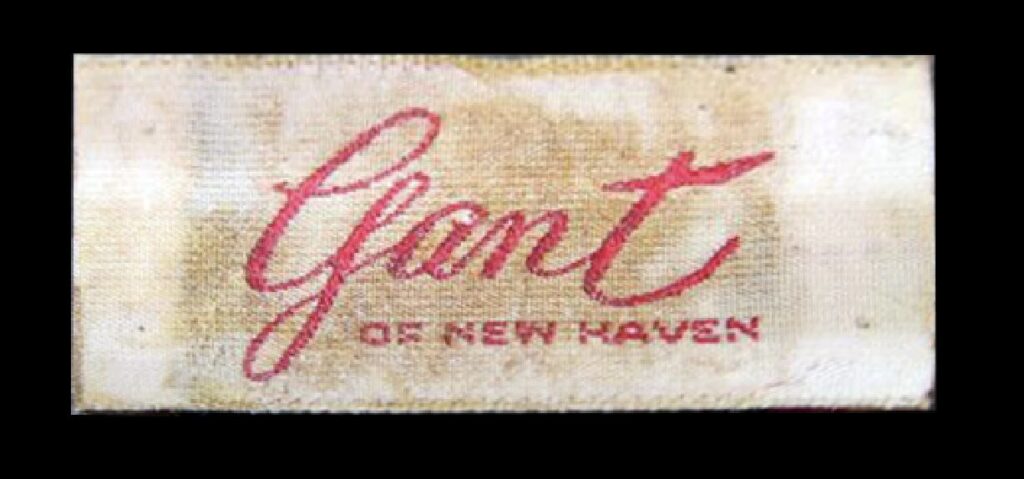
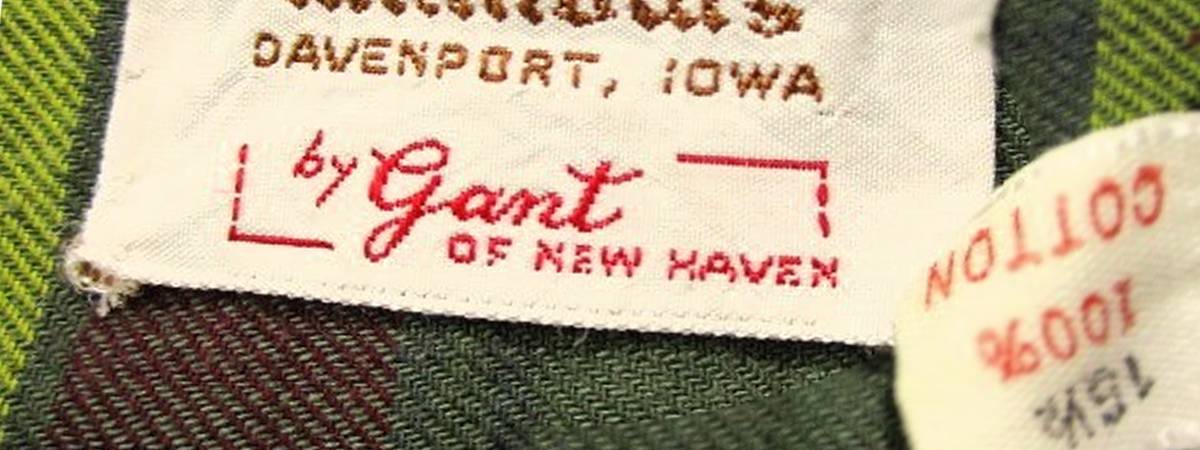
GANT OF NEW HAVEN 最初期タグ
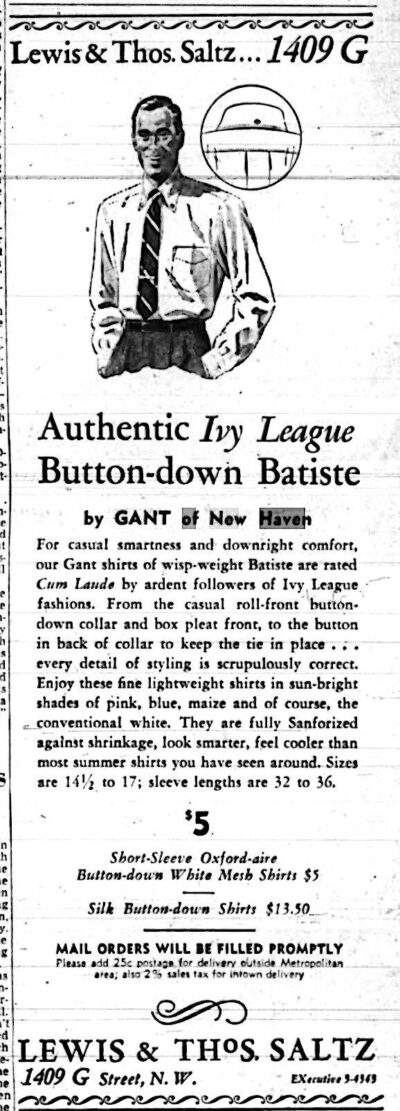
The significance of this GANT of New Haven advertisement lies in the placement of a button at the back of the collar to secure the tie. (As stated in the advertisement: “from the casual roll-front button-down collar and box pleat front, to the button in back of collar to keep the tie in place … every detail of styling is scrupulously correct.”) It also demonstrates that by the 1950s, the button-down shirt was already defined within the framework of Ivy League style, or Ivy fashion.
The family regarded their role in shaping this new style as a significant turning point. In 1954, they reflected this shift by changing the company name to GANT of New Haven.This strategy coincided with a phase of rapid operational expansion. In 1955, Gant opened a new factory at 130 Haven Street in New Haven.
That same year, founder Bernard Gantmacher died. By this point, however, the company’s organizational structure and market position were sufficiently established that operations continued to expand in the postwar economic climate.
Through the late 1950s and into the 1960s, Gant maintained multiple manufacturing sites, including additional locations on East Street and at 162 James Street in New Haven, as well as facilities in West Haven (Wood Street), Wauregan, Connecticut, Kingston, New York, and Salisbury, Maryland.
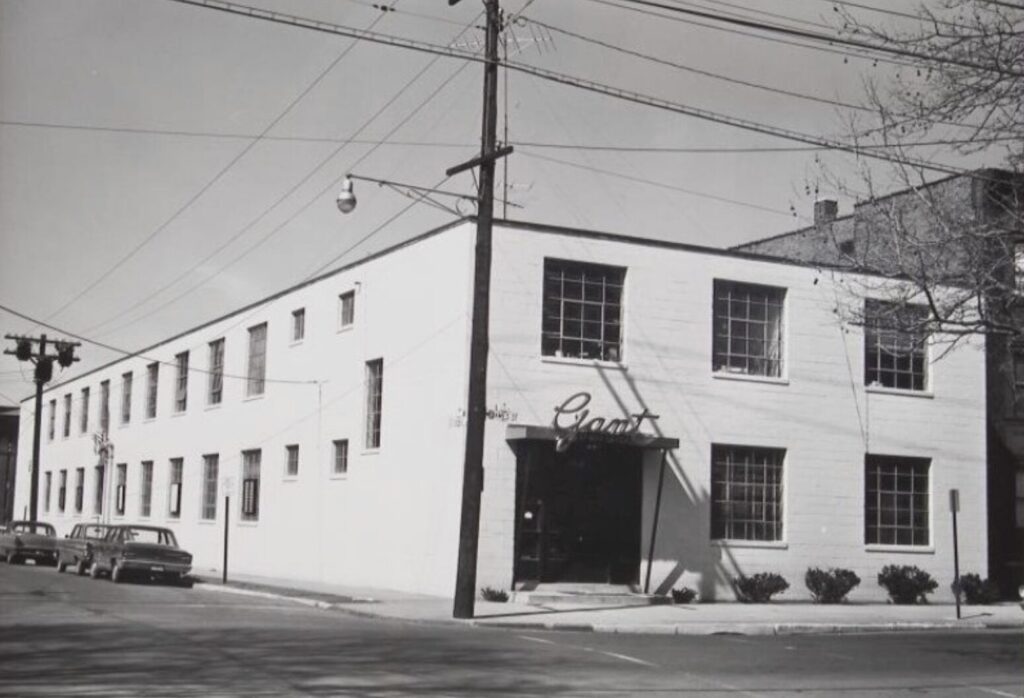
1950s GANT FACTORY at James St. © New Haven Museum
第二次世界大戦の終結後、Bernard Gantmacher の息子である Marty(Martin)と Elliot は軍を除隊し、父の事業であった Par-Ex Shirt Company に関与するようになりました。当時の関係者による回顧録では、彼らが製造現場に近い領域にとどまらず、小売の現場に接する経験も積んでいたことが語られています。その象徴的な出来事として伝えられているのが、J. Press における勤務経験です。Richard Press(J. Press創業者 Jacobi Pressの孫)によれば、Bernard Gantmacher は旧知の間柄であった Jacobi Press に依頼し、除隊直後の息子たちを York Street 店舗の裏方業務に就かせたとされています。Marty と Elliot はそこで、ネクタイやシャツの梱包、在庫整理、服飾雑貨の陳列補助などに携わり、シャツがどのような環境で販売され、どのような商品構成が店頭を形成しているのかを、製造側とは異なる距離感で日常的に目にしていたと語られています。
この経験と並行して、Par-Ex は引き続き New Haven を拠点とするシャツ工場として操業を続けており、J. Press を含む周辺の有力小売店向けにシャツを供給していたとされています。ただし、1950年前後の段階では、特定の小売店向け取引量には一定の制約があったことも、後年の証言の中で触れられています。Par-Ex は J. Press や Paul Stuart 向けにも製造受託を行っていたものの、供給数量は比較的限定的であったとされ、これに対して Marty と Elliot は、特定の小売先に依存する体制では事業拡大が難しいとの認識を強めていったと語られています。
– Richard Press は回顧録の中で
「ニューヘイブンのパーティーで、エリオットとマーティと激しく言い争ったのを覚えています。『私たちはあなたの倉庫で働いていたのに、スポーツシャツは数枚しか買ってくれないじゃないですか』と彼らは言いました」と記しています。
こうした状況を受け、彼らは販売先拡大について了承を得る形で動き、結果として Hart Schaffner & Marx Retail Group(Wallach’s を含む)との大規模な取引契約が成立したと回顧されています。この契約は100店舗以上を対象とするものであったとされ、従来の取引規模とは異なる段階に、Par-Ex/Gant 系譜のシャツが入っていく契機となりました。Richard Press は、この展開によって一部の既存取引先との関係性が相対的に後退する一方で、Par-Ex/Gant が多数の新規小売顧客を獲得する結果となったと述べています。こうした一連の経験を通じて、Marty と Elliot は、製造業としての Par-Ex の技術的基盤を維持しつつも、自社名で市場に出ることの可能性を、現実的な選択肢として意識するようになっていったと考えられます。
その帰結として、1949年、Bernard Gantmacher は Morris Shapiro との共同体制を解消し、Par-Ex Shirt Company の系譜から分岐する形で、「GANT」名義によるシャツ事業を開始するに至りました。
GANT の設立後、同社はきわめて選択的な流通方針を採用しました。歴史家マティアス・ビョークによれば、ガントのマーケティング戦略の一部は「町で一番の店にしか売らない」というものでした。ビョークは、ある小売店がガント・ブランドの取り扱いを断った場合でも、ガントマッハー家は次善の策を取ることなく、第一候補の店が同意するまで待ったと述べています。この戦略について彼は「大胆で、無謀に近いものだった」と評していますが、少なくとも一定期間においては有効に機能したとされています。この戦略は、事業運営の急速な拡大期と重なっていました。
1950年代初頭にかけて、彼らはさまざまな生地やスタイルのシャツを試作し、当時一般的であった淡い色調を基調としながらも、そこにより鮮明で大胆な色使いを取り入れていきました。こうした試みは、後にGANTのシャツが持つ視覚的特徴の一端を形作るものとなります。
一家は、この新しいスタイルの形成に自らが関与していたことを重要な転換点と捉え、1954年には社名を GANT of New Haven に変更しました。1955年、ガントはニューヘイブンのヘイブン通り130番地に新工場を開設しています。
同年、創業者であるバーナード・ガントマッハーが死去しました。
しかしこの時点で、同社の組織体制と市場での地位はすでに確立されており、戦後の好景気を背景に事業拡大は継続されました。1950年代後半から1960年代にかけて、ガントはニューヘイブンのイースト通りおよびジェームズ通り162番地の工場をはじめ、ウェストヘイブン(ウッド通り)、コネチカット州ウォーリガン、ニューヨーク州キングストン、メリーランド州ソールズベリーなど、複数の製造拠点を維持していました。
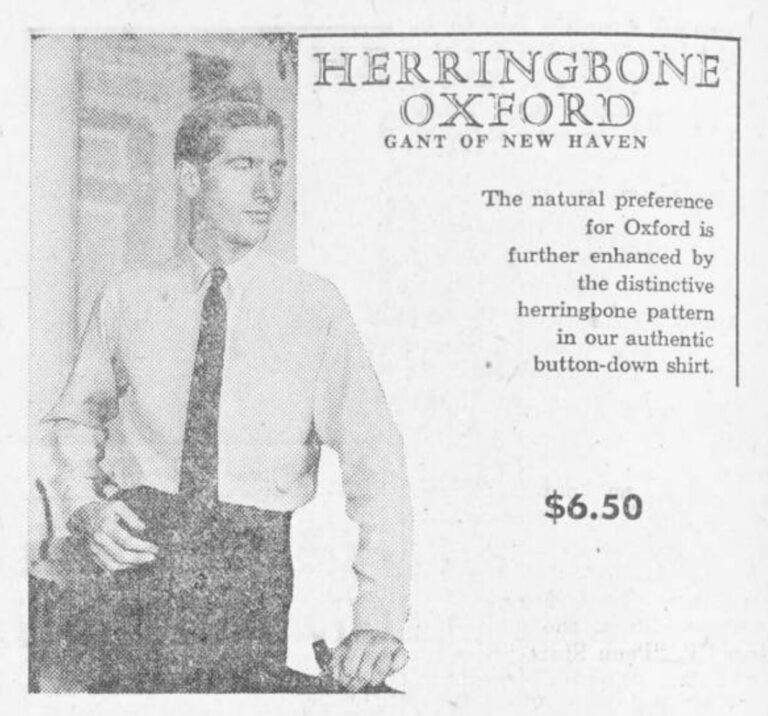
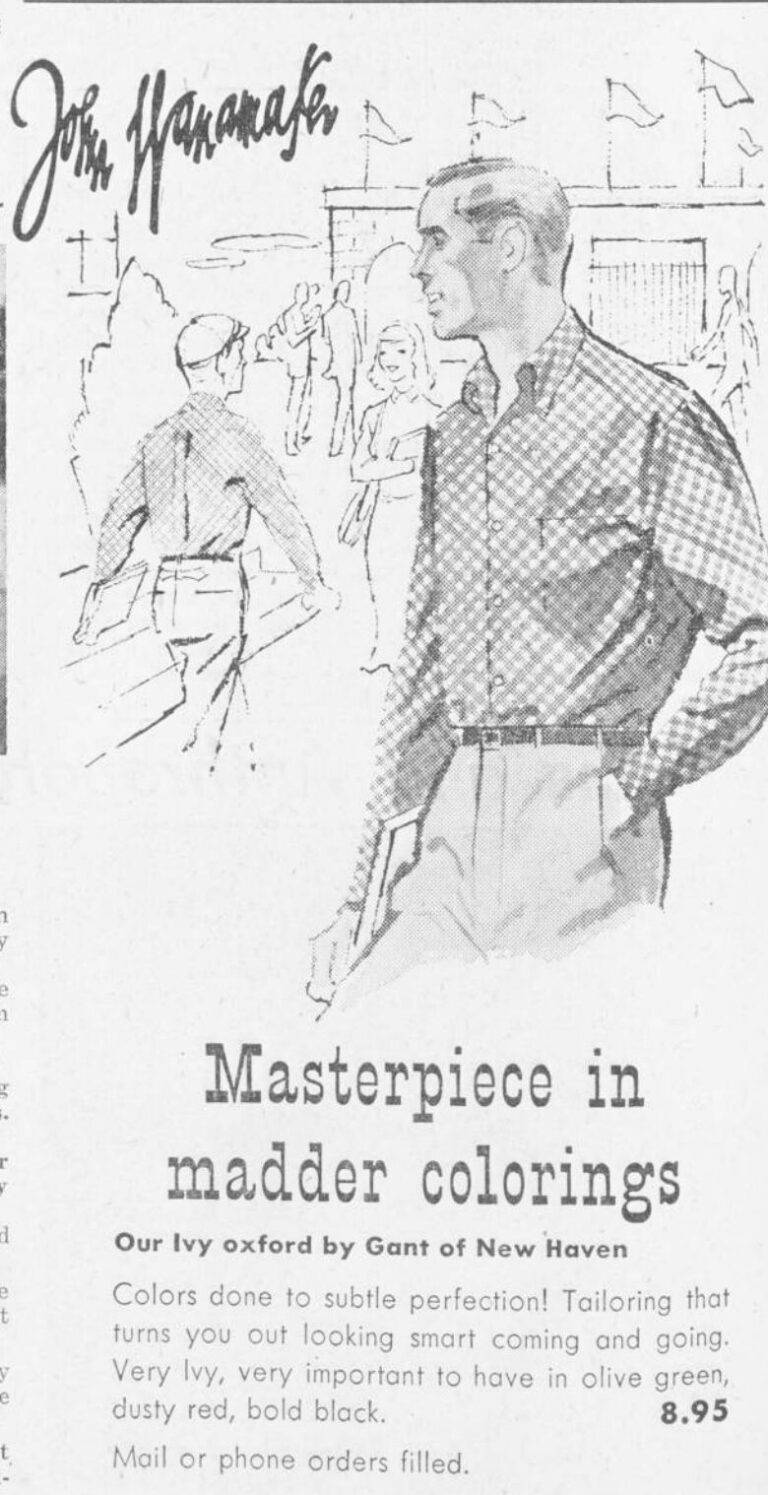
1957 The Daily Pennsylvanian, Volume LXXI, Number 3, 26 September 1957
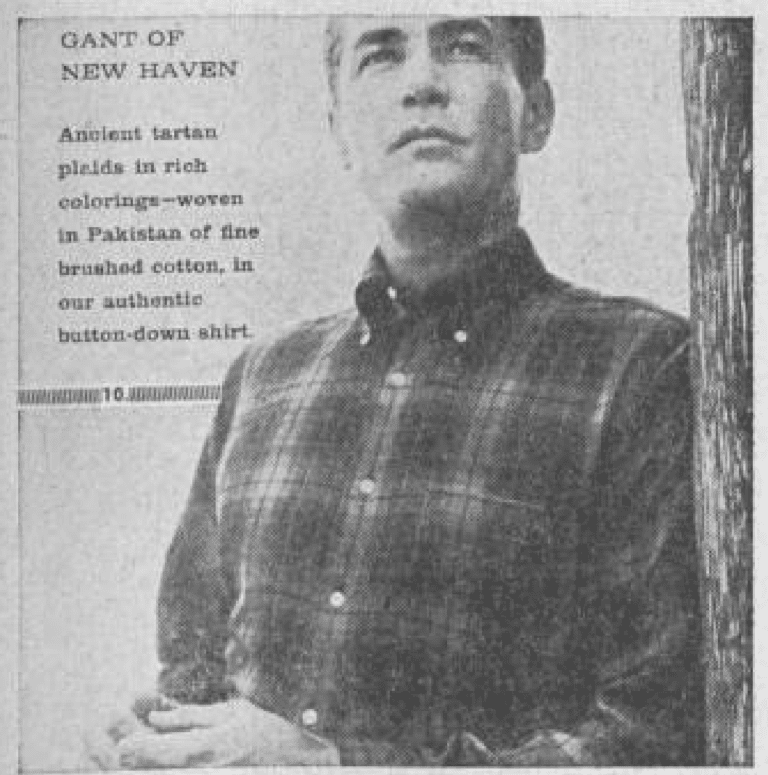
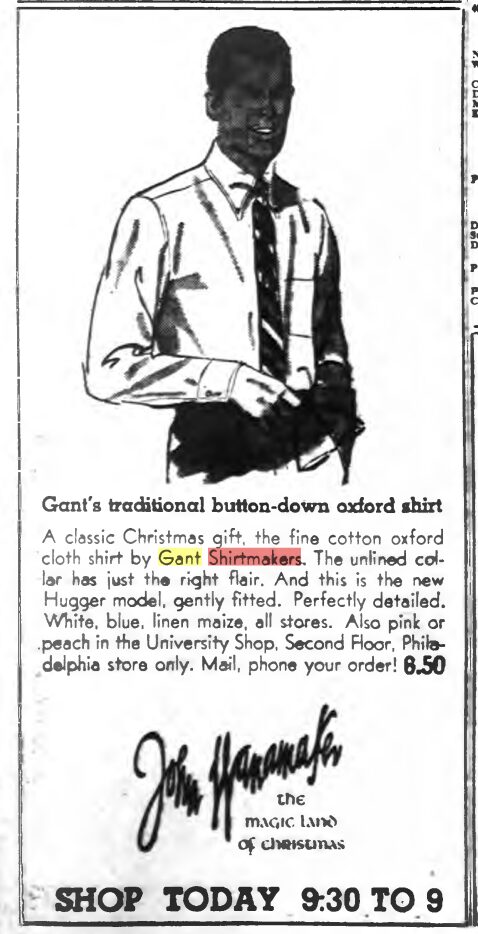
1958 The Daily Pennsylvanian, Volume LXXII, Number 41, 18 November 1958
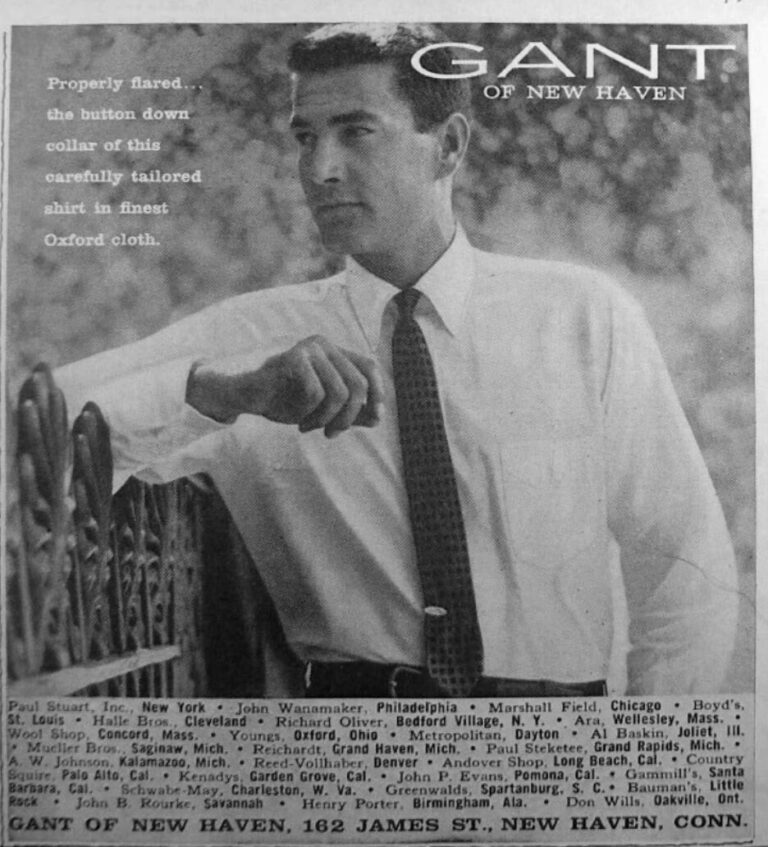


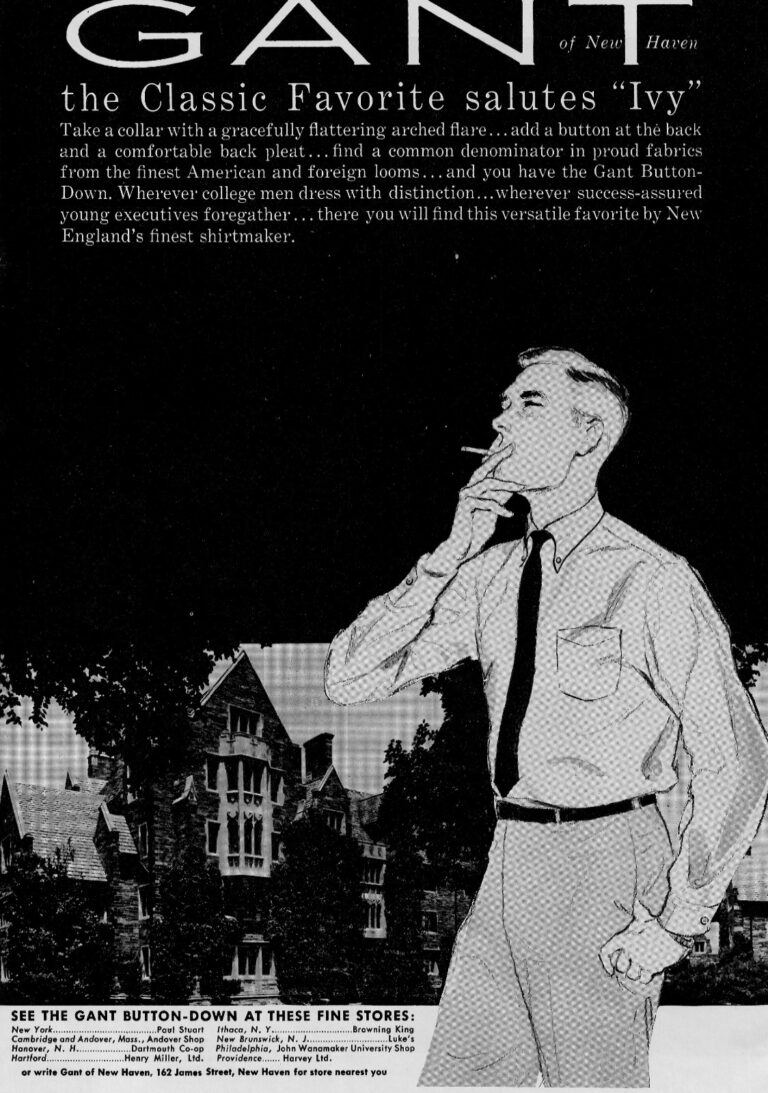
1950s “Gant of Newhaven”時代の広告
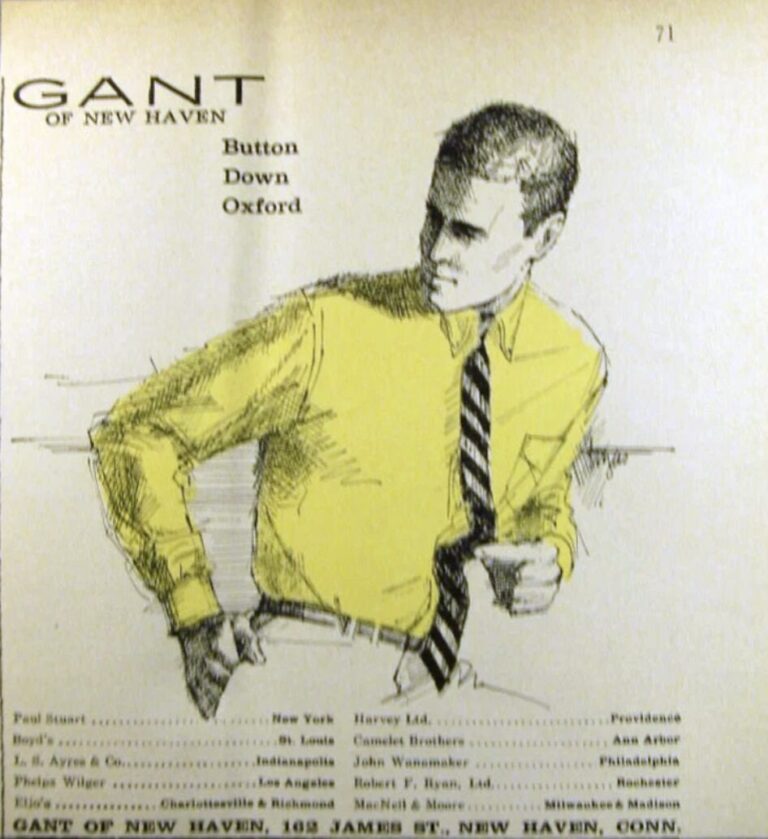
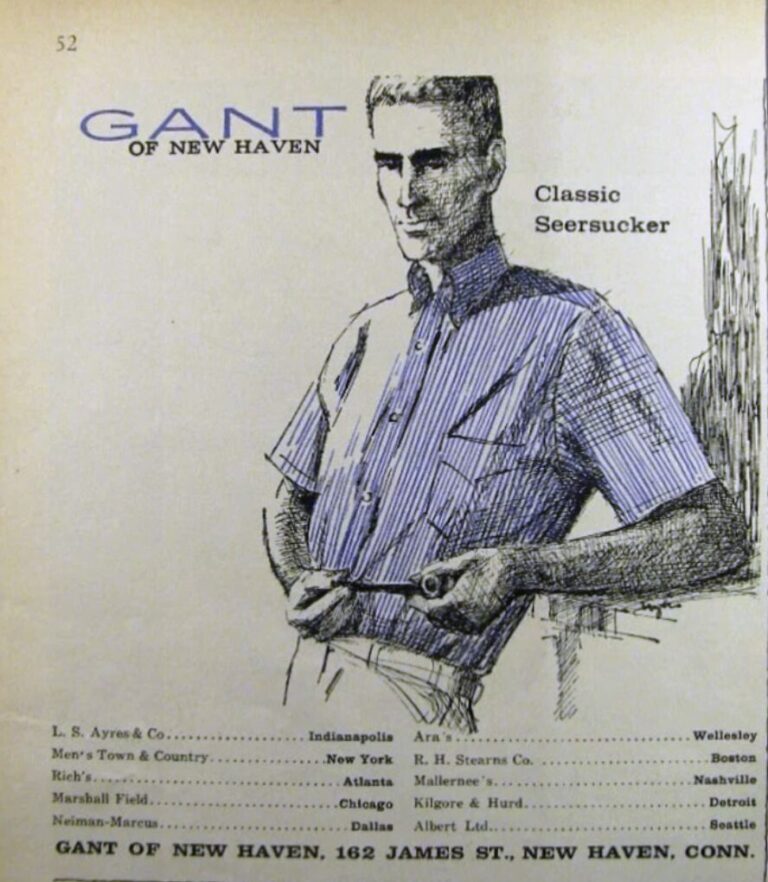
1959 “Gant of Newhaven”時代の広告
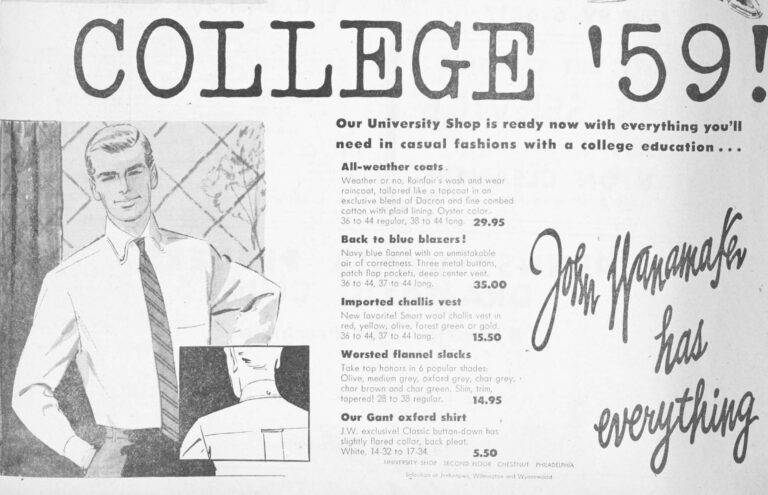
1959 The Daily Pennsylvanian, 8 September 1959
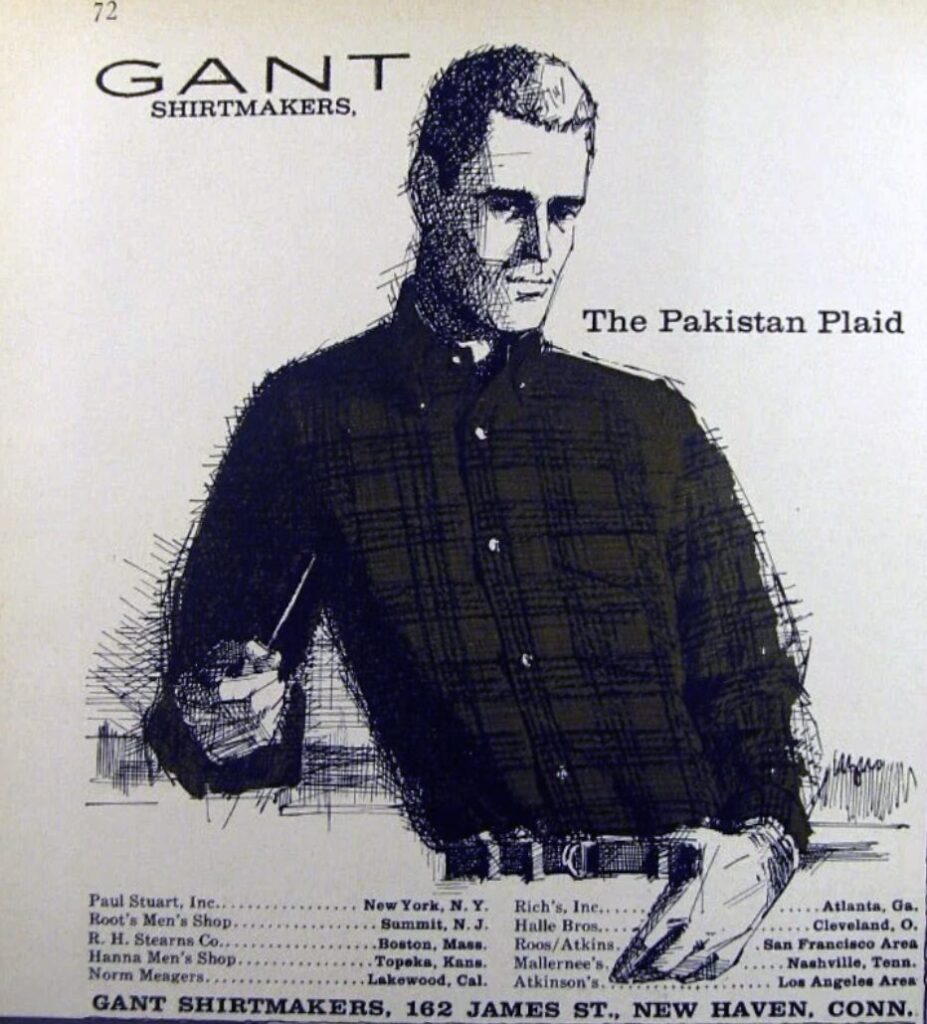
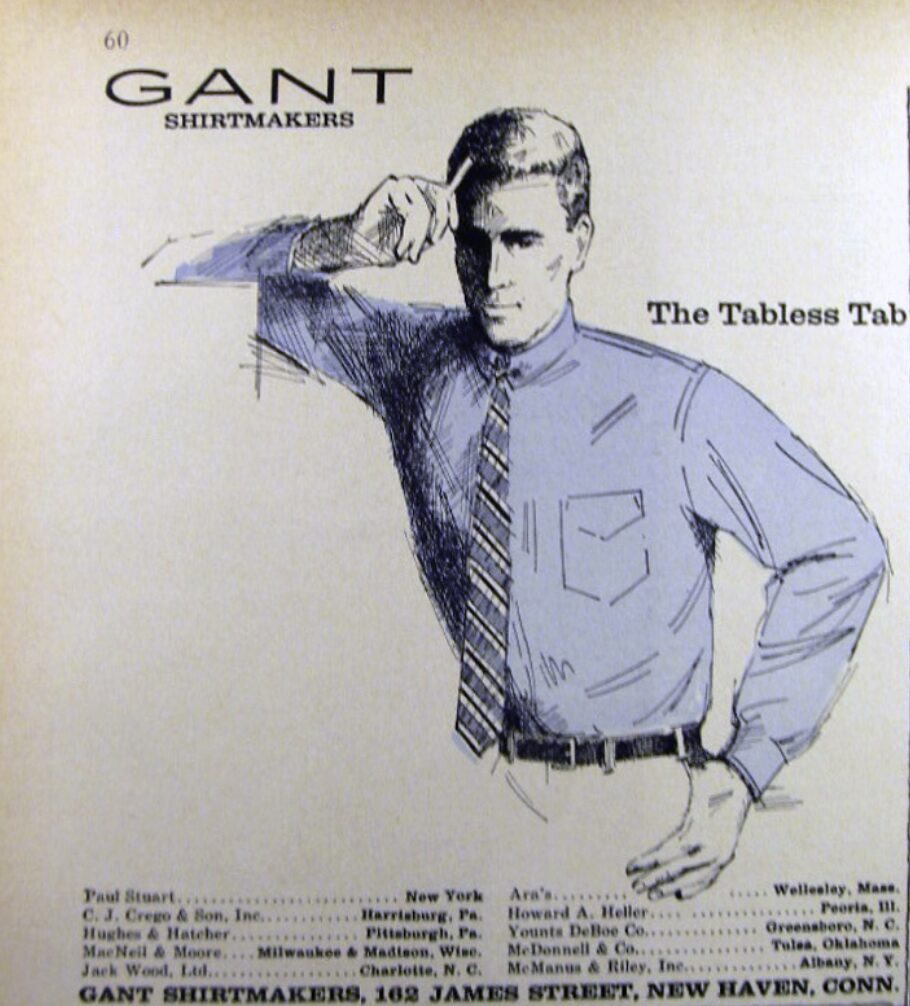
1959 “Gant SHIRTMAKERS”時代の広告
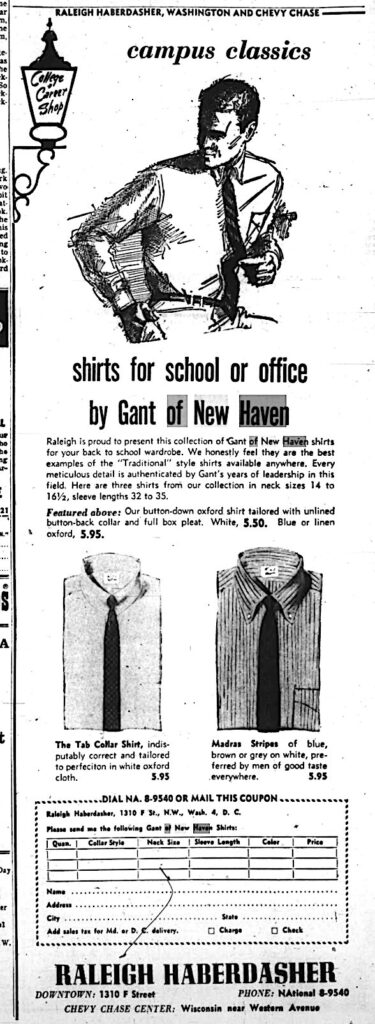
1959 Washington DC Post 1959-12-16_254_3.pdf
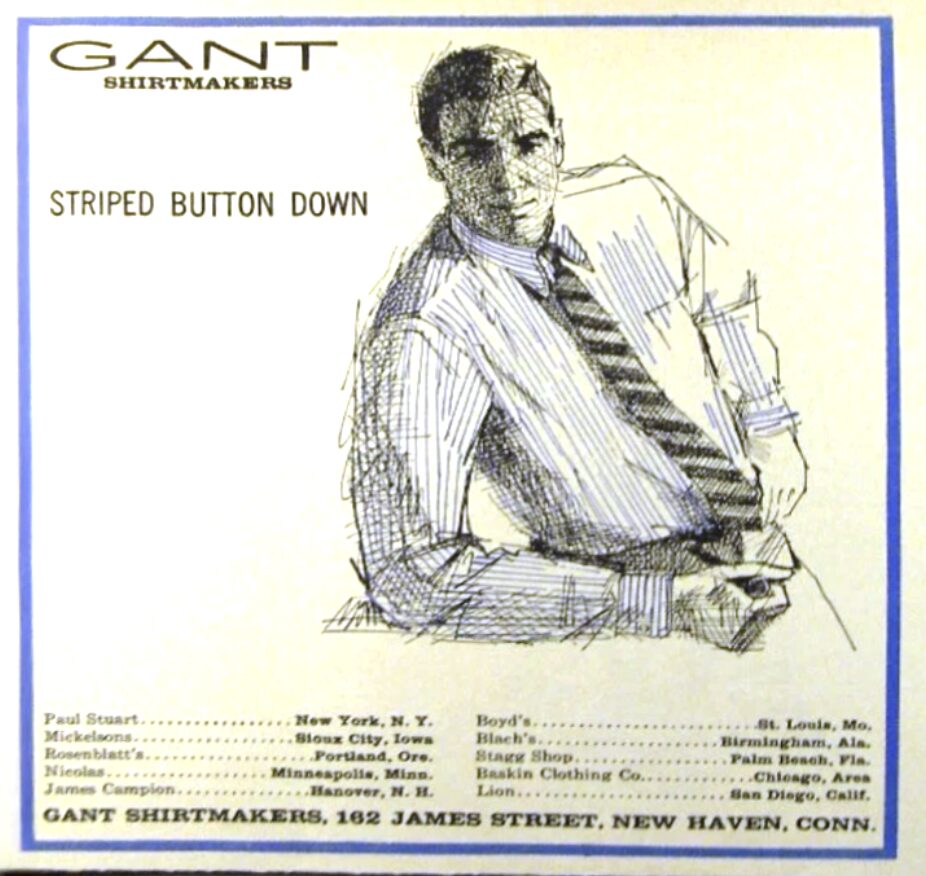
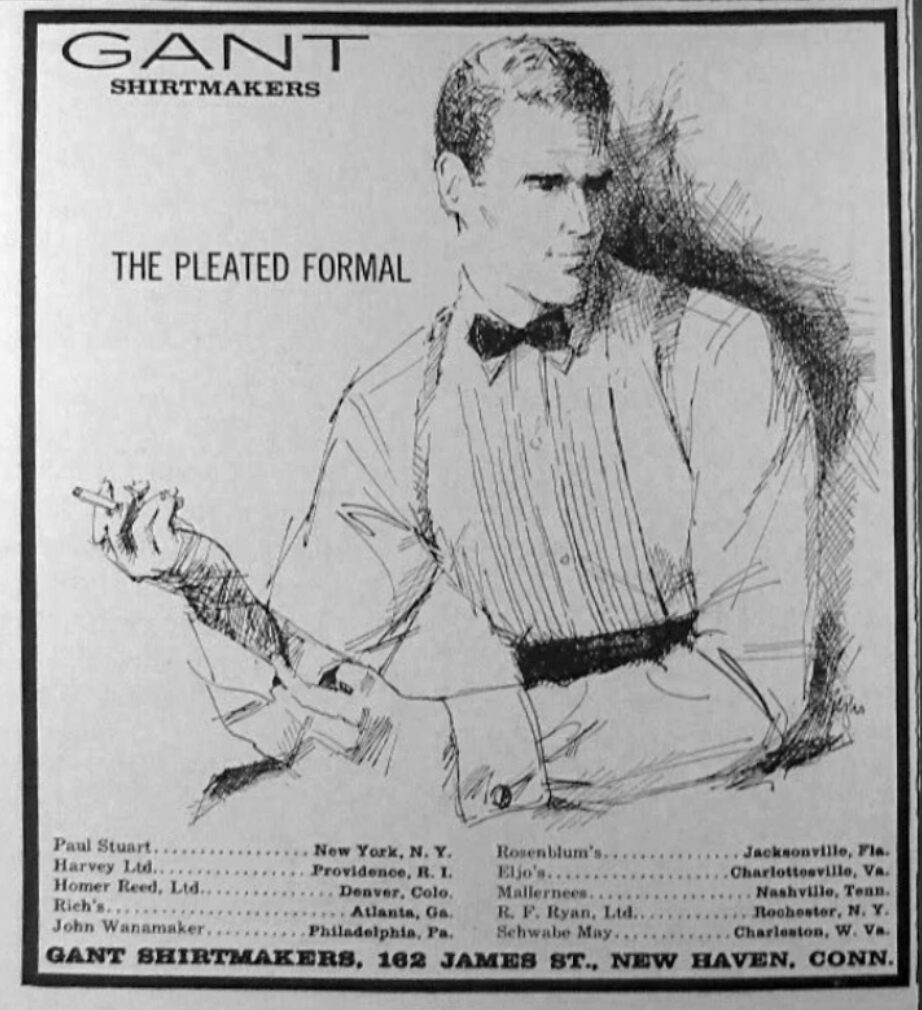
1960 “Gant SHIRTMAKERS”時代の広告
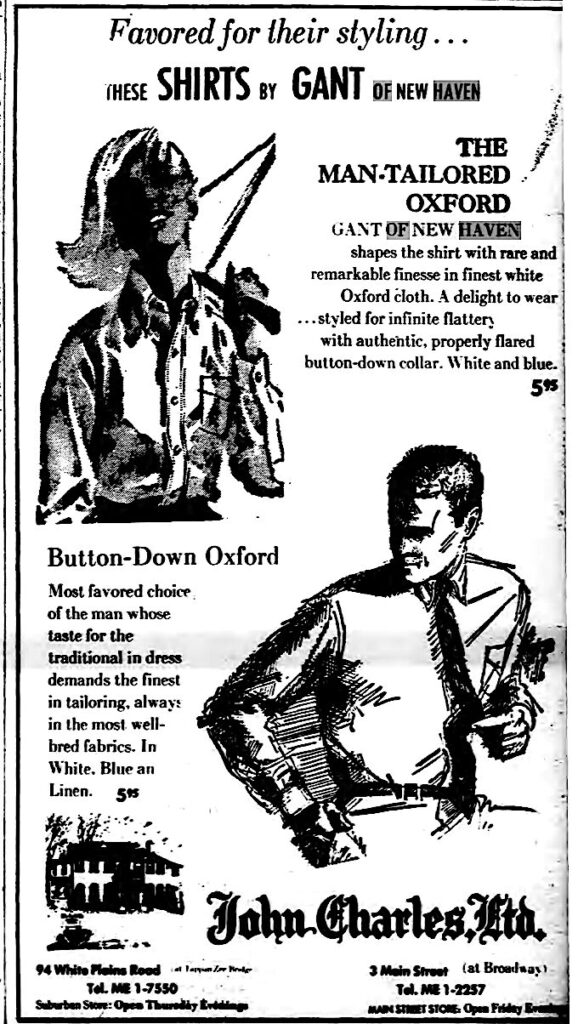
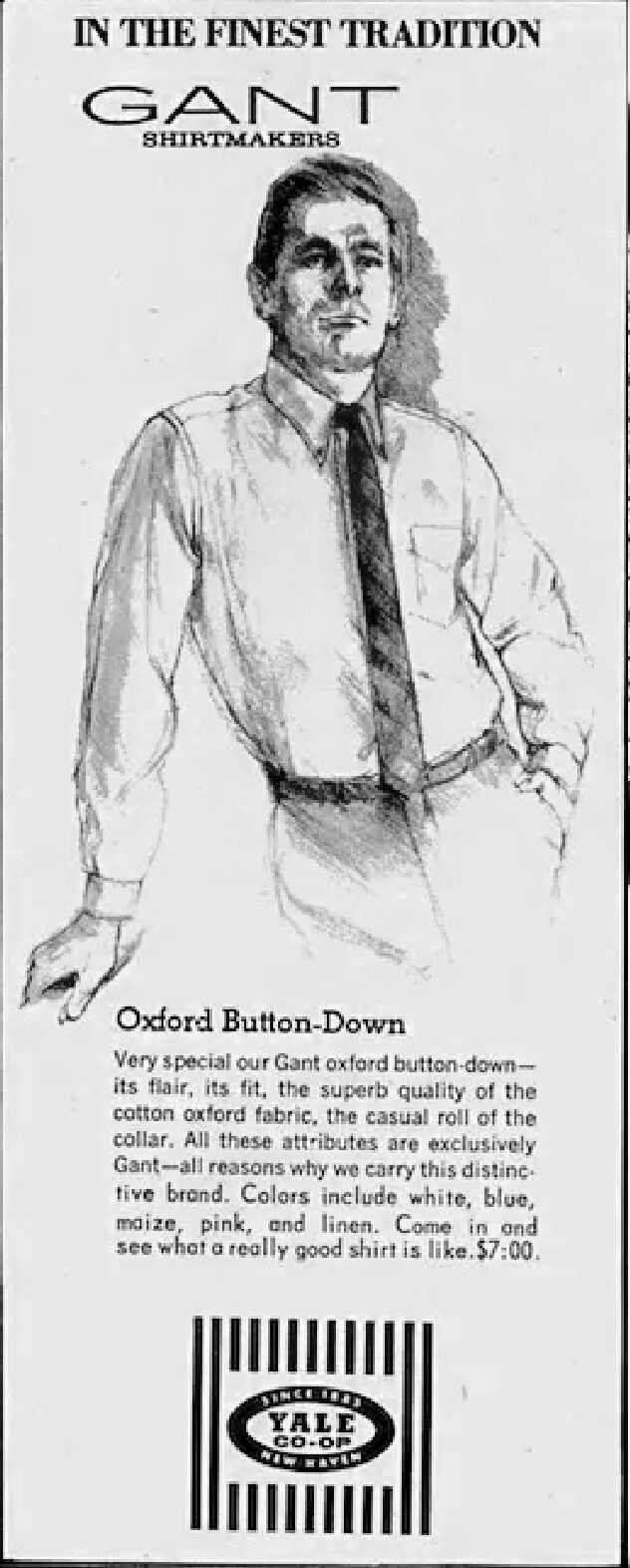
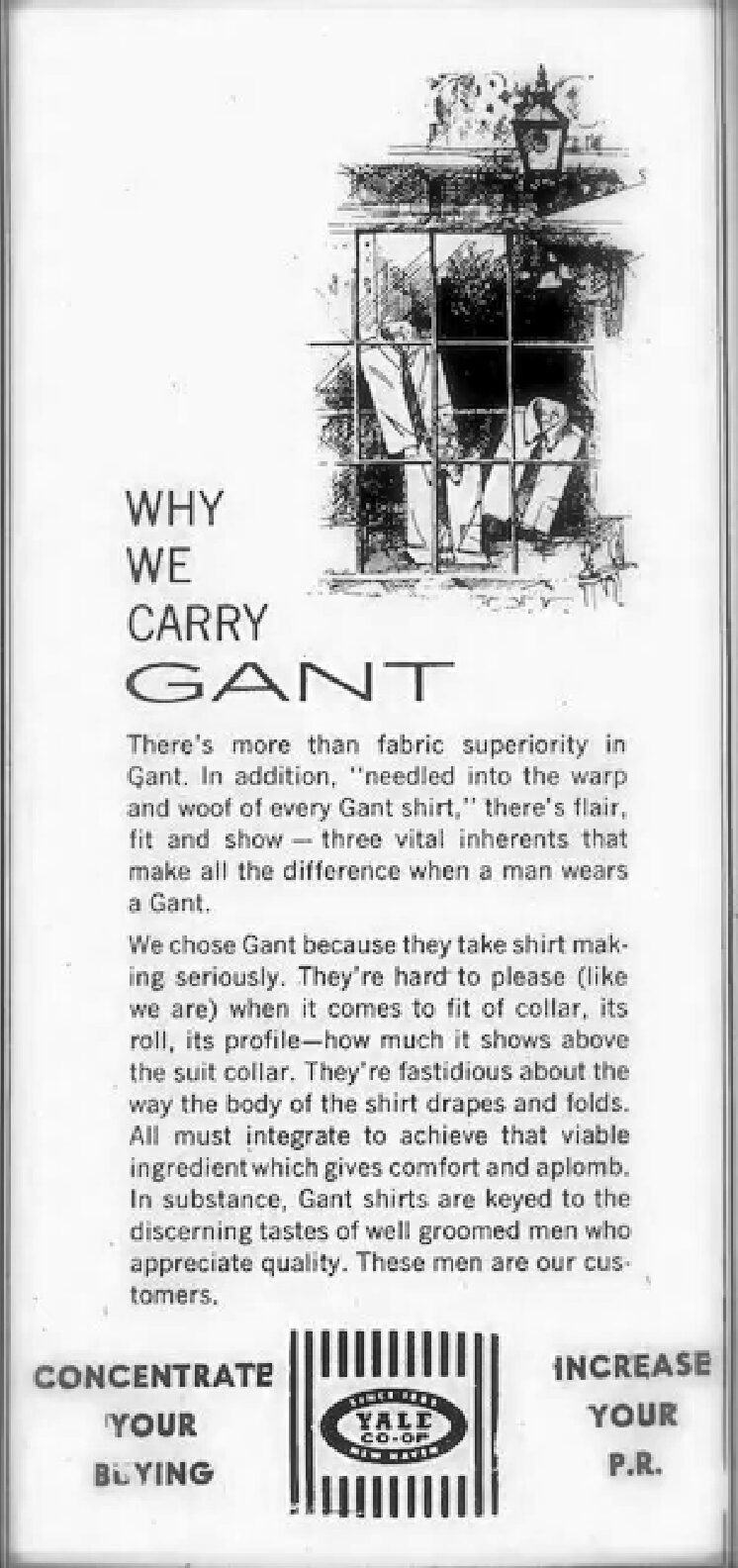
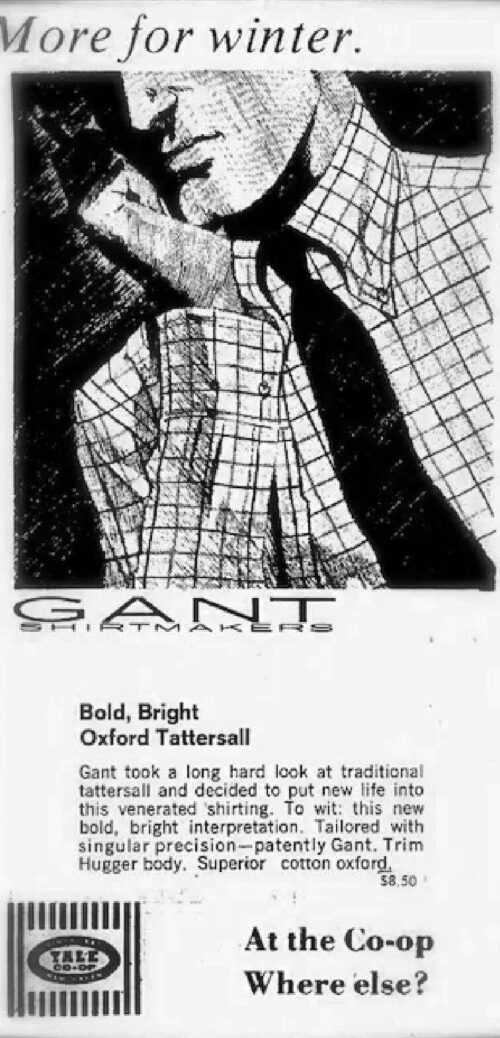
1960s? “YALE COOP Gant SHIRTMAKERS”時代の広告
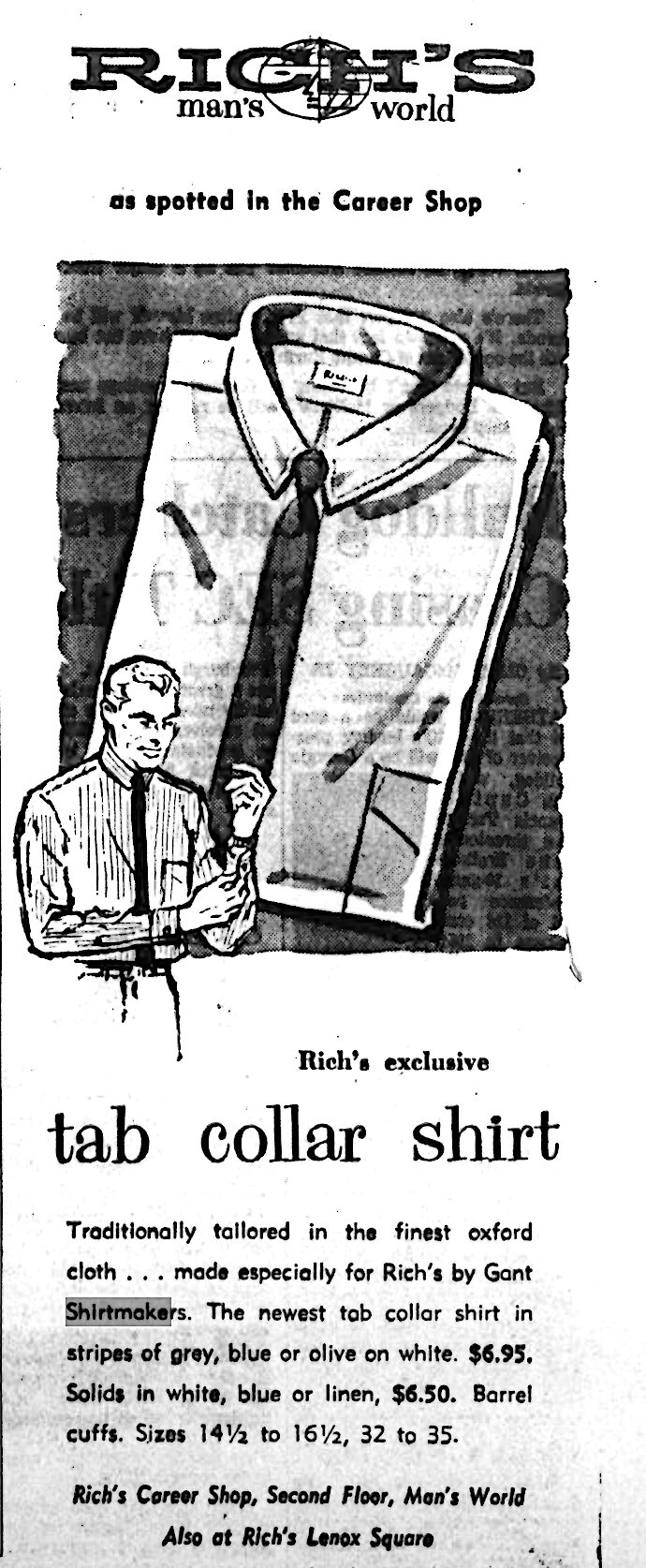
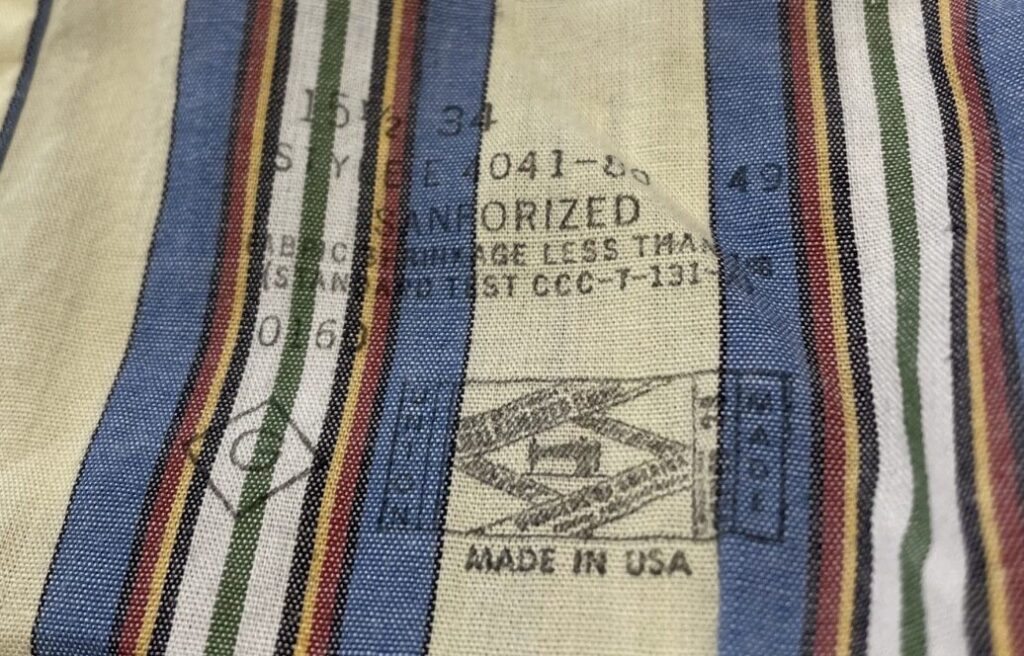
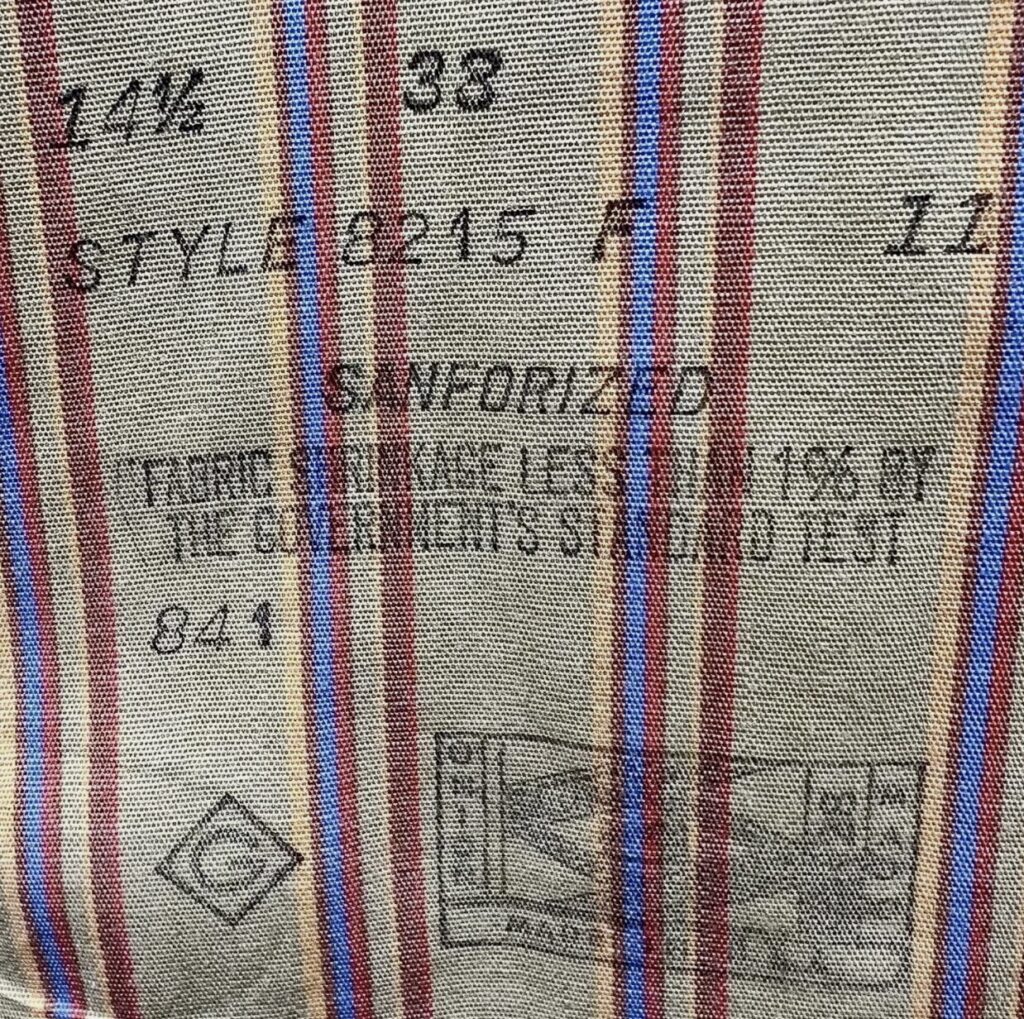
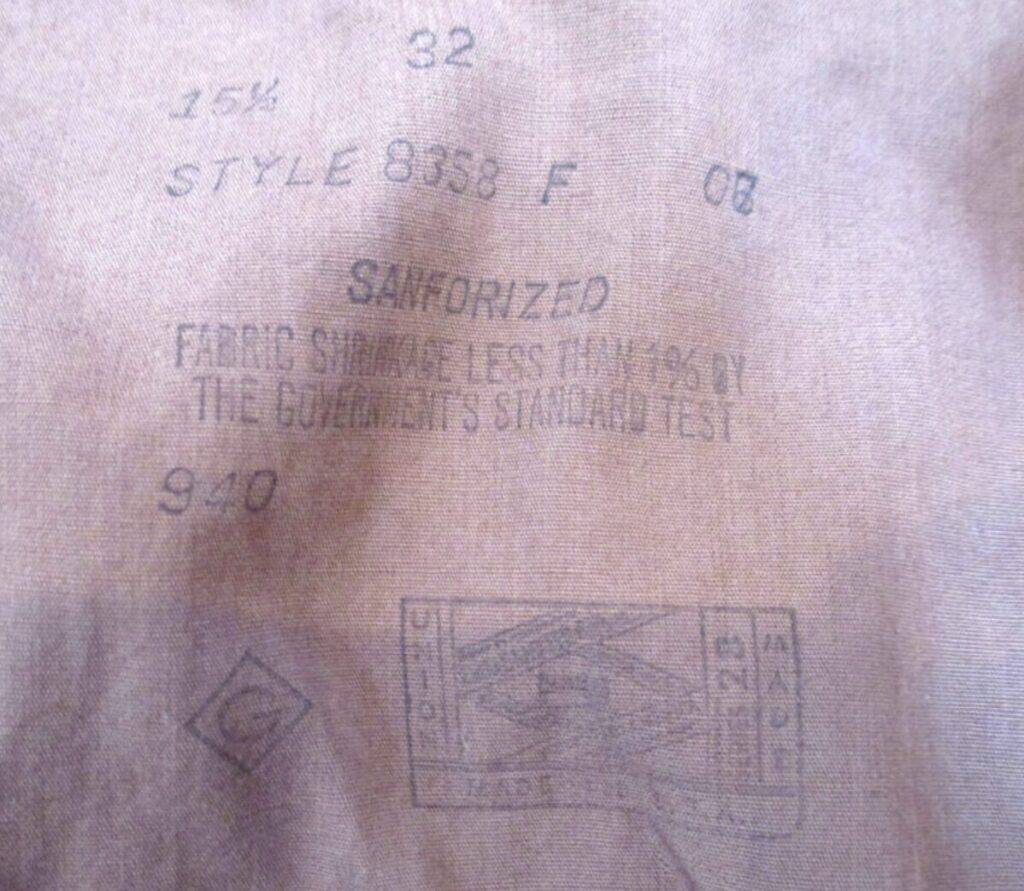
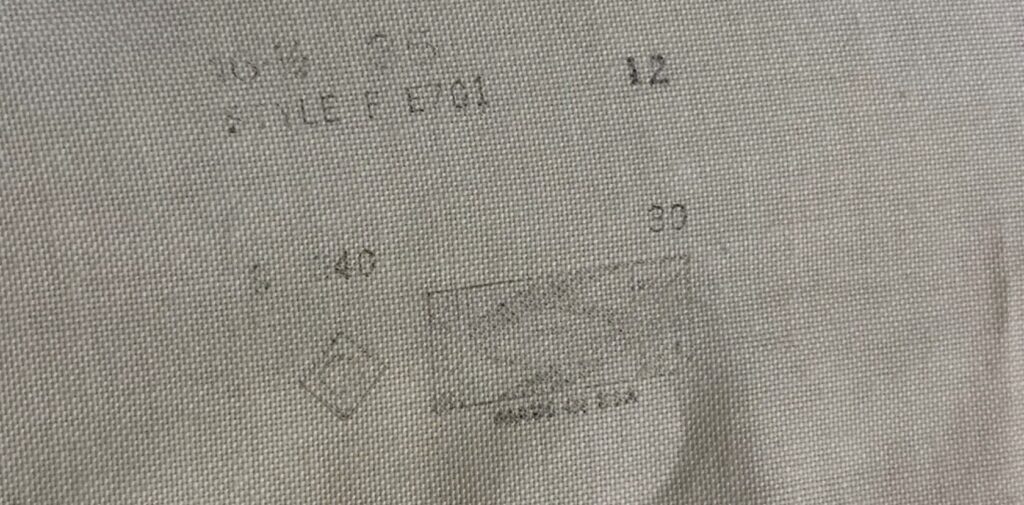
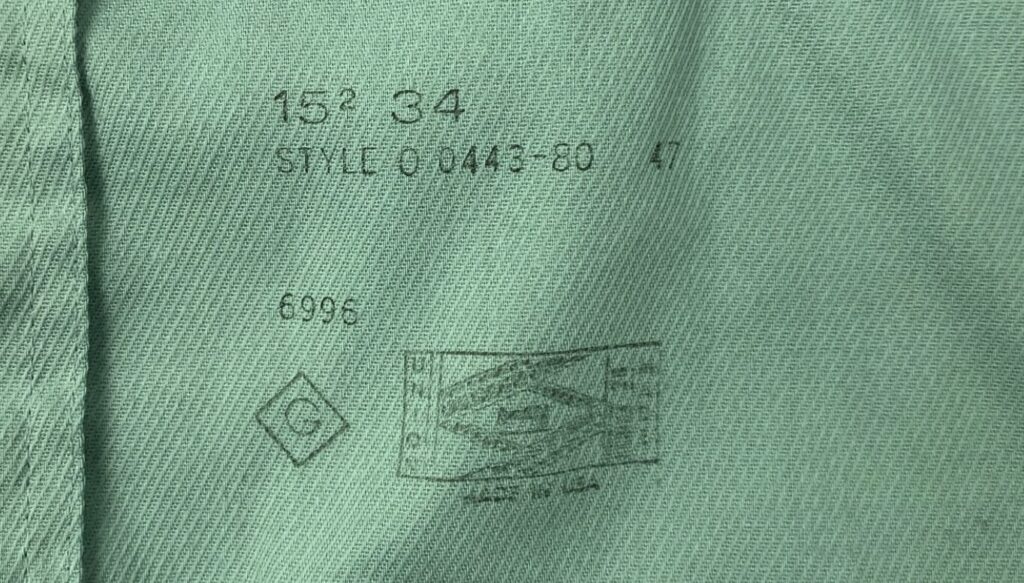
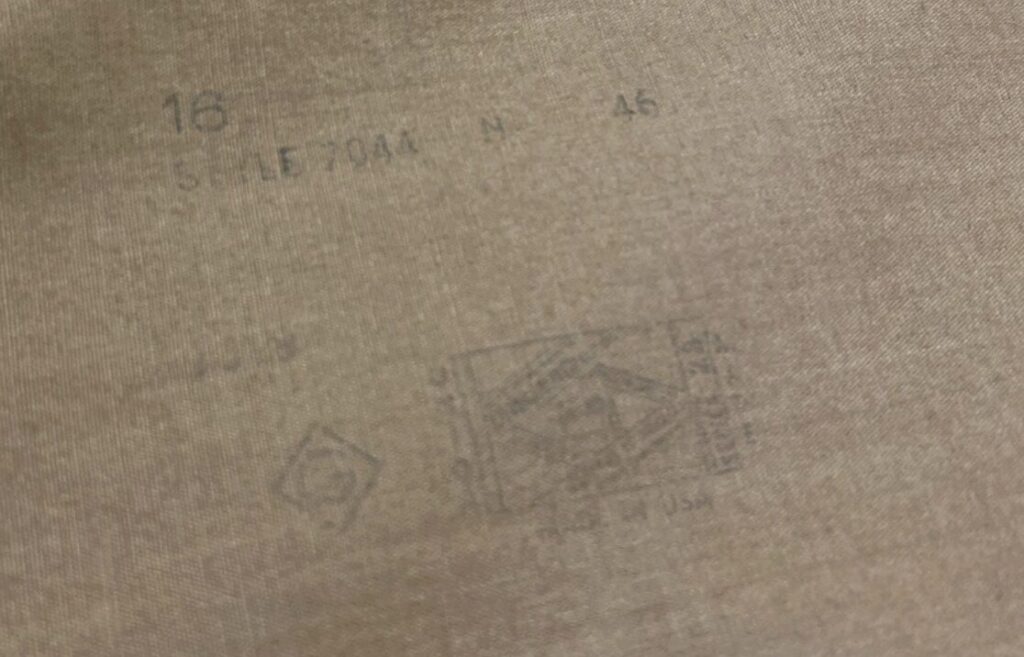
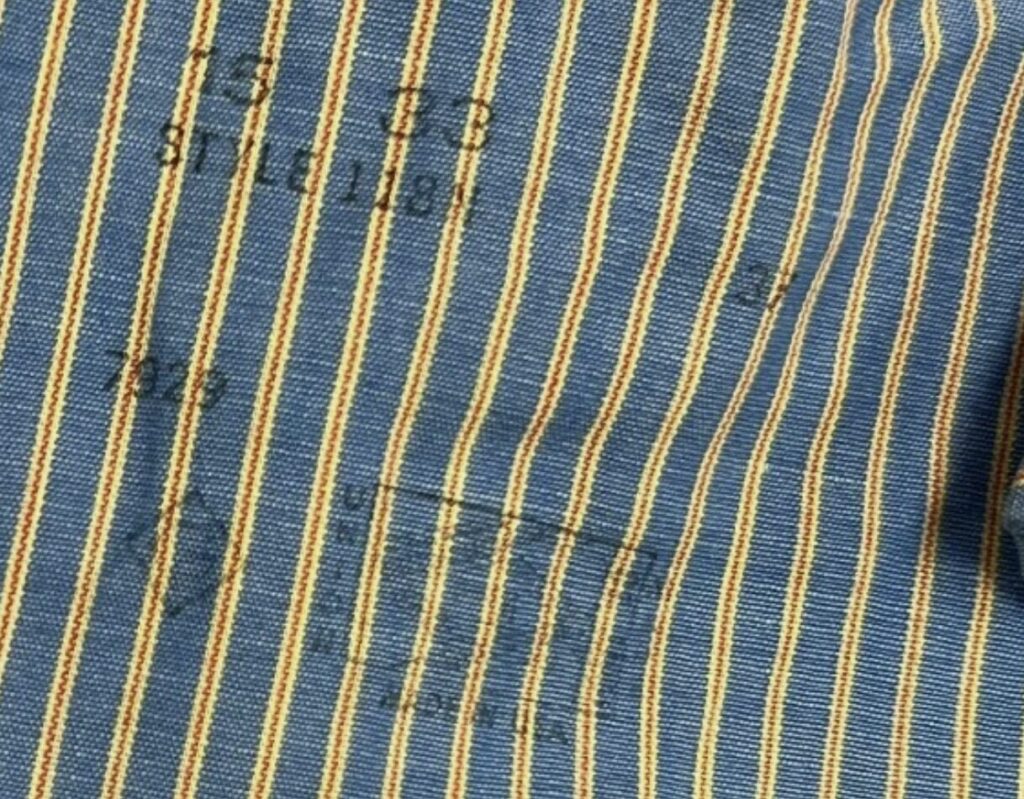
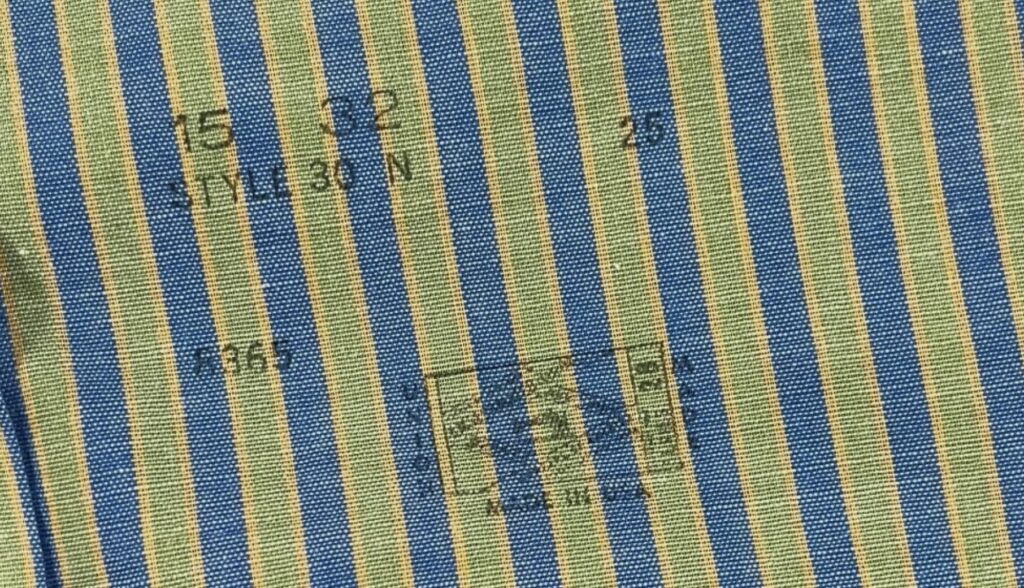
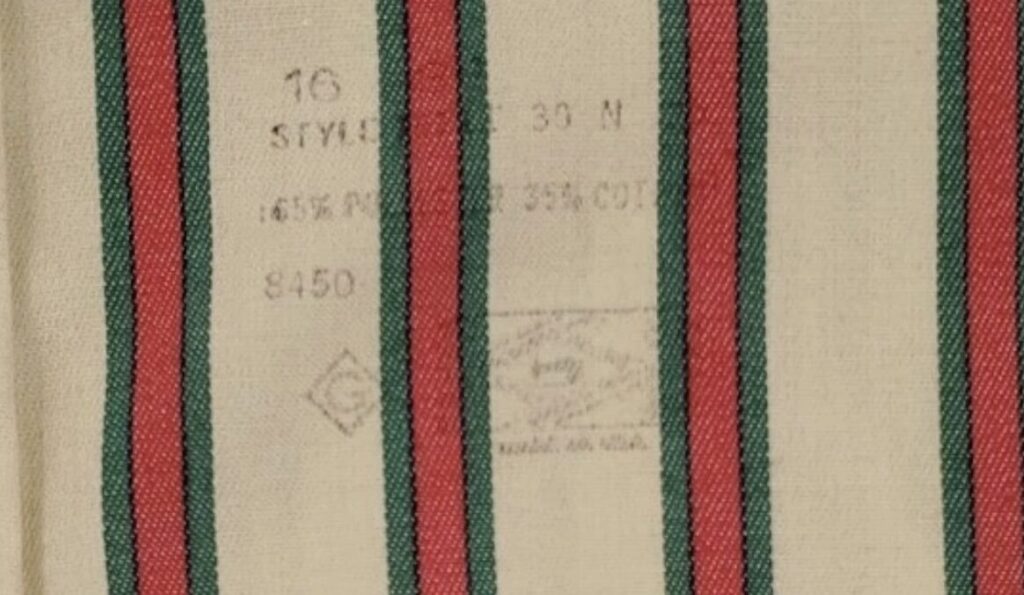
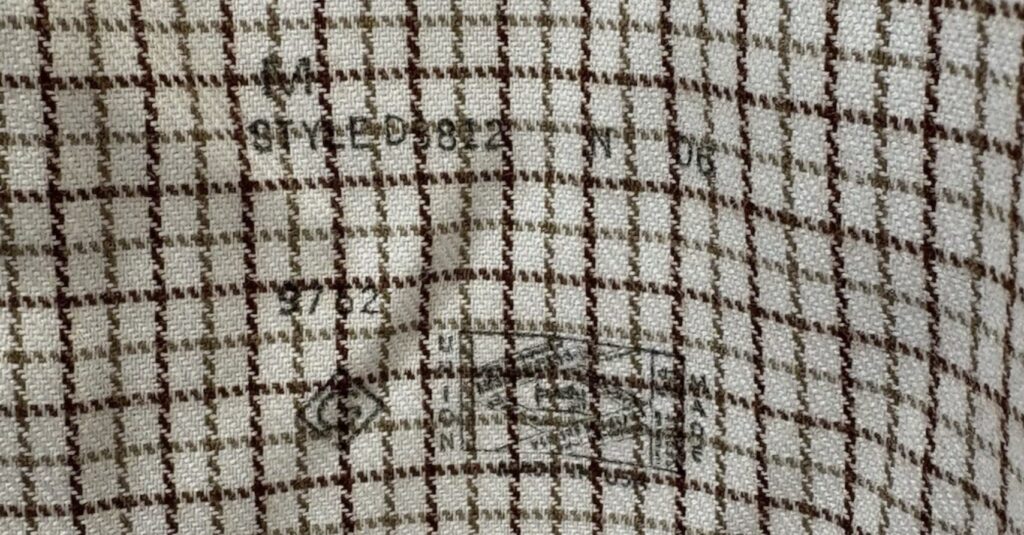
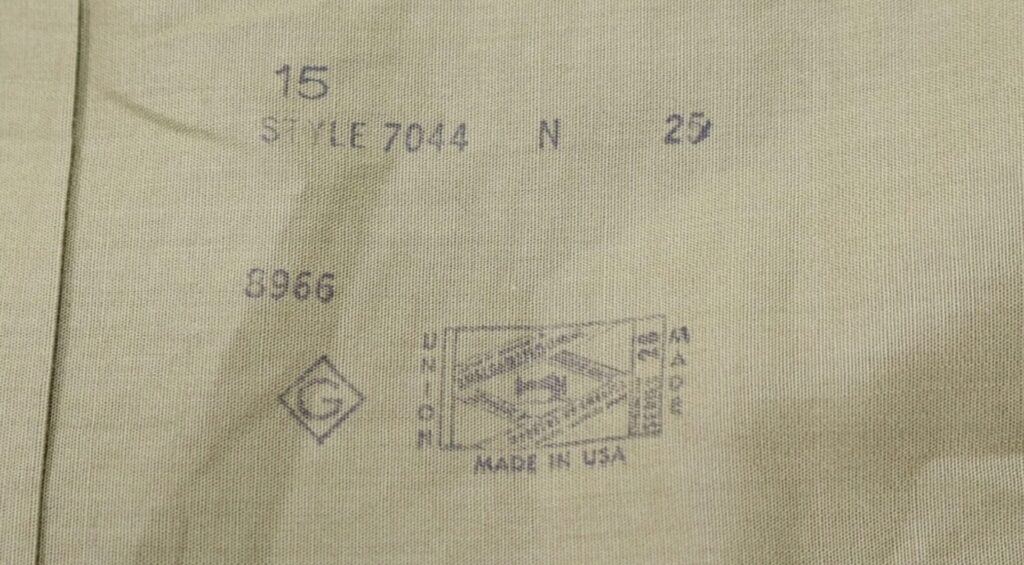
GANTは創業初期から自社工場生産のシャツは、裾部分に小さくスタンプされた菱形の中に「G」を配したマークをスタンプしてあり、後年これをマーケティングとして「ダイアモンドG」と呼ばれるようになりました。このマークの使用は1949年以降とされているがその正確な導入意図は同時代資料は限られている。現存する実物や後年の社史的記述から確認できるのは、当初この印がブランドを前面に押し出すための表示ではなく、あくまで控えめなかたちで用いられていたという点である。アメリカ製造時代においてこの「G」マークはMADE IN NEW HAVENと呼んでいいだろう。


20世紀半ばのアメリカにおけるメンズ衣料産業は、組織化された労働運動、とりわけ**Amalgamated Clothing Workers of America(ACWA)**によって強く形づくられた枠組みの中で運営されていた。1914年に設立されたACWAは、既製服産業全体の労働者を代表する組織として、国内アパレル製造における標準的な労働条件の確立に中心的な役割を果たした ACWAの制度の中でも、とりわけ可視的であったのが**ユニオンラベル(Union Label)**である。これは、認可された労働条件のもとで生産された衣料品に、識別用の印を付すことを可能にする仕組みであった。これらのラベルはブランドを示すものではなく、ACWAとの協約のもと、組合化された工場でアメリカ国内生産された製品であることを示すものであった。この意味において、ユニオンラベルは「MADE IN USA」表記の制度的な対応物として機能し、労働基準を衣料品そのものの中に組み込む役割を担っていた。この制度のもと、各メーカーには固有のユニオンラベル番号が割り当てられていた。GANTはユニオンラベル番号28を使用しており、これは同社がアメリカ製造期においてACWAの管理下にある生産体制に属していたことを示している。ユニオンラベルの存在は、デザインや縫製仕様の差異を示すものではなかったが、その製品が国内で生産され、定められた労働基準を満たしていることを証明するものであった。


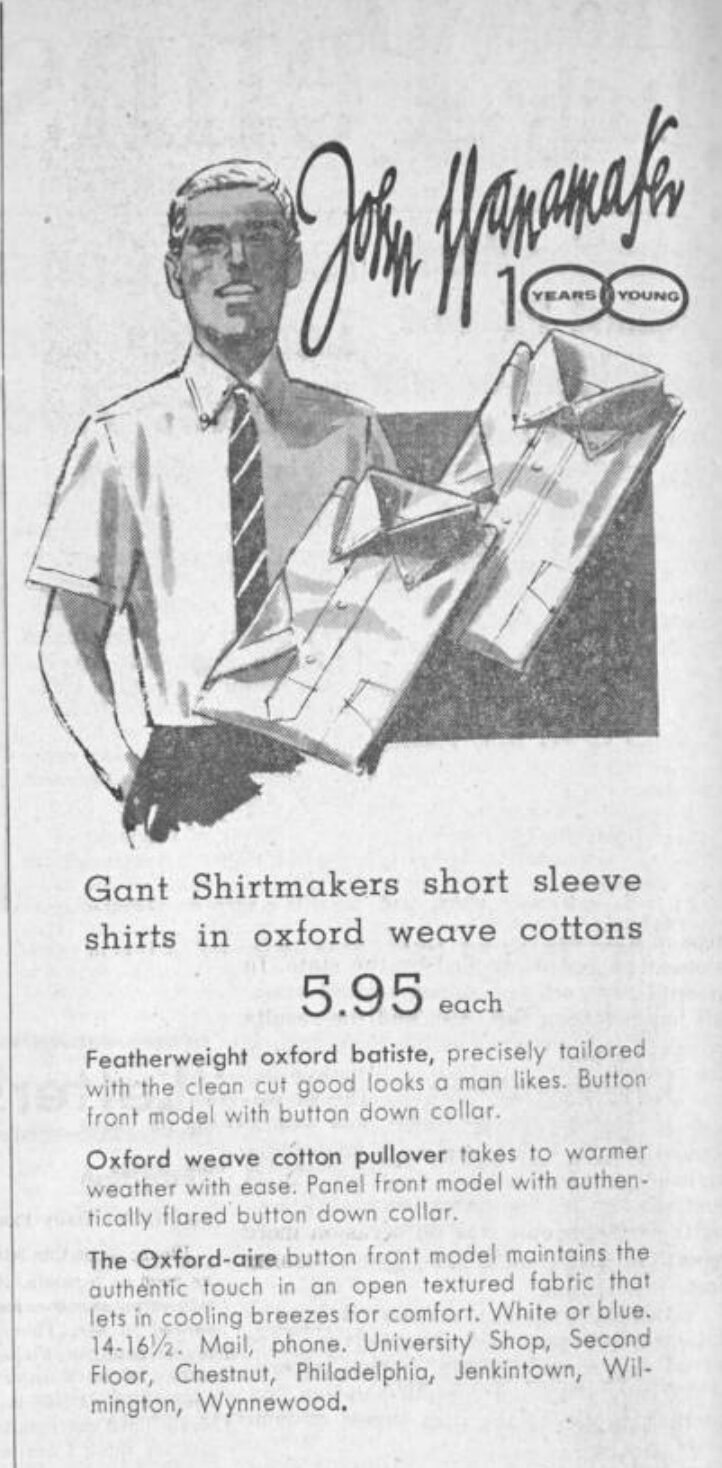
1961 The Daily Pennsylvanian, Volume LXXVII, Number 27, 11 May 1961
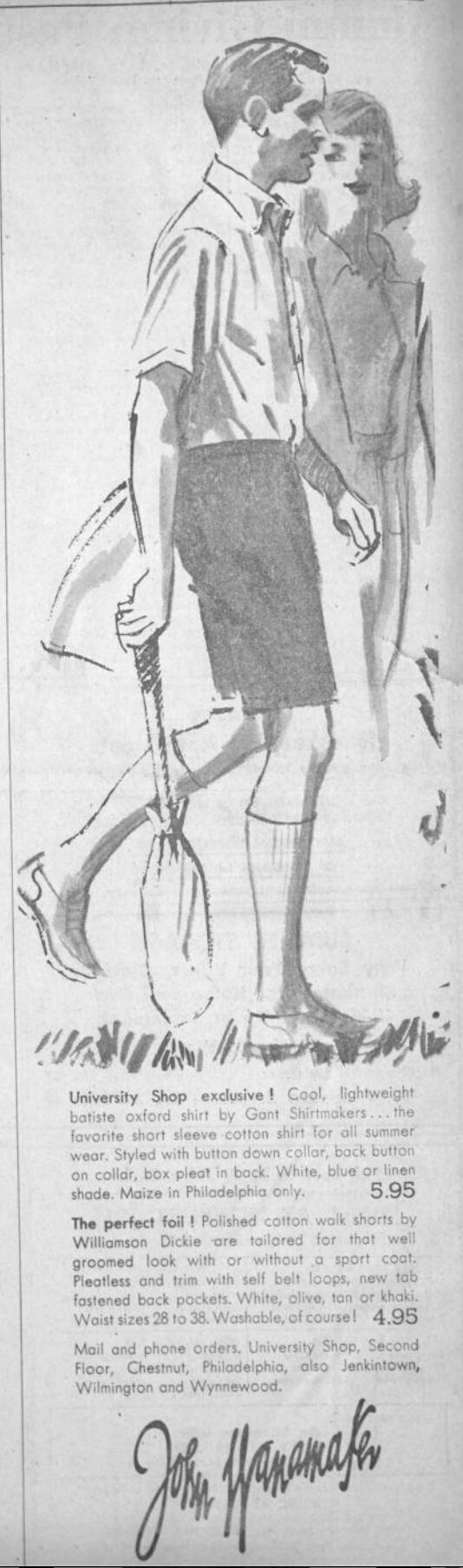
1961 The Daily Pennsylvanian, Volume LXXVII, Number 31, 17 May 1961
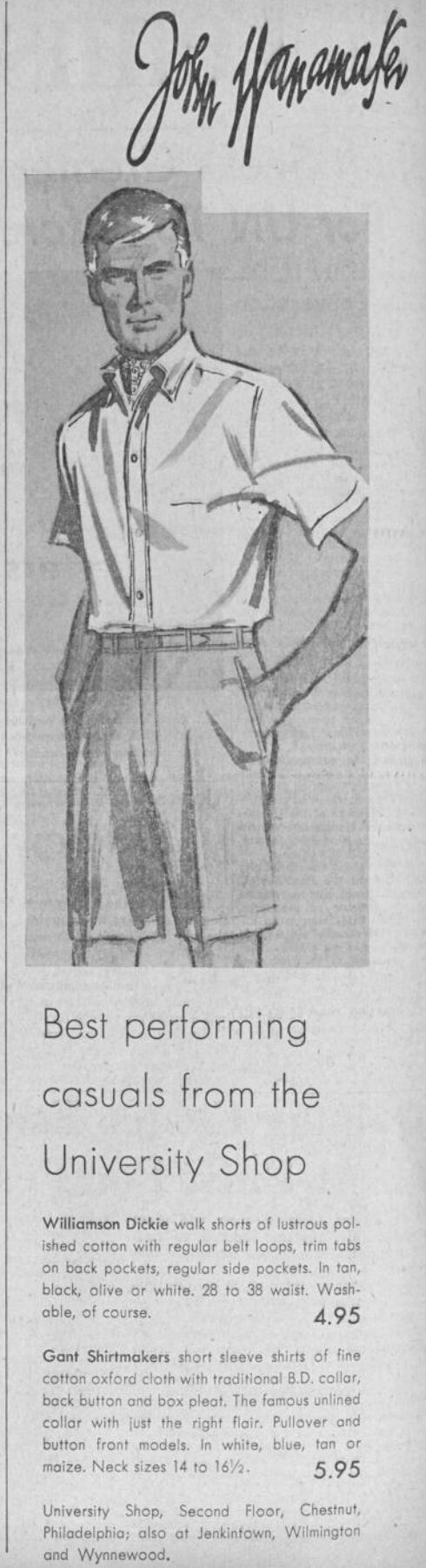
1962 The Daily Pennsylvanian, Volume LXXVIII, N umber 24, 24 April 1962
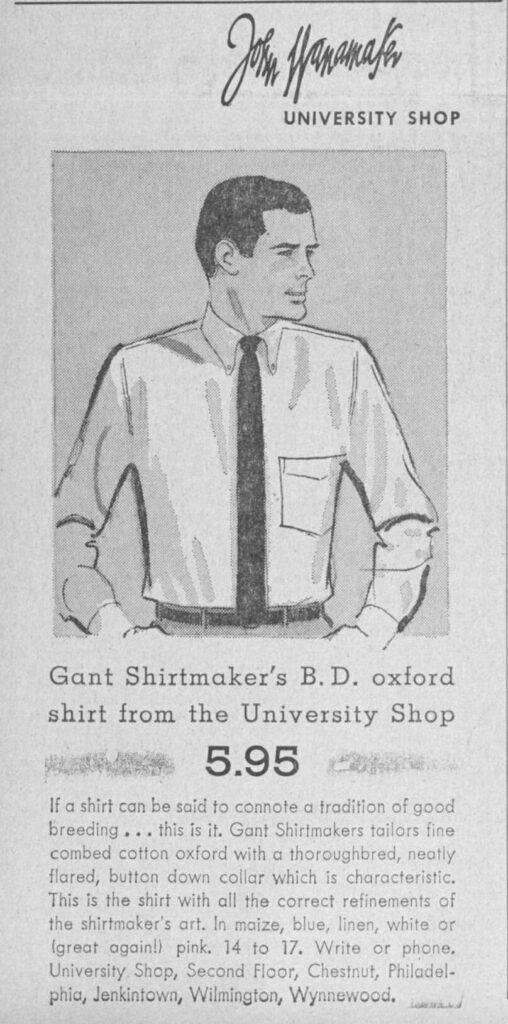
1962 The Daily Pennsylvanian, Volume LXXVIII, Number 90, 6 December 1962

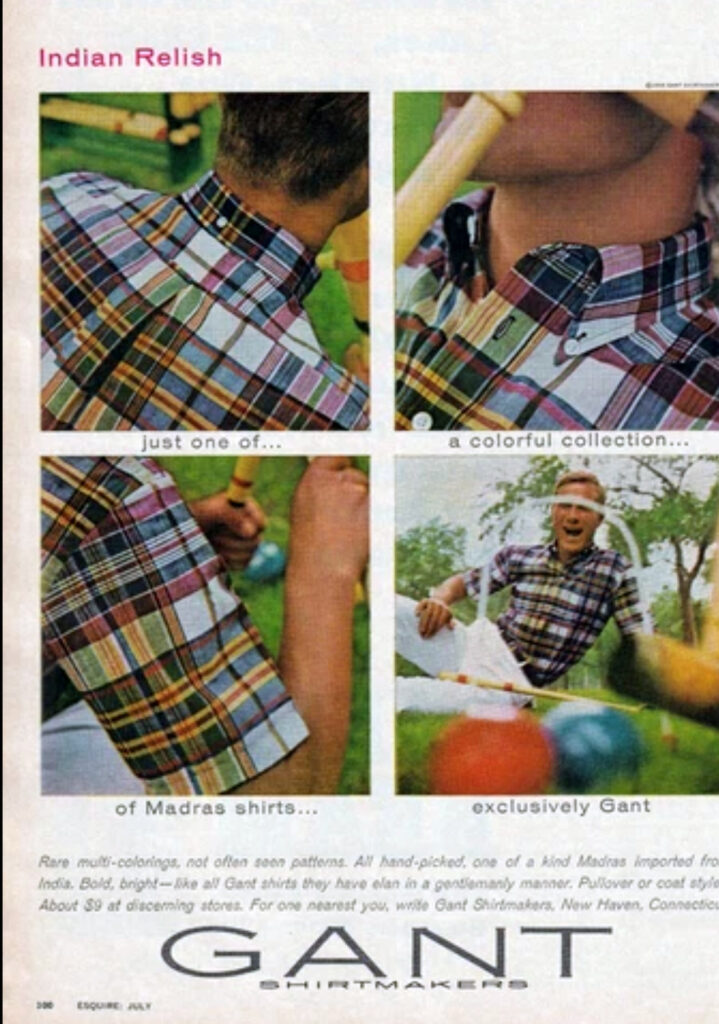
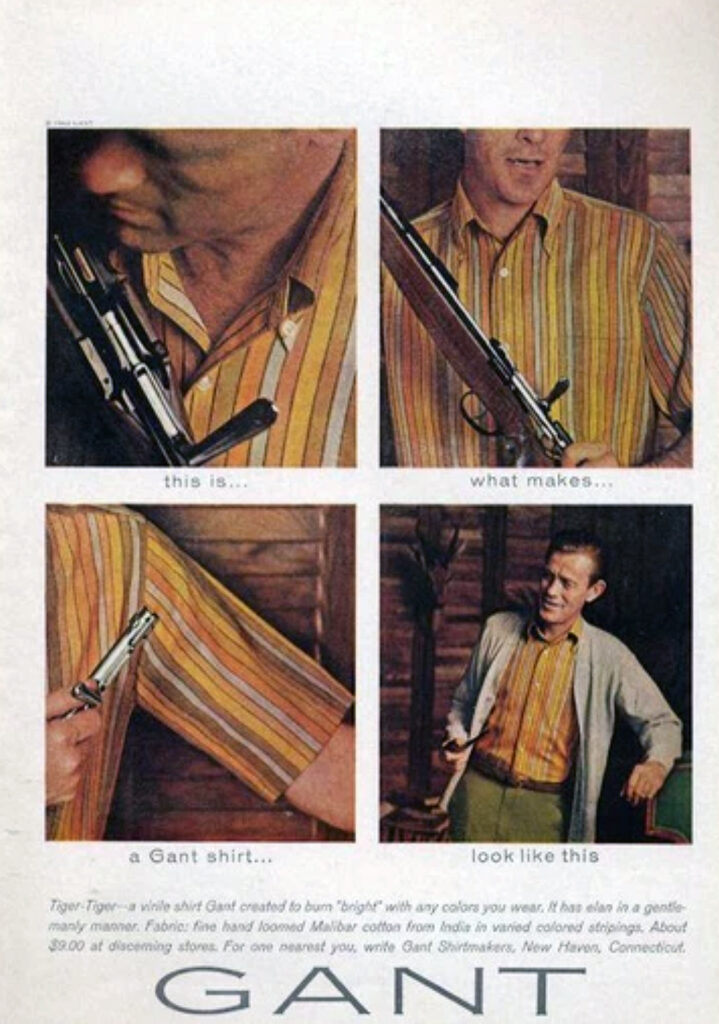
1964 GANT SHIRTMAKERS VINTAGE AD
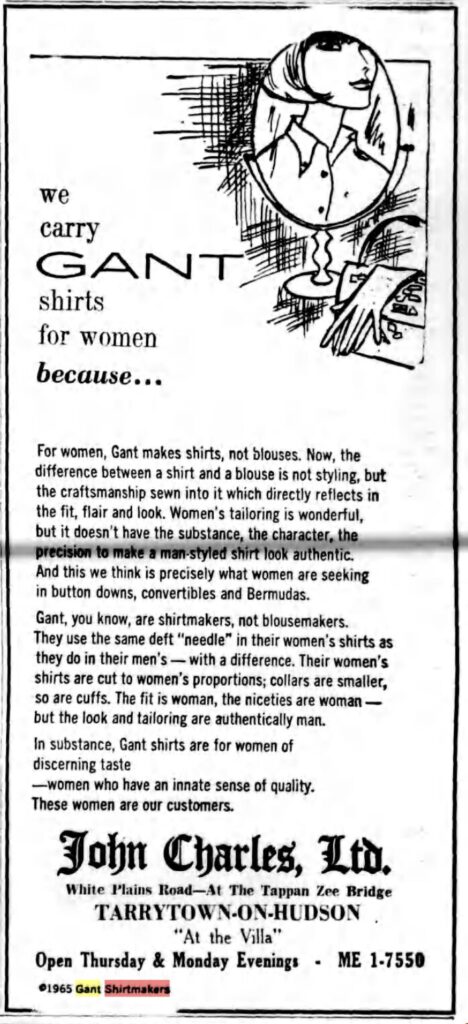
1965 GANT SHIRTMAKERS VINTAGE AD
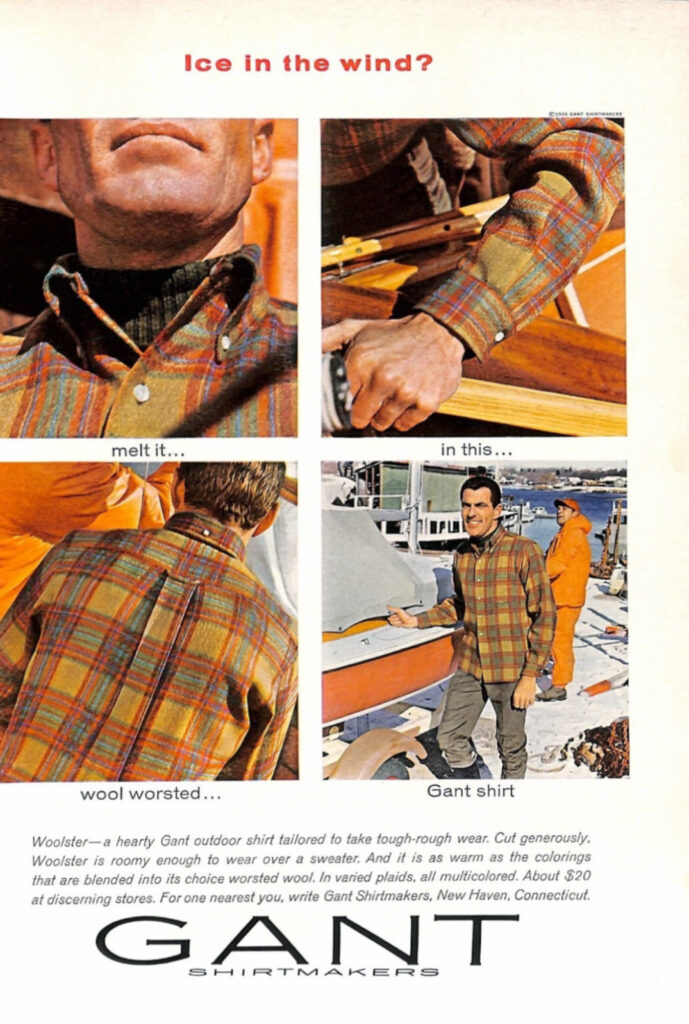
1966 GANT SHIRTMAKERS VINTAGE AD
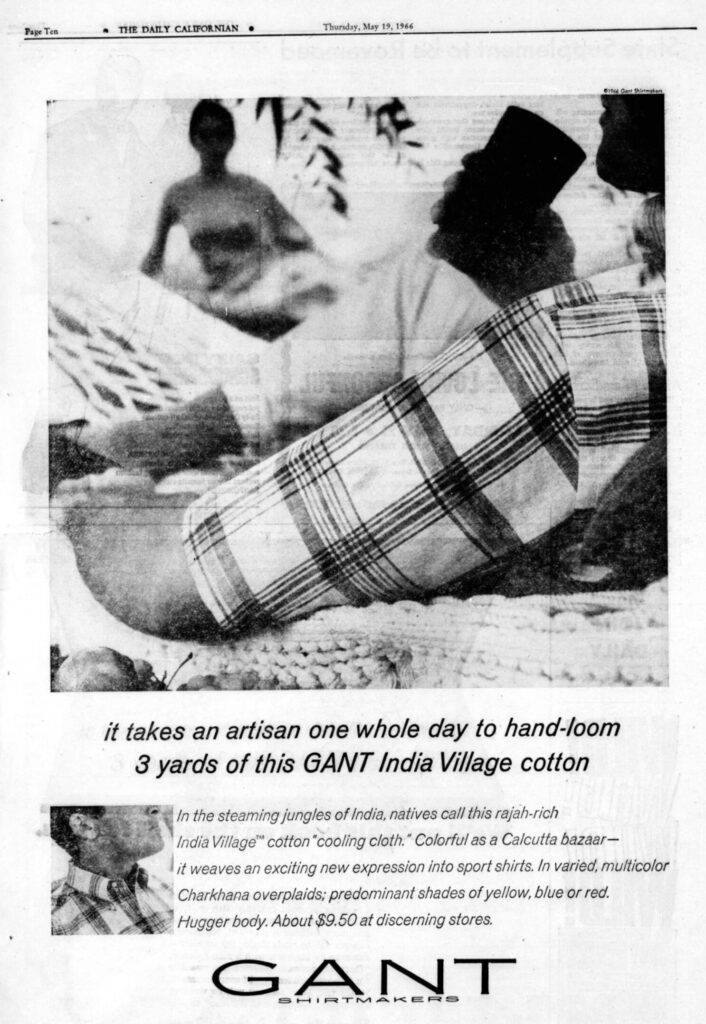
1966 The Daily Californian 1966-05-19 Thu May. 19, 1966
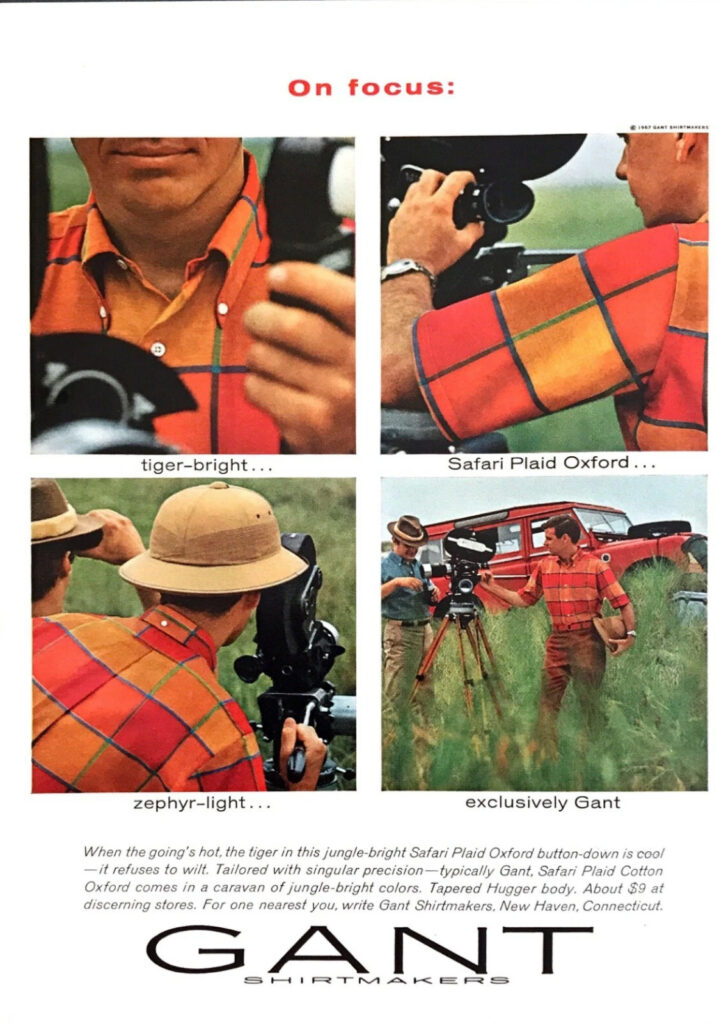
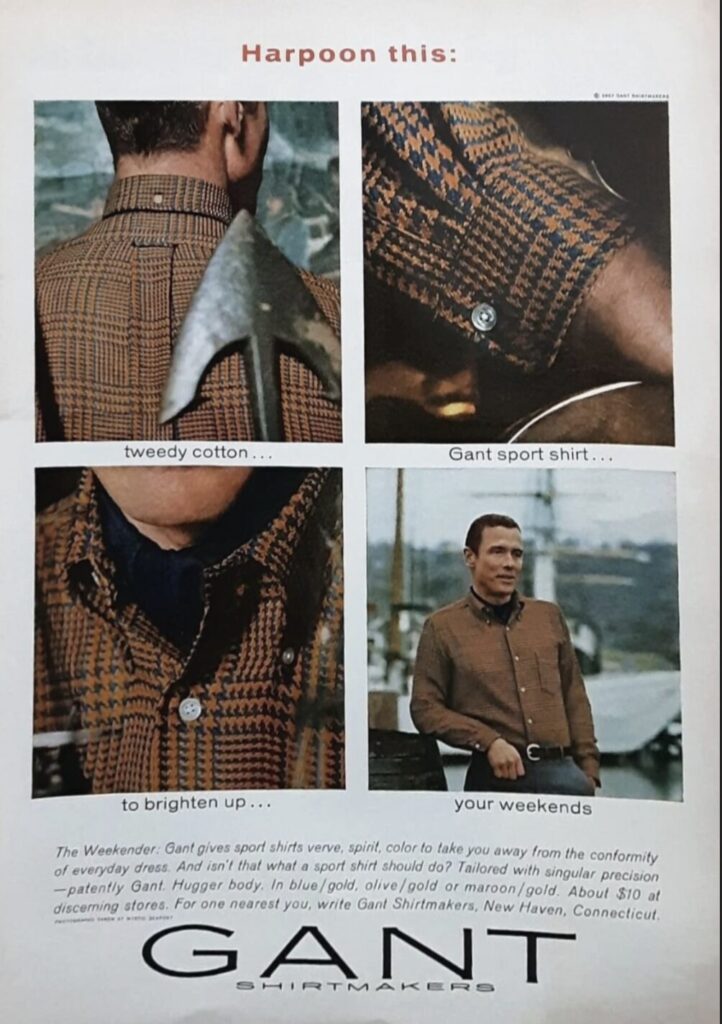
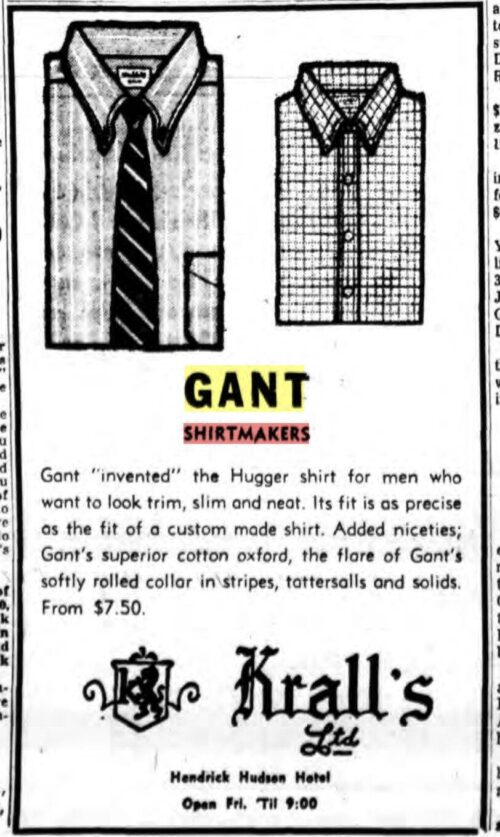
1967 GANT SHIRTMAKERS VINTAGE AD
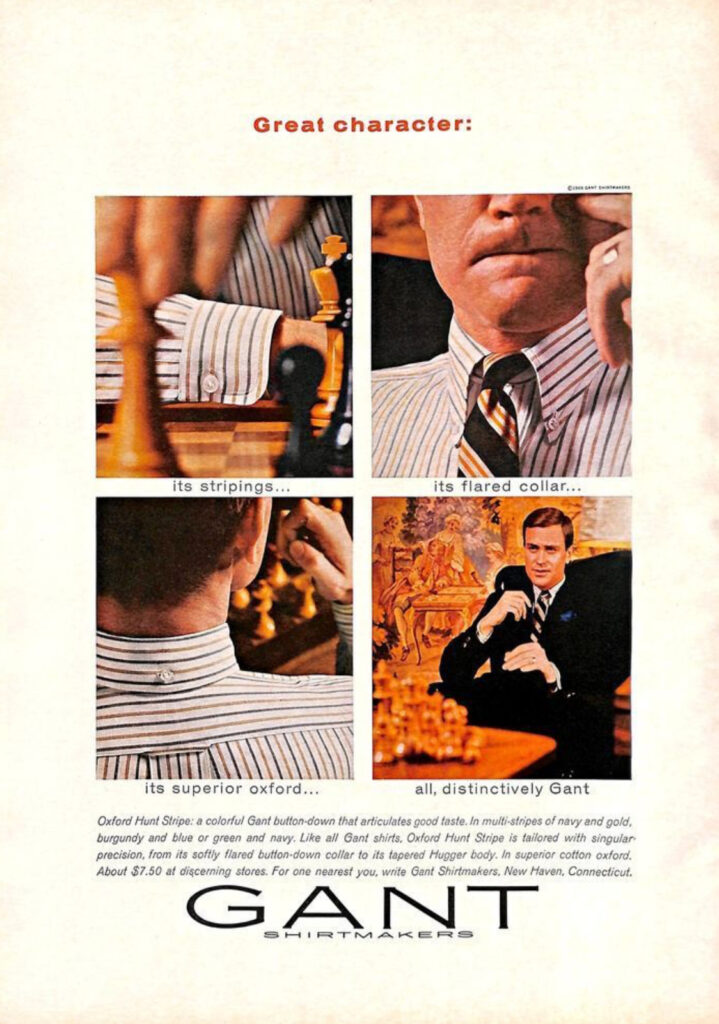
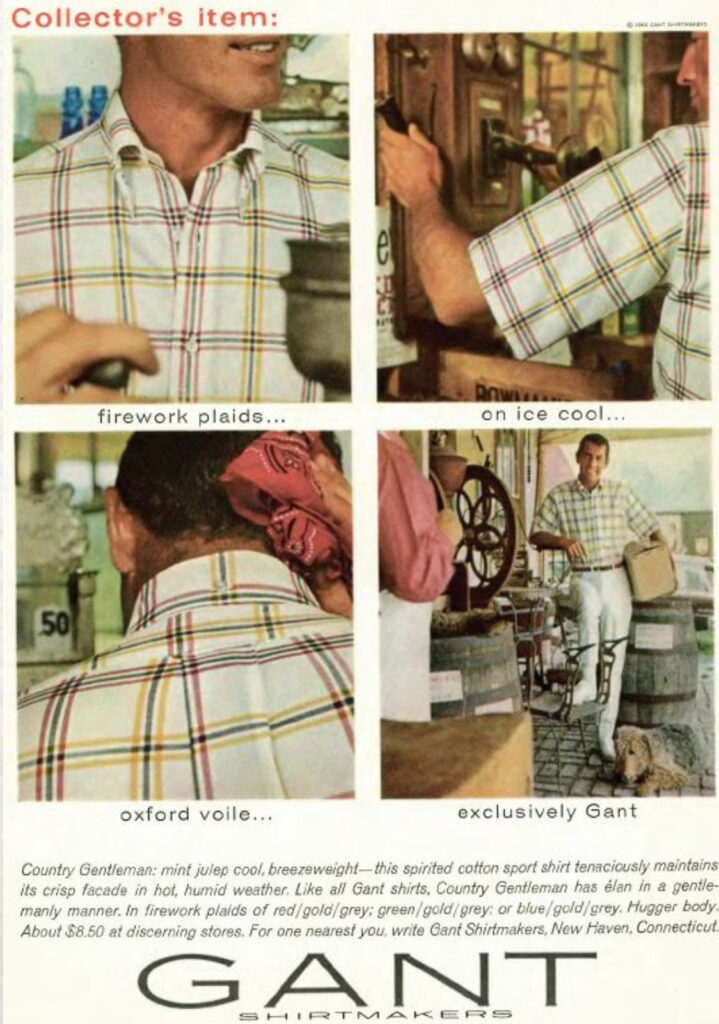
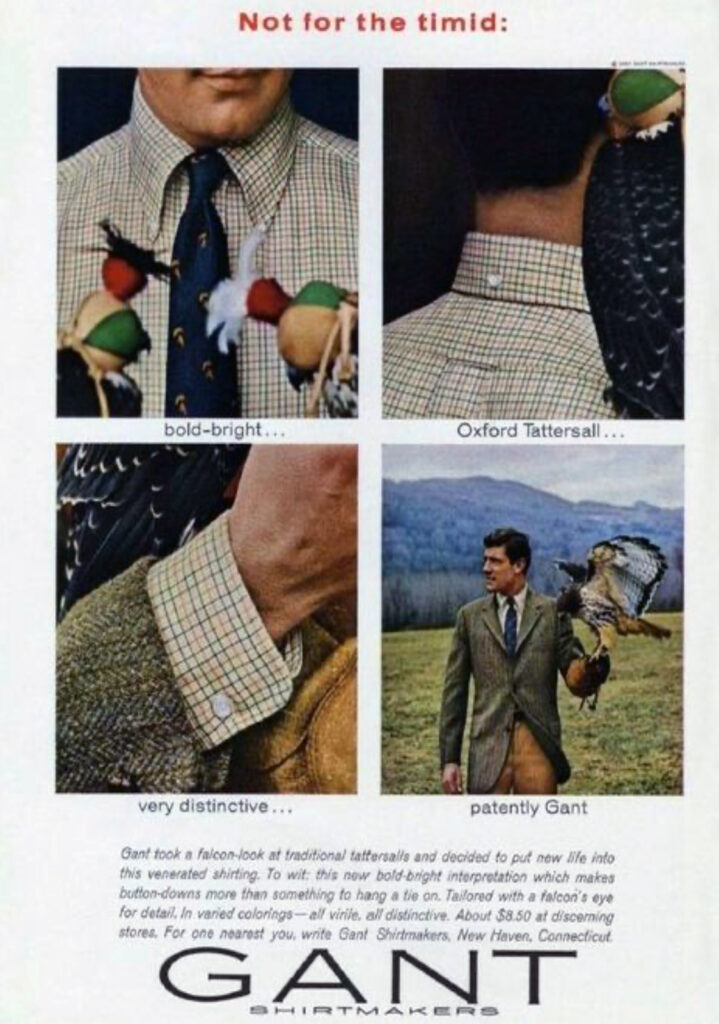
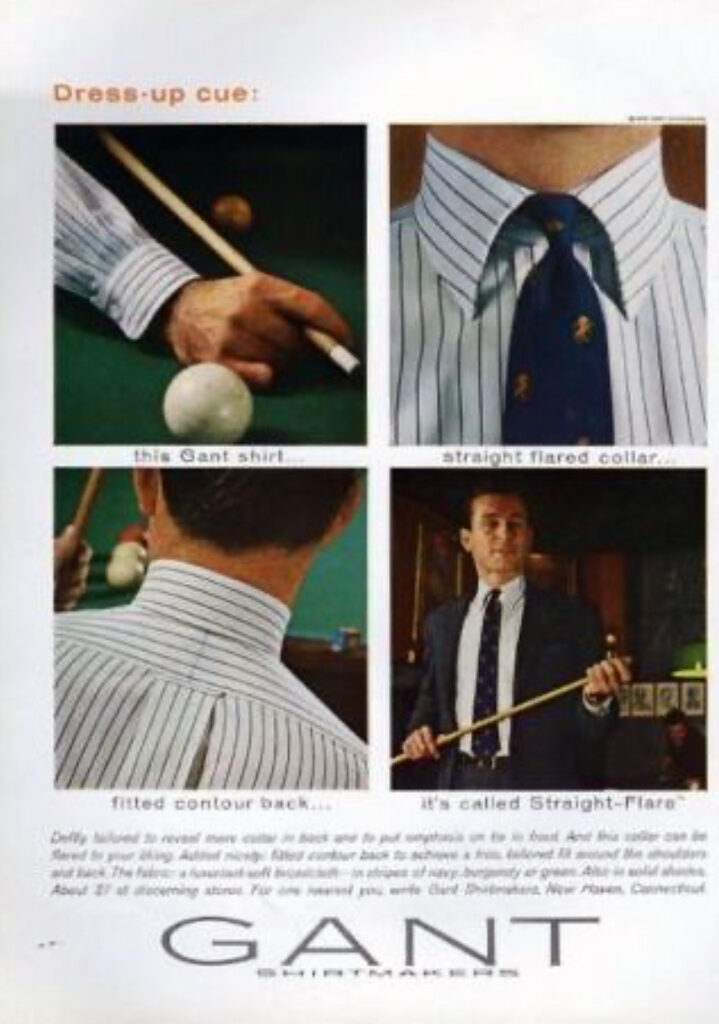
~ 1967 GANT SHIRTMAKERS VINTAGE AD
1964 GANT SHIRTMAKERS VINTAGE AD
1965 GANT SHIRTMAKERS VINTAGE AD
1966 GANT SHIRTMAKERS VINTAGE AD
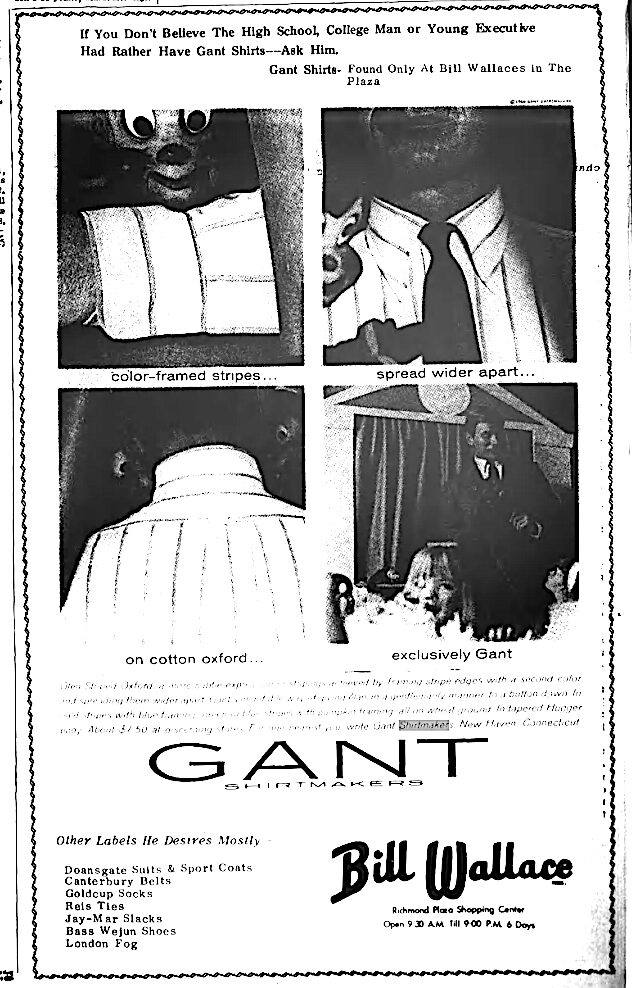
1967 GANT SHIRTMAKERS VINTAGE AD
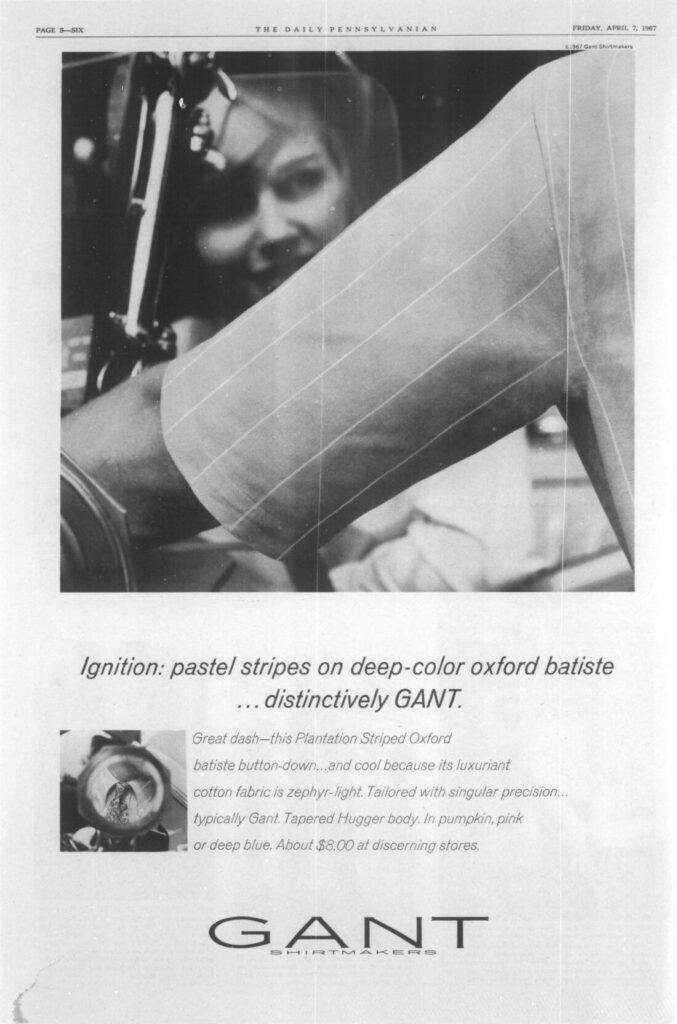
1967 The Daily Pennsylvanian, Volume LXXXIII, Number 14, 7 April 1967
~ 1967 GANT SHIRTMAKERS VINTAGE AD
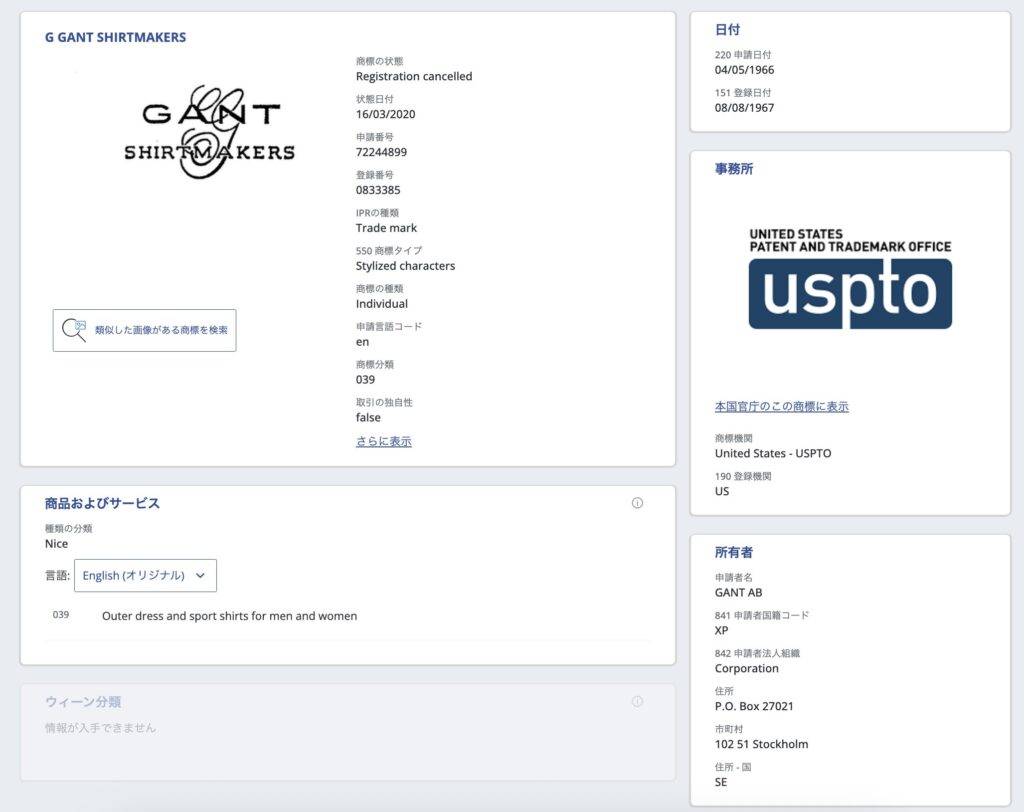
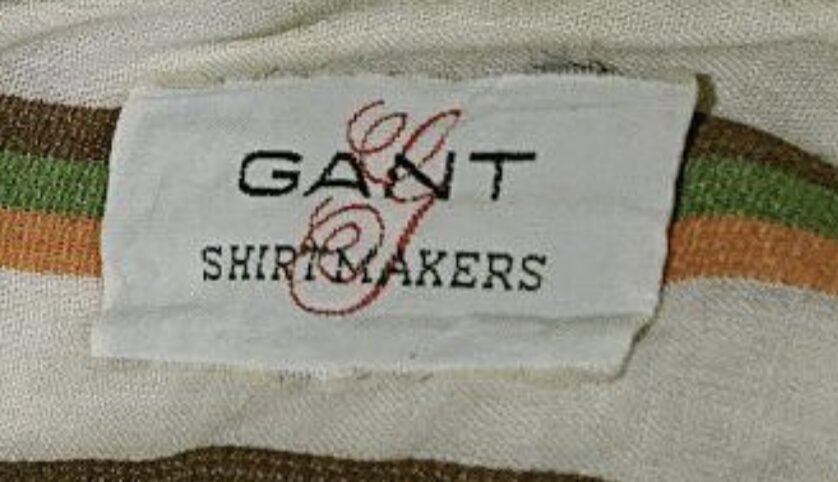
1967 GANT SHIRTMAKERS ORIGINAL TAG
1968
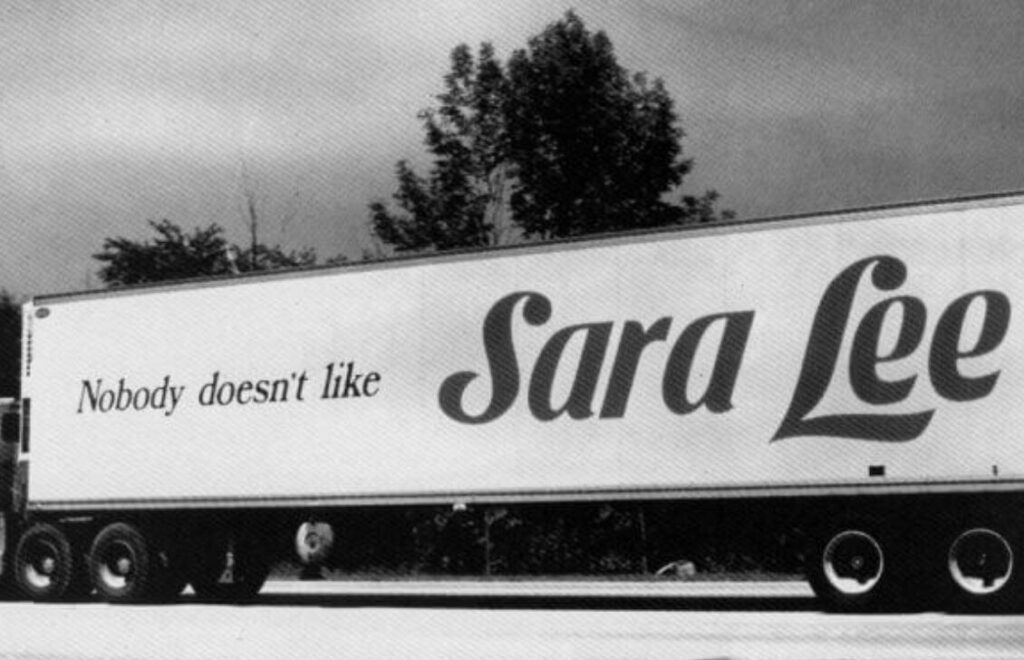
In 1968, GANT was acquired by the American conglomerate Consolidated Foods Corporation (CFC) after Sara Lee Corporation.As a result of this transaction, management by the Gantmacher family came to an end. While some sources cite 1967 as the year of acquisition, this is likely to reflect the timing of negotiations or contractual agreements. By contrast, 1968 is more reasonably understood as the year in which the transfer of control and corporate integration were substantively completed.
At the time, Consolidated Foods was centered on its food business but was actively pursuing a diversification strategy that included expansion into the apparel sector. The acquisition of GANT was positioned within this broader strategy and represented an investment in an established brand with perceived growth potential. Following the acquisition, GANT did not immediately undergo major changes in its production structure or product composition. Its shirt-centered business model was maintained for a period, and domestic production in the United States continued. However, with the shift in corporate ownership, GANT gradually moved away from its previous framework as a manufacturer-led shirtmaker and became integrated into a broader context of brand-oriented management. The 1968 acquisition thus represents a critical turning point in GANT’s history: a transition from the postwar American shirtmaker model—rooted in in-house production and supported by organized labor—to a new phase defined by brand diversification and the prospect of international expansion.
1968年、GANTはアメリカのコングロマリット企業である Consolidated Foods(CFCのちのSara Lee Corp.) によって買収された。 この買収により、ガントマッハー一族の経営は終焉を迎えることとなった。買収の時期については、1967年とする資料も一部に見られるがこれは交渉や契約合意の年を指している可能性が高い。一方、経営権の移行および企業としての統合が実質的に完了した年として1968年を売却年とするのが合理的である。
Consolidated Foodsは当時食品事業を中核としながらも多角化戦略の一環としてアパレル分野への進出を進めていた企業である。GANTの買収は、その戦略の中で位置づけられたものであり、同社にとっては成長余地のある既存ブランドを傘下に収める投資であった。 この買収後もGANTは直ちに生産体制や商品構成を大きく変更したわけではなくシャツを中心とした事業構造は一定期間維持されアメリカ国内生産も継続された。しかし企業経営の母体が変わったGANTはそれまで属していた「シャツ製造業者」としての枠組みからより広いブランド経営の文脈に組み込まれていくことになる。この1968年の買収は、GANTの歴史において、自社工場生産と労働組合に支えられた戦後アメリカ型シャツメーカーの時代から、ブランド多角化と国際展開を前提とする次の段階へと移行する分岐点として位置づけられる。
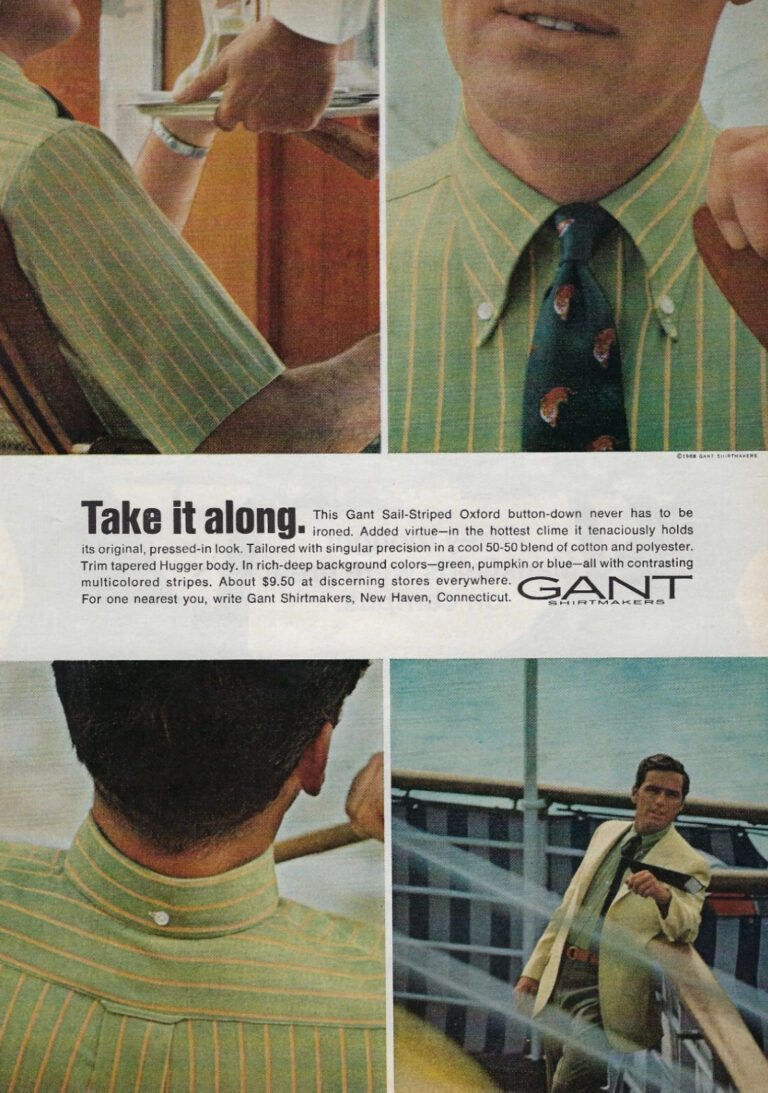
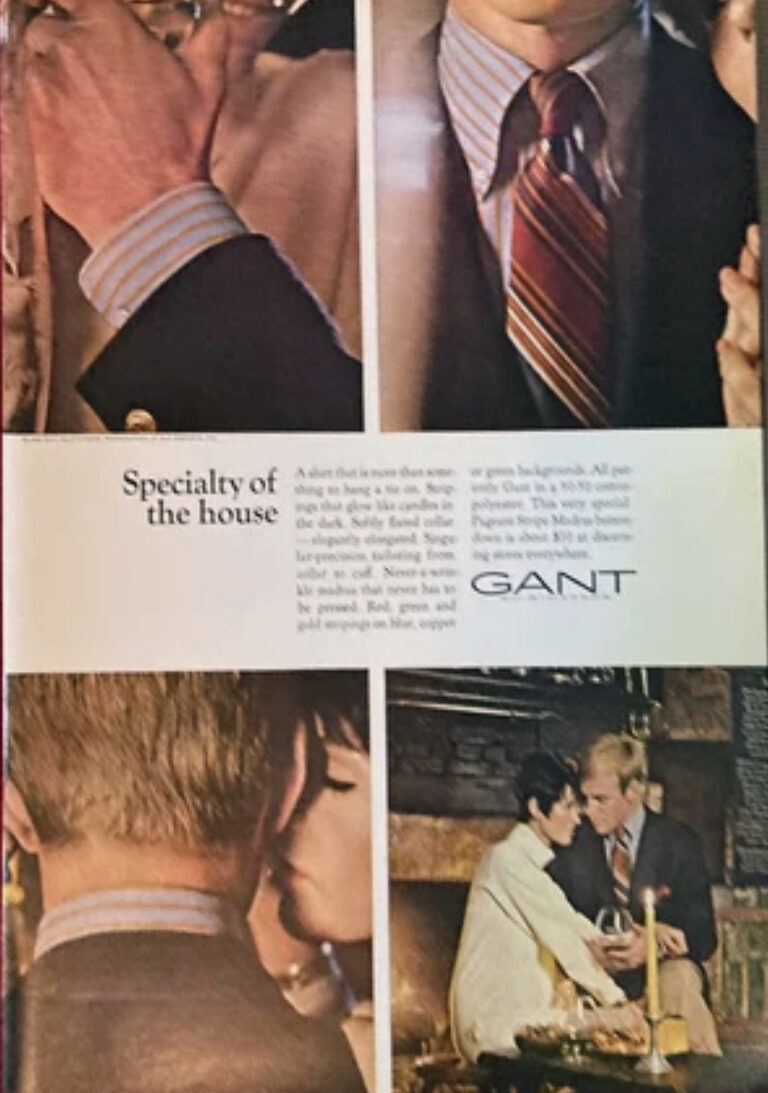
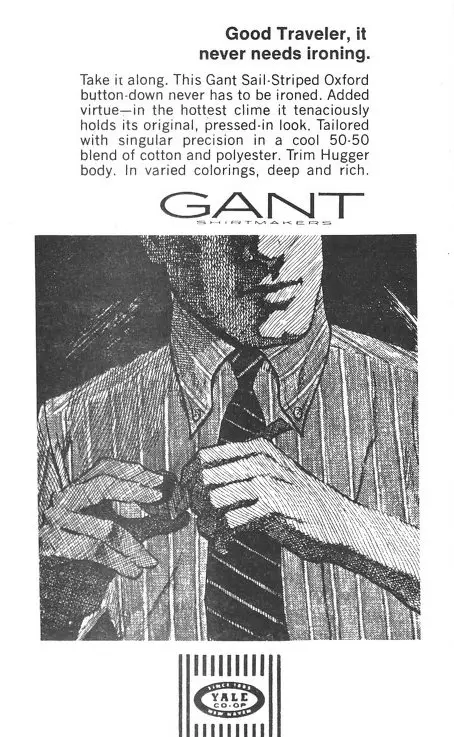
1968 GANT VINTAGE AD
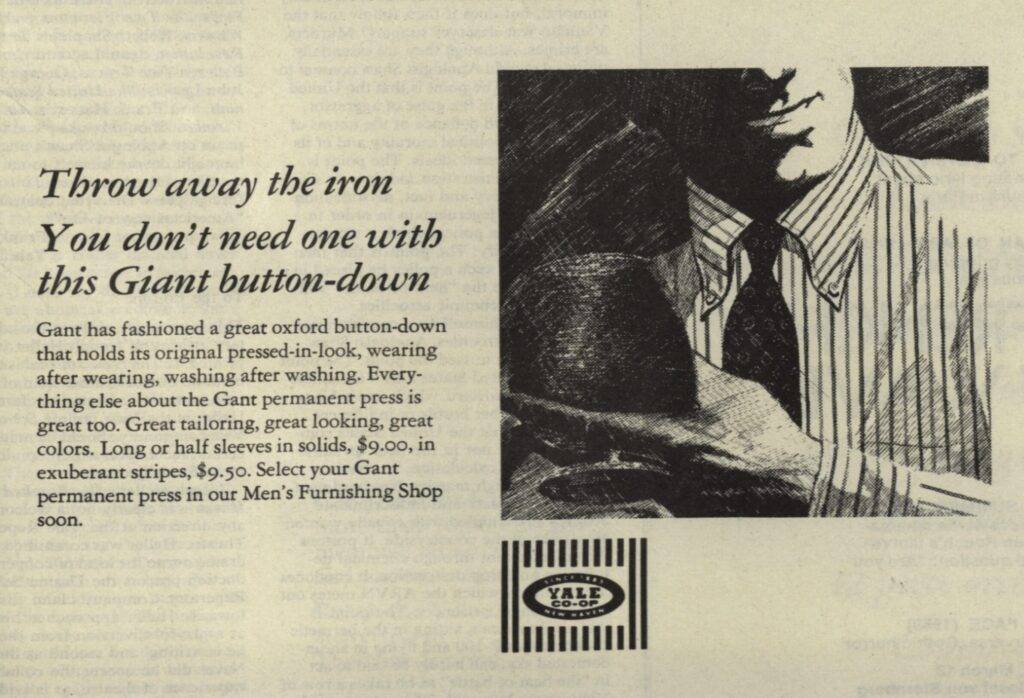
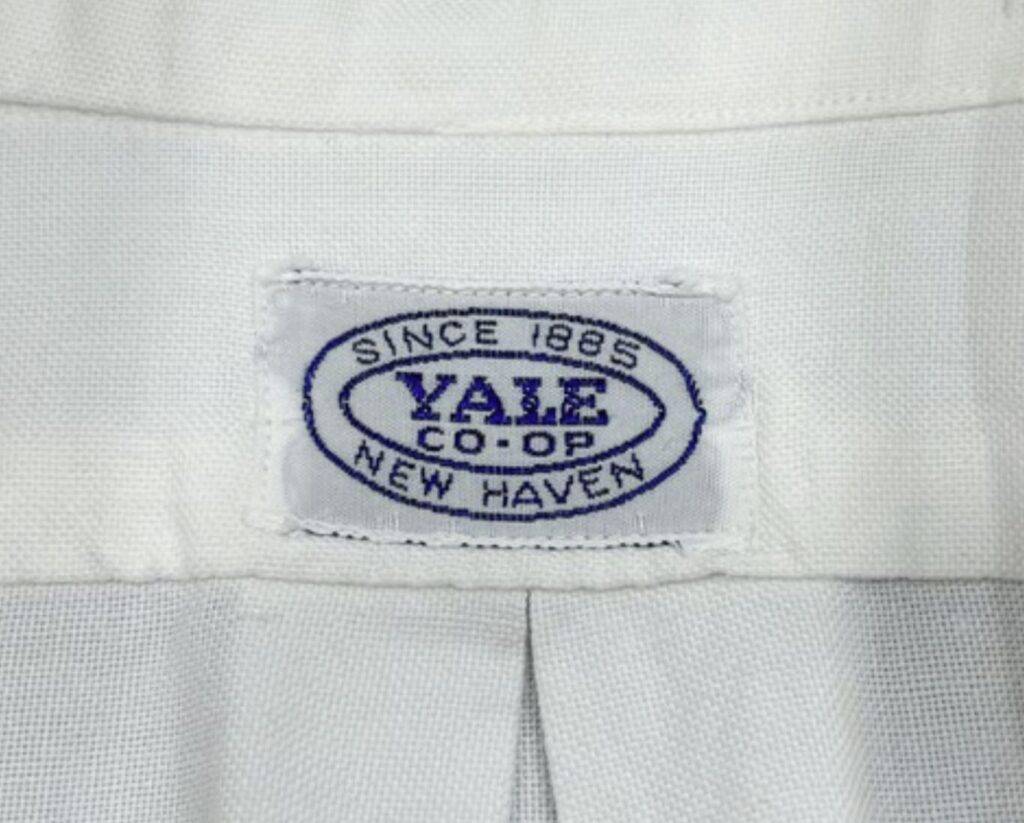
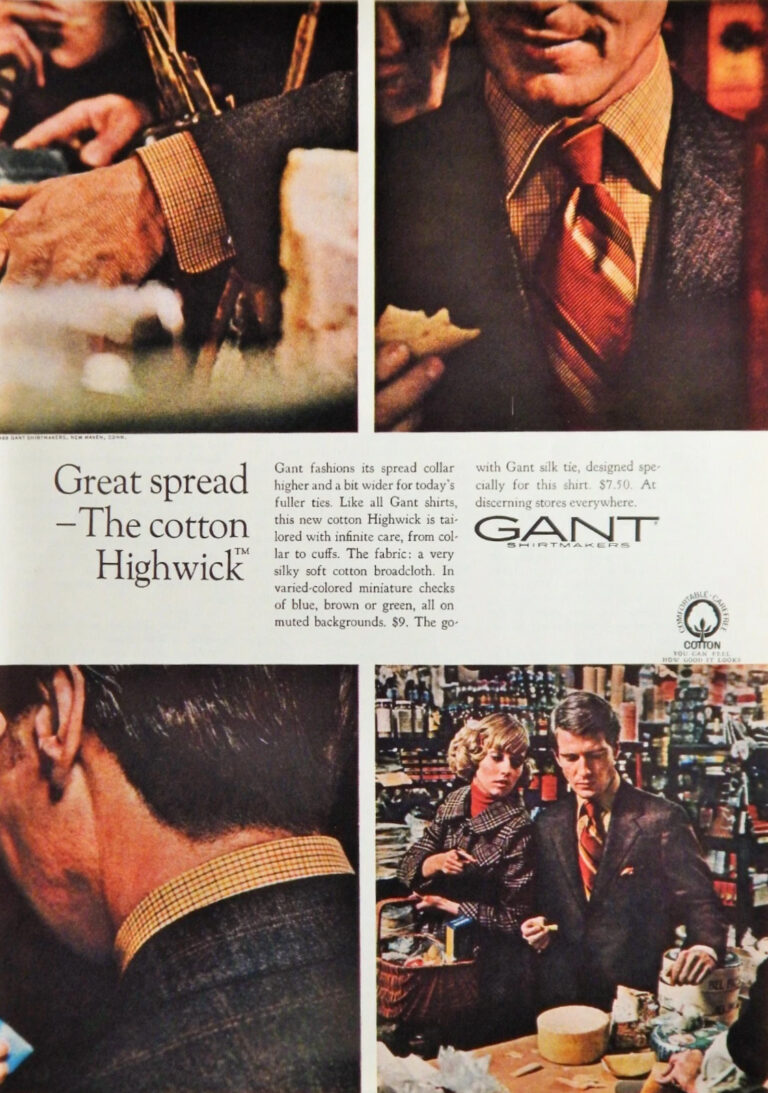
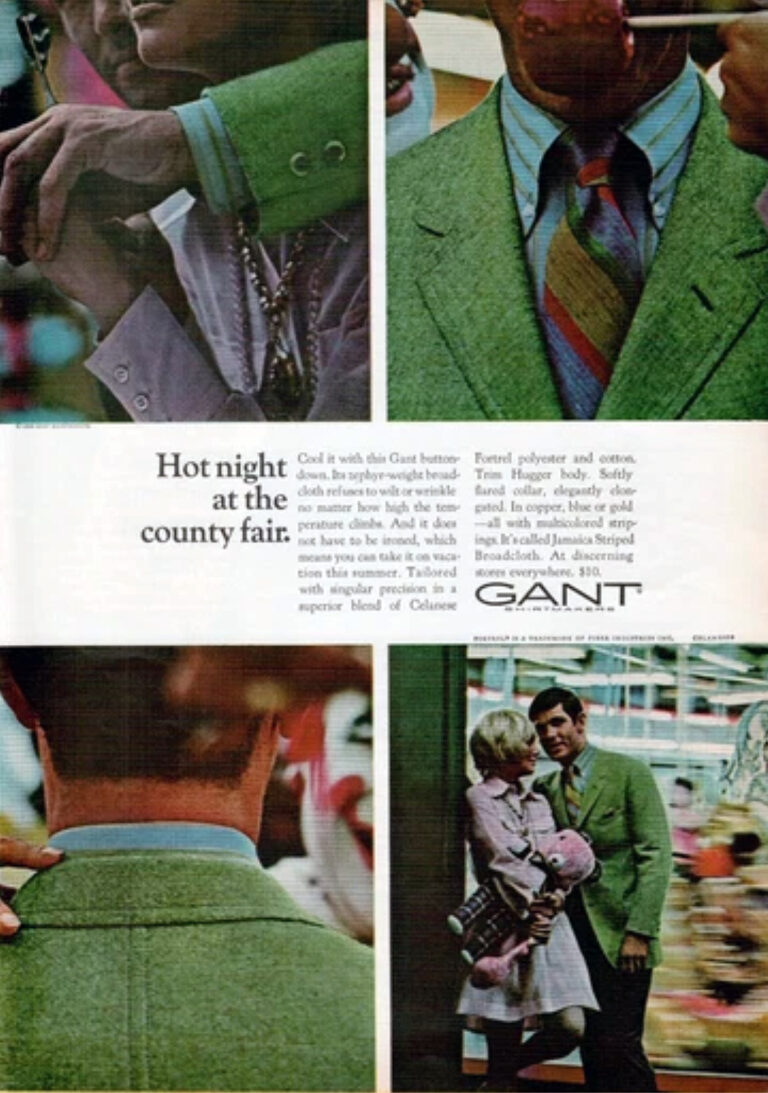
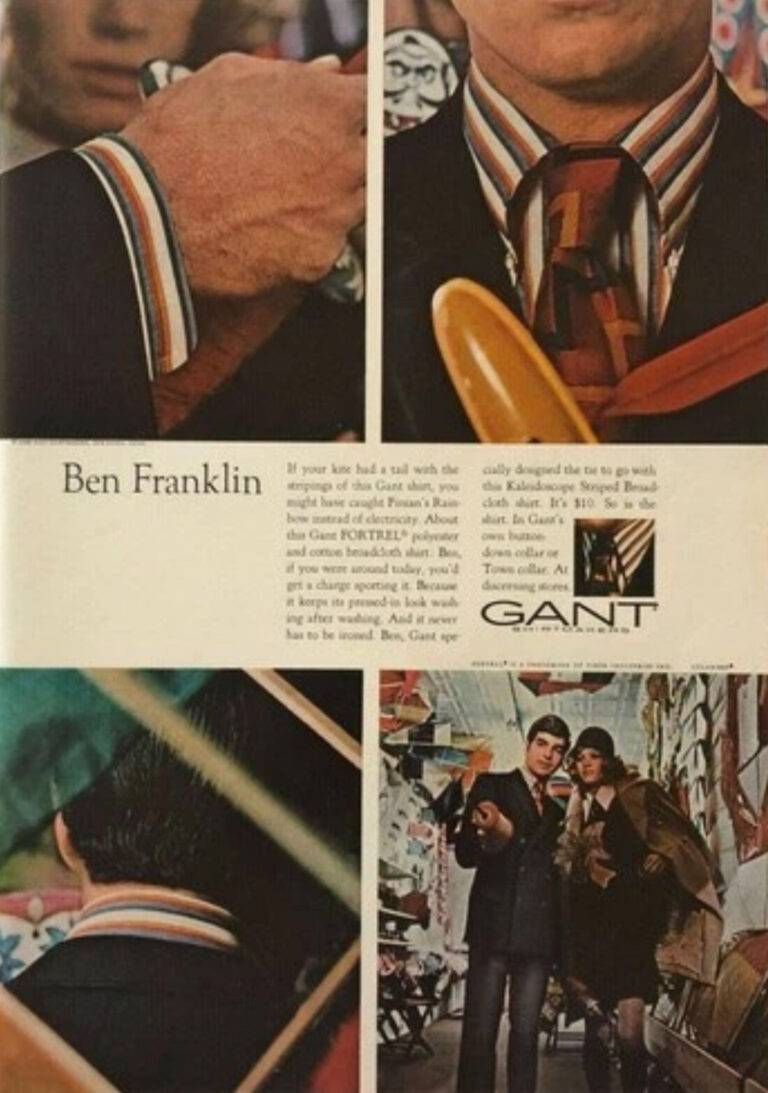
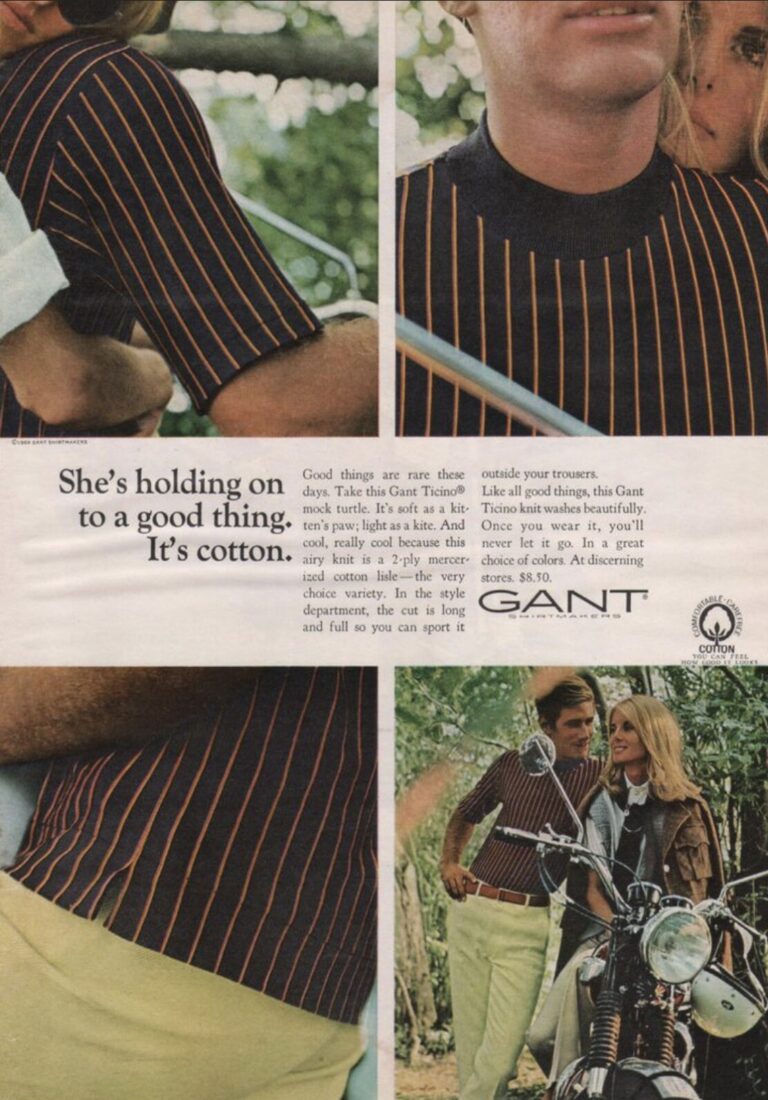
1969 GANT VINTAGE AD
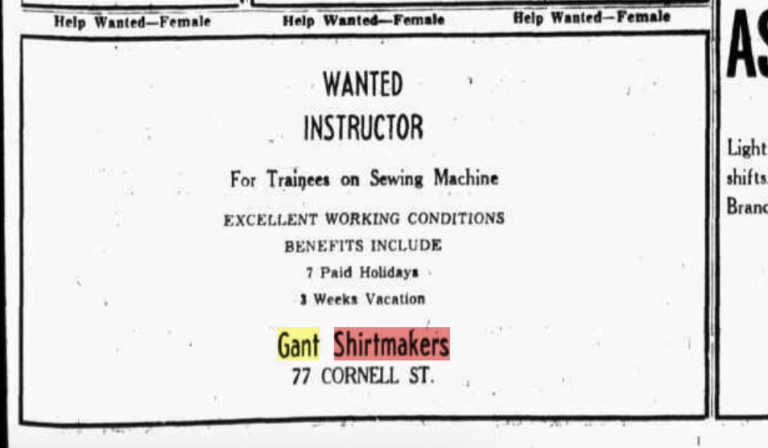
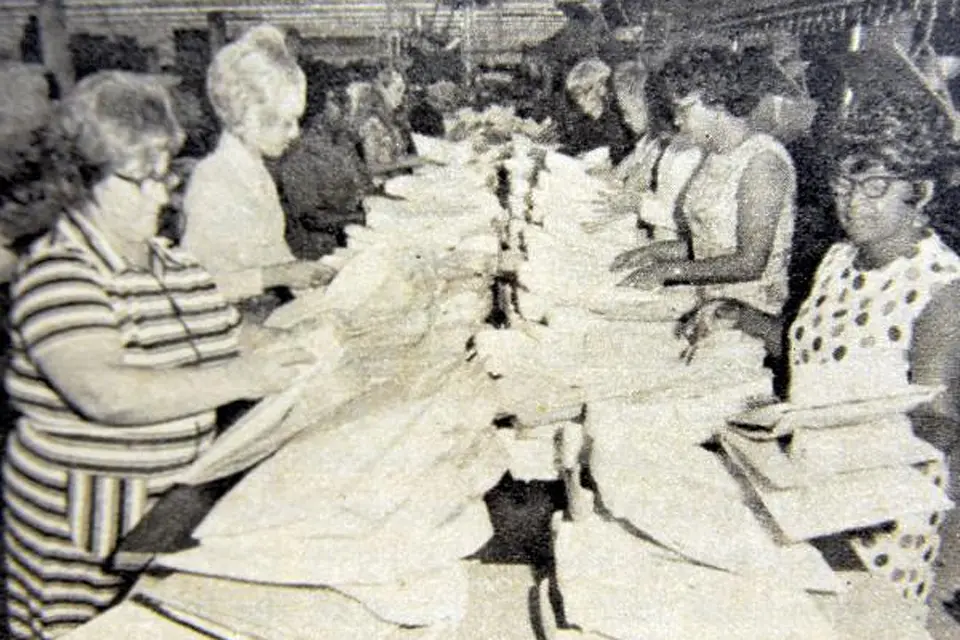
From a Sept. 5, 1971,
feature in the New Haven Register on the opening of Gant’s new factory in New Haven.
Original caption: “The final product — ready for packaging.” Register file photo.
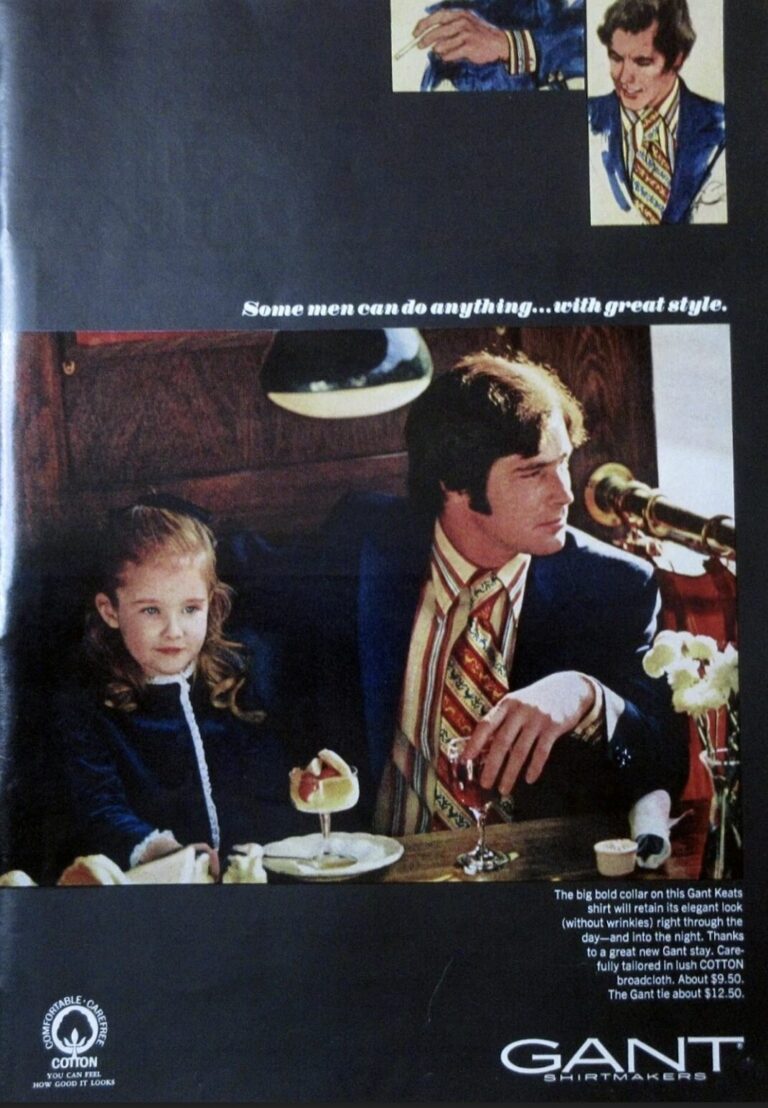
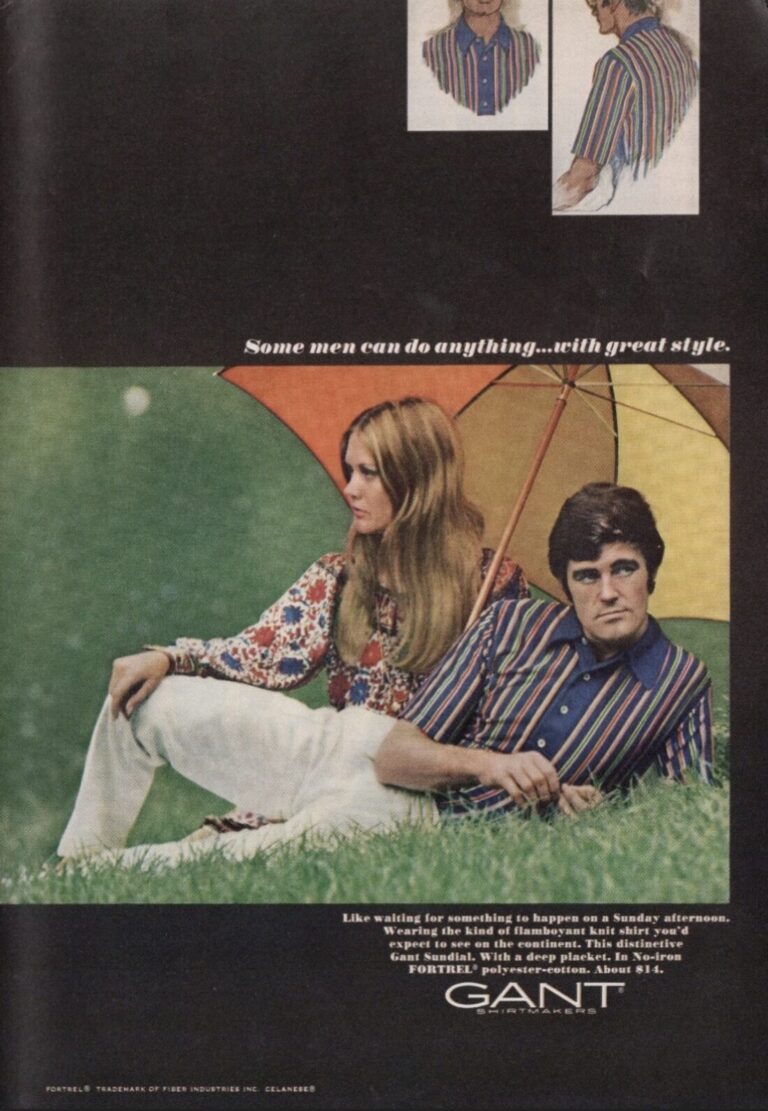
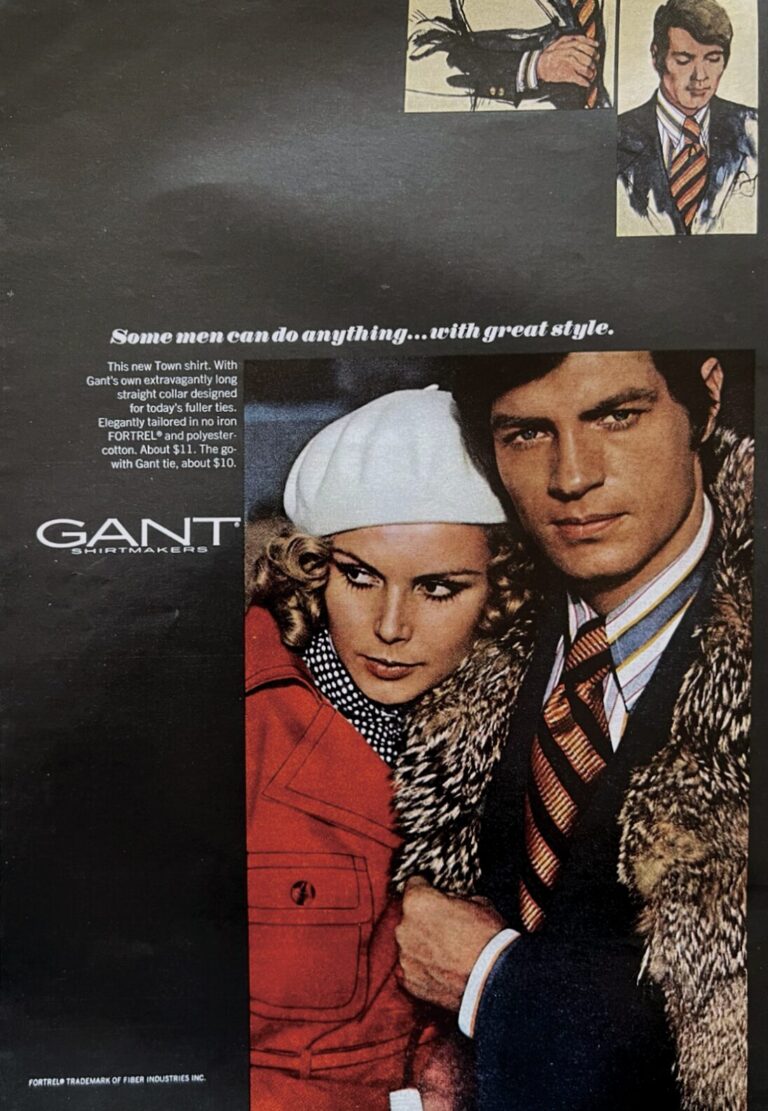
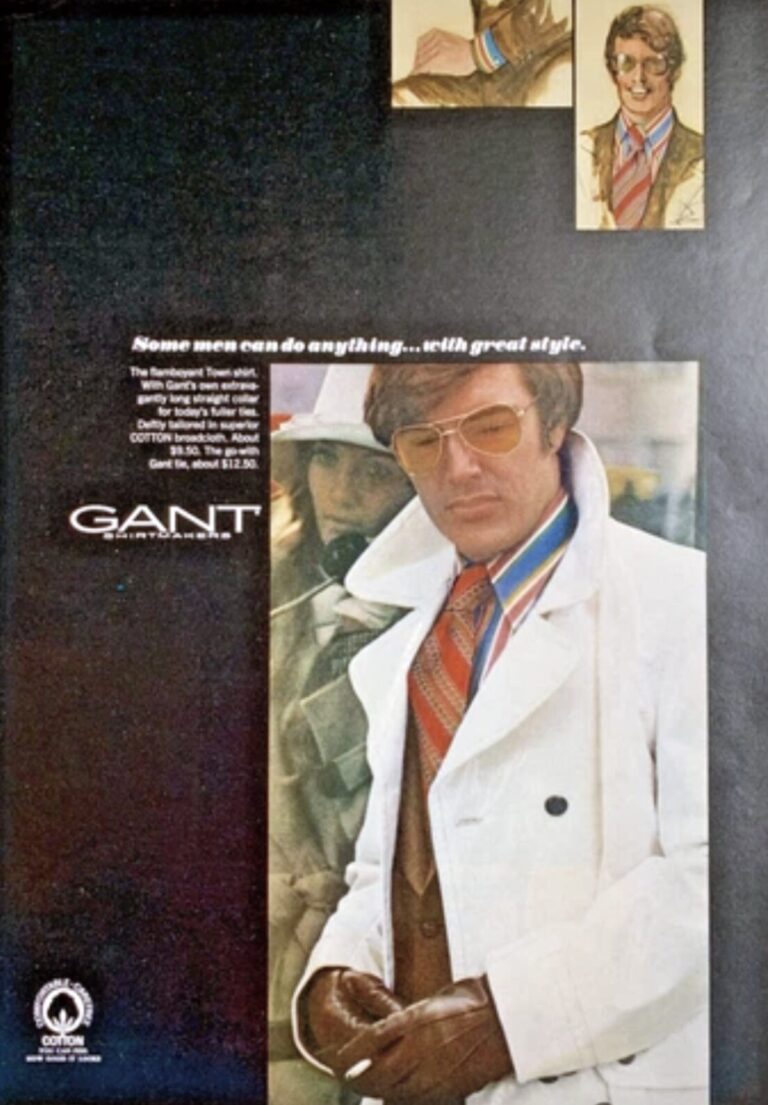
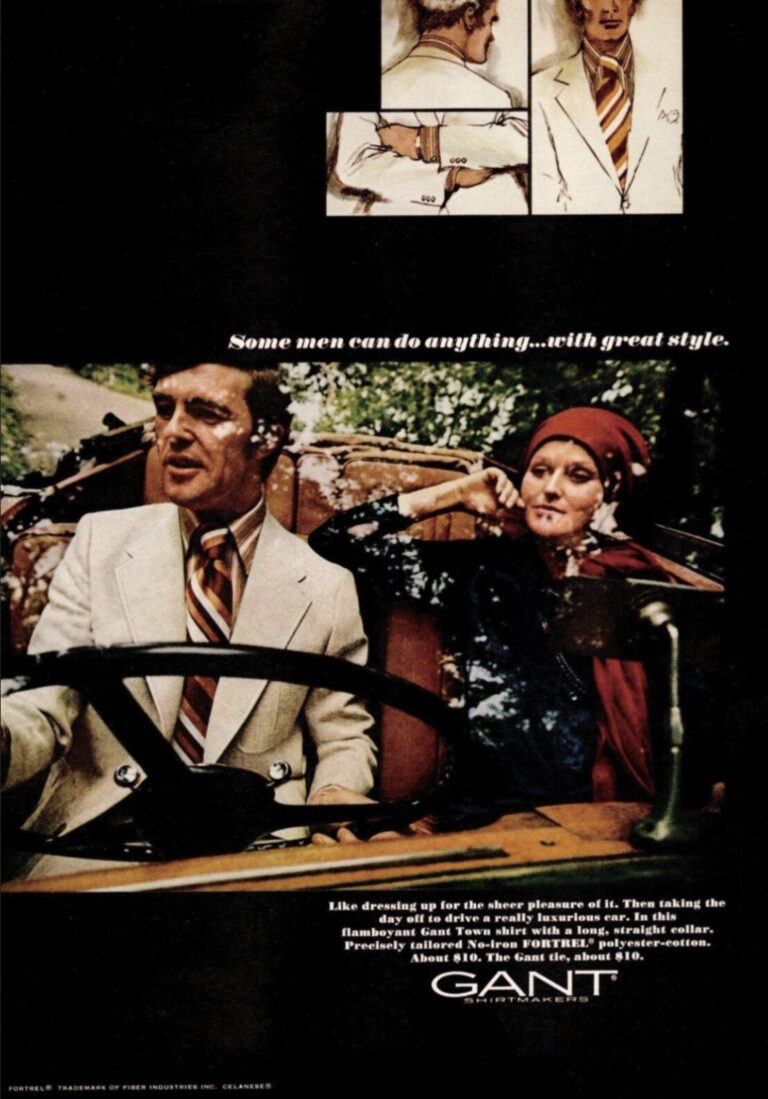
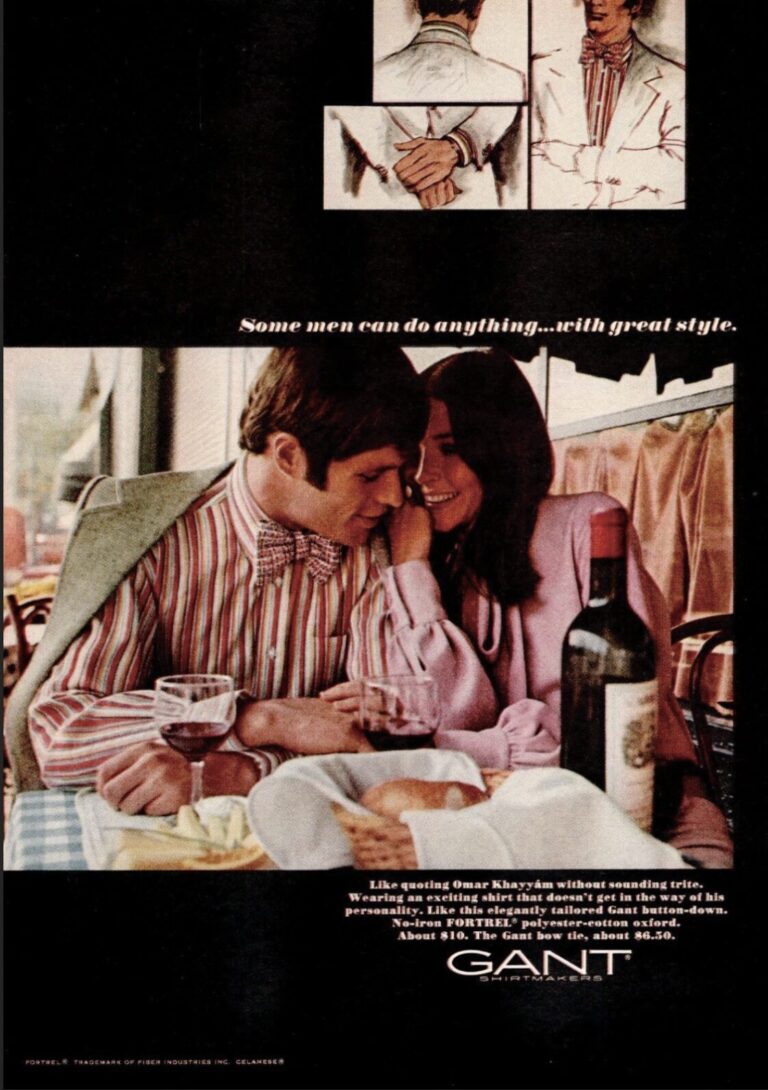
1970 GANT SHIRTMAKERS VINTAGE AD
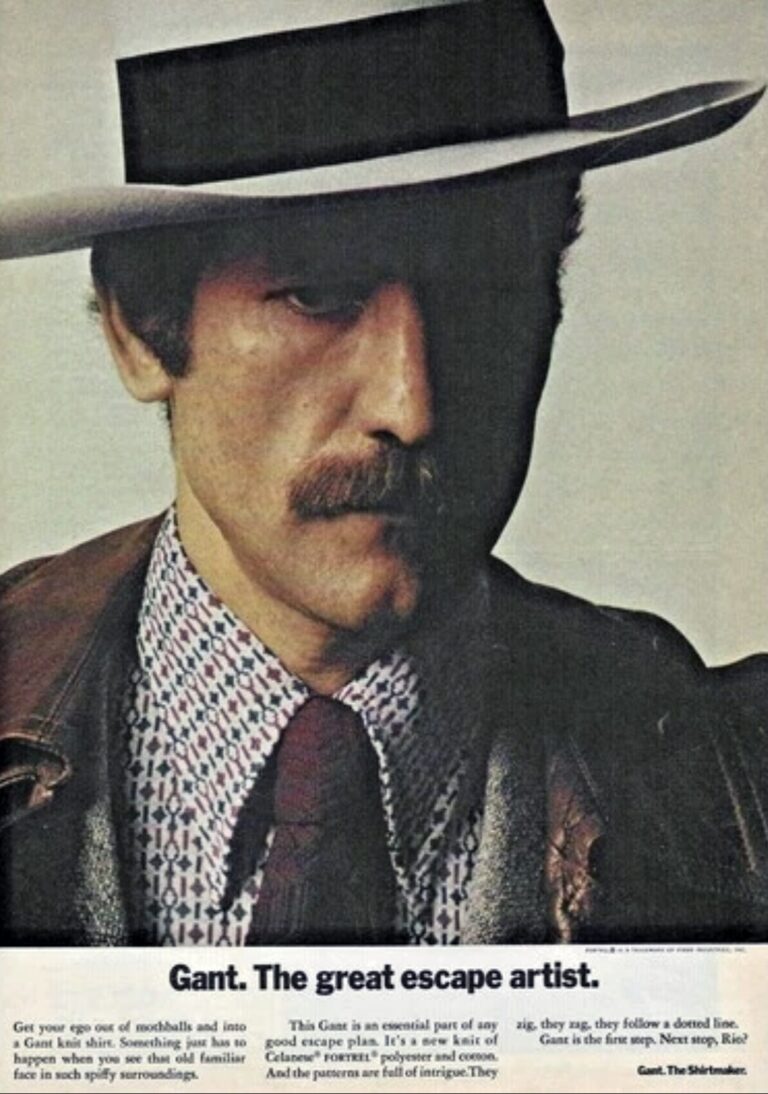
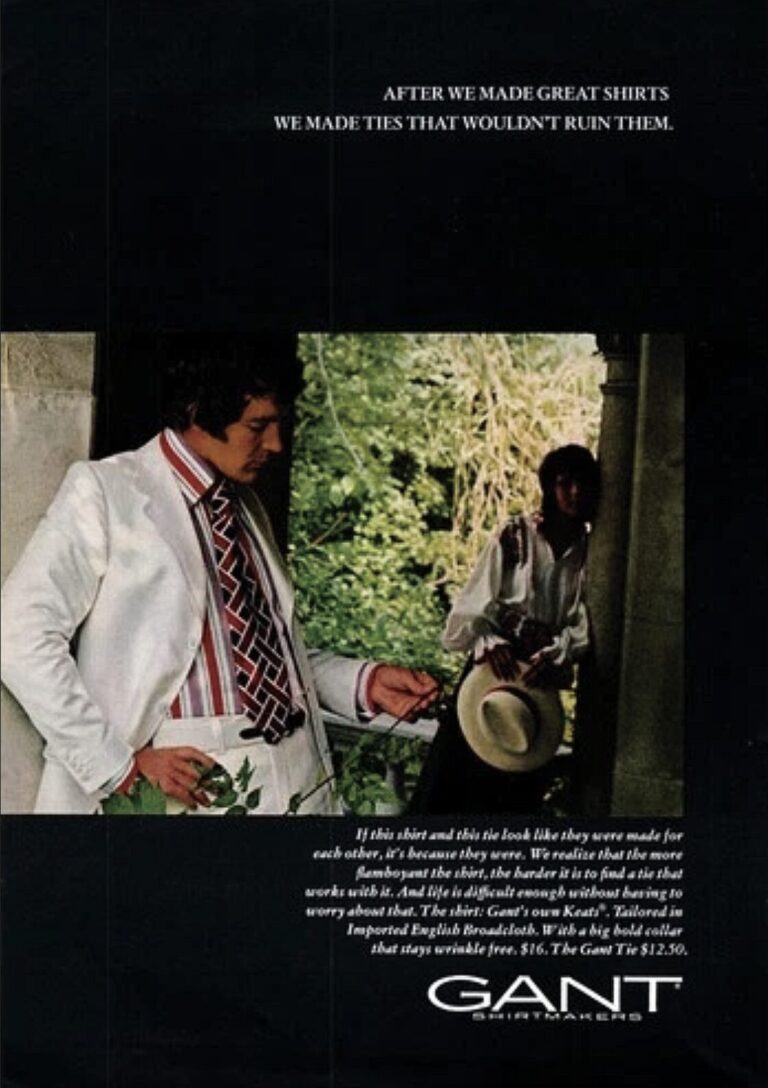
1971 GANT SHIRTMAKERS VINTAGE AD
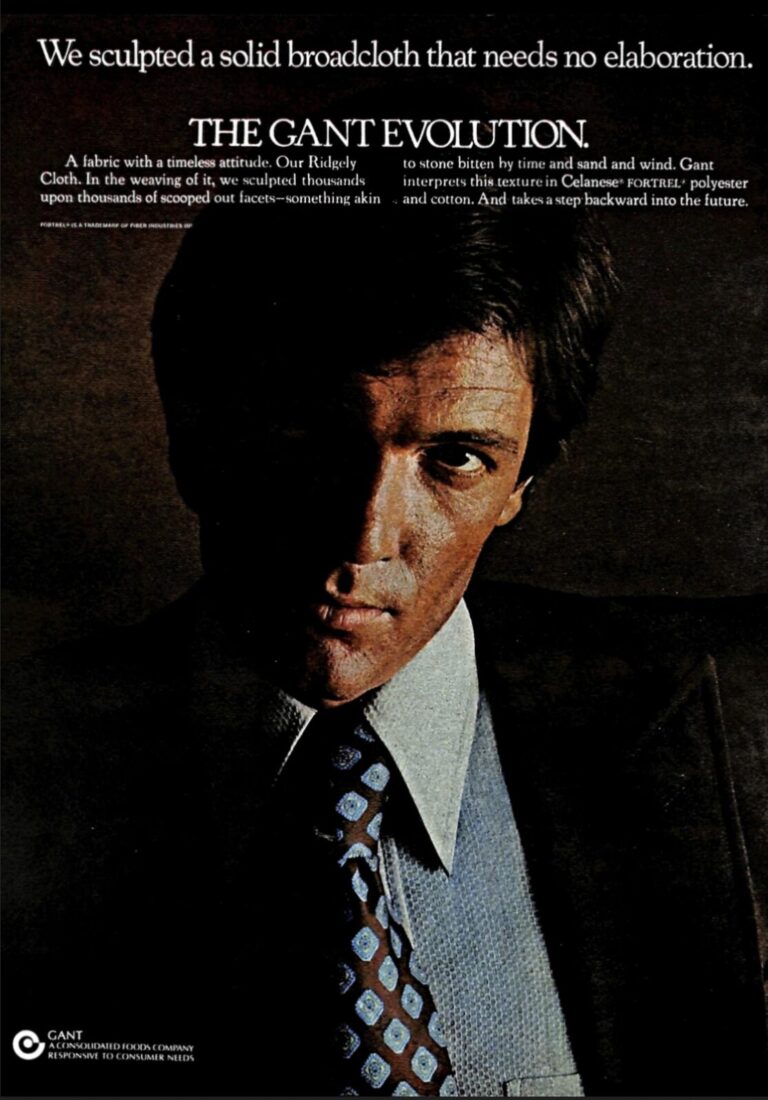
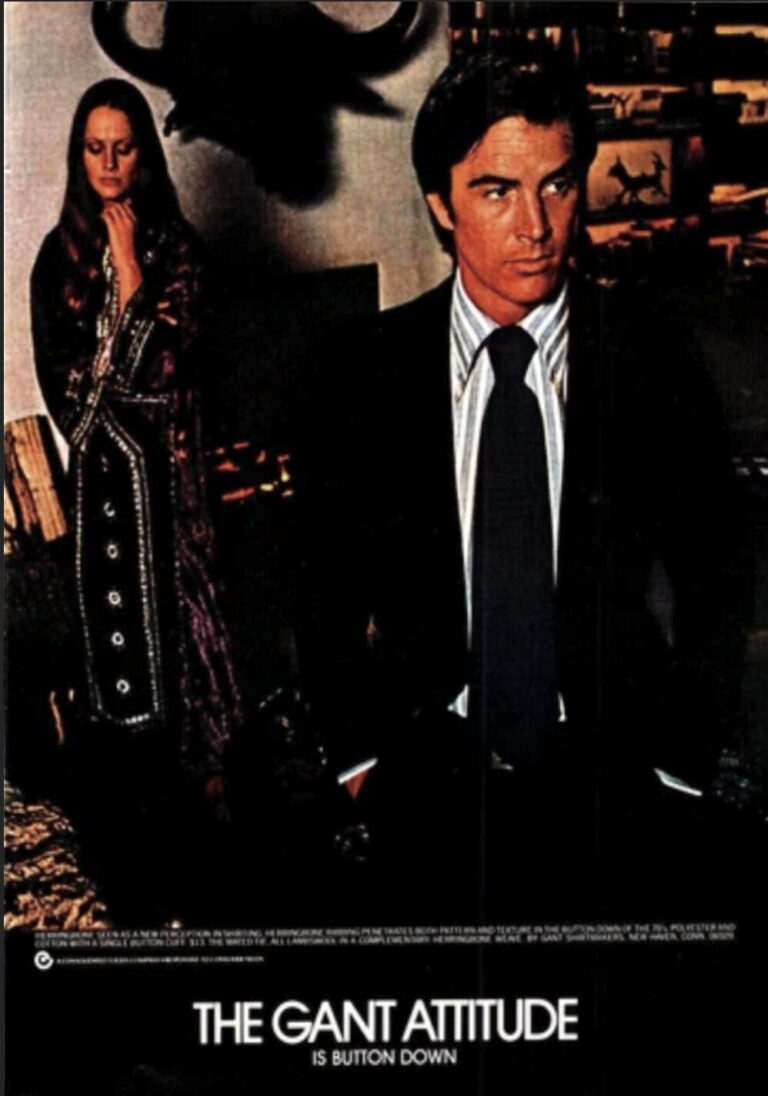
1972 GANT SHIRTMAKERS VINTAGE AD
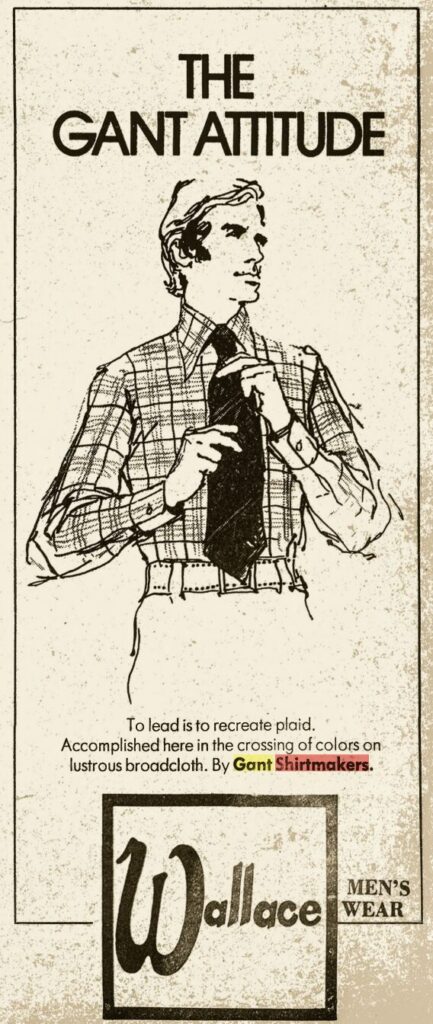
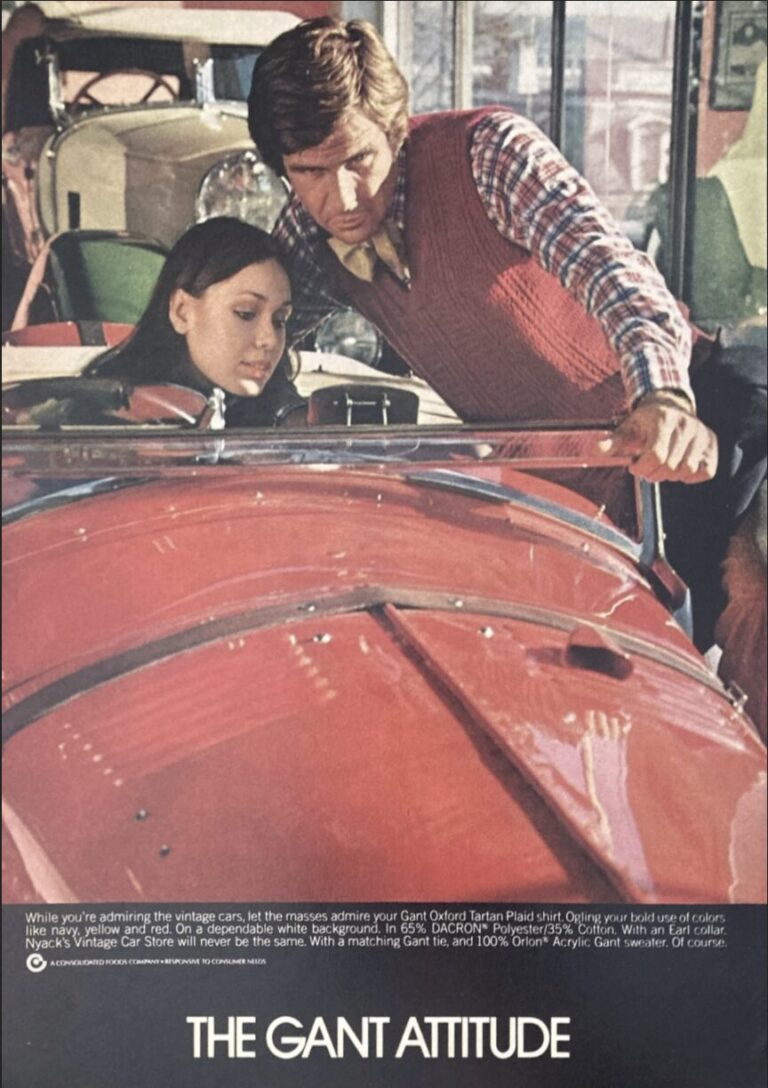
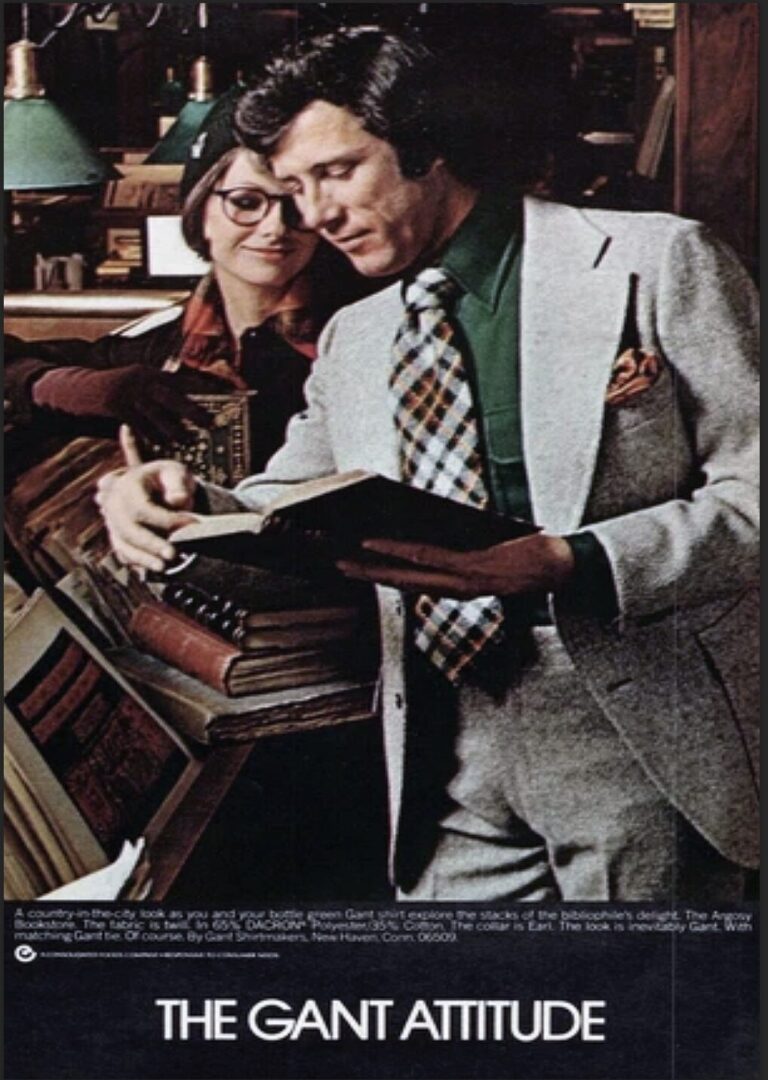
1973 GANT SHIRTMAKERS VINTAGE AD
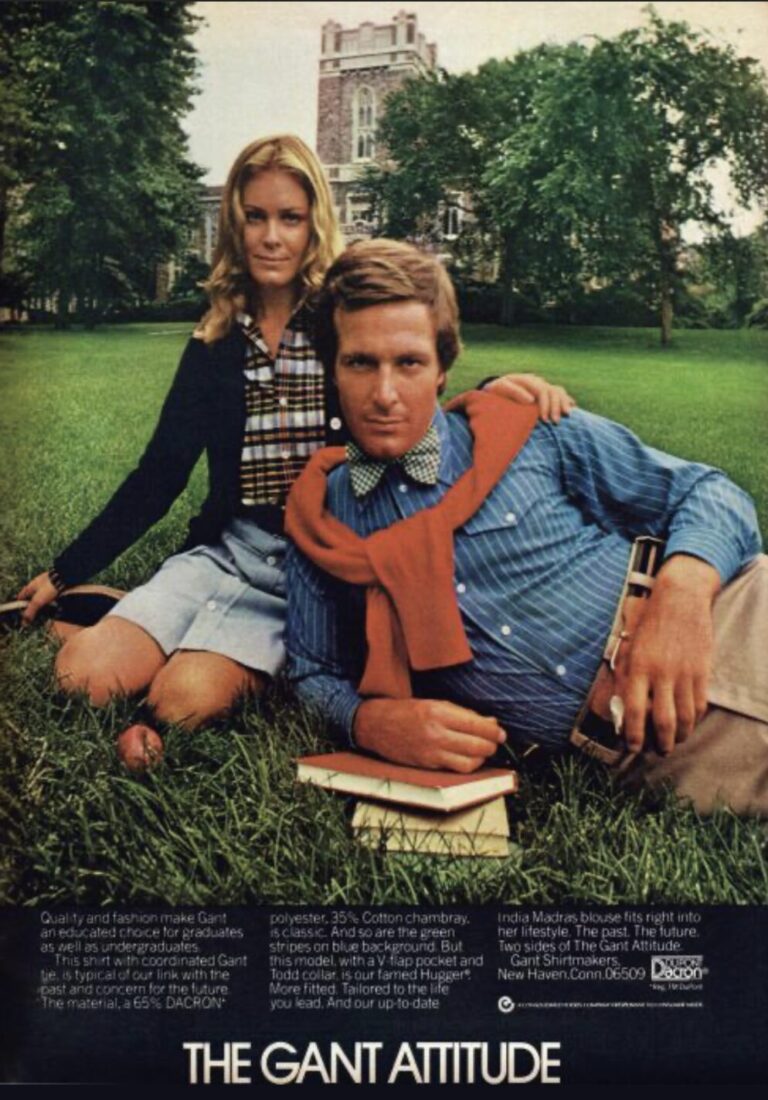
1974 GANT SHIRTMAKERS VINTAGE AD
1974
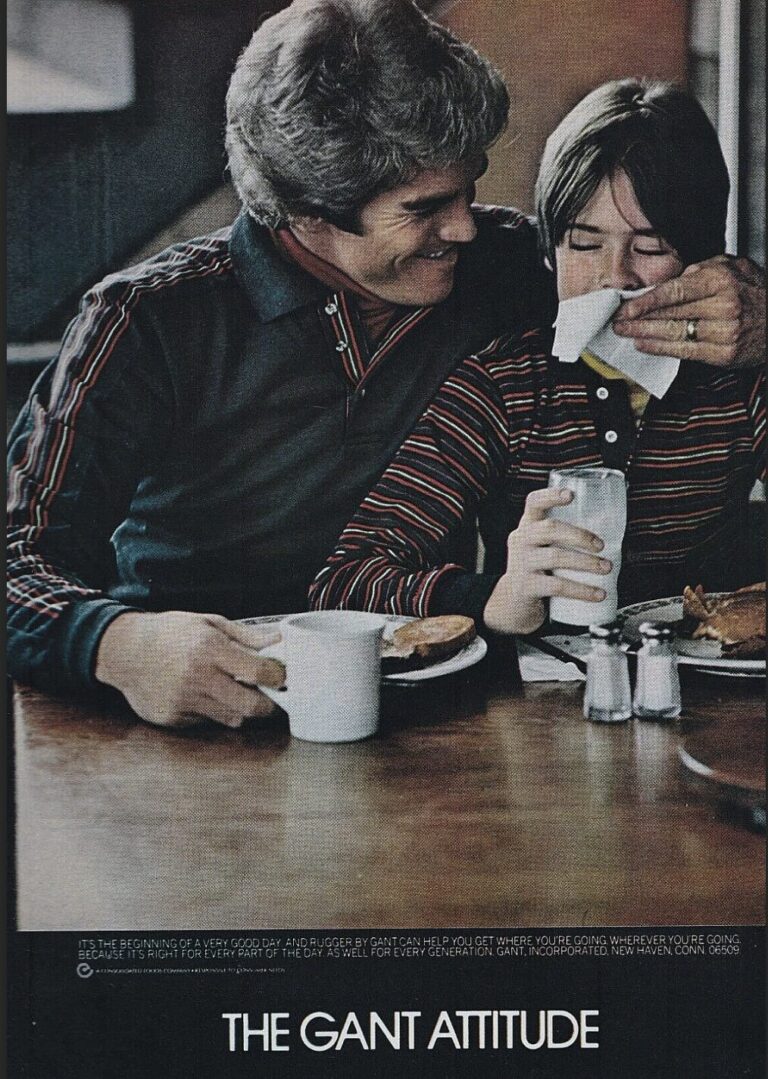
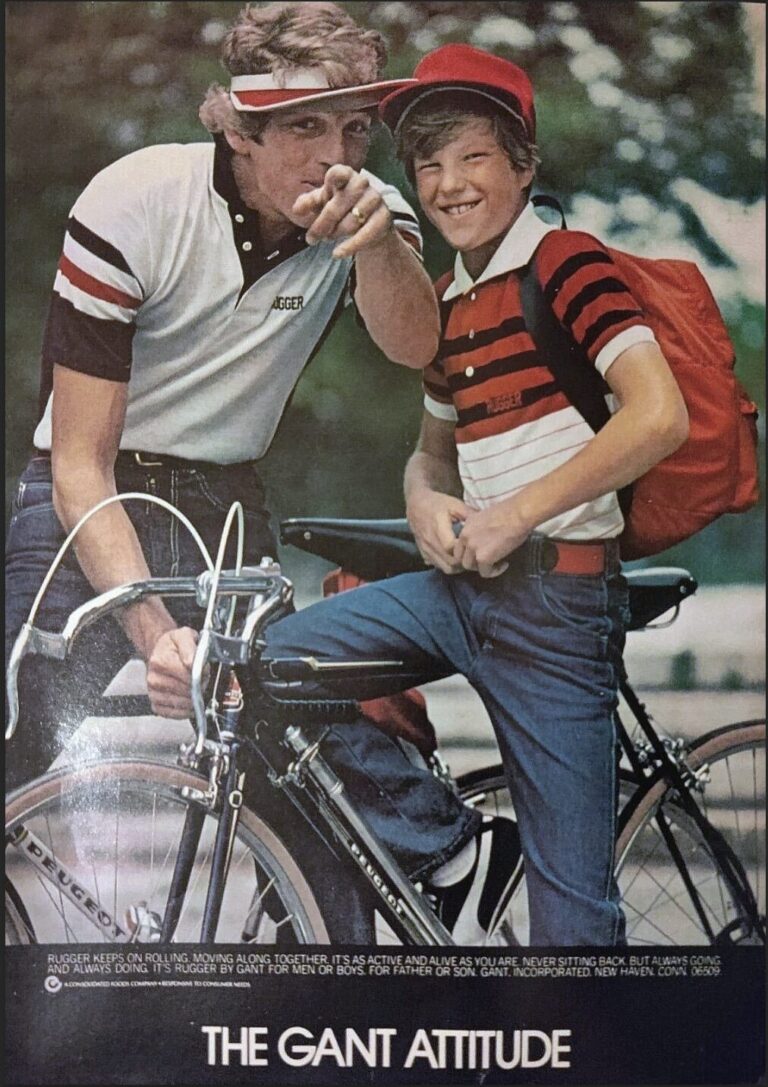
1. 1974: The Full Launch of “THE RUGGER”
Up through the 1960s, GANT was widely recognized as a leading American shirtmaker, particularly associated with button-down shirts. After the company was acquired in 1968 by Consolidated Foods Corporation (CFC), management sought avenues for growth beyond dress shirts alone.
During this period, rugby-style knit shirts were gaining visibility in collegiate settings. The name “RUGGER” was adopted internally in 1973, and commercial use of the name began in 1974, when products were introduced to the market under the designation “THE RUGGER,” later commonly referred to as GANT RUGGER.
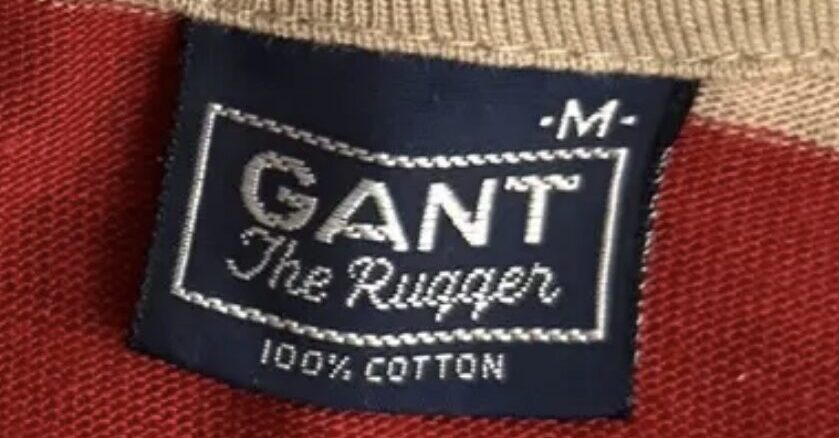
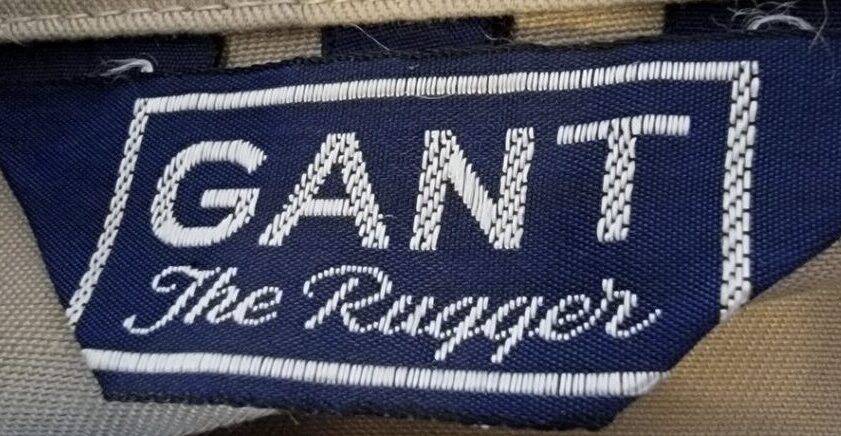
2. 1978: A Trademark Lawsuit That Determined the Brand’s Survival
Following its introduction, the use of the name “RUGGER” became the subject of legal dispute. Anvil Brand Company, which held a federal registration for the mark “RUGGERS,” brought suit against Consolidated Foods Corporation, alleging trademark infringement.
- 1976: Anvil asserted its claim against GANT’s use of the term “RUGGER.”
- December 8, 1978: The United States District Court for the Southern District of New York issued its decision.
The court determined that Anvil’s trademark registration for “RUGGERS” had been abandoned through non-use and ordered its cancellation. At the same time, the court held that the term “RUGGER,” as applied to rugby-style knit shirts, was generic and therefore not subject to exclusive trademark rights by either party. As a result, while Anvil’s registration was cancelled, GANT did not obtain exclusive rights to the term “RUGGER,” but was permitted to continue using it in commerce.
3. The Palm Beach Era: A Golden Age Across America (1979–1995)
In 1979, GANT entered a new phase under the ownership of the Palm Beach Company. During this period, GANT RUGGER products were manufactured in the United States and widely distributed.
Coinciding with the broader growth of preppy and collegiate-influenced casual wear in the United States, GANT RUGGER became a familiar presence in the American market. Products from this era are characterized by the combination of shirtmaking details—particularly collar construction—and the durability expected of sportswear, and are widely collected today.
4. 2010: Revival by Christopher Bastin
From the 1990s onward, changes in ownership structure and production geography reduced the visibility of the original RUGGER line. In 2010, the line was reintroduced as a heritage-oriented collection under the direction of designer Christopher Bastin.
Drawing on archival material from earlier periods of the brand’s history, Bastin reinterpreted rugby shirts and related items with reference to American sportswear traditions, positioning GANT RUGGER once again as a historically grounded line within the contemporary brand.
1. 1974年:「THE RUGGER」の立ち上げ
1960年代まで、GANTはアメリカを代表するシャツメーカーとして、特にボタンダウンシャツで知られていました。1968年に Consolidated Foods Corporation(CFC) の傘下に入った後、経営陣はドレスシャツ以外の分野での展開を模索するようになります。その過程で、大学を中心に着用されていたラグビーシャツに着目し、「RUGGER」 という名称が1973年に採用されました。1974年には同名称での商品が市場に投入され、これが後に GANT RUGGER と呼ばれるラインの始まりとなります。
2. 1978年:商標訴訟「RUGGER」の使用は、まもなく法的な争点となります。
Anvil Brand Company は、自社が保有していた登録商標「RUGGERS」を理由に、GANT(CFC)を相手取って商標侵害訴訟を提起しました。
・1976年:Anvil社が異議を申し立てる
・1978年12月8日:ニューヨーク南部地区連邦地裁が判決
裁判所は、Anvil社の商標「RUGGERS」が長期間使用されておらず、不使用による放棄(abandonment)に該当するとして登録の取消を命じました。一方で、「RUGGER」という語は、ラグビー型ニットシャツを指す**一般名称(generic term)であると判断され、いずれの当事者にも排他的な商標権は認められませんでした。この判決により、GANTは「RUGGER」という名称を継続使用することは可能となりましたが、独占的権利を得たわけではありません。
3. パームビーチ時代(1979–1995)
1979年、GANTは Palm Beach Company の傘下に入り、新たな段階を迎えます。この時期、GANT RUGGER はアメリカ国内生産による製品として広く展開されました。プレッピーやカレッジスタイルが一般化していく中で、GANT RUGGER は日常的なカジュアルウェアとして定着していきます。シャツメーカーとしての仕立ての思想と、スポーツウェア的な耐久性を併せ持つ点が特徴で、この時代の製品は現在も評価が高いものです。
4. 2010年:クリストファー・バスティンによる再始動
1990年代以降、所有構造や生産体制の変化により、RUGGERラインは次第に表舞台から退いていきました。
2010年、デザイナーのクリストファー・バスティン によって、RUGGERはヘリテージ志向のラインとして再構築されます。過去のアーカイブを参照しつつ、ラグビーシャツを中心としたアメリカン・スポーツウェアの要素を現代的に再解釈することで、GANT RUGGER は再びブランドの重要な文脈として位置づけられました。
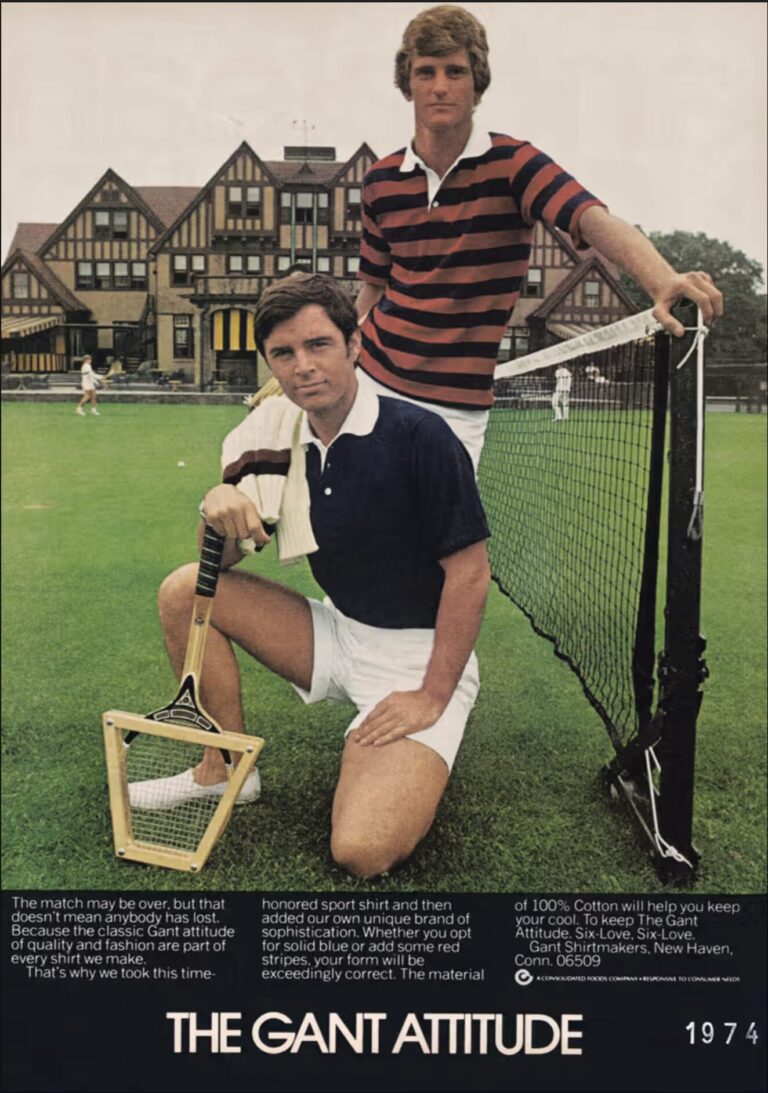
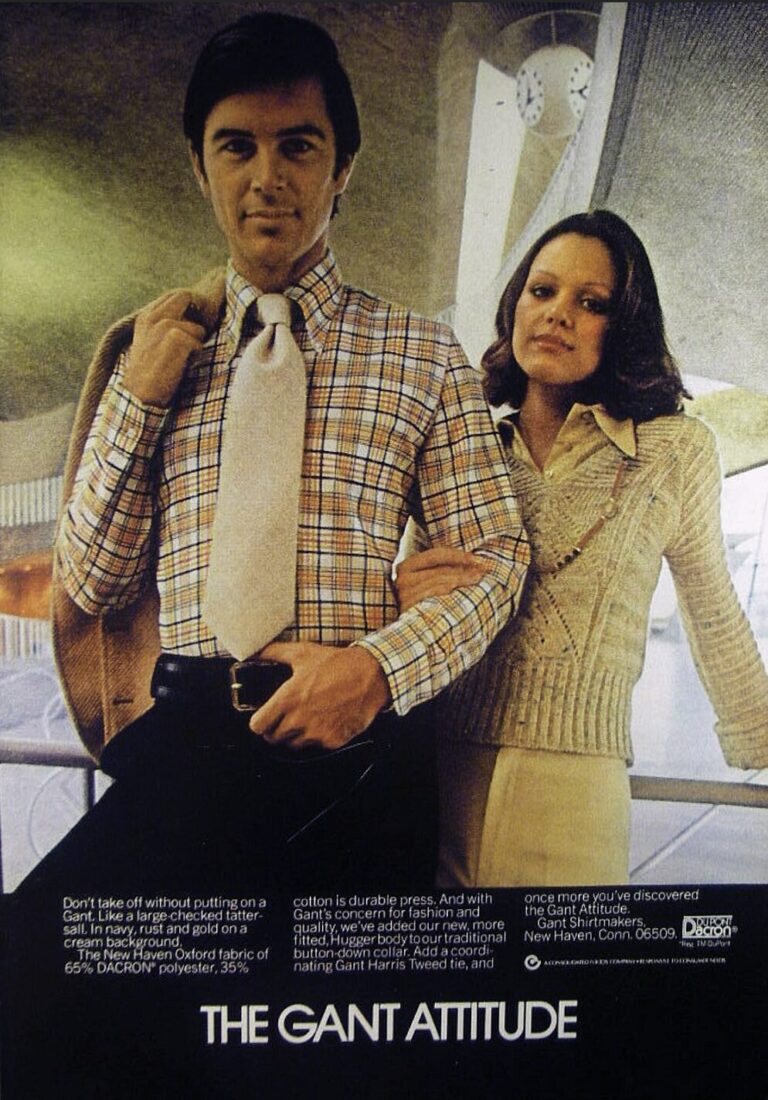
1974 GANT SHIRTMAKERS VINTAGE AD
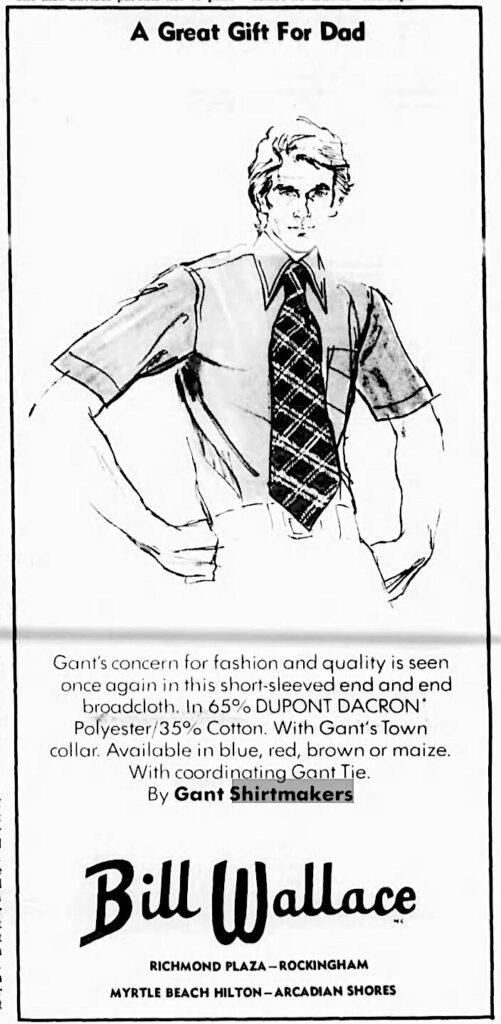
1975 Rockingham NC Richmond County Journal1975 Mar-Dec – 0133.pdf
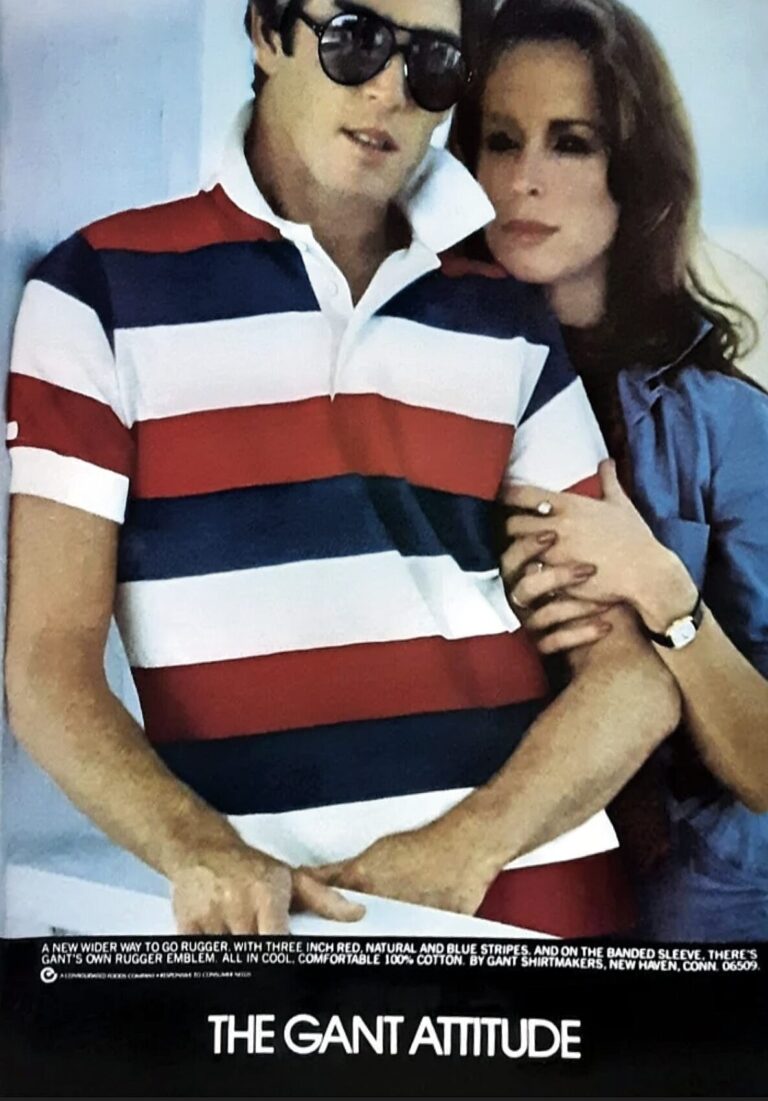
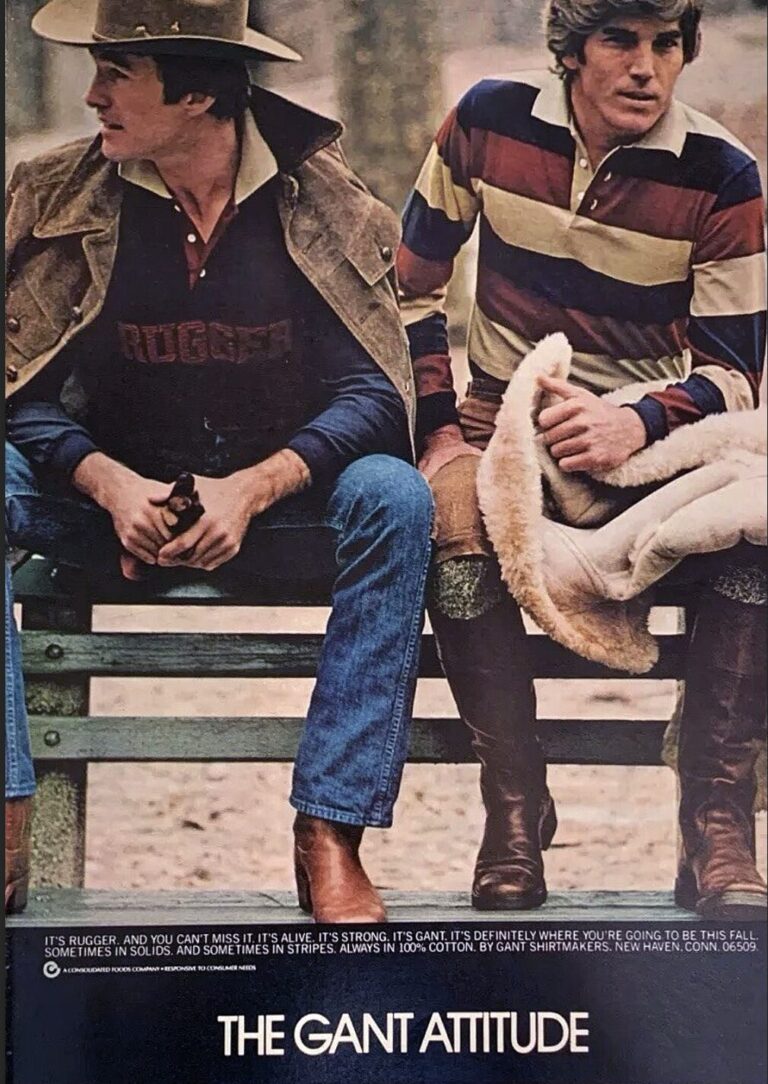
1976 GANT SHIRTMAKERS VINTAGE AD
1978 GANT SHIRTMAKERS VINTAGE AD
1968: Launch of the New Factory Project Using IBM Computer Systems
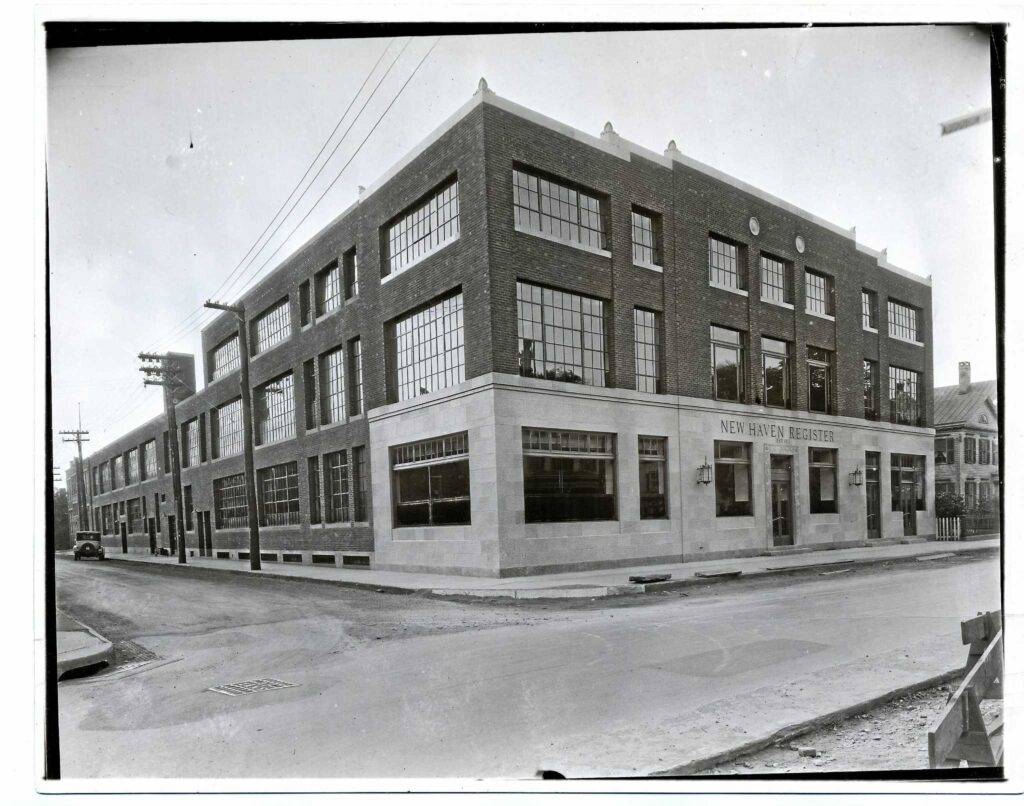
Under the umbrella of the conglomerate CFC, construction began on a new factory at 40 Sargent Drive, a project that carried the future of the brand. The expansion was centered on advanced automation, including a fully automated warehouse operated by IBM computer systems.
1971: Completion of the State-of-the-Art Factory and a Critical Miscalculation
The factory was completed in 1971. However, the system—designed by engineers with limited knowledge of the textile industry—proved inefficient and ill-suited to handling fabric. From the outset, operations were marked by confusion and inefficiency on the production floor.
Mid-1970s: From a Symbol of the Future to an “Albatross”
What had been intended as a symbol of progress became a costly burden. High maintenance expenses and persistent operational problems placed increasing strain on both management and the brand’s credibility.
1979: Acquisition and Closure
The financial burden created by the failed expansion ultimately led to the company’s acquisition by Palm Beach Inc. in 1979
1968年:IBMのコンピューター技術を用いた新工場計画の始動
複合企業体 CFC の傘下で、ブランドの命運を担う一大プロジェクトとしてサージェント・ドライブ40番地に新工場の建設が開始された。この野心的な拡張計画は、IBMのコンピューターで制御される「完全自動化倉庫」を含む最先端の自動化技術の導入を中核としていた。
1971年:最先端工場の完成と「致命的な誤算」
新工場は1971年に完成した。しかし、このシステムは繊維産業への理解に乏しい技術者によって設計されていたため、生地の取り扱いには不向きで非効率なものであることが判明した。稼働開始直後から、生産現場は混乱に見舞われた。
1970年代半ば:輝かしい象徴から「重荷」へ
将来を象徴するはずだった設備は、莫大な維持費を要する**「重荷(アルバトロス)」**と化し、経営とブランドの信頼性の双方に深刻な負担を与え始めた。
1979年:買収と工場閉鎖
この工場の建設および運用の失敗によって生じた重い財務負担は、最終的に1979年の Palm Beach Inc. による買収へとつながった。
1979
LAST OF NEW HAVEN FACTORY
NEW HAVEN, Dec. 7 . 1979 — From the corset factory where middle‐aged women come to work in their aprons to the courts of the new downtown racquetball club, there is an optimism here these days that not even a gloomy labor picture can dim.
“The 1980’s are going to be absolutely wonderful for New Haven,” declared former Mayor Richard Lee, the moving spirit of the city’s urban renewal program, the prototype for similarly huge and debated efforts in other cities.
The hopes of a renaissance were dealt a blow last week when United States Steel announced it would close its cable mill here Dec. 31, throwing 400 people out of work. The decision, which state and local officials are trying to reverse, followed the closing of the Gant shirt factory, which employed 500 people.
With 4,200 people, or 6.7 percent of New Haven’s population, now unemployed, there is also great concern about the 1,300 employees at the Olin Corporation’s Winchester firearms plant who have been on strike for five months, with little sign of progress in negotiations. Officially, Olin says it has no plans at the “present time” to leave town, and for years local and state officials have been wooing the company with numerous tax breaks, incentives and plans to modernize the old factory and keep it in New Haven. But there is still fear the company may leave.
THE NEW YORK TIMES
1979年、GANTが Palm Beach, Inc. に売却された直後、ニューヘイブンの工場は突然閉鎖され、約500人の労働者が一斉に解雇された。多くの従業員は、会社からの正式な説明を受ける前に、新聞報道によって閉鎖を知ったとされている。この出来事は、創業以来続いてきたGANTのニューヘイブンにおける製造の歴史を、急激かつ不可逆的なかたちで終わらせるものであった。
この1979年の工場閉鎖をもって、GANTとニューヘイブンのあいだに築かれてきた長い関係は、製造の現場としての役割を完全に失い、ひとつの時代に終止符が打たれることとなった。
AFTER 80s
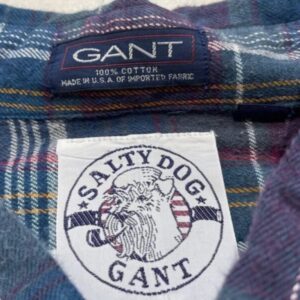
In 1999, PVH sold GANT’s U.S. operations to Pyramid Sportswear, which already controlled GANT’s international licensing rights. This transaction shifted the brand’s center of gravity decisively from the United States to Europe. PVH subsequently divested its remaining minority stake in GANT in 2003, fully exiting the brand.
The Swedish management team, who inherited control from PVH, renamed the company “GANT AB” and accelerated the brand’s revitalization from its new headquarters in Stockholm. In the early 2000s, with the support of capital from investment funds, the company expanded its women’s line and pushed forward with global retail expansion, leading to its listing on the O-list of the Stockholm Stock Exchange on March 28, 2006.
However, attracted by its growth potential, the Swiss retail giant Maus Frères launched a hostile takeover bid in late 2007. An agreement was eventually reached with the management, and following the completion of the acquisition in early 2008, GANT was delisted on March 20, 2008, becoming a wholly owned subsidiary of the group.
Today, GANT exists as a global lifestyle brand operated under a Europe-based management structure. While the name New Haven continues to be referenced within GANT’s identity, it functions not as a site of manufacturing but as a historical point of origin and a marker of the brand’s heritage.
ニューヘイブン工場の閉鎖後、GANTは1979年にパームビーチ社の傘下に入り新たな段階へと移行した。GANTのシャツは引き続きアメリカ国内で生産されていたものの、製造はもはやニューヘイブンに結びついたものではなく外部工場によって担われるようになった。これは、長年続いてきた自社工場生産モデルからの明確な転換を意味していた。
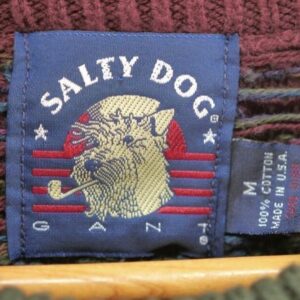
1985年には、パームビーチ社を含むゼネラル・ミルズのアパレル部門がスピンオフされ、クリスタル・ブランズ社が設立された。クリスタル・ブランズ体制のもとで、GANTは大きな戦略転換期に入る。ラルフ・ローレンに代表されるライフスタイル志向ブランドの成功に影響を受け、GANTは従来のシャツ中心のアイデンティティを超えた展開を模索するようになった。その一環として、1980年代半ばに、より若年層でカジュアルな市場を狙った「SALTY DOG」ラインを導入した。マリンテイストと犬をモチーフにした特徴的なロゴを持つこのラインは、1980年代後半から1990年代初頭にかけてのGANTを象徴する存在となった。
1995年、クリスタル・ブランズの破綻を受けてPVHがGANTの米国事業を取得した。PVH傘下において、GANTは自社の製造拠点を持たないブランド事業としてアメリカ市場での展開を継続しつつ次第により伝統的なアメリカンクラシックの方向へと再定位されていった。
1999年には、PVHがGANTの米国事業を、すでに国際ライセンス権を保有していたスウェーデンのパイラミッド・スポーツウェア社に売却した。この取引により、GANTの重心は決定的にアメリカからヨーロッパへと移行した。その後、PVHは2003年にGANTに対する残余の少数持分を売却し、同ブランドから完全に撤退した。
PVHから実権を継承したスウェーデンの経営陣は、社名を「GANT AB」へと変更し、ストックホルムを拠点にブランドの再構築を加速させた。2000年代に入ると、投資ファンドの資本を受け入れながらウィメンズラインの拡充やグローバルな店舗展開を推し進め、2006年3月28日にはストックホルム証券取引所のOリストへの上場を果たした。しかし、その成長性に注目したスイスの小売大手マウス・フレール(Maus Frères)が2007年末に敵対的買収を提案。最終的に経営陣との合意に至り、2008年初頭に買収が成立したことで、GANTは同年3月20日に上場を廃止し、同グループの完全子会社となった。
現在、GANTはヨーロッパを拠点とする経営体制のもとで運営される、グローバルなライフスタイルブランドとして存在している。ニューヘイブンという名称は、もはや製造拠点を示すものではなく、ブランドの起源とヘリテージを示す歴史的な記号として参照されている。
Who invented the button-down ?